News
SpaceX to upgrade Starship with 50% more Raptor engines

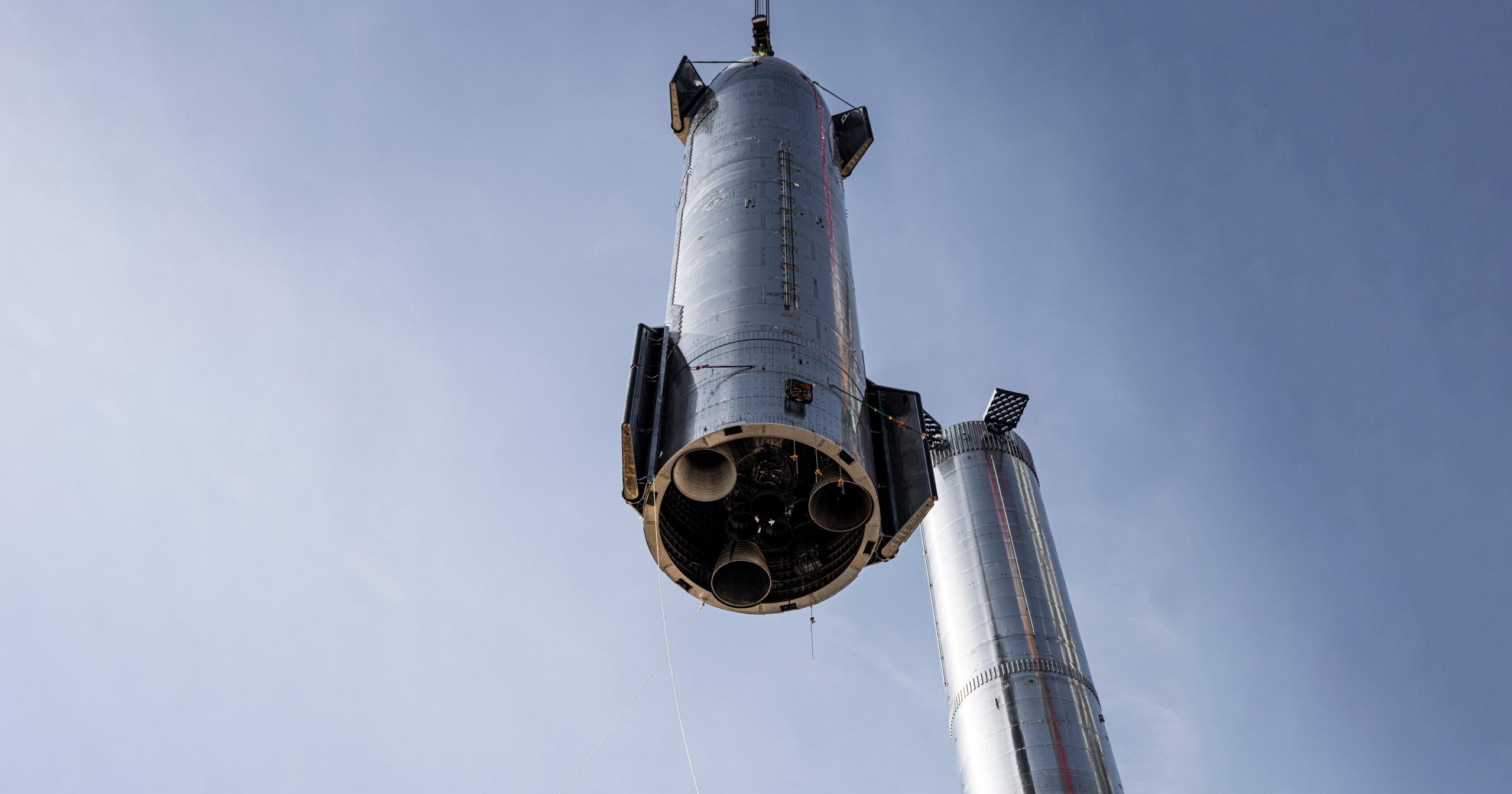
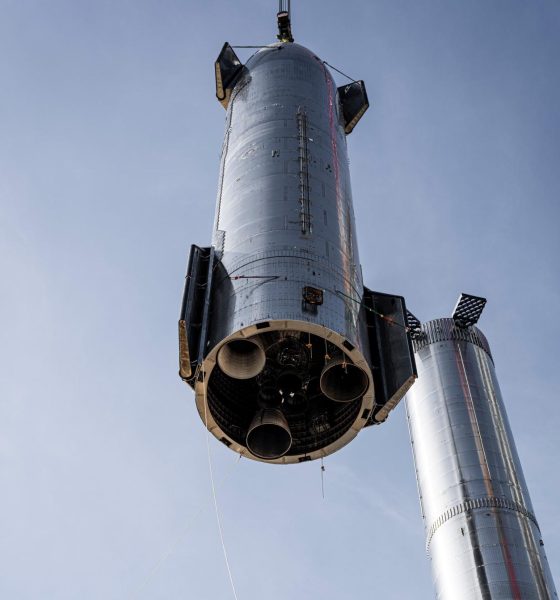
SpaceX CEO Elon Musk says that future Starships – or at least certain Starship variants – are being upgraded with 50% more Raptor engines and stretched propellant tanks.
On December 17th, the CEO revealed the plans, confirming a tweet published three months prior stating that Starship was “begging for an extra 3 engines.” Musk was likely referring to the fact that a 9-engine Starship – combined with upcoming 33-engine Super Heavy boosters – would create a rocket with 42 engines, a number made famous as “the answer to the ultimate question of life [and everything]” in Hitchhiker’s Guide to the Galaxy – both of which the CEO vocally enjoys. As ever, it’s thus almost impossible to tell jokes from serious, consequential plans – as is the case with Starship.
Nonetheless, origination aside, adding another three Raptor engines to Starship – boosting the count from six to nine – and stretching its tanks could be a substantial upgrade.
According to amateur modelers, who are generally able to estimate rocket performance with enough information about its structures, shape, and engines; an optimal nine-engine Starship’s tanks would be stretched about 25% to store an additional 300 tons (650,000 lb) of cryogenic liquid oxygen and methane (LOx/LCH4). That upgraded Starship would have a liftoff mass close to 1600 tons (3.5M lb) and stand about 55 meters (~180 ft) tall – 10% taller than current ships.
At stage separation, close to vacuum, a stretched Starship with three sea-level-optimized Raptors (RCs) and six vacuum-optimized Raptors (RVacs) should produce at least 2000 tons (4.4M lbf) of thrust – and possibly more than 2250 tons (~5M lbf) depending on engine performance. At that upper level of thrust, Starship – an upper stage – would be just 10% less powerful than the first stage of Falcon Heavy, the most powerful operational rocket in the world.
 -->
-->Regardless of its thrust, dimensions, or weight, what matters most is how a stretched, nine-engine Starship would impact that overall rocket’s launch performance. If unofficial modelers are to be believed, the results are significant: compared to a ‘normal’ Starship with a six-engine upper stage and 33-engine booster, the stretched ship could theoretically boost the amount of payload the rocket can launch to low Earth orbit (LEO) from about 150 tons to 220 tons or more (330,000 to 485,000+ lb) – an almost 50% improvement. In fact, per another recent comment from Musk indicating that Starship – unlike almost all other rockets – won’t temporarily throttle down on ascent, the total payload performance could be a bit less than 230 tons (~500,000 lb) – more than 50% greater than a shorter six-engine Starship.
If those estimates are accurate, upgrading Starship with nine Raptors and stretching its tanks is a no-brainer. It might slow development and make all nine-engine ships cost a substantial fraction more but a 50% improvement in payload performance would significantly improve the efficiency of Starship’s more ambitious Moon and Mars launch profiles, which require numerous orbital refuelings.
In effect, a 50% payload increase would allow SpaceX to complete most refueling tasks more efficiently, quickly, and cheaply. Even if the upgrade plans mean that all Starships will be stretched and carry nine Raptors, fully refueling the new Starship variant in LEO could require 7 tanker launches instead of 8-10. If SpaceX doesn’t mind maintaining multiple distinct Starship variants, which appears to be the case, then ships that are exclusively dependent on refueling (Moon and Mars landers in particular) could stay at their current size, with ~1200 tons (~2.6M lb) of propellant storage and six Raptors. A fleet of upgraded Starships could thus refuel their smaller siblings with just 5-6 tanker launches.
However, there’s a good chance that the extra mass required to stretch Starship ~5.5m (~4 tons or ~9000 lb) is minor enough that SpaceX will instead stretch all Starship variants. In fact, for variants like NASA’s HLS Moon lander and future Marsbound Starships, which depend entirely on refueling to reach their destinations, stretched tanks and more propellant storage could increase the amount of payload they could send to the Moon, Mars, and other high-energy destinations by quite a bit. Ultimately, it will be fascinating to hear more details from SpaceX and Musk on how exactly the upgraded Starship design might benefit those operations in the coming weeks and months.
-->


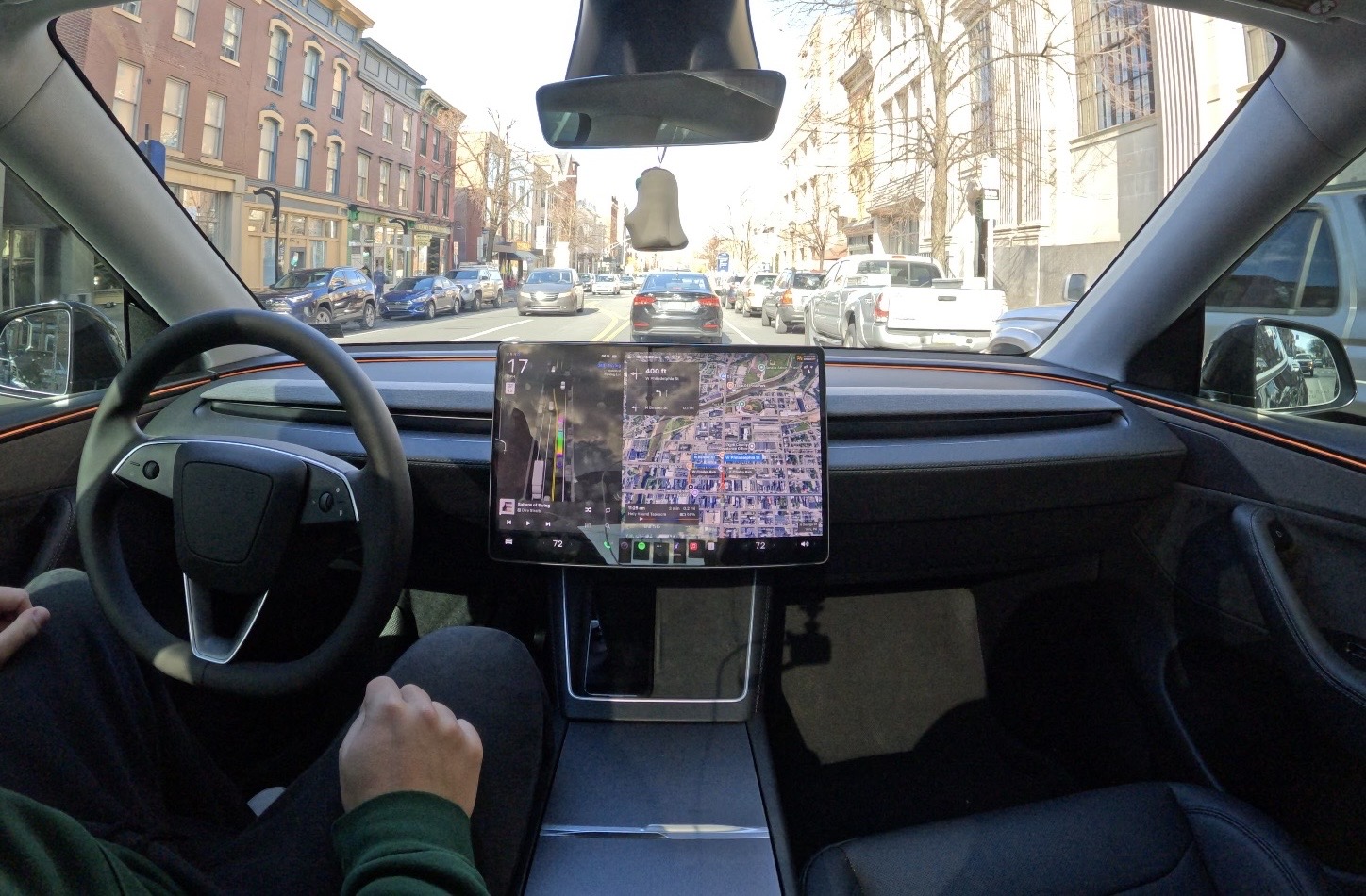
Elon Musk said in late November that he’s “tried to warn” legacy automakers and “even offered to license Tesla Full Self-Driving, but they don’t want it,” expressing frustration with companies that refuse to adopt the company’s suite, which will eventually be autonomous.
Tesla has long established itself as the leader in self-driving technology, especially in the United States. Although there are formidable competitors, Tesla’s FSD suite is the most robust and is not limited to certain areas or roadways. It operates anywhere and everywhere.
The company’s current position as the leader in self-driving tech is being ignored by legacy automakers, a parallel to what Tesla’s position was with EV development over a decade ago, which was also ignored by competitors.
The reluctance mirrors how legacy automakers initially dismissed EVs, only to scramble in catch-up mode years later–a pattern that highlights their historical underestimation of disruptive innovations from Tesla.
Elon Musk’s Self-Driving Licensing Attempts
Musk and Tesla have tried to push Full Self-Driving to other car companies, with no true suitors, despite ongoing conversations for years. Tesla’s FSD is aiming to become more robust through comprehensive data collection and a larger fleet, something the company has tried to establish through a subscription program, free trials, and other strategies.
Tesla CEO Elon Musk sends rivals dire warning about Full Self-Driving
However, competing companies have not wanted to license FSD for a handful of speculative reasons: competitive pride, regulatory concerns, high costs, or preference for in-house development.
Déjà vu All Over Again
Tesla tried to portray the importance of EVs long ago, as in the 2010s, executives from companies like Ford and GM downplayed the importance of sustainable powertrains as niche or unprofitable.
Musk once said in a 2014 interview that rivals woke up to electric powertrains when the Model S started to disrupt things and gained some market share. Things got really serious upon the launch of the Model 3 in 2017, as a mass-market vehicle was what Tesla was missing from its lineup.
This caused legacy companies to truly wake up; they were losing market share to Tesla’s new and exciting tech that offered less maintenance, a fresh take on passenger auto, and other advantages. They were late to the party, and although they have all launched vehicles of their own, they still lag in two major areas: sales and infrastructure, leaning on Tesla for the latter.
I’ve tried to warn them and even offered to license Tesla FSD, but they don’t want it! Crazy …
When legacy auto does occasionally reach out, they tepidly discuss implementing FSD for a tiny program in 5 years with unworkable requirements for Tesla, so pointless. 🤷♂️
🦕 🦕
— Elon Musk (@elonmusk) November 24, 2025
Musk’s past warnings have been plentiful. In 2017, he responded to critics who stated Tesla was chasing subsidies. He responded, “Few people know that we started Tesla when GM forcibly recalled all electric cars from customers in 2003 and then crushed them in a junkyard,” adding that “they would be doing nothing” on EVs without Tesla’s efforts.
Companies laughed off Tesla’s prowess with EVs, only to realize they had made a grave mistake later on.
It looks to be happening once again.
A Pattern of Underestimation
Both EVs and self-driving tech represent major paradigm shifts that legacy players view as threats to their established business models; it’s hard to change. However, these early push-aways from new tech only result in reactive strategies later on, usually resulting in what pains they are facing now.
Ford is scaling back its EV efforts, and GM’s projects are hurting. Although they both have in-house self-driving projects, they are falling well behind the progress of Tesla and even other competitors.
It is getting to a point where short-term risk will become a long-term setback, and they may have to rely on a company to pull them out of a tough situation later on, just as it did with Tesla and EV charging infrastructure.
Tesla has continued to innovate, while legacy automakers have lagged behind, and it has cost them dearly.
Implications and Future Outlook
Moving forward, Tesla’s progress will continue to accelerate, while a dismissive attitude by other companies will continue to penalize them, especially as time goes on. Falling further behind in self-driving could eventually lead to market share erosion, as autonomy could be a crucial part of vehicle marketing within the next few years.
Eventually, companies could be forced into joint partnerships as economic pressures mount. Some companies did this with EVs, but it has not resulted in very much.
Self-driving efforts are not only a strength for companies themselves, but they also contribute to other things, like affordability and safety.
Tesla has exhibited data that specifically shows its self-driving tech is safer than human drivers, most recently by a considerable margin. This would help with eliminating accidents and making roads safer.
Tesla’s new Safety Report shows Autopilot is nine times safer than humans
Additionally, competition in the market is a good thing, as it drives costs down and helps innovation continue on an upward trend.
Conclusion
The parallels are unmistakable: a decade ago, legacy automakers laughed off electric vehicles as toys for tree-huggers, crushed their own EV programs, and bet everything on the internal-combustion status quo–only to watch Tesla redefine the industry while they scrambled for billions in catch-up capital.
Today, the same companies are turning down repeated offers to license Tesla’s Full Self-Driving technology, insisting they can build better autonomy in-house, even as their own programs stumble through recalls, layoffs, and missed milestones. History is not merely rhyming; it is repeating almost note-for-note.
Elon Musk has spent twenty years warning that the auto industry’s bureaucratic inertia and short-term thinking will leave it stranded on the wrong side of technological revolutions. The question is no longer whether Tesla is ahead–it is whether the giants of Detroit, Stuttgart, and Toyota will finally listen before the next wave leaves them watching another leader pull away in the rear-view mirror.
This time, the stakes are not just market share; they are the very definition of what a car will be in the decades ahead.
News
Waymo driverless taxi drives directly into active LAPD standoff
No injuries occurred, and the passengers inside the vehicle were safely transported to their destination, as per a Waymo representative.

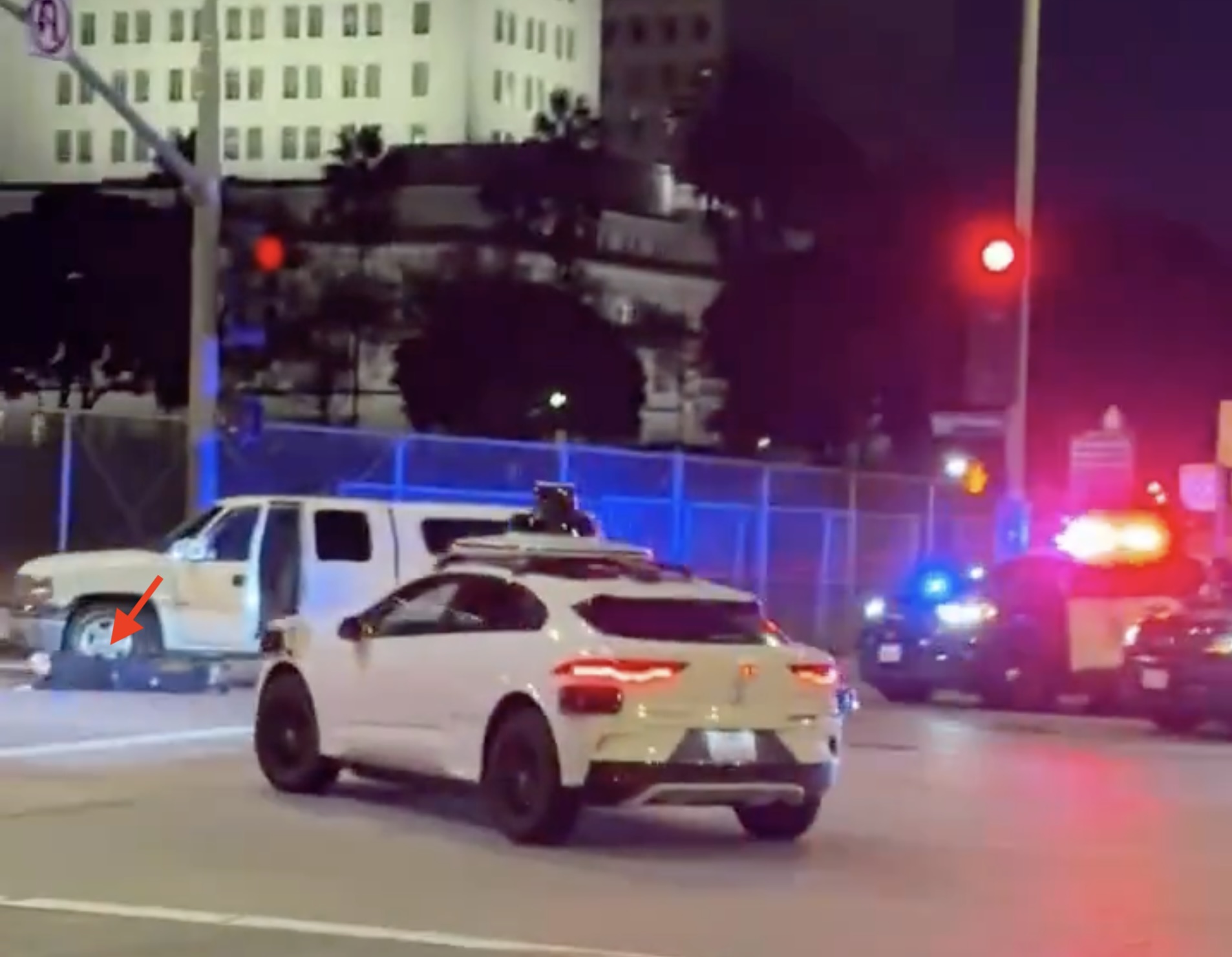
A video posted on social media has shown an occupied Waymo driverless taxi driving directly into the middle of an active LAPD standoff in downtown Los Angeles.
As could be seen in the short video, which was initially posted on Instagram by user Alex Choi, a Waymo driverless taxi drove directly into the middle of an active LAPD standoff in downtown Los Angeles.
The driverless taxi made an unprotected left turn despite what appeared to be a red light, briefly entering a police perimeter. At the time, officers seemed to be giving commands to a prone suspect on the ground, who looked quite surprised at the sudden presence of the driverless vehicle.
People on the sidewalk, including the person who was filming the video, could be heard chuckling at the Waymo’s strange behavior.
The Waymo reportedly cleared the area within seconds. No injuries occurred, and the passengers inside the vehicle were safely transported to their destination, as per a Waymo representative. Still, the video spread across social media, with numerous netizens poking fun at the gaffe.
-->Others also pointed out that such a gaffe would have resulted in widespread controversy had the vehicle involved been a Tesla on FSD. Tesla is constantly under scrutiny, with TSLA shorts and similar groups actively trying to put down the company’s FSD program.
A Tesla on FSD or Robotaxi accidentally driving into an active police standoff would likely cause lawsuits, nonstop media coverage, and calls for a worldwide ban, at the least.
This was one of the reasons why even minor traffic infractions committed by the company’s Robotaxis during their initial rollout in Austin received nationwide media attention. This particular Waymo incident, however, will likely not receive as much coverage.
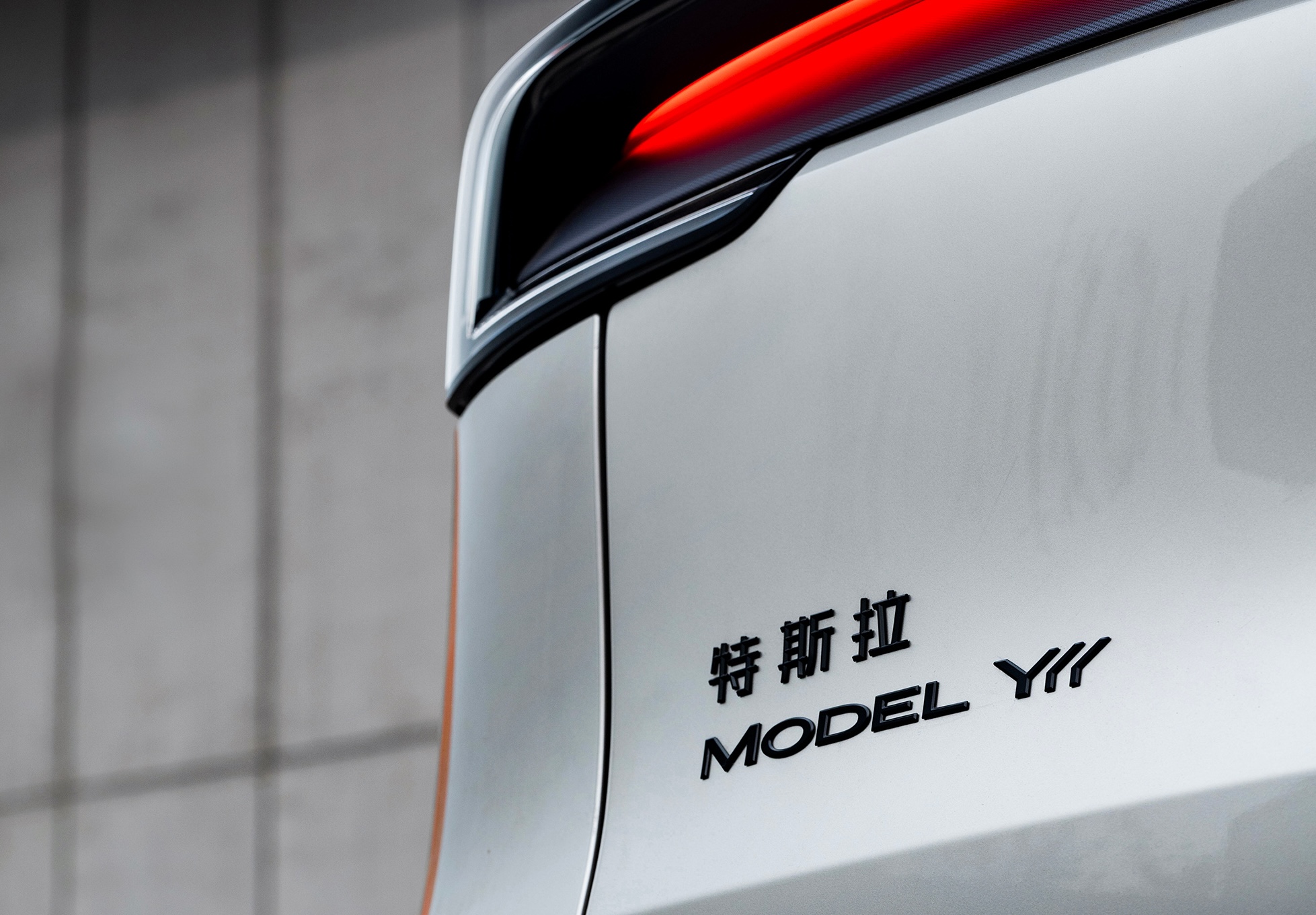
Tesla Model Y demand in China is through the roof, and new delivery dates show the company has already sold out its allocation of the all-electric crossover for 2025.
The Model Y has been the most popular vehicle in the world in both of the last two years, outpacing incredibly popular vehicles like the Toyota RAV 4. In China, the EV market is substantially more saturated, with more competitors than in any other market.
However, Tesla has been kind to the Chinese market, as it has launched trim levels for the Model Y in the country that are not available anywhere else. Demand has been strong for the Model Y in China; it ranks in the top 5 of all EVs in the country, trailing the BYD Seagull, Wuling Hongguang Mini EV, and the Geely Galaxy Xingyuan.
The other three models ahead of the Model Y are priced substantially lower.
Tesla is still dealing with strong demand for the Model Y, and the company is now pushing delivery dates to early 2026, meaning the vehicle is sold out for the year:
NEWS: New orders for all four Tesla Model Y trims in China are now officially sold out for 2025, as the factory’s remaining production capacity for the year has been fully allocated.
Estimated delivery dates for new orders now show January-February 2026. pic.twitter.com/Dfnu7yY58N
— Sawyer Merritt (@SawyerMerritt) December 1, 2025
Tesla experienced a 9.9 percent year-over-year rise in its China-made EV sales for November, meaning there is some serious potential for the automaker moving into next year despite increased competition.
There have been a lot of questions surrounding how Tesla would perform globally with more competition, but it seems to have a good grasp of various markets because of its vehicles, its charging infrastructure, and its Full Self-Driving (FSD) suite, which has been expanding to more countries as of late.
Tesla Model Y is still China’s best-selling premium EV through October
Tesla holds a dominating lead in the United States with EV registrations, and performs incredibly well in several European countries.
With demand in China looking strong, it will be interesting to see how the company ends the year in terms of global deliveries.

Elon Musk’s warning to legacy automakers: Tesla FSD licensing snub echoes EV dismissal

Waymo driverless taxi drives directly into active LAPD standoff


