Investor's Corner
How will Tesla perform in Mr. Trump’s America?

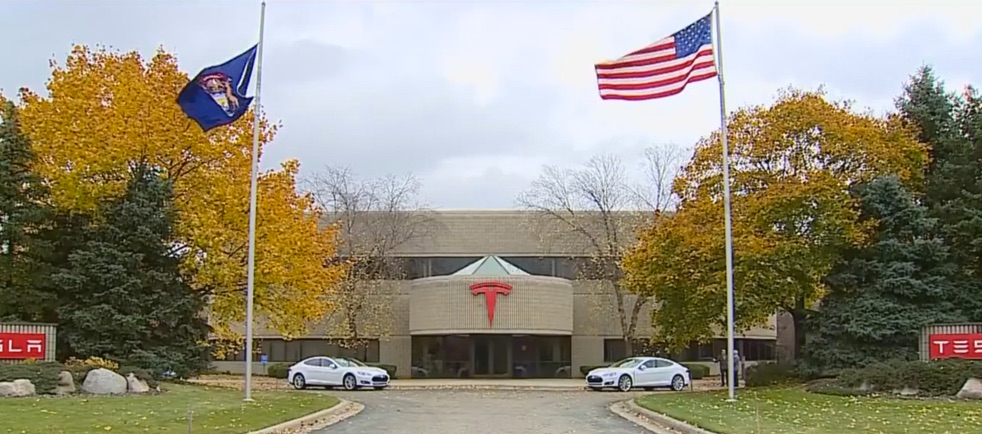
To say the results of the 2016 election were surprising is a gross understatement. That’s like saying the the national debt is rather a lot of money. What will a Trump presidency mean to Elon Musk and Tesla Motors? The answer is, it’s too early to tell. But we can make some (hopefully) educated guesses.
First and foremost, Trump is a champion of American companies providing jobs for Americans. Tesla has taken an abandoned factory in Fremont, California and turned it into one of the premier automobile manufacturing facilities in the world. And that’s just for openers.
Tesla has just announced it has acquired Grohmann Engineering, a highly respected German engineering firm located in in the city of Prüm near the border with Belgium and Luxembourg. With help from Grohmann, Musk wants to show the world how to increase production by a factor of ten by ‘building the machine that builds the machine’. That translates into higher productivity, something any businessman can understand.
Musk is committed to building a sustainable future while President-elect Trump is committed to a “Drill, baby, drill” mentality. Green Tech Media weighs in with the opinion that Trump will simply ignore the Paris climate accord and dismantle Obama’s Clean Power Plan. He undoubtedly will rein in the power of the EPA. What effect will that have on CAFE rules? We simply don’t know but no one should be surprised if vehicle efficiency targets for car companies become considerably watered down over the next few years.
Musk has always challenged the other car companies to build “compelling electric cars” but few have accepted the challenge. Most give the appearance of being dragged kicking and screaming into the zero emissions future while they continue to build every large truck and SUV they can weld, bolt, and screw together. One thing seems clear. Incentives for electric vehicles and for building a national EV charging infrastructure will likely be reduced in a Trump administration or eliminated all together.
That would not seem to be a major issue for Tesla Motors, whose current customers are mostly able to afford the products Tesla makes with or without incentives. But it could be an issue for at least some of the 373,000 Model 3 reservation holders. It is more likely that SolarCity’s rooftop solar business will be negatively impacted by a Trump administration. The President-elect has said publicly he doesn’t believe government should pick winners and losers in the commercial world. Utility companies may find it easier to resist encroachment on their business model from rooftop solar with Trump at the helm.
Elon told CNBC News on November 4 that he had hoped Donald Trump would not get the nomination and that Hillary Clinton’s climate policies were more in tune with his own preferences. He went on to say he now felt a bit stronger that Trump was “not the right guy, he just doesn’t seem to have the sort of character that reflects well on the United States.”
Will Musk and Trump be able to do business? Trump has to be a big supporter of American business but for Musk, the idea of his zero emissions cars with electricity derived from burning more coal and more natural gas extracted from our national parks and public lands has to be a bitter pill to swallow.
For the moment, America has said it doesn’t give a damn about sustainability, even though 60% of people tell the pollsters that building a green economy is high on their wish list. For now, “cognitive dissonance” is the order of the day. The people have spoken and their message is they want good jobs and lots of them sooner rather than later. A lot of people have taken Donald Trump at his word that he can provide them.
It is doubtful that Trumps’ victory will impact the fate of Tesla Motors or SolarCity negatively. Tesla has too much momentum built up and solar power is poised to supplant fossil fuels and nuclear simply because it costs less. Solar won’t need incentives if it is cheaper than the alternatives. Now electric cars will need to get less expensive to appeal to mainstream buyers.



Investor's Corner
Tesla Robotaxi gets a massive upgrade in Nevada
Nevada regulators just approved a massive expansion of Tesla’s robotaxi fleet across the entire county.

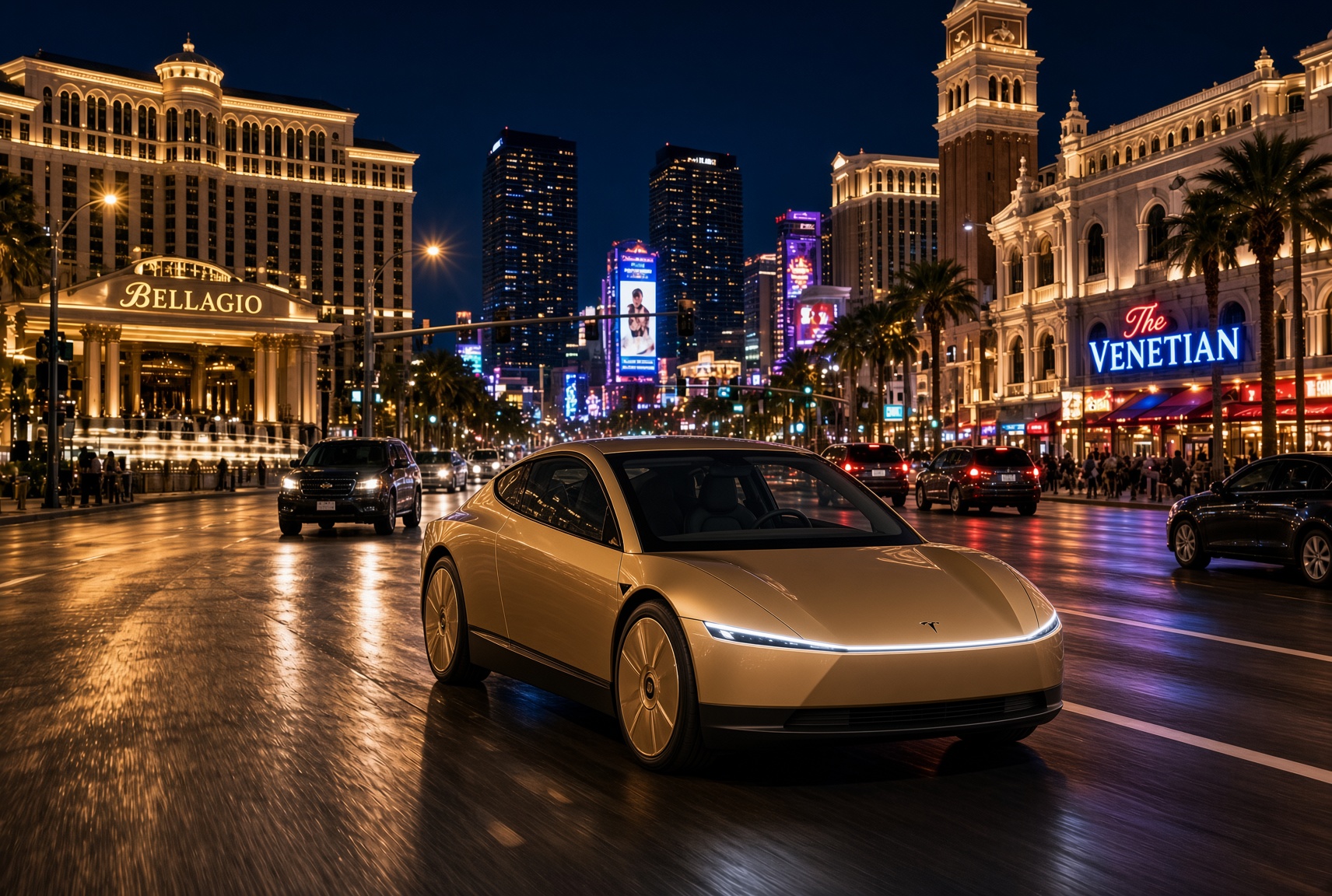
Tesla’s robotaxi footprint in Nevada just grew by roughly 500 times in a single regulatory vote.
The Nevada Transportation Authority approved Tesla’s full Autonomous Vehicle Network Company permit on Thursday, clearing the way for the company to deploy up to 5,000 driverless vehicles across Clark County over the next 12 months. The decision came during a four hour general session meeting that Tesla investor Sawyer Merritt watched live and reported on X, noting the vote replaces the interim order that had limited Tesla to just 10 robotaxis on a narrow stretch of the Las Vegas Strip.
EXCLUSIVE: Tesla has just officially received approval for its full Autonomous Vehicle Network Company permit in Nevada, clearing the way for Tesla to launch a paid public Robotaxi service in Las Vegas.
This officially allows @Tesla to deploy up to 5,000 robotaxis over the next… pic.twitter.com/DPs5UtUlrE
— Sawyer Merritt (@SawyerMerritt) August 20, 2026
That earlier cap, covered here after it surfaced on August 13, came with restrictions that looked stricter than what Tesla runs in Austin: a 45 mph speed ceiling, no airport pickups, and a geofence confined to the Strip corridor. The new approval extends Tesla’s operating authority to all of Clark County, with room to request an even wider geofence across the state.
Tesla representatives at the meeting said they have no intention of putting 5,000 cars on the road right away. Commercial rides are expected to start within 30 days, pending vehicle inspections, insurance filings, and fare approval, the standard steps every robotaxi operator in Nevada has had to clear.
Tesla’s own Robotaxi account replied to the news with a short line, The golden future is upon us.
The timing lines up with Tesla’s broader robotaxi push this month. The company is preparing to open Cybercab rides to the public in Austin as soon as this month, and it opened a sweepstakes for riders to win a seat at the launch event. Tesla filed its original application for a 5,000 vehicle Nevada fleet back in June, a request regulators trimmed to 10 vehicles when they issued the interim order in July. Thursday’s vote effectively grants the number Tesla asked for from the start.
Zoox, the Amazon owned robotaxi operator, has run in Nevada since 2025 and was capped at 100 vehicles before Thursday’s decision. Tesla’s new ceiling puts it well ahead of that comparison on paper, though the company has said its actual fleet size will depend on how quickly FSD v15 rolls out, the software update executives have called the gateway to scaling unsupervised robotaxi operations nationwide.

Elon Musk
SpaceX’s next trillion dollar bet has nothing to do with rockets, Musk tells staff
Elon Musk told SpaceX staff AI revenue will soon dwarf rockets and Starlink combined entirely.
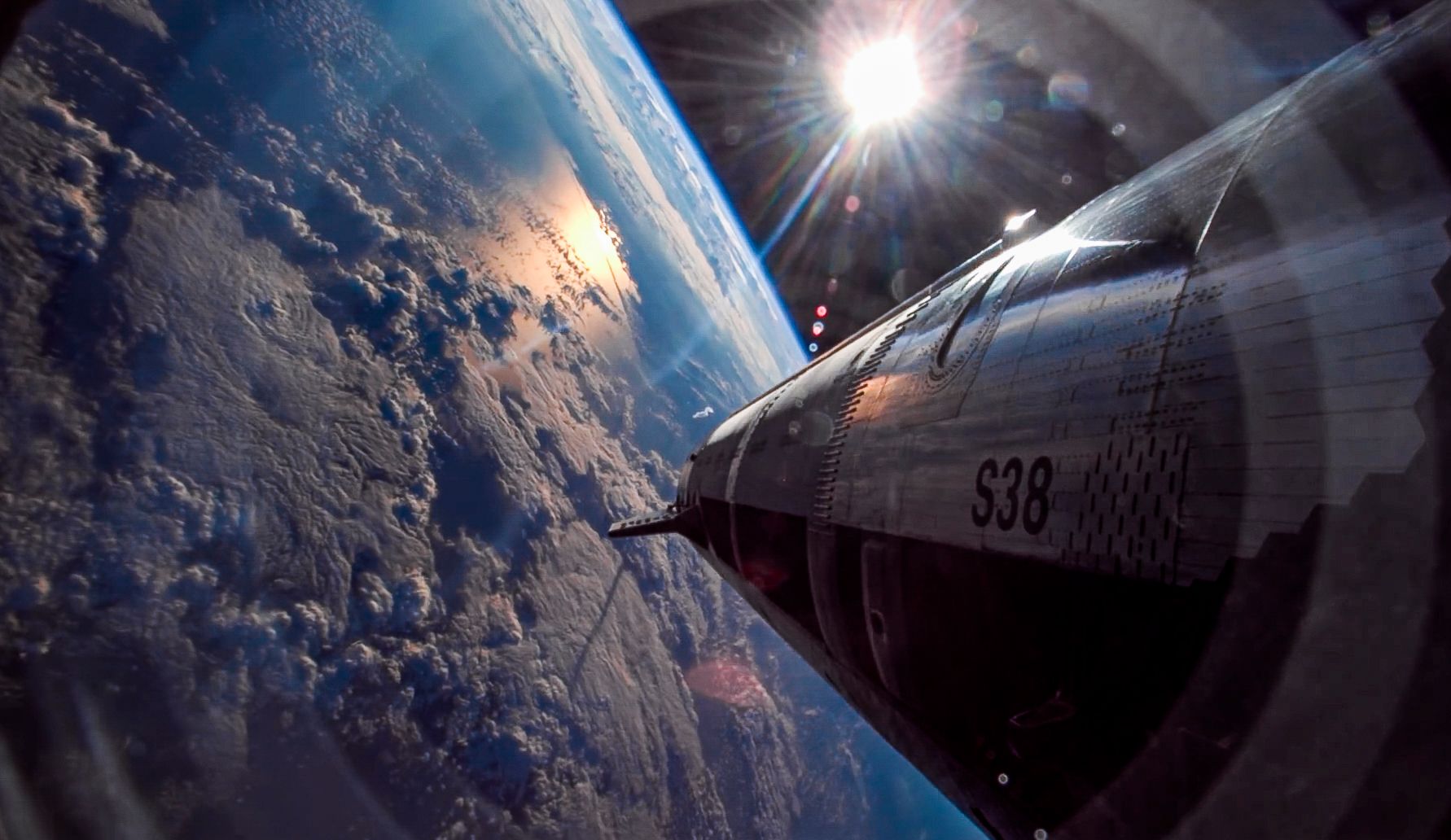
Elon Musk told SpaceX employees this week that artificial intelligence, not rockets, will soon carry the company’s revenue. In a roughly 29 minute internal address posted on SpaceX’s X account on Tuesday, Musk said AI revenue will pass every other line of business at SpaceX “probably in September” and pull further ahead by the fourth quarter.
The numbers he gave are specific. SpaceX currently runs 1.4 gigawatts of AI compute capacity. Musk wants that at 10 gigawatts by the end of 2027, a jump he tied directly to revenue: “if we bring 10GW of AI online by the end of next year, it will be $300 billion to $500 billion a year in revenue.” He called those “big numbers,” which undersells a projection larger than what most countries produce in a year.
We made rockets reusable and are rebuilding the internet in space. The next challenge: making life multiplanetary and understanding the true nature of the universe
Watch @ElonMusk deliver a company update to @SpaceX employees pic.twitter.com/5c8rxoCQfu
— SpaceX (@SpaceX) August 11, 2026
Musk went further on where AI fits into SpaceX’s future. “Probably in four or five years, AI will be 99% of the value of SpaceX,” he told staff, adding that digital intelligence would eventually run “a trillion times” ahead of biological intelligence as computing scales. He tied that growth to the company’s founding mission, telling employees “we must win on AI, because the future is overwhelmingly AI and robots,” with the payoff meant to help fund Starship and a Mars program that increasingly runs through Terafab, the joint Tesla, SpaceX and xAI chip plant.
Elon Musk launches TERAFAB: The $25B Tesla-SpaceXAI chip factory that will rewire the AI industry
None of this is entirely new territory. SpaceX told investors much the same story during its first earnings call as a public company on August 4, where Musk moved the company’s $1 trillion revenue target up a year to 2030 and said Starlink could someday carry a majority of the world’s internet. What the all hands video adds is a hard deadline and a specific power figure Musk had not given publicly before, along with a franker pitch to his own workforce that AI, not launch cadence, is now the thing SpaceX is betting its future on.
The AI revenue itself is not coming from SpaceX training its own models. It is largely Starlink acting as the network layer for xAI’s workloads, plus SpaceX renting out compute capacity directly, the same approach behind the roughly $16 billion the company spent on AI infrastructure in a single quarter.
Musk closed the video with a pitch aimed at recruiting and retention rather than investors, telling employees that anyone who helps SpaceX win the AI race will eventually get the chance to go to the moon or Mars themselves. Whether SpaceX can turn 1.4 gigawatts into 10 in seventeen months is the more immediate question, and one that will show up in quarterly numbers well before anyone leaves Earth.


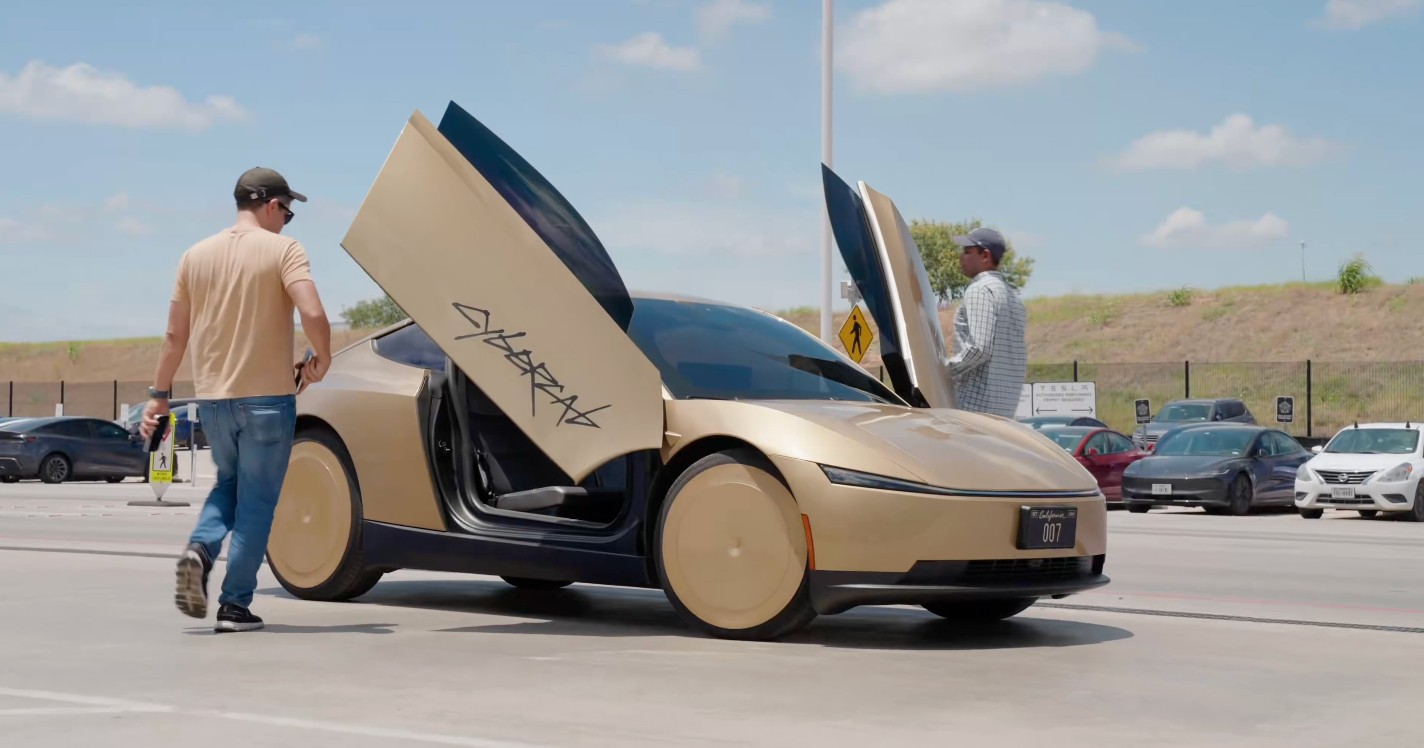
In a new note to investors on Tuesday, Morgan Stanley analyst Andrew Percoco said that Tesla has one big financial question to answer for investors regarding its Robotaxi rollout, Full Self-Driving software, and Optimus.
Percoco said in the note that, for the most part, investors are still very positive about the direction the company is headed. However, there are some things the firm would like to see, and they have to do with financials.
Tesla (TSLA) Q2 2026 earnings results: miss on EPS, beat on revenue
Tesla bulls are more than convinced that the company’s Full Self-Driving software is proof it can develop physical AI. Financially, however, there are still some questions, especially on elevated spending, which CEO Elon Musk said would occur as the company works to roll out Robotaxi faster and continue developing its Optimus robot.
The latter two are where Tesla will have to prove progress to investors, as Percoco writes that both projects “will require clearer evidence that Robotaxi is scaling and more tangible Optimus proof points to support the ROI on elevated capex.”
Percoco said the second quarter earnings call did not change his long-term thesis of where Tesla is positioned in the AI race, which is out in front. However, there are concerns that weaker gross margins and higher R&D spend will stress financials, and that has “sharpened our (and investors’) focus on measurable progress across Robotaxi and Optimus.”
Additionally, Robotaxi still needs to be proven with more operation in existing cities while maintaining safety but improving how many rides it gives in any given time, he said. For Optimus, Percoco wrote that he is “still looking for evidence beyond commentary around SOP.”
Morgan Stanley put Percoco in charge of covering Tesla after long-time analyst Adam Jonas transitioned to the automotive side.
Currently, Morgan Stanley has a $415 price target on Tesla and a ‘Hold’ rating on the stock. It is trading at around $330 at the time of publication, which was 2:30 P.M. on the East Coast.

Tesla will launch Cybercab on September 3

SpaceX and a new Trump order that could rewrite the next decade of launches


