News
Tesla Applies For Michigan Dealer’s LIcense
Tesla has applied for a Class A dealer’s license in Michigan according to the Detroit News. Is this the latest strategy to force Michigan to permit Tesla to sell cars its way within the state?

Tesla is ratcheting up its war with the state of Michigan. According to the Detroit News, Tesla submitted an application to the Michigan Secretary of State’s office for a license to sell and service automobiles in Michigan last November. At the request of that office, Tesla submitted follow-up information in recent weeks. At this moment, it is unclear who at Tesla initiated the applications.
Fred Woodham, a spokesman for the Secretary of State’s office, said the department is reviewing the applications and a decision is expected “in the next month or two.” He would not elaborate on what additional information was requested, saying it “isn’t uncommon during the application review process.”
According to an e-mail Woodham sent to the Detroit News on January 31, Tesla applied for a Class A dealership license to sell new and used cars. A Class A dealer is required to have a “repair facility as part of their business or have an established relationship with a licensed repair facility,” according to Woodham.
The filing was first reported by Michigan Information & Research Service Inc., which is located in Lansing. It says if granted a license, Tesla could contract with anyone except itself to sell its cars. It could even dispatch a former employee to open a dealership in the state, specifying in the franchise agreement that the “dealership look, act and do business exactly as the Tesla-run stores.”
Tesla currently has about 400 customers in Michigan. There are 4 Supercharger locations within the state and the company website indicates a Tesla service facility in the Detroit area is coming soon. The Detroit News reached out to Tesla for a comment on the story but received no response from the company. It is possible Elon Musk may offer a clarification during the 4th quarter earnings call scheduled for February 10.
Tesla has been locked in a tug of war with the Michigan legislature for several years. Michigan is home to Ford, General Motors, and Chrysler. None of those companies wants to see Tesla successfully challenge the franchise dealer sales model that has been the norm in the industry for generations. It is believed the major auto manufacturers have been pressuring the legislature to preserve the current system.
But Tesla is a formidable ally. It protested by boycotting the North American International Auto Show in Detroit last month, saying it would not help others sell cars in Michigan if it could not do so itself. This new gambit may substantially weaken the protectionist wall Michigan’s auto dealers and manufacturers have built around themselves.
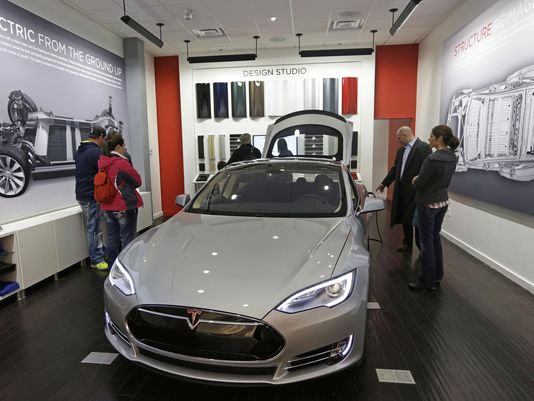
Photo credit of Tesla store in Cincinnati: Al Behrman/AP via Detroit News
Related News



Elon Musk said he is planning to give “every one of his SpaceX shares to every kid in America” in 2027, stating that “this will be the first of many.”
SpaceX went public earlier this year, and its stock price has been relatively stable since leveling off shortly after its IPO. Based on its current price, it’s a gift of just over $10 billion to children across the United States.
It appears to be closely related to President Donald Trump’s bank accounts for children, which were set up earlier this year as Trump Accounts.
Just hours earlier, Anthropic had announced the establishment of its Anthropic Public Benefit Fund, “a new wholly-owned entity dedicated entirely to public benefit.” Musk responded by stating he recommended “giving the shares directly to the public,” and that he would be doing it that way.
Just a little bit later, Musk said children across the U.S. would be getting a share from him:
Next year, I will give one of my SpaceX shares to every kid in America.
This will be the first of many.
— Elon Musk (@elonmusk) October 19, 2026
There are roughly 70 million children, meaning someone under the age of 18, in the United States, according to the Federal Interagency Forum on Child and Family Statistics. Musk’s ownership of SpaceX stock shows he has around 849 million Class A shares of SpaceX stock, according to filings with the SEC.
Elon Musk revealed in a post on X that “Permits were impossible to get,” explaining the fate of The Boring Company’s most ambitious East Coast proposal.
The comment responded to a query about what became of his July 20, 2017 announcement that he had “just received verbal govt approval” for an underground Hyperloop connecting New York City, Philadelphia, Baltimore, and Washington, D.C., capable of carrying passengers from the Big Apple to the Nation’s Capital in just 29 minutes.
The Boring Company receives verbal ‘approval’ to build NY to DC Hyperloop tunnel
The 2017 post, which envisioned city-center stations and multiple elevators in each city, sparked immediate scrutiny. Local and state officials in New York, Philadelphia, Baltimore, and D.C. said they had no knowledge of any approval. A White House spokesperson confirmed only “promising conversations” about the transformative infrastructure.
Musk clarified shortly after that there was “still a lot of work” to do for formal approvals.
@cybrtrkguy Permits were impossible to get
— Elon Musk (@elonmusk) October 19, 2026
Limited progress followed, as Maryland Governor Larry Hogan’s administration issued a conditional utility permit and supported work near Fort Meade. In 2018, Washington, D.C., granted a preliminary permit for site preparation and excavation on a vacant lot at 53 New York Ave. NE in the NoMa neighborhood, which The Boring Company said could become a station.
A draft environmental assessment for a D.C.-Baltimore segment was released in 2019. Yet, by April 2021, the company had removed the project from its website, and the Federal Highway Administration reported receiving no indication of further interest. Communication with Maryland officials had ceased.
The full corridor would have required coordination among the District of Columbia, Maryland, Pennsylvania, New York, the Federal Highway Administration, the Army Corps of Engineers, the National Park Service, and other agencies.
Environmental reviews under the National Environmental Policy Act, utility clearances, and approvals for novel infrastructure added to the overall complexity of the project and its approval.
Speculation on the permitting barriers centers around a few factors, but a multi-state, multi-level route involving unproven high-speed vacuum-tube technology inherently triggers exhaustive safety, environmental, and engineering reviews that can stretch for years, even for conventional projects.
There are also other elements, of course, like officials who may face political exposure if a privately funded, untested system encountered anything such as cost overruns, delays, or safety issues. On the outset of this project, there were limited things such as engineering plans or demonstrated technology maturity, which also added to the potential skepticism.
The East Coast vision for Boring Co., once framed as a privately funded revolution that could reshape Northeast travel, quietly ended without construction of the promised network. Musk’s recent statement frames the outcome as a regulatory impasse, unfortunate but not unexpected.
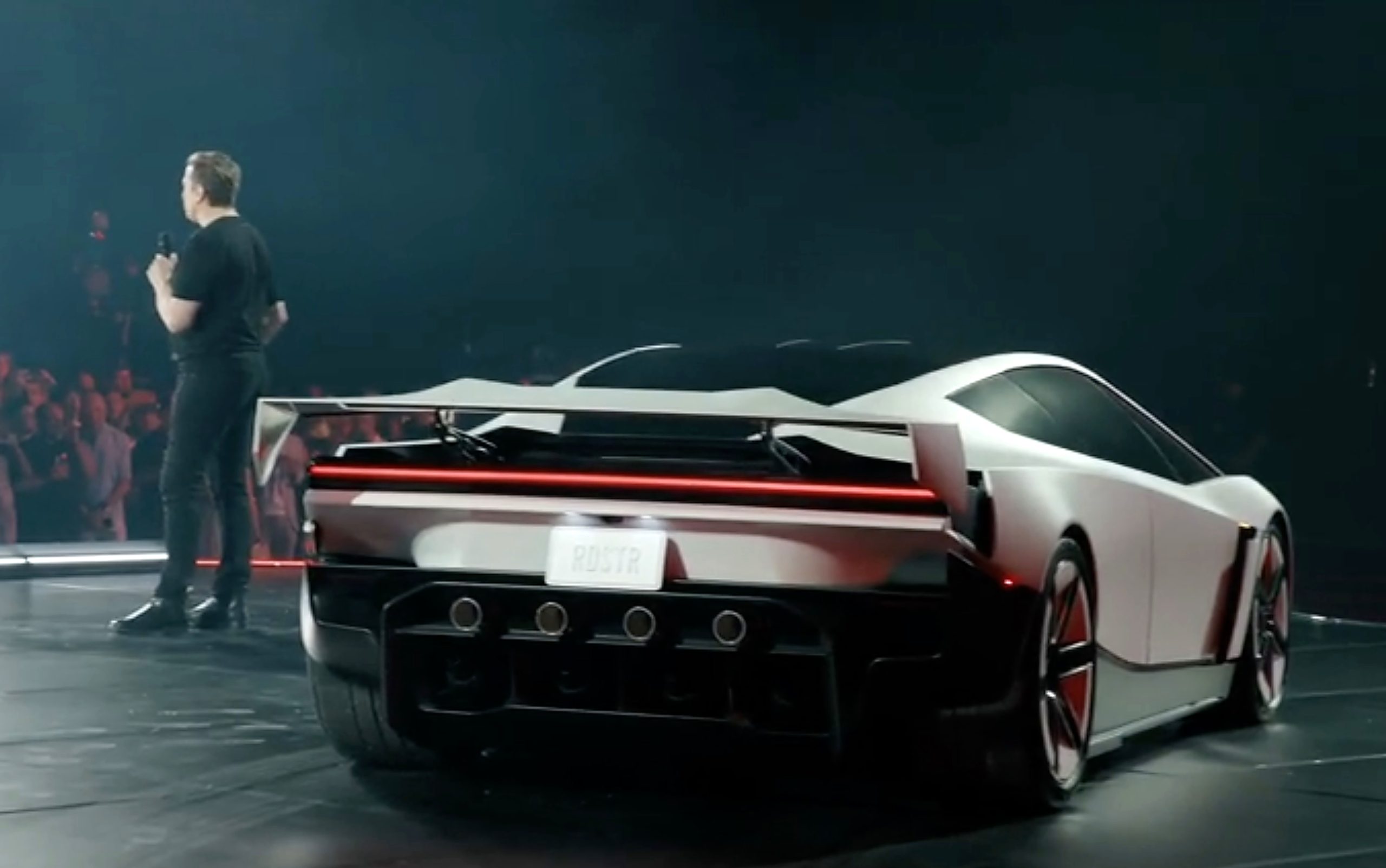
Tesla CEO Elon Musk took to his social media platform X on Sunday to remind everyone that the Roadster’s true meaning is not about company growth or adding dollars to shareholders’ pockets. Sometimes, you just do things because you can.
Following the Roadster’s epic unveiling event last Thursday, skeptics and critics of the company or the project itself came out to say that the vehicle is a pointless project because it is not geared toward growing the company, delivering supreme margins for profitability, nor does it contribute to the big picture of Artificial/Super Intelligence.
But that’s just the thing: Roadster is not meant to be some shareholder dream; it’s meant to be a vehicle that people buy just because it is something awesome, unique, and the first of its kind.
Tesla Roadster: Three configs, one can fly, 0-60 in 0.8 seconds
Musk had to remind those who are skeptical about the Roadster’s importance to the company mission that while it is not a major contributor to Tesla’s long-term goals, it is something that is being built just because it can be:
“Optimus and Cybercab will be the vast majority of Tesla’s value. The only things that will scale to incredible size (K2 and beyond) economically are super intelligence, robots, solar power, and mass to space. And, of course, if you have the first two, the rest will follow. But Roadster is super cool, so we’re doing it anyway.”
Musk has said on many occasions that Optimus would be the project that would make up the vast majority of Tesla’s value in the coming years.
Robotics will be a major focus of Tesla over the coming years, especially as Musk believes Optimus will enable work to be optional for humans and will enable what he calls “High Universal Income.”
Optimus and Cybercab will be the vast majority of Tesla’s value.
The only things that will scale to incredible size (K2 and beyond) economically are super intelligence, robots, solar power and mass to space.
And, of course, if you have the first two, the rest will follow.
But Roadster is super cool, so we’re doing it anyway.
— Elon Musk (@elonmusk) October 18, 2026
Cybercab will be a passive income opportunity for owners, Musk and Tesla have said for a very long time, as a fleet of self-driving vehicles will operate within a ride-hailing Robotaxi service that won’t require a human driver to be present.
Tesla investors are more than enthusiastic about the company’s future projects, at least from a general consensus perspective. However, it is important to note that the Roadster is a fun and cool project that pushes the boundaries of what people thought was possible for an automobile.
What we saw last week was the first true example of a flying car, and despite the backlash about how it might not contribute to Tesla’s grand ambitions, it’s okay to have fun sometimes, too.

Elon Musk will give ‘every kid in America’ a SpaceX share in 2027

Elon Musk reveals why Boring Co’s biggest East Coast project never happened

Tesla CEO Elon Musk reminds everyone about Roadster’s true meaning

SpaceX reveals how its 1 Million AI satellite network will work and prevent space collisions
Tesla Roadster: Three configs, one can fly, 0-60 in 0.8 seconds


