Elon Musk
Tesla CEO Elon Musk reminds everyone about Roadster’s true meaning

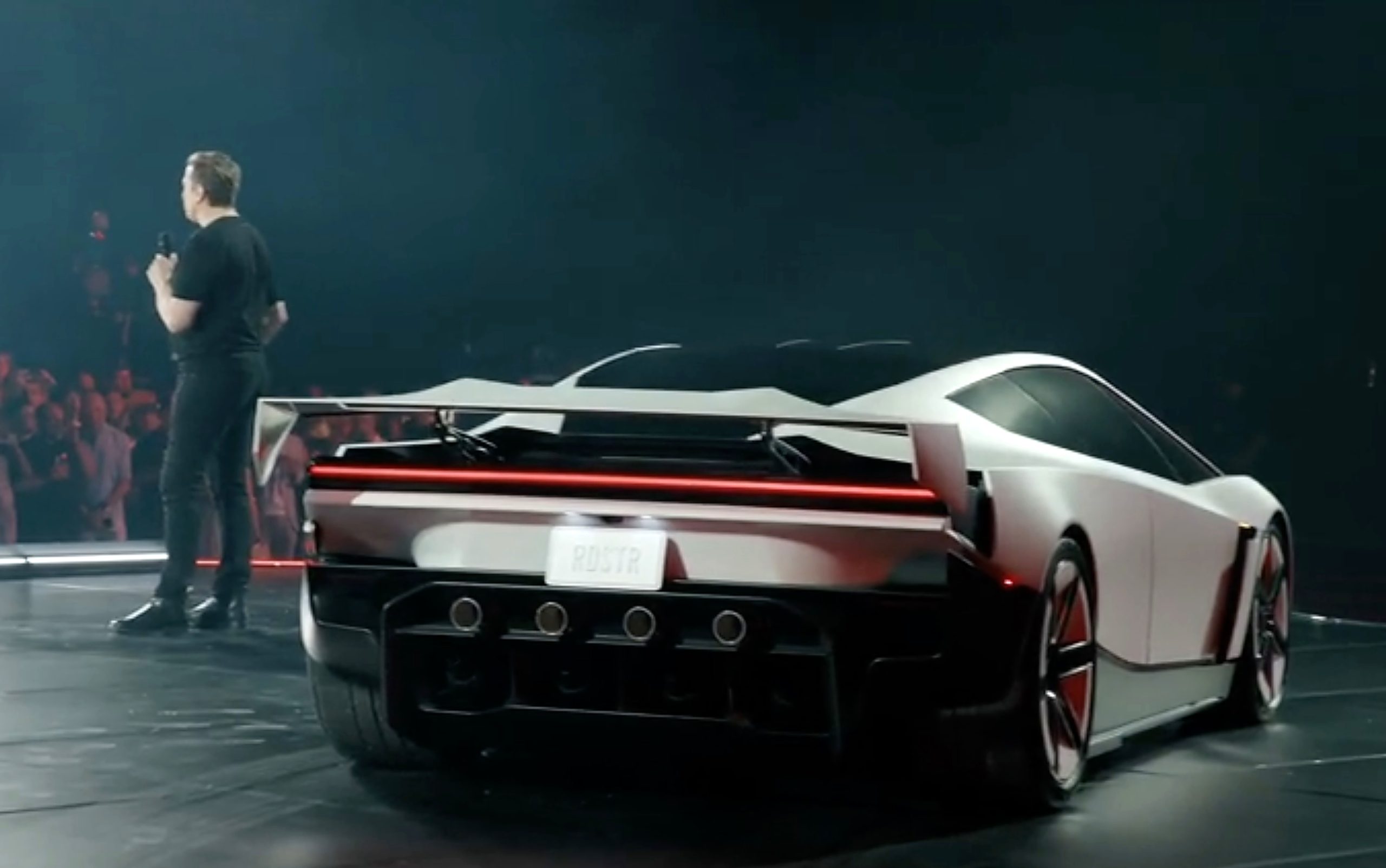
Tesla CEO Elon Musk took to his social media platform X on Sunday to remind everyone that the Roadster’s true meaning is not about company growth or adding dollars to shareholders’ pockets. Sometimes, you just do things because you can.
Following the Roadster’s epic unveiling event last Thursday, skeptics and critics of the company or the project itself came out to say that the vehicle is a pointless project because it is not geared toward growing the company, delivering supreme margins for profitability, nor does it contribute to the big picture of Artificial/Super Intelligence.
But that’s just the thing: Roadster is not meant to be some shareholder dream; it’s meant to be a vehicle that people buy just because it is something awesome, unique, and the first of its kind.
Tesla Roadster: Three configs, one can fly, 0-60 in 0.8 seconds
Musk had to remind those who are skeptical about the Roadster’s importance to the company mission that while it is not a major contributor to Tesla’s long-term goals, it is something that is being built just because it can be:
“Optimus and Cybercab will be the vast majority of Tesla’s value. The only things that will scale to incredible size (K2 and beyond) economically are super intelligence, robots, solar power, and mass to space. And, of course, if you have the first two, the rest will follow. But Roadster is super cool, so we’re doing it anyway.”
Musk has said on many occasions that Optimus would be the project that would make up the vast majority of Tesla’s value in the coming years.
Robotics will be a major focus of Tesla over the coming years, especially as Musk believes Optimus will enable work to be optional for humans and will enable what he calls “High Universal Income.”
Optimus and Cybercab will be the vast majority of Tesla’s value.
The only things that will scale to incredible size (K2 and beyond) economically are super intelligence, robots, solar power and mass to space.
And, of course, if you have the first two, the rest will follow.
But Roadster is super cool, so we’re doing it anyway.
— Elon Musk (@elonmusk) October 18, 2026
Cybercab will be a passive income opportunity for owners, Musk and Tesla have said for a very long time, as a fleet of self-driving vehicles will operate within a ride-hailing Robotaxi service that won’t require a human driver to be present.
Tesla investors are more than enthusiastic about the company’s future projects, at least from a general consensus perspective. However, it is important to note that the Roadster is a fun and cool project that pushes the boundaries of what people thought was possible for an automobile.
What we saw last week was the first true example of a flying car, and despite the backlash about how it might not contribute to Tesla’s grand ambitions, it’s okay to have fun sometimes, too.
Interested in ordering a Tesla? Use my referral code for three free months of Full Self-Driving (Supervised) here.


Elon Musk
SpaceX Starship is going for a catch that could change spaceflight forever
SpaceX will try to catch both Starship stages today, a first for any orbital rocket.

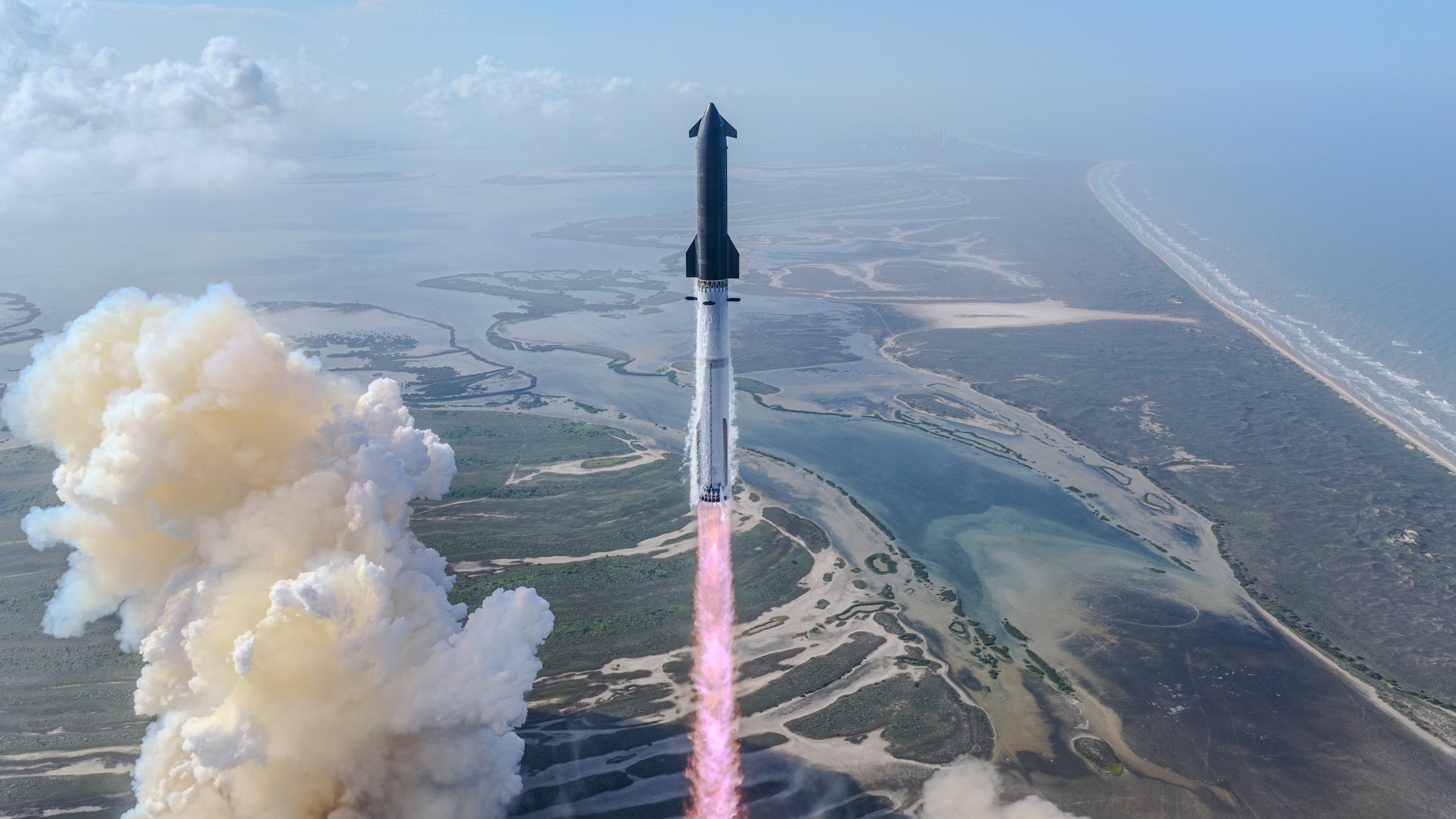
SpaceX is set to launch Starship Flight 15 from Starbase on Friday afternoon, and if both stages make it back to the tower, the mission will go down as the first time an orbital rocket has ever been fully recovered. The 75 minute launch window opens at 4:45 p.m. CT from Pad 2, a day after SpaceX rolled Ship 42 out to the pad and shared photos of the move on X.
The first catch comes quickly. About six and a half minutes after liftoff, Booster 22 is scheduled to fly back to Starbase and settle into the launch tower’s chopstick arms, the first catch attempt for SpaceX’s V3 Super Heavy. SpaceX has caught the booster three times before most recently in March 2025.
Ship 42 moves to the Starbase pad ahead of launch https://t.co/pMUFTHneJQ — SpaceX (@SpaceX) November 13, 2026
The second catch is the one that has never been done. Ship 42 will climb to an orbit about 275 kilometers up, deploy 26 Starlink V3 satellites and complete about 14 orbits. Three of those satellites carry cameras to inspect the ship’s heat shield before it commits to coming home. If its reentry, landing burn and tower approach systems pass their checks, the ship will fire its engines to leave orbit, fall through the atmosphere in its belly flop position, flip vertical and drop into the tower about 22 and a half hours after launch, on Saturday afternoon. SpaceX gave a preview of that maneuver in an animation during its third quarter earnings webcast.
Elon Musk described a successful double catch on that call as “the first time that an orbital launch vehicle has been fully recovered” and a “profound technology milestone,” putting the odds of catching the ship at “more likely than not.” SpaceX has called it a potential “breakthrough moment in making Starship a reliable, rapidly reusable rocket,”
Reuse is where the economics change. Falcon 9 lands its boosters routinely, but its upper stage is thrown away on every flight. Starship is designed so both stages can be refueled and flown again, which is key to cutting launch costs. That matters for Starlink, where each V3 satellite is expected to carry roughly 10 times the download capacity of the V2 Mini satellites flying today, and for Starmind, SpaceX’s planned constellation of AI compute satellites.
It matters for NASA too. Starship is the lunar lander for the Artemis program, and reaching the Moon requires refilling a ship in orbit using several tanker flights. That plan only works if Starships can fly again and again. Musk has said he expects Starship to reach a weekly launch cadence in the first half of 2027.
Investors are paying attention. Morgan Stanley’s Adam Jonas wrote this week that a catch of both stages would likely be “a material positive” for SpaceX stock.
The last Starship flight in September reached orbit for the first time but ended after about three hours with a splashdown in the Pacific, short of its planned 10 hours, after some engines shut down. Since then, Booster 22 has completed a full 33 engine static fire and Ship 42 a six engine firing, as Teslarati previously reported. As of Friday morning, SpaceX was still waiting on the FAA to approve a license change covering the ship’s return over land.
Elon Musk
Tesla and SpaceX merger talks hit a new stage, and one hurdle remains
Tesla and SpaceX merger talks are reportedly advancing, and a deal could arrive by December.
Tesla and SpaceX are moving closer to a combination, with a deal announcement possible as soon as December, Bloomberg reported on Thursday, citing people familiar with the matter. The companies have also discussed a scenario in which the announcement slips into early 2027.
Boards and advisers on both sides are now working through the terms of the deal and the governance structure of the combined company, according to the report. One open item is how many SpaceX shares Tesla investors would receive. Bloomberg had previously reported that the two companies were aiming to announce a deal in the first half of next year and close it before the end of President Donald Trump’s term, so a December announcement would pull that schedule forward by months.
Tesla shares rose as much as 1.9% to $398.35 after the report, while SpaceX gained 0.6% to $140.63. SpaceX carries a market value of about $1.9 trillion following its June IPO, and Tesla is valued at about $1.55 trillion, which would make a combination the largest corporate deal on record. Neither company responded to requests for comment.
The talks became official on October 20, when Elon Musk said on SpaceX’s third quarter earnings call that both companies had formed special committees of independent directors to study a merger, as Teslarati reported. Musk said he could not take part because he is “a conflicted party” and called the process “an odd kabuki dance.” He also noted that Tesla would need approval from 50 percent of all outstanding shares, a bar the company missed in 2025 when a board declassification proposal won support from only 39.4 percent.
China remains the biggest structural problem. Bloomberg’s sources said the companies still need to work out how to isolate Tesla’s large and profitable manufacturing business in China from SpaceX’s U.S. government and defense contracts. JPMorgan analyst Rajat Gupta described those two factors last month as “key dynamics that are at odds with each other” for regulatory and shareholder approval. Musk has repeatedly said Tesla has no plans to separate its China business, a position he restated in August after ARK Invest predicted a merger announcement before the end of the year.
Washington adds another layer. Democrats took control of Congress in this month’s midterms and have pledged to investigate Musk’s business and political activities, which could bring added scrutiny to a deal involving one of the Pentagon’s most important launch and satellite contractors.
The report also lands three weeks before Tesla’s December 3 annual meeting at Giga Texas. That ballot has only three items, led by the re-election of Musk, board chair Robyn Denholm and JB Straubel, and includes no merger proposal. Any deal announced in December would likely require a separate special meeting for Tesla shareholders to vote on it.
The two companies already share a growing list of projects, including the Terafab semiconductor plant in Texas. Tesla’s next generation Roadster, which uses cold gas thrusters built on SpaceX hardware, turned up on display at SpaceX headquarters last month and has become one of the clearest public examples of that overlap.
Elon Musk
Nvidia’s board meets on Jensen Huang, and Elon Musk already has an answer
Elon Musk says it would be an honor to hire Jensen Huang amid Nvidia turmoil.
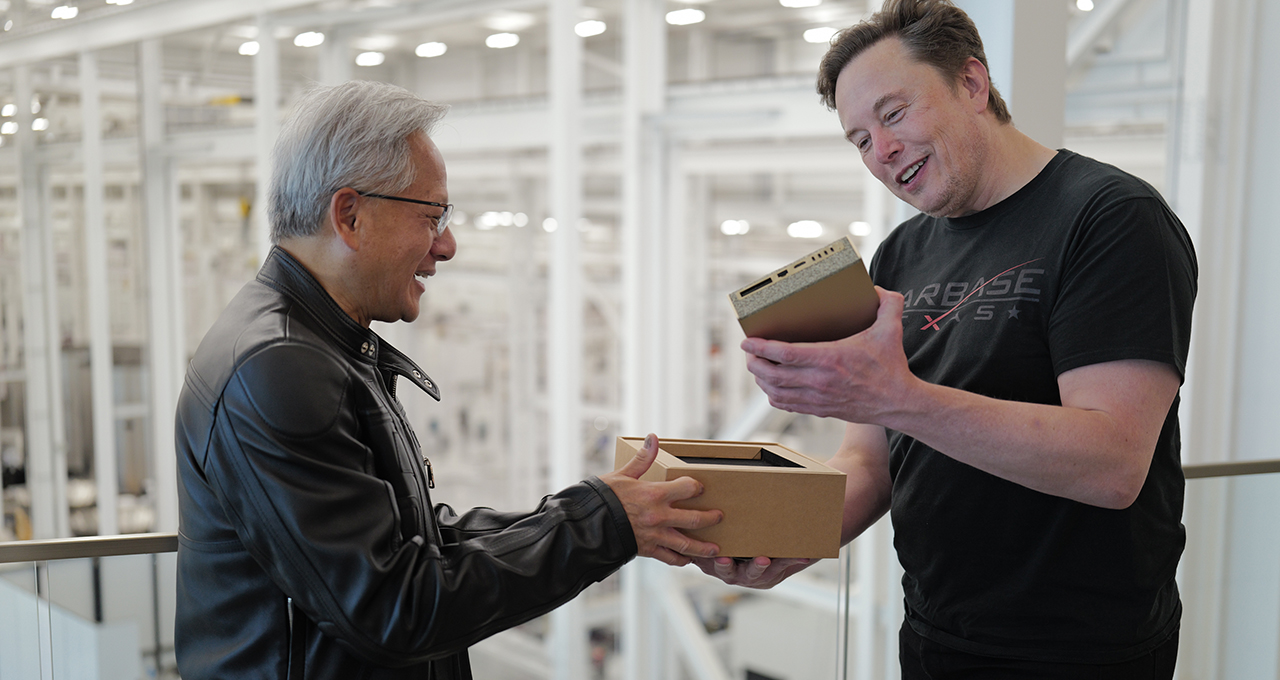
Elon Musk says he would welcome Jensen Huang at one of his companies if Nvidia’s board decides to push out its longtime chief executive.
On Wednesday evening, the financial account ZeroHedge posted “Elon please hire Jensen” on X. Musk replied roughly two hours later: “That would be an honor.” Neither Huang nor Nvidia had responded publicly as of Wednesday night.
Musk’s reply came as Nvidia’s board met to decide Huang’s future. The Wall Street Journal reported that directors were preparing to oust him following reports of two extramarital relationships. One involves Alice Huang, a Singapore-based businesswoman whom U.S. intelligence officials reportedly believe was working for China’s Ministry of State Security. The New York Times separately reported a relationship with Kimberly Powell, Nvidia’s vice president of health care. Huang acknowledged being unfaithful in a memo to employees on Sunday but gave no details.
@zerohedge That would be an honor
— Elon Musk (@elonmusk) November 12, 2026
Under Nvidia’s bylaws, a majority of its 11 directors can remove the CEO with or without cause. Bloomberg reported that the board has been working with an outside firm on possible replacements and may name an interim chief, with CFO Colette Kress seen as the likely pick. Nvidia shares fell more than 8 percent in extended trading, according to CNBC, and the company is scheduled to report quarterly earnings on November 17.
Musk has more riding on Nvidia’s leadership than most tech executives. In August, he told investors on SpaceX’s first earnings call as a public company that it would build its AI infrastructure exclusively on Nvidia hardware, calling Vera Rubin “the best architecture.” SpaceX is also working with Nvidia on the compute payload for Starmind, its planned orbital AI constellation. In October, SpaceX said it had a binding commitment for a roughly $40 billion lease of Vera Rubin GPUs and related equipment, with the leases expected to begin in the first half of 2027.
The scale of that dependence is already enormous. On its Q3 call, SpaceX said it was bringing roughly 200,000 to 220,000 Nvidia GB300 GPUs online each month and expects 2.5 to 3 GW of nameplate compute by the end of the year. That buildout is now reaching new sites like the proposed $24 billion power plant and supercomputer campus at Starbase.
The relationship between the two executives also goes back nearly a decade. Huang has often told the story of personally delivering Nvidia’s first DGX-1 AI supercomputer to Musk in 2016, when no other customer wanted one. “Nobody wanted to be part of it, except for Elon,” Huang said on the Joe Rogan Experience last December.
Musk did not say what role Huang might fill, and his reply stops short of a formal offer. Huang co-founded Nvidia in 1993 and still owns about 3.6 percent of its stock, so any move to a Musk company would depend on whether, and how, he leaves the chipmaker he has run for more than three decades.

Tesla Cybercab ownership will come with plenty of strings attached

Tesla Cybercab goes on sale for $29,990, slated for December deliveries


