News
Driver of Model X crash in Montana pens open letter to Musk, calls Tesla drivers “lab rats” [Updated]

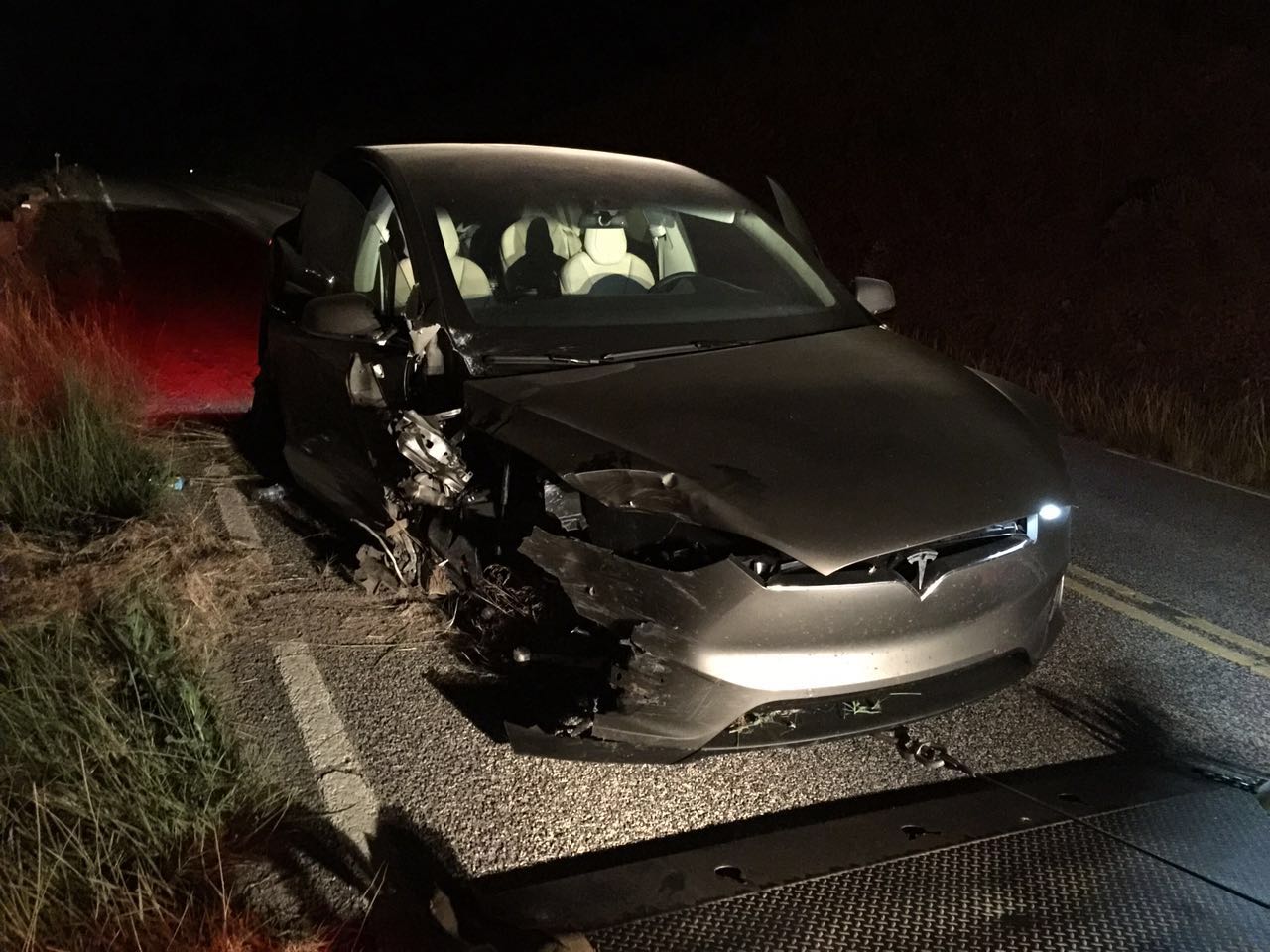
Pang, the driver of the Model X that crashed in Montana earlier this month has posted an open letter to Elon Musk and Tesla asking the company to “take responsibility for the mistakes of Tesla products”. He accuses Tesla for allegedly using drivers as “lab rats” for testing of its Autopilot system.
In an email sent to us and also uploaded to the Tesla Motors Club forum, Pang provides a detailed account of what happened the day of the crash. He says he and a friend drove about 600 miles on Interstate 90 on the way to Yellowstone National Park. When he exited the highway to get on Montana route 2, he drove for about a mile, saw conditions were clear, and turned on Autopilot again. Pang describes what happened next as follows:
“After we drove about another mile on state route 2, the car suddenly veered right and crashed into the safety barrier post. It happened so fast, and we did not hear any warning beep. Autopilot did not slow down at all after the crash, but kept going in the original speed setting and continued to crash into more barrier posts in high speed. I managed to step on the break, turn the car left and stopped the car after it crashed 12 barrier posts.
“After we stopped, we heard the car making abnormal loud sound. Afraid that the battery was broken or short circuited, we got out and ran away as fast as we could. After we ran about 50 feet, we found the sound was the engine were still running in high speed. I returned to the car and put it in parking, that is when the loud sound disappeared.”
Pang goes on to explain how his Tesla Model X driving on Autopilot continued to travel on its own even after veering off the road and crashing into a roadside stake. “I was horrified by the fact that the Tesla autopilot did not slow down the car at all after the intial crash. After we crashed on the first barrier post, autopilot continued to drive the car with the speed of 55 to 60 mph, and crashed another 11 posts. Even after I stopped the car, it was still trying to accelerate and spinning the engine in high speed. What if it is not barrier posts on the right side, but a crowd?”
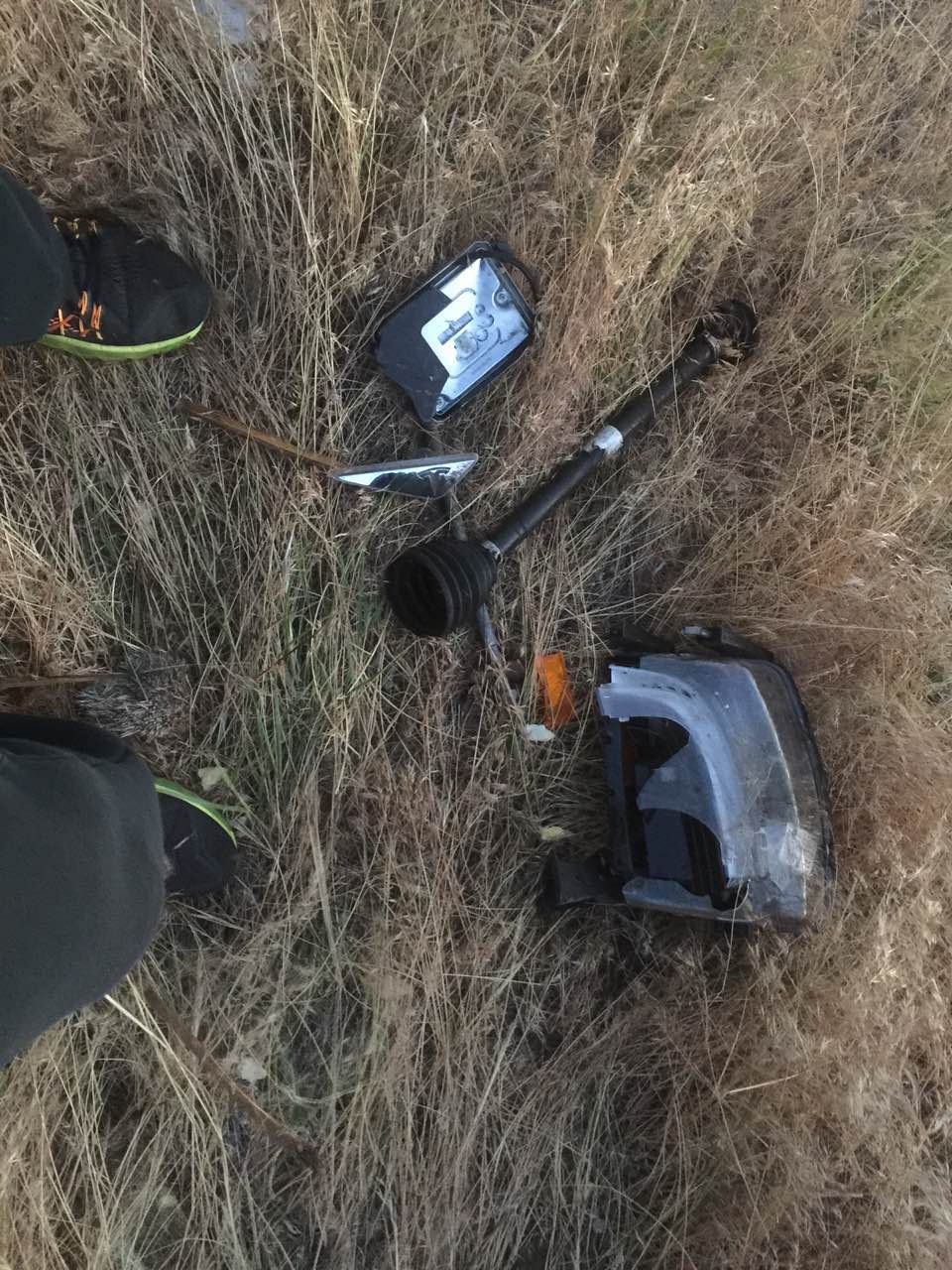
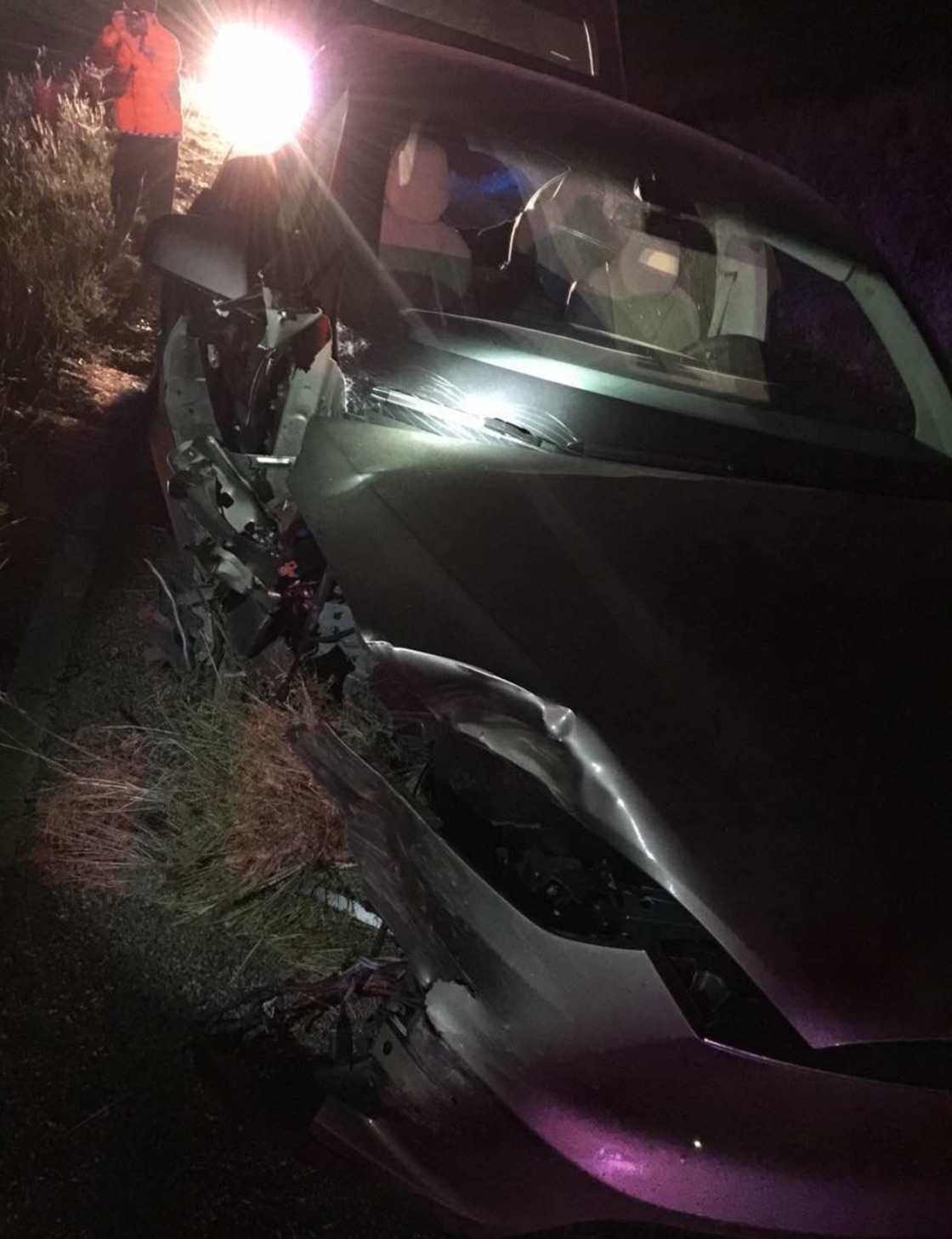
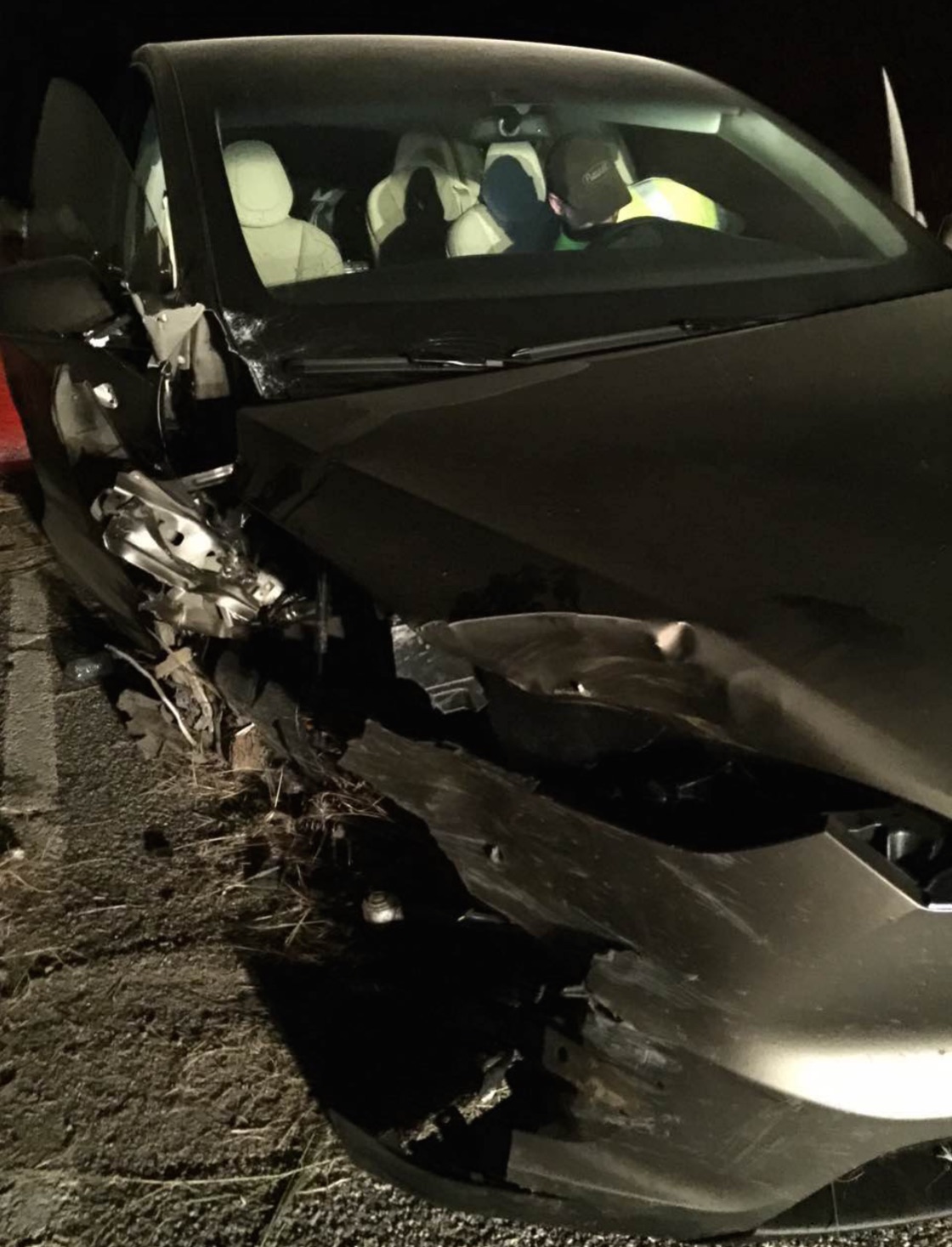
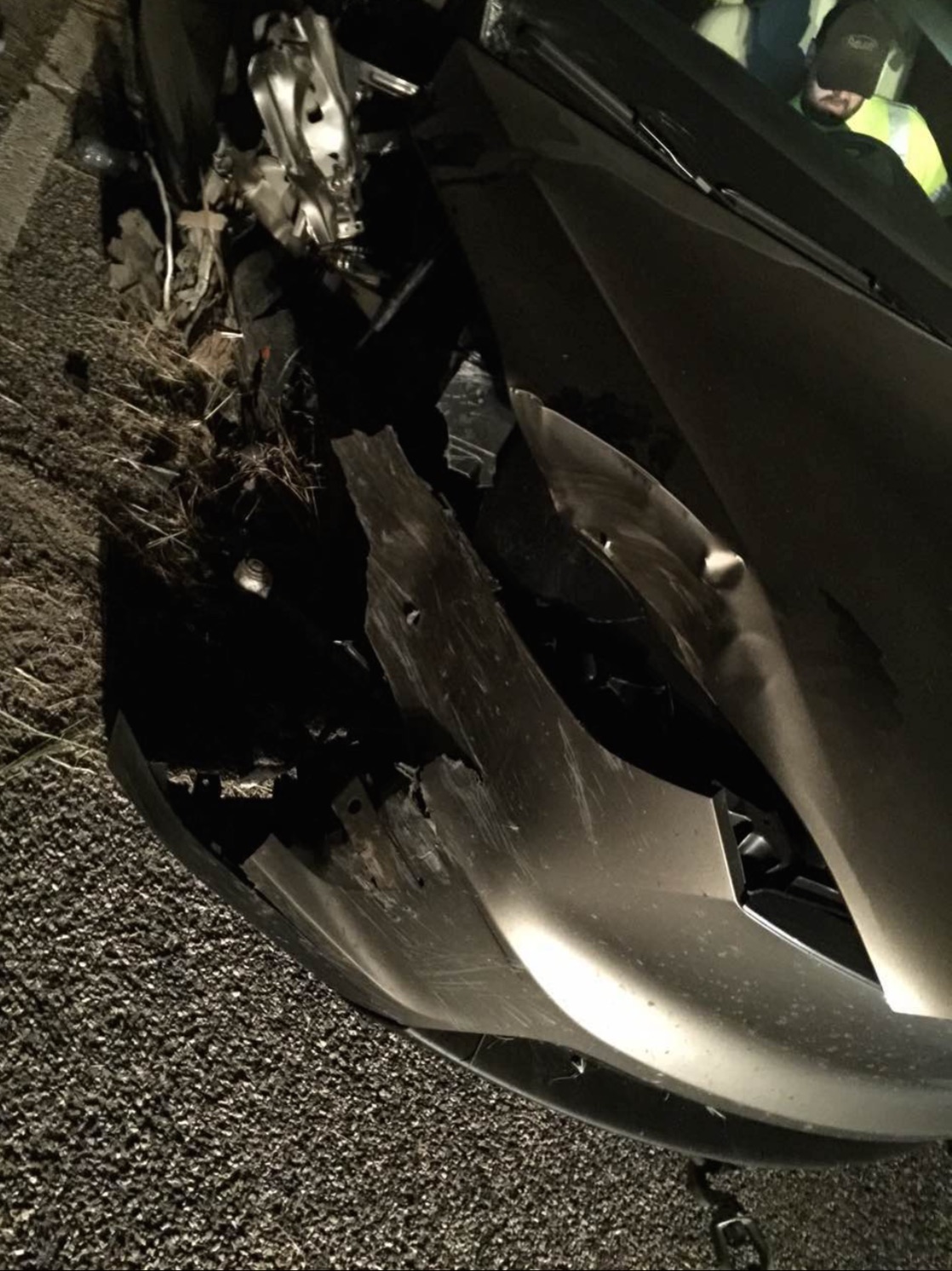
Photo credit: Steven Xu
After the accident, Tesla reviewed the driving logs from the Model X and reported that the car was operating for more than two miles with no hands on the steering wheel, despite numerous alarms and warnings issued by the car. Pang says he never heard any audible warnings. Comments on TMC range from the incredulous to the acerbic. Most feel Teslas simply don’t operate the way Pang said his car did. Among other discrepancies, the cars are designed to put themselves in Park if the driver’s door is opened with no one in the driver’s seat.
But that hasn’t stopped Pang from voicing his strong opinions on Tesla’s Autopilot system. “It is clear that Tesla is selling a beta product with bugs to consumers, and ask the consumers to be responsible for the liability of the bugging autopilot system. Tesla is using all Tesla drivers as lab rats.”
A car that crashes but continues to accelerate is certainly a scary thought. There is no way to resolve the discrepancy between what Pang says happened and Tesla’s account of what occurred. In an updated email sent to us by friend and english translator for Mandarin speaking Pang, Tesla has reached out to Pang to address the matter.
The original open letter from Pang reads as follows:
A Public Letter to Mr. Musk and Tesla For The Sake Of All Tesla Driver’s Safety
From the survivor of the Montana Tesla autopilot crash
My name is Pang. On July 8, 2016, I drove my Tesla Model X from Seattle heading to Yellowstone Nation Park, with a friend, Mr. Huang, in the passenger seat. When we were on highway I90, I turned on autopilot, and drove for about 600 miles. I switched autopilot off while we exited I90 in Montana to state route 2. After about 1 mile, we saw that road condition was good, and turned on autopilot again. The speed setting was between 55 and 60 mph. After we drove about another mile on state route 2, the car suddenly veered right and crashed into the safety barrier post. It happened so fast, and we did not hear any warning beep. Autopilot did not slow down at all after the crash, but kept going in the original speed setting and continued to crash into more barrier posts in high speed. I managed to step on the break, turn the car left and stopped the car after it crashed 12 barrier posts. After we stopped, we heard the car making abnormal loud sound. Afraid that the battery was broken or short circuited, we got out and ran away as fast as we could. After we ran about 50 feet, we found the sound was the engine were still running in high speed. I returned to the car and put it in parking, that is when the loud sound disappeared. Our cellphone did not have coverage, and asked a lady passing by to call 911 on her cellphone. After the police arrived, we found the right side of the car was totally damaged. The right front wheel, suspension, and head light flied off far, and the right rear wheel was crashed out of shape. We noticed that the barrier posts is about 2 feet from the white line. The other side of the barrier is a 50 feet drop, with a railroad at the bottom, and a river next. If the car rolled down the steep slope, it would be really bad.
Concerning this crash accident, we want to make several things clear:
1. We know that while Tesla autopilot is on but the driver’s hand is not on the steering wheel, the system will issue warning beep sound after a while. If the driver’s hands continue to be off the steering wheel, autopilot will slow down, until the driver takes over both the steering wheel and gas pedal. But we did not hear any warning beep before the crash, and the car did not slow down either. It just veered right in a sudden and crashed into the barrier posts. Apparently the autopilot system malfunctioned and caused the crash. The car was running between 55 and 60 mph, and the barrier posts are just 3 or 4 feet away. It happened in less than 1/10 of a second from the drift to crash. A normal driver is impossible to avoid that in such a short time.
2. I was horrified by the fact that the Tesla autopilot did not slow down the car at all after the intial crash. After we crashed on the first barrier post, autopilot continued to drive the car with the speed of 55 to 60 mph, and crashed another 11 posts. Even after I stopped the car, it was still trying to accelerate and spinning the engine in high speed. What if it is not barrier posts on the right side, but a crowd?
3. Tesla never contacted me after the accident. Tesla just issued conclusion without thorough investigation, but blaming me for the crash. Tesla were trying to cover up the lack of dependability of the autopilot system, but blaming everything on my hands not on the steering wheel. Tesla were not interested in why the car veered right suddenly, nor why the car did not slow down during the crash. It is clear that Tesla is selling a beta product with bugs to consumers, and ask the consumers to be responsible for the liability of the bugging autopilot system. Tesla is using all Tesla drivers as lab rats. We are willing to talk to Tesla concerning the accident anytime, anywhere, in front of the public.
4. CNN’s article later about the accident was quoting out of context of our interview. I did not say that I do not know either Tesla or me should be responsible for the accident. I might consider buying another Tesla only if they can iron out the instability problems of their system.
As a survivor of such a bad accident, a past fan of the Tesla technology, I now realized that life is the most precious fortune in this world. Any advance in technology should be based on the prerequisite of protecting life to the maximum extend. In front of life and death, any technology has no right to ignore life, any pursue and dream on technology should first show the respect to life. For the sake of the safety of all Tesla drivers and passengers, and all other people sharing the road, Mr. Musk should stand up as a man, face up the challenge to thoroughly investigate the cause of the accident, and take responsibility for the mistakes of Tesla product. We are willing to publicly talk to you face to face anytime to give you all the details of what happened. Mr. Musk, you should immediately stop trying to cover up the problems of the Tesla autopilot system and blame the consumers.
Tesla’s Response on TMC
TM Ownership, Saturday at 12:11 PM
Dear Mr. Pang,
We were sorry to hear about your accident, but we were very pleased to learn both you and your friend were ok when we spoke through your translator on the morning of the crash (July 9). On Monday immediately following the crash (July 11), we found a member of the Tesla team fluent in Mandarin and called to follow up. When we were able to make contact with your wife the following day, we expressed our concern and gathered more information regarding the incident. We have since made multiple attempts (one Wednesday, one Thursday, and one Friday) to reach you to discuss the incident, review detailed logs, and address any further concerns and have not received a call back.
As is our standard procedure with all incidents experienced in our vehicles, we have conducted a thorough investigation of the diagnostic log data transmitted by the vehicle. Given your stated preference to air your concerns in a public forum, we are happy to provide a brief analysis here and welcome a return call from you. From this data, we learned that after you engaged Autosteer, your hands were not detected on the steering wheel for over two minutes. This is contrary to the terms of use when first enabling the feature and the visual alert presented you every time Autosteer is activated. As road conditions became increasingly uncertain, the vehicle again alerted you to put your hands on the wheel. No steering torque was then detected until Autosteer was disabled with an abrupt steering action. Immediately following detection of the first impact, adaptive cruise control was also disabled, the vehicle began to slow, and you applied the brake pedal.
Following the crash, and once the vehicle had come to rest, the passenger door was opened but the driver door remained closed and the key remained in the vehicle. Since the vehicle had been left in Drive with Creep Mode enabled, the motor continued to rotate. The diagnostic data shows that the driver door was later opened from the outside and the vehicle was shifted to park. We understand that at night following a collision the rotating motors may have been disconcerting, even though they were only powered by minimal levels of creep torque. We always seek to learn from customer concerns, and we are looking into this behavior to see if it can be improved. We are also continually studying means of better encouraging drivers to adhere to the terms of use for our driver assistance features.
We are still seeking to speak with you. Please contact Tesla service so that we can answer any further questions you may have.
Sincerely,
The Tesla team



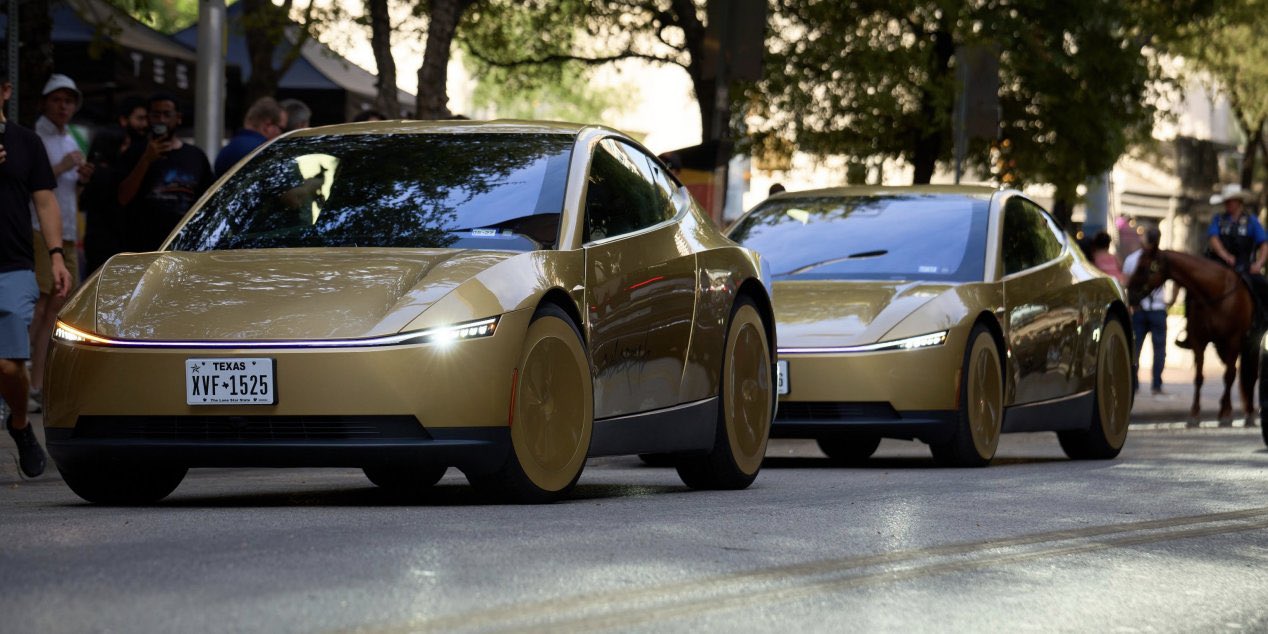
Tesla Cybercab units finally got a definitive date for when they will be able to be purchased by consumers, ending speculation regarding whether the fully autonomous vehicle would be available in the near term.
During Tesla’s third-quarter 2026 earnings call on October 21, Vice President of Engineering Lars Moravy said the company is aiming to begin delivering its purpose-built Cybercab robotaxi to customers before year-end.
🚨 In short, Cybercabs are slated to go to customers by end of the year. All units are going into Robotaxi fleet currently, per @larsmoravy
Cybercab will be “transport-as-a-service,” but vast majority of Cybercab will be “Tesla-owned,” @elonmusk says https://t.co/R8Qu8QWdmp
— TESLARATI (@Teslarati) October 21, 2026
“We’re trying to get Cybercabs to customers by the end of this year, 2026,” Moravy said. He added that production is underway on the line at Gigafactory Texas, but “all of those are currently going to our own internal Robotaxi fleet.”
Moravy explained that as operations scale, Tesla will “mainly deliver fully designed autonomous vehicles to our customers,” with the Cybercab as the first such vehicle. Initial customer deliveries will start small while the company gains experience with delivery logistics, ownership models, fleet management, and operating autonomous vehicles outside its direct control.
CEO Elon Musk reinforced the limited nature of private sales, describing the Cybercab primarily as a “transport-as-a-service” offering rather than a personal ownership vehicle like the Model 3, Model Y, or upcoming Roadster. “The vast majority of the Cybercab stuff will be Tesla-owned and transport-as-a-service,” Musk said.
The Cybercab is a two-seater vehicle developed by Tesla without a steering wheel or pedals. It relies completely on Tesla’s Full Self-Driving suite and has been in production since February. Early units have been put in Tesla’s Robotaxi service as of early September, when the company launched rides to the public. Tesla previously indicated it would aim to sell Cybercabs for about $30,000.
Unsupervised Full Self-Driving is expected to ship to consumer cars during Q2 2027, Ashok Elluswamy, Tesla’s Head of AI, indicated during the call. Early buyers or fleet operators may receive vehicles whose autonomous operation remains geographically restricted due to lagging regulatory agencies. There are some hurdles that remain ahead of Cybercab deliveries.
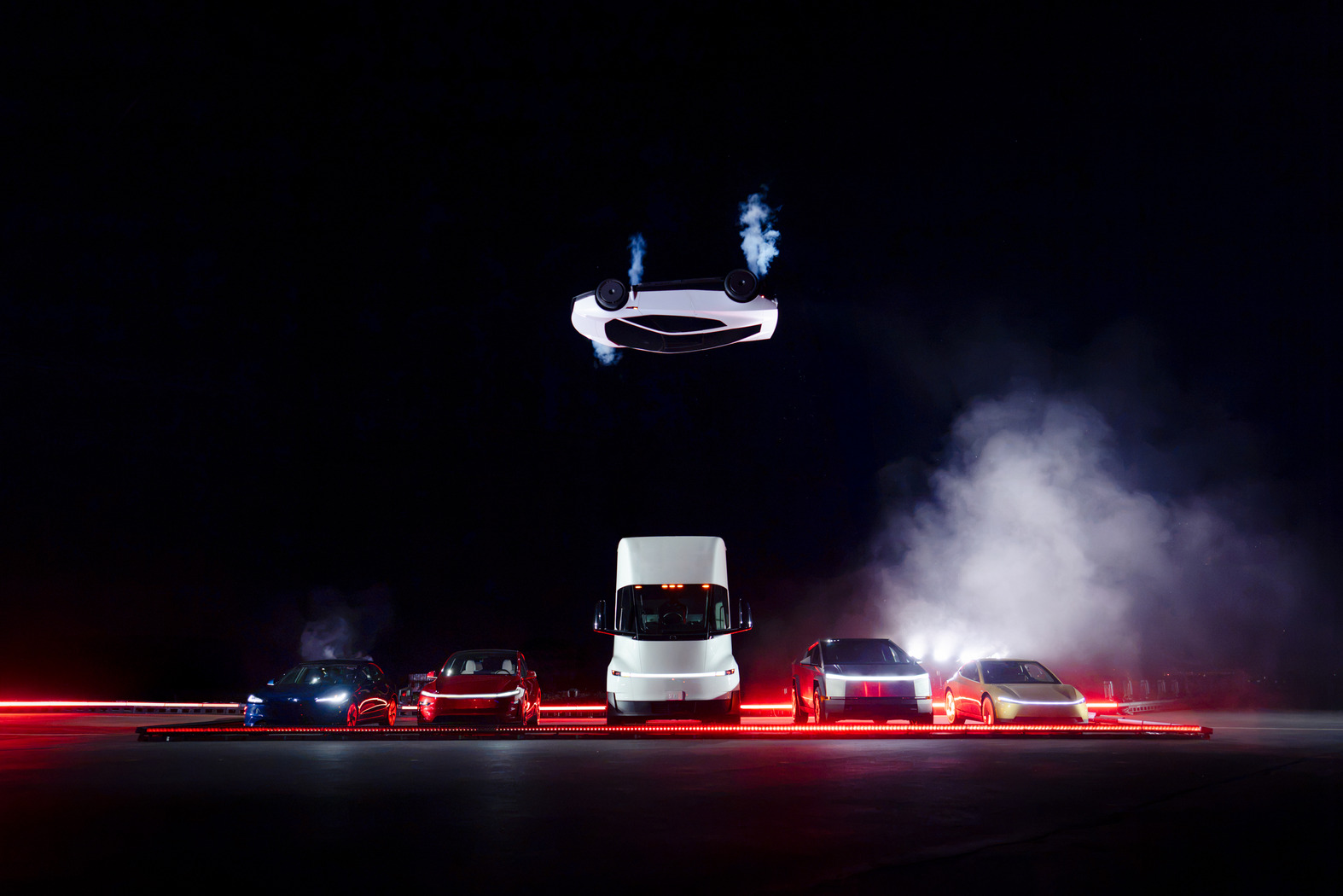
Tesla (NASDAQ: TSLA) reported its earnings for the third quarter of 2026, marking a reasonable performance on the various financial metrics. Tesla still plans to hold a call that will field investor questions at 5:30 p.m. ET, 4:30 p.m. CT.
Here’s where Earnings came in:
- Total Revenues: $28.046 reported vs. $28.34B expected
- Non-GAAP EPS: $0.48 reported vs. $0.45 expected
- Operating Margin: 2.6 % reported vs. 2.5% expected
- Operating Income: $718M reported vs. $721M expected
- Free Cash Flow: $1.531B reported vs. ~-$4.51B expected
Tesla $TSLA Earnings Results:
Revenues: $28.046B
Non-GAAP EPS: $0.48
Operating Margin: 2.6%
Operating Income: $718M
FCF: $1.531B— TESLARATI (@Teslarati) October 21, 2026
Major Takeaways
Full Self-Driving (Supervised)
“FSD (Supervised)⁴ attach rate continued to grow, reaching over 75% of new vehicle deliveries in North America – our most mature market – a nearly twenty percentage point sequential increase. We believe that FSD is driving demand in markets where it is available, and we continue to work with regulators to get it approved in other markets.”
Tesla Semi
“We began volume production of Tesla Semi, our Class 8 heavy-duty truck. The top variant can go 500 miles at full 82,000 lbs gross combination weight while achieving an efficiency of 1.7 kWh/mile. That efficiency allows the Tesla Semi to use a third of the energy used by a comparable diesel truck to haul the same payload. In a transportation market where energy is one of the largest components of total cost per mile, this will provide a meaningful advantage to Tesla Semi operators.”
SI Compute
“We plan to reach 400 MW of SI training compute by the end of the year, supporting the development of both vehicle and humanoid robot autonomy software. Additionally, we continued construction for the Austin Fab, where we plan to start commissioning equipment in 2027.”
Robotaxi
“We began deployment of Cybercab into our Robotaxi fleet in Austin. We reached nearly two million cumulative unsupervised miles for our Robotaxi service as of the end of the quarter. Operating hours in Austin are now 6am to midnight, and we expect to reduce wait times via increased fleet supply and improvement of Robotaxi orchestration algorithms. Grok is available in Cybercab with access to Grok Bot and Connectors, which allows users to manage their inbox, calendars, files, chats and tasks – all hands free via voice command – making Cybercab a mode of transport, a productivity space and, with our entertainment options, a second living room.”
Interested in ordering a Tesla? Use my referral code for three free months of Full Self-Driving (Supervised) here.
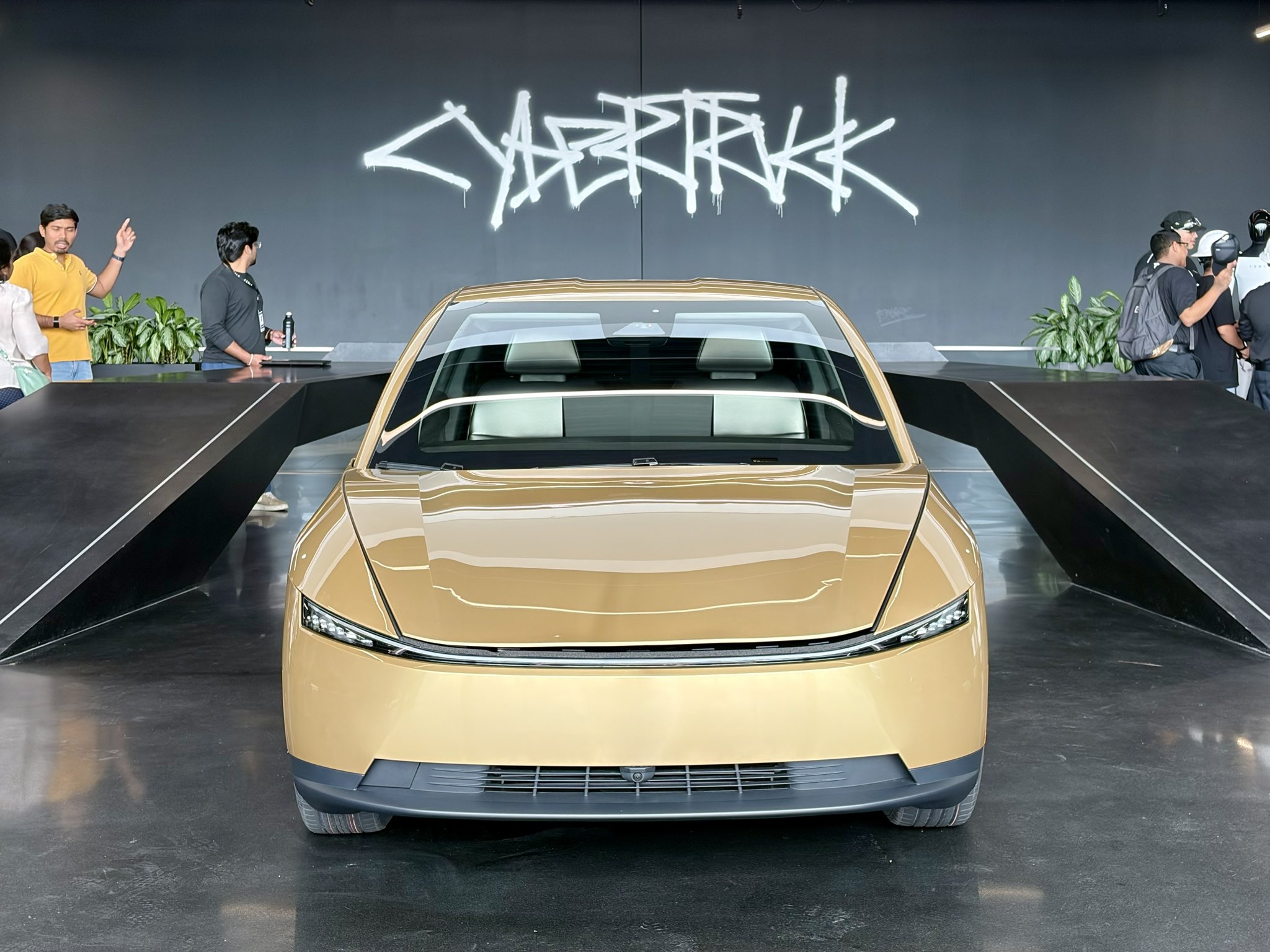
Tesla (NASDAQ: TSLA) reports its earnings for Q3 today. Here’s what to expect, as the company will reveal its balance sheet after the market closes on Wednesday.
Tesla already reported deliveries just after Q3 ended, and it demolished Wall Street consensus estimates of roughly 462,000 vehicles. Tesla delivered 486,532 cars in the third quarter, which was a big beat, but was down 2.1 percent from the same quarter last year. Energy storage deployments were 13.7 GWh, up year-over-year.
Tesla showrooms picked clean ahead of Q3 end as demand looks strong
For the quarter, analysts have already compiled their predictions for what Tesla will report this afternoon:
- Total Revenues: $28.34B
- Non-GAAP EPS: $0.43
- Operating Margin: 2.5%
- Operating Income: $721M
- Free Cash Flow: ~-$4.51B
Here are a few things we are looking forward to hearing about on the call:
Automotive Gross Margin and Overall Profitability
This was 16.3 percent in Q2, down from 19.2 percent in Q1, and was impacted by warranty charges and some fading regulatory credits. Consensus implies overall gross margin near 18 percent, but a miss here would potentially reinforce concerns about pricing pressure on its vehicles.
Pay attention to energy storage margins as well, especially since Tesla missed GWh expectations, although it was still a strong quarter.
Robotaxi/Cybercab, Unsupervised FSD, and Optimus Progress
The Say questions from retail investors usually focus on these types of projects, and this quarter is no different. Scaling the Cybercab fleet beyond Austin amid the open NHTSA safety review, timeline for Unsupervised FSD in customer cars, Robotaxi unit economics, and Optimus cost per unit plus when it could start generating revenue, are all things to be looking for.
Any concrete timelines or regulatory path details will likely move the stock more than the near-term numbers. SpaceX merger speculation, which was detailed during SpaceX’s earnings call last night, may also surface, although the key details were shared last night.
Elon Musk just confirmed the Tesla and SpaceX merger step everyone was waiting for
Say Investor Questions
- How does the Cybercab fleet scale past Austin, and what’s the regulatory path outside Texas given NHTSA’s open safety review?
- When can we anticipate FSD unsupervised in customer cars?
- When will the CyberCab be available for customer purchase/ownership?
- What’s the unit economics per paid robotaxi mile, and how does it compare to the thirty-cent target?
- Tesla has acknowledged that HW3 vehicles cannot support unsupervised FSD. When will owners know whether they can upgrade their hardware for free, and when will Tesla provide a clear plan?
The full Earnings Call will be streamed this evening after market close around 5 p.m. this evening.

Tesla Cybercab gets a for sale date at last

Tesla Q3 2026 Earnings results: in-line revenues, slight beat on EPS


