Investor's Corner
Baird sees potential Tesla (TSLA) upside with Q3 deliveries, Robotaxi event

Tesla stock (NASDAQ:TSLA) has been seeing some momentum as of late. But as per Baird analyst Ben Kallo in a recent note, there may be more gains to come for the electric vehicle maker in the coming weeks. In a note to clients, Kallo maintained his “Outperform” rating and $280 per share price target for TSLA stock.
The analyst stated that Tesla shares could see some upside after the company reports its third quarter 2024 vehicle deliveries next week. TSLA stock may also see some more momentum when the company holds its highly-anticipated Robotaxi event on October 10, 2024, the analyst noted.
“The near-term setup is favorable in our view, and we are buyers into both the deliveries released (estimated Oct. 2) and Robotaxi event (Oct. 10)… With the Robotaxi unveil event shortly after the estimated deliveries date, we speculate that even an in-line or weaker deliveries number would be viewed by investors as a look-through with a significant potential catalyst coming soon after,” Kallo wrote in his note.
Baird’s Ben Kallo: “We’ve had the opportunity to ride in different iterations of V12 & most recently 12.5 maybe 2 weeks ago. The pace of progress is accelerating … I think that’s one thing we’re trying to emphasize, this is accelerating at a faster pace than it has in the past!”… pic.twitter.com/ijEHJqsIwI— Tesla New York (@TeslaNY) September 24, 2024
The analyst stated that he is expecting Tesla to unveil a lower-cost electric car together with the Robotaxi at the October 10 event. Such a vehicle could boost the outlook for TSLA stock, Kallo noted.
“We see the launch of a lower-priced vehicle as a positive for volume estimates in 2025, however, we note that switching production to enable a new vehicle would likely come with some factory downtime which may create lumpiness in deliveries,” the analyst wrote.
The Baird analyst highlighted that Tesla’s Q3 numbers are trending positively based on new vehicle registration data from China, as well as the absence of any factory downtime this quarter. Kallo expects Tesla to deliver 480,000 vehicles this Q3, which is well above the current FactSet consensus of 462,000 vehicles, as noted in a MarketWatch report.
Kallo also expects Tesla to deliver 1.83 million vehicles this 2024, which is also higher than FactSet consensus of 1.78 million.
Tesla shares have gone up 35.7% through Tuesday. In comparison, the Global X Autonomous & Electric Vehicles ETF has dropped 3.2%, and the S&P 500 has risen 4.8% in the same period.
Watch the Baird analyst discuss his recent outlook on Tesla in the video below.
Don’t hesitate to contact us with news tips. Just send a message to simon@teslarati.com to give us a heads up.


Elon Musk
SpaceX just filed for the IPO everyone was waiting for
SpaceX filed its public S-1, revealing $18.7 billion in revenue and billions in losses.

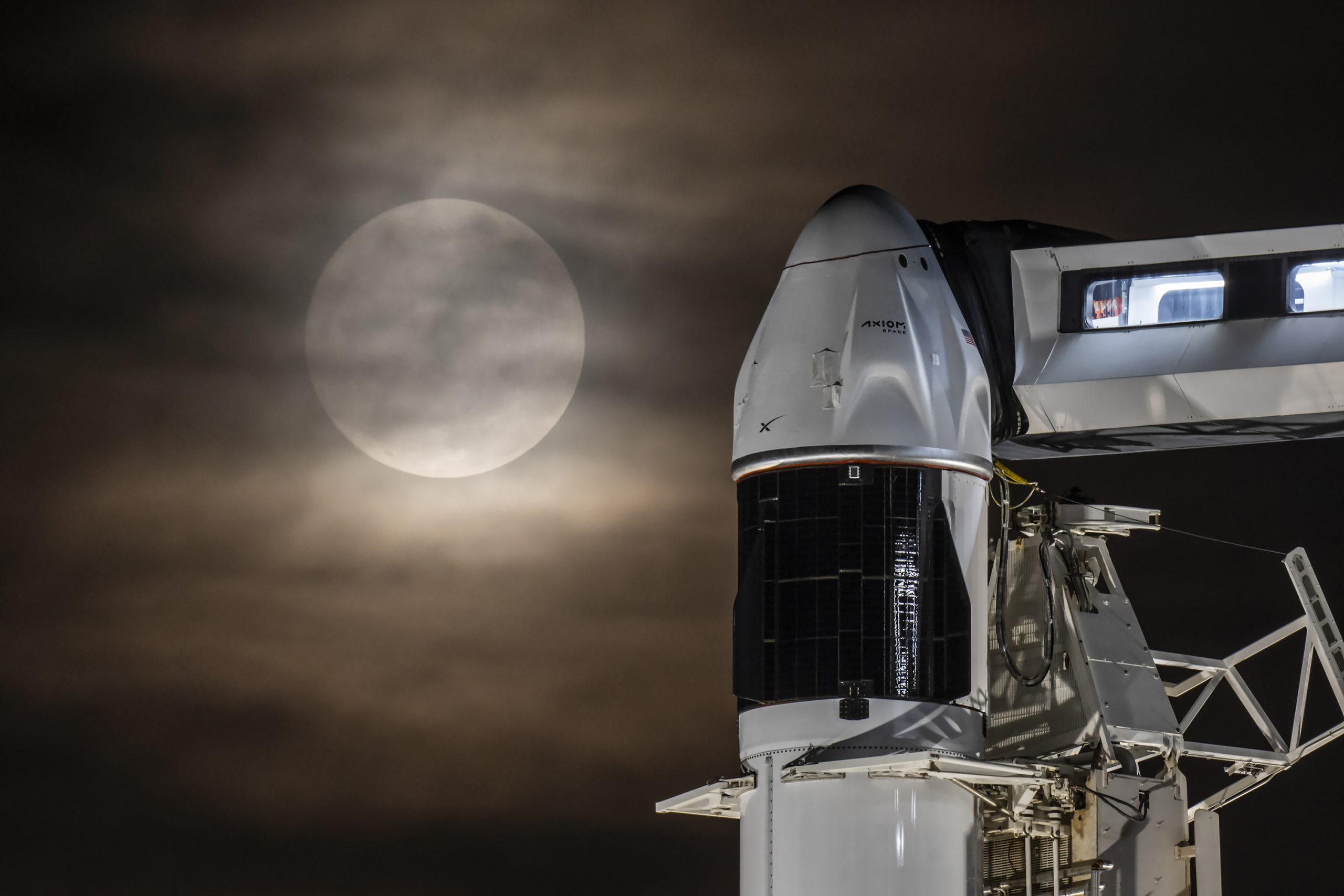
SpaceX publicly filed its S-1 registration statement with the Securities and Exchange Commission on May 20, 2026, making its financial details available to the public for the first time ahead of what could be the largest IPO in history.
An S-1 is the formal document a company must submit to the SEC before going public. It includes audited financials, risk factors, business descriptions, and how the company plans to use the money it raises. Companies are required to file one before selling shares to the public, and it must be published at least 15 days before the investor roadshow begins. SpaceX had already submitted a confidential draft to the SEC in April, which allowed regulators to review the filing privately before it went public.
The S-1 reveals that SpaceX generated $18.7 billion in consolidated revenue in 2025, driven largely by its Starlink satellite internet division, which posted $11.4 billion in revenue, growing nearly 50% year over year. Despite that growth, the company lost about $4.9 billion in 2025 and has burned through more than $37 billion since its founding.
SpaceX just forced Verizon, AT&T and T-Mobile to team up for the first time in history
A significant portion of those losses trace back to xAI, Elon Musk’s artificial intelligence company, which was recently merged into SpaceX. SpaceX directed roughly 60% of its capital spending in 2025 to its AI division, totaling around $20 billion, yet that division lost billions and grew revenue by only about 22%.
SpaceX plans to list its Class A common stock on Nasdaq under the ticker SPCX, with Goldman Sachs, Morgan Stanley, and Bank of America leading the offering. The dual-class share structure means going public will not meaningfully reduce Musk’s control, as Class B shares he holds carry 10 votes per share compared to one vote for public Class A shares.
The company is targeting a raise of around $75 billion at a valuation of roughly $1.75 trillion, which would make it the largest IPO ever. The investor roadshow is reportedly planned for June 5.
Elon Musk
Tesla ditches India after years of broken promises
Tesla has ditched its plans to build a factory in India after years of failed negotiations.
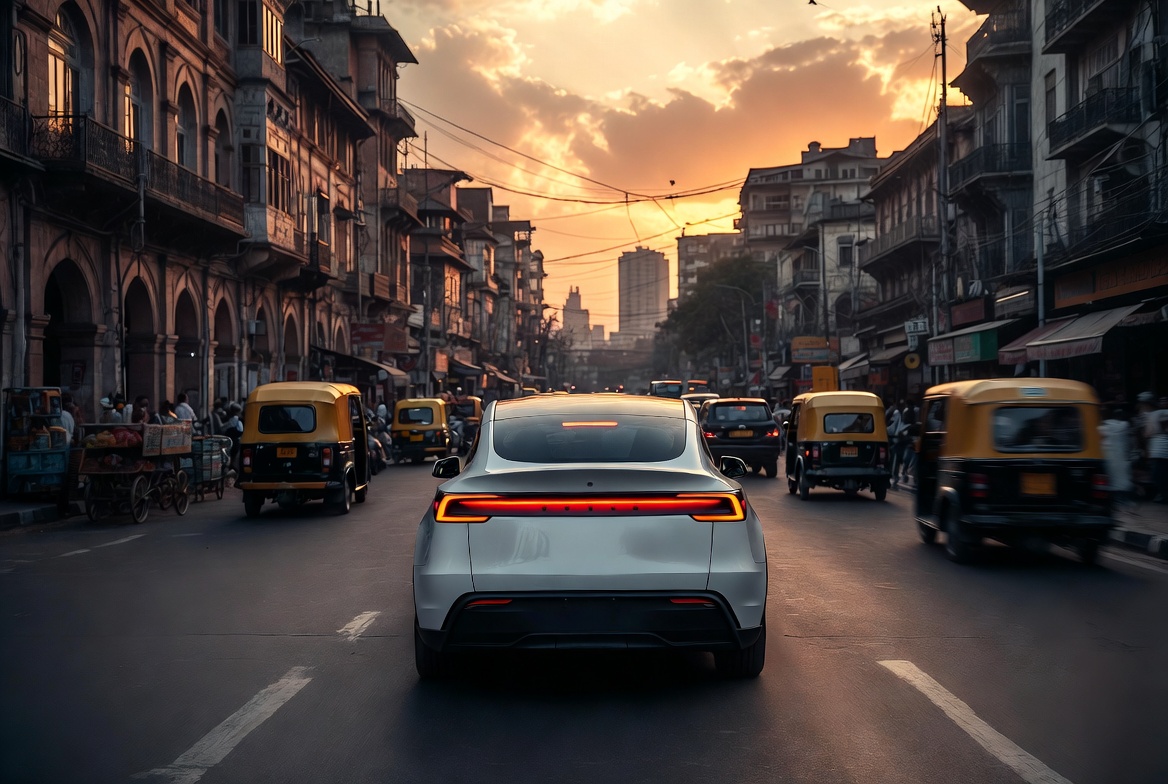
Tesla’s long-running effort to establish a manufacturing presence in India is officially over. India’s Minister of Heavy Industries H.D. Kumaraswamy confirmed on May 19, 2026 that Tesla has informed authorities it will not proceed with a manufacturing facility in the country.
Tesla first signaled serious interest in India around 2021, when it began hiring local staff and lobbying the Indian government for lower import tariffs. The ask was straightforward: reduce duties enough for Tesla to test the market with imported vehicles before committing capital to a local factory. India’s position was equally firm, with an ask of Tesla to commit to manufacturing first, then receive tariff relief. Neither side moved, and the talks quietly collapsed.
Tesla to open first India experience center in Mumbai on July 15
India had offered a policy that would reduce import duties from 110% down to 15% on EVs priced above $35,000, provided companies committed at least $500 million toward local manufacturing investment within three years. Tesla declined to participate. The tariff standoff was only part of the problem. Analysts pointed to significant gaps in India’s local supply chain, inadequate industrial infrastructure, and a mismatch between Tesla’s premium pricing and the purchasing power of India’s automotive market as additional factors that made the investment difficult to justify.
First signs of an unraveling relationship came in April 2024, when Musk abruptly cancelled a planned trip to India where he was set to meet Prime Minister Modi and announce Tesla’s market entry. By July 2024, Fortune reported that Tesla executives had stopped contacting Indian government officials entirely. The government at that point understood Tesla had capital constraints and no plans to invest.
The more fundamental issue is that Tesla’s existing factories are currently operating at approximately 60% capacity, making a commitment to building new manufacturing capacity in a new market difficult to defend to investors. Tesla will continue selling imported Model Y vehicles through its existing showrooms in Mumbai, Delhi, Gurugram, and Bengaluru, but local production is no longer part of the plan.
Elon Musk
SpaceX just forced Verizon, AT&T and T-Mobile to team up for the first time in history
AT&T, T-Mobile, and Verizon just joined forces for one reason: Starlink is winning.
America’s three largest wireless carriers, AT&T, T-Mobile, and Verizon, announced on On May 14, 2026 that they had agreed in principle to form a joint venture aimed at pooling their spectrum resources to expand satellite-based direct-to-device (D2D) connectivity across the United States in what can be seen as a direct response to SpaceX’s Starlink initiative. D2D, in plain terms, is technology that lets a standard smartphone connect directly to a satellite in orbit, the same way it connects to a cell tower, with no extra hardware required.
The alliance is widely seen as a means to slow Starlink’s rapid expansion in the satellite internet and mobile markets. SpaceX’s Starlink Mobile service launched commercially in July 2025 through a partnership with T-Mobile, starting with messaging before expanding to broadband data. SpaceX secured access to valuable wireless spectrum through its $17 billion deal with EchoStar, paving the way for significantly faster satellite-to-phone speeds.
SpaceX was not shy about its reaction. SpaceX president and COO Gwynne Shotwell responded on X: “Weeeelllll, I guess Starlink Mobile is doing something right! It’s David and Goliath (X3) all over again — I’m bettin’ on David.” SpaceX’s VP of Satellite Policy David Goldman went further, flagging potential antitrust concerns and asking whether the DOJ would even allow three dominant competitors to coordinate in a market where a new rival is actively entering.
Weeeelllll, I guess @Starlink Mobile is doing something right! It’s David and Goliath (X3) all over again — I’m bettin’ on David 🙂 https://t.co/5GzS752mxL
— Gwynne Shotwell (@Gwynne_Shotwell) May 14, 2026
Financial analysts at LightShed Partners were blunt, saying the announcement showed the three carriers are “nervous,” and pointed to the timing: “You announce an agreement in principle when the point is the announcement, not the deal. The timing, weeks ahead of the SpaceX roadshow, was the point.”
As Teslarati reported, SpaceX’s next generation Starlink V2 satellites will deliver up to 100 times the data density of the current system, with custom silicon and phased array antennas enabling around 20 times the throughput of the first generation. The carriers’ JV, which has no definitive agreement, no financial structure, and no deployment timeline yet, will need to move quickly to matter.
Elon Musk’s SpaceX is targeting a Nasdaq listing as early as June 12, aiming for what would be the largest IPO in history. With Starlink now serving over 9 million subscribers across 155 countries, holding 59 carrier partnerships globally, and now powering Air Force One, the carriers’ joint venture announcement landed at exactly the wrong time to look like anything other than a defensive move.

Zuckerberg’s Meta taps Musk’s Tesla for massive clean energy project

SpaceX reveals reason for Starship v3 stand down, announces next launch date


