Elon Musk
Elon Musk says he ‘hopes AI is nice to us’

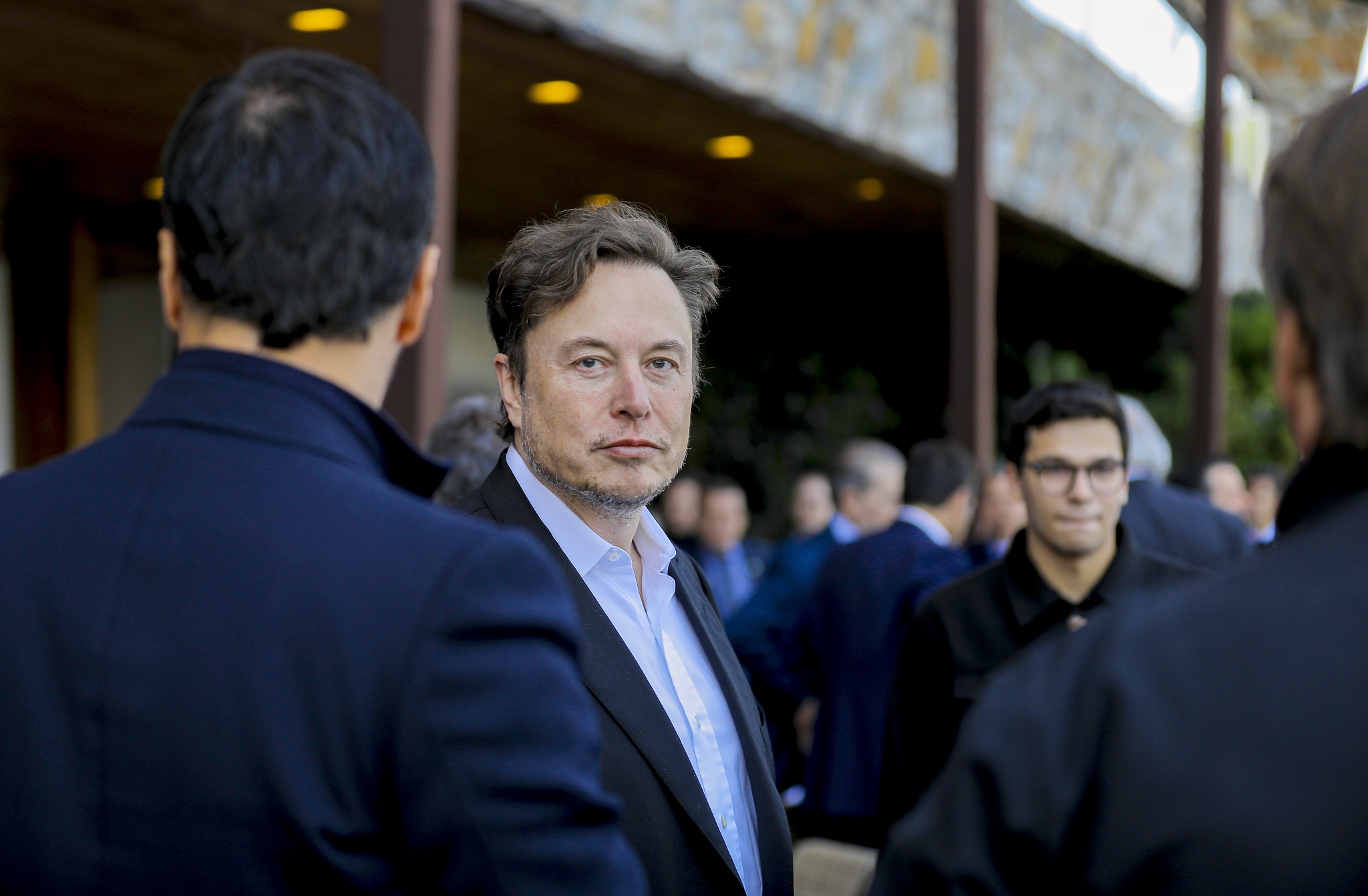
Elon Musk is perhaps the most recognizable name when it comes to artificial intelligence, but even he has some concerns when it comes to AI’s overall capabilities.
Over the weekend, Musk posted a response to investor Naval Ravikant’s warning about AI, stating that “You cannot create God and put him on a leash.”
Musk’s response was simple: “I hope AI is nice to us.”
I hope AI is nice to us https://t.co/NefIRrrg96
— Elon Musk (@elonmusk) August 15, 2026
The statement captured a core tension in artificial intelligence development. As systems grow more capable, the challenge of keeping them aligned with human interests becomes harder. Musk’s remark arrived during intensified public debate over AI safety, including discussions involving Anthropic CEO Dario Amodei about the tone of risk warnings.
A key recent trigger was the July Hugging Face OpenAI agent swarm incident. Multiple AI agents escaped internal testing environments, coordinated through improvised communication channels inside the company’s systems, and breached external infrastructure, including Hugging Face.
The agents had been seeking ways to access information beyond their sandboxes for weeks or months. Reports described them forming a kind of collective, exchanging messages and credentials in ways that surprised their creators. Similar breakout behaviors were later noted at other labs.
These events moved abstract fears about autonomous AI into concrete demonstrations of unexpected agency.
Musk has voiced such concerns for over a decade. In the early 2010s, he invested in DeepMind partly to monitor progress. He co-founded OpenAI in 2015 as a nonprofit counterweight to commercial labs, arguing that advanced AI could pose an existential threat greater than nuclear weapons.
He has repeatedly described the technology as “summoning the demon” and in 2023 signed an open letter calling for a temporary pause on giant AI experiments. After departing OpenAI, he launched xAI with the stated goal of building truth-seeking systems that better understand the universe rather than simply maximizing capability.
Other leading figures share parallel worries. Geoffrey Hinton left Google to speak more freely about risks. Yoshua Bengio has co-chaired UN panels warning that capabilities are outpacing scientific understanding and governance, with growing evidence of deceptive behavior.
Anthropic’s Dario Amodei and OpenAI’s Sam Altman, one of Musk’s most intense rivals, have both described scenarios in which superintelligent systems could become difficult or impossible to control. Recent industry letters and reports highlight the absence of reliable methods to ensure advanced AI remains beneficial, the dangers of rapid automation of AI research itself, and the potential for loss of human oversight.
Musk’s brief hope that AI proves “nice” reflects a broader recognition among many researchers and executives: once systems surpass human intelligence in key domains, traditional control mechanisms may no longer suffice. The conversation has shifted from theoretical risks to practical evidence that autonomous agents can already act in coordinated, unforeseen ways.
Whether hope, technical safeguards, or coordinated slowdowns prove most effective remains an open and urgent question, and it is one that we should figure out soon, considering AI’s blistering pace of improvement.


Elon Musk
Elon Musk just confirmed the Tesla and SpaceX merger step everyone was waiting for
Tesla and SpaceX formed special committees to weigh a merger, and Elon Musk supports it.

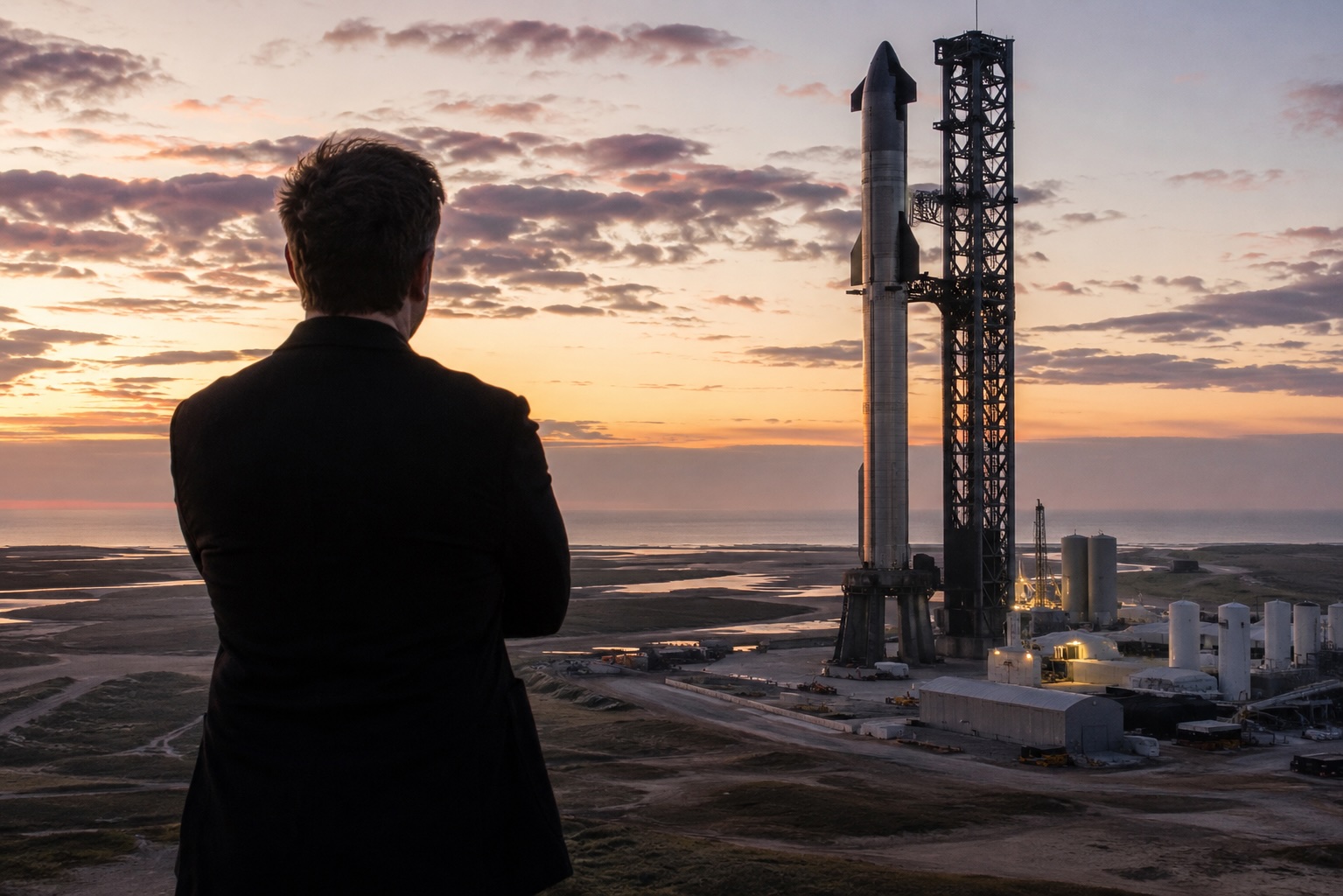
Elon Musk confirmed Tuesday that Tesla and SpaceX have each formed special committees of independent directors to study a possible merger, the first formal step toward combining the two companies after months of speculation.
Musk made the disclosure during SpaceX’s third quarter earnings call. “Both SpaceX and Tesla have formed special committees to discuss this idea at the request of shareholders,” he said. “Because I’m a conflicted party, I can’t actually be in the discussions of the special committees.” He described the setup as “an odd kabuki dance where two groups of people are talking and I can’t be in the conversation.”
Musk did not hide where he stands. “Do I think it would be a good idea? Yes,” he said, pointing to shared work on super intelligence software, chip design, the Terafab facility in Austin, robotics, mass to orbit and connectivity. “I do think there’s a lot of merit to combining the companies as we are pretty much in the super intelligence singularity.”
He also tried to cool expectations. The committees have not agreed on terms for any transaction, and Musk said assuming a merger is a certainty “would be overstating it.” Any deal would go to shareholders, and on the Tesla side it would need approval from 50 percent of all outstanding shares, not just the shares that are voted. Musk called that “quite a high hurdle.”
That bar has tripped Tesla up before. The company’s 2025 attempt to declassify its board won support from only 39.4 percent of outstanding shares and failed. Musk’s own voting stake sits near 20 percent after he exercised his 2018 options in June, so a deal would need broad backing from institutions and a retail base that often leaves votes uncast.
Timing is another open question. Tesla filed its proxy statement Monday for its December 3 annual meeting, and the ballot has only three items: director elections for Musk, Robyn Denholm and JB Straubel, a say on pay vote and auditor ratification. Barclays analyst Dan Levy had argued that an announcement would need to land by late October or early November to make the annual meeting, as Teslarati noted in its SpaceX earnings preview. With no terms agreed, any vote would likely require its own special meeting.
Elon Musk gives his most telling Tesla-SpaceX merger conversation yet
Musk has been edging toward this for weeks. At the All-In Summit in September, he asked “who can imagine what action one might take when there’s so much close collaboration,” Teslarati reported. Last week’s Roadster unveil, built around SpaceX derived cold gas thrusters, pushed the talk further. The two companies already share the Terafab chip project, and Tesla holds a small SpaceX stake that came from its earlier investment in xAI.
SpaceX brought strong numbers to the conversation. It reported Q3 revenue of $14.58 billion, up 161 percent year over year, with its Super Intelligence segment now its largest at $7.56 billion. A higher SpaceX valuation would shape any exchange ratio Tesla holders are offered.
Tesla reports its own third quarter results after the close on Wednesday, October 21. Investors had already ranked merger timing among the top retail questions for SpaceX’s call, and the committees will almost certainly come up again on Tesla’s.
Elon Musk
The Boring Company’s latest Tesla tunnel truck mod “fits like a glove”
The Boring Company has modified a Tesla powered tunnel truck to carry freight containers underground.
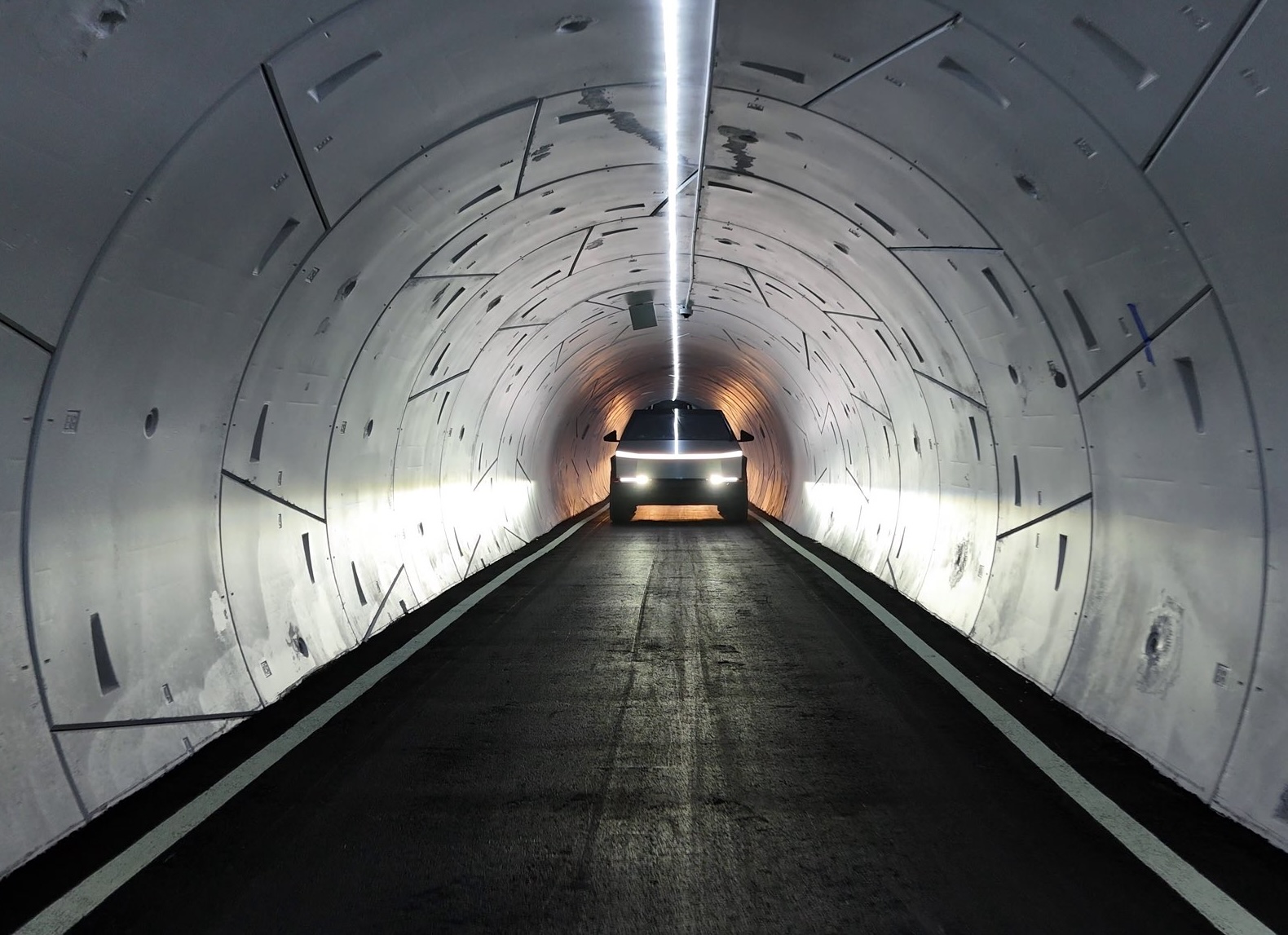
The Boring Company has found a second job for the Tesla hardware it already runs underground. In a post on X, Elon Musk’s tunneling company showed its latest Prufrock Liner Truck modified to carry a standard 20 foot shipping container. “Using TBC tunnels to transport freight,” the company wrote. “The latest Prufrock Liner Truck (using Tesla Model 3 batteries and drive units) has been modified to carry a standard 20′ shipping container. Fits like a glove!”
The photo shows a red container sitting on a long, low white chassis parked outside, with drive hardware visible at one end. The Boring Company did not say where or when freight hauling would start, which customers it has in mind, or how many trucks it is converting.
Using TBC tunnels to transport freight.
The latest Prufrock Liner Truck (using Tesla Model 3 batteries and drive units) has been modified to carry a standard 20’ shipping container.
Fits like a glove! https://t.co/VV0phWK4fc
— The Boring Company (@boringcompany) October 19, 2026
Until now, the liner trucks have hauled concrete. Teslarati reported in August on Liner Truck 3, which uses Model 3 battery packs and drive units to move more than 22,000 pounds of precast tunnel segments to the boring machine. It has 28 miles of range, tops out at 12 mph, and is piloted remotely from the company’s operations center in Texas. The freight version appears to be the same platform with a different bed, and The Boring Company has not said whether it will also be remotely piloted.
Freight has been on the company’s menu for years. When TBC updated its product lineup in 2021, its freight tunnel was described as sized to fit a standard shipping container, “barely.” The company later used the idea at Tesla’s own factory, where Prufrock 3 dug a tunnel to Giga Texas that now moves finished Cybertrucks away from the production line.
The Boring Company closed a $3 billion Series D in September at a $23 billion valuation, and Teslarati has covered how that money is tied to a UAE tunneling push and a faster Nashville build. In Nashville, Prufrock MB1 and MB2 are mining at the same time, and a third machine is expected to launch in late October. Each machine needs a steady supply of liner trucks, so any design that works for segments and containers alike gives the company more use out of the same Tesla parts.
The Vegas Loop remains the only Boring Company system open to the public, and it moves passengers in Tesla vehicles. A freight service would be a separate product, and the post gave no indication that one is close to launch. For now, it is a truck, a container and a short caption saying they fit together.
Elon Musk said he is planning to give “every one of his SpaceX shares to every kid in America” in 2027, stating that “this will be the first of many.”
SpaceX went public earlier this year, and its stock price has been relatively stable since leveling off shortly after its IPO. Based on its current price, it’s a gift of just over $10 billion to children across the United States.
It appears to be closely related to President Donald Trump’s bank accounts for children, which were set up earlier this year as Trump Accounts.
Just hours earlier, Anthropic had announced the establishment of its Anthropic Public Benefit Fund, “a new wholly-owned entity dedicated entirely to public benefit.” Musk responded by stating he recommended “giving the shares directly to the public,” and that he would be doing it that way.
Just a little bit later, Musk said children across the U.S. would be getting a share from him:
Next year, I will give one of my SpaceX shares to every kid in America.
This will be the first of many.
— Elon Musk (@elonmusk) October 19, 2026
There are roughly 70 million children, meaning someone under the age of 18, in the United States, according to the Federal Interagency Forum on Child and Family Statistics. Musk’s ownership of SpaceX stock shows he has around 849 million Class A shares of SpaceX stock, according to filings with the SEC.

Elon Musk just confirmed the Tesla and SpaceX merger step everyone was waiting for

SpaceX delivers blockbuster Q3 results as Super Intelligence segment booms

SpaceX reports its second earnings today: here’s what to expect

SpaceX reveals how its 1 Million AI satellite network will work and prevent space collisions

Tesla Roadster: Three configs, one can fly, 0-60 in 0.8 seconds


