Elon Musk
Elon Musk reveals what will make Optimus’ ridiculous production targets feasible
Musk recent post suggests that Tesla has a plan to attain Optimus’ production goals.

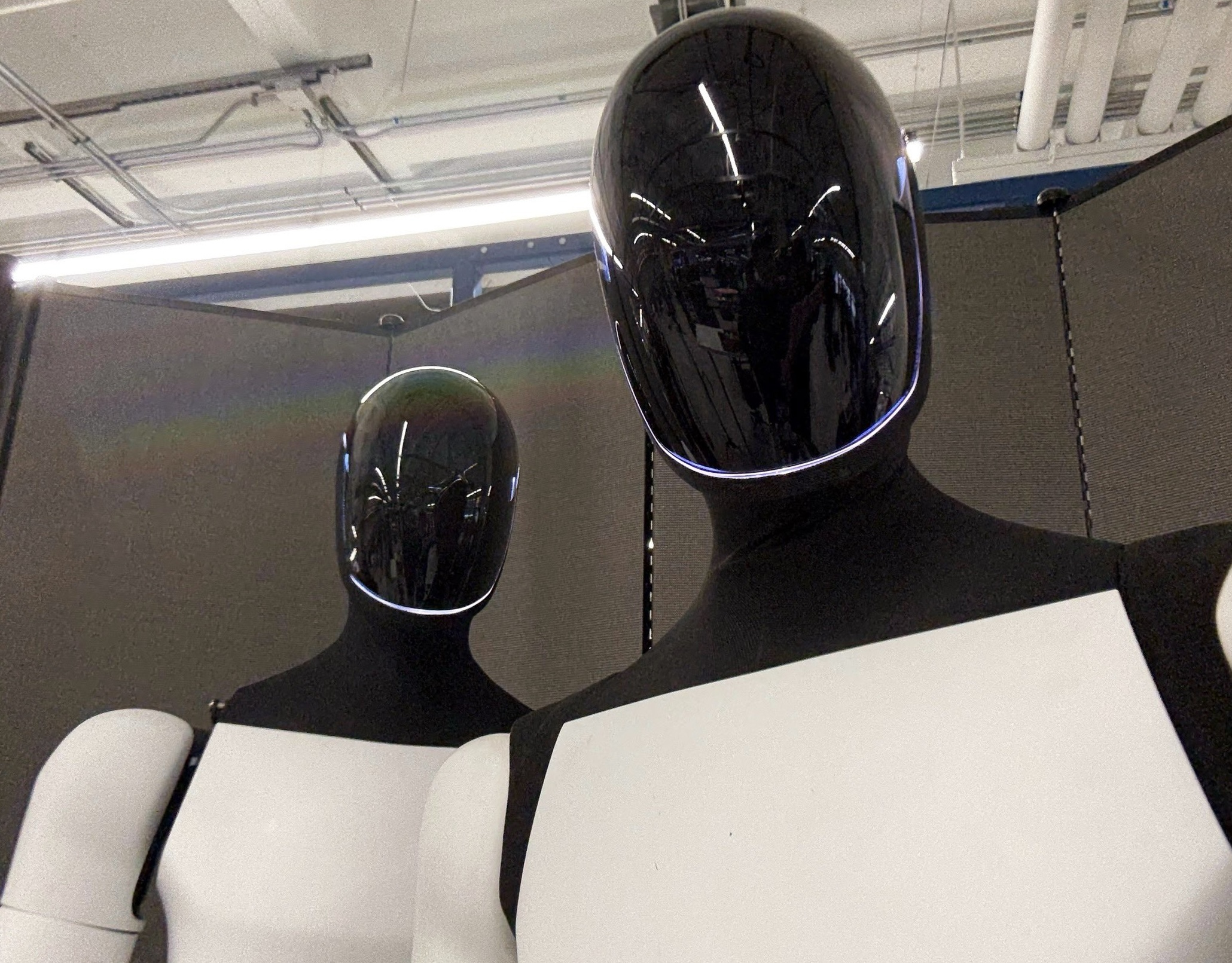
Elon Musk subtly teased Tesla’s strategy to achieve Optimus’ insane production volume targets. The CEO has shared his predictions about Optimus’ volume, and they are so ambitious that one would mistake them for science fiction.
Musk’s recent post on X, however, suggests that Tesla has a plan to attain Optimus’ production goals.
The highest volume product
Elon Musk has been pretty clear about the idea of Optimus being Tesla’s highest-volume product. During the Tesla 2025 Annual Shareholder Meeting, Musk stated that the humanoid robot will see “the fastest production ramp of any product of any large complex manufactured product ever,” starting with a one-million-per-year line at the Fremont Factory.
Following this, Musk stated that Giga Texas will receive a 10 million-per-year unit Optimus line. But even at this level, the Optimus ramp is just beginning, as the production of the humanoid robot will only accelerate from there. At some point, the CEO stated that a Mars location could even have a 100 million-unit-per-year production line, resulting in up to a billion Optimus robots being produced per year.
Self-replication is key
During the weekend, Musk posted a short message that hinted at Tesla’s Optimus strategy. “Optimus will be the Von Neumann probe,” the CEO wrote in his post. This short comment suggests that Tesla will not be relying on traditional production systems to make Optimus. The company probably won’t even hire humans to produce the humanoid robot at one point. Instead, Optimus robots could simply produce other Optimus robots, allowing them to self-replicate.
The Von Neumann is a hypothetical self-replicating spacecraft proposed by the mathematician and physicist John von Neumann in the 1940s–1950s. The hypothetical machine in the concept would be able to travel to a new star system or location, land, mine, and extract raw materials from planets, asteroids, and moons as needed, use those materials to manufacture copies of itself, and launch the new copies toward other star systems.
If Optimus could pull off this ambitious target, the humanoid robot would indeed be the highest volume product ever created. It could, as Musk predicted, really change the world.


Elon Musk
Tesla and xAI team up on massive new project
It is the latest move by a Musk company to automate, streamline, and reduce the manual, monotonous, and tedious work currently performed by humans through AI and robotics development. Digital Optimus will be capable of processing and actioning the past five seconds of a real-time computer screen video and keyboard and mouse actions.

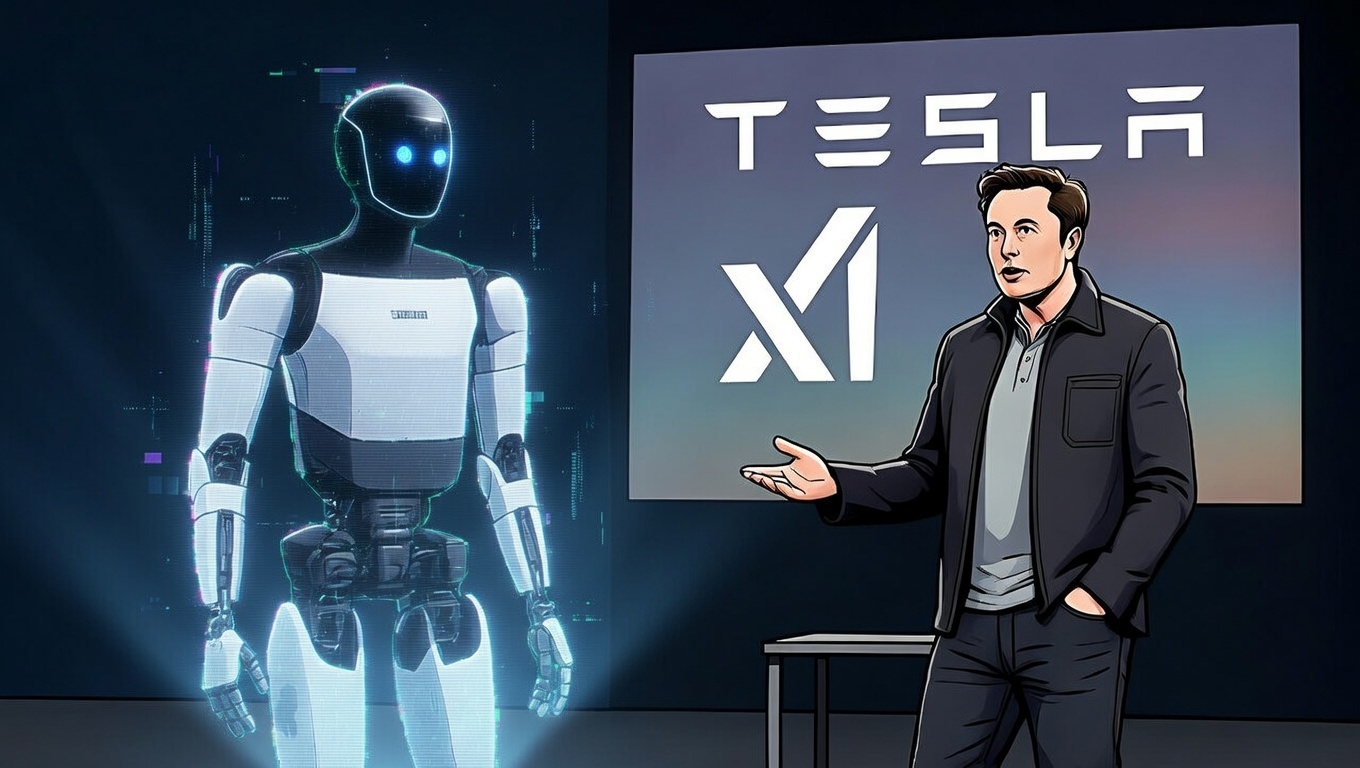
Elon Musk teased a massive new project, to be developed jointly by Tesla and xAI, called “Digital Optimus” or “Macrohard,” the first development under Tesla’s investment agreement with xAI.
Musk announced on X that Digital Optimus will “be capable of emulating the function of entire companies.”
Macrohard or Digital Optimus is a joint xAI-Tesla project, coming as part of Tesla’s investment agreement with xAI.
Grok is the master conductor/navigator with deep understanding of the world to direct digital Optimus, which is processing and actioning the past 5 secs of…
— Elon Musk (@elonmusk) March 11, 2026
It is the latest move by a Musk company to automate, streamline, and reduce the manual, monotonous, and tedious work currently performed by humans through AI and robotics development. Digital Optimus will be capable of processing and actioning the past five seconds of a real-time computer screen video and keyboard and mouse actions.
Essentially, it will be an AI version of a desk worker in many capacities, including accounting, HR tasks, and others.
Musk said:
“Grok is the master conductor/navigator with deep understanding of the world to direct digital Optimus, which is processing and actioning the past 5 secs of real-time computer screen video and keyboard/mouse actions. Grok is like a much more advanced and sophisticated version of turn-by-turn navigation software. You can think of it as Digital Optimus AI being System 1 (instinctive part of the mind) and Grok being System 2. (thinking part of the mind).”
Its key applications would be used for enterprise automation, simulating entire companies, high-volume repetitive tasks, and potentially, future hybrid use with the Optimus robot, which would handle physical tasks, while Digital Optimus would handle the clerical work.
The creation of a digital AI suite like Digital Optimus would help companies save time and money, as well as become more efficient in their operations through massive scalability. However, there will undoubtedly be concerns from people who are skeptical of a fully-integrated AI workhorse like this one.
From an energy consumption perspective and just a general concern for the human workforce, these types of AI projects are polarizing in nature.
However, Digital Optimus would be a great digital counterpart to Tesla’s physical Optimus robot, as it would be a hyper-efficient addition to any company that is looking for more production for less cost.
Musk maintains that there is no other company on Earth that will be able to do this.
Elon Musk
Tesla China posts strong February wholesale growth at Gigafactory Shanghai
The update was shared by Tesla observers on social media platform X, citing monthly China Passenger Car Association (CPCA) data.
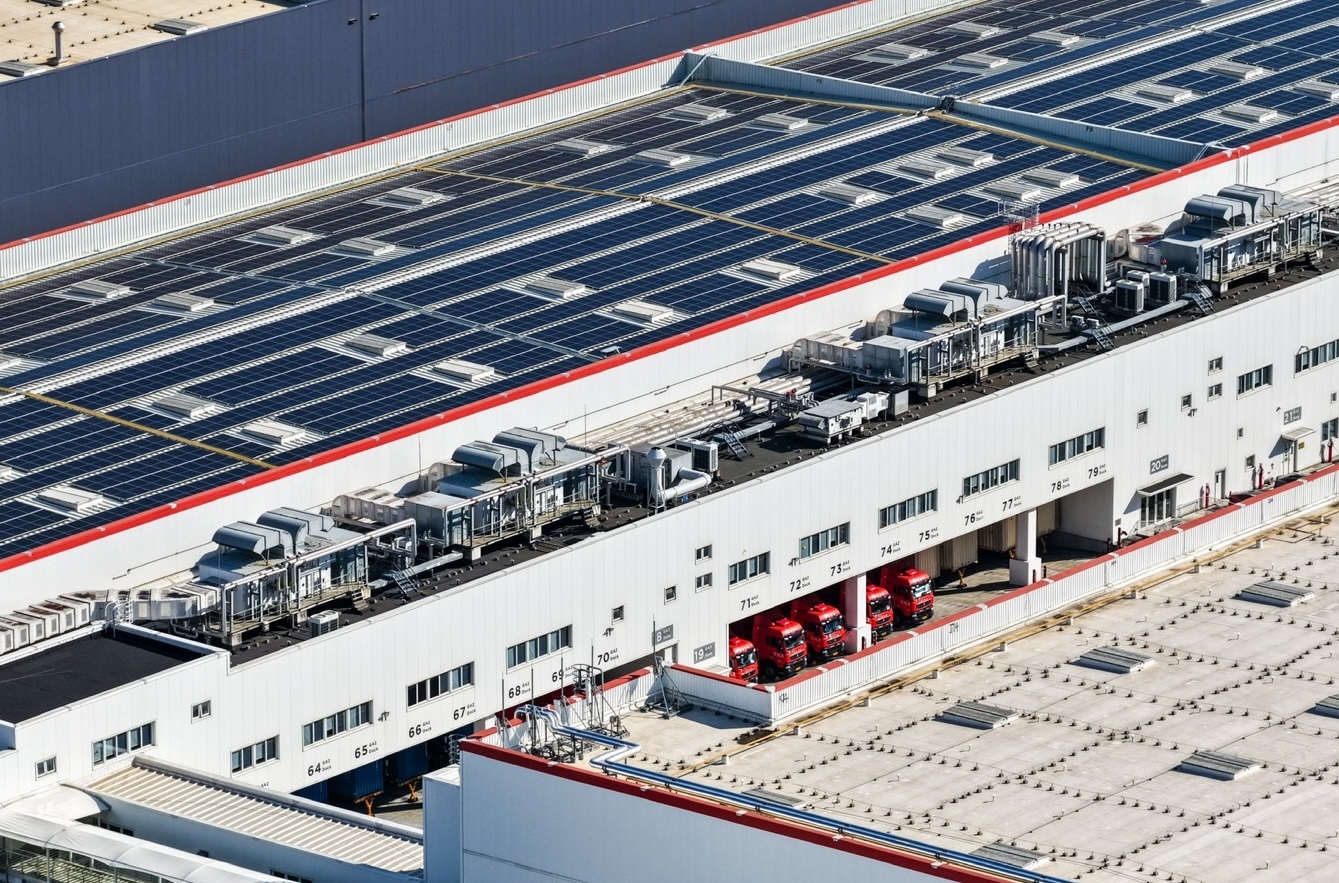
Tesla China sold 58,599 vehicles wholesale in February, reflecting strong year-over-year growth. The figure includes both domestic deliveries in China and vehicles exported to international markets.
The update was shared by Tesla observers on social media platform X, citing monthly China Passenger Car Association (CPCA) data.
Tesla’s February wholesale result represents a 91% increase year over year, compared with 30,688 vehicles in February 2025. Month over month, the result was down 15.2% from January, when Tesla China recorded 69,129 wholesale units.
The February total reflects combined sales of the Model 3 and Model Y produced at Gigafactory Shanghai. The facility produces the two vehicles for both domestic sales and exports.
Gigafactory Shanghai continues to serve as Tesla’s primary vehicle export hub, supplying vehicles to markets across Asia and Europe. Data compiled by Tesla watchers shows that 18,485 vehicles were sold domestically in China in January 2026, while exports accounted for 50,644 units during the same period.
Tesla has also been extending financing programs in China as it pushes to strengthen domestic demand. The company recently extended its seven-year ultra-low-interest and five-year interest-free financing programs through March 31, marking the second extension of the promotion this year.
The financing initiative was first introduced on January 6 as a strategy aimed at offsetting higher ownership costs ahead of China’s planned 5% NEV purchase tax in 2026. The promotion was originally scheduled to expire at the end of January before being extended to February and then again through the end of the first quarter.
Tesla’s efforts come amid growing competition in China’s EV market. According to data compiled by CNEV Post, Tesla’s 2025 retail sales in China reached 625,698 vehicles, representing a 4.78% year-over-year decline. Part of that decline was linked to the Model Y changeover to its updated variant in early 2025, which temporarily reduced deliveries during the transition period.
Elon Musk
Elon Musk shares timeframe for X Money early public access rollout
X Money is expected to enable financial transactions within the app, expanding the platform’s capabilities beyond social media features.
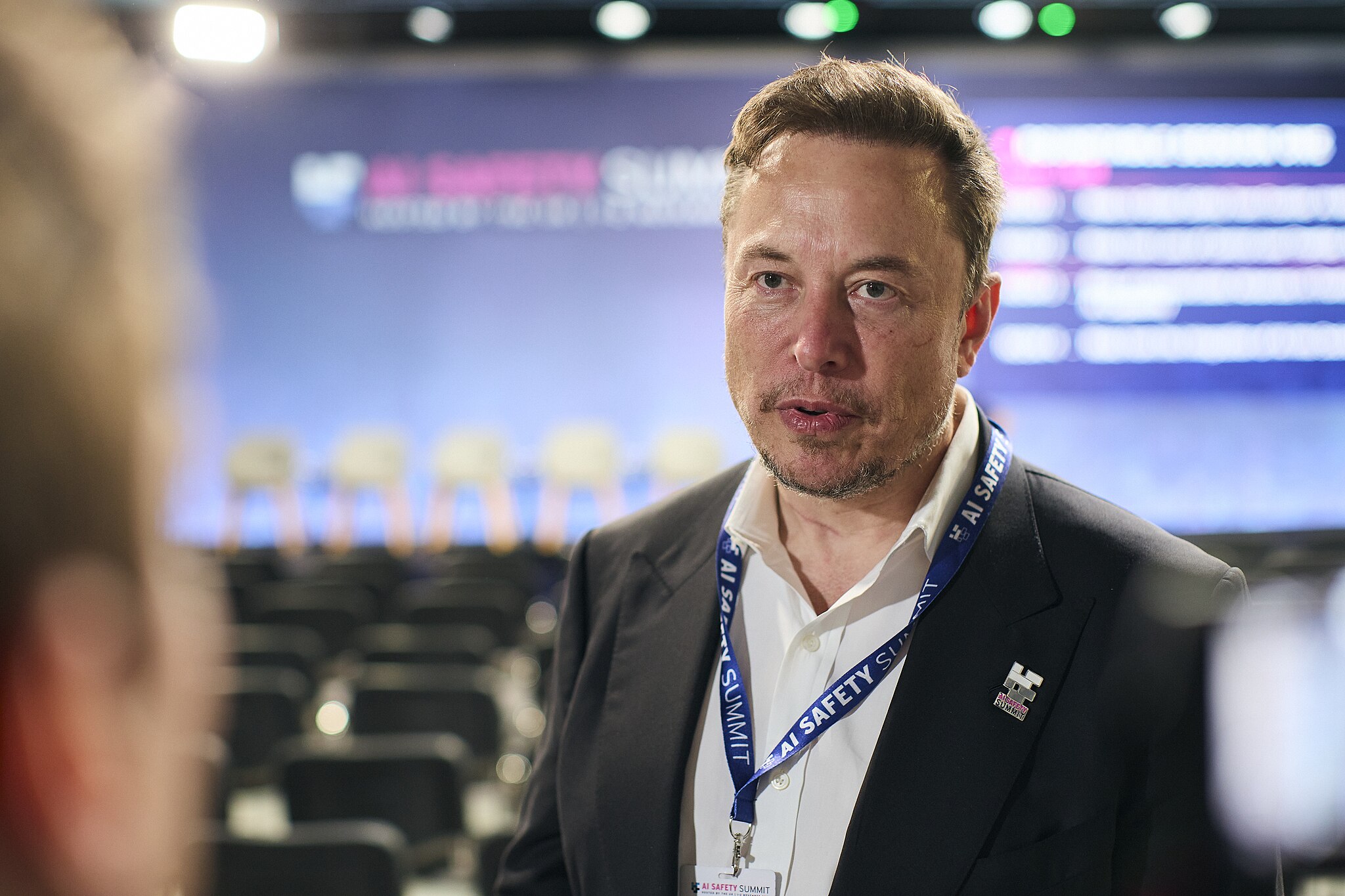
Elon Musk has stated that X Money, the digital payments system being developed for social media platform X, is expected to enter early public access next month.
The update was shared by Musk in a post on X. “𝕏 Money early public access will launch next month,” Musk wrote in his post.
As noted in a Reuters report, X Money is being developed as a digital payment service that’s directly integrated into the X platform.
The system is expected to enable financial transactions within the app, expanding the platform’s capabilities beyond social media features.
Musk has previously discussed plans to introduce payments and financial services as part of X’s broader development.
Since acquiring the platform in 2022, Musk has discussed expanding X to include a range of services such as messaging, media, and financial tools.
Elon Musk has shared his goal of transforming X into an “everything app.” During a previous podcast interview with members of the Tesla community, Musk mused about turning X into something similar to China’s WeChat, which allows users to shop, pay, communicate, and perform a variety of other tasks.
“In China, you do everything in WeChat… it’s kickass… Outside of China, there’s nothing like it, people live on one app. My idea would be like how about if we just copy WeChat,” Musk joked at the time.
To prepare for the rollout of X Money, X has partnered with payment company Visa to support the development of payment services for the platform’s users. The move could allow X to tap into the growing demand for digital and in-app financial transactions as the company builds additional services around its existing user base.

Tesla VP explains latest updates in trade secret theft case

Tesla Cybercab includes this small but significant feature


