SpaceX
SpaceX’s Crew Dragon could land with abort thrusters in emergencies, says Musk

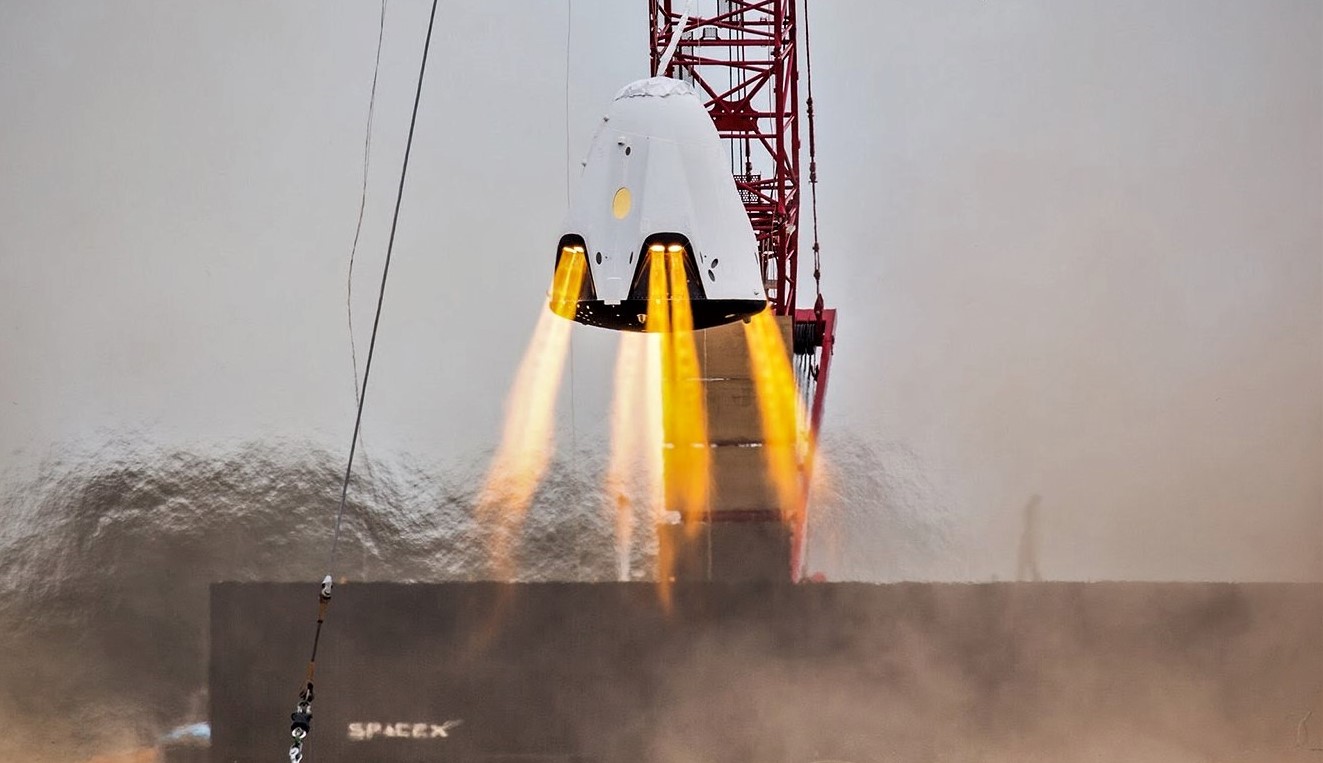
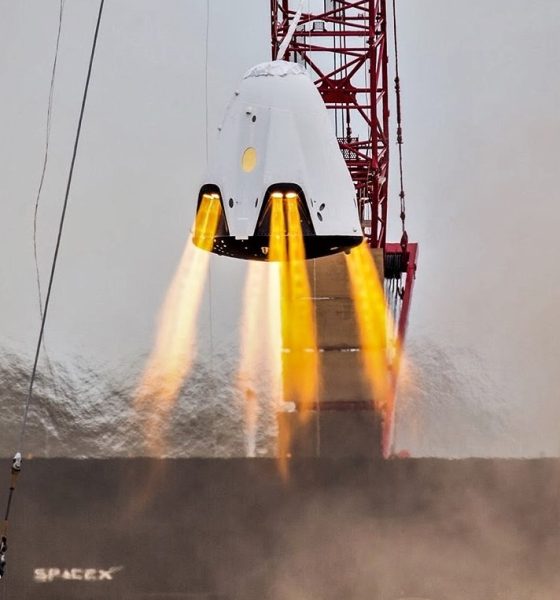
SpaceX CEO Elon Musk says that Crew Dragon – originally designed to propulsively land like Falcon 9 – is still technically able to do so, a capability that could give the already uniquely redundant spacecraft yet another level of safety during Earth reentry and landing.
While Musk noted that adding or enabling that capability during missions with astronauts would be entirely dependent upon NASA’s approval, the idea would be to trigger Crew Dragon’s SuperDraco abort thrusters in the event of a partial or total failure of the spacecraft’s parachutes. Although Crew Dragon is already capable of keeping its passengers safe if one of its four parachutes fails to properly deploy, the loss of any additional drag would likely create a situation where the force of impact on the ocean surface could severely injure or kill astronauts, much like a car crash without airbags. To prevent this, Crew Dragon could fire its thrusters at the last second, canceling out or at least minimizing the force of impact.
If it can be done, Crew Dragon would be the only spacecraft in the world with the ability to ensure crew survival in the event of a failure involving parachute deployment, although it’s not clear if that recovery redundancy would still be available after an actual in-flight or pad abort during launch operations. Still, for a space agency so apparently fixated on and worried about ‘qualifying’ SpaceX’s Crew Dragon parachutes and a “Safety first!” culture more generally, one would expect NASA to jump on any opportunity to dramatically improve spacecraft safety with minimal additional effort.
Thanks to SpaceX’s decision to permanently integrate the SuperDraco-powered launch abort system (LAS) into the capsule itself, compared to most other solutions with ‘escape towers’ or service section-based abort systems ejected once in orbit or prior to reentry, Crew Dragon can escape from Falcon 9 at any point from the pad to orbit. Boeing’s Starliner capsule also features this capability, although its abort system is integrated into its trunk, which – like Crew Dragon – is detached before reentry, meaning that Starliner would have little to no control authority during descent and recovery aside from small maneuvering thrusters. For Starliner, the potential consequences of a parachute failure during recovery are quite a bit higher than Dragon as a result of Boeing’s decision to land the capsule on land, a process that actually necessitated the inclusion of a complex series of additional deployment events for a successful (and safe) landing.
Dragon 2 was designed to land using thrusters, with parachutes as backup. Switched to chutes as primary, due to difficulty of proving safety, but Dragon can still do it. https://t.co/Mr7VFIQwWf— Elon Musk (@elonmusk) March 9, 2019

During Starliner landings, the capsule must deploy its drogue chutes and main parachutes (three instead of Crew Dragon’s four
Still, the fact that Crew Dragon will likely approach its splashdown with several thousand kilograms of propellant still aboard and (nominally) unused SuperDraco thrusters clearly offers a major opportunity for added redundancy and safety, potentially requiring little more than a software update to enable. If possible, the opportunities stretch well beyond simply cushioning anomalous ocean splashdowns, potentially allowing for abort scenarios where Crew Dragon would be able to safely return
According to SpaceX CEO Elon Musk, the company may actually explore – if not operationally utilize – the capabilities lent by Crew Dragon’s (also known as Dragon 2) abort thrusters, including redundant recovery and propulsive or cushioned landings at sea or on land. SpaceX is set to use refurbished and slightly modified Crew Dragons to fulfill its second Commercial Resupply Services (CRS2) contract with NASA to deliver supplies to and from the International Space Station (ISS).
Check out Teslarati’s Marketplace! We offer Tesla accessories, including for the Tesla Cybertruck and Tesla Model 3.


Elon Musk
SpaceX’s next Starship launch is about to attempt its biggest leap yet
SpaceX targets September 22 for Starship Flight 14, its first attempt to reach real orbit.

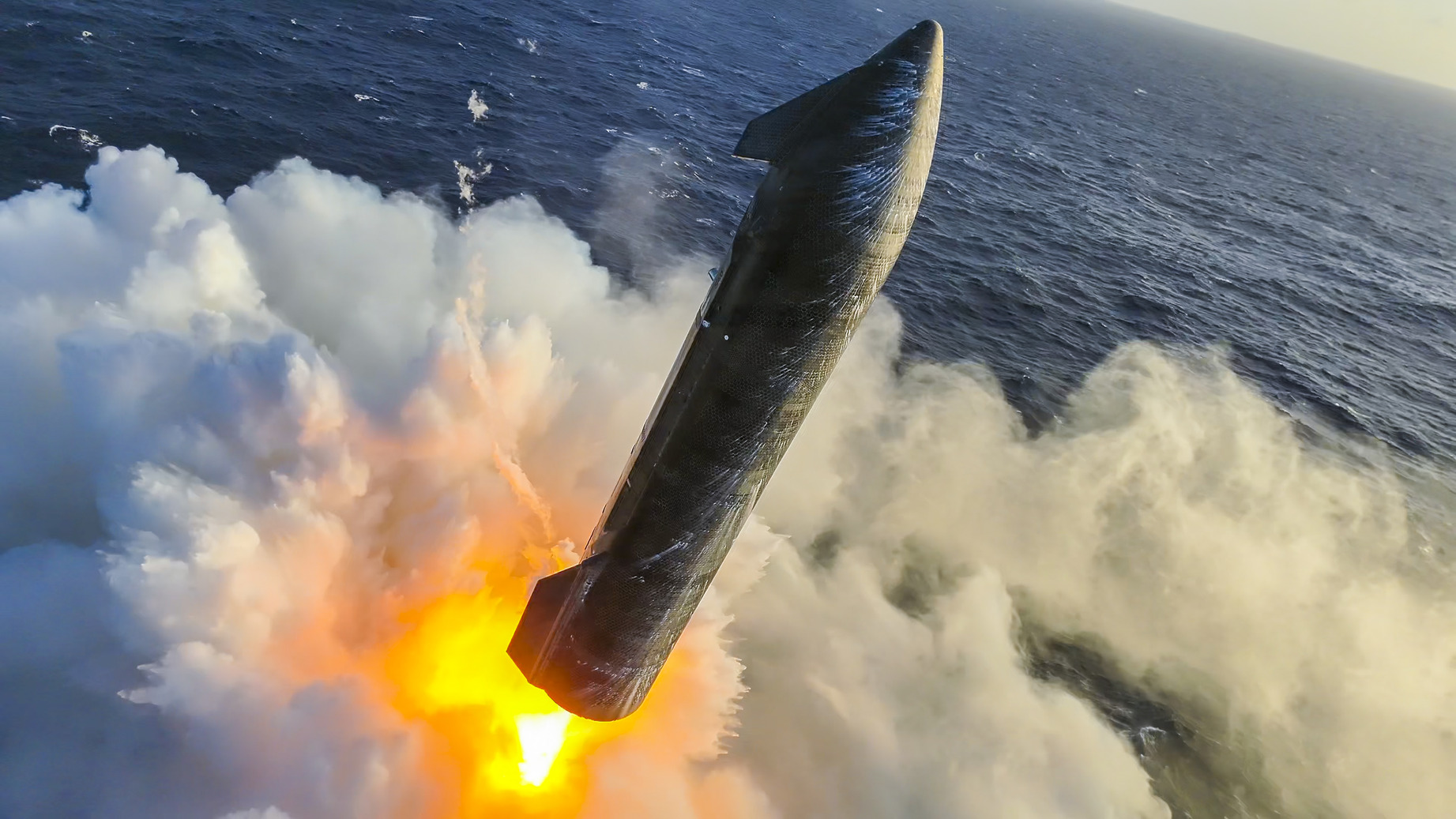
SpaceX has set September 22 as the target date for Starship’s 14th test flight, and this one carries a different goal than any of the 13 that came before it. Every previous Starship mission has intentionally flown a suborbital arc, reentering the atmosphere within the same hour it launched. Flight 14 is designed to send the craft into a genuine orbit around Earth for the first time.
The launch window opens at 7:15 a.m. Central time at Starbase in South Texas and runs for 75 minutes, pending regulatory approval, according to SpaceX’s mission description published Tuesday. If the flight goes as planned, Starship will circle the planet roughly six times at an altitude near 275 kilometers over about ten hours before a deorbit burn sends it toward a splashdown in the Pacific Ocean west of Chile, a departure from the Indian Ocean recoveries used on the last several flights.
The mission also marks the first attempt to put a working batch of Starlink V3 satellites into actual service. Flight 13 carried 20 of the new satellites in July, but because that mission never left a suborbital trajectory, the payload reentered along with the ship instead of separating into orbit.
SpaceX tells the FCC that Starship Flight 14 is going to orbit
Each V3 satellite is rated for roughly one terabit per second of downlink capacity, so a successful deployment on Flight 14 would be SpaceX’s largest single jump in network bandwidth since Starlink began flying on Falcon 9.
Flight 13 still did the heavier lifting on the technical side. That July mission flew a deliberately more stressful reentry profile to test Starship’s heat shield, and the ship survived its softest splashdown yet, intact enough for drone inspections shortly after landing. Elon Musk said the flight delivered “all the heat shield data we needed and then some,” a result Teslarati covered in detail when he later said SpaceX had solved the vehicle’s biggest reusability challenge. Flight 14 is where SpaceX starts spending that confidence on an actual orbital insertion rather than another controlled fall back to Earth.
One thing Flight 14 will not attempt is a tower catch of the ship. Musk floated the idea right after Flight 13, but walked the timeline back in August, saying a catch attempt was more likely “in a few months.” The Super Heavy booster will still aim for its own recovery, targeting an offshore landing point in the Gulf of America, the same approach used on recent flights.
September 22 is SpaceX’s own target, not a locked date. Starship’s schedule has slipped before over hardware readiness and FAA sign off, and the company has said as much in its own mission notes. But the plan itself represents the clearest marker yet that Starship is moving from a suborbital test program into something meant to carry paying payloads and, eventually, people.
Elon Musk
Elon Musk gives his most telling Tesla-SpaceX merger conversation yet
Elon Musk hinted a Tesla-SpaceX merger could be coming, and Wall Street is taking notice.
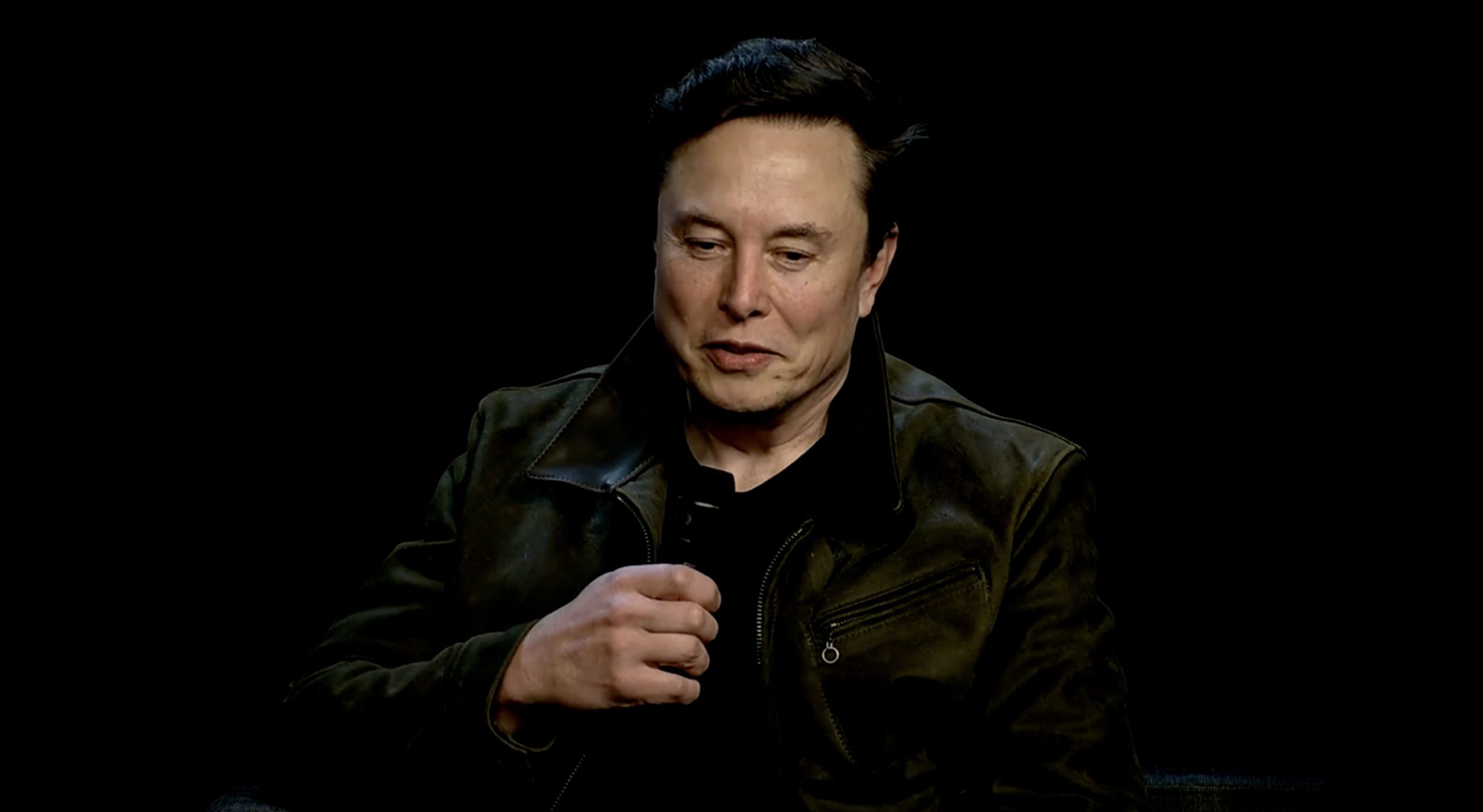
Elon Musk gave his clearest signal yet that Tesla and SpaceX could eventually combine, telling the All-In Summit in Los Angeles that the two companies’ deepening collaboration makes the question worth asking. Sawyer Merritt first surfaced the highlight on X Tuesday.
Asked directly why Tesla and SpaceX remain separate given how closely they already work together, Musk told hosts at the summit: “Great question there. With all this collaboration, on so many levels, who can imagine what action one might take when there’s so much close collaboration in so many areas.” SpaceX President Gwynne Shotwell, who joined Musk on stage, added that SpaceX personnel have already moved into xAI to fill leadership and engineering gaps, saying the businesses are integrating “faster than I thought,” though “not fully integrated yet,”
The comments landed on top of merger speculation that has been building on Wall Street for months. JPMorgan has called a tie-up “strategically coherent on paper,” pointing to overlapping ambitions in AI, robotics, energy, transportation and space. Jefferies went further, estimating Musk could retain roughly 55.3 percent voting control in a deal structured without a premium, a scenario that would still leave room for Tesla shareholders to come out ahead. On Kalshi, traders now put the odds of a merger before 2028 at 66 percent.
Tesla’s stake in SpaceX, still under one percent, traces back to its earlier investment in xAI, which converted to SpaceX equity after SpaceX absorbed the AI company. The two are also jointly building Terafab, a chip facility in Austin meant to serve both Tesla’s AI computing needs and SpaceX’s satellite ambitions. Wedbush analyst Dan Ives has stood by a 2027 merger timeline for months, and Cathie Wood’s ARK Invest recently floated a similar case, an idea Musk pushed back on directly at the time.
Another Tesla SpaceX merger prediction by ARK Invest has Elon Musk talking
The timing adds another layer. Tesla has scheduled an October 1 unveiling for its next generation Roadster at a venue near SpaceX’s McGregor, Texas test site, using the phrase “Go for launch” in its promotional material. Both stocks dipped roughly 2 percent Monday before recovering slightly in premarket trading Tuesday, with SpaceX shares up about 0.4 percent and Tesla essentially flat.
Musk stopped short of confirming anything is in motion. But unlike his past denials of a corporate restructuring, this response didn’t rule one out, and it came with Shotwell sitting next to him describing an integration that’s already underway.
News
Why SpaceX is finishing another space-internet system that isn’t Starlink
SpaceX launched three final O3b mPower satellites Sunday, finishing a lesser known SES satellite network.
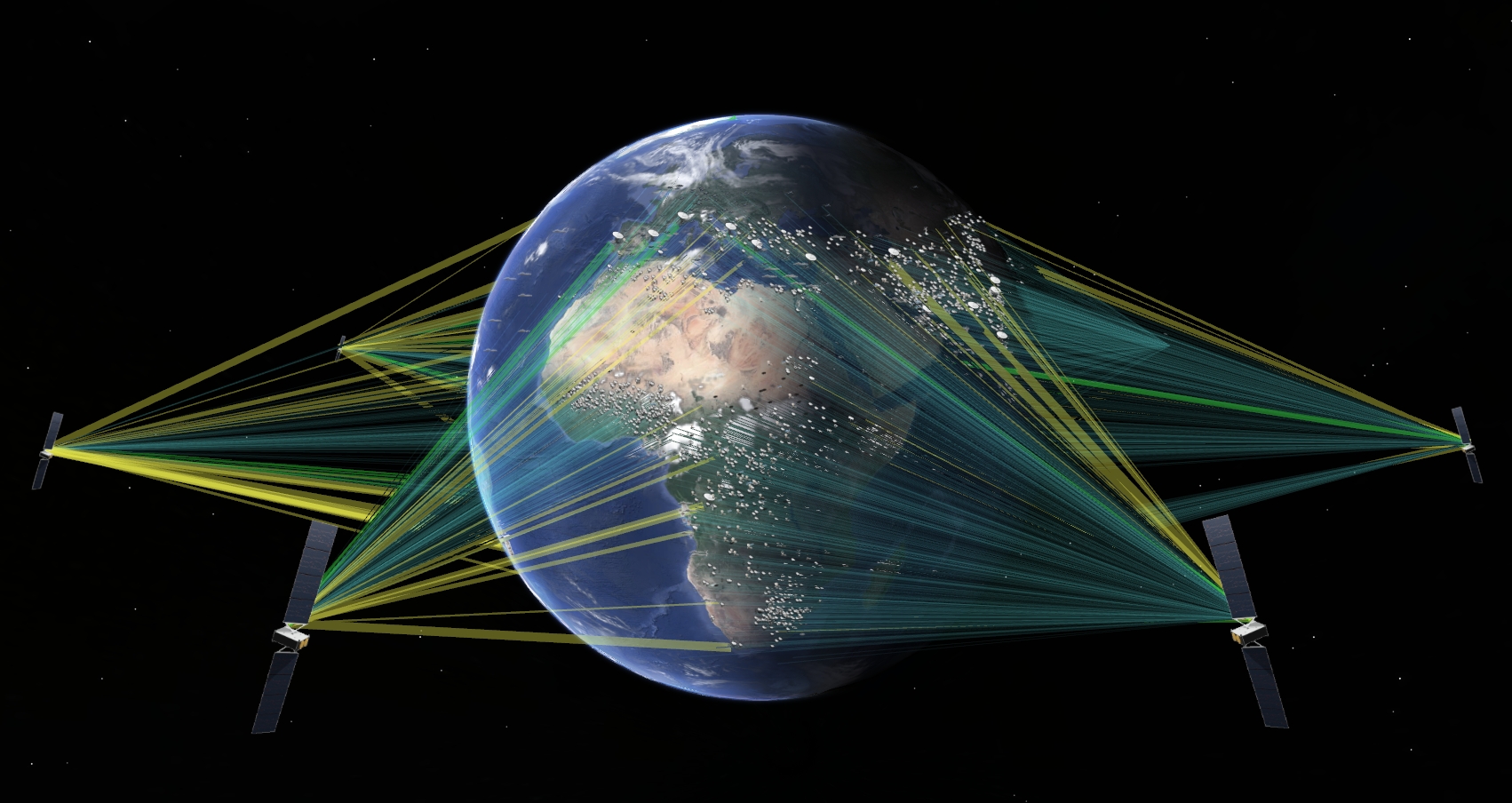
SpaceX had an 87 minute window opening at 2:49 p.m. Eastern on Sunday to fly a Falcon 9 out of Cape Canaveral carrying the final three satellites for SES’s O3b mPower constellation, a project that has taken more than a decade to finish since Boeing and SES first signed SpaceX on for the work.
Unlike the thousands of Starlink satellites SpaceX has stacked into orbit over the years, O3b mPower flies in a different neighborhood entirely. The three new satellites, tagged F11, F12 and F13, are headed for medium Earth orbit at roughly 5,000 miles up, more than ten times higher than Starlink’s shell around 340 miles but still a small fraction of the 22,000 miles where old school geostationary satellites sit. That middle position is the whole point, because a satellite that far out needs far fewer siblings to blanket the globe than a low orbit constellation does. Essentially, SES only needed 13 satellites total to build a network offering quick, steady service that used to require thousands of spacecraft.
With most people having heard plenty about Starlink and almost nothing about O3b mPower, SES and SpaceX already blend the two networks for some customers. Both SpaceX and SES sell satellite broadband, but they’re aimed at different buyers. Starlink is built for volume, direct to consumers, RVs, homes, small businesses, plus a growing aviation and maritime business. O3b mPower skips consumers entirely and sells enterprise grade connectivity to airlines, cruise lines, offshore energy operators, telecoms needing backhaul, and governments, priced and provisioned more like a dedicated circuit.
A 2023 partnership lets cruise ships combine Starlink’s speed with O3b mPower’s steady capacity depending on what a ship needs at a given moment. Sunday’s completed 13 satellite constellation effectively finishes the medium orbit half of that pairing, years after.
Sunday’s mission was already a something on SpaceX’s manifest well before O3b mPower entered the picture. This flight marked its 29th trip to orbit, a history that includes two crewed Axiom missions, the European Space Agency’s Euclid telescope and 22 separate Starlink batches. SpaceX has landed boosters on the droneship A Shortfall of Gravitas so often that Sunday’s touchdown attempt, if it went as planned, was set to be the 661st successful Falcon booster landing to date.
For a company that pushed the Starlink constellation past 11,000 satellites back in August, almost entirely through bulk launches from California, Sunday’s flight was a reminder that SpaceX’s schedule still has room for someone else’s satellites too. SES gets a finished network built for a narrower set of customers, and Falcon 9 gets one more line on an already long resume.

Tesla uber bull Ron Baron says ‘the time to buy the stock is now’

SpaceX’s next Starship launch is about to attempt its biggest leap yet


