SpaceX
SpaceX’s Falcon Heavy rocket set to attempt triple-booster landing tonight

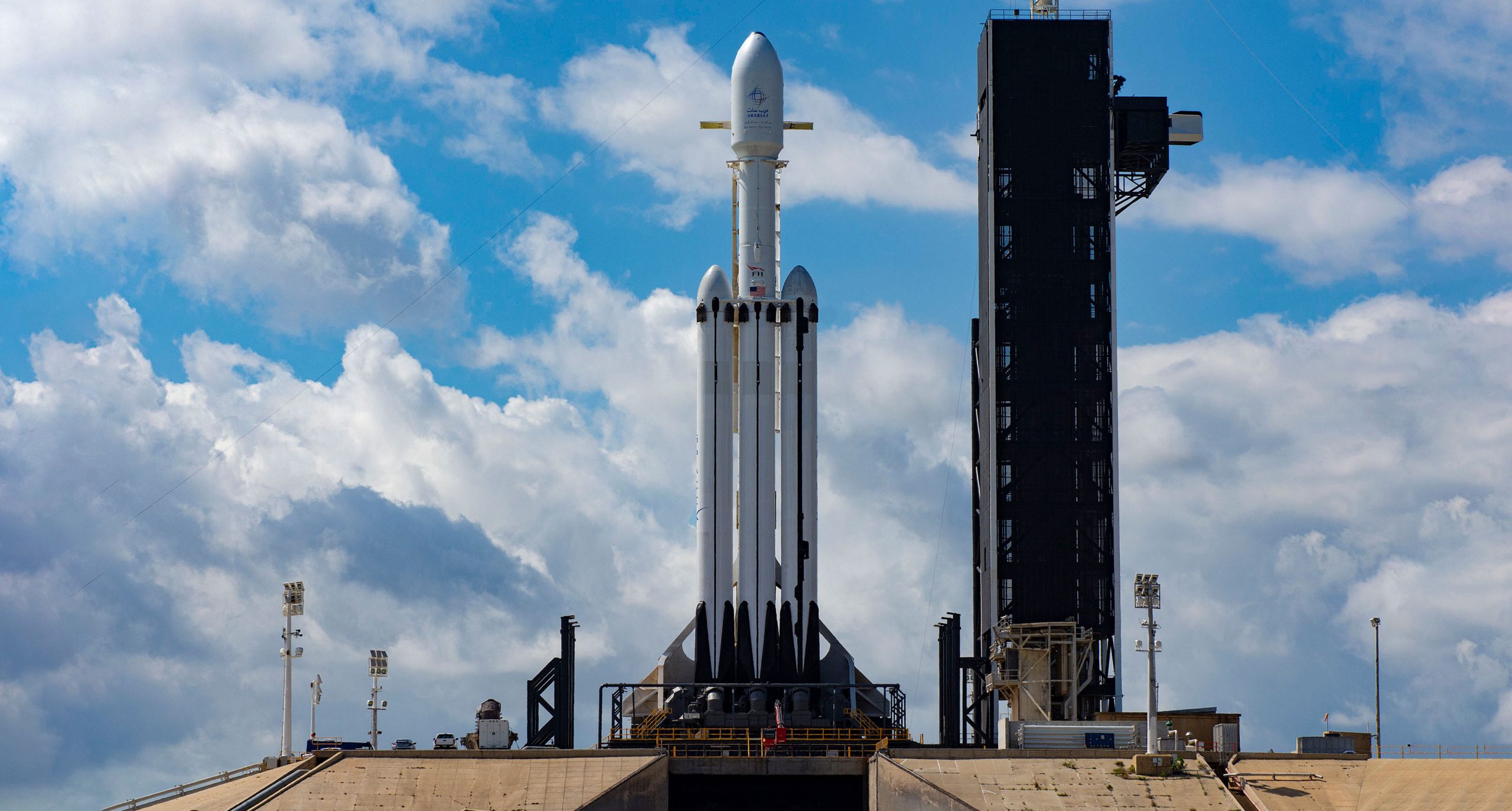
SpaceX just delayed the launch debut of Falcon Heavy Block 5 by about an hour and a half to dodge bad high-altitude wind conditions that would be a risk to the vehicle during launch and to both side boosters during their subsequent landing attempts.
Falcon Heavy Flight 2’s evening launch window now sits at 8:00-8:32 pm ET (00:00-00:32 UTC), leaving little margin for any bugs prior to liftoff but still plenty of time for at least one serious attempt. Featuring three brand new Block 5 boosters, this mission also has the potential to redeem a slight anomaly that caused Falcon Heavy Flight 1’s center core to be destroyed during a recovery attempt. Both side boosters will return to SpaceX’s Cape Canaveral Landing Zones 1 and 2 (LZ-1/LZ-2), while the Block 5 center core will aim for drone ship Of Course I Still Love You (OCISLY) some 1000 km (~600 mi) distant in the Atlantic Ocean.
Weather in the Atlantic is currently about as good as could be expected, with minimal waves and low winds, excellent conditions for the safe recovery of Falcon Heavy’s center core – likely B1055 – and Version 2 payload fairing halves. Although fairing recovery vessel Mr. Steven is also out and about, the vessel will not be taking part in this launch’s recovery efforts after an anomaly earlier this year catastrophically damaged his arms and net, breaking two arms off and resulting in the loss of the net.
All other SpaceX vessels – GO
During Falcon Heavy Flight 1, the rocket’s center core – B1032 – was destroyed when a failure to reignite its landing Merlin 1D engines resulted in the booster slamming into the ocean at more than 300 mph (~500 km/h). The impact was apparently so severe that it actually seriously damaged the OCISLY’s maneuvering thrusters despite the fact that it didn’t directly strike the drone ship. According to CEO Elon Musk, B1032 had run out of the TEA/TEB (
Regardless, prior to December 2018, B1032 was the first failed SpaceX landing after dozens of successful attempts. In December, Falcon 9 B1051 suffered an unrelated failure with the hydraulic pump system that controls its titanium grid fins, causing the new Block 5 booster to land softly in the Atlantic Ocean, missing LZ-1 by a few miles. Since the first successful Falcon 9 land-based and sea-based recoveries in December 2015 and April 2016 respectively, SpaceX has landed Falcon 9 and Heavy boosters 35 times with one complete failure (Falcon Heavy, B1032) and one partial failure (Falcon 9, B1051).
If all goes as planned during Falcon Heavy Flight 2, SpaceX will have successfully returned boosters to its East Coast landing zones after more than 14 months of inactivity, landed a Falcon Heavy center core for the first time ever, and recovered three boosters nearly simultaneously after a single launch – also for the first time. Falcon Heavy’s third launch could happen as early as June 2019 – two months from now – if everything is safely recovery.
SpaceX’s launch livestream will go live approximately 20 minutes before liftoff, currently scheduled for no earlier than 8pm ET (00:00 UTC, April 11).
Check out Teslarati’s Marketplace! We offer Tesla accessories, including for the Tesla Cybertruck and Tesla Model 3.



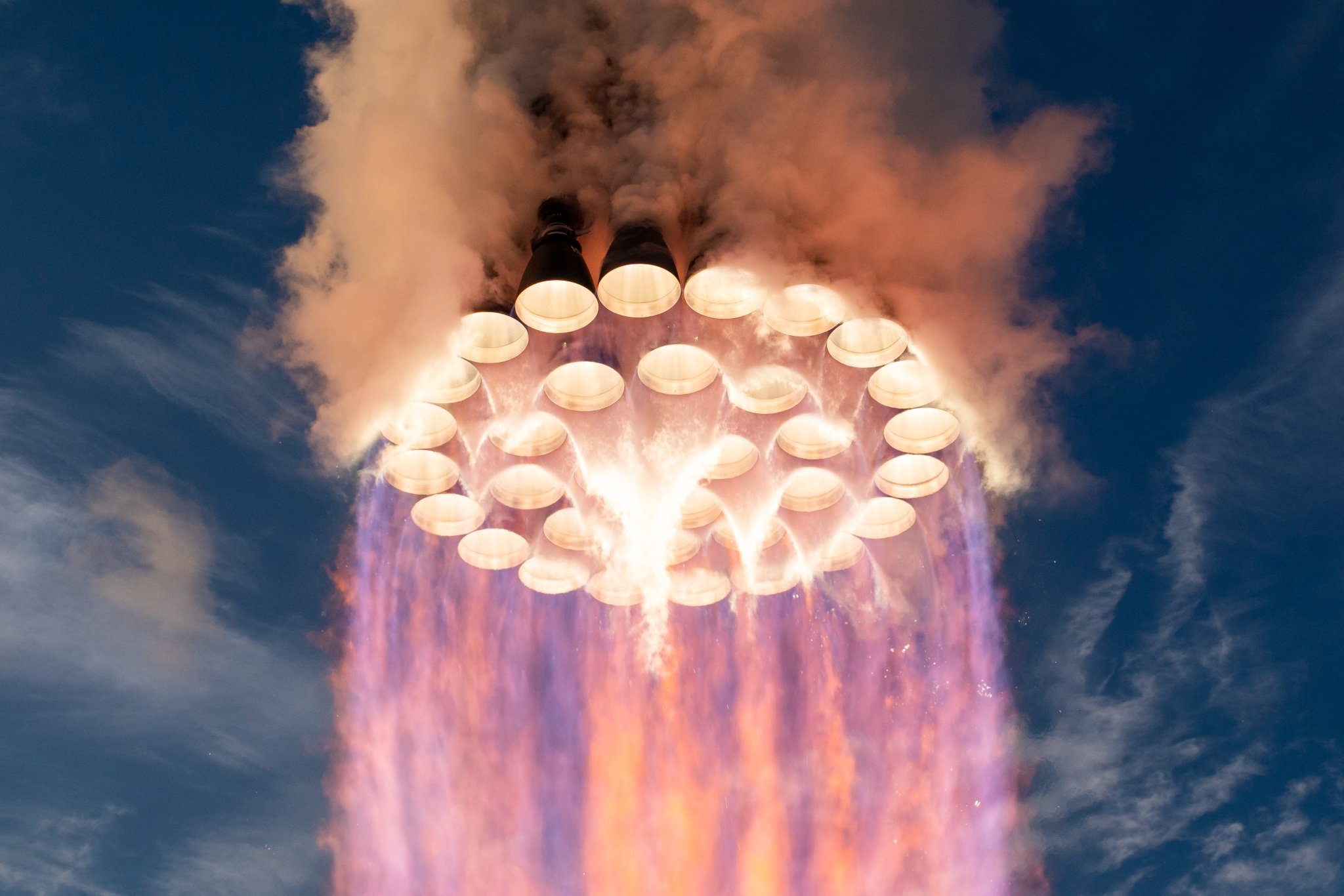
SpaceX’s Raptor engine family has steadily increased sea-level thrust while simultaneously reducing mass, turning iterative engineering gains into substantially higher performance for the Super Heavy booster. CEO Elon Musk shed more light on how powerful Raptor 4 will be, and it’s pretty crazy.
Raptor 1 delivered 185 metric tons of thrust at roughly 2,080 kilograms, while Raptor 2 raised that to 230 tons while cutting mass to about 1,630 kilograms. SpaceX data for Raptor 3 lists a target of 280 tons at 1,525 kilograms (with further reductions in associated vehicle hardware), while operational flight ratings have been cited near 250 tons.
This morning, Elon Musk stated that Raptor 4 is expected to reach 300 tons of sea-level thrust at roughly the same mass as Raptor 3. Across these versions, thrust has risen by more than 60 percent from the first engines while engine mass has fallen, producing a sharp improvement in thrust-to-weight ratio. This is a true testament to how great SpaceX engineering has been:
🚀 Elon says Raptor 4 will make 300 tons of thrust at sea level at roughly the same mass as Raptor 3.
How far Raptor has come:
Raptor 1: 185 tf, 2,080 kg
Raptor 2: 230 tf, 1,630 kg
Raptor 3: 250 tf, 1,525 kg
Raptor 4: 300 tf33 on Super Heavy = ~9,900 tf, nearly 3x Saturn V https://t.co/HQDswZhyvL
— TESLARATI (@Teslarati) October 26, 2026
With 33 engines on SuperHeavy, the jump from earlier versions to a 300-ton Raptor 4 would produce roughly 9,900 metric tons of total liftoff thrust, nearly three times the Saturn V’s approximately 3,400 metric tons from its five F-1 engines.
This is not just a larger number on a data sheet, either, as sea-level thrust is the force available the moment the vehicle leaves the pad. This is when it is heaviest and still deep in Earth’s gravity well and dense atmosphere.
Higher levels of sea-level thrust directly improves the initial thrust-to-weight ratio of the full stack. A higher ratio produces faster acceleration off the pad, which shortens the time the rocket has to spend fighting gravity, and gravity losses during the first minute or two of the flight are a major drain on total available delta-v. Every second shaved off of that early climb preserves more propellant energy for reaching orbital velocity or for carrying extra payload.
Because Super Heavy’s engine count is constrained by vehicle diameter and packing density, increasing thrust per engine is the most straightforward way to raise total liftoff performance without redesigning the booster structure or design.
The same-mass target for Raptor 4 is equally important. Holding engine mass roughly constant while raising thrust improves the engine’s own thrust-to-weight ratio and reduces the structural and propellant mass fraction that must be carried solely to support the engines.
Earlier Raptor iterations also simplified or eliminated extensive vehicle-side hardware such as heat shields. These gains compound: more force for less installed mass leaves additional capacity for propellant, payload, or operational margins such as engine-out capability.
For Starship’s architecture, the practical effects are large. Greater liftoff thrust supports heavier vehicles, larger propellant loads, and higher payloads to low Earth orbit, figures SpaceX has targeted in the 100-plus-ton reusable range. That capacity underpins orbital refueling, lunar missions, and eventual Mars cargo and crew flights.
Continued growth in sea-level thrust therefore tightens the gap between theoretical rocket performance and the high flight rates and reusability needed to make large-scale space transport practical.
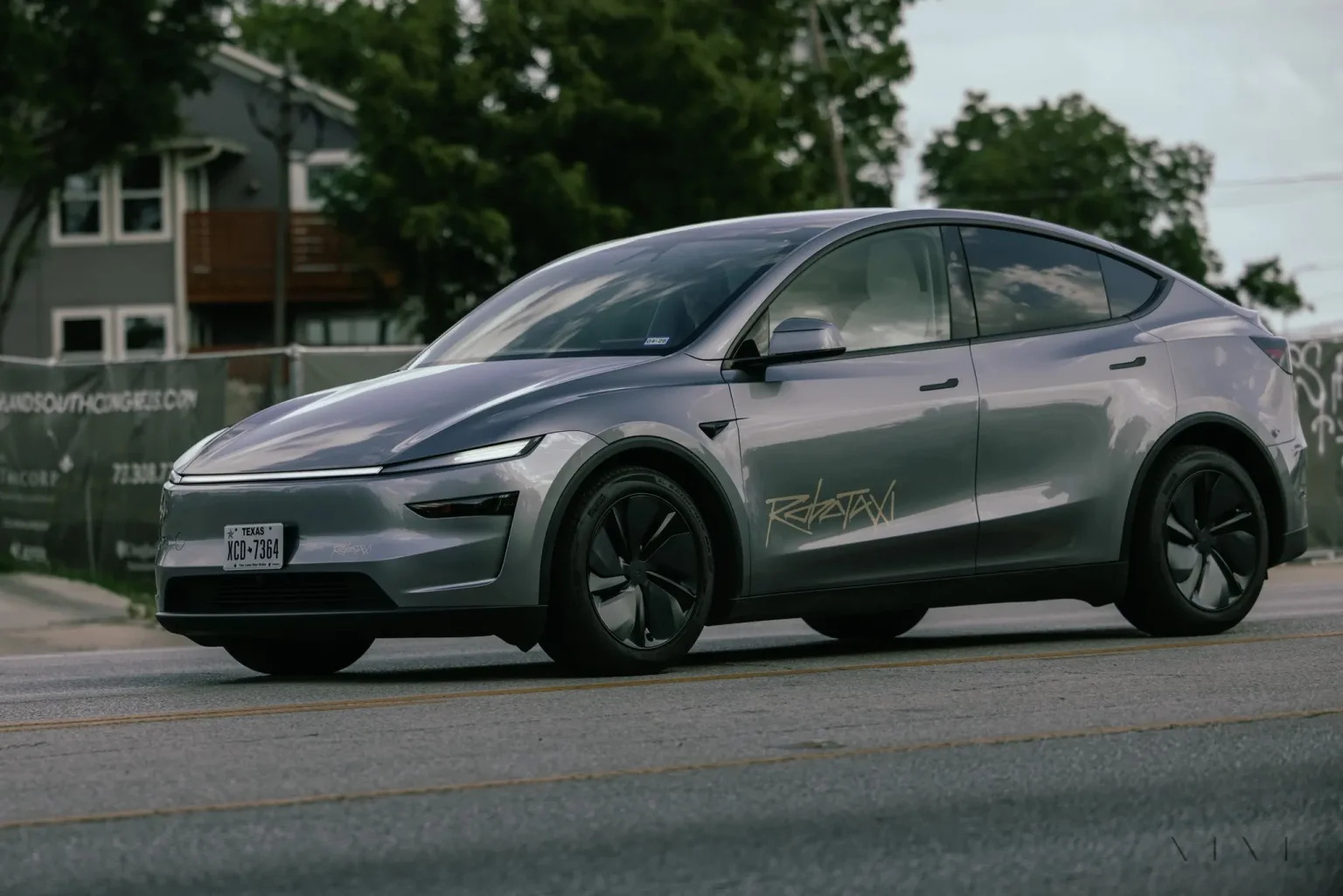
Tesla expanded its Robotaxi geofence in Houston, Texas, today, enlarging the service area and drawing a new rocket-shaped boundary across the city’s northwestern and central parts.
Although CEO Elon Musk said it was just a coincidence, the expansion seems to be an ode to SpaceX and its potential merger with Tesla.
🚨 Tesla has just expanded its Robotaxi geofence in Houston
It looks a lot like a rocket — we all remember the shape in Austin 🤣 https://t.co/cFOPEuiJ4u
— TESLARATI (@Teslarati) October 26, 2026
The official Tesla Robotaxi account announced the change with the lines “Houston, we have liftoff” and “Bigger service area now live,” pairing them with a map overlay.
The prior white geofence, roughly 25 square miles covering Jersey Village, Harvest Bend, and the Willowbrook corridor along U.S. 290 and State Highway 249, now sits inside a larger blue zone that stretches southeast toward Bellair and closer to central Houston.
Houston’s Robotaxi service launched on April 18, 2026, the same day as Dallas, as Tesla’s first unsupervised public expansion beyond Austin. From the start, the vehicles were Model Ys running without anyone in the front seats, booked through the dedicated Tesla Robotaxi app and open to the public inside the geofence.
Trackers measured the initial zone at about 25 square miles; by late September it had not grown substantially. Community and registry data indicated a modest local fleet of unsupervised Model Ys, while dozens to nearly 200 Cybercabs, the purpose-built, steering-wheel-free two-seaters, have been spotted staging and testing in Houston lots, though public Cybercab rides remain limited to Austin for now.
Across the broader Robotaxi program, Tesla began public Robotaxi rides in Austin in June 2025, as a small geofence and vehicles with safety monitors became available for a ride-hailing service. Later on, Tesla removed the monitors and steadily expanded the service area until it covered most of the Austin metro area.
Unsupervised Robotaxi services now run in six cities: Austin, Dallas, Houston, Miami, Orlando, and Tampa. Cumulative driverless miles reported by the company have reached several million. The Cybercab entered public service in Austin in early September 2026 and has scaled rapidly there. The company has also said that Dallas is next for Cybercab rides in November, with further cities and 24/7 hours targeted by year-end, plus fleet-operator sales of the vehicle.
Waymo also operates a fully driverless service in Houston, which has been open to the public since August of this year.
The Houston expansion continues Tesla’s pattern of starting with tightly controlled validation zones before widening coverage as real-world data accumulates, while the rocket motif on the map underscores the company’s habit of injecting visual flair into its autonomy rollout.
Riders inside the new boundary can request unsupervised Model Y trips in the Robotaxi app; exact operating hours and further Cybercab availability remain subject to app updates and company statements.
Elon Musk
The Starship moon landing number NASA and Elon Musk can’t agree on
Musk disputes NASA estimate of 22 Starship launches for Moon landing, predicting 6 to 8.

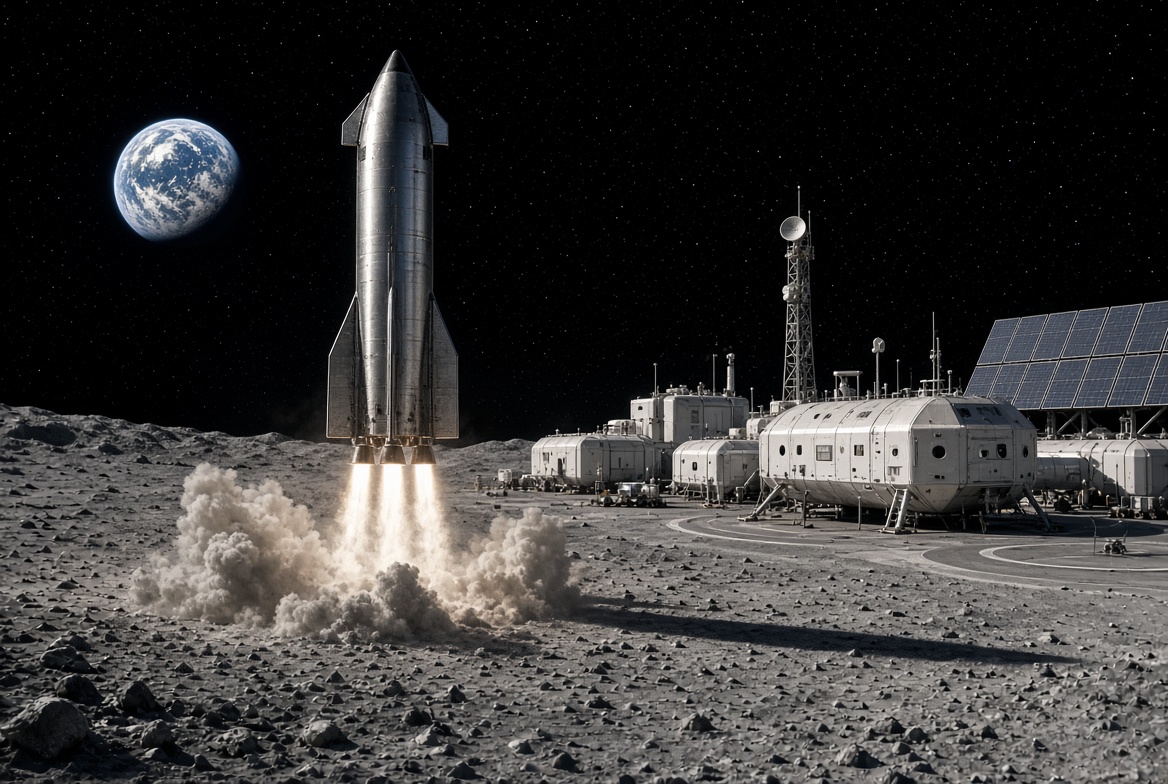
Elon Musk is disputing a new NASA safety panel estimate of how many Starship launches it will take to put astronauts on the Moon, saying the real number will be less than half the panel’s figure.
On Thursday, NASA’s Aerospace Safety Advisory Panel held its quarterly public meeting. Panel member Charlie Precourt, a former NASA astronaut, flagged the fueling process for SpaceX’s lunar lander as a major risk for Artemis IV, the mission planned to land a crew on the Moon in 2028. “We need to keep our eyes on numerous required fuelings for the lander,” Precourt said, according to Ars Technica. “I think the last estimate is around 22 flights.”
Ars Technica’s Eric Berger posted the comment on X, and Musk replied. “That’s way too high,” Musk wrote. “Actual number will be more like 6 to 8.”
The disagreement comes down to a basic problem with sending a ship as large as Starship to the Moon. Starship burns nearly all of its propellant just reaching Earth orbit, so it cannot continue on to the Moon without stopping for a refill. SpaceX’s answer is a gas station in space. First, a Starship that works as a storage tank, called a depot, is launched into orbit. Then a series of tanker Starships launch one at a time, dock with the depot and pump their leftover propellant into it. Once the depot is full, the lunar lander version of Starship launches, docks, fills up and heads for the Moon.
Every tanker trip is its own full rocket launch, which is why the count matters. More launches mean more time, more cost and more chances for something to go wrong before astronauts ever leave Earth. Berger estimated that even if SpaceX reaches twice weekly Starship launches by the end of 2027, filling a depot at the panel’s number would still take roughly three months.
How many tankers are needed depends mostly on how much propellant each one can carry to orbit and how much is lost along the way. Starship’s fuel and oxygen are stored at extremely cold temperatures, and some of it slowly boils off while waiting in orbit. More is lost in each transfer. NASA appears to be working from what Starship can lift today, while Musk’s range assumes a more capable rocket.
Musk has pushed back on higher counts before. In 2021, after a government document suggested 16 launches, he called that “extremely unlikely” and said eight tankers would be the most required.
Much of the answer depends on hardware SpaceX has not finished flying. As Teslarati noted earlier this year, the company plans to carry out the refueling process with its upgraded V3 Starship, and Precourt described Artemis IV as carrying “a large number of firsts.” He also praised NASA Administrator Jared Isaacman’s team for working to clear obstacles for both SpaceX and Blue Origin, whose Blue Moon lander does not rely on orbital refueling for its first mission.

Tesla has a Cybercab problem nobody saw coming

How SpaceX Is raising Raptor’s sea-level thrust while holding engine mass steady


