News
Tesla expands Robotaxi app access once again, this time on a global scale
Tesla said recently it plans to launch Robotaxi in Miami, Houston, Las Vegas, Phoenix, and Dallas.

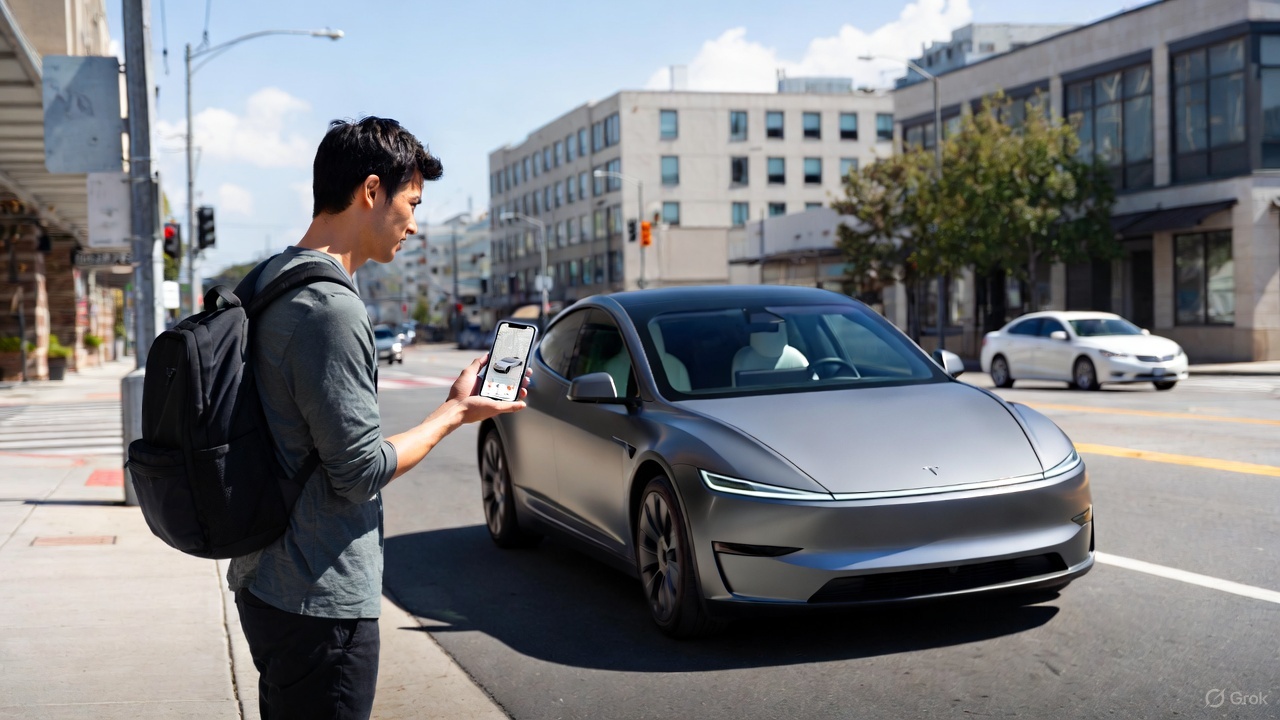
Tesla has expanded Robotaxi app access once again, but this time, it’s on a much broader scale as the company is offering the opportunity for those outside of North America to download the app.
Tesla Robotaxi is the company’s early-stage ride-hailing platform that is active in Texas, California, and Arizona, with more expansion within the United States planned for the near future.
Tesla said recently it plans to launch Robotaxi in Miami, Houston, Las Vegas, Phoenix, and Dallas.
The platform has massive potential, and Tesla is leaning on it to be a major contributor to even more disruption in the passenger transportation industry. So far, it has driven over 550,000 miles in total, with the vast majority of this coming from the Bay Area and Austin.
First Look at Tesla’s Robotaxi App: features, design, and more
However, Tesla is focusing primarily on rapid expansion, but most of this is reliant on the company’s ability to gain regulatory permission to operate the platform in various regions. The expansion plans go well outside of the U.S., as the company expanded the ability to download the app to more regions this past weekend.
So far, these are the areas it is available to download in:
- Japan
- Thailand
- Hong Kong
- South Korea
- Australia
- Taiwan
- Macau
- New Zealand
- Mexico
- U.S.
- Canada
Right now, while Tesla is focusing primarily on expansion, it is also working on other goals that have to do with making it more widely available to customers who want to grab a ride from a driverless vehicle.
One of the biggest goals it has is to eliminate safety monitors from its vehicles, which it currently utilizes in Austin in the passenger’s seat and in the driver’s seat in the Bay Area.
A few weeks ago, Tesla started implementing a new in-cabin data-sharing system, which will help support teams assist riders without anyone in the front of the car.
Tesla takes a step towards removal of Robotaxi service’s safety drivers
As Robotaxi expands into more regions, Tesla stands to gain tremendously through the deployment of the Full Self-Driving suite for personal cars, as well as driverless Robotaxis for those who are just hailing rides.
Things have gone well for Tesla in the early stages of the Robotaxi program, but expansion will truly be the test of how things operate going forward. Navigating local traffic laws and gaining approval from a regulatory standpoint will be the biggest hurdle to jump.


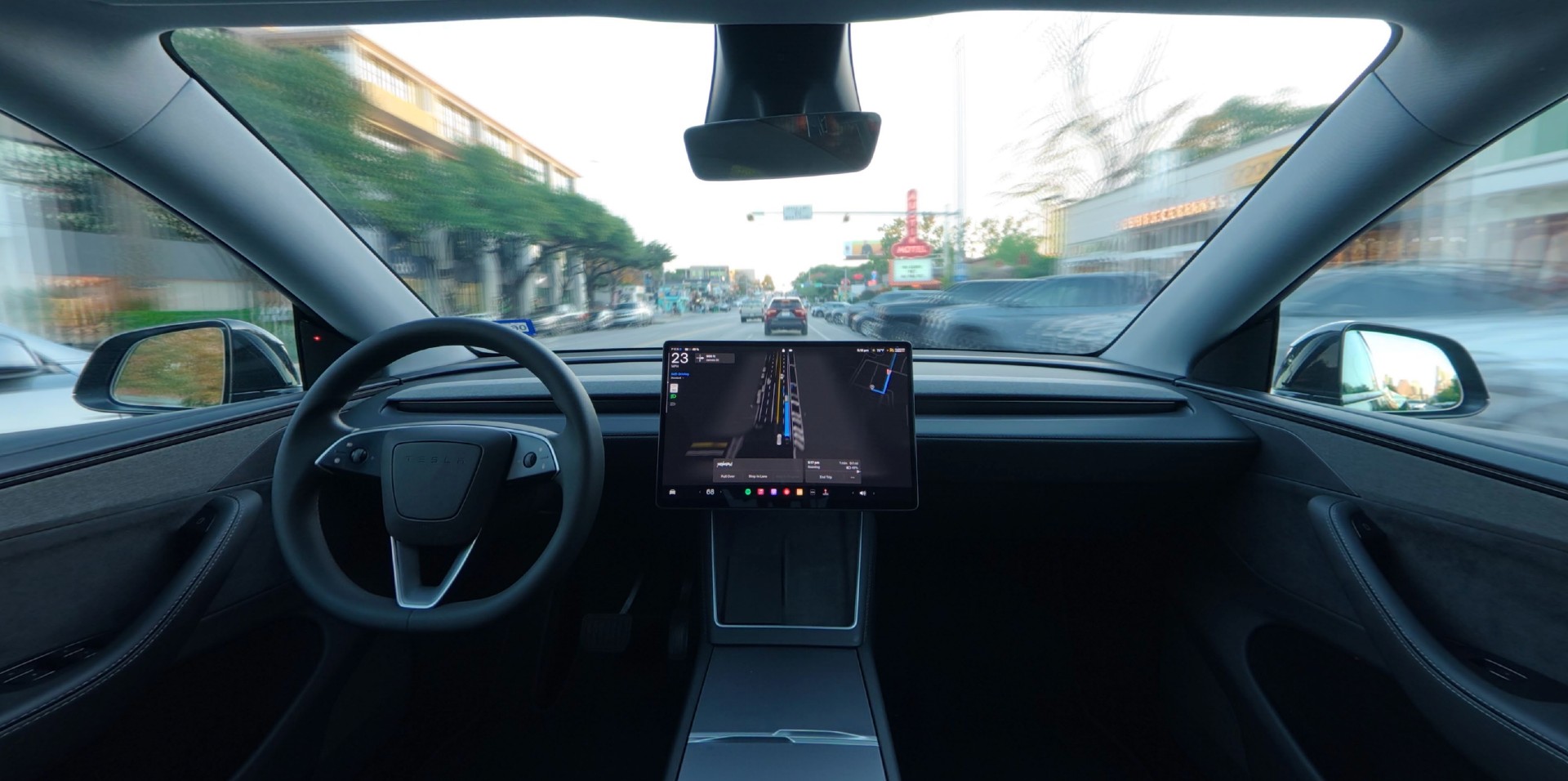
Tesla has reached a notable benchmark in its autonomous driving program after its Robotaxi fleet surpassed one million miles of unsupervised operation. The company made the announcement during its Cybercab event in Austin on September 3.
Tesla Vice President of AI Ashok Elluswamy told attendees he was happy to report the fleet had achieved one million miles of unsupervised Robotaxi operation as a testament to safety.
The new total marked a sharp increase from the 380,000 unsupervised miles Tesla disclosed during its second-quarter 2026 earnings update in late July.
In roughly six weeks, the company added about 620,000 miles. That acceleration followed Tesla’s decision to remove in-vehicle safety monitors from most of its operations outside the San Francisco Bay Area.
Credit: Tesla
Tesla first launched Robotaxi service in Austin in June 2025 with safety drivers present. It later began fully unsupervised rides and expanded into Dallas, Houston, Miami, Orlando, and Tampa. The San Francisco Bay Area remains the exception, where a safety monitor still rides in the vehicle under California permitting rules.
The company has not released a city-by-city breakdown of the one million unsupervised miles.
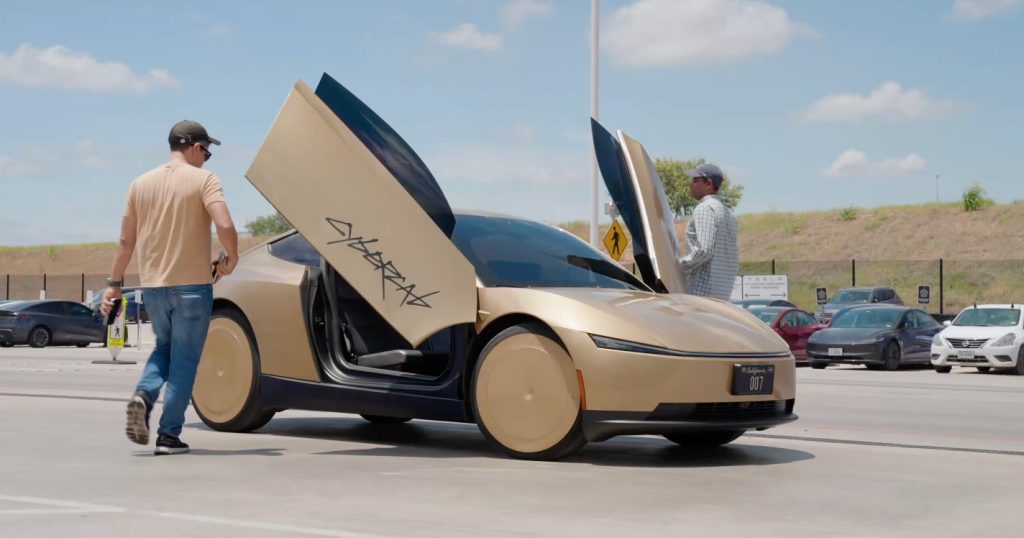
The milestone arrived as Tesla began offering public Cybercab rides in Austin. The purpose-built vehicle has no steering wheel or pedals and is designed only for autonomous ride-hailing. Production versions joined the existing fleet of modified Tesla vehicles already operating in the service.
Tesla’s unsupervised mileage is growing at a double-digit weekly rate according to earlier company comments, yet its fleet size remains modest compared with established competitors. Waymo has accumulated more than 200 million fully autonomous rider-only miles. Tesla has described its own unsupervised operations as having recorded zero notable incidents in the period leading up to the July update.
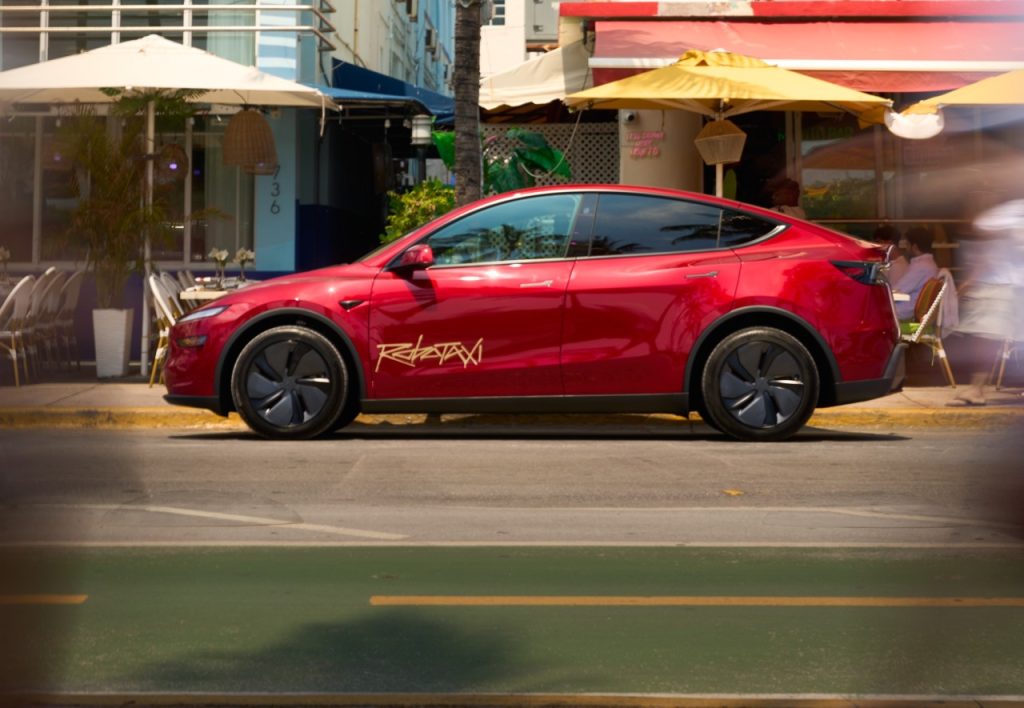
The one-million-mile figure reflects Tesla’s shift from supervised testing to broader driverless service in multiple states. It also highlights the company’s strategy of using both existing Model Y vehicles and the new Cybercab to scale its network.
Credit: Tesla
Whether the rapid recent growth continues will depend on further city expansions, regulatory approvals, and the performance of the purpose-built Cybercab in everyday paid rides. Tesla has not specified how many of the latest miles involved the new vehicle versus the rest of the fleet.
The announcement underscores Tesla’s progress toward a larger robotaxi network while illustrating the remaining gap in total autonomous experience relative to longer-operating rivals.
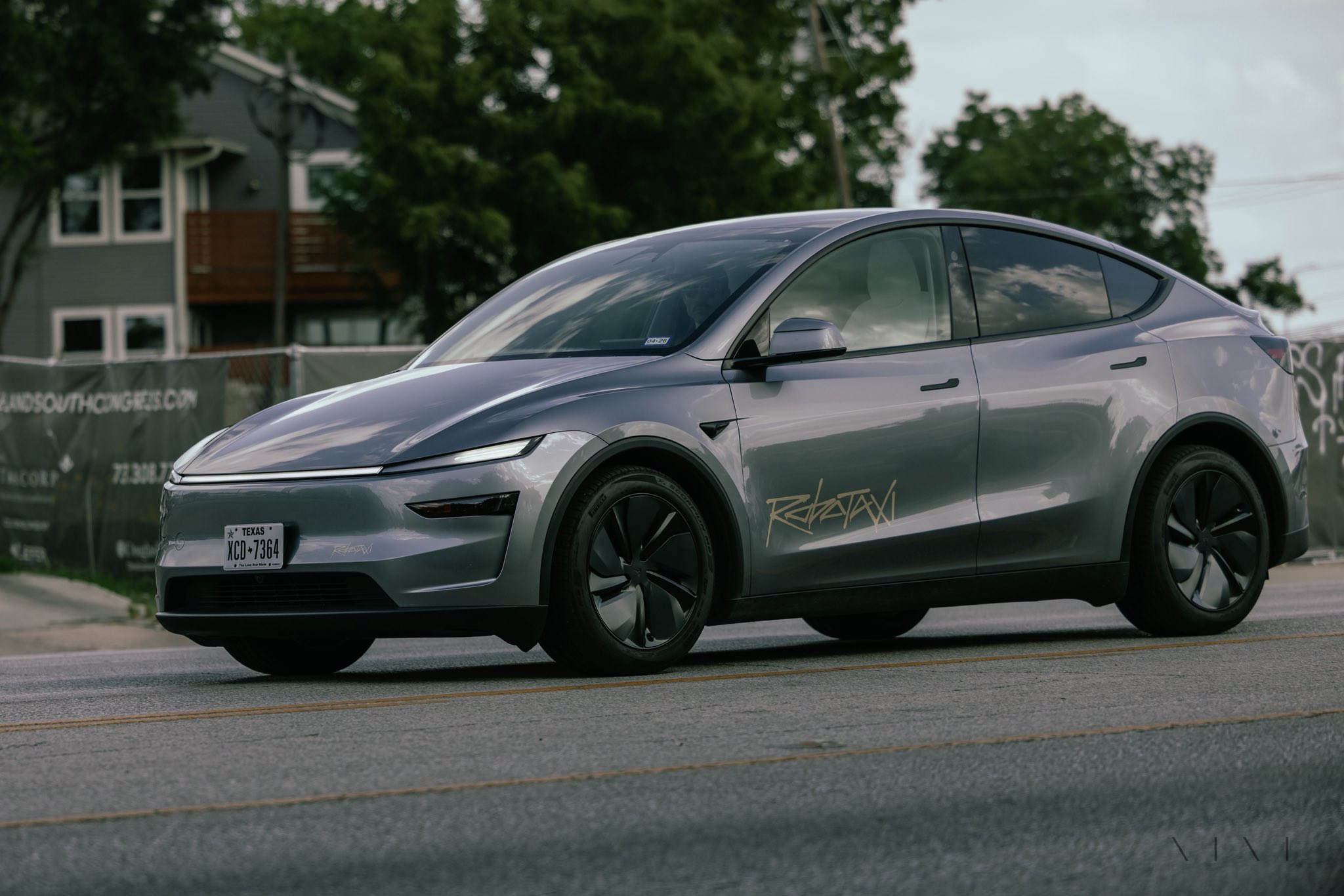
Tesla AI lead Ashok Elluswamy said this week that 24-hour Robotaxi service is close. Replying on X to a rider who wanted Cybercab trips all night, he wrote that the capability would arrive “next month or so” once “the next tech to merge on the v15 plan” is ready.
The comment landed on September 4, one day after Tesla opened public Cybercab rides in Austin. It is the clearest near-term timeline yet for overnight unsupervised operation. Tesla’s paid Robotaxi network currently runs from 6 a.m. to 10 p.m. seven days a week across Austin, Dallas, Houston, Miami, Orlando, and Tampa.
next month or so. the next tech to merge on the v15 plan will enable it.
— Ashok Elluswamy (@aelluswamy) September 4, 2026
That 16-hour window is shorter than the 6 a.m. to 2 a.m. schedule the company used for much of the prior year.
Elluswamy did not name the specific feature or say whether the change would apply first to purpose-built Cybercabs, the existing Model Y fleet, or both. He also offered no city-by-city rollout list. The link to Full Self-Driving v15 is nevertheless significant.
Tesla has described v15 as a step-change architecture with seven parallel improvement tracks and roughly ten times more parameters than earlier builds. Early versions of that software already operate on the Robotaxi fleet and contain about 40 percent of the planned gains.
By July 2026, the unsupervised fleet had logged more than 380,000 miles across six cities in two states with what the company called an impeccable safety record and no notable incidents caused by the vehicles themselves. Tesla has repeatedly argued that camera-based end-to-end neural networks, rather than extra sensors, are the core of the solution.
Overnight service would test that claim in lower-light conditions and would also raise vehicle utilization, a key variable for Robotaxi unit economics. The company has already begun using public Superchargers at night and is building dedicated Robotaxi charging sites.
Riders have asked why software must change if the cars already drive in the dark. The practical answer appears to be reliability and scale: Tesla has held back mass expansion until more of the v15 stack is merged, citing the need for higher confidence before putting thousands of unoccupied vehicles on streets around the clock.
If the next module arrives on the timetable Elluswamy sketched, 24-hour service could begin in October 2026 in at least some markets.
That would mark a shift from a daytime-bounded pilot to a service that can run whenever demand exists, including the late-night hours that have so far remained out of reach.
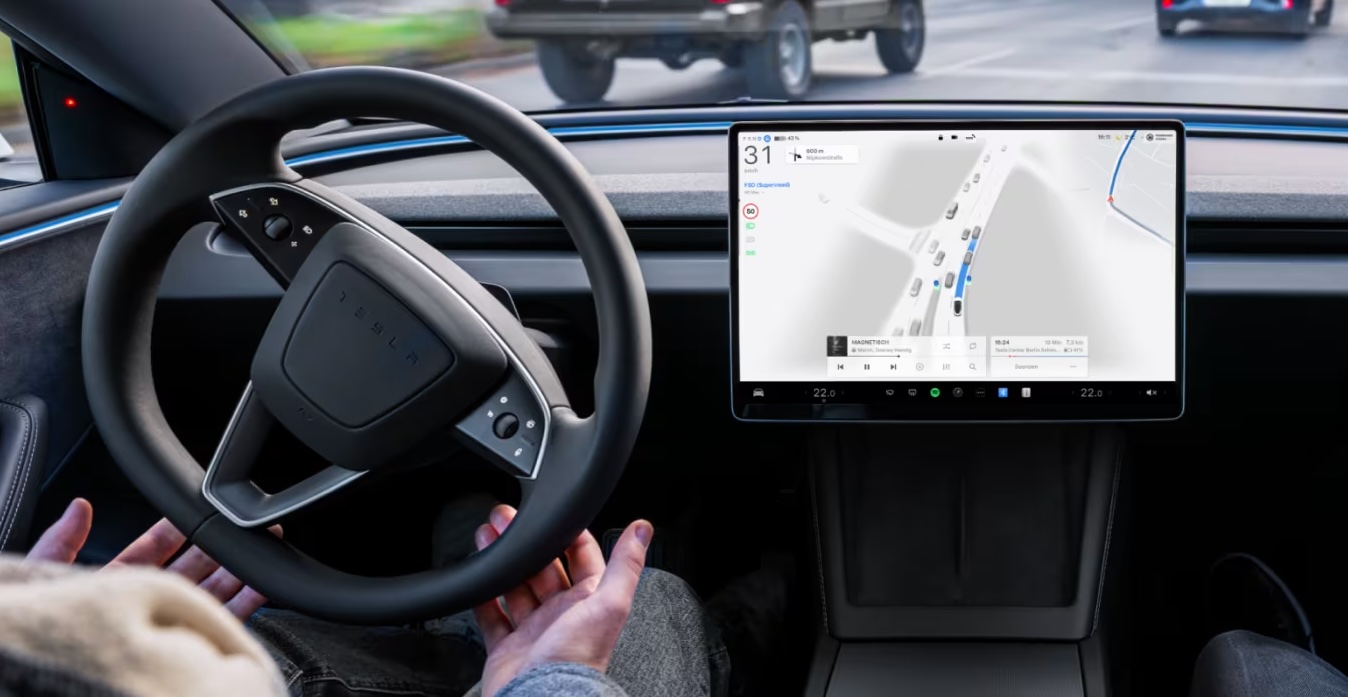
Tesla is beginning to roll out Full Self-Driving Supervised v14.3.9 with a new active safety layer that can take control even when the driver is operating the car manually.
Tesla AI said the software can activate FSD on the driver’s behalf when an imminent collision is detected and Automatic Emergency Braking may not be enough. It may also engage if the system detects heavy distraction or an accidental FSD disengagement.
FSD Supervised v14.3.9 starting to roll out shortly
This release includes a new active safety feature set: FSD Supervised can now activate on your behalf when an imminent collision is detected and Automatic Emergency Braking (AEB) may not be enough.
It may also engage if we…
— Tesla AI (@Tesla_AI) September 4, 2026
The capability is essentially Automatic Collision Evasion. However, unlike conventional AEB, which mainly applies the brakes in a straight line, this feature can use steering, braking, and acceleration together if the car calculates that stopping alone will not prevent impact and a safer path exists. The system may change lanes or move toward a shoulder when conditions allow, then continue driving after the immediate threat is handled rather than simply coming to a stop.
The intervention is meant as a last-resort safety net, not a replacement for attentive driving.
Tesla Full Self-Driving v14.3.7 early review: FSD saved me from an accident
Tesla’s own description still frames FSD as supervised assistance. Secondary reports on internal release notes say the feature can fire while the car is being driven manually if cabin-camera monitoring suggests the driver is not sufficiently attentive, such as reaching toward the back seat, or if FSD appears to have been turned off unintentionally.
After the emergency maneuver, the car is expected to alert the driver and request a return to manual control.
The safety case is straightforward. Many collisions happen in the last second because a driver is looking away, fumbles a control, or faces an obstacle that braking cannot fully solve. A system that can both recognize that AEB is insufficient and execute a coordinated evasive path can reduce those remaining high-severity events.
Re-engaging after accidental disengagement also addresses a practical failure mode: a small steering nudge that drops FSD at the worst moment. The advantage is a background safety net that uses the same vision stack already running in v14, instead of leaving the car solely to emergency braking once the driver is no longer in command.
The feature still depends on FSD being enabled and, according to reports, an active FSD purchase or subscription. It does not make the vehicle unsupervised. Drivers remain responsible, and Tesla has not published how often the system is expected to intervene or how it will handle false positives.
If the rollout is conservative and the false-alarm rate stays low, the update is a meaningful step: FSD is no longer only a feature the driver turns on. In the rare moments when disaster is already forming, it can step in.

Tesla crosses major Unsupervised Self-Driving milestone

Tesla Robotaxi will be a 24/7 service: here’s when


