News
Tesla partners with Lemonade for new insurance program
Tesla recently was offered “almost free” coverage for Full Self-Driving by Lemonade’s Shai Wininger, President and Co-founder, who said it would be “happy to explore insuring Tesla FSD miles for (almost) free.”

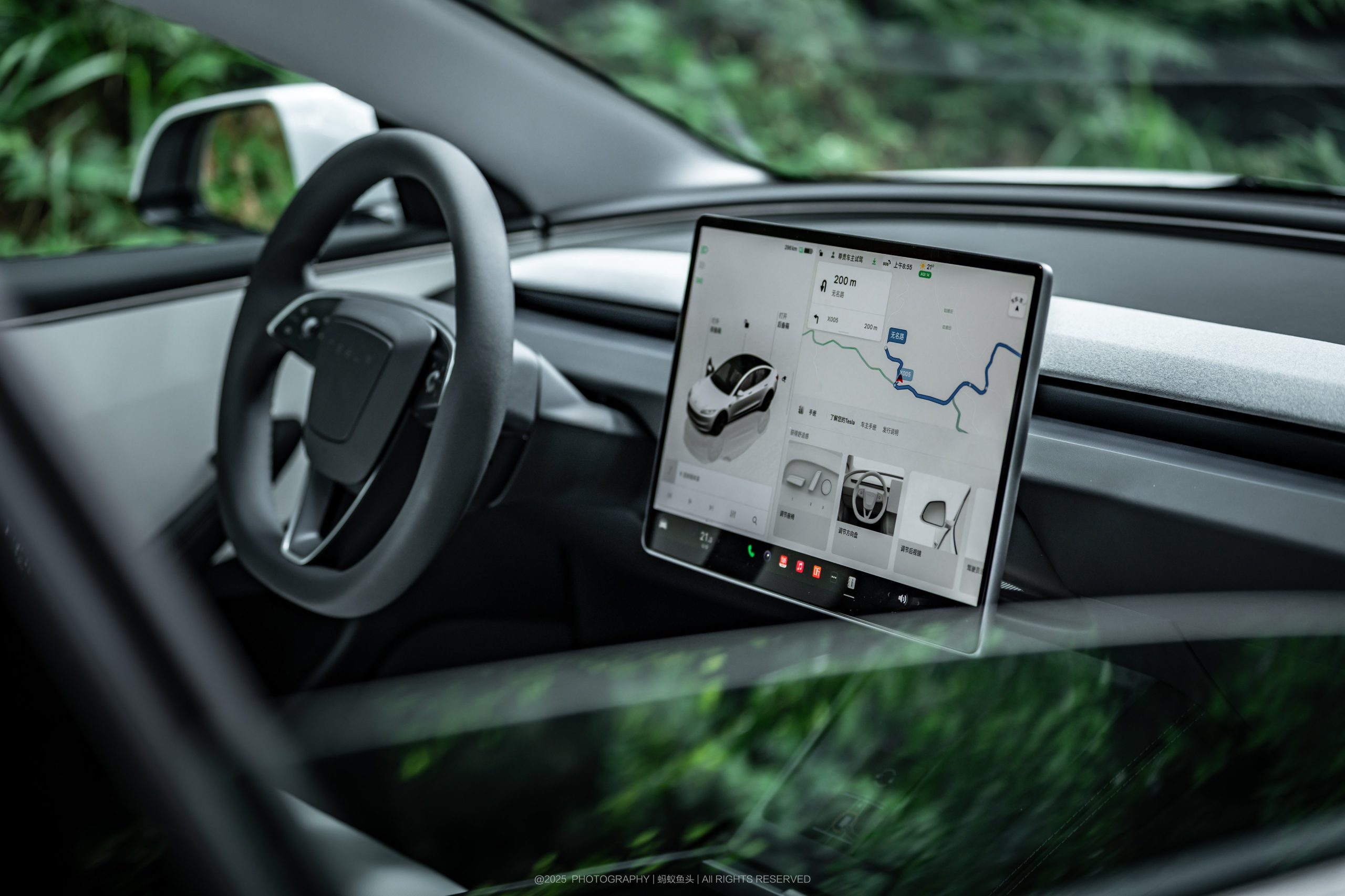
Tesla owners in California, Oregon, and Arizona can now use Lemonade Insurance, the firm that recently said it could cover Full Self-Driving miles for “almost free.”
Lemonade, which offered the new service through its app, has three distinct advantages, it says:
- Direct Connection for no telematics device needed
- Better customer service
- Smarter pricing
The company is known for offering unique, fee-based insurance rates through AI, and instead of keeping unclaimed premiums, it offers coverage through a flat free upfront. The leftover funds are donated to charities by its policyholders.
On Thursday, it announced that cars in three states would be able to be connected directly to the car through its smartphone app, enabling easier access to insurance factors through telematics:
Lemonade customers who own @Tesla vehicles in California, Oregon, and Arizona can now connect their cars directly to the Lemonade app! ⚡🚘
Direct connection = no telematics device needed 📵
Better customer experience 💃
Smarter pricing with Lemonade 🧠This is a game-changer… pic.twitter.com/jbabxZWT4t
— Lemonade (@Lemonade_Inc) December 11, 2025
Tesla recently was offered “almost free” coverage for Full Self-Driving by Lemonade’s Shai Wininger, President and Co-founder, who said it would be “happy to explore insuring Tesla FSD miles for (almost) free.”
The strategy would be one of the most unique, as it would provide Tesla drivers with stable, accurate, and consistent insurance rates, while also incentivizing owners to utilize Full Self-Driving for their travel miles.
Tesla Full Self-Driving gets an offer to be insured for ‘almost free’
This would make FSD more cost-effective for owners and contribute to the company’s data collection efforts.
Data also backs Tesla Full Self-Driving’s advantages as a safety net for drivers. Recent figures indicate it was nine times less likely to be in an accident compared to the national average, registering an accident every 6.36 million miles. The NHTSA says a crash occurs approximately every 702,000 miles.
Tesla also offers its own in-house insurance program, which is currently offered in twelve states so far. The company is attempting to enter more areas of the U.S., with recent filings indicating the company wants to enter Florida and offer insurance to drivers in that state.


Elon Musk
The Starship V3 static fire everyone was waiting for just happened
SpaceX fired all 33 Raptor 3 engines on Starship V3 today clearing the path for Flight 12.

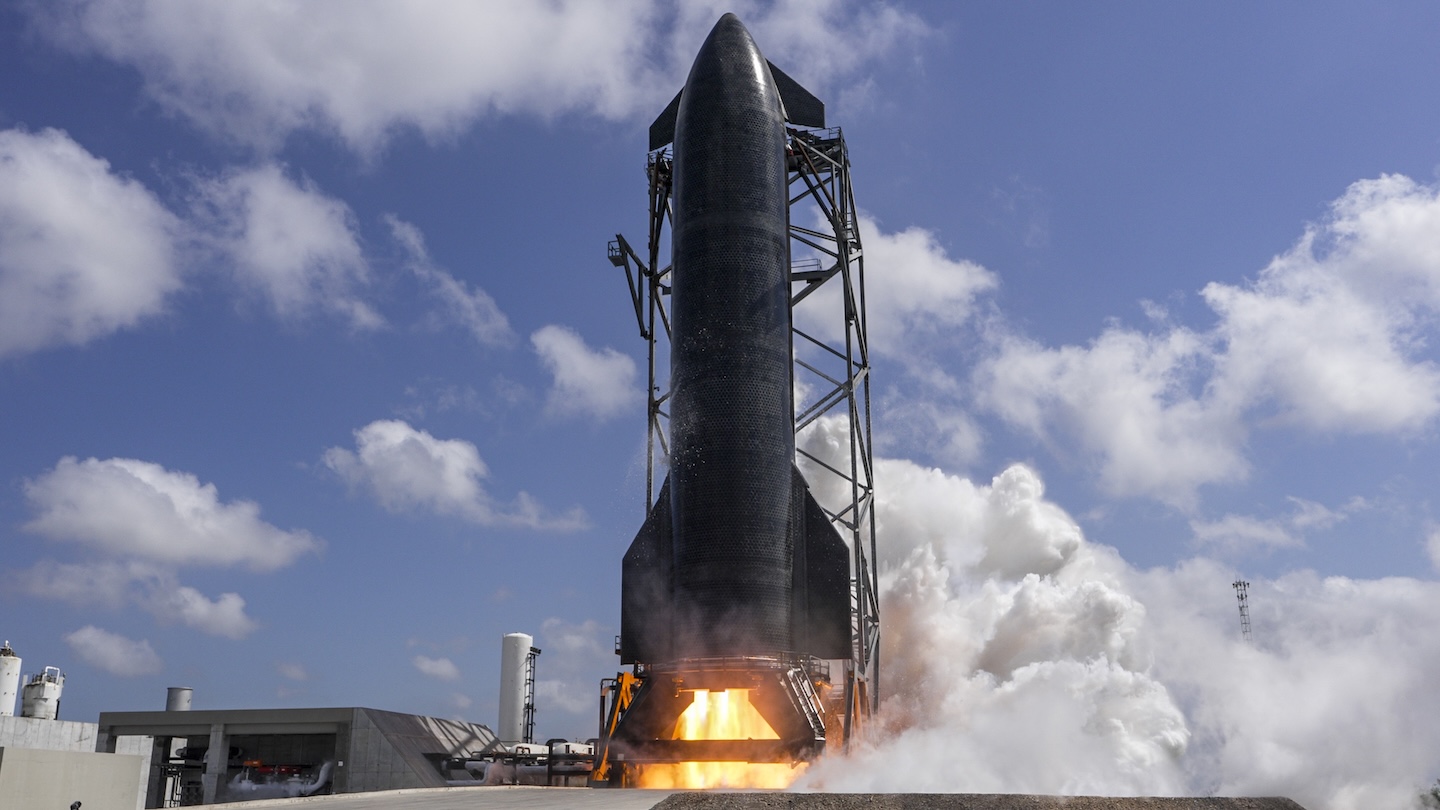
SpaceX is that much closer to launching their next-gen Starship after completing today’s full duration static fire of all 33 Raptor 3 engines out of Starbase, Texas. This marks the most powerful rocket engine test ever conducted and a direct signal that Flight 12, the maiden voyage of Starship V3, is imminent. SpaceX confirmed the test on X, posting that the full duration firing was completed ahead of the vehicle’s next flight test.
The road to today started on March 16, when Booster 19 completed a shorter 10-engine static fire, also at the newly constructed Pad 2. That test ended early due to a ground systems issue but confirmed all installed Raptor 3 engines started cleanly. Booster 19 returned to the Mega Bay, received its remaining 23 engines for a full complement of 33, and rolled back out this week for the complete test campaign. Musk confirmed earlier this month that Flight 12 is now 4 to 6 weeks away.
Countdown: America is going back to the Moon and SpaceX holds the key to what comes after
The numbers behind today’s test are genuinely hard to put in context. Each Raptor 3 engine produces roughly 280 tons of thrust, and with all 33 firing simultaneously, this generates approximately 9,240 tons of combined thrust, more than any rocket in history. For context, that’s enough thrust to lift the entire Empire State Building, and then some. V3 stands 408 feet tall and can carry over 100 tons to low Earth orbit in a fully reusable configuration. The V2 generation topped out at around 35 tons.
Historically, a successful full-duration static fire is the last major ground milestone before launch. SpaceX has followed this pattern with every Starship iteration since the program began in 2023. Musk has been direct about the ambition behind all of it. “I am highly confident that the V3 design will achieve full reusability,” he wrote on X earlier this year. Full reusability of both stages is the foundation of SpaceX’s plan to make regular flights to the Moon and Mars economically viable. Today’s test brings that goal one significant step closer.
Starship V3 delivers on two most critical promises of full reusability and in-orbit refueling. The reusability case is straightforward, and one we have seen with Falcon 9 wherein the rocket can fly again within a day rather than building a new one for every mission. It’s the only economic model that makes frequent lunar cargo runs viable. The in-orbit refueling piece is less obvious but equally essential. To reach the Moon with enough payload, Starship requires roughly ten dedicated tanker flights to fuel up a propellant depot in low Earth orbit before it can even begin its journey to the lunar surface. That capability has never been demonstrated at scale, and Flight 12 is the first step toward proving it works. As Teslarati reported, NASA’s Artemis II crew completed a historic lunar flyby earlier this month, the first humans to travel beyond low Earth orbit since 1972, but getting astronauts to actually land and eventually supply a permanent Moon base requires a cargo pipeline that only a fully reusable, refuelable Starship V3 can deliver at the volume and cost NASA’s plans demand.
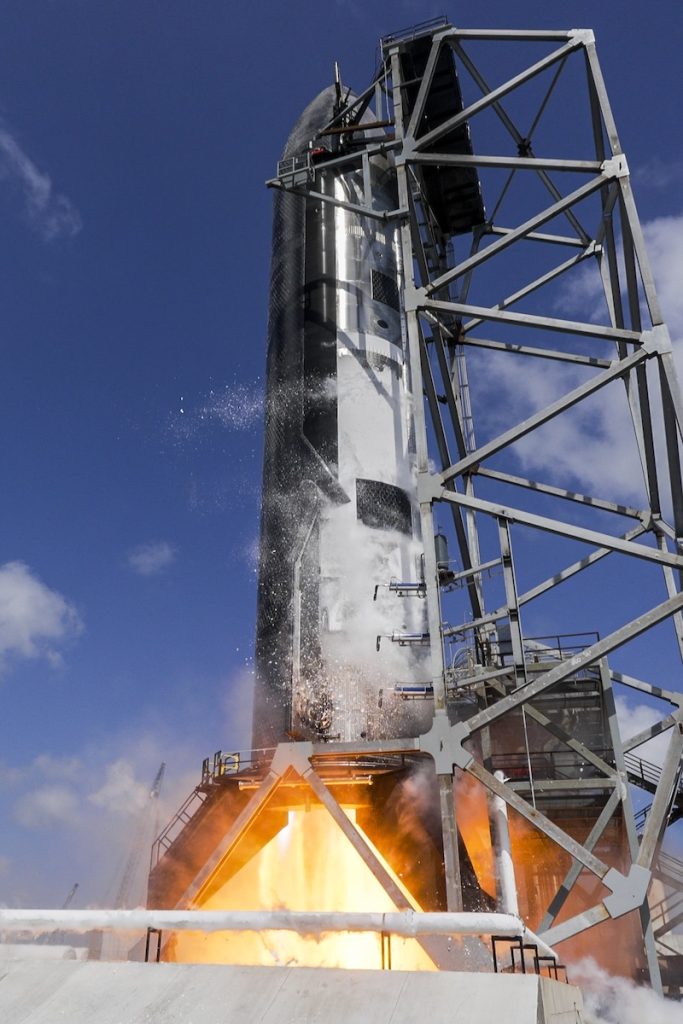
SpaceX Starship full duration static fire on April 14, 2026 from Starbase, Texas (Credit: SpaceX)
News
Tesla Full Self-Driving shows stunning maneuver in Europe to silence skeptics
In a striking demonstration of autonomous driving prowess, Tesla’s Full Self-Driving (FSD) system recently showcased its capabilities on the narrow rural roads of the Netherlands. Captured in two in-car videos, the system encountered scenarios that would challenge even the most experienced human drivers.
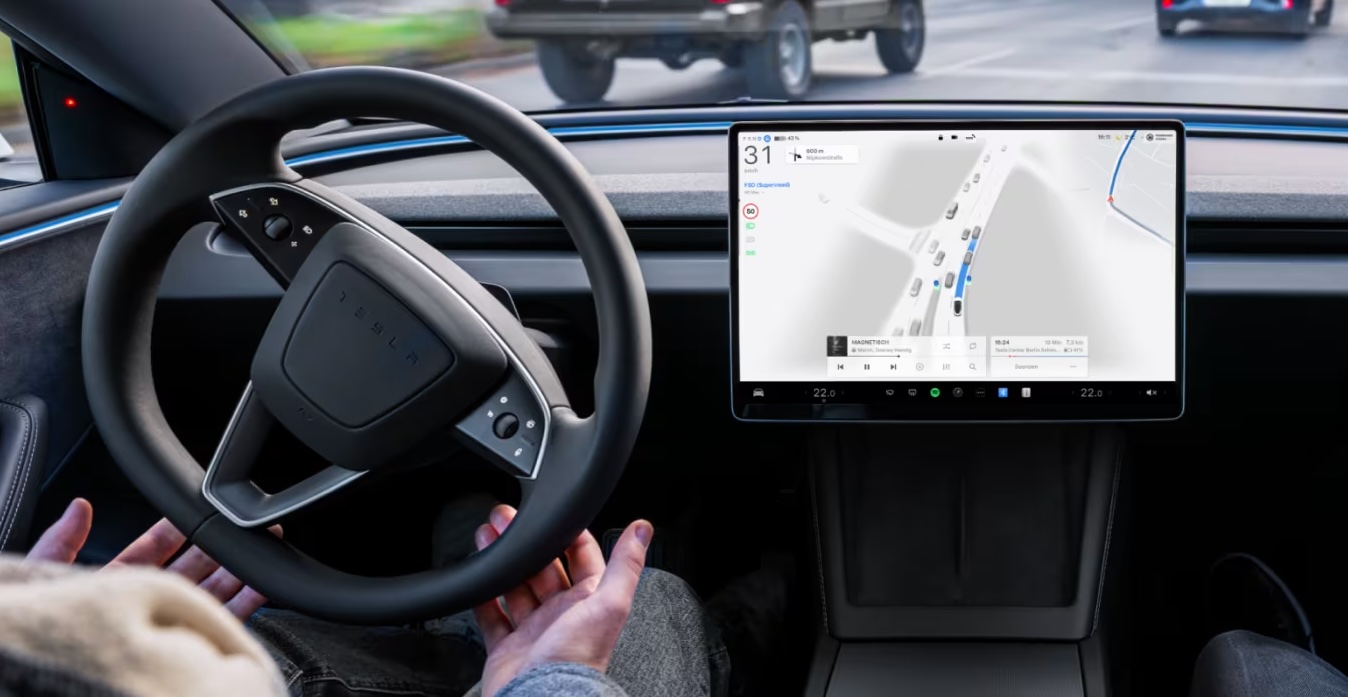
Tesla Full Self-Driving, fresh on the heels of its approval for operation on European roads for the first time, showed off a stunning maneuver that will certainly silence any skeptics on the continent.
Fresh off its approval in the Netherlands, Full Self-Driving is working toward a significant expansion into more parts of Europe.
In a striking demonstration of autonomous driving prowess, Tesla’s Full Self-Driving (FSD) system recently showcased its capabilities on the narrow rural roads of the Netherlands. Captured in two in-car videos, the system encountered scenarios that would challenge even the most experienced human drivers.
In the first clip, a wide tractor occupied more than half the lane on a tight two-way road. Rather than braking abruptly or forcing a collision risk, FSD smoothly edged the vehicle onto the adjacent bike path—using the extra space with precision—before seamlessly returning to the lane once clear.
The second clip was equally demanding: while overtaking a group of cyclists, an oncoming car approached at speed.
FSD maintained a safe, minimal buffer to the cyclists while timing the pass perfectly, avoiding any swerve or hesitation that could unsettle passengers or other road users.
People wonder if FSD is safe on narrow European roads. Well have a look what it did when a tractor took up more than half of the road or when overtaking bicycles with fast oncoming traffic. pic.twitter.com/z37Csa09sP
— Chanan Bos (@ChananBos) April 14, 2026
This maneuver highlights FSD’s advanced spatial reasoning and predictive planning. On roads often under three meters wide, with no room for error, the system calculated available clearance in real time, incorporated shoulder and path geometry, and executed a controlled deviation without compromising safety.
It treated the bike path as a legitimate extension of navigable space, something many drivers might hesitate to do, while respecting Dutch road norms and cyclist priority.
Such feats align closely with a growing library of impressive FSD maneuvers documented on camera worldwide.
In urban Amsterdam, for instance, FSD has navigated the world’s densest cyclist environments, weaving through hundreds of unpredictable bike movements on canal-side streets with tram tracks and pedestrians.
One uncut drive showed it yielding smoothly at crossings, overtaking where needed, and even handling a near-perfect auto-park in a tight residential spot, demonstrating the same low-speed precision seen in the rural clips.
Teslas using FSD have tackled turbo roundabouts in the Netherlands, complex multi-lane circles notorious for geometry challenges, merging confidently while yielding to traffic. Similar clips depict smooth handling of construction zones, emergency vehicle pull-overs, and gated parking barriers, where the car stops precisely, waits for clearance, and proceeds without driver input.
Collectively, these examples illustrate FSD’s evolution toward handling the unpredictable.
The rural Netherlands maneuvers aren’t isolated. Instead, they reflect a pattern of spatial awareness, cyclist deference, and traffic anticipation seen from city streets to highways.
As FSD continues refining through real-world data, videos like this one are certainly building a compelling case for its readiness on Europe’s varied roads.
News
Tesla utilizes its ‘Rave Cave’ for new awesome safety feature
Part of the massive interior overhaul of both the Model 3 “Highland” and Model Y “Juniper” was the addition of interior accent lighting to help bring out the mood of the vehicle, increase the customization of the interior, and to create a unique listening experience.
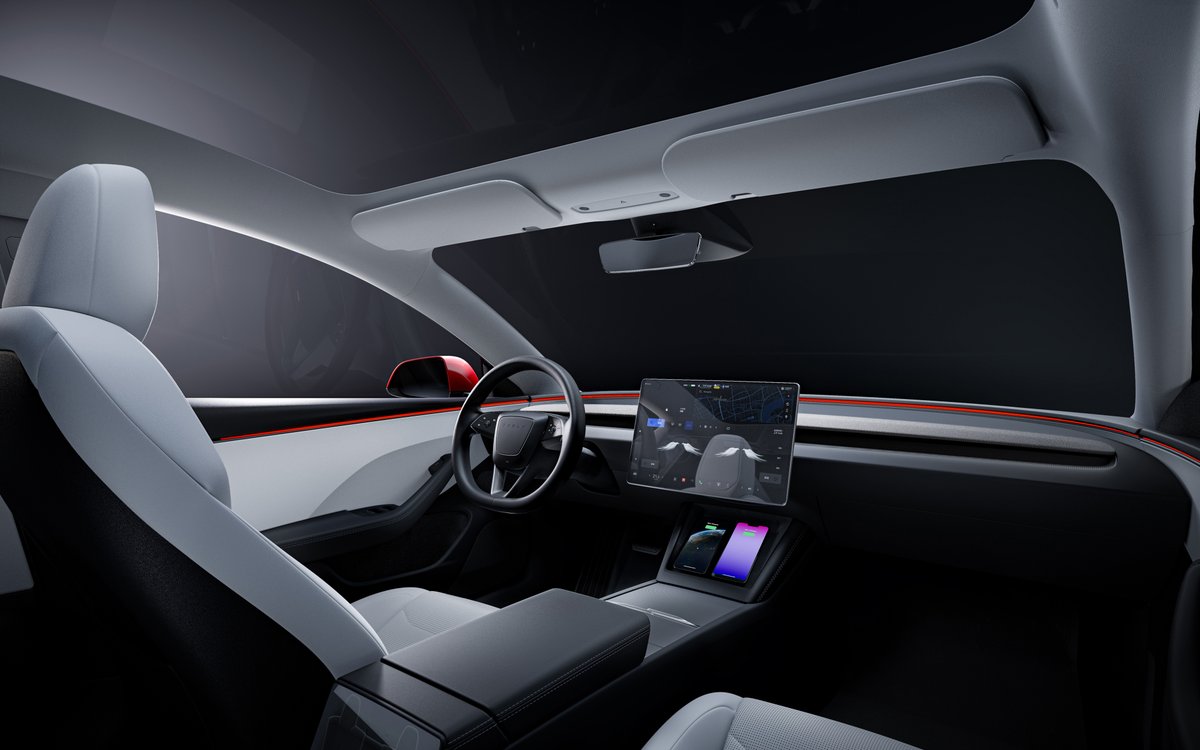
Tesla is utilizing its ‘Rave Cave’ for an awesome new safety feature that will arrive with the upcoming Spring Update for 2026.
Part of the massive interior overhaul of both the Model 3 “Highland” and Model Y “Juniper” was the addition of interior accent lighting to help bring out the mood of the vehicle, increase the customization of the interior, and to create a unique listening experience.
Tesla added a Sync Lights feature that will strobe the accent strips with the beat of the music.
It is one of the most unique and one of the coolest non-functional features of a Tesla, as it does not improve the driving of the vehicle, but makes it a cool and personal addition to the interior.
However, Tesla is going to take it one step further, as the Rave Cave lights will now be used for blind spot recognition. This feature will be added as the Spring 2026 Update starts to roll out.
A lot of CRAZY new features coming with Tesla’s 2026 Spring Update, including a new FSD app!
– Self-Driving App (AI4 hardware): New app in App Launcher > Self-Driving for one-tap FSD subscriptions, activation guides, and ongoing stats.
– “Hey Grok”: Voice-activated Grok with… https://t.co/ljeYPlq9Qt— TESLARATI (@Teslarati) April 13, 2026
Tesla writes:
“Accent lights now turn red when an object is in your blind spot and your turn signal is engaged, or when an approaching object is detected while parked.”
This neat new safety feature will now increase the likelihood of a driver, who is operating their Tesla manually, of seeing the blind spot warnings that are currently available on the A pillar and on the center touchscreen.
These new alerts will now warn drivers of cross traffic as they back out of a parking space with little to no visibility of what is coming. It is a great new addition that will only increase the safety of the vehicles, while also utilizing something that is already installed in these specific Model 3 and Model Y units.
The Model 3 and Model Y were the central focus of the Spring 2026 Update, especially considering the fact that the Model S and Model X are basically gone, with only a few hundred units left. Additionally, Tesla included new Immersive Sound and Car Visualization for the Model 3 and Model Y specifically in this new update.

The Starship V3 static fire everyone was waiting for just happened

Tesla Full Self-Driving shows stunning maneuver in Europe to silence skeptics


