News
Tesla Model Y sold out in China for 2025
Customers who wish to get their cars by the end of the year would likely need to get an inventory unit.

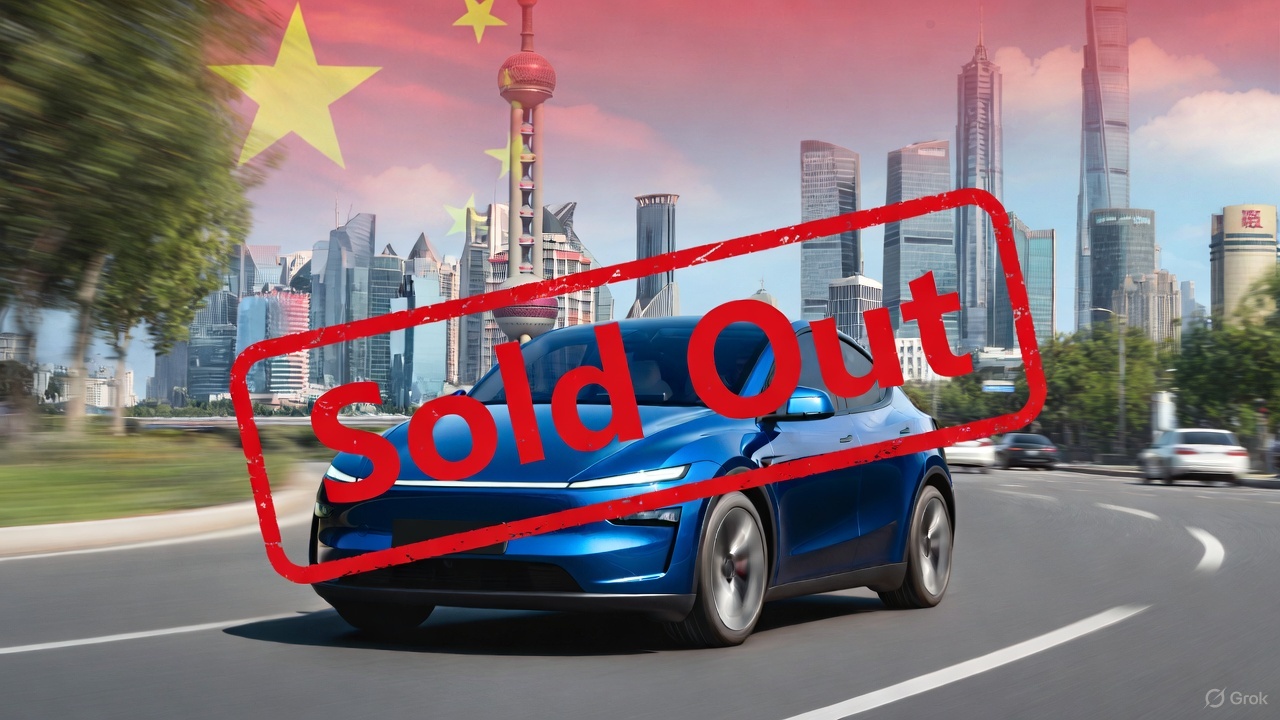
It appears that the Model Y has been sold out for 2025 in China. This seems to be true for the four variants of the vehicle that are currently offered in the country.
Tesla China’s order page update
A look at Tesla China’s order page for the Model Y shows a message informing customers that those who wish to guarantee delivery by the end of the year should purchase an inventory unit. This was despite the Model Y RWD and Model Y L showing an estimated delivery timeline of 4-8 weeks, and the Model Y Long Range RWD and Model Y Long Range AWD showing 4-13 weeks.
As per industry watchers, these updates on the Model Y’s order page suggest that Tesla China’s sales capacity for the remainder of 2025 has been sold out. The fact that estimated delivery timeframes for the Model Y Long Range RWD and AWD extend up to 13 weeks also bodes well for demand for the vehicle, especially given strong rivals like the Xiaomi YU7, which undercuts the Model Y in price.
Tesla China’s upcoming big updates
What is quite interesting is that Tesla China is still competing in the country with one hand partly tied behind its back. So far, Tesla has only been able to secure partial approval for its flagship self-driving software, FSD, in China. This has resulted in V14 not being rolled out to the country yet. Despite this, Tesla China’s “Autopilot automatic assisted driving on urban roads,” as the system is called locally, has earned positive reviews from users.
As per Elon Musk during the 2025 Annual Shareholder Meeting, however, Tesla is expecting to secure full approval for FSD in China in early 2026. “We have partial approval in China, and we hopefully will have full approval in China around February or March or so. That’s what they’ve told us,” Musk said.


Cybertruck
Chattanooga Charge: Tesla and EV fans ready for the Southeast’s wildest Tesla party
From Cybertruck Convoys to Kid-Friendly Fun Zones: The Chattanooga Charge Has Something for Everyone

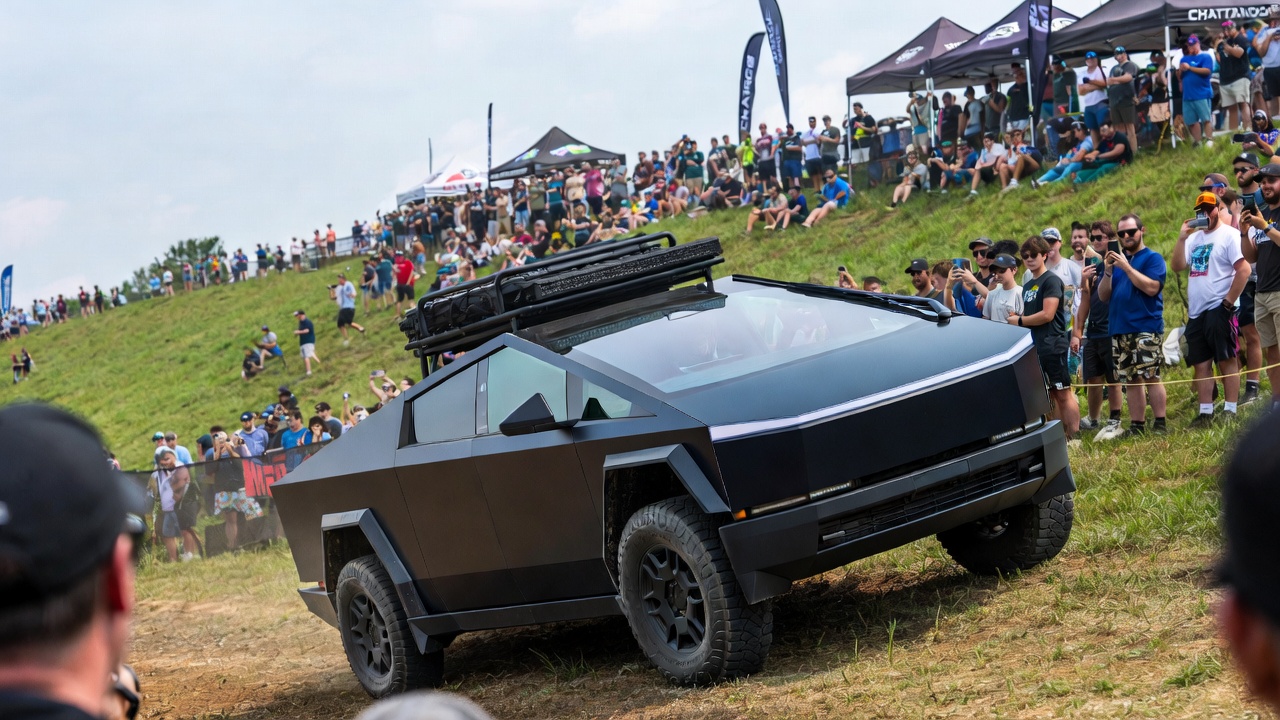
Hundreds of like-minded Tesla and EV enthusiasts are descending on Chattanooga Charge this weekend for the largest Tesla meet in the Southeast. Taking place on March 20–22, 2026 at the stunning Tennessee Riverpark.
If you were there last year, you’ll know that it’s the ultimate experience to see the wildest Teslas in action, see the best in EV tech, and arguably the most fun – finally put a name to the face and connect with those social media buddies IRL! Oh, and that epic night time Tesla light show is a once-in-a-lifetime experience that will transform the Riverpark into something out of a sci-fi film that’s remarkably unforgettable and must be seen in person.
This year’s event takes everything up a notch, with over 100 Cybertrucks expected to be on display, many sporting jaw-dropping modifications and custom wraps that push the boundaries of what these stainless steel beasts can look like.
Whether you’re a diehard Tesla fan, EV supporter, or just EV-mod-curious, the sheer spectacle is worth the drive.
The Chattanooga Charge doesn’t wait until Saturday morning to get started. The weekend technically kicks off Friday, March 20th, and the venue sets the tone immediately. Come share roadtrip stories over drinks at the W-XYZ Rooftop Bar on the top floor of the Aloft Chattanooga Hamilton Place Hotel, with sunset views over the city.
Come morning, nurse your hangover with a some good coffee, and convoy with hundreds of other Tesla and EV drivers through Chattanooga to the event for some morning meet and greets before the speaker panel starts and the food trucks fire up.
Tesla owner clubs travel from across the country to be here, not just to show off their vehicles,, but to connect, share, and celebrate a shared passion for the future of driving.
Sounds like a plan to me. See you there, guys. Don’t miss it. Get your tickets at ChattanoogaCharge.com and join the charge. 🔋⚡
Chattanooga Charge is a premier Tesla and EV gathering inspired by the X Takeover, known as one of the largest Tesla event gatherings. What began as a bold idea from the team at DIY Wraps/TESBROS, hosted in their hometown of Chattanooga, Tennessee, the event quickly became a movement across social media. The first annual Chattanooga Charge united over 16 Tesla clubs from 16 states, proof that the EV community was hungry for something big in the South. Year after year, the event has grown in scale, ambition, and heart.
News
Tesla Full Self-Driving gets latest bit of scrutiny from NHTSA
The analysis impacts roughly 3.2 million vehicles across the company’s entire lineup, and aims to identify how the suite’s degradation detection systems work and how effective they are when the cars encounter difficult visibility conditions.

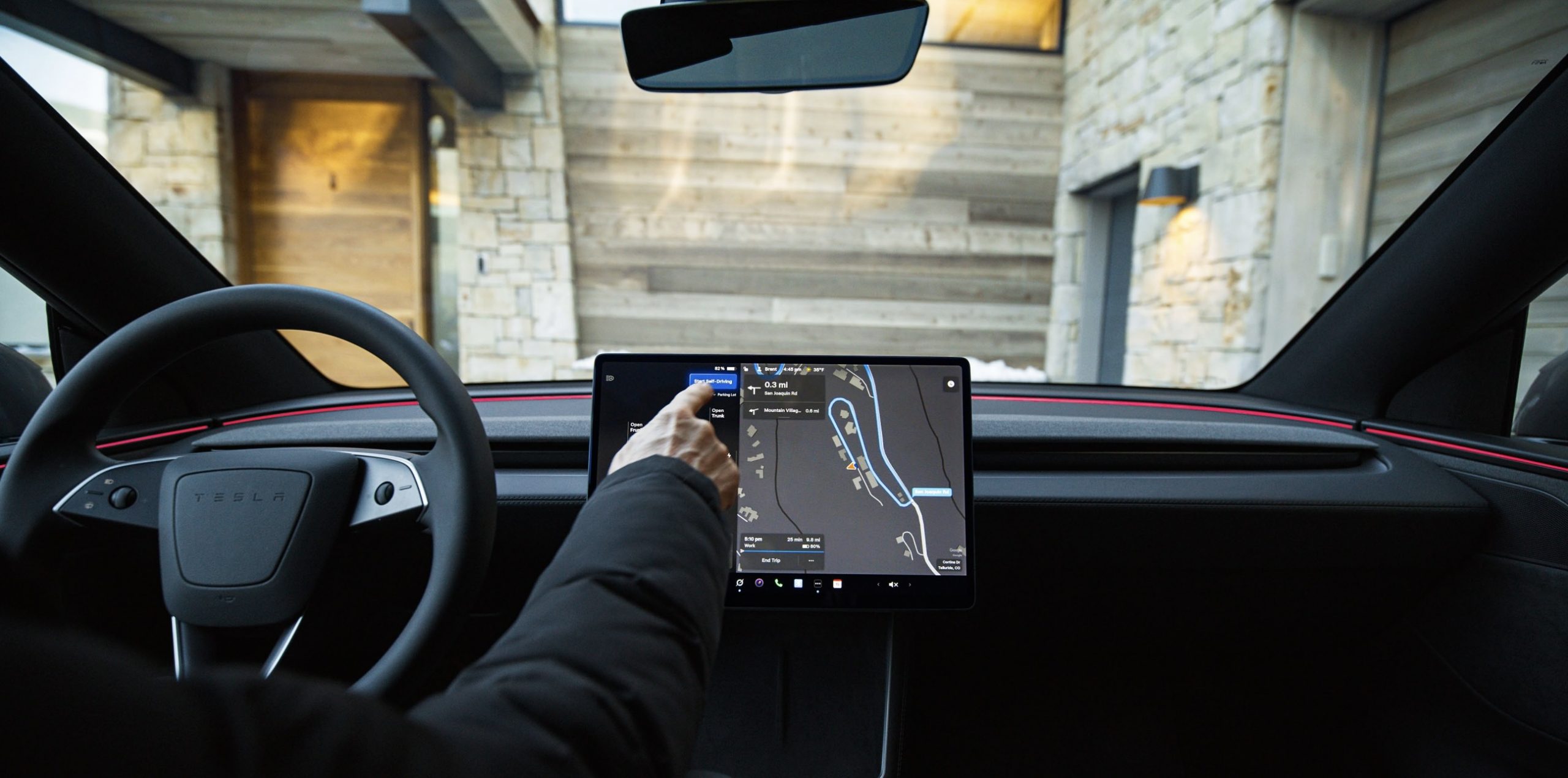
The National Highway Traffic Safety Administration (NHTSA) has elevated its probe into Tesla’s Full Self-Driving (Supervised) suite to an Engineering Analysis.
The analysis impacts roughly 3.2 million vehicles across the company’s entire lineup, and aims to identify how the suite’s degradation detection systems work and how effective they are when the cars encounter difficult visibility conditions.
The step up into an Engineering Analysis is often required before the NHTSA will tell an automaker to issue a recall. However, this is not a guarantee that a recall will be issued.
🚨 The NHTSA said it was upgrading a probe into Tesla’s Full Self-Driving (Supervised) platform to an “engineering analysis”
It will examine 3.2 million vehicles and aims to determine its effectiveness in evaluating degraded road conditions pic.twitter.com/2dkrv1mR8o
— TESLARATI (@Teslarati) March 19, 2026
The NTHSA wants to examine Tesla FSD’s ability to assess road conditions that have reduced visibility, as well as detect degradation to alert the driver with sufficient time to respond.
The Office of Defects Investigation (ODI) will evaluate the performance of FSD in degraded roadway conditions and the updates or modifications Tesla makes to the degradation detection system, including the timing, purpose, and capabilities of the updates.
Tesla routinely ships software updates to improve the capabilities of the FSD suite, so it will be interesting to see if various versions of FSD are tested. Interestingly, you can find many examples from real-world users of FSD handling snow-covered roads, heavy rain, and single-lane backroads.
However, there are incidents that the NHTSA has used to determine the need for this probe, at least for now. The agency said:
“Available incident data raise concerns that Tesla’s degradation detection system, both as originally deployed and later updated, fails to detect and/or warn the driver appropriately under degraded visibility conditions such as glare and airborne obscurants. In the crashes that ODI has reviewed, the system did not detect common roadway conditions that impaired camera visibility and/or provide alerts when camera performance had deteriorated until immediately before the crash occurred.”
It continues to say in its report that a review of Tesla’s responses revealed additional crashes that occurred in similar environments showed FSD “did not detect a degraded state, and/or it did not present the driver with an alert with adequate time for the driver to react. In each of these crashes, FSD also lost track of or never detected a lead vehicle in its path.”
The next steps of the NHTSA Engineering Analysis require the agency to gather further information on Tesla’s attempts to upgrade the degradation detection system. It will also analyze six recent potentially related incidents.
The investigation is listed as EA26002.
Elon Musk
SpaceX’s Starship V3 is almost ready and it will change space travel forever
SpaceX is targeting April for the debut test launch of Starship V3 “Version 3”
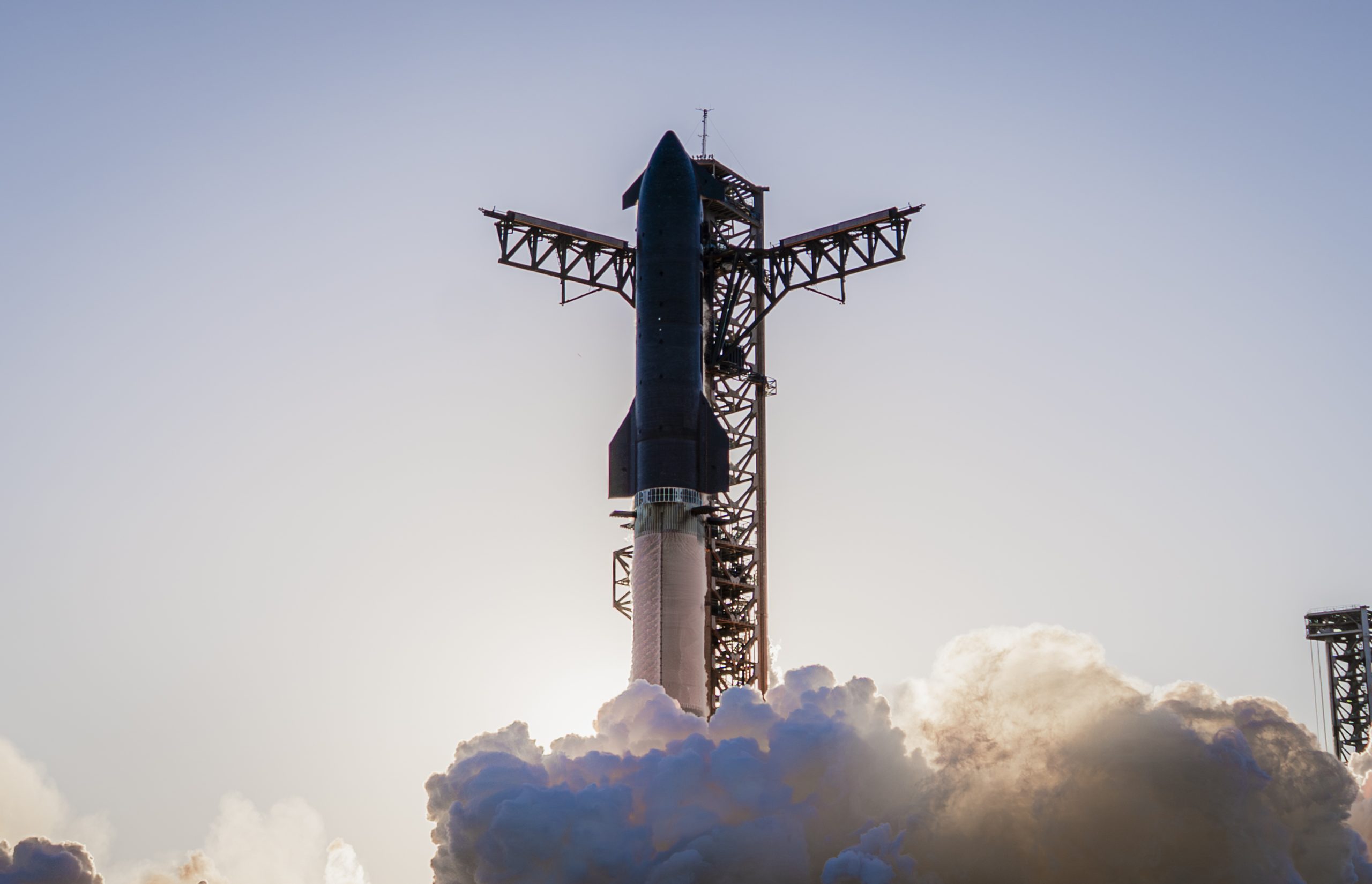
SpaceX is closing in on one of the most anticipated rocket launches in history, as the company readies for a planned April test launch and debut of its next-gen Starship V3 “Version 3”.
The latest iteration of Starship V3 has a slightly taller Super Heavy booster and Starship upper stage than their predecessors, and produce stronger, more efficient thrust using SpaceX’s upgraded Raptor 3 engines. V3 also features increased propellant capacity, targeting a total payload capacity of over 100 tons to low Earth orbit, compared to around 35 tons for its predecessor. With Musk’s lifelong aspiration to colonize Mars one day, the increased payload capacity matters enormously, because Mars missions require moving massive amounts of cargo, fuel, and eventually, people. But the most critical upgrade may be orbital refueling. SpaceX’s entire deep space architecture depends on moving large amounts of propellant in space, and having orbital refueling capabilities turn Starship from just a rocket into a true transport system. Without it, neither the Moon nor Mars is reachable at scale.
Initial Super Heavy V3 and Starbase Pad 2 activation campaign complete, wrapping up several days of testing that loaded cryogenic fuel and oxidizer on a V3 vehicle for the first time. While the 10-engine static fire ended early due to a ground-side issue, we saw successful… pic.twitter.com/uHGji17srv
— SpaceX (@SpaceX) March 18, 2026
A fully reusable Starship and Super Heavy, SpaceX aims to drive marginal launch costs down and at a tenfold reduction compared to current market leaders. To put that in perspective, getting a kilogram of cargo to orbit today costs thousands of dollars. Bring that number down far enough and space stops being an exclusive domain. That price point unlocks mass deployment of satellite constellations, large-scale science payloads, and affordable human transport beyond Earth orbit. It also means the Moon stops being a destination we visit and starts being one we inhabit.
NASA expects Starship to take off for the Moon’s South Pole in 2028, with the ultimate goal of establishing a permanently crewed science station there. A successful V3 flight this spring keeps that timeline alive. As for Mars, Musk has shifted focus toward building a self-sustaining city on the Moon first, arguing that the Moon can be reached every 10 days versus Mars’s 26-month alignment window. Mars remains the horizon, but the Moon is the proving ground.
Elon Musk hasn’t been shy with hyping the upcoming Starship V3 launch. In a social media post on Wednesday, he confirmed the first V3 flight is getting closer to launch. SpaceX also announced its initial activation campaign for V3 and Starbase Pad 2 was complete, wrapping up several days of cryogenic fuel testing on a V3 vehicle for the first time. The countdown is on. April can’t come soon enough.

Chattanooga Charge: Tesla and EV fans ready for the Southeast’s wildest Tesla party

Tesla Full Self-Driving gets latest bit of scrutiny from NHTSA


