News
China’s NIO expands mobile charging service to all electric cars, including Tesla

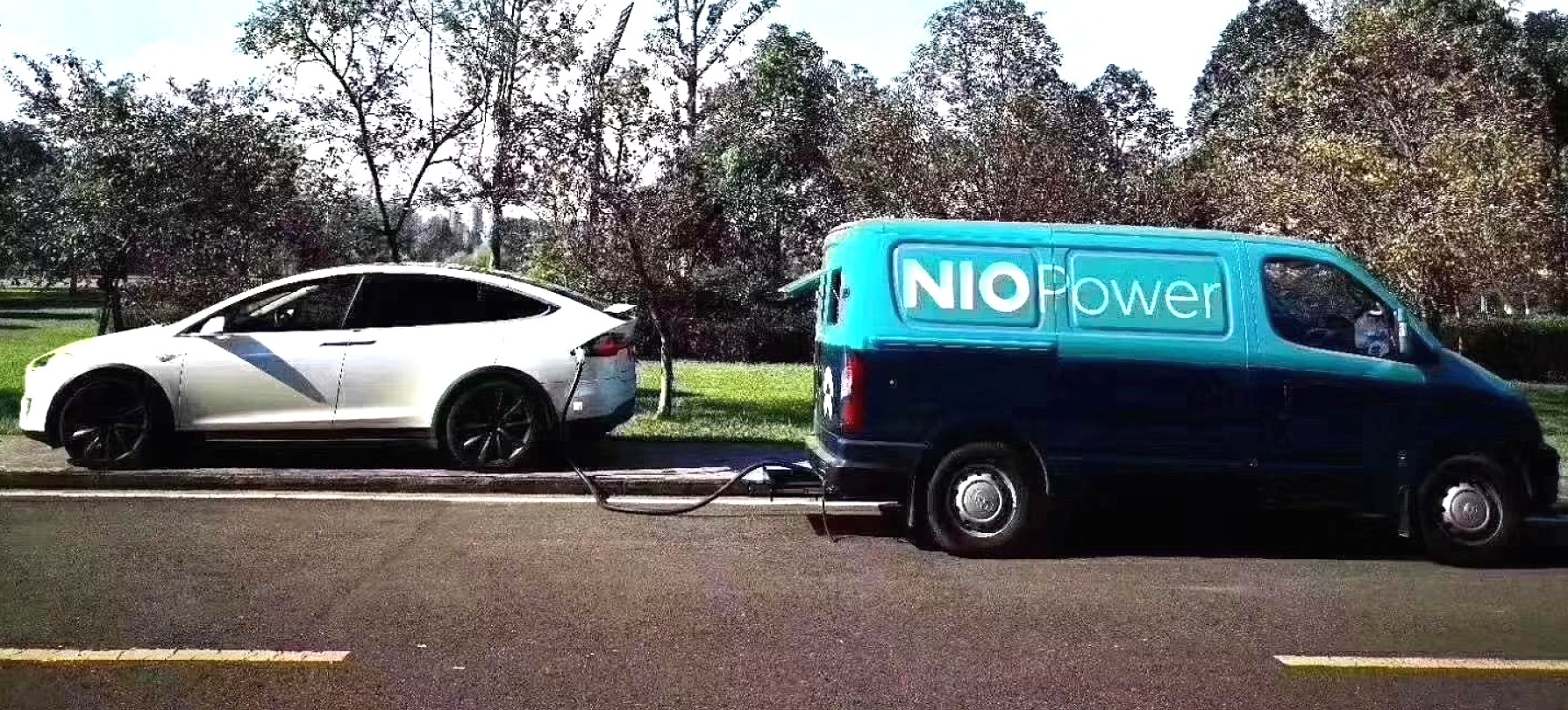
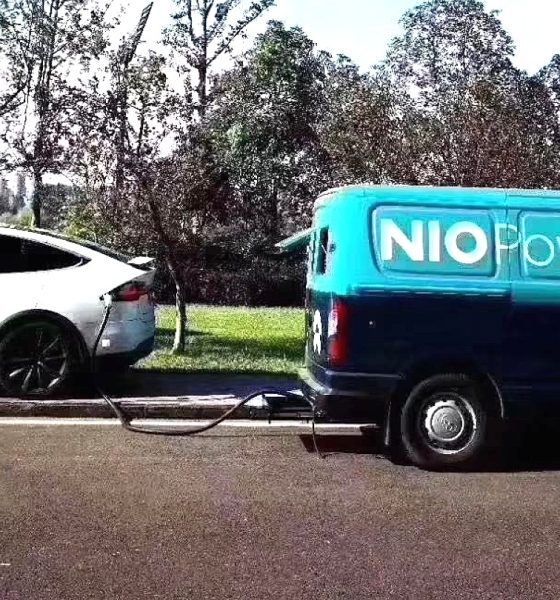
China’s NIO announced at the Shanghai Auto Show that any electric vehicle will soon be able to use their “One Click for Power” services. The service allows EV owners to order valet charging and mobile charging vans right from the NIO app.
NIO, founded in 2014, began production of their first vehicle last year and has since delivered over 15,000 vehicles. Up until this point, the NIO Power services have only been available to NIO owners. The services division includes the company’s quickly growing rapid charging network, charging vans, and battery swap stations. Shen Fei, VP of NIO Power, stated that the company has had several owners order power services seeking to charge their other electric vehicles, including several Teslas. While the company had accommodated those owners in the past, they are now opening up the services to all types of electric vehicles.
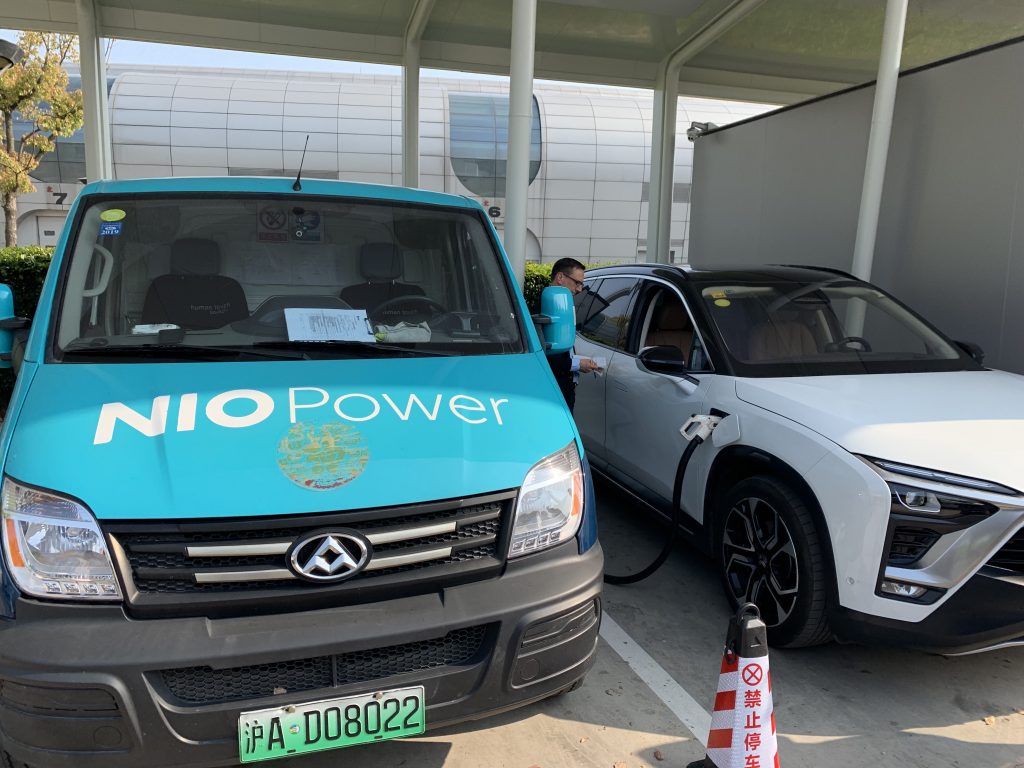
While nearly all EV owners in the US and Europe charge at home, it can be difficult to install in-home chargers in China. Fei stated that 22% of NIO owners lack home charging stations, creating a need for other power solutions. While public chargers are becoming quite prevalent in most major Chinese cities, NIO’s One Click for Power services allows owners to skip the trip to the charging station.
The China-based electric car maker highlighted that NIO owners have used the service over 93,000 times since the company started vehicle deliveries last year. Approximately 70% of NIO owners have used the One Click for Power service, indicating that there is a real desire for flexible charging solutions.
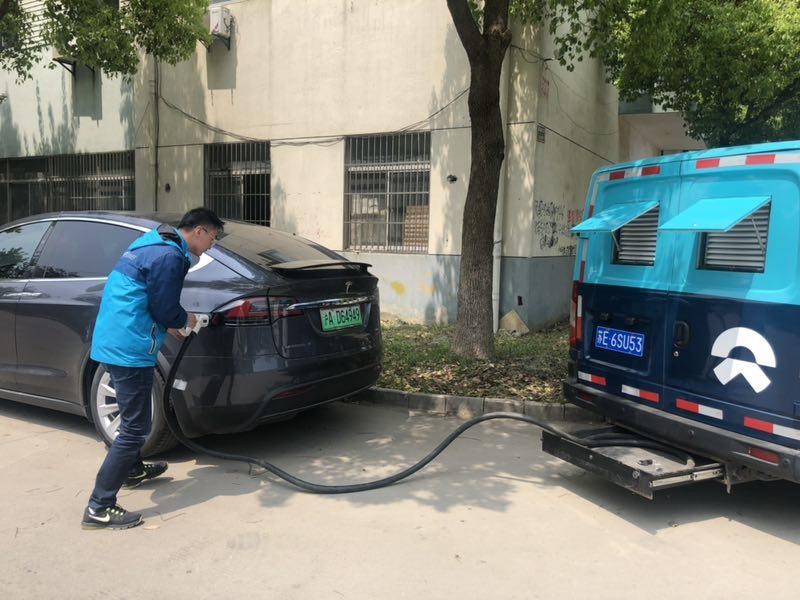
On the same day that NIO announced the expansion of their power services to other EVs, NIO was charging up a customer’s Tesla (the customer owned both a Tesla and a NIO ES8). Other EV owners, including Tesla owners, will be able to pay just 280 yuan ($42 USD) through NIO’s WeChat mini-app to have their vehicle charged. The company has more than 510 mobile charging vans across 95 cities in China.
NIO CEO William Li told Teslarati that he sees the expansion of their services business as an opportunity to both grow revenue and expose more users to the NIO brand. “Lots of EV owners want to have better [charging] service and we have the capability to serve them,” Li stated. “Even if they don’t want to buy our car, we can introduce our brand and our service to other buyers. I think it’s very good for us,” he said.
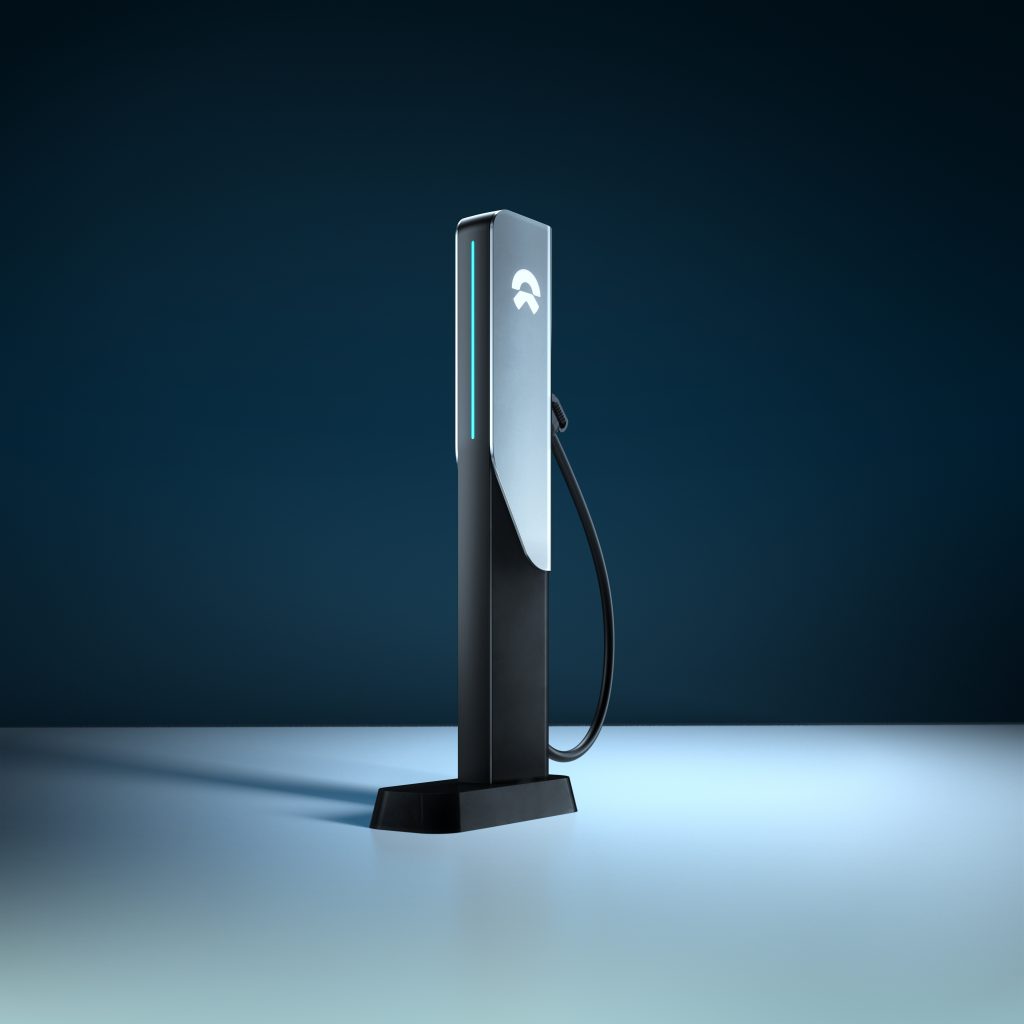
In addition to expanding their power services, NIO also unveiled a new DC-fast charging station. The company previously partnered with ABB to deploy 60 kW fast-charging stations across China. NIO’s new DC fast chargers are far more compact than the previous generation chargers and now have a charging capacity of 105 kW.
NIO debuted on the New York Stock Exchange last fall and has since been on a bit of a rollercoaster as investors react to changing market conditions in China. Despite the swings in value, NIO is focused on servicing its growing customer base. The company now has ~9,500 employees globally, including a team of more than a 1,000 NIO Power service workers. NIO expects to start deliveries of their mid-size SUV, the ES6, in June which starts at ¥358,000 ($53,500) and delivers 315 miles of range.



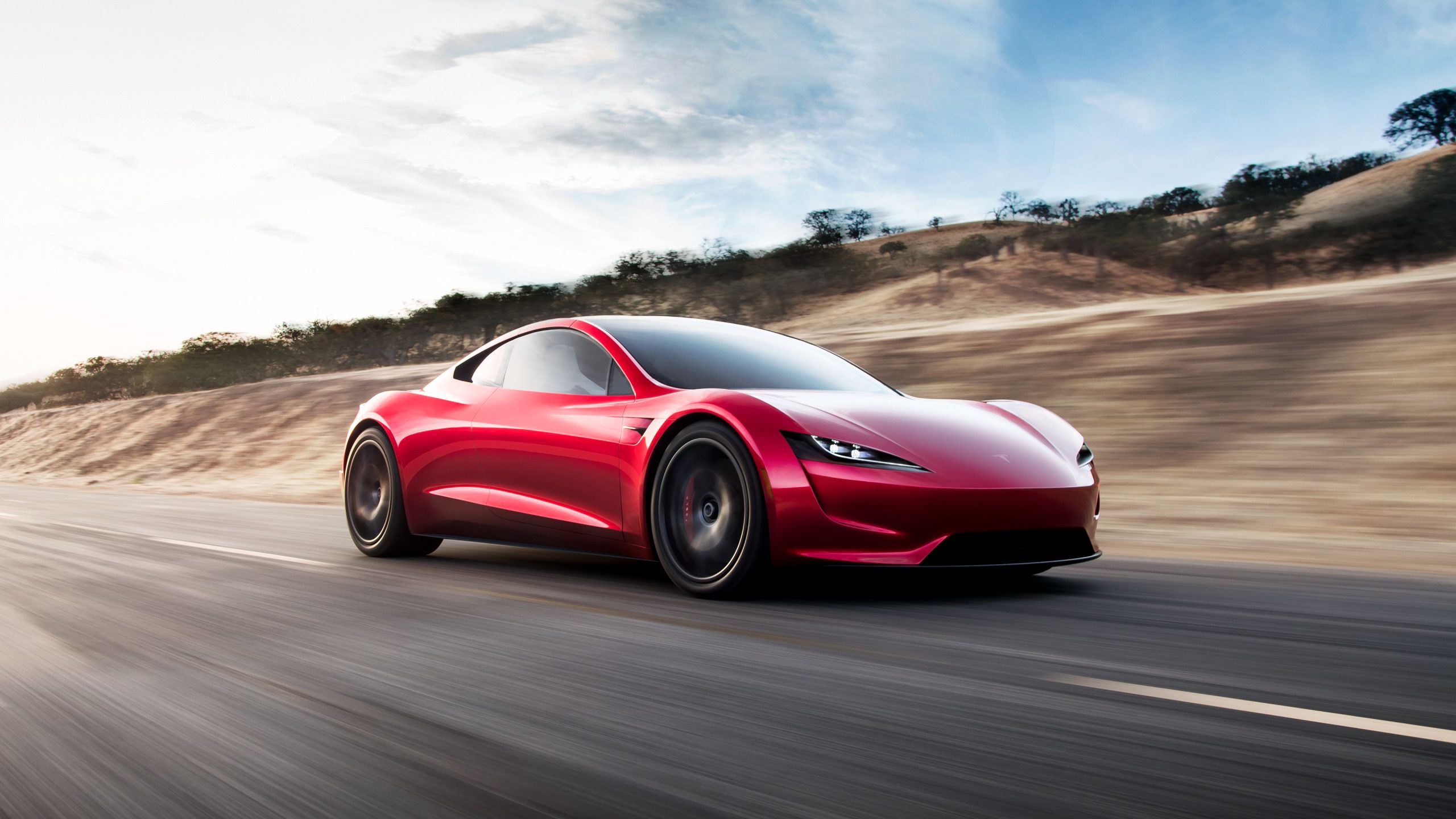
Tesla is delaying its event for the Roadster, moving it from this Thursday, October 1, to Thursday, October 15, due to unfavorable weather.
The company has said it has been tracking the weather for this Thursday closely with local meteorologists, and because the event can only be held outside, Tesla is making the call to delay it:
“We’ve been tracking the weather closely with local meteorologists, but given the severe conditions predicted & because this event can only be held outdoors, we’ve made the difficult decision to reschedule. New date is October 15. Additional details to follow.”
Roadster event update
We’ve been tracking the weather closely with local meteorologists, but given the severe conditions predicted & because this event can only be held outdoors, we’ve made the difficult decision to reschedule.
New date is October 15. Additional details to…
— Tesla (@Tesla) September 28, 2026
We are sure that this is bringing back PTSD for some Tesla fans, and we know it is not ideal, but this also reveals some things about the event. Tesla said that this can only be held outdoors, meaning it bodes well for the rumors that the vehicle could potentially hover.
Some believe that this was essentially confirmed by the FAA airspace restriction they were granted, but this could have been for a drone show or to keep drones from spying on the event.
Tesla Roadster is available for order once again following brief hold
The Roadster event has been long-awaited, and it is unfortunate that the weather is going to keep us all waiting a little bit longer.
The Tesla Roadster will be unveiled in Waco, Texas.
Elon Musk
SpaceX turned a heralding moment for Starship into its greatest
Starship reached orbit despite losing an engine, deployed 26 Starlink V3 satellites on Flight 14.

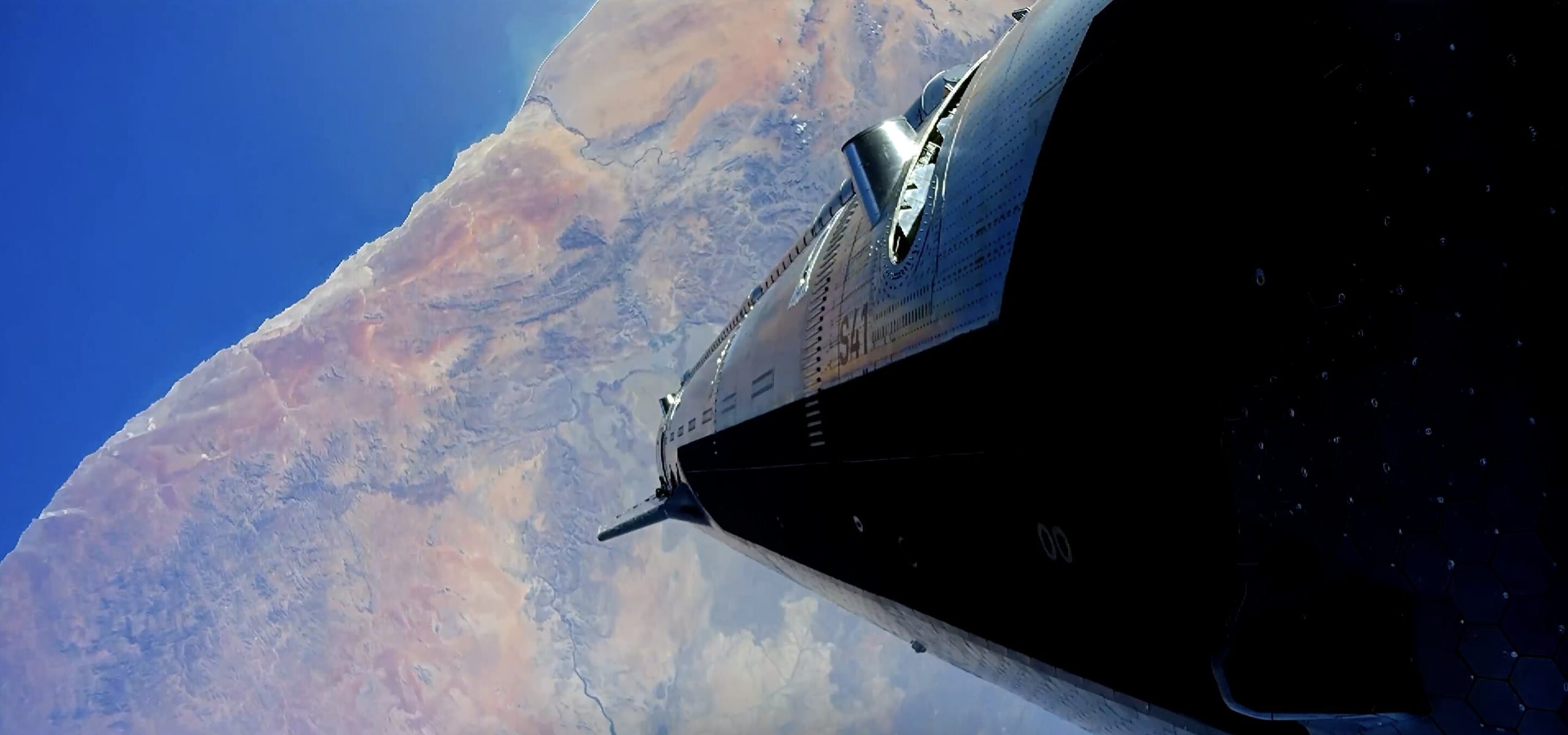
SpaceX’s Starship reached orbit for the first time on Monday, and for a few nail-biting minutes it looked like it wouldn’t. During ascent on Flight 14, one of Ship 41’s six Raptor engines shut down early, and SpaceX’s livestream host Dan Huot told viewers the team had decided not to commit to orbit. Minutes later, after what Huot described as a lot of conversation in the control room, the final poll came back in favor, and a roughly 19 second burn of a single Raptor pushed the ship into orbit about 170 miles up.
The reversal matters because SpaceX had written the exit ramp into the mission plan. The company said it would only fire the orbital insertion burn if flight controllers confirmed enough backup hardware remained for the deorbit burn, a condition Teslarati laid out ahead of the flight. Losing an engine was exactly the scenario that rule was built for.
Pressing forward fits Elon Musk’s history. Falcon 1 failed three straight times before its fourth launch reached orbit in 2008, with SpaceX nearly out of money, and Starship was developed by flying prototypes until they broke. What changed this year SpaceX going public, and with $SPCX sliding below its IPO price in July when Flight 13 slipped, the short interest climbed significantly, as Teslarati reported at the time. A Starship potentially lost today with revenue generating next-gen Starlink satellites aboard would have landed directly on shareholders.
Splashdown confirmed. Congratulations to the entire SpaceX team on the first orbital flight of Starship! pic.twitter.com/urjmiwnvNl
— SpaceX (@SpaceX) September 28, 2026
That pressure showed up after orbit. SpaceX cut a flight planned to last nearly 10 hours to about three, moving splashdown from west of Chile to the North Pacific near Hawaii. SpaceX gave no reason, though Musk said this month the company was being extremely cautious about debris risk. The single Raptor for deorbit worked, and Ship 41 completed its flip and landing burn before breaking apart in the water, an outcome SpaceX expected. Musk has structured SpaceX’s governance to shield long term bets from market pressure.
The payload is the bigger business story. Musk posted that all 26 Starlink V3 satellites deployed and are “operating nominally.” Each V3 is rated for about 1 Tbps of downlink and 160 Gbps of uplink, so this single launch adds roughly 26 Tbps, about 10 times what a Falcon 9 load of V2 Mini satellites adds. The V3 is too large for Falcon 9, making Starship the only vehicle that can build out the planned 100,000 satellite constellation, at up to 60 per flight once it reaches routine service. Unlike the 20 V3 units on Flight 13, which reentered on a suborbital path, these will raise their orbits and could begin serving customers within weeks and bring in hundreds of millions of additional dollars in projected Starlink revenue.
SpaceX has already begun winding down Falcon 9 Starlink launches from Florida in favor of Starship. Reported targets put Flight 15 as early as October 19, leaving about three weeks to diagnose Monday’s engine shutdown before the next orbital attempt.
Starship’s 14th flight is set to launch on Monday, Sept 28. The 75-minute launch window opens at 7:15 a.m. CT. Live coverage of the mission starts ~35 minutes before launch → https://t.co/uQKQvgaTmJ
— SpaceX (@SpaceX) September 27, 2026
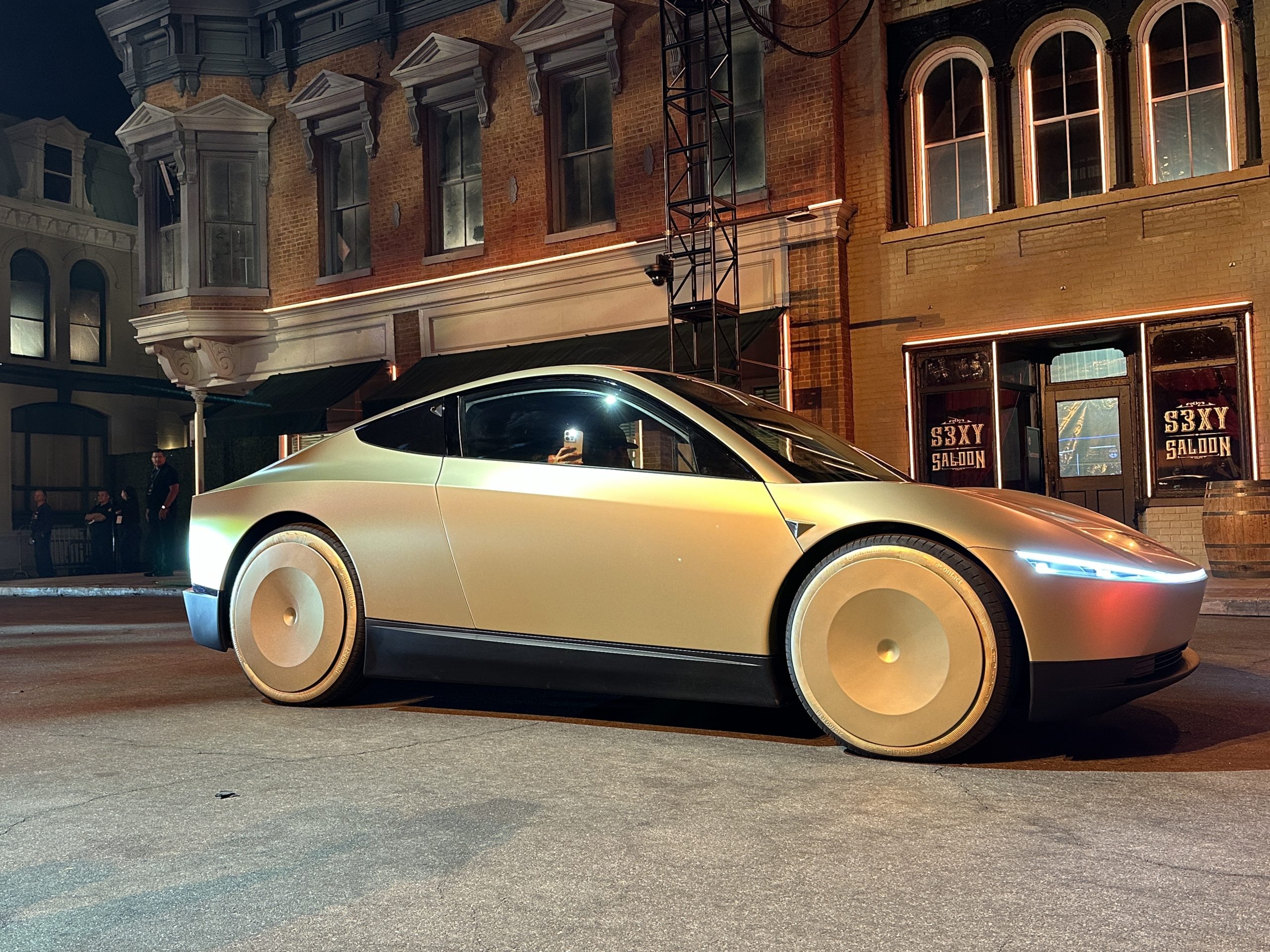
Tesla quietly doubled the size of its Cybercab fleet within the Robotaxi program in Austin, Texas, over the weekend to well over 100 units.
The move not only establishes more of the steering-wheel-less and pedal-less vehicles within the ride-sharing fleet Tesla has been operating for a year, but it also solidifies a more robust Robotaxi fleet as a whole.
Riders started receiving notifications from the Robotaxi app that stated: “Cybercab fleet has doubled: more rides available.”
I got this notification on the robotaxi app. They are saying the Cybercab fleet has doubled. Glad that they are advertising this pic.twitter.com/FFrnw4FRCF
— Abhimanyu Yadav (@WorldlyReviewer) September 26, 2026
Tesla first launched rides in the Cybercab in early September, although the Robotaxi fleet has been active for over a year, as rides began last Summer. Cybercab is truly Tesla’s most crucial vehicle release yet, as it is the first car any company has built that is geared toward full-fledged and end-to-end autonomy, never needing human intervention for anything.
Only available in Austin at the current time, Cybercab has two seats and has been spotted testing around various U.S. states and regions; Tesla plans to deploy the Cybercab in various U.S. cities in the coming months as a best-case scenario.
Tesla Cybercab gets initial tie-in to localized, in-house cathode plant
The availability of the Cybercab has doubled from just 58 units last Monday to 125 the following Friday. Marking a substantial increase in Cybercab availability, the additional ride-sharing units are more than welcome, as wait times for Cybercabs, especially, were quite high.
The dramatic increase is a sign that demand for Robotaxi is growing and Tesla is feeling more confident that its driverless ride-hailing suite, especially its Full Self-Driving software, is able to handle any traffic situation without explicit direction or supervision from a human being.

Tesla Roadster event gets delayed due to unfavorable weather

SpaceX turned a heralding moment for Starship into its greatest


