Elon Musk
Tesla primes Cybercabs for 4K streaming and high bandwidth gaming with Starlink integration
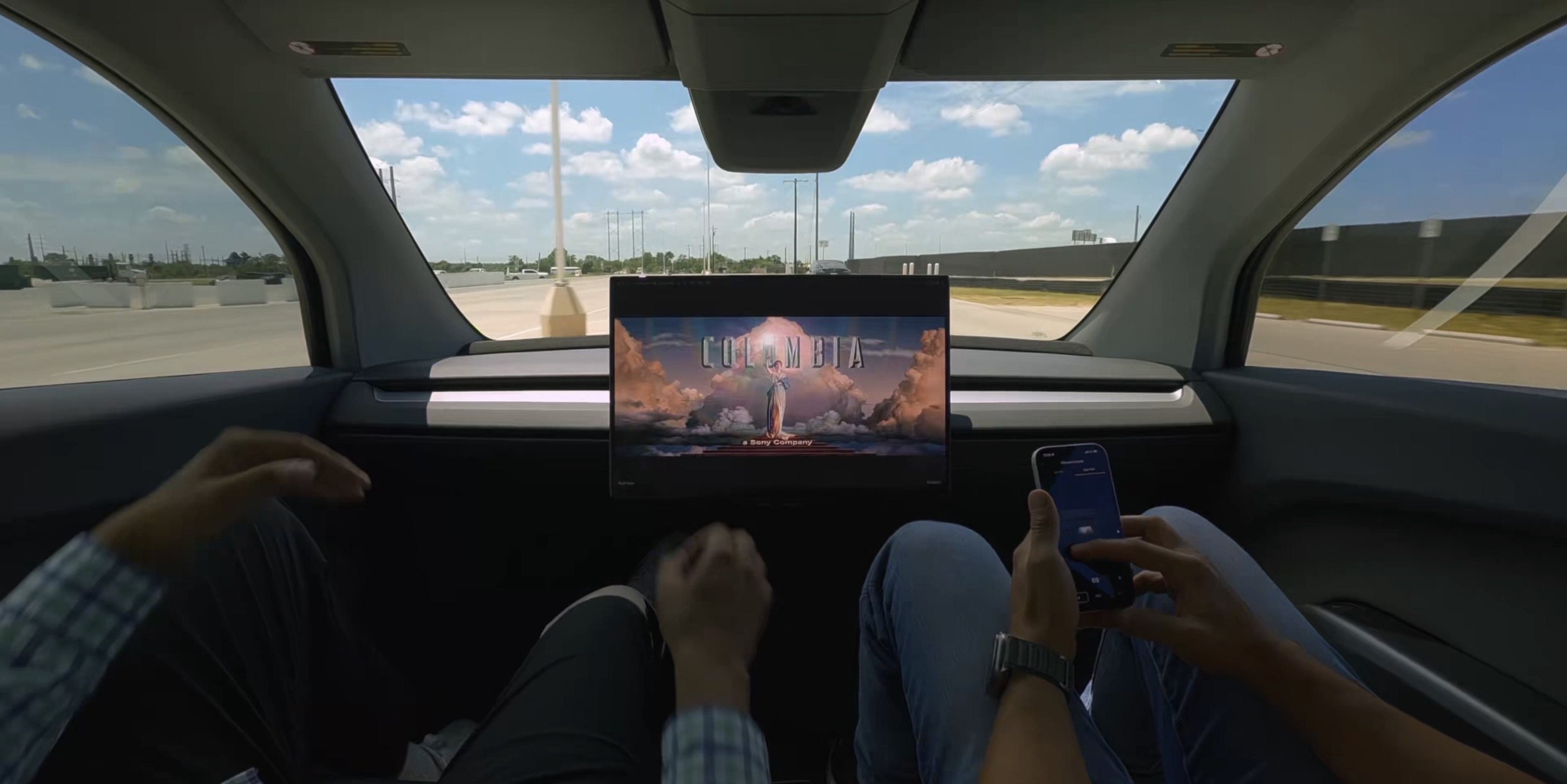
Tesla is now shipping Cybercabs from Giga Texas with Starlink hardware built in as standard.

Tesla’s Cybercabs are now leaving Gigafactory Texas with Starlink hardware on the rear hatch in significant numbers, according to drone footage captured Tuesday by longtime Austin drone observer Joe Tegtmeyer. Production at the factory ramped back up after the Labor Day weekend, and his flyover of the outbound lot showed rows of gold Cybercabs alongside Model Y Long Wheelbase units, many carrying the satellite module for the first time as standard equipment rather than a one off retrofit.
Giga Texas today is busy with production coming back up following the long weekend. Of interest today in the outbound lot is the appearance of hundreds of Mode; YL’s and many more Cybercabs and for the 1st time equipped with the Starlink module one the hatch in big numbers.
At… pic.twitter.com/G9yl6s51m4
— Joe Tegtmeyer 🚀 🤠🛸😎 (@JoeTegtmeyer) September 8, 2026
Tesla first showed Starlink built into an actual Cybercab on August 10, when the Robotaxi account posted images of a single gold unit with the antenna integrated into the roofline above the taillights and called it the first Cybercab with Starlink integration. That followed a July reveal where Tesla and Starlink jointly posted a cutaway diagram of the antenna placement without a working vehicle to back it up. Ashok Elluswamy, Tesla’s VP of AI software, said at the time that the connection isn’t required for the car to drive itself. It exists mainly for navigation, customer service and keeping tabs on the fleet.
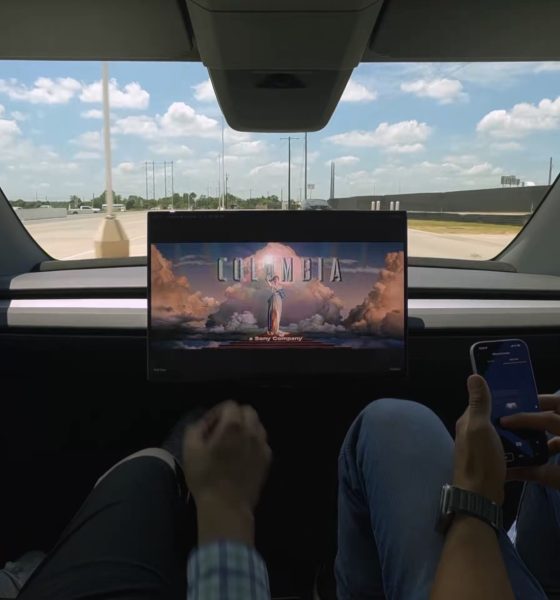
Musk has made a different case in public. During Tesla’s Q2 earnings call, he said the company can’t afford robotaxis stranded in what he called “Bermuda Triangles of lack of cellular connectivity,” and he separately claimed on X that Starlink will eventually reach every Tesla built, calling it the only way to deliver high bandwidth to billions of vehicles. He has also pitched the antenna as an entertainment upgrade, telling riders they would be able to stream 4K video or play games during a trip.
The rollout has moved fast since. Robotaxi service opened to the public in Austin on September 3, and Cybercabs had already been spotted with Starlink hardware in Houston and near Miami International Airport in the weeks before Tuesday’s factory footage showed the module shipping at volume rather than on scattered test units. Whether the satellite link earns its keep is still an open question. Tesla’s unsupervised service currently runs in dense metro geofences in Texas and Florida, markets where cellular coverage is already strong, which is not where the rural dead zones Musk describes tend to show up.



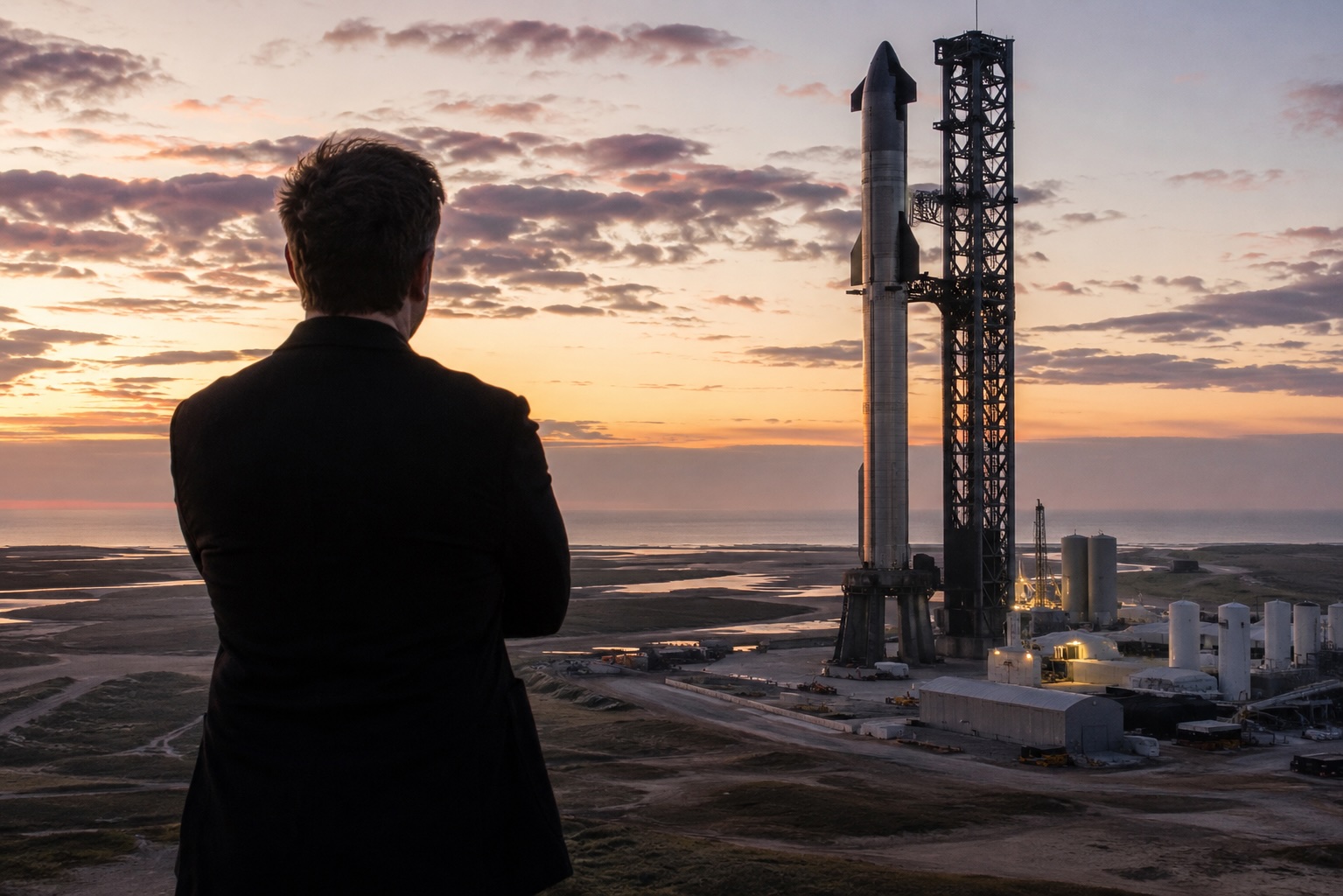
Elon Musk said he is planning to give “every one of his SpaceX shares to every kid in America” in 2027, stating that “this will be the first of many.”
SpaceX went public earlier this year, and its stock price has been relatively stable since leveling off shortly after its IPO. Based on its current price, it’s a gift of just over $10 billion to children across the United States.
It appears to be closely related to President Donald Trump’s bank accounts for children, which were set up earlier this year as Trump Accounts.
Just hours earlier, Anthropic had announced the establishment of its Anthropic Public Benefit Fund, “a new wholly-owned entity dedicated entirely to public benefit.” Musk responded by stating he recommended “giving the shares directly to the public,” and that he would be doing it that way.
Just a little bit later, Musk said children across the U.S. would be getting a share from him:
Next year, I will give one of my SpaceX shares to every kid in America.
This will be the first of many.
— Elon Musk (@elonmusk) October 19, 2026
There are roughly 70 million children, meaning someone under the age of 18, in the United States, according to the Federal Interagency Forum on Child and Family Statistics. Musk’s ownership of SpaceX stock shows he has around 849 million Class A shares of SpaceX stock, according to filings with the SEC.
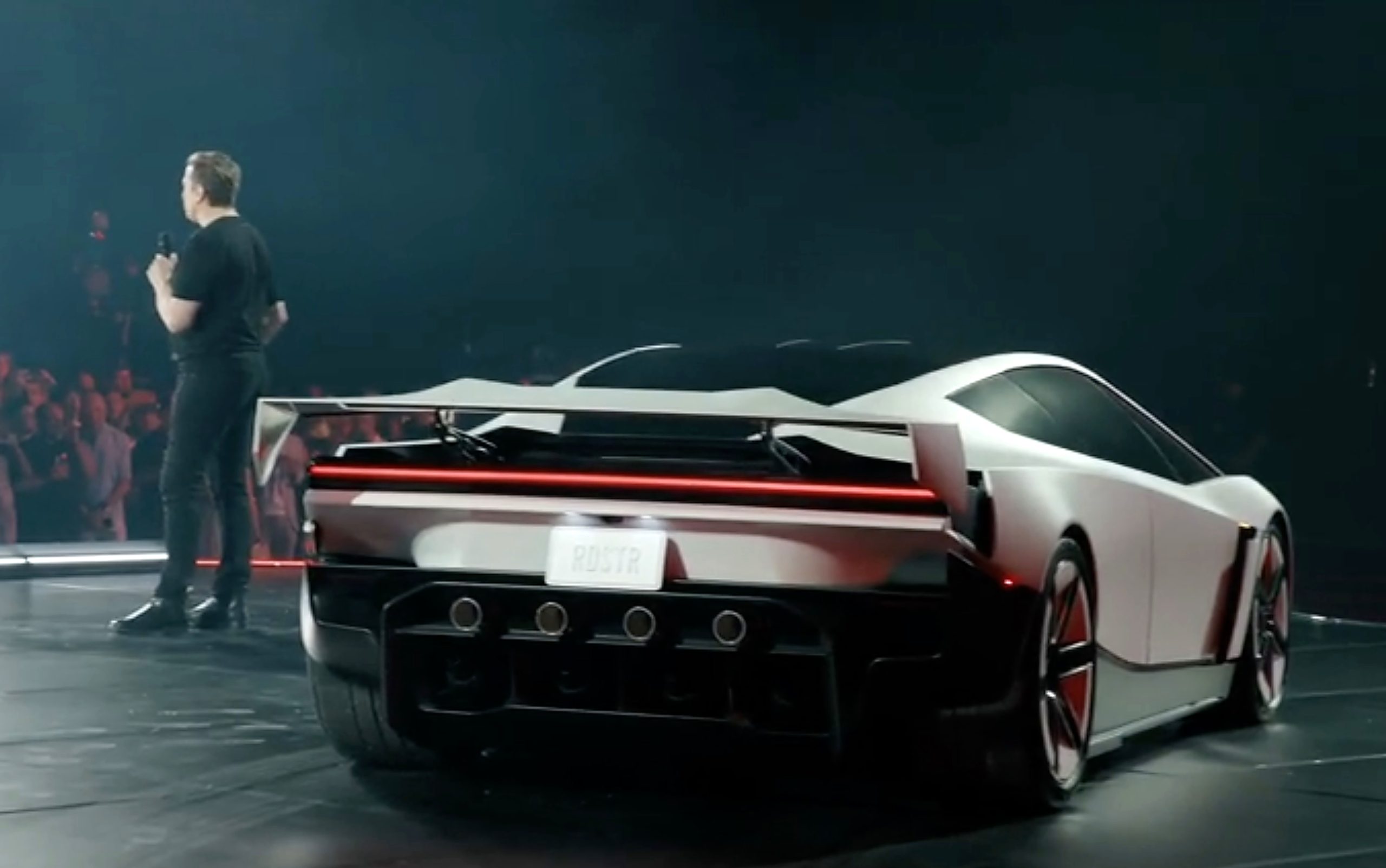
Tesla CEO Elon Musk took to his social media platform X on Sunday to remind everyone that the Roadster’s true meaning is not about company growth or adding dollars to shareholders’ pockets. Sometimes, you just do things because you can.
Following the Roadster’s epic unveiling event last Thursday, skeptics and critics of the company or the project itself came out to say that the vehicle is a pointless project because it is not geared toward growing the company, delivering supreme margins for profitability, nor does it contribute to the big picture of Artificial/Super Intelligence.
But that’s just the thing: Roadster is not meant to be some shareholder dream; it’s meant to be a vehicle that people buy just because it is something awesome, unique, and the first of its kind.
Tesla Roadster: Three configs, one can fly, 0-60 in 0.8 seconds
Musk had to remind those who are skeptical about the Roadster’s importance to the company mission that while it is not a major contributor to Tesla’s long-term goals, it is something that is being built just because it can be:
“Optimus and Cybercab will be the vast majority of Tesla’s value. The only things that will scale to incredible size (K2 and beyond) economically are super intelligence, robots, solar power, and mass to space. And, of course, if you have the first two, the rest will follow. But Roadster is super cool, so we’re doing it anyway.”
Musk has said on many occasions that Optimus would be the project that would make up the vast majority of Tesla’s value in the coming years.
Robotics will be a major focus of Tesla over the coming years, especially as Musk believes Optimus will enable work to be optional for humans and will enable what he calls “High Universal Income.”
Optimus and Cybercab will be the vast majority of Tesla’s value.
The only things that will scale to incredible size (K2 and beyond) economically are super intelligence, robots, solar power and mass to space.
And, of course, if you have the first two, the rest will follow.
But Roadster is super cool, so we’re doing it anyway.
— Elon Musk (@elonmusk) October 18, 2026
Cybercab will be a passive income opportunity for owners, Musk and Tesla have said for a very long time, as a fleet of self-driving vehicles will operate within a ride-hailing Robotaxi service that won’t require a human driver to be present.
Tesla investors are more than enthusiastic about the company’s future projects, at least from a general consensus perspective. However, it is important to note that the Roadster is a fun and cool project that pushes the boundaries of what people thought was possible for an automobile.
What we saw last week was the first true example of a flying car, and despite the backlash about how it might not contribute to Tesla’s grand ambitions, it’s okay to have fun sometimes, too.
Elon Musk
Tesla Roadster owners to get “Flying Stunt Mode” and looping track access
Musk says Roadster owners can command the unveiling stunts autonomously, with a Texas looping track.
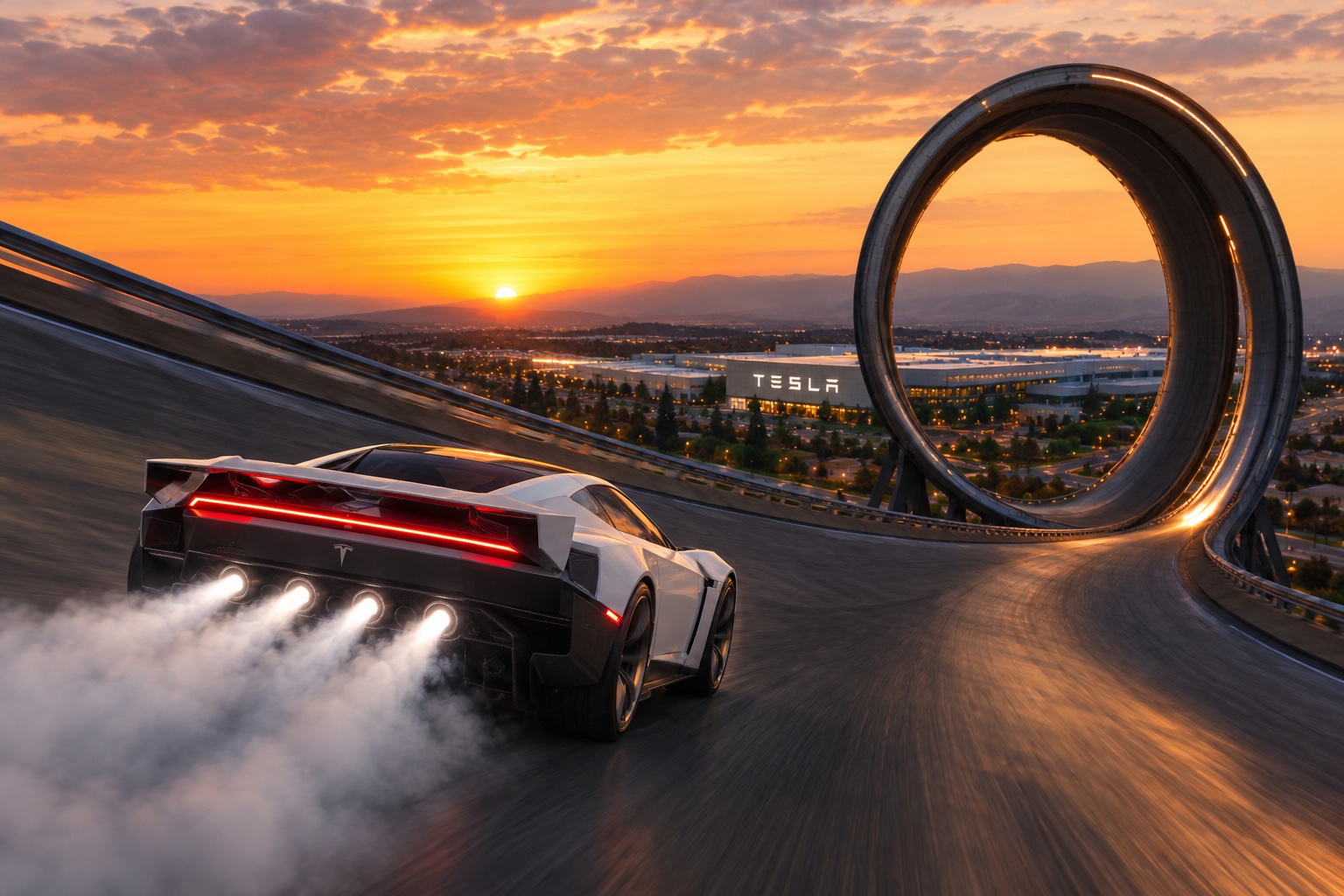
Elon Musk says owners of the new Tesla Roadster will be able to ask the car to perform the stunts Tesla showed at its unveiling, with the car doing the driving itself. Musk made the comment Saturday in a reply on X to tech blogger Robert Scoble, and he added a promise of a looping track at Tesla’s Texas headquarters.
Scoble had argued that the person in the Roadster is not really driving it. In his description, the driver operates a computer that tells another computer what to do, with steering, braking and acceleration all handled by wire. Musk answered, “True. You will be able to ask the Roadster to perform any of the tricks shown autonomously, as it will be sentient. Also, we will have a wild looping track (crazier even than Hot Wheels) at our Texas HQ where you can test out your Roadster.”
@Scobleizer True.
You will be able to ask the Roadster to perform any of the tricks shown autonomously, as it will be sentient.
Also, we will have a wild looping track (crazier even than Hot Wheels) at our Texas HQ where you can test out your Roadster.
— Elon Musk (@elonmusk) October 17, 2026
At the October 15 event outside Waco, the car drove up a curved ramp until it was upside down, flew off on cold gas thrusters, flipped and landed. It also hovered over a Cybercab, Cybertruck, Semi, Model Y and Model 3 while moving. As we noted in our breakdown of the three Roadster configurations, Musk said at the event that the car “literally is just going to puff itself up” to perform the maneuvers whenever an owner wants. Saturday’s reply adds that the car would run them on its own.
Tesla has described some of the hardware that would make that possible. The Roadster uses steer by wire with a yoke, and its cold gas thrusters rely on electric actuators for small adjustments in flight. A fan system under the car creates suction, which Tesla says is strong enough to hold it upside down, a setup we covered in our look at the Roadster’s fan system and thrusters.
Musk did not say when an autonomous stunt feature might arrive, how it would work, or what he means by sentient. He also gave no size, location or opening date for the Texas track. Production is planned for Giga Texas in 2027 or 2028, and Tesla says the car is not approved for public road use. The Rocket version, the one built to fly, is invite only.
The comment follows a week of Musk teasing the event, including his claim that the demo would be a banger, which we covered before the stream. Tesla reports third quarter earnings on October 21, and shareholders can submit and vote on questions through the Say portal until 4 p.m. EDT on October 20, according to our earnings Q&A preview. A question about autonomous Roadster stunts and the Texas track would be a quick way to get specifics from management.

Elon Musk will give ‘every kid in America’ a SpaceX share in 2027

Tesla CEO Elon Musk reminds everyone about Roadster’s true meaning

SpaceX’s biggest earnings test yet lands Tuesday, and Tesla shareholders should be watching

SpaceX reveals how its 1 Million AI satellite network will work and prevent space collisions
Tesla Roadster: Three configs, one can fly, 0-60 in 0.8 seconds


