News
Tesla tops American-Made Index for sixth-consecutive year

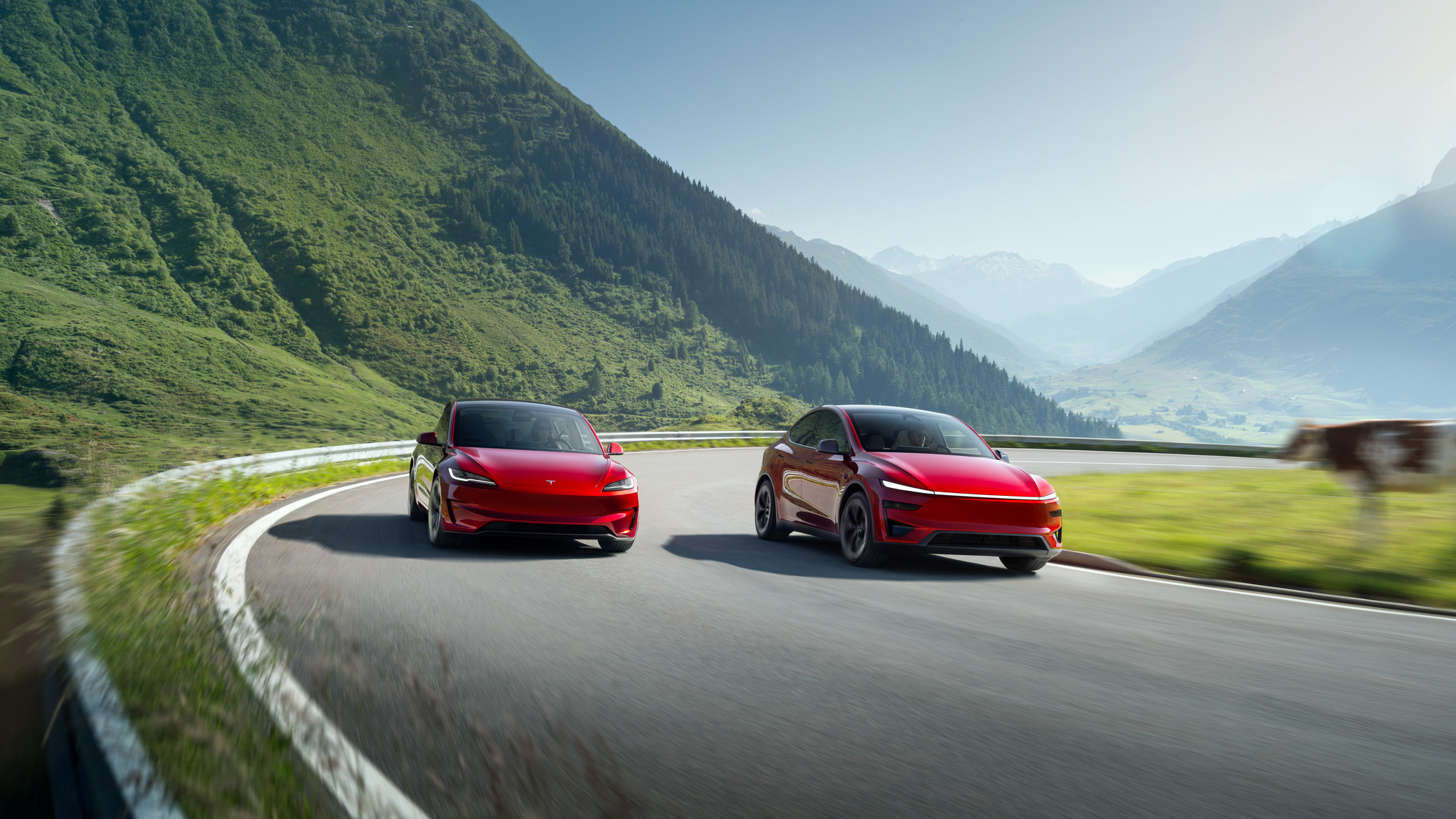
Tesla is atop the American-Made Index from Cars.com for the sixth-straight year, as the Model 3 and Model Y took the top two spots, respectively.
Last year, the Model 3, Model Y, Model S, and Model X took the top four spots, respectively. The company has routinely performed well in the Index. However, Tesla discontinued its flagship Model S and Model X earlier this year, which took the two cars out of the ranking.
Cybertruck is not considered due to its curb weight being above the 8,500-pound threshold, which eliminates it from being required to have more detailed assembly information.
Cars.com uses five main categories to develop its rankings:
- Location(s) of final assembly
- Percentage of U.S. and Canadian parts
- Countries of origin for all available engines
- Countries of origin for all available transmissions
- U.S. manufacturing workforce
These five major factors are then put into a 100-point scale. The vehicles with the highest scores sit atop the list. The Model 3 edged out the Model Y.
🇺🇸 The Tesla Model 3 and Tesla Model Y have been put atop the American-Made Index from https://t.co/PXZ0g1pPb6, meaning they are the most American vehicles you can possibly buy.
This is the SIXTH-STRAIGHT year a Tesla has been listed as the most American-made vehicle: pic.twitter.com/HyraOmaxSL
— TESLARATI (@Teslarati) June 23, 2026
Tesla uses a strong domestic strategy to build its cars and parts domestically. It relies on intense vertical integration that reduces its dependence on global suppliers, keeping more value and jobs in the United States.
This strategy has helped Tesla gain a strong reputation for domestically produced vehicles and parts. However, it helps it with more than just awards like this one. Keeping a supply chain local has also helped insulate Tesla more than others from tariffs and supply chain disruptions.
This year’s American-Made Index from Cars.com studied nearly 400 vehicles from the 2026 model year. Tesla was the only manufacturer to have an EV inside the Top 10. The Kia EV9 was the next EV to make the list, scoring the 17th position.
The Hyundai IONIQ 5 was 21st, and the final EV to make the list was the Cadillac LYRIQ in 77th.


Elon Musk
Elon Musk spotlights the Starlink rescue that got through where no cell tower could
Elon Musk spotlighted how Starlink helped rescuers reach five people stranded in Kazakhstan’s snowy mountains.

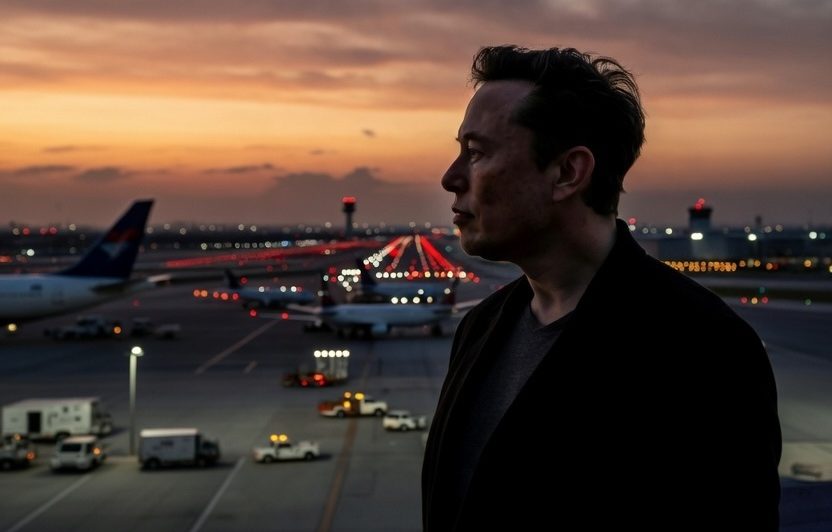
Elon Musk put a spotlight on a mountain rescue in eastern Kazakhstan on Sunday, writing “Starlink saves lives” in response to a post describing how SpaceX’s satellite internet helped five stranded people reach emergency crews.
The post from DogeDesigner, which had been viewed more than 500,000 times by Sunday afternoon, said the group’s SUV broke down about 15 kilometers from the village of Kystau Kurchum in an area with no usable mobile network. Starlink carried their call for help and kept them in contact with rescuers, who used the connection to locate them.
The rescue itself took place in October. Local outlet YK.kz reported on October 22 that Kazakhstan’s Ministry of Emergency Situations responded to the breakdown in the Kurchum district of East Kazakhstan region and noted that the group stayed in touch through Starlink. Rescuers covered roughly 100 kilometers in a Trekol, a low pressure tire vehicle built for snow and marshland, then escorted the disabled SUV back to Kystau Kurchum. Nobody needed medical attention.
Starlink saves lives
— Elon Musk (@elonmusk) November 8, 2026
Conditions in the region were rough at the time. Kazakh broadcaster Channel 7 identified the five as hunters caught in a snow trap and said satellite communication allowed rescuers to pinpoint where they were. A spokesperson for the East Kazakhstan emergency department said a storm warning was in effect and urged residents not to leave populated areas unless necessary. The same weather stranded seven utility workers repairing power lines in the nearby Kuygan rural district, according to Tengrinews.
Kazakhstan has been one of Starlink’s more notable markets in Central Asia. Teslarati reported in 2024 that Starlink was serving 1,731 of the country’s 1,879 schools, with the country’s Education Minister saying it had set a new standard for internet service in schools.
Rescue stories like this one have followed Starlink for years, usually in places where ground networks fail or never existed in the first place. Then Florida CFO Jimmy Patronis called Starlink a “game changer” for search and rescue crews during Hurricane Milton, and SpaceX and T-Mobile switched on Starlink Direct to Cell in North Carolina to push emergency alerts to phones after Hurricane Helene.
The next target is dead zones for people who do not carry a dish at all. SpaceX is building out Starlink Mobile and earlier this week selected Qualcomm to supply core infrastructure for a planned terrestrial 5G network in the United States, which it intends to pair with its next generation satellite constellation.
Sunday’s post is at least the third time Musk has written “Starlink saves lives” on X this week, following identical posts on November 5 and November 7.
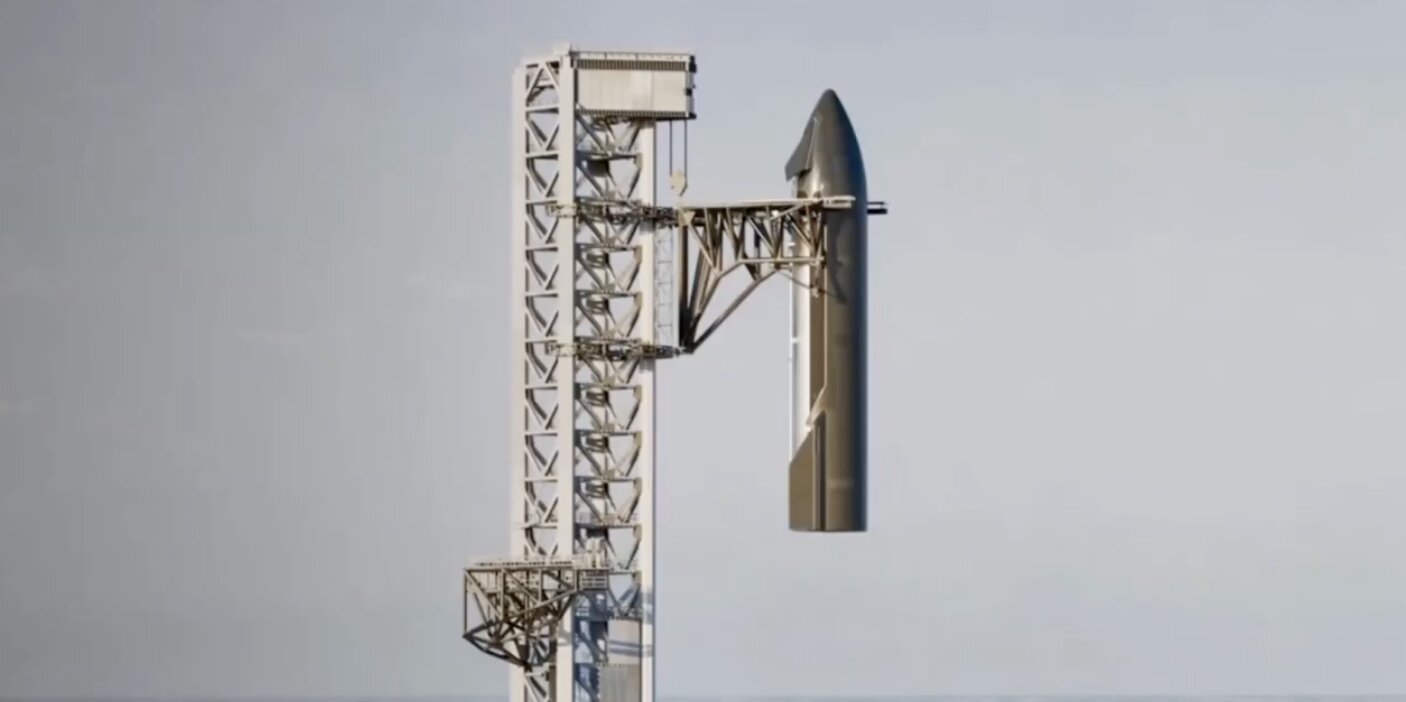
SpaceX plans to attempt what will be a defining moment in rocket reusability on Starship Flight 15.
As Elon Musk announced in a recent X post, SpaceX will attempt to catch both the Super Heavy Booster and the Starship upper stage during the upcoming orbital flight. If successful, it will mark the first time that all parts of an orbital rocket return to Earth intact, a breakthrough Musk has called essential to making life multiplanetary.
SpaceX will attempt to catch both the Super Heavy booster and Starship on the upcoming flight.
If both are successful, it will mark the first time that all parts of an orbital rocket return to Earth intact.
This is the critical breakthrough needed to make life multiplanetary.
— Elon Musk (@elonmusk) November 6, 2026
Previous flights have demonstrated the tower-catch technique with Super Heavy. SpaceX has successfully caught V1 boosters three times (on Flights 5, 7, and 8), with some even reflown. The Ship upper stage has never been caught.
Returning from orbital velocity after deploying payload makes it a significantly harder challenge due to higher energy, heat loads, and the need for precise belly-flop reentry, a flip maneuver, and a final landing burn to settle between the Mechazilla tower’s chopstick arms.
Flight 15, using Booster 22 and Ship 42 (both Block 3 vehicles), is targeted for no earlier than Friday, November 13, 2026, from Orbital Launch Pad 2 at Starbase, Texas. The 75-minute window opens at 4:45 p.m. CT, pending regulatory approval. After hot staging and separation, the booster is planned to return for a catch roughly 6 minutes and 35 seconds after liftoff.
The Ship will insert into a roughly 275 km orbit, deploy 26 advanced Starlink V3 satellites, complete about 14 orbits over more than 22 hours, and—if systems check out—perform a deorbit burn, reentry, flip, and landing burn for a tower catch at approximately T+22 hours 32 minutes.
SpaceX confirms Starship 15 launch window with massive ambitions
A simulation shown during SpaceX’s October earnings call depicted the Ship descending in a belly-flop attitude, flipping upright with a short engine burn, and being captured by the arms:
From simulation to reality
SpaceX is just ONE WEEK away from attempting its most ambitious Starship catch yet https://t.co/nHrxSX6DSz
— X Freeze (@XFreeze) November 6, 2026
Contingency splashdown zones exist in the Gulf of Mexico (booster) and Pacific (Ship) if a catch is not viable. SpaceX has stressed rigorous health checks before committing the Ship to a return-to-launch-site trajectory.
Musk has described the odds of success on this first dual-catch attempt as “more likely than not,” noting a steady stream of additional flights is already scheduled if needed. Full recovery would enable rapid inspection, refurbishment, and reflight—slashing costs and supporting the high launch cadence required for Starlink expansion, lunar missions, and eventual Mars settlement.
As Musk put it, this is “the critical breakthrough needed to make life multiplanetary.”
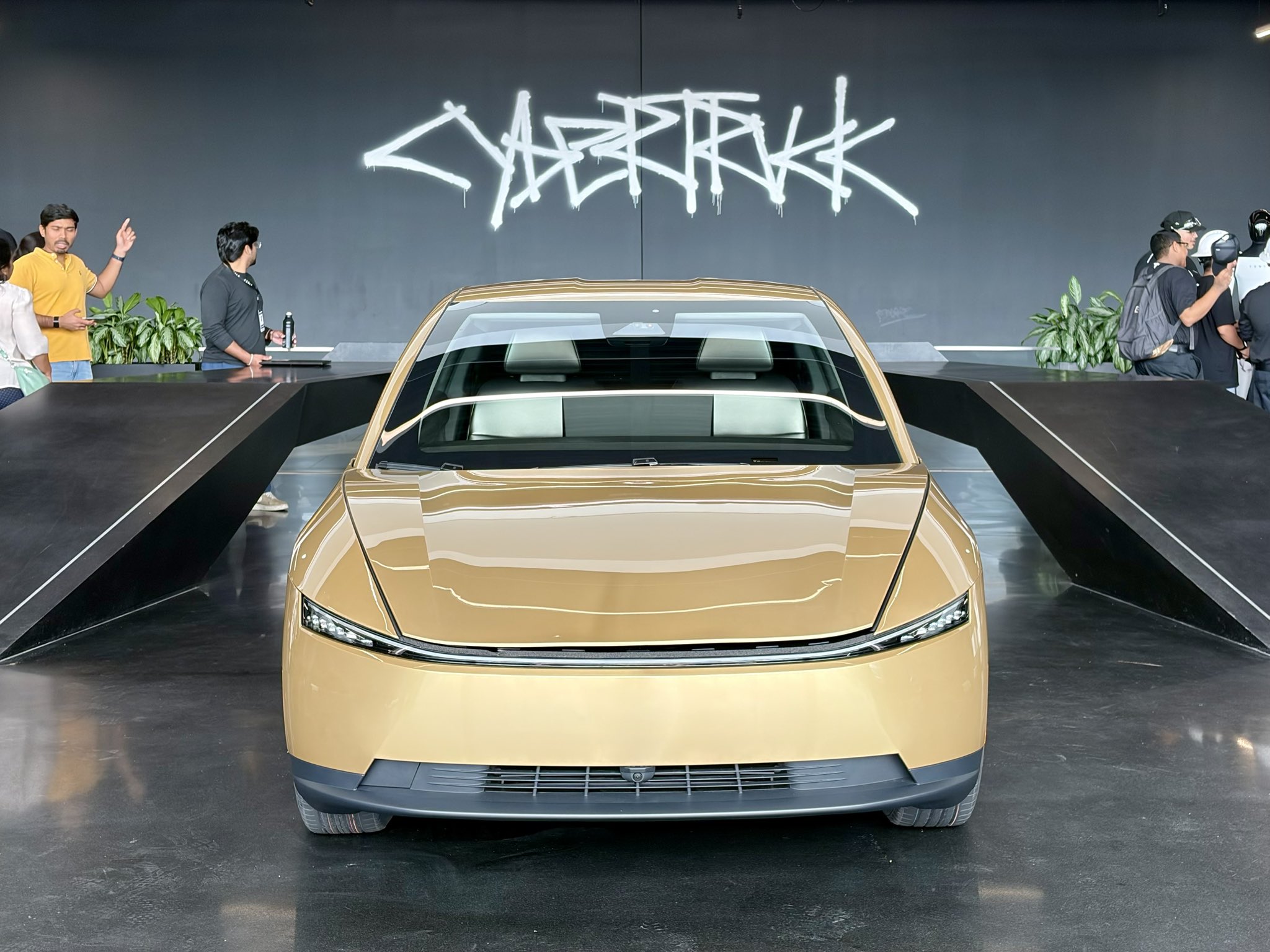
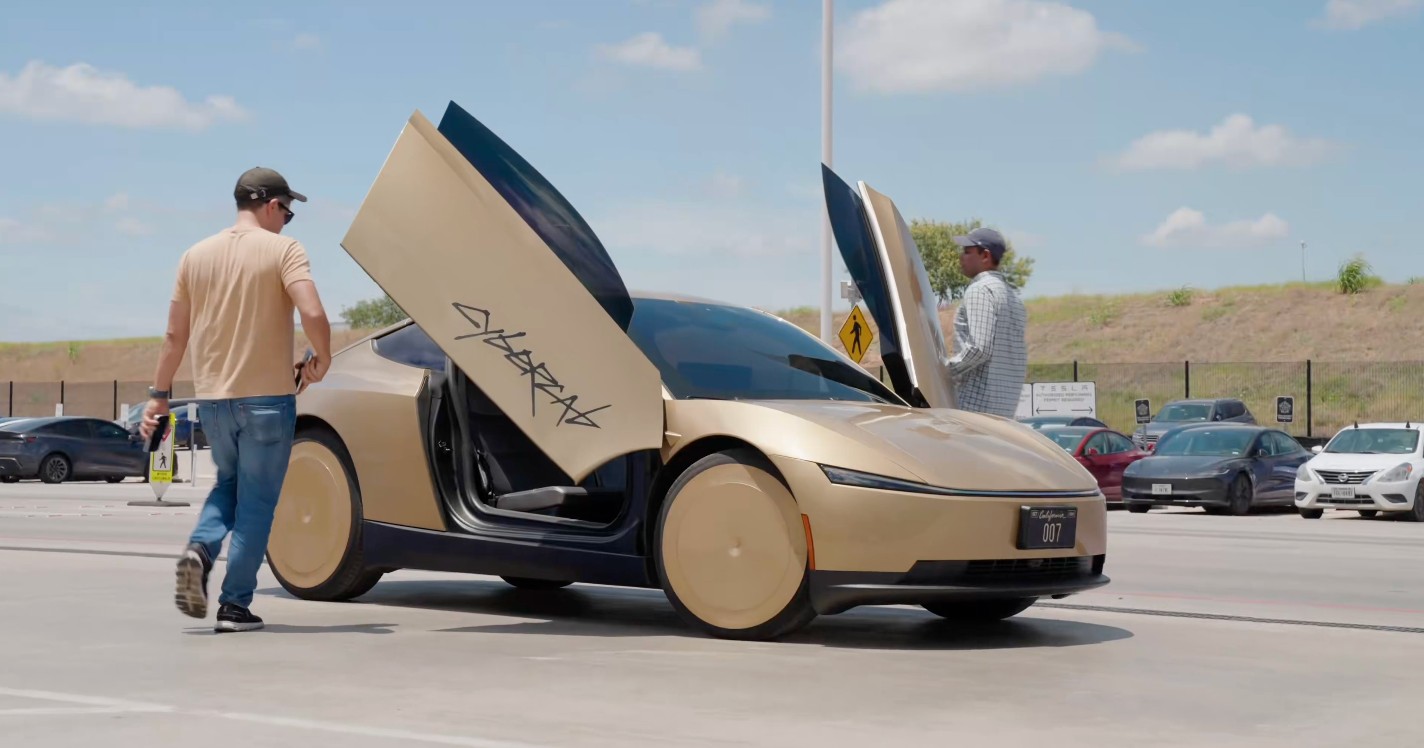
Tesla Cybercab is going to get some pretty substantial updates, including improvements to efficiency and a new color.
CEO Elon Musk said in a post on X on Saturday that Tesla would be working to refine the Cybercab even more, following the announcement during the week that the company would eliminate the Cybertruck lines within Giga Texas for more Cybercab manufacturing capacity.
“There are efficiency improvements coming that will allow for a 40kWh Cybercab pack,” Musk posted on X. “We will make this in liquid silver, so the colors are not too monotonous.”
There are efficiency improvements coming that will allow for a 40kWh Cybercab pack. We will make this in liquid silver, so the colors are not too monotonous.
The biggest thing most people fail to understand is that there are a very limited number of smart, dedicated people! They can only do so many things.
If we have to maintain a complex production line, supply chain and allocate engineering for Cybertruck, we can’t use those people or factory space and machinery for scaling Cybercab, which is the vehicle that will PROFOUNDLY transform the world of terrestrial transport!
— Elon Musk (@elonmusk) November 7, 2026
A new, more efficient model of the Cybercab will be engineered, which will only help Tesla’s profitability and margins, and it also boosts the argument for why the Cybertruck should be discontinued, at least from a business perspective.
The current Cybercab that operates in the Robotaxi platform in Austin, Texas, has a 48 kWh pack, and it sounds like Musk believes Tesla is on its way to introducing a version that has fewer cells but can manage the same workload thanks to engineering efficiencies.
Credit: Tesla
Musk also doubled down on the decision to prioritize Cybercab production over Cybertruck, which is a decision that has been extremely polarizing within the community, and many fans have made it abundantly clear that they are not particularly pleased with the plans.
“If we have to maintain a complex production line, supply chain, and allocate engineering for Cybertruck, we can’t use those people or factory space and machinery for scaling Cybercab, which is the vehicle that will PROFOUNDLY transform the world of terrestrial transport,” Musk said.
A good look at Tesla’s new Liquid Silver Cybercab, planned with a 40 kWh battery pack following new improvements
😍 https://t.co/IUYsUcCBMs
— TESLARATI (@Teslarati) November 8, 2026
Cybercab is obviously Tesla’s path forward in an automotive sense. It seems that Tesla is less concerned about catering to the passenger vehicle market and is more prone to focus on transforming passenger transportation in a way that prioritizes autonomy. However, this requires some sacrifice on Tesla’s end, and the Cybertruck is unfortunately a victim of this.
Cybercab holds an extremely crucial part of Tesla’s future. With the company already revolutionizing passenger transportation once, this is the next phase, and Cybercab is the path forward.

Elon Musk spotlights the Starlink rescue that got through where no cell tower could

SpaceX will perform Starship double catch attempt with Flight 15


