News
Xiaomi CEO congratulates Tesla on first FSD delivery: “We have to continue learning!”
Xiaomi has become one of Tesla’s strongest rivals in China.

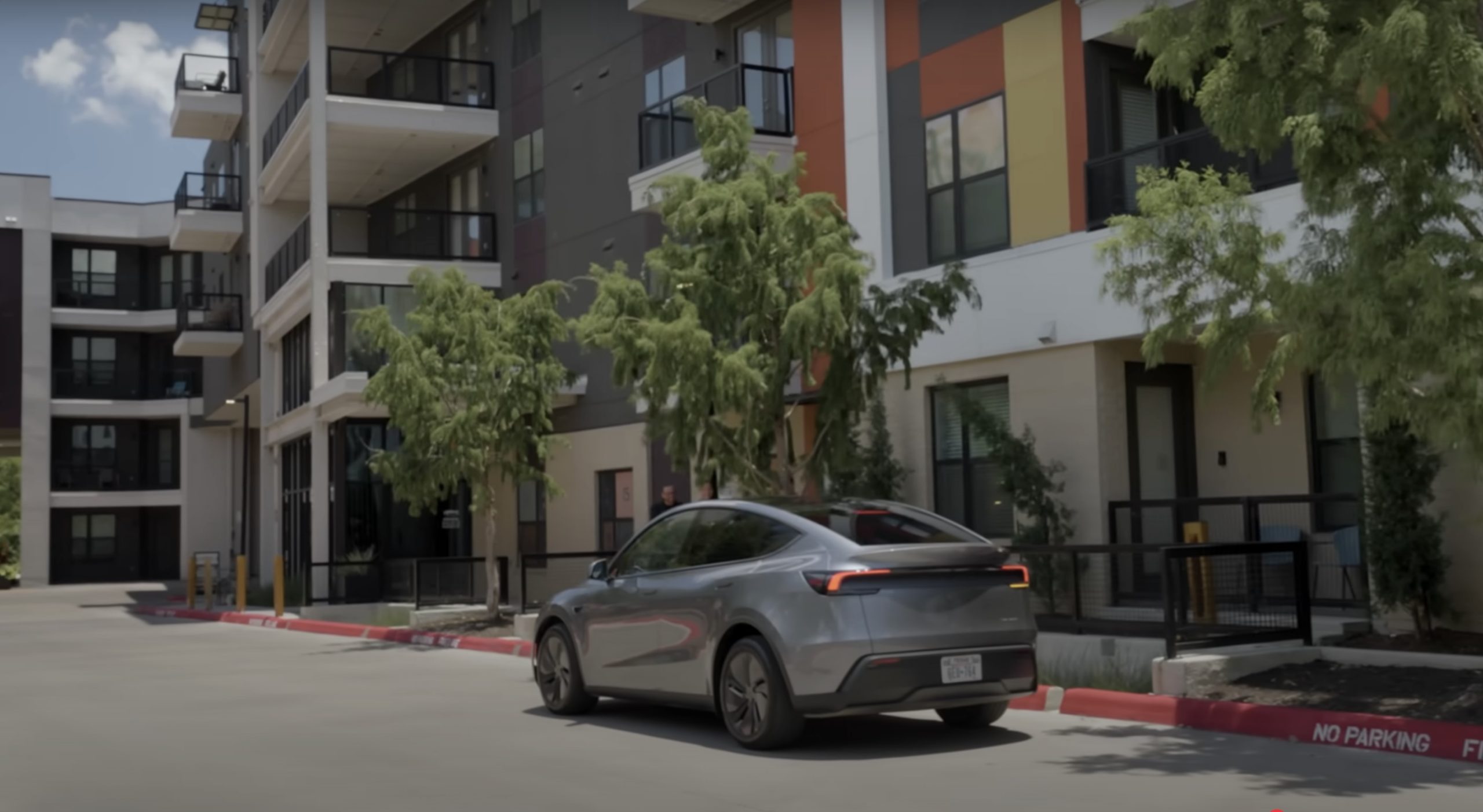
Just days after unveiling the Xiaomi YU7, a vehicle that is considered as the Model Y’s strongest competitor yet, Xiaomi CEO Lei Jun gave a nod of respect to Tesla and its Full Self-Driving (FSD) program.
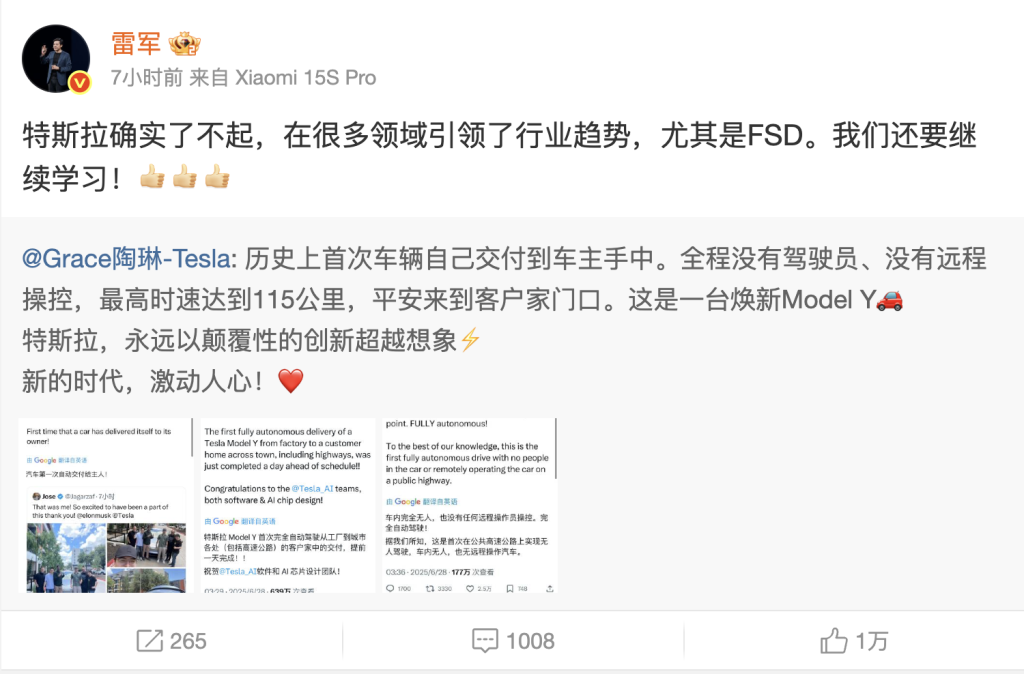
In a post on Weibo, Lei Jun highlighted the remarkable nature of Tesla’s first autonomous delivery. He also acknowledged that Xiaomi still has much to learn in the electric vehicle industry.
Xiaomi CEO’s Nod of Respect
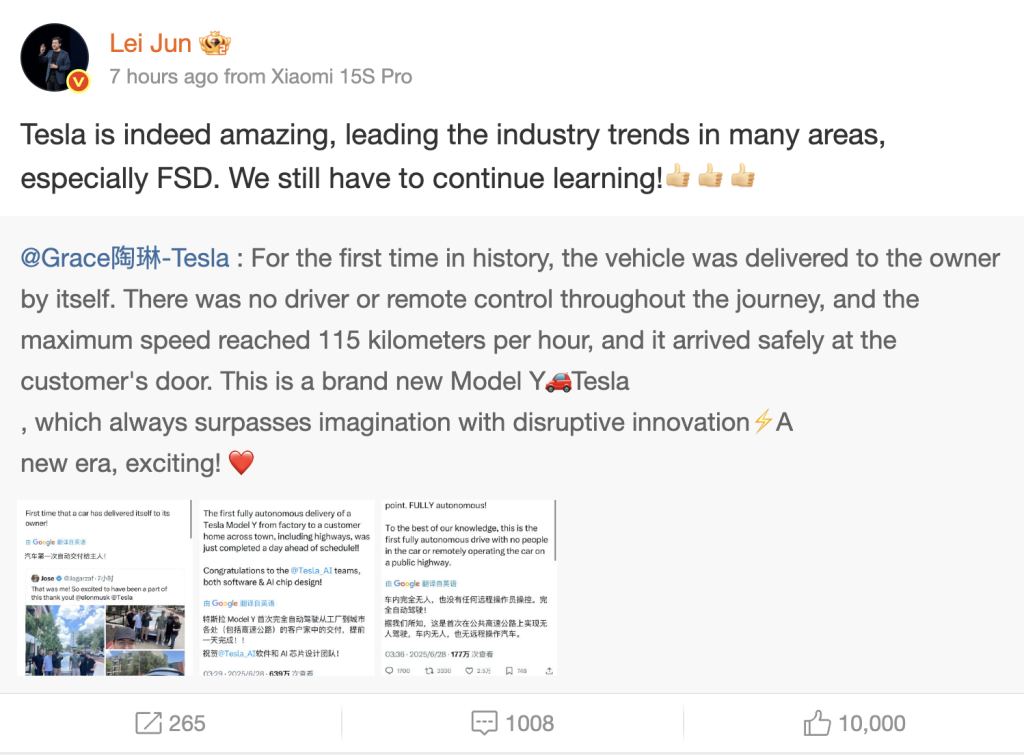
Lei Jun’s comments about Tesla’s FSD delivery were shared as a response to Tesla VP Grace Tao’s post about the recent feat. The Tesla VP shared several key aspects of the delivery, from the fact that there was no driver in the Model Y to the vehicle reaching over 70 mph as it drove to its owner.
“For the first time in history, the vehicle was delivered to the owner by itself. There was no driver or remote control throughout the journey, and the maximum speed reached 115 kilometers per hour, and it arrived safely at the customer’s door. This is a brand new Model Y. Tesla always surpasses imagination with disruptive innovation. A new era, exciting!” Tao wrote in her post.
In his response, the Xiaomi CEO acknowledged Tesla’s incredible feat. “Tesla is indeed amazing, leading the industry trends in many areas, especially FSD. We still have to continue learning!” he wrote.
Xiaomi’s Recent Tesla Competitor
The Xiaomi CEO’s comments show that Tesla’s projects and leadership garner a lot of respect in the global electric vehicle sector. While Tesla and Elon Musk tend to be media punching bags in the United States and Europe, the company and its CEO seem to be taken very seriously in China. This was despite China being the world’s most competitive electric vehicle market.
Xiaomi itself has become one of Tesla’s strongest rivals in China, with its first car, the SU7, bringing the fight to the Tesla Model 3. Its most recent vehicle, the YU7, could very well be the Model Y’s most legitimate rival yet, as it is more affordable, bigger, and more feature-laden than Tesla’s best-selling crossover. The YU7 has garnered quite a lot of attention, with Xiaomi receiving 200,000 firm orders for the vehicle within the first three minutes of its launch.


Elon Musk
Tesla’s $2.9 billion bet: Why Elon Musk is turning to China to build America’s solar future
Tesla looks to bring solar manufacturing to the US, with latest $2.9 billion bet to acquire Chinese solar equipment.

Tesla is reportedly in talks to purchase $2.9 billion worth of solar manufacturing equipment from a group of Chinese suppliers, including Suzhou Maxwell Technologies, which is the world’s largest producer of screen-printing equipment used in solar cell production. According to Reuters sources, the equipment is expected to be delivered before autumn and shipped to Texas, where Tesla plans to anchor its next phase of domestic solar production.
The move is a direct extension of a vision Elon Musk has been building for months. At the World Economic Forum in Davos this past January, Musk announced that both Tesla and SpaceX were independently working to establish 100 gigawatts of annual solar manufacturing capacity inside the United States. Days later, on Tesla’s Q4 2025 earnings call, he made the ambition concrete: “We’re going to work toward getting 100 GW a year of solar cell production, integrating across the entire supply chain from raw materials all the way to finished solar panels.”
Job postings on Tesla’s website reflect that same target, with language explicitly calling for 100 GW of “solar manufacturing from raw materials on American soil before the end of 2028.”
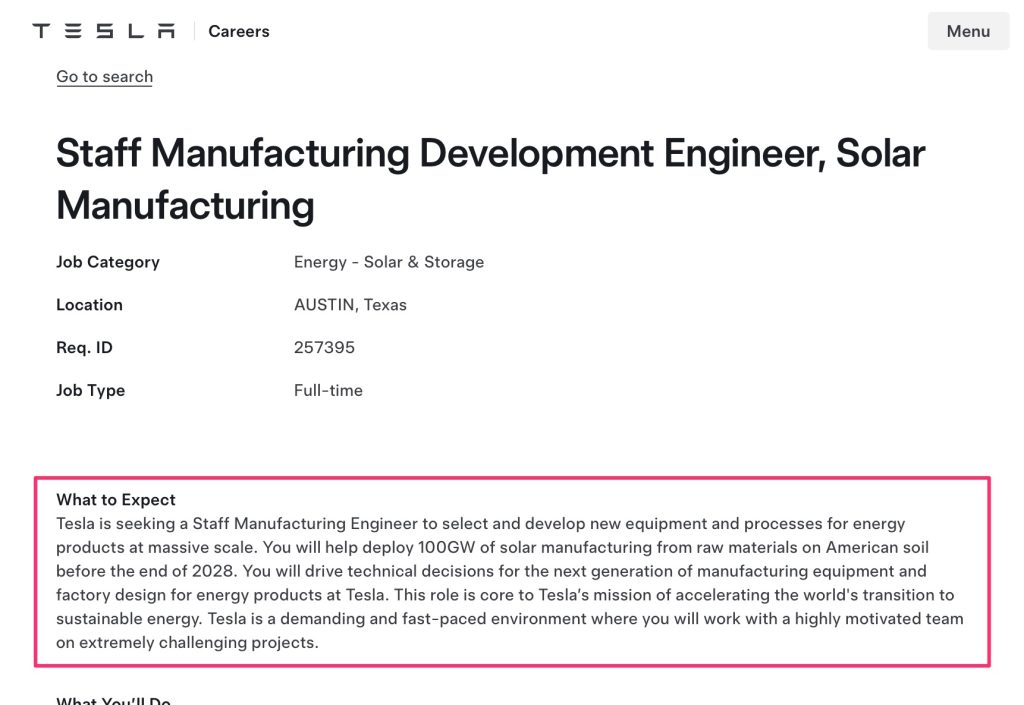
Tesla job listing for Staff Manufacturing Development Engineer, Solar Manufacturing
The urgency behind the latest solar manufacturing target is rooted in a set of rapidly emerging pressures related to AI and Tesla’s own energy business. U.S. power consumption hit its second consecutive record high in 2025 and is projected to climb further through 2026 and 2027, driven largely by the explosion in AI data centers and the broader electrification of transportation. Tesla’s own energy division, which produces the Megapack utility-scale battery storage system, has been growing rapidly, and solar supply is a critical companion component for the business to scale. Musk has argued that solar is not just a clean energy option but the only one that makes economic sense at the scale AI infrastructure demands.
Tesla lands in Texas for latest Megapack production facility
Ironically, the path to domestic solar independence currently runs through China. Sort of.
Despite Tesla’s stated push to localize its supply chain, mirrored recently by the company’s plan for a $4.3 billion LFP battery manufacturing partnership with LG Energy Solution in Michigan, Tesla still relies on China-based suppliers to keep its cost structure intact.
The $2.9 billion equipment deal underscores a tension Musk himself acknowledged at Davos: “Unfortunately, in the U.S. the tariff barriers for solar are extremely high and that makes the economics of deploying solar artificially high, because China makes almost all the solar.” Building the factory in America requires buying the machinery from the country Tesla is trying to reduce its dependence on.
Tesla named by U.S. Gov. in $4.3B battery deal for American-made cells
The regulatory pathway adds another layer of complexity. Suzhou Maxwell has been seeking export approval from China’s commerce ministry, and it remains unclear how quickly that clearance will come. Still, the market has already reacted, with shares in the Chinese firms reportedly involved in the talks surged more than 7% following the Reuters report that broke the story.
Whether Tesla can hit its 2028 target of 100GW of solar manufacturing remains an open question. Though that scale may seem staggering, especially in such a short timeframe, we know that Musk has a documented history of “always pulling it off” in the face of ambitious deadlines that may slip. But, rest assured – it’ll get done.
Elon Musk
Elon Musk reveals date of Tesla Full Self-Driving’s next massive release
Initially planned for a January or February release, v14.3 aims to add some reasoning and logic to the decisions that Full Self-Driving makes, which could improve a lot of things, including Navigation, which is a major complaint of many owners currently.

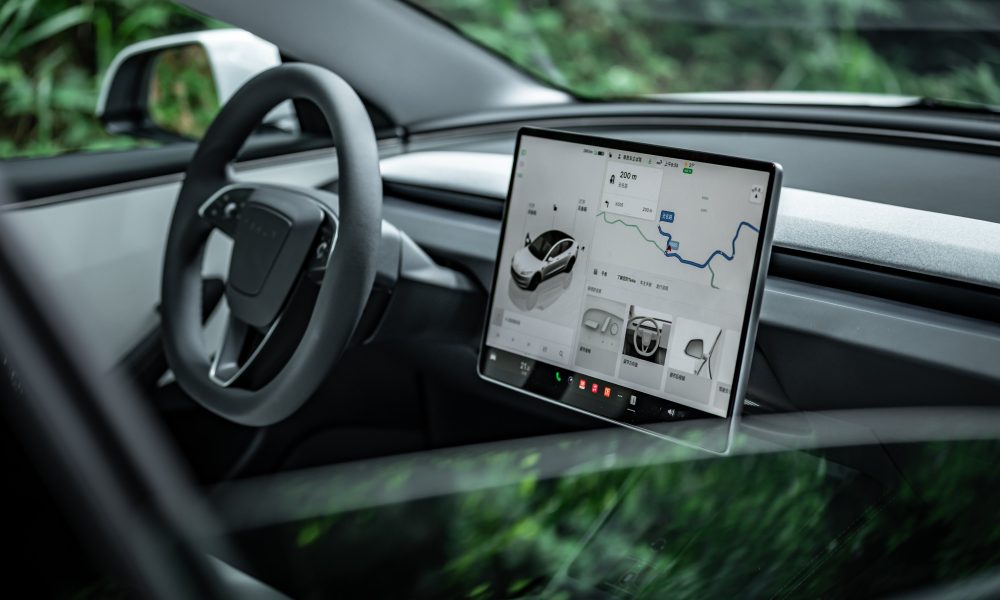
Tesla CEO Elon Musk revealed the date of Full Self-Driving’s next massive release: v14.3.
For months, Tesla owners with Hardware 4 have been utilizing Full Self-Driving v14.2 and subsequent releases. Currently, the most up-to-date FSD version is v14.2.2.5, which has definitely brought out mixed reviews. With releases, some things get better, and other things might regress slightly.
For the most part, things are better in terms of overall behavior.
However, many owners have been looking forward to the next release, which is v14.3, about which Musk has said many great things. Back in November, Musk said that v14.3 “is where the last big piece of the puzzle lands.”
He added:
“We’re gonna add a lot of reasoning and RL (reinforcement learning). To get to serious scale, Tesla will probably need to build a giant chip fab. To have a few hundred gigawatts of AI chips per year, I don’t see that capability coming online fast enough, so we will probably have to build a fab.”
Initially planned for a January or February release, v14.3 aims to add some reasoning and logic to the decisions that Full Self-Driving makes, which could improve a lot of things, including Navigation, which is a major complaint of many owners currently.
Tesla Full Self-Driving v14.2 is a considerable improvement from early versions of the suite, but we have written about the somewhat confusing updates that have come with recent versions.
Tesla Full Self-Driving v14.2.2.5 might be the most confusing release ever
They’ve been incredibly difficult to gauge in terms of progress because some things have gotten better, but there seems to be some real regression on a handful of things, especially with confidence and assertiveness.
Musk confirmed today on X that Tesla is already testing v14.3 internally right now. It will hit a wide release “in a few weeks,” so we should probably expect it by late April.
It’s in testing right now. Wide release in a few weeks.
— Elon Musk (@elonmusk) March 19, 2026
Overall, there are high hopes that v14.3 could be a true game changer for Tesla Full Self-Driving, as many believe it could be the version that Robotaxis in Austin, Texas, some of which are driverless and unsupervised, are running.
It could also include some major additions, including “Banish,” also referred to as “Reverse Summon,” which would go find a parking spot after dropping occupants off at their destination.
What Tesla will roll out, and when exactly it arrives, all remain to be seen, but fans have been ready for a new version as v14.2.2.5 has definitely run its course. We have had a lot of readers tell us their biggest request is to fix Navigation errors, which seem to be one of the most universal complaints among daily FSD users.
Cybertruck
Chattanooga Charge: Tesla and EV fans ready for the Southeast’s wildest Tesla party
From Cybertruck Convoys to Kid-Friendly Fun Zones: The Chattanooga Charge Has Something for Everyone
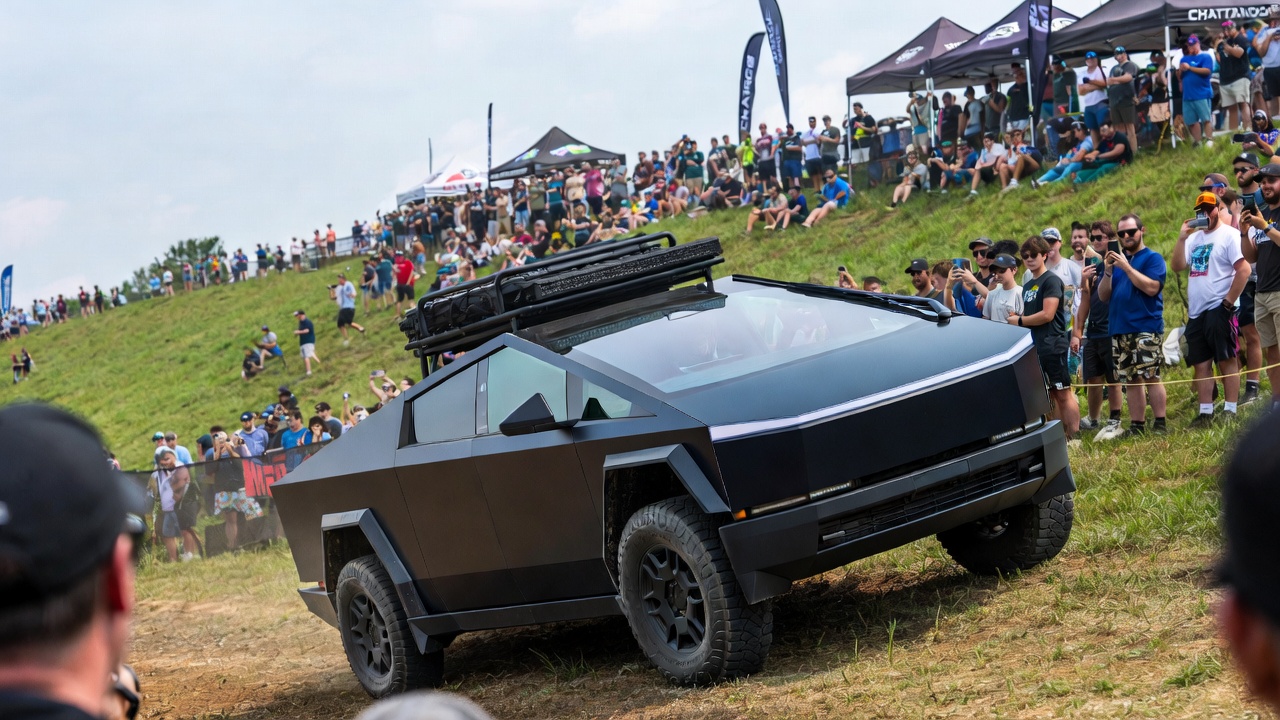
Hundreds of like-minded Tesla and EV enthusiasts are descending on Chattanooga Charge this weekend for the largest Tesla meet in the Southeast. Taking place on March 20–22, 2026 at the stunning Tennessee Riverpark.
If you were there last year, you’ll know that it’s the ultimate experience to see the wildest Teslas in action, see the best in EV tech, and arguably the most fun – finally put a name to the face and connect with those social media buddies IRL! Oh, and that epic night time Tesla light show is a once-in-a-lifetime experience that will transform the Riverpark into something out of a sci-fi film that’s remarkably unforgettable and must be seen in person.
This year’s event takes everything up a notch, with over 100 Cybertrucks expected to be on display, many sporting jaw-dropping modifications and custom wraps that push the boundaries of what these stainless steel beasts can look like.
Whether you’re a diehard Tesla fan, EV supporter, or just EV-mod-curious, the sheer spectacle is worth the drive.
The Chattanooga Charge doesn’t wait until Saturday morning to get started. The weekend technically kicks off Friday, March 20th, and the venue sets the tone immediately. Come share roadtrip stories over drinks at the W-XYZ Rooftop Bar on the top floor of the Aloft Chattanooga Hamilton Place Hotel, with sunset views over the city.
Come morning, nurse your hangover with a some good coffee, and convoy with hundreds of other Tesla and EV drivers through Chattanooga to the event for some morning meet and greets before the speaker panel starts and the food trucks fire up.
Tesla owner clubs travel from across the country to be here, not just to show off their vehicles,, but to connect, share, and celebrate a shared passion for the future of driving.
Sounds like a plan to me. See you there, guys. Don’t miss it. Get your tickets at ChattanoogaCharge.com and join the charge. 🔋⚡
Chattanooga Charge is a premier Tesla and EV gathering inspired by the X Takeover, known as one of the largest Tesla event gatherings. What began as a bold idea from the team at DIY Wraps/TESBROS, hosted in their hometown of Chattanooga, Tennessee, the event quickly became a movement across social media. The first annual Chattanooga Charge united over 16 Tesla clubs from 16 states, proof that the EV community was hungry for something big in the South. Year after year, the event has grown in scale, ambition, and heart.

Tesla’s $2.9 billion bet: Why Elon Musk is turning to China to build America’s solar future

Elon Musk reveals date of Tesla Full Self-Driving’s next massive release


