
Lifestyle
Tesla Referral Program crackdown: Musk to “shut down” referral code abuse

Elon Musk’s highly successful and once “experimental” Tesla Referral Program has arguably been one of the company’s best viral campaigns for selling cars. The concept is simple. Buy a new Tesla, refer a friend to buy one through a referral code, and win exclusive prizes including a highly coveted invite to a Tesla unveiling event. Whether it’s a VIP Fremont Factory tour, an invite to the upcoming Model 3 launch party, or the opportunity to witness Elon Musk unveil Tesla’s electric Semi truck on September 28, chances are you want to be there and you’ll do anything to make it happen. And that’s exactly what many have done.
In question are the ethics behind the oversharing of one’s Tesla referral code. It’s a normal occurrence these days to see Tesla owners shamelessly plug their personal referral codes across social media, on forums and even on email signatures. I’m guilty of it and I’m sure many others are too. But when Tesla owners begin buying keyword-based Google ads to promote their referral code on a massive scale, a question of whether this is fair or even “legal” under Tesla’s Referral Program “Good Faith” clause naturally arises.
According to Tesla:
Good Faith
We introduce programs such as these in good faith and expect the same good faith in return. Please note that we may withhold awards where we believe customers are acting in bad faith or otherwise acting contrary to the intent of this program. To be clear, commercializing or otherwise selling referral codes is not appropriate, and we will not honor such codes. We cannot cover every nefarious scenario, nor will we attempt to, but we do promise to be fair and reasonable.
One can interpret “Commercializing or otherwise selling referral codes” as paying a person or service to use one’s referral code, which would put Google AdWords buyers in violation of Tesla’s Good Faith clause. But what if you’re a highly popular Model S or Model X-owning YouTuber that has the ability to influence millions of fans on the purchase of a Tesla? Is it moral to ask your subscribers to consider using your referral code?
Not according to Twitter user Station2Station. In a tweet to Elon Musk, Station2Station writes, “As an owner, please DO AWAY with referral code prgr. Too many youtube owners hustling their YT channels to gain refs.”
Musk replied back, stating that he “will shut that down”, which presumably means he’ll disqualify any referral code use that came by way of someone that is not a “friend” to the original Tesla owner.
Will shut that down. The point is to provide something special that only existing owners can give to friends and it is limited to 5 people.
— Elon Musk (@elonmusk) May 24, 2017
While Musk’s intention is clear that the program is meant to be something special, penalizing Tesla-owning YouTubers for sharing their referral codes would be a step in the wrong direction. Let us not forget that many Tesla-owning YouTubers began their channels with the sole purpose of sharing their love for the company, their cars, and most importantly Musk’s vision of the future. As their voice amplified across the Google-owned social video platform and subscriber counts grew, so did Tesla’s brand reach and presumably the number of Model S and Model X vehicles sold each quarter. Should they be faulted for having a loyal following, many of whom built something special in the form of friendships with their YouTuber through social media? I say no.
In this instance, it’s less of an issue of referral code misuse and more the case of sour grapes.

Here’s a fun blast from the past email sent by Musk when the first Tesla Referral Program was introduced.
From: “Elon Musk” <elon@teslamotors.com>
Subject: Trying something new (plus party at the Gigafactory and a Founder Series Model X)
Date: July 29, 2015 at 2:05:31 PM PDT
Word of mouth has always been a major part of how Tesla sales have grown. When I meet Tesla owners, one of the first things they often tell me is how they have convinced many others to buy the car. As you may already know, Tesla does not advertise or pay for endorsements or product placement. Maybe by doing so we could sell more cars, but I don’t like the idea of trying to trick people into buying a product by false association. If you see somebody famous driving a Model S, it is because they genuinely like the car.
If you see it in a movie or TV show, it is because the people associated with that production genuinely like the car. Besides word of mouth, another way that our cars are sold is through stores. These will always be important to allow people to check out new models and ask our product specialists detailed questions. However, stores are quite expensive to set up and operate. In reviewing the Tesla cost of sales, we found that it is approximately $2,000 to sell a car through our stores, higher in some regions and lower in others.
Both ways of reaching potential customers are important, but, if we can amplify word of mouth, then we don’t need to open as many new stores in the future. So, we are going to try an experiment. This is similar to the customer growth program that I worked on at PayPal/X.com back in ’99. What worked for PayPal may not work for Tesla, but it is worth trying, as the net result would be lowering our costs by $2,000, allowing us to give that money to our customers.
From now through October 31st, if someone buys a new Model S through your link, they will get $1,000 off the purchase price and you will get a $1,000 credit in your Tesla account, which can be applied to a future car purchase, service charge or accessories. To put some limits on the experiment, each Tesla owner can grant a maximum of ten $1,000 discounts.
Just for fun, there will also be some things that money can’t buy. If five of your friends order a Model S, you and a guest will receive an invitation to tour the Gigafactory in Nevada – the world’s biggest factory by footprint – and attend the grand opening party. This will be awesome. At ten orders, you get the right to purchase a Founder Series Model X, which is not available to the public, with all options free (value of about $25,000). The first person to reach ten will get the entire car for free.
Elon


Lifestyle
NTSB findings on fatal Tesla crash tell a very different story
The NTSB confirmed the driver, not Tesla’s FSD, caused the fatal Texas house crash.
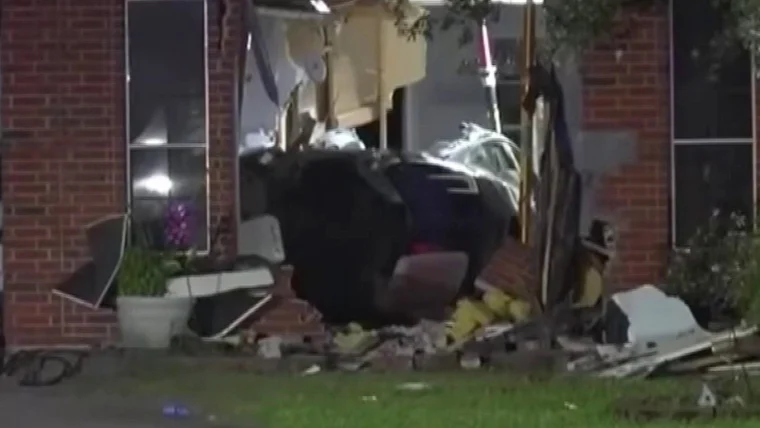
The National Transportation Safety Board released preliminary findings Wednesday confirming that a Tesla driver, not the vehicle’s software, caused a fatal crash in Katy, Texas in June. The driver, 44-year-old Michael Butler, had engaged Full Self-Driving Supervised mode on Rose Hollow Lane, a residential street with a 30 mph speed limit, before manually overriding the system by pressing the accelerator pedal all the way to 100%. Data recovered from the 2025 Tesla Model 3 showed the vehicle was traveling over 70 miles per hour when it struck a home and killed 76-year-old Martha Avila, who was inside. Weather was clear, the road was dry, and it was daylight.
Texas man charged in fatal Tesla crash where he blamed Autopilot
Butler told authorities he had passed out at the wheel. But security camera footage obtained by the NTSB told a different story, and showed the car accelerating through an intersection before leaving the road entirely. Police also found that Butler’s phone had Google searches including the terms “Tesla FSD not aggressive enough 2026” and “Tesla FSD too timid,” raising serious questions about how he was using the system before the crash. Butler has since been charged with manslaughter. The victim’s family has filed a lawsuit against both Butler and Tesla, alleging negligence.
The NTSB findings aligned directly with what Tesla VP of AI Software Ashok Elluswamy had already stated publicly on X in the weeks after the crash, writing that “the driver manually overrode self-driving by pressing the accelerator all the way to 100%.” The data confirmed his account.
Yup. In this case, the driver manually overrode self-driving by pressing the accelerator all the way to 100% of the accel pedal in this residential area. They reached a speed of 73 mph during the crash, and had the accelerator pressed even after the crash.
— Ashok Elluswamy (@aelluswamy) June 22, 2026
Elon Musk
Elon Musk’s Texas ranch to showcase the lifelong work that changed the world
Elon Musk is building a product gallery at his Texas ranch spanning his lifelong inventions.
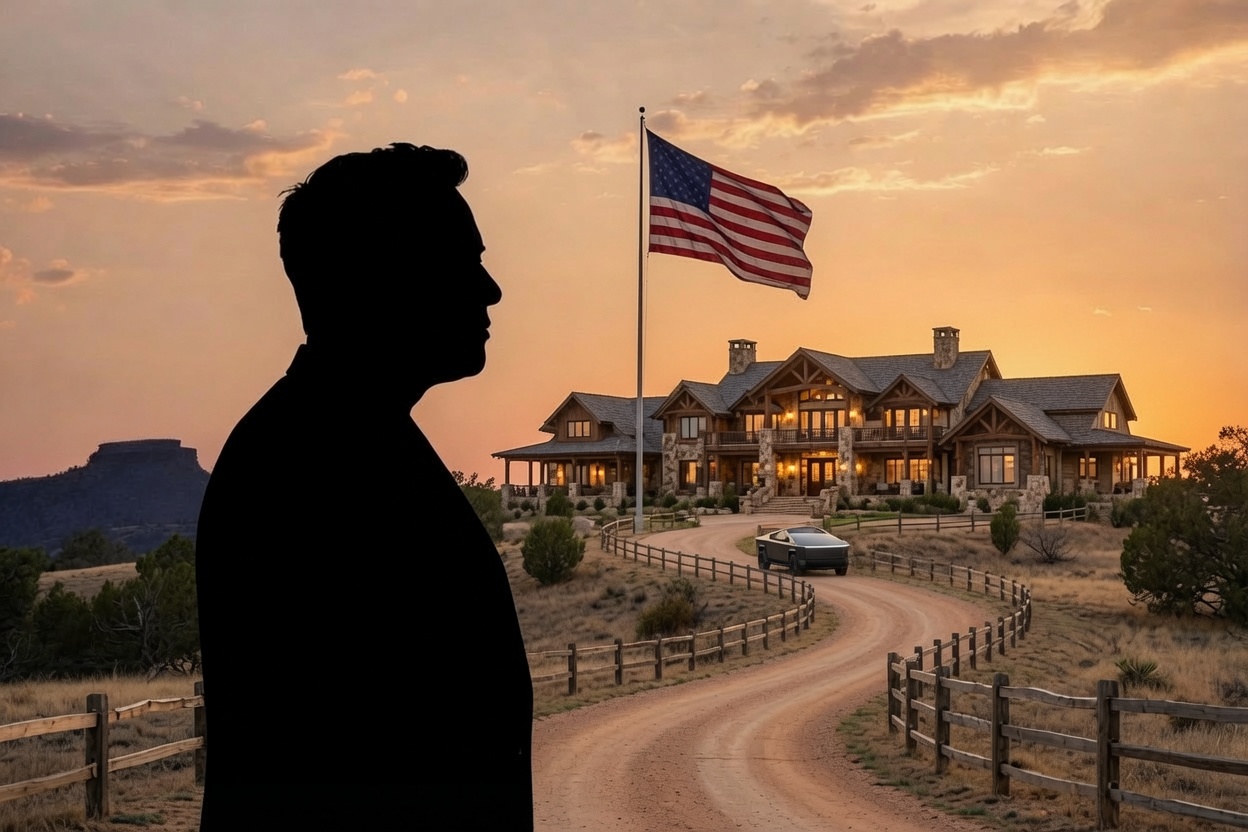
Elon Musk took to X earlier today, noting “Am putting together a product gallery at my ranch in Texas.” in response to a resurfaced famous quote from JPMorgan CEO Jamie Dimon’s wherein he draw parallels of the Tesla CEO to legendary physicist Albert Einstein.
Dimon made the remark at the World Economic Forum in Davos, Switzerland back in January 2025, telling CNBC at the time, “SpaceX, Tesla, Neuralink, I mean, the guy is our Einstein.” The remark seemingly ended a long-time feud between the two high profile execs.
While details are thin about the exact location of Elon Musk’s Texas ranch and any pending projects that would serve as a gallery and homage to his portfolio of revolutionary product inventions spanning from 1984 to 2025, land acquisition records point to roughly a location of several thousand acres in Bastrop County, east of Austin near the Colorado River and held through an LLC called Horse Ranch LLC that’s managed by Musk’s longtime personal friend and family wealth manager Jared Birchall. Birchall also serves as the CEO of Neuralink.
Tesla’s “ecological paradise” in Giga Texas may be larger than expected
The broader Bastrop County footprint surrounding the ranch has grown significantly. Entities tied to Musk have accumulated approximately 2,000 acres in Bastrop County as of mid-2026, up from 700 acres earlier in the year, with possibly as much as 6,000 acres acquired in total across Bastrop and Travis counties based on deed records.
No completion date for the gallery has been announced and Musk has not confirmed whether it will be open to the public. As Teslarati has reported, SpaceX just completed the largest IPO in history raising $75 billion, a milestone that makes this particular moment in Musk’s career a natural inflection point for looking back at what he has built through the years.
Am putting together a product gallery at my ranch in Texas https://t.co/xQf5FRy4uz
— Elon Musk (@elonmusk) July 15, 2026
Starting with Blastar, a simple space shooter game Musk coded at 12 years old and sold to a South African magazine for $500. From there the timeline moves through a commercial career that started with Zip2 in 1995, a city guide software company sold to Compaq for roughly $300 million in 1999. That was followed by X.com in 1999, which merged with Confinity to become PayPal, acquired by eBay in 2002 for $1.5 billion. SpaceX came in 2002, Tesla in 2003, SolarCity in 2006, the Supercharger network in 2012, Neuralink in 2016, The Boring Company in 2016, OpenAI co-founded in 2015, X acquired in 2022, xAI in 2023, Optimus in 2024, the Cybercab in 2026, and most recently SpaceXAI following the SpaceX and xAI merger. The gallery will also likely include items that blur the line between product and cultural artifact, among them The Boring Company’s Not-a-Flamethrower from 2018, Tesla Short Shorts from 2020, and Burnt Hair perfume released under X in 2022.
Lifestyle
Tesla makes the cut on California’s newest EV Rebate program
California just signed a $270 million EV rebate into law and it starts this summer.
California Governor Gavin Newsom signed SB 168 into law on Monday, July 13, 2026, creating a $270 million EV rebate program that delivers money directly at the dealership rather than as a tax credit applied months later. The program, called MyFirstEV, is funded equally by California’s state budget and participating automakers, with each contributing $135.5 million to make the math work.
The timing is directly tied to the loss of federal support when the $7,500 federal EV tax credit ended, removing the most significant consumer incentive that had driven EV adoption in the U.S. California, which accounts for roughly one-third of all EVs sold nationally, moved to fill that gap with a state-level replacement.
The rebate structure is straightforward. First-time EV buyers can receive $3,500 off any new battery-electric vehicle with an MSRP up to $50,000. Used EVs priced at $25,000 or below qualify for a $1,750 rebate. The credit is applied at the point of sale, which removes the friction of the old federal system where buyers had to wait for tax season to see the benefit. The program goes live later this summer, with the California Air Resources Board expected to release full participation details next month.
California hits Tesla Cybercab and Robotaxi driverless cars with new law
For Tesla buyers, the implications are mixed. The Tesla Model 3 RWD at $42,490 and the Model 3 Long Range at $47,490 both fall under the $50,000 cap and would qualify for the full $3,500 rebate for first-time buyers. The Model Y, which starts at $44,990 after Tesla’s recent price adjustment, also qualifies. The Model X, Model S, and Cybertruck all exceed the cap and receive no benefit. As Teslarati has reported, the program also includes a carve-out exempting California-based automakers like Rivian and Lucid from the price cap entirely, a provision that puts Tesla at a disadvantage since it relocated its headquarters to Texas in 2021.
Other qualifying vehicles include the Chevrolet Equinox EV, Ford Mustang Mach-E, Hyundai Ioniq 5, Kia EV6, and Volkswagen ID.4.

Elon Musk secretly acquires $1B energy company to power the AI future

Tesla has to fix a big problem with its old headlights, NHTSA says


