Lifestyle
Racing a Tesla in 100 degree weather and with no power limiting?

The Track
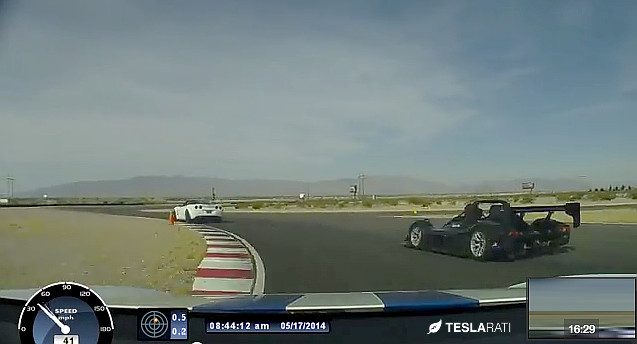
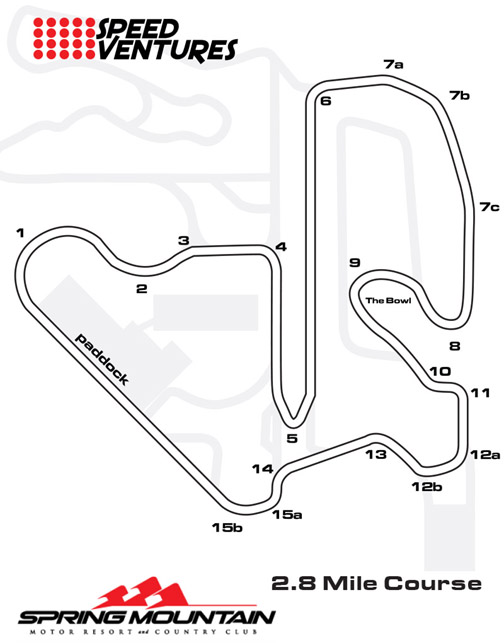
Spring Mountain Raceway is located in the city of Pahrump NV, an hour west of Las Vegas. It’s a technical track supporting a unique set of configurations that we have not seen elsewhere. There’s both high and low speed turns along with several straightaways that allowed us to accelerate to 100 mph+. The track is well maintained and has smooth surfaces all the way around. The track configuration we ran was 2.8 miles as seen in this track map:
The Tesla Model S
An interesting phenomenon occurred while racing on this track. For the first time in our racing history, our “48 Tesla” Model S was able to pull consistent lap times and did not experience significant power limitation despite the 100 degree weather. In fact, we registered our best lap times on lap 2 and lap 6.
Power limitation did not go below 160kw even after staying on the track for 6+ laps. We have no explanation for this and was pleasantly surprised to say the least. Did Tesla Motors retune the power limiting feature?
Also see: The full Tesla Racing Series
Out best lap time was 2:15. Top speed on the front straightaway was 112 mph. Max lateral G was 1.2. The Model S tops out at 1 G in most turns, but occasionally you can push it to get 1.1 or 1.2 out of it. Anything more and you run the risk of losing control. We ran in the open passing Green group this time with Speed Ventures in a class with much higher powered cars than the Model S. Even with power limitation, we were able to keep up with a pack of Corvettes for awhile.
Charging and Power Consumption
This track does not have a 220 V outlet. Similar to Chuckwalla that did not have electricity at all, we had to make arrangements for charging outside of the track. There is a very nice RV Park situated 3 miles away by the name of Wine Ridge RV Resort. They have very nice accommodations along with a reliable 50 amp power source. We were able to recharge in between sessions and last for 3 full racing sessions. The Las Vegas Supercharger is located 60 miles away.
Power consumption on the track was 1100 wh/mile, which translated into 4 miles of range used per 1 actual mile of travel, or about 12 rated miles used per lap.
Travel
As we learned in our last journey out of Las Vegas Speedway, traveling through the desert in a Model S requires some careful planning and driving discipline.
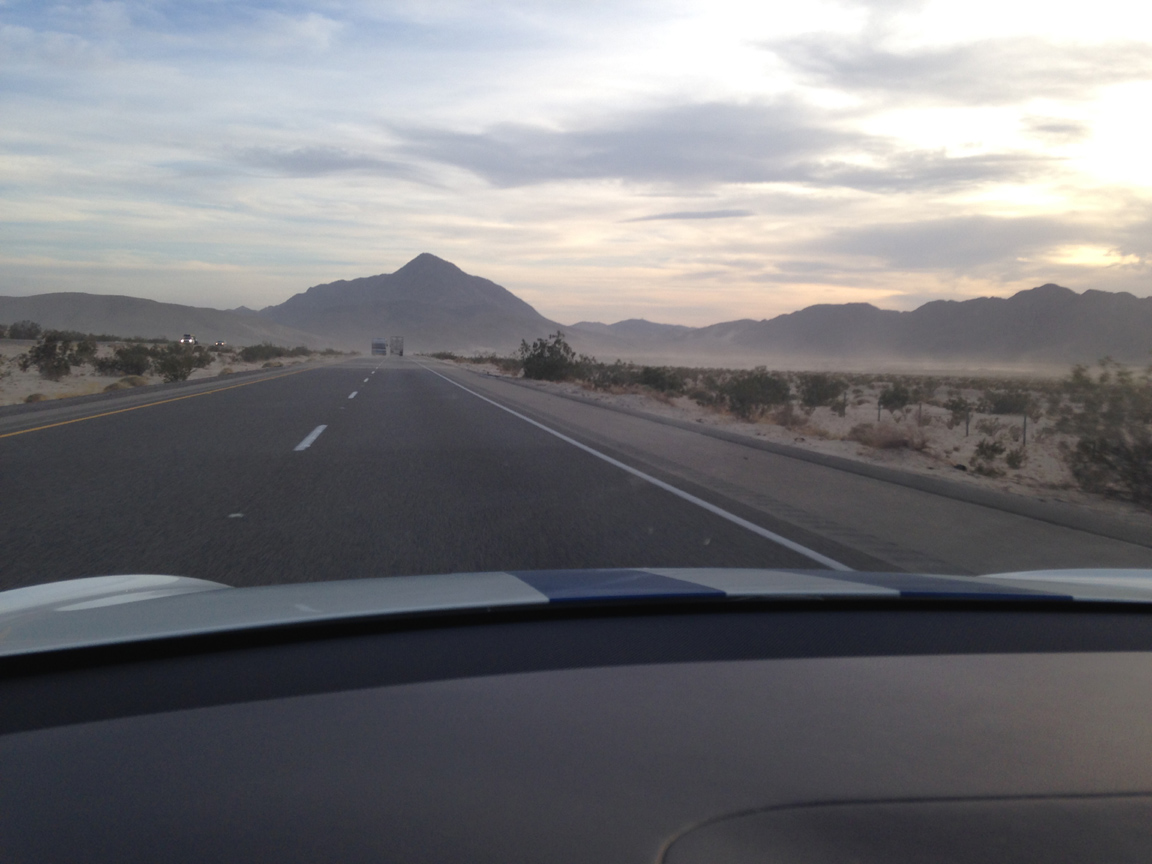
The road leading from Barstow to Pahrump is a small highway that crosses the desert (highway 127 then 178). There is no cellular reception for most of the journey, and no human settlements or restrooms for miles on end. Very few cars travel this road so it’s definitely wise to maximize your charge, drive slow and account for any weather conditions before embarking on this journey. You could be in some serious danger if you ended up stranded here.


Elon Musk
The FCC just said ‘No’ to SpaceX for now
SpaceX is fighting the FCC for spectrum that could put satellites inside every smartphone.

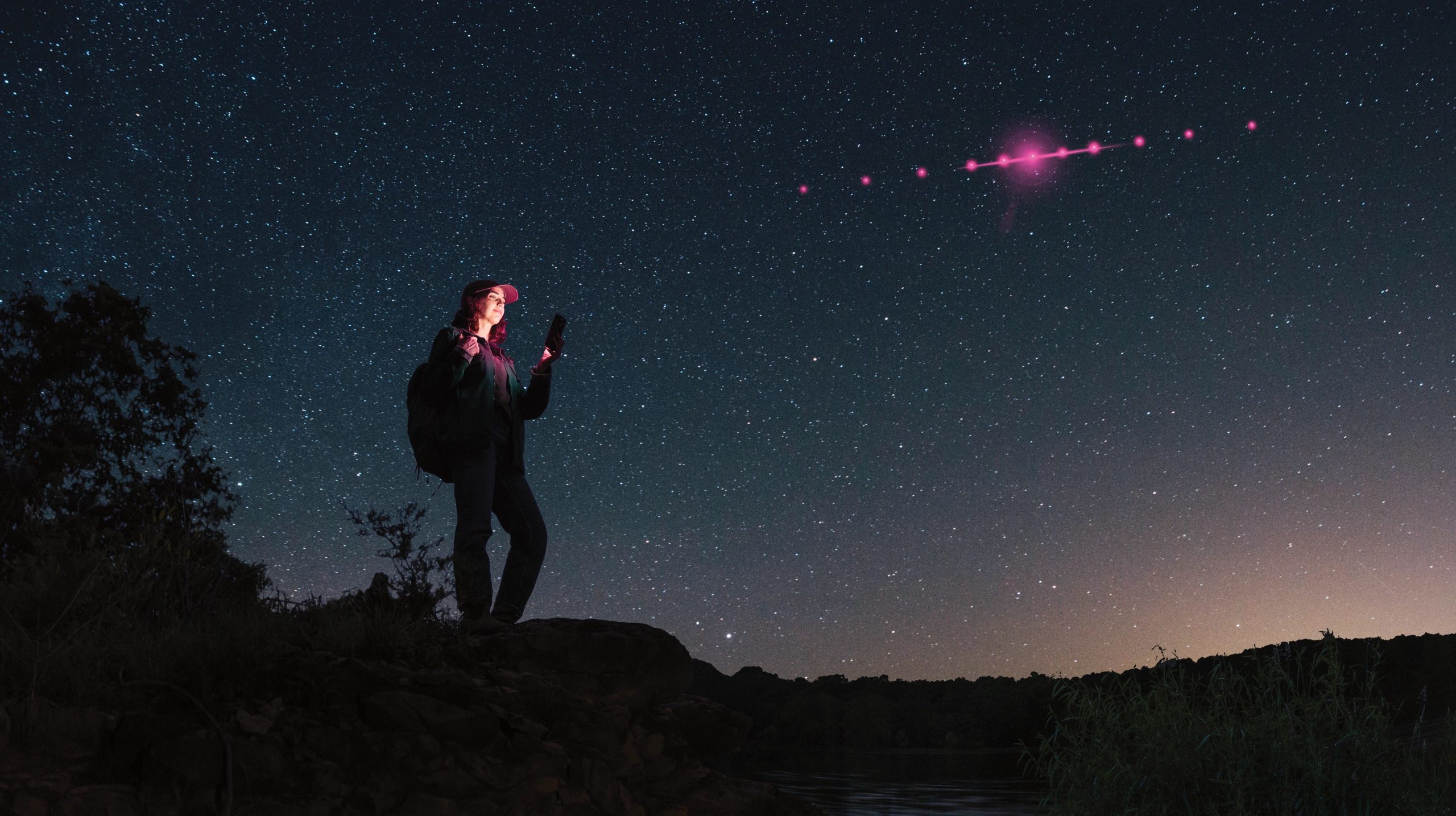
SpaceX was dealt a new setback on April 23, 2006 by the Federal Communications Commission (FCC) after the U.S. government agency dismissed the company’s petition to access a Mobile Satellite Service spectrum that would allow direct-to-device (D2D) capabilities.
The FCC regulates communications by radio, television, wire, and cable, which also includes regulating D2D technology that lets your existing smartphone connect directly to a satellite orbiting Earth, the same way it would connect to a cell tower.
Elon Musk’s SpaceX has been building toward this through its Starlink Mobile service, formerly called Direct-to-Cell, in partnership with T-Mobile. The service officially launched on July 23, 2025, starting with messaging and expanding to broadband data in October of that year.
T-Mobile Starlink Pricing Announced – Early Adopters Get Exclusive Discount
It’s worth noting that SpaceX is not alone in this race. AT&T and Verizon have their own satellite texting deals with AST SpaceMobile, while Verizon separately offers free satellite texting through Skylo on newer phones.
The regulatory foundation for all of this dates to March 14, 2024, when the FCC adopted the world’s first framework for what it called Supplemental Coverage from Space, allowing satellite operators to lease spectrum from terrestrial carriers and fill gaps in their coverage. On November 26, 2024, the FCC granted SpaceX the first-ever authorization under that framework, approving its partnership with T-Mobile to provide service in specific frequency bands. SpaceX then went further, completing a roughly $17 billion acquisition of wireless spectrum from EchoStar, which gave it the ability to negotiate with global carriers more independently.
Starlink’s EchoStar spectrum deal could bring 5G coverage anywhere
This recent ruling by the FCC blocked SpaceX from going further, protecting incumbent spectrum holders like Globalstar and Iridium. But the market momentum is already in motion. As Teslarati reported, SpaceX is targeting peak speeds of 150 Mbps per user for its next generation Direct-to-Cell service, compared to roughly 4 Mbps today, which would bring satellite connectivity close to standard carrier performance.
With a reported IPO targeting a $1.75 trillion valuation on the horizon, each spectrum fight, carrier deal, and regulatory win or loss now carries weight beyond just connectivity. SpaceX is quietly becoming the infrastructure layer underneath the phones of millions of people, and the FCC’s next move will help determine how much further that reach extends.
FCC Satellite Rule Makings can be found here.
Elon Musk
Elon Musk talks Tesla Roadster’s future
Elon Musk confirmed the Roadster as Tesla’s last manually driven car, with a debut coming soon.
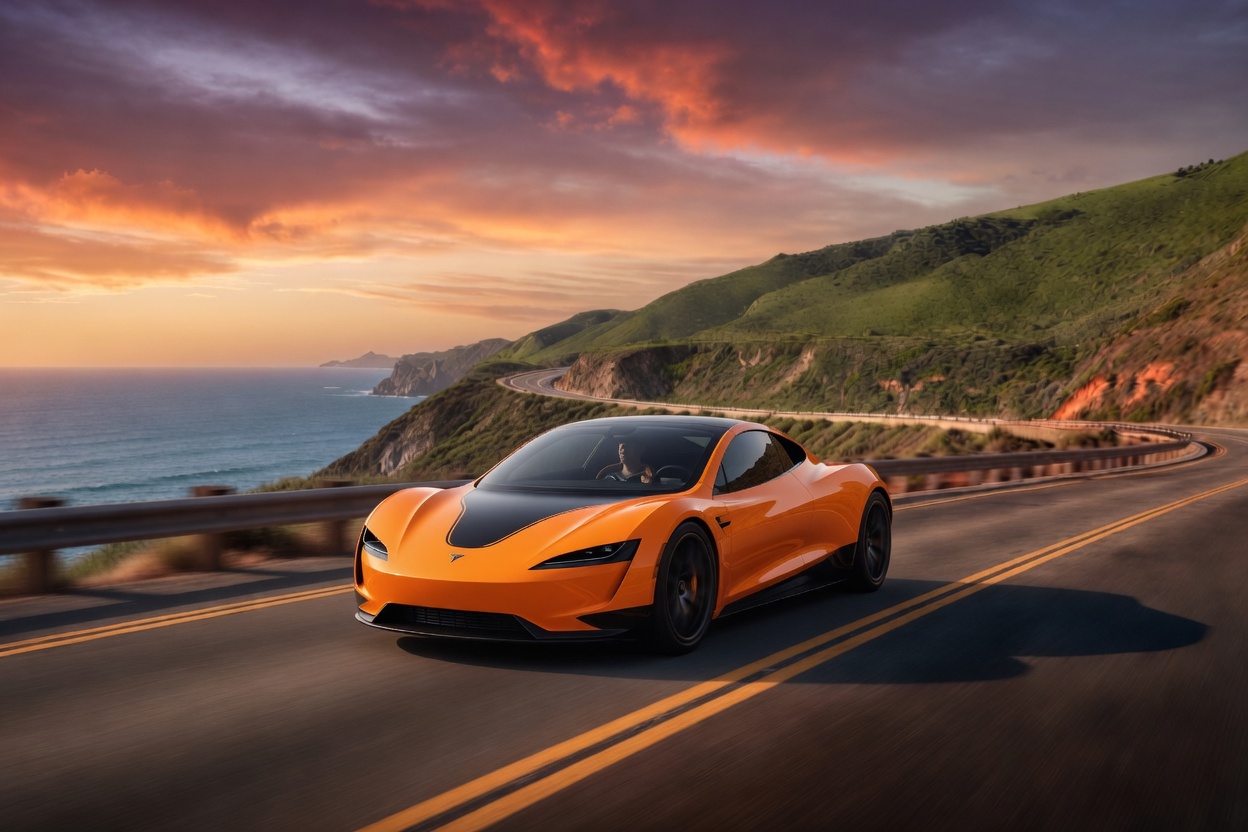
During Tesla’s Q1 2026 earnings call on April 22, Elon Musk made a brief but notable comment about the long-awaited next generation Roadster while describing Tesla’s future vehicle lineup. “Long term, the only manually driven car will be the new Tesla Roadster,” he said. “Speaking of which, we may be able to debut that in a month or so. It requires a lot of testing and validation before we can actually have a demo and not have something go wrong with the demo.”
That single statement is the entire Roadster update from yesterday’s call, and while it represents another timeline shift, it comes as no surprise with Tesla heads-down-at-work on the mass rollout of its Robotaxi service across US cities, and the industrial scale production of the humanoid Optimus.
The fact that Musk specifically framed the Roadster as the last manually driven Tesla is significant on its own. As the rest of the lineup moves toward full autonomy, the Roadster becomes something rare in the Tesla-sphere by keeping the driver in control. Driving enthusiasts who buy a $200,000 supercar are not doing so to be passengers. They want the physical connection to the road, the feel of acceleration under their own input, and the experience of controlling something with that level of performance. FSD, however capable it becomes, removes that entirely. The Roadster signals that Tesla understands this distinction and is building a car specifically for the people who consider driving itself the point.
Tesla isn’t joking about building Optimus at an industrial scale: Here we go
The specs for the Roadster Musk has teased over the years are genuinely unlike anything in production. The base model targets 0 to 60 mph in 1.9 seconds, a top speed above 250 mph, and up to 620 miles of range from a 200 kWh battery. The optional SpaceX package takes it further, rumored to add roughly ten cold gas thrusters operating at 10,000 psi, borrowed directly from Falcon 9 rocket technology. With thrusters, Musk has claimed 0 to 60 mph in as little as 1.1 seconds. In a 2021 Joe Rogan interview he went further, stating “I want it to hover. We got to figure out how to make it hover without killing people.” Tesla filed a patent for ground effect technology in August 2025, suggesting the hover concept has not been abandoned. The starting price remains $200,000, with the Founders Series requiring a $250,000 full deposit. Some reservation holders placed those deposits in 2017 and are approaching a full decade of waiting.
With production now targeted for 2027 or 2028 at the earliest, the Roadster remains Tesla’s most audacious promise and its longest-running delay. But if what Musk is testing lives up to even half of what he has described, the demo alone should be worth waiting for.
Elon Musk says the Tesla Roadster unveiling could be done “maybe in a month or so.”
He said it should be an extraordinary unveiling event. pic.twitter.com/6V9P7zmvEm
— TESLARATI (@Teslarati) April 22, 2026
Elon Musk
Tesla isn’t joking about building Optimus at an industrial scale: Here we go
Tesla’s Optimus factory in Texas targets 10 million robots yearly, with 5.2 million square feet under construction.
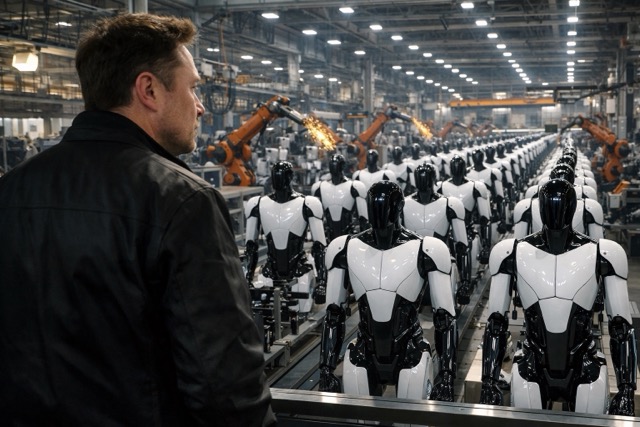
Tesla’s Q1 2026 Update Letter, released today, confirms that first generation Optimus production lines are now well underway at its Fremont, California factory, with a pilot line targeting one million robots per year to start. Of bigger note is a shared aerial image of a large piece of land adjacent to Gigafactory Texas, that Tesla has prominently labeled “Optimus factory site preparation.”
Permit documents show Tesla is seeking to add over 5.2 million square feet of new building space to the Giga Texas North Campus by the end of 2026, at an estimated construction investment of $5 billion to $10 billion. The longer term production target for that facility is 10 million Optimus units per year. Giga Texas already sits on 2,500 acres with over 10 million square feet of existing factory floor, and the North Campus expansion is being built to support multiple projects, including the dedicated Optimus factory, the Terafab chip fabrication facility (a joint Tesla/SpaceX/xAI venture), a Cybercab test track, road infrastructure, and supporting facilities.
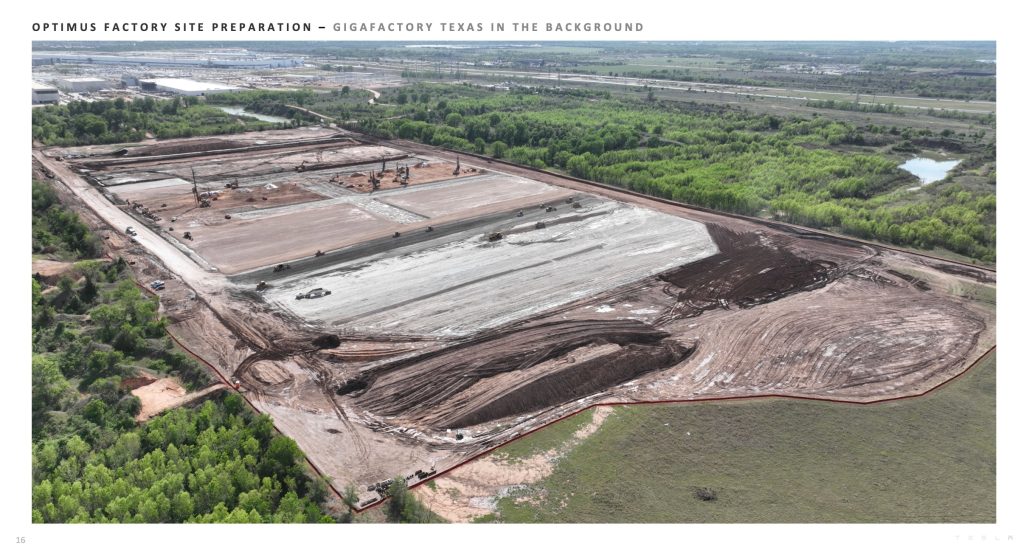
Credit: TESLA
Texas makes strategic sense beyond the existing infrastructure. The state’s tax structure, lower labor costs relative to California, and the proximity to Tesla’s AI training cluster Cortex 1 and 2, both located at Giga Texas and now totaling over 230,000 H100 equivalent GPUs, means the Optimus software stack and the factory producing the hardware will share the same campus. Tesla’s Q1 report also confirmed completion of the AI5 chip tape out in April, the inference processor designed specifically to power Optimus units in the field.
As Teslarati reported, the Texas facility is intended to house Optimus V4 production at full scale. Musk told the World Economic Forum in January that Tesla plans to sell Optimus to the public by end of 2027 at a price between $20,000 and $30,000, stating, “I think everyone on earth is going to have one and want one.” He has previously pegged long term demand for general purpose humanoid robots at over 20 billion units globally, citing both consumer and industrial use cases.

Tesla gives HW3 owners another massive update

SpaceX Board has set a Mars bonus for Elon Musk


