News
Tesla partners with grocery chain on Midwest Supercharger expansion

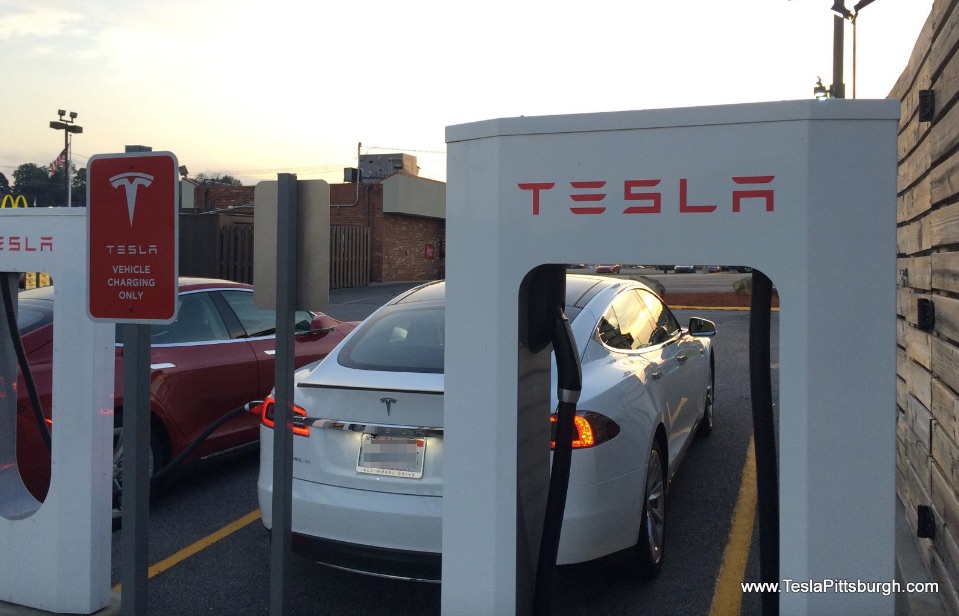
Supercharger locations in the Midwestern United States are about to increase, thanks to a partnership between Tesla and the Hy-Vee grocery store chain. “The time it takes for an average shopper to get through a grocery store to get groceries is about the same time it takes to get a full charge on a decent fast charger like this,” said John Brehm, Hy-Vee director of site planning on November 15 who on hand for the introduction of three Superchargers at the West Lakes Hy-Vee in West Des Moines. “So it’s a marriage made in heaven.”
The partnership will add critically needed Supercharger locations along the heavily traveled Interstate 80 transportation corridor. Since July, eight Tesla supercharger stations have been installed at Hy-Vee stores in Coralville, West Lakes, and Davenport as well as in Peru, Illinois and Oakdale, Minnesota. Work on Superchargers at the Hy-Vee store in Lincoln, Nebraska will begin next year. Six more Midwestern installations at Hy-Vee stores are under discussion.
“[A Supercharger] is robust enough and powerful enough that people can confidently and conveniently travel hundreds and thousands of miles without any sort of compromise in terms of staying overnight or staying over the course of several hours,” said Will Nicholas, Tesla communications manager. He adds that the communities chosen are the perfect locations for new Supercharger locations. “We’re happy to be working with Hy-Vee to kind of connect the Midwest, from Chicago to Denver,” he said according to The Gazette.
Tesla has partnered with several other chains and businesses in the U.S. to make its Superchargers more accessible to the public. Ruby Tuesday restaurant chain is adding Superchargers at many of its locations, beginning with its restaurant in Miner, Missouri. The chargers there are an important link in the Supercharger network for people driving between St. Louis and Nashville.
In the mid-Atlantic area of the country, Tesla is in talks with Sheetz, a chain of several hundred gas stations, about adding Supercharger equipment at many of its stores. Merchants recognize that Tesla has rapidly created a highly desirable brand. In short, Tesla drivers are good for business.
The federal government estimates that U.S. drivers will consume 20% less gasoline than today by 2035 as the proportion of electric cars on the road increases. John Eichberger, executive director of the Fuels Institute, founded by the National Association of Convenience Stores, says, “Those kiosks that just sell gallons and smokes are going to have to change. They’re going to lose gallons. Plain and simple, no way around it.”
Gas stations of the future will be completely different from the fast paced “get ’em in, get ’em out” stores of today, Eichenberger believes. They will be more like restaurants or highway rest stops than convenience stores.
Tesla works hard at positioning its Supercharger stations in places where drivers have access to food and rest rooms. It is also sensitive to providing clean, well-lit locations where people traveling alone will feel safe, even at night. Touring by Tesla is more like the European “slow food” experience than the fast paced gas-n-go experience most drivers of conventional cars put up with.


Elon Musk
Musk bankers looking to trim xAI debt after SpaceX merger: report
xAI has built up $18 billion in debt over the past few years, with some of this being attributed to the purchase of social media platform Twitter (now X) and the creation of the AI development company. A new financing deal would help trim some of the financial burden that is currently present ahead of the plan to take SpaceX public sometime this year.

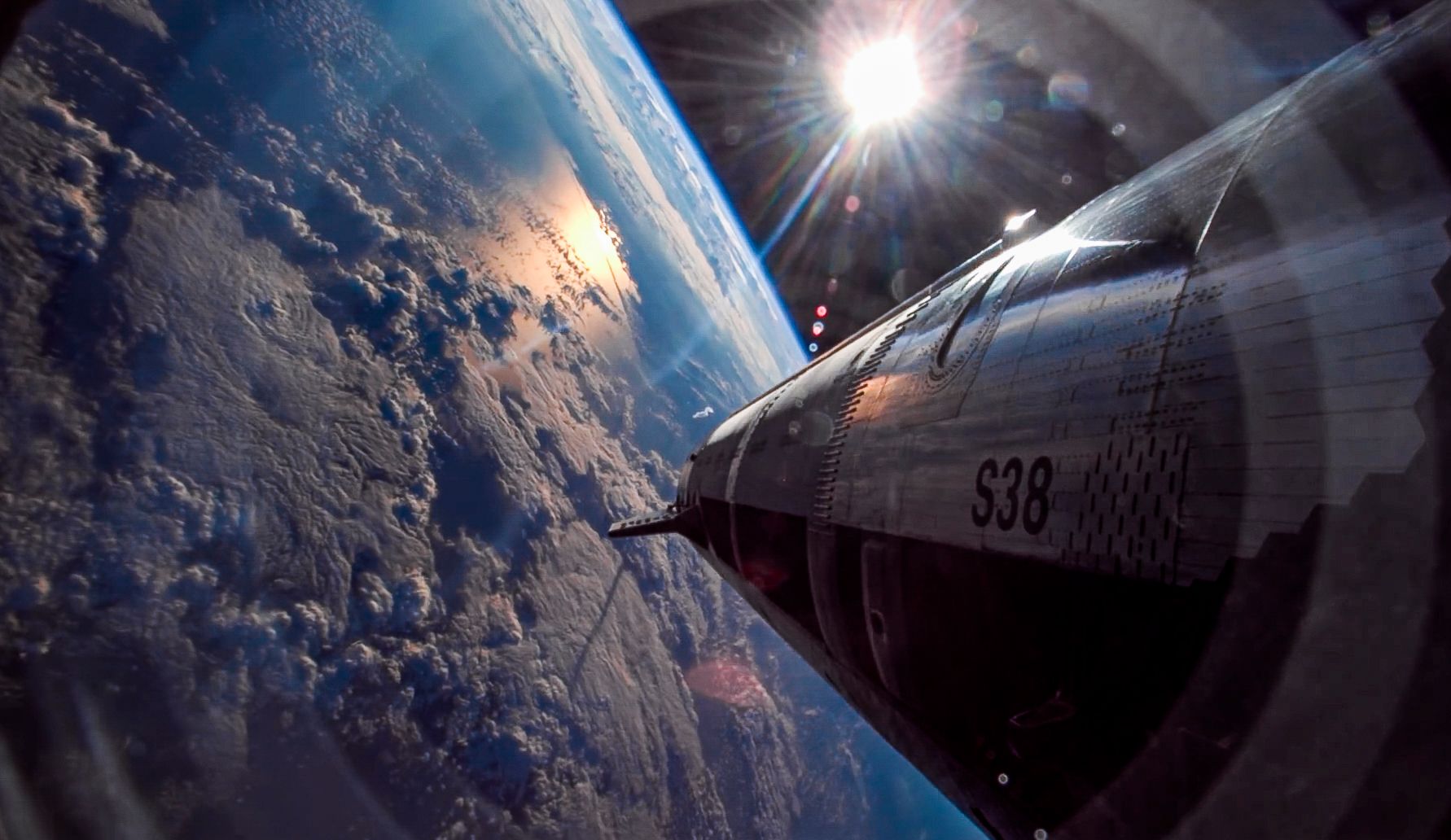
Elon Musk’s bankers are looking to trim the debt that xAI has taken on over the past few years, following the company’s merger with SpaceX, a new report from Bloomberg says.
xAI has built up $18 billion in debt over the past few years, with some of this being attributed to the purchase of social media platform Twitter (now X) and the creation of the AI development company. Bankers are trying to create some kind of financing plan that would trim “some of the heavy interest costs” that come with the debt.
The financing deal would help trim some of the financial burden that is currently present ahead of the plan to take SpaceX public sometime this year. Musk has essentially confirmed that SpaceX would be heading toward an IPO last month.
The report indicates that Morgan Stanley is expected to take the leading role in any financing plan, citing people familiar with the matter. Morgan Stanley, along with Goldman Sachs, Bank of America, and JPMorgan Chase & Co., are all expected to be in the lineup of banks leading SpaceX’s potential IPO.
Since Musk acquired X, he has also had what Bloomberg says is a “mixed track record with debt markets.” Since purchasing X a few years ago with a $12.5 billion financing package, X pays “tens of millions in interest payments every month.”
That debt is held by Bank of America, Barclays, Mitsubishi, UFJ Financial, BNP Paribas SA, Mizuho, and Société Générale SA.
X merged with xAI last March, which brought the valuation to $45 billion, including the debt.
SpaceX announced the merger with xAI earlier this month, a major move in Musk’s plan to alleviate Earth of necessary data centers and replace them with orbital options that will be lower cost:
“In the long term, space-based AI is obviously the only way to scale. To harness even a millionth of our Sun’s energy would require over a million times more energy than our civilization currently uses! The only logical solution, therefore, is to transport these resource-intensive efforts to a location with vast power and space. I mean, space is called “space” for a reason.”
The merger has many advantages, but one of the most crucial is that it positions the now-merged companies to fund broader goals, fueled by revenue from the Starlink expansion, potential IPO, and AI-driven applications that could accelerate the development of lunar bases.
News
Tesla pushes Full Self-Driving outright purchasing option back in one market
Tesla announced last month that it would eliminate the ability to purchase the Full Self-Driving software outright, instead opting for a subscription-only program, which will require users to pay monthly.
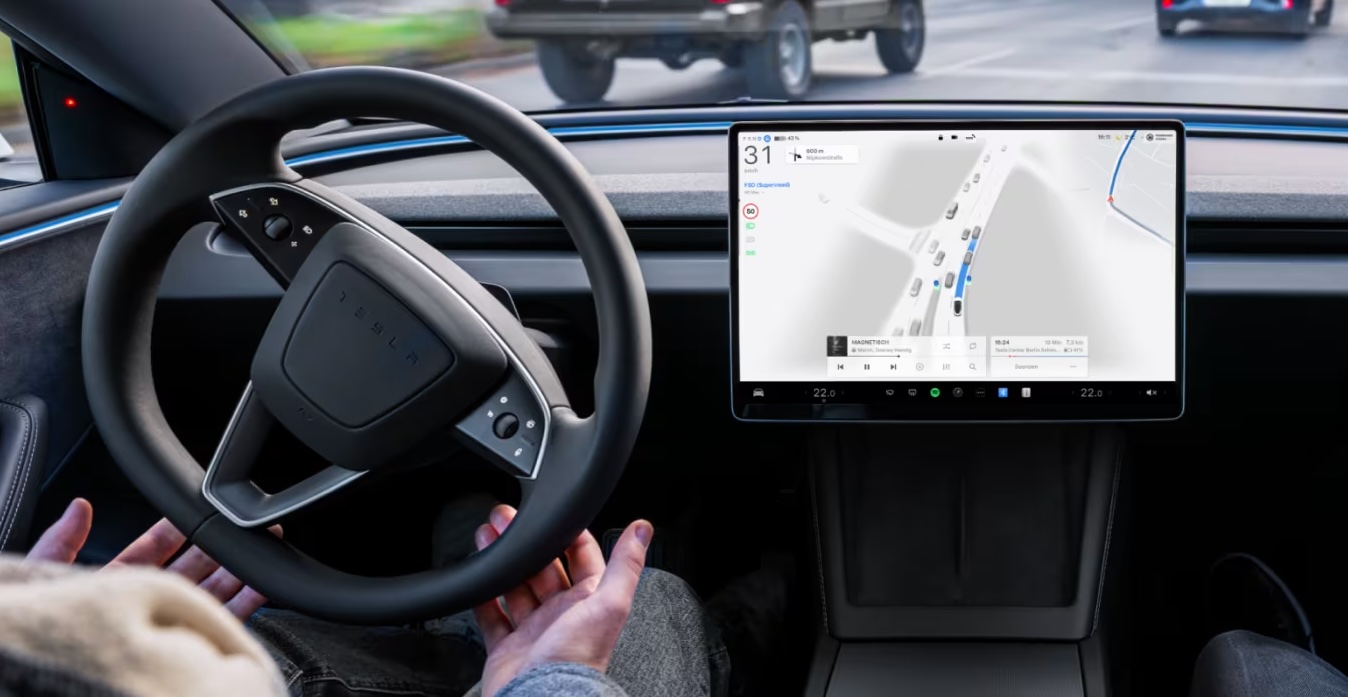
Tesla has pushed the opportunity to purchase the Full Self-Driving suite outright in one market: Australia.
The date remains February 14 in North America, but Tesla has pushed the date back to March 31, 2026, in Australia.
NEWS: Tesla is ending the option to buy FSD as a one-time outright purchase in Australia on March 31, 2026.
It still ends on Feb 14th in North America. https://t.co/qZBOztExVT pic.twitter.com/wmKRZPTf3r
— Sawyer Merritt (@SawyerMerritt) February 13, 2026
Tesla announced last month that it would eliminate the ability to purchase the Full Self-Driving software outright, instead opting for a subscription-only program, which will require users to pay monthly.
If you have already purchased the suite outright, you will not be required to subscribe once again, but once the outright purchase option is gone, drivers will be required to pay the monthly fee.
The reason for the adjustment is likely due to the short period of time the Full Self-Driving suite has been available in the country. In North America, it has been available for years.
Tesla hits major milestone with Full Self-Driving subscriptions
However, Tesla just launched it just last year in Australia.
Full Self-Driving is currently available in seven countries: the United States, Canada, China, Mexico, Australia, New Zealand, and South Korea.
The company has worked extensively for the past few years to launch the suite in Europe. It has not made it quite yet, but Tesla hopes to get it launched by the end of this year.
In North America, Tesla is only giving customers one more day to buy the suite outright before they will be committed to the subscription-based option for good.
The price is expected to go up as the capabilities improve, but there are no indications as to when Tesla will be doing that, nor what type of offering it plans to roll out for owners.
Elon Musk
Starlink terminals smuggled into Iran amid protest crackdown: report
Roughly 6,000 units were delivered following January’s unrest.

The United States quietly moved thousands of Starlink terminals into Iran after authorities imposed internet shutdowns as part of its crackdown on protests, as per information shared by U.S. officials to The Wall Street Journal.
Roughly 6,000 units were delivered following January’s unrest, marking the first known instance of Washington directly supplying the satellite systems inside the country.
Iran’s government significantly restricted online access as demonstrations spread across the country earlier this year. In response, the U.S. purchased nearly 7,000 Starlink terminals in recent months, with most acquisitions occurring in January. Officials stated that funding was reallocated from other internet access initiatives to support the satellite deployment.
President Donald Trump was aware of the effort, though it remains unclear whether he personally authorized it. The White House has not issued a comment about the matter publicly.
Possession of a Starlink terminal is illegal under Iranian law and can result in significant prison time. Despite this, the WSJ estimated that tens of thousands of residents still rely on the satellite service to bypass state controls. Authorities have reportedly conducted inspections of private homes and rooftops to locate unauthorized equipment.
Earlier this year, Trump and Elon Musk discussed maintaining Starlink access for Iranians during the unrest. Tehran has repeatedly accused Washington of encouraging dissent, though U.S. officials have mostly denied the allegations.
The decision to prioritize Starlink sparked internal debate within U.S. agencies. Some officials argued that shifting resources away from Virtual Private Networks (VPNs) could weaken broader internet access efforts. VPNs had previously played a major role in keeping Iranians connected during earlier protest waves, though VPNs are not effective when the actual internet gets cut.
According to State Department figures, about 30 million Iranians used U.S.-funded VPN services during demonstrations in 2022. During a near-total blackout in June 2025, roughly one-fifth of users were still able to access limited connectivity through VPN tools.
Critics have argued that satellite access without VPN protection may expose users to geolocation risks. After funds were redirected to acquire Starlink equipment, support reportedly lapsed for two of five VPN providers operating in Iran.
A State Department official has stated that the U.S. continues to back multiple technologies, including VPNs alongside Starlink, to sustain people’s internet access amidst the government’s shutdowns.

Musk bankers looking to trim xAI debt after SpaceX merger: report

SpaceX launches Crew-12 on Falcon 9, lands first booster at new LZ-40 pad


