SpaceX
SpaceX’s steel Starship gets new official render, this time with a huge NASA telescope

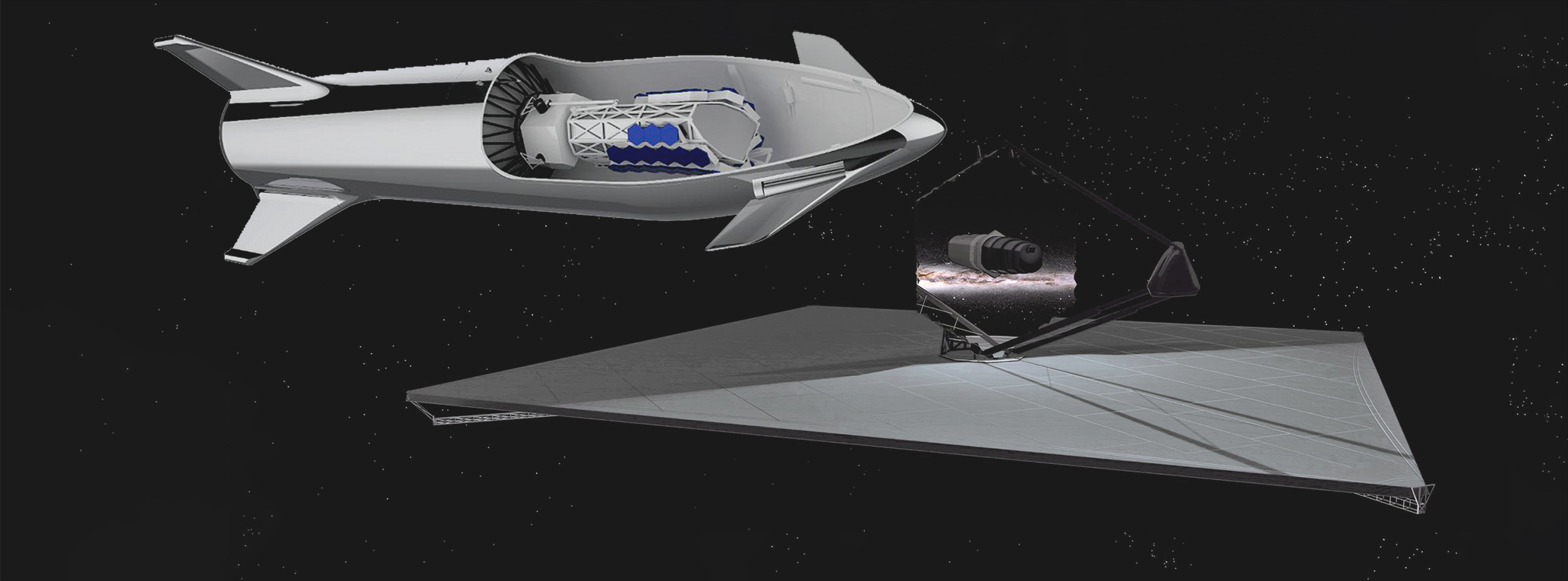
SpaceX recently provided NASA with the third known official render of its stainless steel Starship, focused on the vehicle’s potential utility for launching massive scientific spacecraft for NASA. Starship’s only direct competition for the proposed LUVOIR telescope: NASA’s own SLS rocket.
Published by NASA’s Goddard Space Flight Center (GSFC), Starship is shown with a smaller “B” variant of the proposed LUVOIR space telescope in its payload bay. According to a scientist from the Space Telescope Science Institute (STSI), the massive LUVOIR-A variant could “barely” fit inside Starship’s clamshell bay, but the telescope could also be tweaked to more perfectly fit the constraints of its chosen launch vehicle. LUVOIR is effectively being designed as a logical follow-up to the James Webb Space Telescope (JWST) and could be ready to launch no earlier than 2039 if NASA selects the idea – one of three under consideration – for future development.
The LUVOIR telescope (shorthand for Large UV/Optical/IR Surveyor) is currently grouped into two different categories, A and B. A is a full-scale, uncompromised telescope with a vast 15-meter primary mirror and a sunshade with an area anywhere from 5000 to 20000 square meters (1-4 acres). B is a smaller take on the broadband surveyor telescope, with an 8-meter primary mirror (a quarter of the area of LUVOIR-A’s) accompanied by a similarly reduced sunshade (and price tag, presumably).
— Teslarati, July 2018
Goddard’s “we asked, SpaceX checked” statement refers to a funded analysis of LUVOIR launch options the group announced back in July 2018, at which point the future prospects of NASA’s SLS rocket were far more stable. Approximately nine months later, NASA administrator Jim Bridenstine announced that all work on future SLS upgrades – including the Block 1B and Block 2 variants that could have supported the launch of LUVOIR-A – was to be halted as soon as possible. All of that funding would instead be focused on mitigating a never-ending string of delays and pushing SLS to actually prepare for its first launches. Bridenstine has since publicly waffled on that aggressive plan, simultaneously indicating that some of those SLS upgrades (mainly an advanced upper stage, EUS) would be critical for one variant of his proposal to return astronauts to the Moon as early as 2024.
Regardless, the blood of SLS is currently in the water as NASA pursues an answer to the question of whether commercial rockets can instead be used to launch the agency’s Orion spacecraft and Lunar Gateway segments. Based on preliminary interviews focused on NASA’s internal study of the subject, there is still plenty of room for SLS as long as its contractors (namely Boeing) can stem relentless delays, cost overruns, and quality control issues and finally prepare the rocket for its first missions.
As described above, it appears likely that NASA is going to require the SLS rocket’s core stage to conduct a critical mission-duration test fire before permitting the vehicle to begin launch preparations in Florida. As a result, there will be almost no conceivable way for the rocket to rise to the 2020 launch debut challenge issued by Bridenstine, potentially meaning that NASA will put significant resources into studying and developing alternatives to SLS. If or when NASA sets the precedent for allowing serious studies and funding of SLS alternatives, the death of the rocket will almost certainly be assured. Relative to commercial rockets like Falcon Heavy, New Glenn, Vulcan Heavy, and even SpaceX’s BFR (i.e. Starship/Super Heavy), conservative estimates suggest that SLS will be no less than 5-20+ times as expensive on a per-launch basis.
Consequently, it should come as no surprise to see NASA Goddard openly confirm its willingness to launch future flagship science missions on SpaceX’s Starship vehicle, so long as the rocket is successfully developed, launched, and certified by NASA for high-value missions. Given just how distant the proposed ~2039 launch of LUVOIR is and how early SpaceX is in the process of developing Starship/Super Heavy into a highly mature and reliable launch vehicle, one should not read too far into Goddard’s public support.
However, there should be no doubt at this point that SpaceX’s next-generation Starship and current-generation Falcon Heavy rockets are already upsetting certain aspects of the status quo. If SpaceX continues to refine Starship’s design and demonstrate Falcon Heavy’s reliability and readiness, studies like Goddard’s LUVOIR launch case can be expected to crop up throughout domestic and global space industries, both pubic and private.
Check out Teslarati’s Marketplace! We offer Tesla accessories, including for the Tesla Cybertruck and Tesla Model 3.


Investor's Corner
SpaceX reveals how its 1 Million AI satellite network will work and prevent space collisions
SpaceX reveals plans for one million Starmind AI satellites and calls out operators hiding maneuvers.

SpaceX has put the largest satellite count it has ever published into writing, and it says that plan only works if every other operator in orbit starts sharing what it knows.
In a new Space Safety page highlighted Tuesday morning by Sawyer Merritt on X, SpaceX said it “plans to operate up to 100,000 Starlink satellites and up to 1 million Starmind AI satellites to meet the growing demand for broadband and supercompute.” Starlink has a little over 11,000 satellites in orbit today, so the target alone implies roughly a ninefold expansion of the broadband network.
Starmind is SpaceX’s orbital AI compute constellation. Elon Musk confirmed the Starmind name in June after an xAI trademark filing surfaced, and in August SpaceX said it was working with Nvidia on the compute payload. The FCC accepted the filing for up to one million satellites back in February.
FCC accepts SpaceX filing for 1 million orbital data center plan
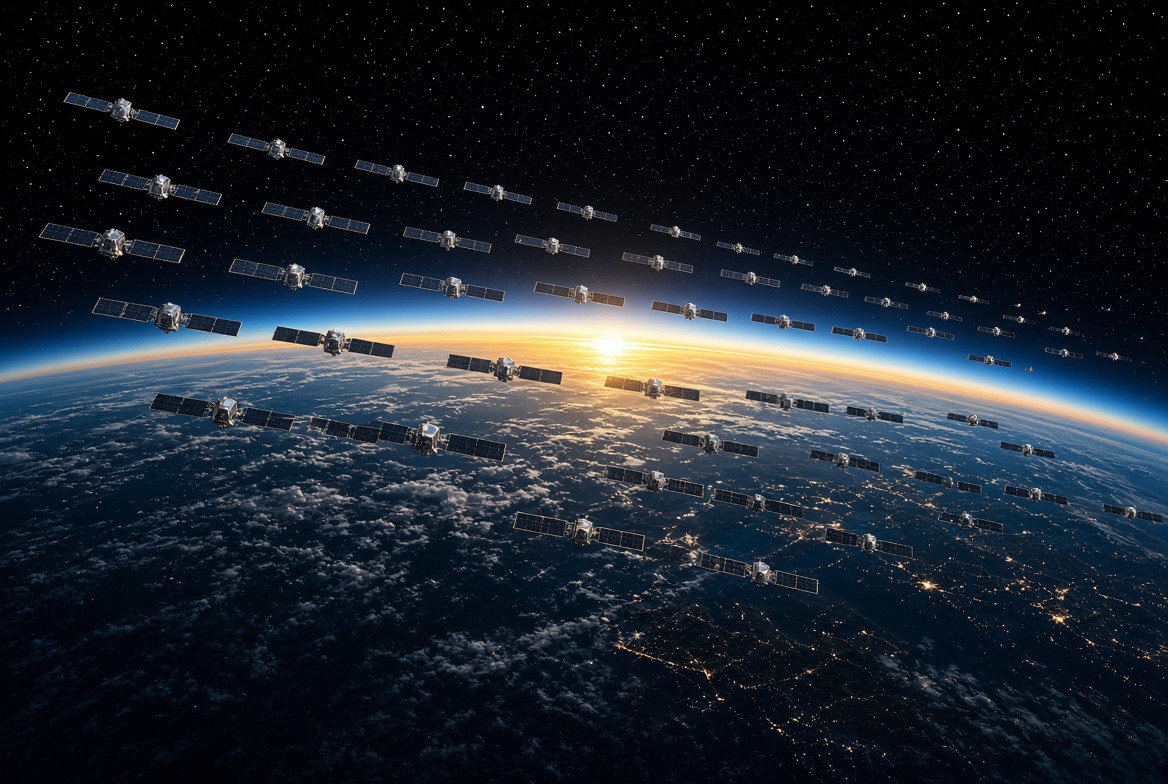
SpaceX also released a new render of what a full Starmind constellation could look like. Alongside it, SpaceX VP Michael Nicolls explained why the satellites will not operate on their own. “We need to operate clusters of satellites in tight formation to get enough coherent compute to run AI models efficiently,” Nicolls said. “A cluster will be 10-ish satellites connected with 10 terabits or so of bandwidth between them, and interconnected to the broader constellation.”
That is the most specific detail SpaceX has given on how Starmind will be built. Instead of a million independent servers, the network would work as tightly packed groups of about 10 satellites acting as one compute unit, with Starlink’s laser links carrying results back to Earth.
There is a bright and exciting future for humanity ahead – and space is fundamental to that future.
To achieve this, space safety must be done right. We encourage every operator to not only share ephemeris data proactively the same way Starlink already does, but to also adopt the high standards of space safety that SpaceX and Starlink use every day → https://t.co/QizAkQZvEm
— Starlink (@Starlink) October 6, 2026
Packing satellites that close together, at that scale, makes collision avoidance the central problem, and most of the Space Safety page is aimed at other operators. SpaceX said Starlink encountered collision risks with about 650 unique maneuvering third party satellites in 2026, and only about half of them shared data. Over six months, Starlink recorded roughly 164,000 more collision risks where the closest approach came within four hours of an unannounced maneuver.
Some operators keep maneuver plans private over proprietary concerns, while others cannot get government permission to share them. SpaceX called those policies “counterproductive,” saying they “largely only serve to create preventable collision risk between satellites.” Starlink is also offering a free ephemeris sharing and screening platform that returns risk results within a minute, backed by its Stargaze network of 30,000 optical sensors.
The push comes as the Starmind application draws opposition from astronomers and environmental groups. In a September filing with the FCC, SpaceX said each Starmind satellite could weigh up to 4,000 kg, nearly seven times the mass of a Starlink V2 Mini. Musk has brushed off crowding concerns before, telling viewers in June that “space is enormous” and that SpaceX already knows how to run very large constellations safely.
SpaceX’s Starmind page says its Gigasat factory in Bastrop, Texas, is designed to produce AI satellites at scale, with deployment of thousands of units starting as soon as late 2027.
News
SpaceX just locked up a NASA record no other U.S. spacecraft can touch
SpaceX’s Crew-13 Dragon reached the ISS in under eight hours, and NASA confirmed a record.
SpaceX now owns every spot on the list of the five fastest trips a U.S. spacecraft has ever made to the International Space Station, and its newest entry beat the old mark by more than four hours.
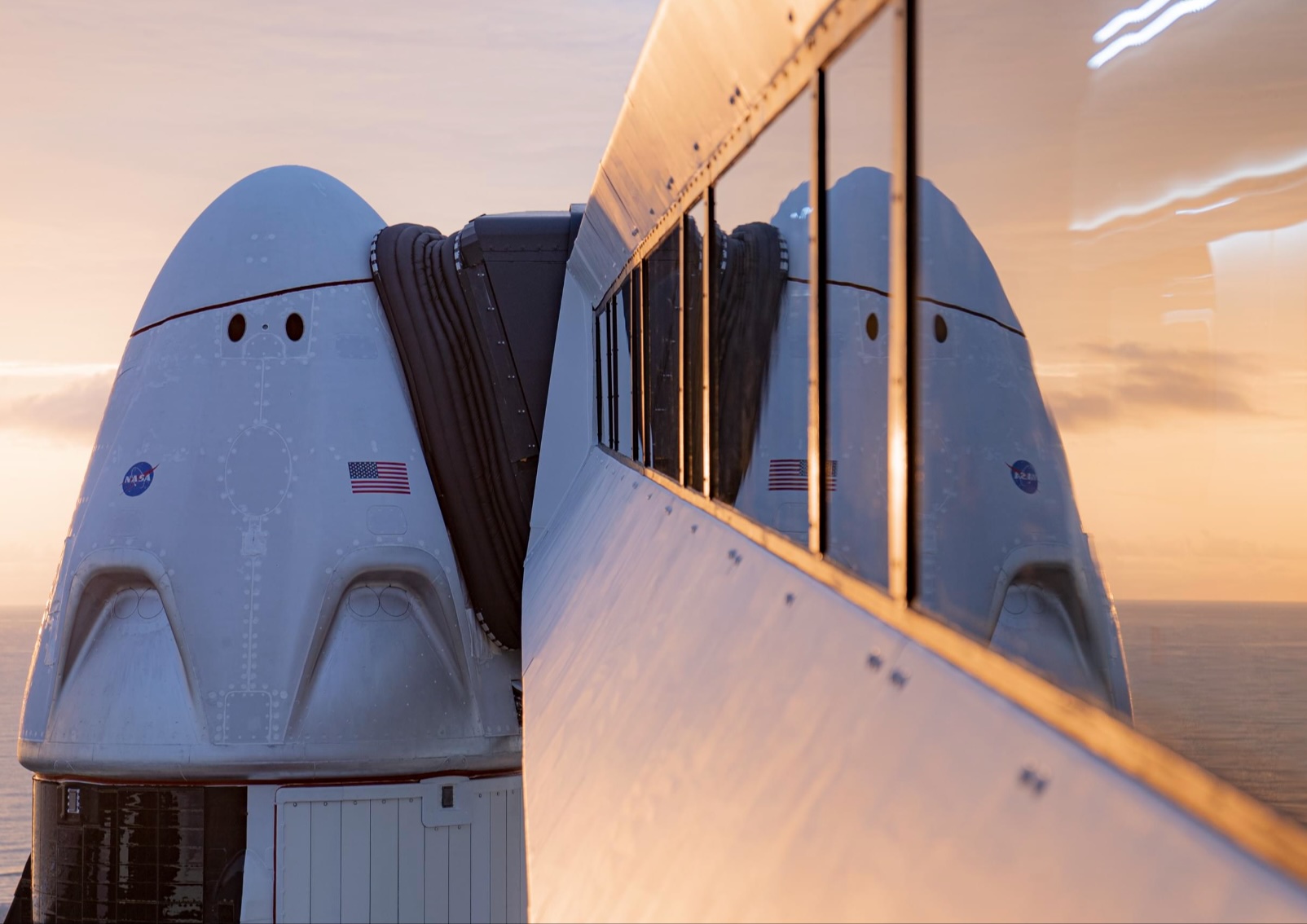
Crew Dragon Grace docked to the forward port of the station’s Harmony module at 7:05 p.m. ET on October 1, just 7 hours and 55 minutes after lifting off from Space Launch Complex 40 at Cape Canaveral. NASA confirmed the milestone in a space station blog update, writing that the flight “marked the fastest launch‑to‑docking of a U.S. spacecraft in the history of the International Space Station.”
The previous U.S. record also belonged to Dragon. SpaceX’s uncrewed CRS-31 cargo mission reached the station in a little over 12 hours in November 2024. The fastest crewed trip before last week was Crew-11, which took 14 hours and 43 minutes in August 2025, according to Space.com.
A post that Elon Musk reposted on Monday filled out the rest of the ranking. Behind Crew-13, CRS-31 and Crew-11 sit Axiom’s Ax-2 mission at 15 hours and 35 minutes and NASA’s Crew-4 at 15 hours and 44 minutes. All five flew on Dragon.
SpaceX turned a heralding moment for Starship into its greatest
Crew-13 carried NASA astronauts Jessica Watkins and Luke Delaney, Canadian Space Agency astronaut Joshua Kutryk, and Roscosmos cosmonaut Sergey Teteryatnikov. NASA had projected a docking around 8 p.m. ET, as Teslarati reported the day before launch, and Dragon arrived nearly an hour early. Our launch day coverage noted that the flight was lined up to be the quickest Crew Dragon transit yet.
The speed came from timing more than hardware. SpaceX’s Julianna Scheiman said the station “was in an opportune spot in space,” which let Dragon start closing the gap almost immediately after reaching orbit. “This is close to the fastest it could be,” she added. Most Crew Dragon flights still take close to a day, using a series of Draco thruster burns to raise and phase their orbit before arrival.
Dragon’s next job at the station is a departure. NASA said Monday it is targeting 8:05 a.m. ET on Wednesday, October 7, for Crew-12 to undock, setting up a splashdown off the coast of California around 11:34 a.m. on Thursday. Clearing that port makes room for CRS-35, a cargo Dragon carrying the final set of iROSA solar arrays.
Dragon remains NASA’s only operational ride to the station while Boeing’s Starliner stays grounded, and the agency recently added Crew-15, Crew-16 and Crew-17 to SpaceX’s contract in a $946 million modification.


Elon Musk has acknowledged that early discussions with Taiwan Semiconductor Manufacturing Company (TSMC) could bring the company into his ambitious Terafab semiconductor project, signaling a possible partnership with the world’s leading contract chipmaker.
Musk confirmed that early talks are underway, but as of right now, they are “just discussions.” There is no confirmation of a deal nor dismissal of the possibility of one, leaving open the prospect of one of the largest advanced-chip collaborations under discussion in the U.S.
@wholemars Just discussions, but something may come of it
— Elon Musk (@elonmusk) October 3, 2026
The report that speculated on potential discussions between Terafab and TSMC comes from Tim Culpan, who outlined a few ways the collaboration could operate. One is TSMC using the project as an “anchor customer” for future facilities in Texas, potentially contributing process expertise, operational know-how, or capacity while Terafab provides capital, long-term purchase commitments, or both.
Tesla and SpaceX jointly developed the Terafab project, with Intel already participating on the tech side. Elon Musk announced the project in March, and it intends to produce more than one terawatt of AI compute capacity annually once fully built.
Company statements place the first phase at approximately $16.8 billion in cost, with later filings pointing to a total that could reach well into the tens of billions across multiple stages.
Intel joined the effort in April 2026 and is expected to supply its 14A manufacturing process for the full-scale plant.
Musk has said existing suppliers, including Samsung and TSMC, remain important for near-term needs; Tesla already has production arrangements with Samsung for AI5 and AI6 chips, but that future demand from Optimus robots, Cybercab vehicles, and planned space-based data centers will eventually exceed what the global industry can currently deliver.
Terafab is positioned as the long-term answer to that projected shortfall, and Tesla did something similar during COVID to avoid a chip shortage. This is just a much larger-scale solution.
If the partnership were to materialize, it would add TSMC’s industry-leading strategies to a project that already combines Tesla’s and SpaceX’s capital and offtake with Intel’s process technology. For now, the only public confirmation is Musk’s brief acknowledgement that conversations are occurring.

Tesla FSD changed its mind mid-intersection, and it may have saved a life

Tesla Model 3 and Model Y can now do what only Cybertruck could


