


Redwood Materials, a battery recycling startup founded and led by Tesla co-founder, former CTO, and current Board Member JB Straubel, has announced the completion of its most recent equity funding round. The funding round raised over $1 billion in Series D shares, and it was co-led by Goldman Sachs Asset Management, Capricorn’s Technology Impact Fund, and funds advised by T. Rowe Price Associates.
As noted by the battery recycling startup, the Series D funding will be used to continue building the company’s capacity. This should expand the domestic battery supply chain and allow Redwood’s customers, such as Panasonic from Tesla’s Giga Nevada facility, to purchase sustainable battery materials that are made in the United States.
Redwood noted that it remains dedicated to the expansion of its collection of end-of-life batteries, which should increase the company’s capability to refine and recover higher quantities of key components. “With this additional capital, we’ll continue to assemble an industry-leading technical team, ensuring top-notch execution in sustainable battery materials production,” Redwood noted in a press release.
As of writing, Redwood has raised almost $2 billion in equity capital, together with a $2 billion loan commitment from the US Department of Energy.
Goldman Sachs Asset Management issued a statement about the battery recycling company’s recent funding round. As per Sebastien Gagnon, a Managing Director in Private Equity within Goldman Sachs Asset Management, Redwood has the potential to be a prominent player in the battery materials segment.
“As the electrification megatrend continues to accelerate, building a local sustainable battery materials supply chain is more important now than ever. We believe the Redwood team is well-positioned to become a leader in the battery materials industry. We look forward to working with the company in the coming years and leveraging our firm’s global platform to support Redwood’s growth, which we believe will play an important role in the ongoing energy transition,” he said.
Dipender Saluja, Managing Partner, Capricorn’s Technology Impact Fund, also shared some thoughts about the funding round and the battery recycling startup.
“Having invested in electric cars and airplanes, battery technology, and power electronics for over two decades, we’ve had a front-row seat to the evolution of clean energy technology and electric mobility. Redwood Materials emerges as one of the most pivotal companies in this space. Our journey with JB, beginning with his transformative work at Tesla, feels like it’s come full circle with our investment in Redwood. Their commitment to creating a sustainable battery materials supply chain is not only an impressive continuation of that legacy but also a crucial step for our clean energy future,” Saluja said.
Don’t hesitate to contact us with news tips. Just send a message to simon@teslarati.com to give us a heads-up.



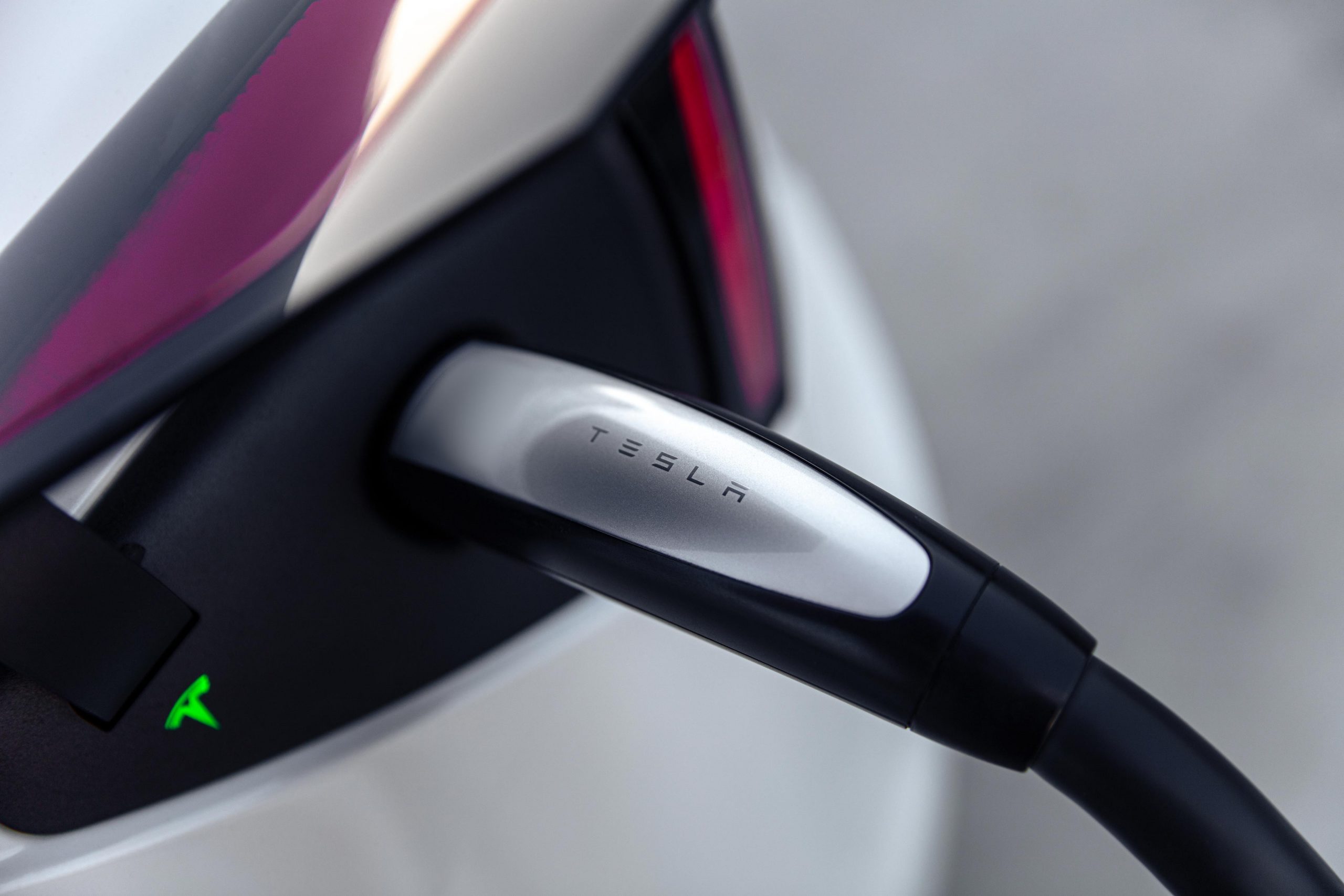
Tesla’s launch of the “Emergency Drive Away” function a few months back offered owners a safe option to evacuate an area if they were in reasonable danger. The function finally got its first use in the real world, but it appears it was by mistake.
A video shared by u/Joshalander in the r/TeslaLounge subreddit recorded the instance from his vehicle and said the incident took place in Austin this past weekend during the city’s F1 Race.
“Was charging around 6 AM this past Sunday in Austin before heading to the F1 race and heard a pop. Looked over and saw the new emergency drive-away feature in action. Genuinely felt bad for the dude when he got out and realized what happened, since he looked exhausted and only seemed to half-read the prompts.”
🚨 Here’s the first look at Tesla’s Emergency Drive Away function in action:
Apparently this driver accidentally enabled it and drove forward; you can see the Supercharger pull with the car.
Tesla said previously this would cost up to $25k if not used properly. https://t.co/B4qQRrsO6B
— TESLARATI (@Teslarati) October 28, 2026
Emergency Drive Away unlatches the Supercharger connector from the vehicle, but still causes damage to both the car and the Supercharger. Tesla has said that it will cost up to $25,000 in repairs to have everything fixed back to normal.
Additionally, the company said that if it were not used in an emergency situation, the driver of the vehicle who activated the Emergency Drive Away feature would be responsible for all repair costs.
Tesla constitutes the following situations as reasonable justifications for activating the feature:
- You face an immediate threat to your life or personal safety.
- You must leave the area immediately.
- Exiting the vehicle is unsafe.
- Unplugging the charge connector would unreasonably delay your departure or expose you to a risk to your personal safety.
After using the feature, Tesla requires the driver to schedule Service so the car can be inspected.
News
Tesla’s Cybercab battery design could make robotaxis even cheaper
Tesla built the Cybercab’s battery pack with spare room for a future switch to LFP.

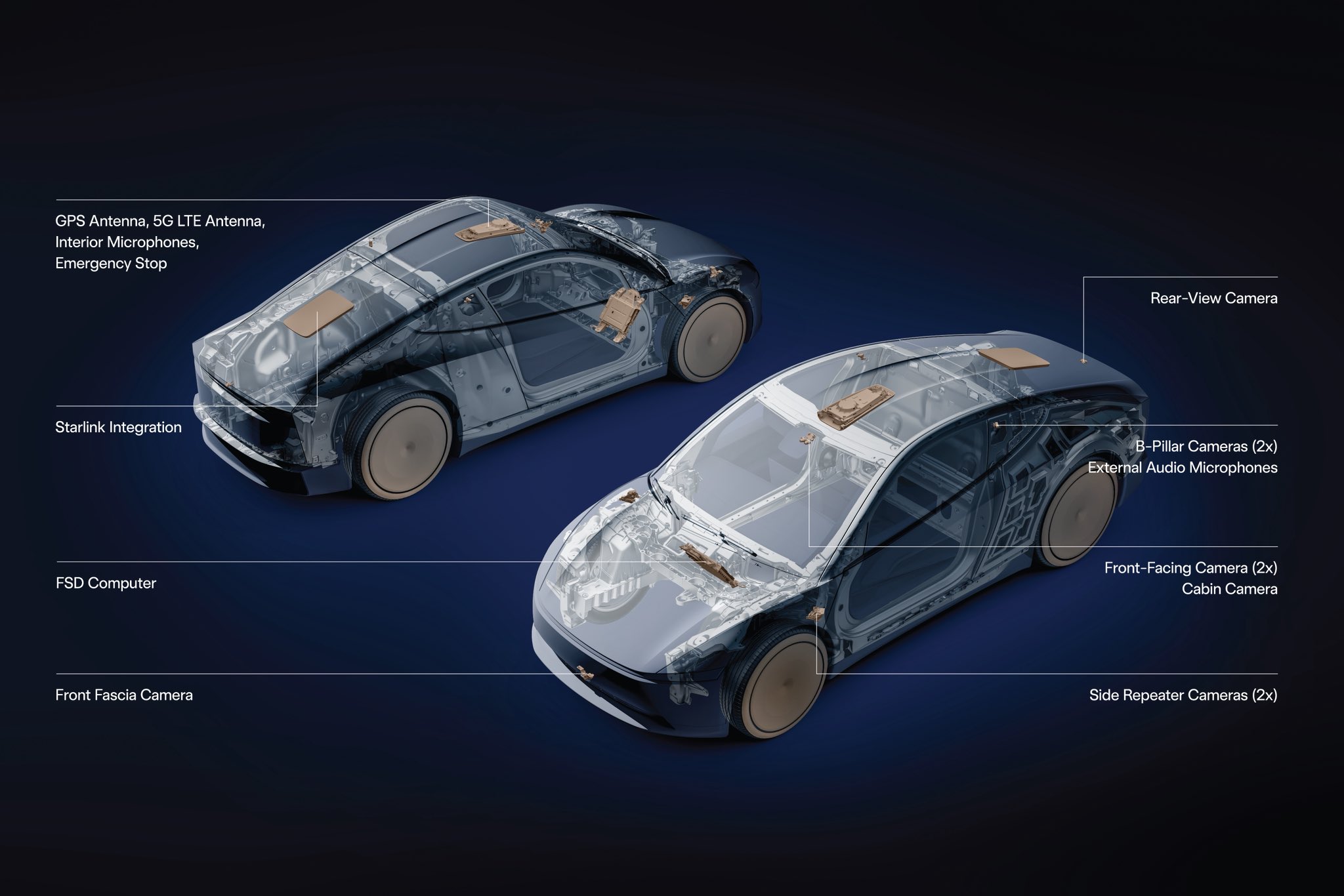
Tesla built the Cybercab’s battery pack with empty space inside it on purpose, and the reason points to a cheaper robotaxi down the road.
Robert Sumpf, Tesla’s director of mechanical design engineering for battery modules and packs, said the extra room beside and beneath the Cybercab’s modules was left there so the company can move to lithium iron phosphate cells later. “So, we protected this pack to go to an even lower energy dense chemistry as we scale and need to bring LFP into the platform,” Sumpf said in a Cybercab deep dive with Munro Live.
The Cybercab runs on Tesla’s own 4680 cells with a nickel chemistry today. LFP cells store less energy for their size, so a straight swap would cut range. The reserved space lets Tesla add more LFP cells to make up the difference. In return, Tesla would get cells that cost less, run cooler and survive more charge cycles. LFP became the most used EV battery chemistry in the world last year.
Not all of that room was planned for a chemistry change. Lars Moravy, Tesla’s Vice President of Vehicle Engineering, said part of it exists because “we didn’t need as many batteries as we thought we did.” Tesla told Sandy Munro in early 2025 that it was targeting a Cybercab pack under 50 kWh with close to 300 miles of range.
The pack also breaks from the structural design Tesla used in some Model Y and Cybertruck builds. Instead of potting hundreds of cells into one block, the Cybercab uses four separate, individually sealed modules, so a bad module can be replaced without scrapping the whole pack. Sumpf was blunt about the older approach, giving the Model Y structural battery “a grade D” because it was hard to build and nearly impossible to repair. He estimated a fully structural pack gains about 10% more cell volume, but said “the issue is the service cost.”
That cost matters more for a car that rarely sits parked. Cybercab chief engineer Eric Earley said replacing an entire pack “before half a million miles is a killer on cost,” which is why remanufacturing and serviceability were built into the design from the start.
The same Munro Live tour produced Moravy’s admission that the Cybercab line at Giga Texas is now outpacing Robotaxi deployments, along with a look at the robotaxi’s unorthodox paint process. Tesla is aiming to deliver the first Cybercabs to outside customers by the end of 2026, though Elon Musk has said the vast majority will stay owned by Tesla and run as a transport service.
Sumpf did not give a date for an LFP version, name a cell supplier or say how a chemistry change would affect range. For now, the 4680 cars keep piling up: Texas DMV records from Tuesday list 544 Cybercabs authorized for Tesla’s Robotaxi fleet, more than the 507 Model Ys on the same roster for the first time.
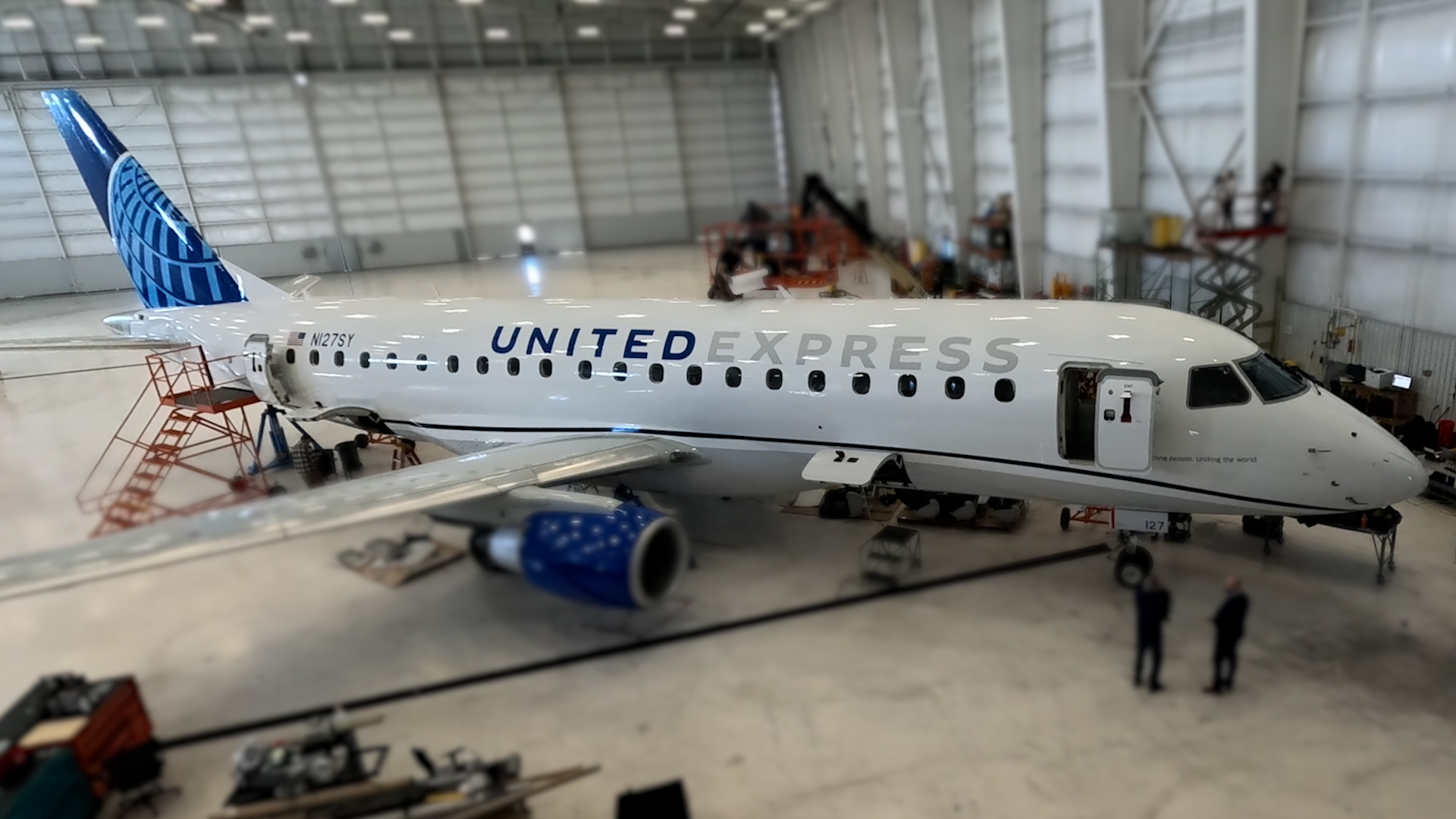
United Airlines CEO Scott Kirby said that SpaceX’s Starlink satellite internet is its leading competitive advantage in the U.S. airline industry. However, in recent comments, while he described the service as “the biggest competitive advantage” the carrier currently holds, he also acknowledged that the edge is temporary.
“…everybody eventually is going to have high-speed low earth orbit internet connectivity. It’s going to be a must-have. We are going to have a few years of being the only airline that has it at scale, and that’s our mission,” Kirby said. Until everyone has it, United aims to capitalize on its head start by converting trial users into long-term loyal customers.
🚨 United CEO Scott Kirby calls Starlink “the biggest competitive advantage,” but says it’s temporary.
“I think it’s the biggest competitive advantage. And it’s temporary. Like it’s not, everybody eventually is going to have high speed low earth orbit internet connectivity. It’s going to be a must-have. But we are going to have a few years of being the only airline that has it at scale, and that’s our mission.”
“I think we’re going to convince customers that United is the best airline and we’re going to get customers to switch their loyalty, to get our credit card, switch their loyalty to United. Not because of Starlink. They’re going to try us for Starlink and they’re going to stay with all the other technology, and everything else is better, and the technology in particular is so much better than technology other, and it’s accelerating because we’ve got the right tech stack, and because we’re like, our gap is getting wider and wider with our technology every day.”
Next: LAX becomes United’s first 100% Starlink hub in the first half of next year, and the United app will show your Starlink odds for each flight. https://t.co/hToyFWaWj7
— TESLARATI (@Teslarati) October 27, 2026
United has moved faster than its rivals on Starlink installations. As of mid-to-late October 2026, the system was on roughly 43 percent of its fleet, with plans to reach 61 percent by year-end, 87 percent by June 2027, and full fleet coverage by the end of next year.
The airline already operates more Starlink-equipped flights than the rest of the U.S. industry combined. Los Angeles International Airport is scheduled to become United’s first 100 percent Starlink hub in the first half of 2027, and the carrier’s app will display the likelihood that any given flight has the service.
Kirby has pointed to early evidence that the offering influences booking decisions. Some passengers loyal to other airlines are already switching flights for Starlink connectivity, something the airline, along with American Airlines, has tried to leverage against competing airlines. Both companies used status-match programs, and some of those customers are pursuing company-specific credit cards, which signals an intent to stay.
Once onboard, these customers encounter the airline’s broader investments in aircraft, larger seat-back screens, oversized bins, connection tools, and a mobile app that Kirby says outperforms competitors. Wi-Fi satisfaction scores on Starlink-equipped planes have been reported to be nearly double those on aircraft with other systems.
Competitors are moving slowly to do the same. Southwest Airlines began installations in 2025 and expects to complete them soon. Delta is pursuing Amazon’s Leo system, while American expects to start Starlink work in early 2027 and has not yet detailed regional-fleet plans. This timeline gap gives United a multi-year window in which it remains the only major U.S. carrier offering Starlink at scale.
Kirby has framed the strategy as pressing that advantage while simultaneously widening gaps in other technology areas so that customers who try United for the Wi-Fi remain for the overall experience.
The approach reflects a calculated bet that superior in-flight connectivity can accelerate share gains and support longer-term financial targets, including a 10 percent pre-tax margin goal.
High-speed internet is particularly valued by premium and business travelers who can work or stream reliably. As low-Earth-orbit service becomes ubiquitous, the temporary nature of the pure connectivity edge means United’s retention will depend on whether its other product and operational improvements keep pace.

Tesla’s ‘Emergency Drive Away’ function gets its first use in the real world

Tesla’s Cybercab battery design could make robotaxis even cheaper


