Elon Musk
Tesla bull, ARK head Cathie Wood says brand damage is not long-term
Cathie Wood of ARK Invest does not believe Tesla brand damage is a long-term problem.

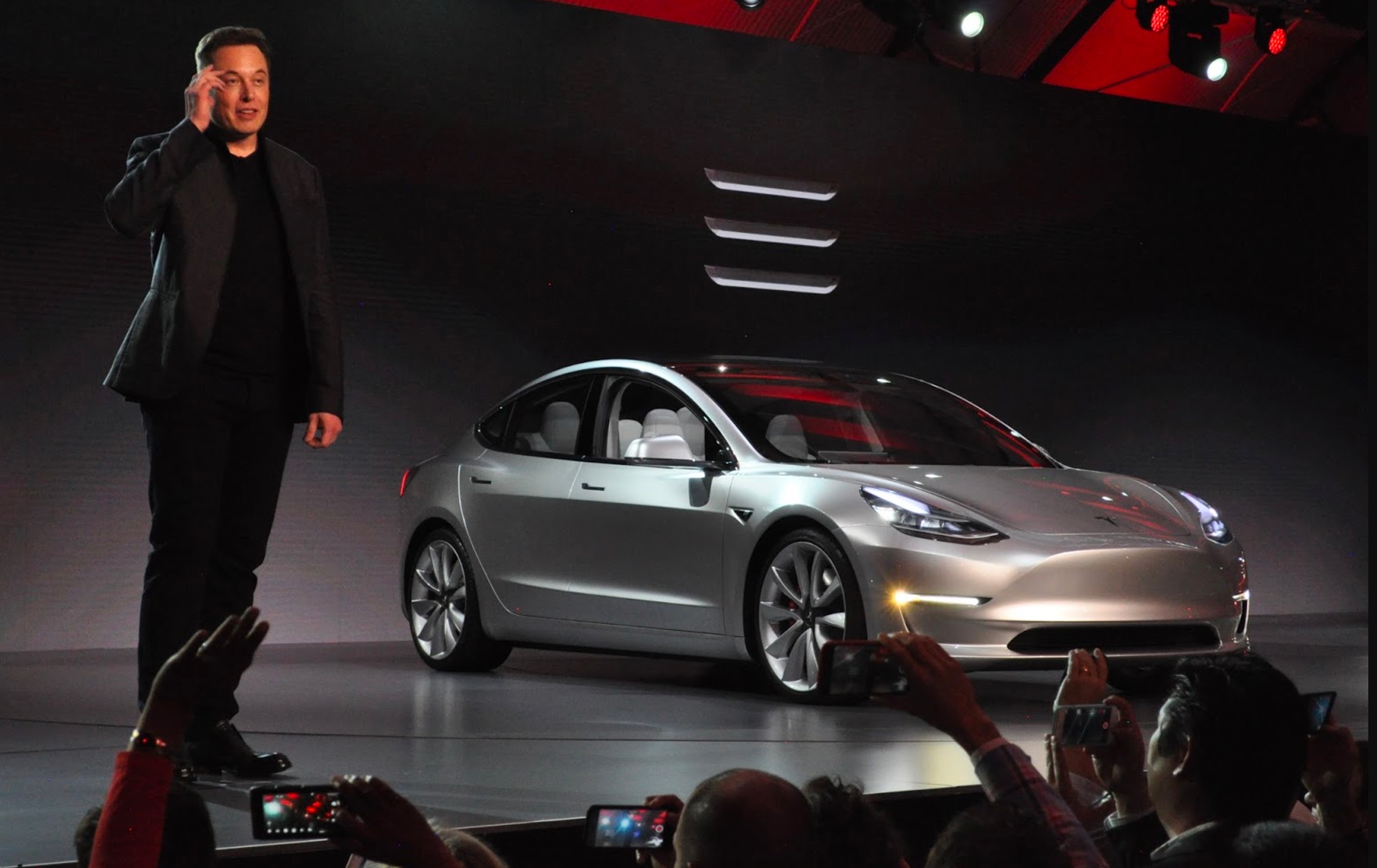
Tesla bull and head of ARK Invest, Cathie Wood, admitted during an interview with Bloomberg that she does believe the company has experienced some brand damage due to CEO Elon Musk’s political involvement. However, she does not believe it is a long-term issue.
Over the past eight months, Musk’s involvement in the U.S. political landscape has swayed some to stop supporting Tesla, others to ditch their cars, and some to boycott the brand altogether. Inversely, others have started supporting Musk, Tesla, and its products as a nod of support for what he’s done for government efficiency.
The perspective on how Musk’s involvement has impacted Tesla truly varies. Its impact has been noticeable, especially in Europe, as some countries have seen some pretty drastic declines in deliveries since the start of the year.
However, some of this can be attributed to the company’s switchover to new production lines for the updated Model Y. Some can also be blamed on economic issues, as the cost of living is still relatively high. There is no denying that at least some of the impact has come from those who simply disagree with Musk and are choosing not to buy his companies’ products.
Wood is among Tesla’s most outspoken bulls and has tremendously high expectations for the stock moving into the late 2020s and into the 2030s. In a recent interview, she highlighted the brand’s exceptional potential moving forward, but did address some of the short-term concerns, especially regarding Tesla’s perception amongst the public:
“I think he feels he has a duty to the country to make sure we don’t ‘blow ourselves up’ with these deficits. Brand damage? Yes. I do not believe [it is long-term]. Tesla, we believe, will have a lock on the Robotaxi business in the U.S., and we believe they are going to proliferate through the United States, especially if we remove regulation from a state level to a federal level, which we believe will happen.”
🚨 ARK’s Cathie Wood: “Tesla Brand Damage Has Happened”@CathieDWood breaks down what Elon Musk’s moves mean for $TSLA — from tech updates to falling sales in Europe!
She’s still bullish on US Robotaxis but warns that rules in Europe and China could make things tricky. Big… pic.twitter.com/YzNnc8dUhi
— Herbert Ong (@herbertong) May 19, 2025
Musk announced during the company’s most recent Earnings Call that he would step back from his government duties and return to Tesla in a more consistent role, as his work with the Department of Government Efficiency (DOGE) seemed to be winding down to a certain extent.
Tesla CEO Elon Musk confirms time spent with DOGE will drop ‘significantly’
It was a big win for Tesla investors, as many were interested in Musk returning his focus to the automaker, especially as 2025 is expected to be a year of many catalysts between the Robotaxi launch, affordable models coming into play, production of the Semi starting at the tail-end of the year, and the Optimus robot continuing consistent development.
Wood was quick to point out that Tesla is not the only car company that was suffering with lagging sales, as a macro-level perspective on the automotive industry proves that many automakers are looking for ways to avert disaster due to the ongoing tariff war.
Tesla is still the highest-valued automaker in the world, and it has plenty of bullish points to look forward to as the year nears the halfway point.


Elon Musk
Elon Musk drops a surprise update on Boring Company’s next big dig
Musk says Boring Company could shrink the Austin to San Antonio drive to just minutes.

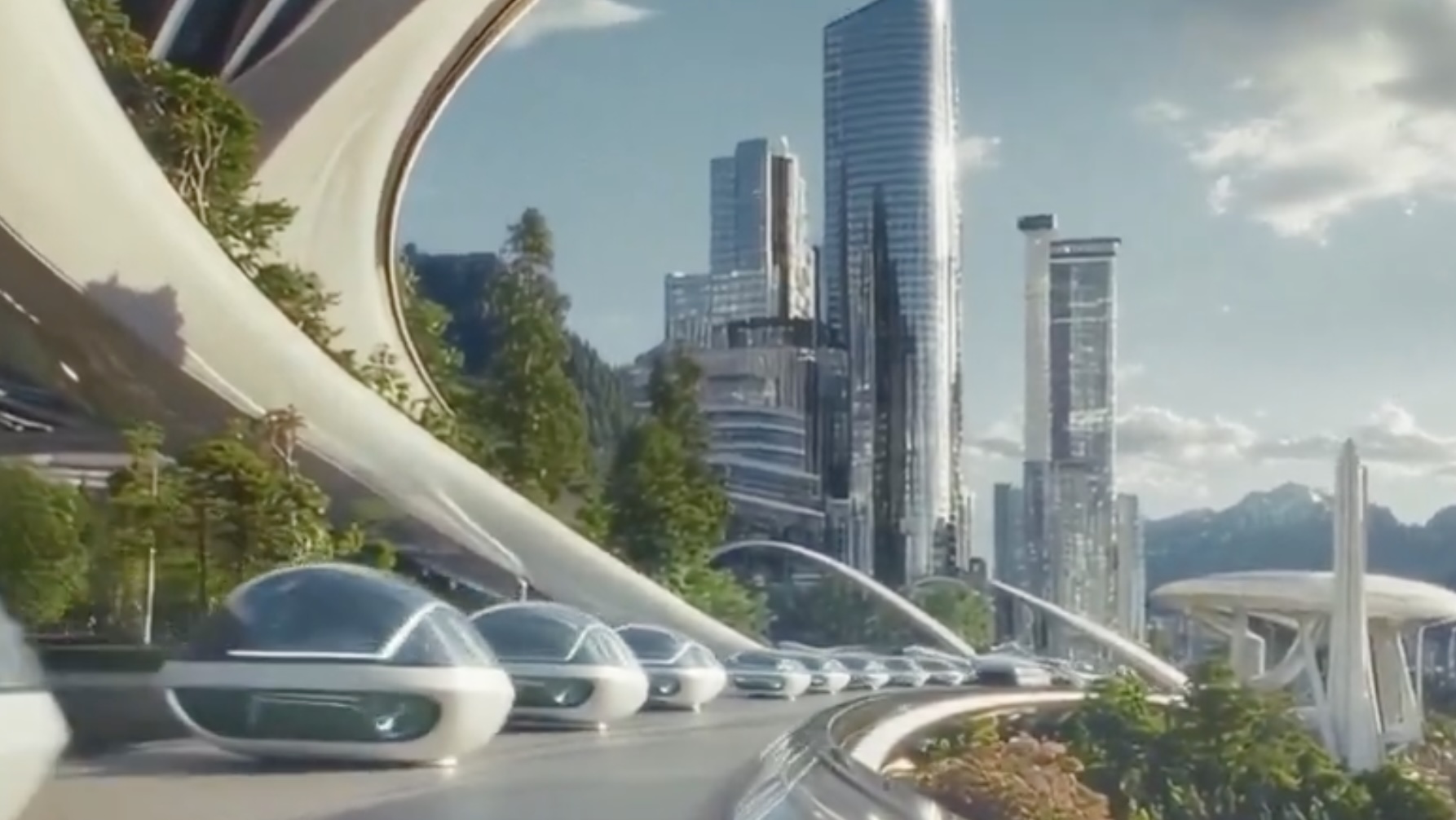
Elon Musk says The Boring Company is working on what he called “a simple, precursor Hyperloop” tunnel connecting Austin and San Antonio, targeting speeds above 200 mph and cutting a drive that can take up to two and a half hours down to a consistent under 30 minutes. Musk posted the idea on X Sunday, in a reply to a repost of an AI generated video imagining a science fiction future with human colonies on other worlds, which he shared with the line “This is the future we shall bring into being.”
This is the future we shall bring into being pic.twitter.com/8aD0w8MDVc
— Elon Musk (@elonmusk) September 20, 2026
The Boring Company’s own account picked up the idea in the same thread, adding a detail about how the trip would actually work: “Because Loop/Hyperloop is express (i.e. no intermediate stops), one could travel from an Austin parking lot to a favorite San Antonio restaurant in about 30 minutes. As long as they both have Loop stations.” That framing ties the proposed intercity link to the same station model the company already runs in Las Vegas, where riders enter the tunnel network through small, garage style stops rather than one central terminal.
This is not the company’s first run at the Austin to San Antonio corridor. Boring Company floated tunnels between the two cities as far back as 2021, and later competed for a separate San Antonio Loop project tied to the airport before that specific bid stalled. Pitches for tunnels in Chicago, Los Angeles, and a New York to Washington corridor have followed a similar pattern of big announcement without a shovel in the ground.
What is different this time is the balance sheet, especially since The Boring Company closed a 3 billion dollar funding round led by investors in the United Arab Emirates earlier this month at a valuation near 23 billion dollars, giving the tunneling company more capital to chase speculative projects than it had during its earlier Texas pitches. The company is also mid-build on two other intercity systems it has actually broken ground on, inc;luding a Nashville tunnel linking downtown to the airport, where a second boring machine finished commissioning in June, and its Las Vegas network, where the station count keeps climbing on paper faster than tunnels get dug.
That gap between announcement and execution is the reason to treat Sunday’s post as an opening bid rather than a project. A tunnel spanning roughly 80 miles between two metro areas, running at speeds Boring Company has not demonstrated over any real distance, would dwarf anything the company has built. For now, the Austin to San Antonio Hyperloop exists as a caption under an AI generated space video.
Elon Musk
Tesla eyes supply partners for Optimus mass production
Tesla certified three Chinese suppliers for Optimus mass production, signaling its robot timeline is accelerating.
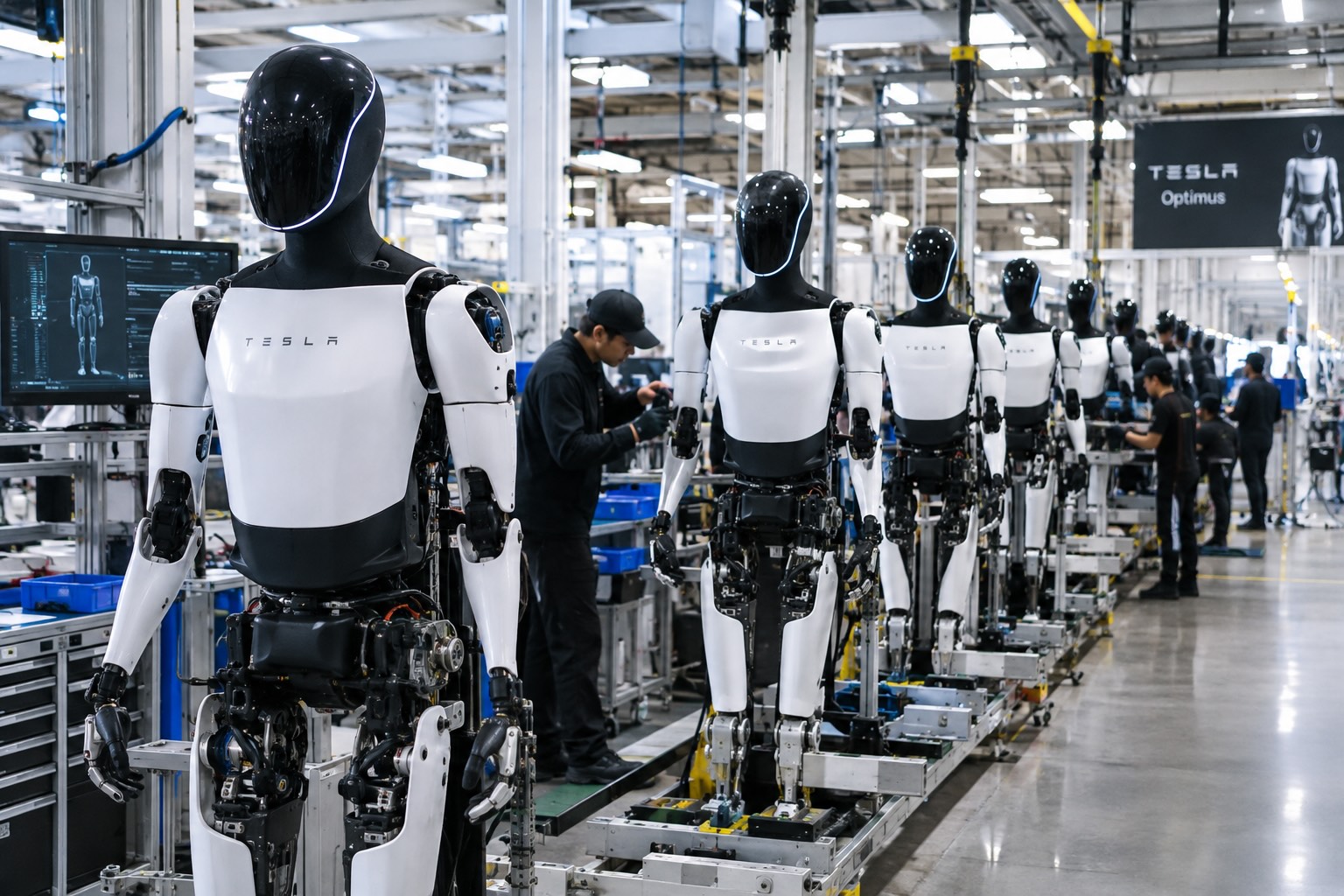
Tesla’s robotics team traveled to Ningbo, in China’s Zhejiang province, on September 16 and spent the following day auditing component suppliers for Optimus, according to a Bloomberg report cited by RobotAIGeek. The visit moved three manufacturers from provisional status to certified mass production partners: Tuopu Group, which handles actuators and chassis components, Ningbo Joyson Electronic, a sensor supplier, and Zhejiang Sanhua Intelligent Controls, which builds thermal management systems. All three already supply parts to Tesla’s electric vehicles, and the audit reportedly came with fresh orders that supply chain reports put at an initial batch of roughly 5,000 units.
Tuopu, Joyson, and Sanhua built their manufacturing base serving the automotive industry, where tolerances and volume requirements are already close to what a mass produced humanoid robot demands. Sanhua in particular has history here. Teslarati reported last October that the company had received a roughly $685 million order for linear actuators tied to Optimus, a volume industry watchers estimated could cover around 180,000 robots once production ramped.
Supply chain reports tied to this week’s audit put Tesla’s near term production goal at about 1,000 Optimus units a week by late September, rising to 2,000 to 2,500 units a week by the end of the year. That pace would put real weight behind the timeline Tesla has been building toward since May, when it wound down Model S and Model X production at Fremont to convert that floor space into a dedicated Optimus line targeting one million units annually. JPMorgan analysts who toured the factory in August confirmed the conversion took roughly four months, a pace Musk has called unprecedented for a facility that size.
New drone video shows Tesla’s Optimus Factory reaching a turning point
Fremont is only the first phase. A second, larger Optimus plant is rising at Gigafactory Texas, where drone footage shared by Joe Tegtmeyer last week showed the structural steel nearing completion on the north end of the building. Tesla has said that facility is meant to eventually support production of up to 10 million units a year, though volume output there is not expected before 2027.
Commercial sales of Optimus are still targeted for the second half of 2027, but production is expected to start well before then. JPMorgan analyst Rajat Gupta has said Tesla’s “Optimus Academy” program, which uses early units to collect real world training data inside Tesla’s own facilities, is expected to be running later this year. Bloomberg Intelligence analyst Ian Ma described the Ningbo audits as “a positive commercialization signal for China’s humanoid supply chain,” noting that sentiment could improve further if the visit leads to confirmed supplier nominations and larger orders. The Solactive China Humanoid Robotics Index rose about 1.4% on the news, though it remains down roughly 30% for the year.
Elon Musk
Elon Musk’s next Uranium in Uranus merch is Boring Company’s weirdest tease yet
Elon Musk teased a glowing new Boring Company merch idea, complete with a Geiger counter.
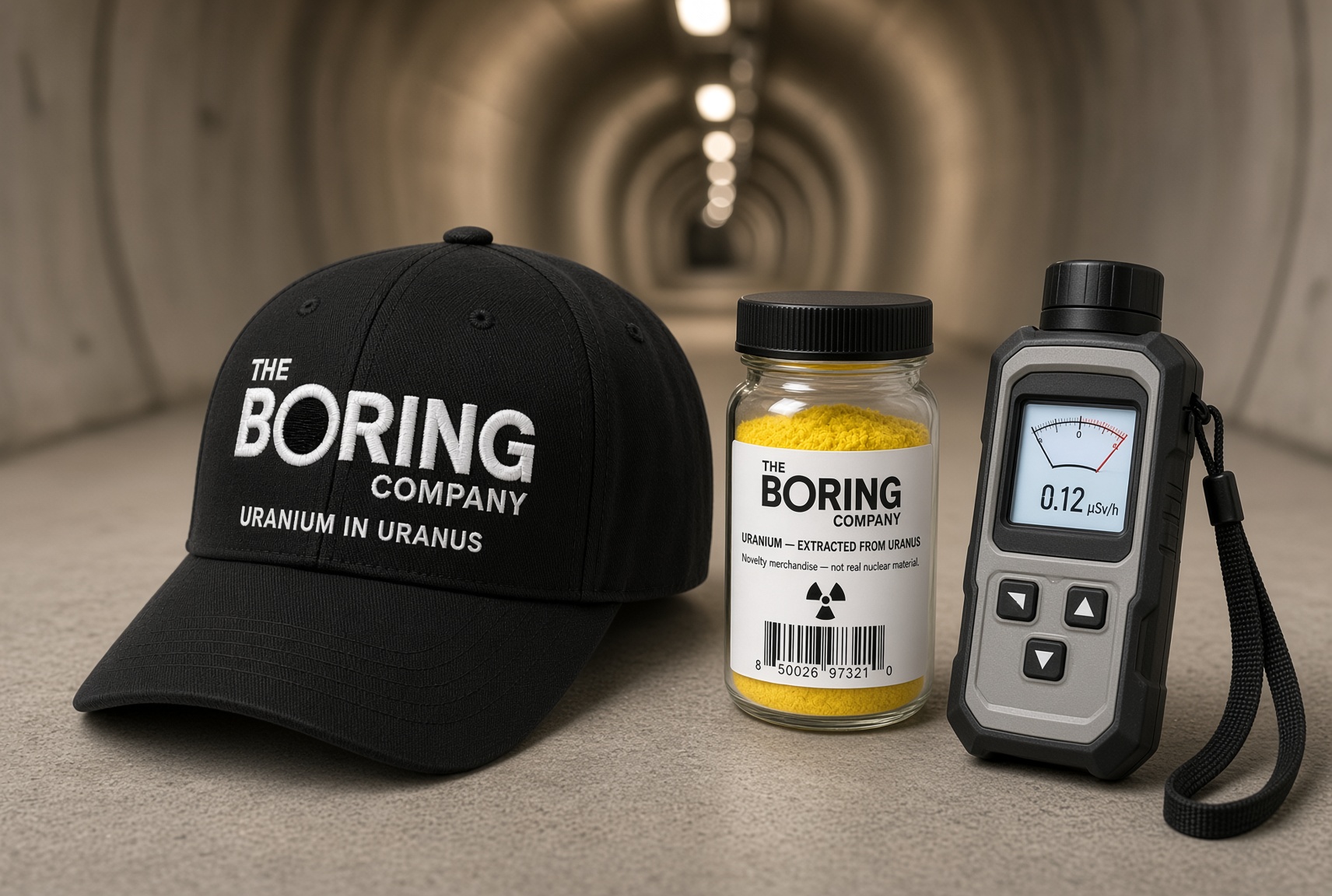
Elon Musk teased the next piece of Boring Company merchandise on X Saturday, and it is exactly as unserious as fans of the company’s product history have come to expect. “The next @boringcompany merch will put Uranium in Uranus,” Musk wrote in a thread posted early Saturday morning. He followed up by explaining that the item would glow in the dark, “because otherwise how could you find it,” and that a Geiger counter would be sold separately as “an optional strap-on.”
Musk closed the thread with a line that doubles as a mission statement for the tunneling company’s merchandise arm: “It’s not easy coming up with something that is both outrageously unsellable and yet extremely popular.”
The Boring Company has built a small but consistent side business out of novelty items that start as jokes and end up selling out. The company’s Not-a-Flamethrower raised roughly $10 million in a few days back in 2018, moving all 20,000 units it produced. Its Burnt Hair perfume, priced around $100 a bottle, sold out fast enough that scalpers were flipping units on eBay for ten times the retail price. Boring Bricks, made from tunneling spoil, followed the same playbook of teasing a product on X months before it became real.
Musk has not said what the actual item will be, only that it involves uranium and glows in the dark. Given the pattern, that vagueness is probably intentional. Past merch announcements have started as one-line jokes and taken weeks or months to turn into an actual product listing on the company’s site, and there is no guarantee this one follows through at all.
The timing lines up with a period of real momentum for the Boring Company outside of the joke merchandise. The company said last week it plans to double the number of operational stations on its Vegas Loop by the end of the year, a target tied to a hiring push for drivers and operations managers. Prufrock-5, one of the company’s tunnel boring machines, also just wrapped a test tunnel in Bastrop, Texas, and is expected to relaunch on its next assignment in November.
Whether the uranium joke turns into an actual product remains to be seen. Musk’s post did not include a price, a shipping date, or even a name for the item, which has historically meant a Boring Company website page goes up quietly, password protected, sometime before an announcement.

Elon Musk drops a surprise update on Boring Company’s next big dig

Tesla eyes supply partners for Optimus mass production


