News
Tesla pushes crazy ‘Luxe’ incentive package on flagship Model S and X
Tesla is pushing more customers to the Model S and Model X with a new incentive package.

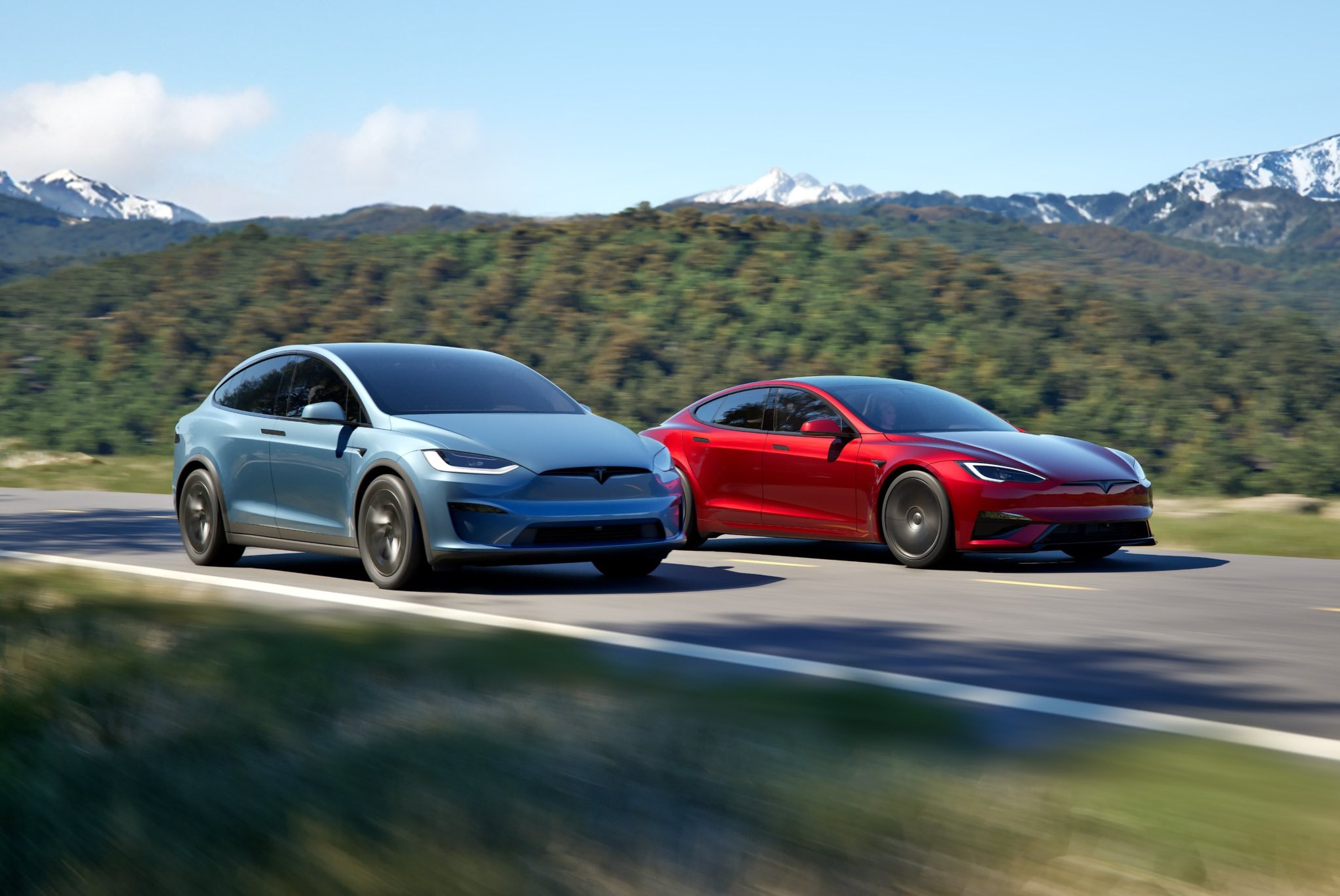
Tesla has pushed a crazy new incentive package, known as the “Luxe Package,” on the flagship Model S and Model X, along with a $10,000 price increase on each trim level.
The move aims to likely bolster margins for the company on the two cars while also giving those who choose to buy the Tesla lineup mainstays a variety of awesome advantages, including Free Supercharging, Full Self-Driving, and other add-ons.
Tesla is offering a crazy Supercharging incentive on its two ‘sentimental’ vehicles
Last night, Tesla launched the “Luxe Package” for the Model S and Model X, which includes the following four add-ons:
- Full Self-Driving (Supervised) – Your car will be able to drive itself almost anywhere with minimal driver intervention
- Four-Year Premium Service – Wheel and Tire Protection, Windshield Protection, and Recommended Maintenance
- Supercharging – Charge for free at 70,000+ Superchargers worldwide
- Premium Connectivity – Listen to music, stream movies, monitor live traffic, and more – no Wi-Fi needed
Full Self-Driving is priced at $8,000. Free Supercharging for the life of the car is between $10,000 and $15,000 over the life of the vehicle, although Tesla has valued it at $5,000 in recent promotions.
Free Premium Connectivity is roughly $1,000, and the four-year tire, wheel, windshield, and maintenance plan is about $3,200.
🚨 Tesla increased the price of both the Model S and Model X by $10,000, but both vehicles now include the “Luxe Package,” which includes:
-Full Self-Driving
-Four years of included maintenance, tire and wheel repairs, and windshield repairs/replacements
-Free lifetime… pic.twitter.com/LKv7rXruml— TESLARATI (@Teslarati) August 16, 2025
In all, the value is over $25,000, but this is loosely based on usage.
The Model S and Model X are low contributors to Tesla’s overall sales figures, as they make up less than five percent of sales from a quarterly perspective and have for some time.
As they are certainly the luxury choices in Tesla’s lineup, the Model 3 and Model Y are the bigger focus for the company, as a significantly larger portion of the company’s sales is made up of those vehicles.
The Luxe Package is an especially good idea for those who drive high-mileage and plan to use the Model S or Model X for commuting or long drives. The free Supercharging makes the deal worth it on its own.
As for the price bumps, each of the vehicles are now priced as follows:
- Model S All-Wheel-Drive: $94,990
- Model S Plaid: $109,990
- Model X All-Wheel-Drive: $99,990
- Model X Plaid: $114,990


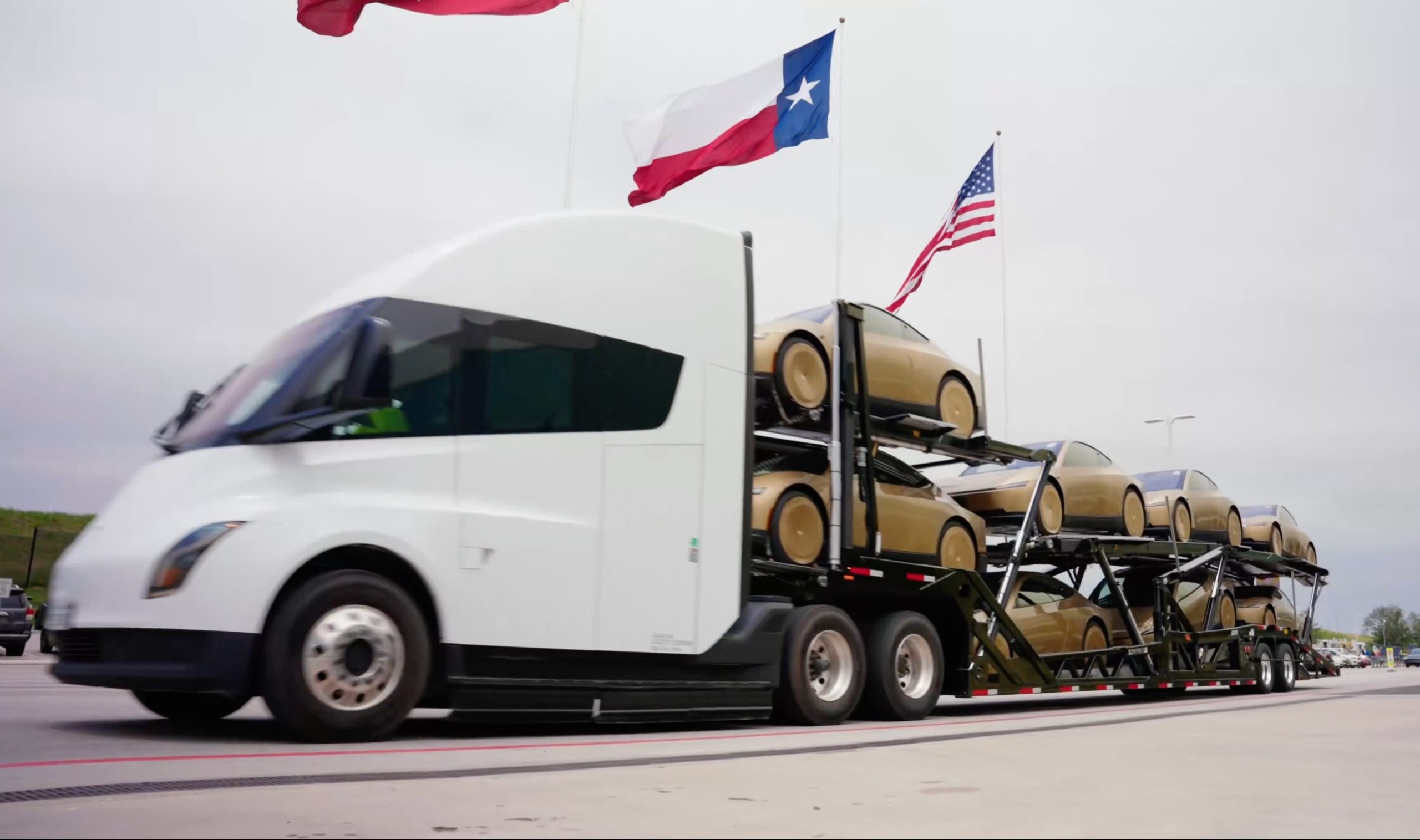
Although the two vehicles are built for completely different use cases, Tesla utilized engineering expertise while developing both the Cybercab and Semi to build a thermal architecture that would fit both vehicles. Of course, with some slight revisions.
The development was noted by Lars Moravy and Dan Priestley last week at Tesla’s Semi Handover event in Sparks, Nevada, where the company showed off its dedicated production facility for the Class 8 truck.
🚨 Tesla designed the integrated thermal systems for Cybercab and Semi at the same time as the vehicles were both in development
Tesla wanted to build one thermal system that worked with both vehicles, apart from small modifications.
Semi and Cybercab share parts 🤯 pic.twitter.com/KmzSsUbrcg
— TESLARATI (@Teslarati) September 25, 2026
Tesla’s decision to develop one thermal architecture for both the Cybercab and Semi is one of the more revealing engineering choices in the company’s 2026 lineup:
“We designed it at the same time we designed the Cybercab and we said okay we’re going to take our most efficient vehicle and our biggest vehicle and we’re going to take one thermal system and make it work for both.”
Core parts, meaning the compressor, pumps, and heat exchangers, are shared, with only modest changes to cooling-loop sizing and a larger radiator on the truck. The result, they said, is a compressor and thermal stack already proven across millions of miles, delivering “reliability from day one.”
Priestley also highlighted a practical payoff of the indirect design:
“There’s no AC lines, there’s no refrigerant lines…It comes from the factory fully charged, sealed with refrigerant, and it just exchanges coolant. It doesn’t actually run refrigerant up to the front of the vehicle.”
This eliminates potentially leak-prone plumbing that would otherwise require hands-on service, reducing overall uptime and potentially cutting into business margins. The megamanifold runs cabin HVAC and every powertrain heating and cooling loop at once, recapturing waste heat from motors and the battery instead of dumping it the way a diesel engine does.
The approach is just the latest chapter in a continuing story of stretching thermal solutions across wildly different vehicles. Model Y’s Octovalve evolved into the Super Manifold used on Cybertruck, and later Model S/X refreshes. Cybercab then introduced Supermanifold V3, which Tesla says is 80 percent automated to build and 38 percent more efficient than typical automotive thermal systems.
This thermal system is also shared with Cybercab – one thermal system for both our most efficient vehicle & our biggest vehicle
— Tesla Semi (@tesla_semi) September 25, 2026
Tesla has done the same with the 4680 cells, both being utilized in the Cybertruck and Semi, and with heat-pump compressors that Priestley noted were already common across the passenger-car fleet.
Concurrent development of crucial vehicle elements buys scale and reliability that a truck-only thermal system could not match. High-volume passenger car parts are cheaper and more accessible, which can give fleets a sealed, low-maintenance loop of operation from their first day of operation.
For owners and operators, that translates into less energy spent on cabin heat in the colder months, fewer refrigerant-related repairs, and a thermal architecture already stress-tested at passenger-car volumes before the first high-volume Semi left the lines in Nevada.
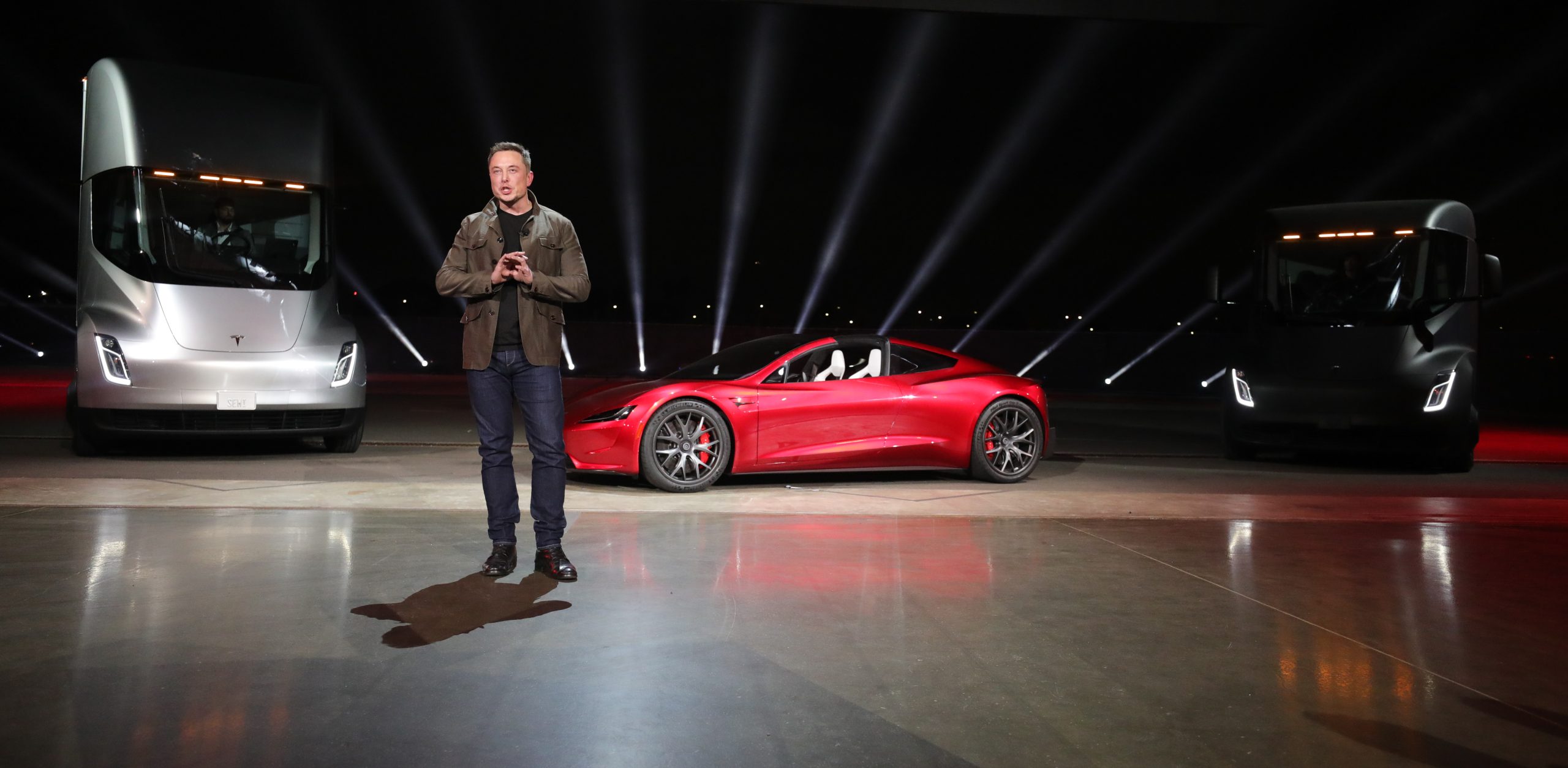
Tesla CEO Elon Musk certainly tipped off some details of the Tesla Roadster event with a broadening of information regarding the company’s decision to delay the unveiling for two weeks.
For years, people have speculated about what the Roadster will be capable of. While there have been plenty of things said about what it *could* do, we have not seen or been told by Tesla what it will actually be capable of.
However, over the past few days, Tesla’s weather updates have truly pushed the speculation into Plaid Mode, basically all but confirming the car will have some sort of aerial capability — whether that would be hovering or fully flying remains to be seen — but it definitely seems that it will be able to leave the ground intentionally.
“Because this event can only be held outdoors…”
Tesla posted on Monday that it would delay the Roadster event until October 15, and it indicated that it had to do this because the event “can only be held outdoors.”
With the potential SpaceX collaboration to develop cold-gas thrusters that will help the vehicle go airborne, doing this indoors is probably not a safe, or even plausible, possibility.
Roadster event update
We’ve been tracking the weather closely with local meteorologists, but given the severe conditions predicted & because this event can only be held outdoors, we’ve made the difficult decision to reschedule.
New date is October 15. Additional details to…
— Tesla (@Tesla) September 28, 2026
FAA Airspace Restriction
The FAA gave Tesla a Temporary Flight Restriction (TFR) for 10,000 feet above ground level, much higher than the typical 2,000-foot restrictions that are usually placed at SpaceX’s McGregor, Texas site.
Tesla Roadster event requires restricted airspace, and the FAA obliges
Some have said that this massive increase is due to Tesla’s need to restrict unauthorized drone use for spying on the event.
Elon Admits High Winds
“Due to high winds, the new Roadster demo is postponed by 2 weeks,” Musk said in a post on X yesterday.
Due to high winds, the new Roadster demo is postponed by 2 weeks https://t.co/dV3ojDh1iT
— Elon Musk (@elonmusk) September 30, 2026
A reply reading, “What’s strong wind got to do with a car demo with four grounded wheels?” was directly below Musk’s post, satirically and sarcastically probing for more details.
All signs are pointing toward an aerial demonstration for the Roadster.
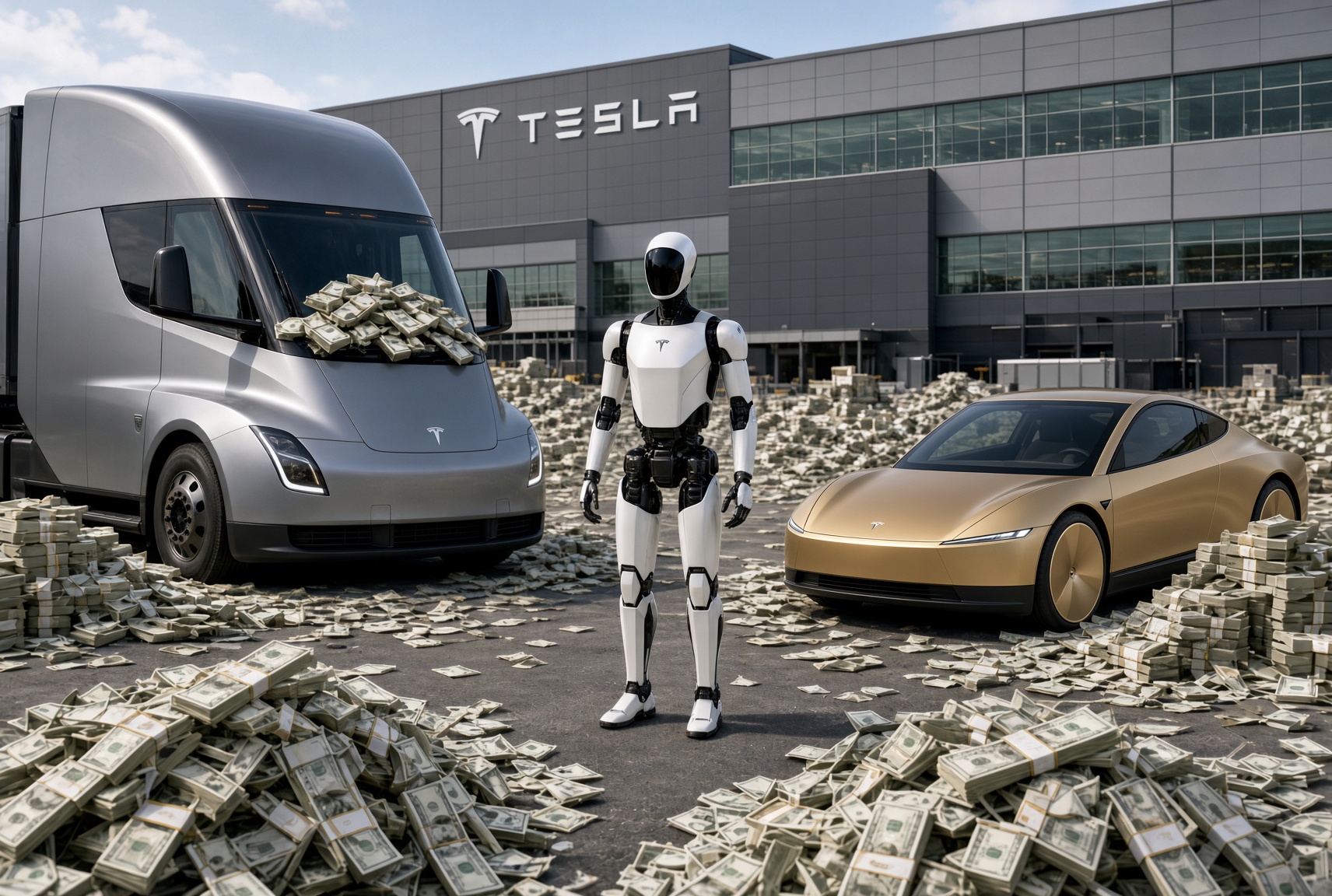
Tesla has secured $30 billion in fresh credit lines from Citibank and Wells Fargo in an effort to scale its biggest current projects.
Tesla agreed to a $20 billion three-year delayed-draw term loan facility from Citibank, it announced on Tuesday. Additionally, it signed a five-year, $8 billion revolving credit facility and a $2 billion, 364-day term credit facility with Wells Fargo.
In a filing with the Securities and Exchange Commission (SEC), that it “may draw” from the $20 billion delayed-draw term “from time to time” and “no more than ten times during the 18 months following the closing date.” This loan matures on September 29, 2029.
The five-year revolving facility from Wells Fargo will also be accessed by Tesla “from time to time,” and will become due and payable on September 29, 2031. Tesla can request two separate one-year extensions.
On the $2 billion, 364-day revolving loan, it becomes due and payable on September 28, 2027. Tesla can also increase its additional commitments to an additional $4 billion across the Revolving Facilities. This would increase the total facilities to $14 billion. Tesla said it does not plan to utilize any of these loans in 2026.
Tesla plans to utilize the money to help prop up its ambitions to scale its biggest products, each of which is either in early launch phases or still in development. Of course, we’re talking about Cybercab and Semi, which have launched, and Optimus, which is still under heavy development and working toward initial release.
All three Tesla products have one thing in common: they’ve all required Tesla to build new manufacturing lines for them.
For the Semi, Tesla built a brand new factory in Sparks, Nevada, adjacent to the Tesla Gigafactory. For Optimus, Tesla sunset Model S and X production at the Fremont Factory, which brought an end to the two flagship models, thus creating manufacturing space for the humanoid robot. Finally, Cybercab is being built at Gigafactory Texas and officially entered production earlier this year.
The cash will help Tesla bolster its finances for the continuing development of these products. Tesla said that it forecasts its CapEx to be over $25 billion, up from just over $8.5 billion last year. These loans surely help with that spending.

Tesla Cybercab and Semi have more in common than you might think

Elon Musk weather update tips Tesla Roadster speculation into Plaid Mode


