Investor's Corner
Tesla (TSLA) Q3 2025 earnings: Wall Street’s reactions
Tesla’s third-quarter 2025 results delivered the highest quarterly revenue in company history, and Wall Street analysts are taking notice.

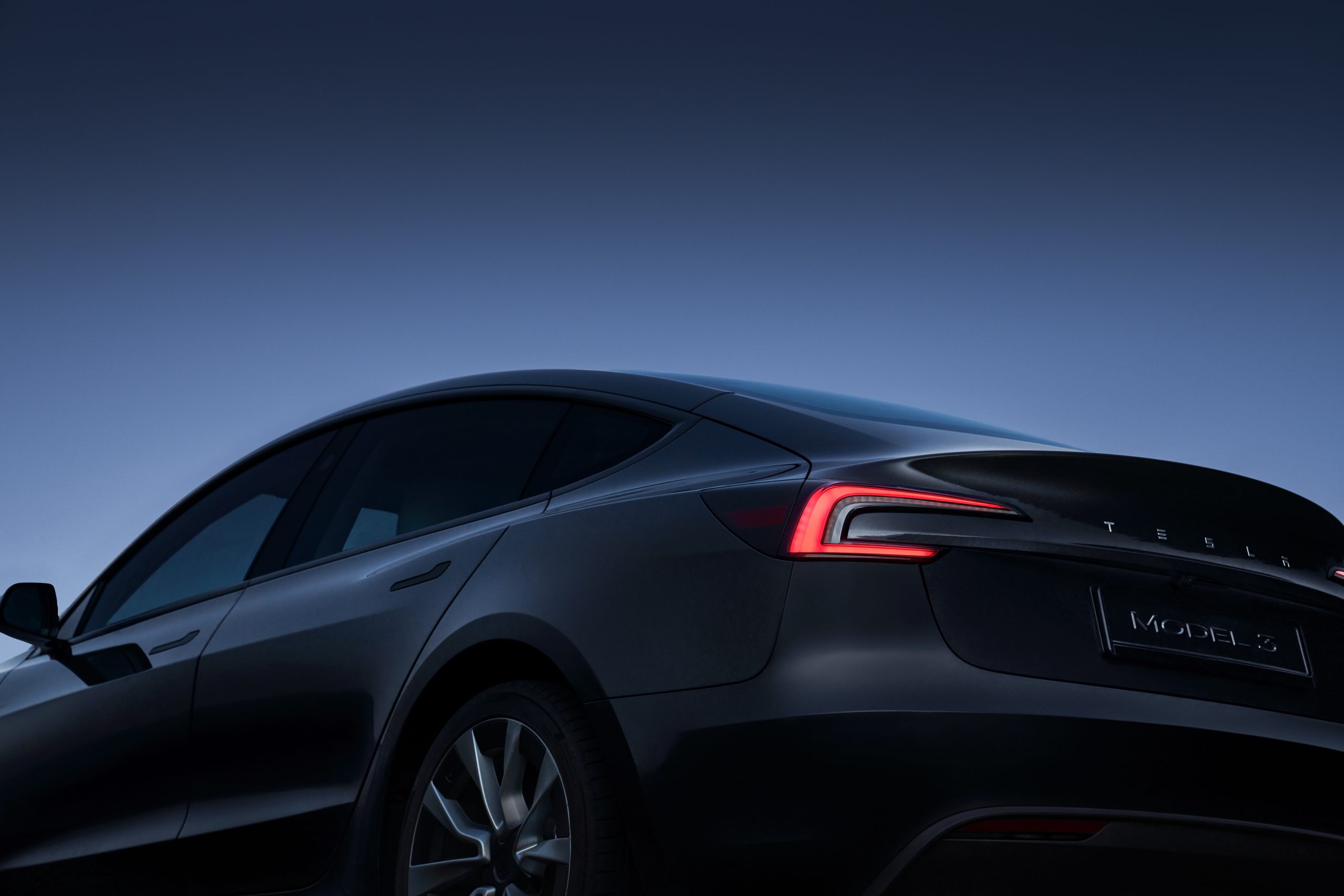
Tesla’s third-quarter 2025 results delivered record quarterly revenues, and Wall Street is taking notice.
The automaker reported $28.1 billion in revenue, topping estimates of $26.4 billion, while non-GAAP EPS landed at $0.50 versus $0.54 expected. Despite the slight earnings miss, Tesla’s free cash flow surged to nearly $4.0 billion and total cash on hand jumped to $41.6 billion, a new high.
The following are some of Wall Street’s reactions to Tesla’s third-quarter results.
Mizuho
Mizuho analyst Vijay Rakesh maintained an “Outperform” rating on Tesla and raised the firm’s price target to $485 from $460 per share, pointing to Tesla’s next-generation autonomy roadmap. “We see 2026E better with stronger FSD traction and deliveries. TSLA is focusing on AI5/HW5 with ~40x gains gen/gen, while ramping Robotaxis and FSD into 2026E–27E.”
Rakesh also highlighted that Mizuho sees Tesla as “well-positioned” to lead “physical AI with Cybercab/FSD traction, humanoid longer term, offset by near-term demand headwinds.”
Wedbush
Wedbush analyst Dan Ives reiterated his “Outperform” rating and $600 price target on Tesla. As per the analyst, “Tesla reported its FY3Q25 results featuring beats on the top-line while missing bottom-line expectations as the company benefitted from a pull-forward in its delivery segment with greater strength across EMEA and APAC while making gradual progress with its autonomous and energy businesses.”
He also pointed to Musk’s upcoming compensation vote as a key inflection point: “We believe it will be approved by a wide margin despite some opposition,” Ives noted. “That will be incremental to keeping Musk as a war-time CEO as the company enters a critical AI expansion phase.”
Baird
Baird analyst Ben Kallo reiterated his “Outperform” rating and $548 per share price target for Tesla following the company’s Q3 2025 earnings results. He praised Tesla’s energy segment for delivering record results.
“Energy demand is particularly high given grid constraints in several regions and a rapid build-out of infrastructure. We expect this piece of the business to capture more attention in the remainder of 2025 and moving into 2026 with the tipping points for longer-term initiatives (Optimus, robotaxi, etc.) more opaque,” Kallo noted.
Deepwater
Meanwhile, Deepwater’s Gene Munster struck a more measured tone. “The September numbers and earnings call were largely uneventful,” Munster said, adding that Tesla’s decision to move cautiously with robotaxis in Austin is the right one.
“Shares of TSLA traded down following Elon’s comment that he remains paranoid about the safety of Robotaxi given any accidents would represent a significant step back in terms of the public’s confidence in the fleet,” he wrote. Munster, however, emphasized that Tesla’s cash position is a major strength: “They have enough cash to will Elon’s vision into reality. It may take a lot longer than many expect, but they’ve got the cash to get there.”



Investor's Corner
Tesla Robotaxi gets a massive upgrade in Nevada
Nevada regulators just approved a massive expansion of Tesla’s robotaxi fleet across the entire county.

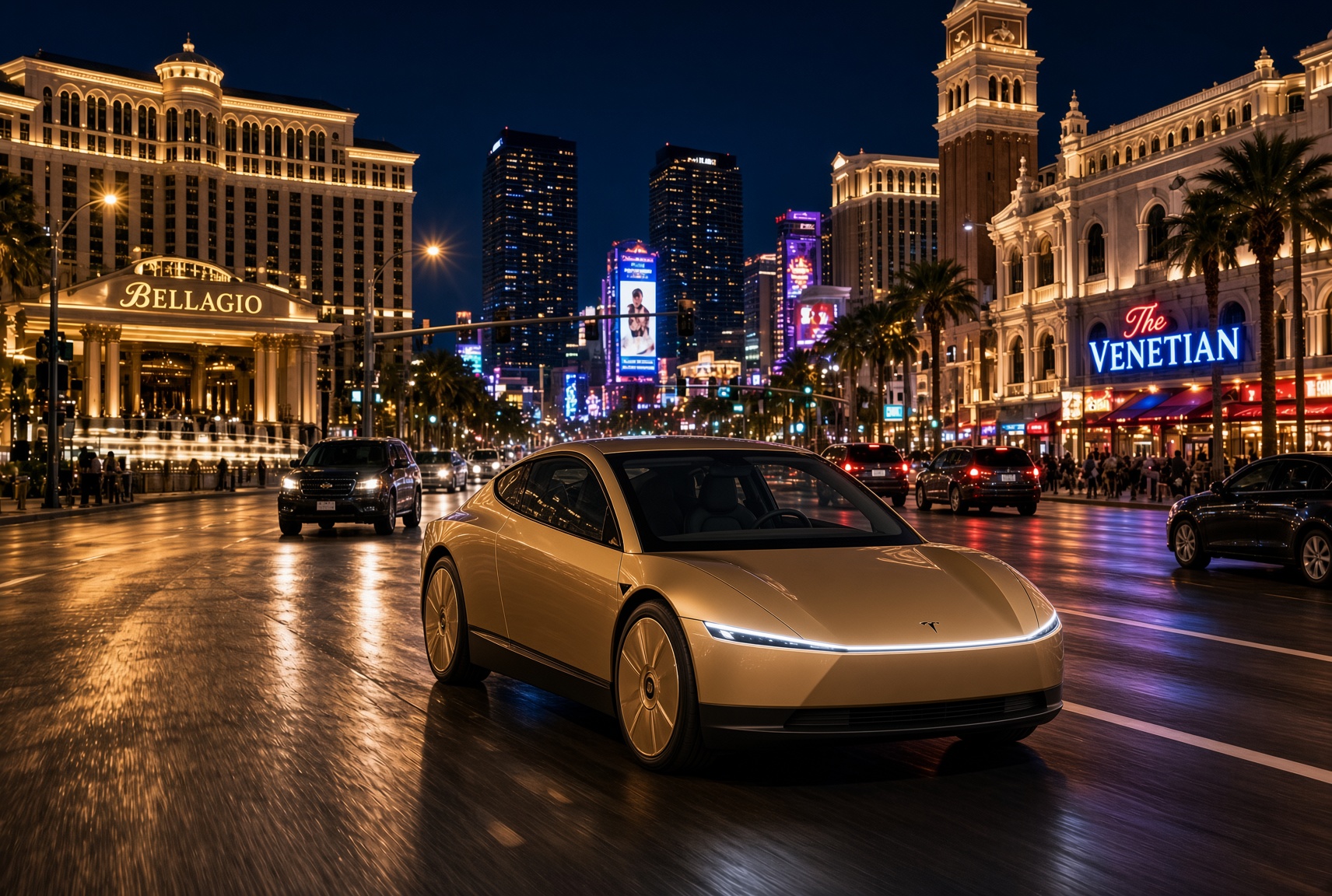
Tesla’s robotaxi footprint in Nevada just grew by roughly 500 times in a single regulatory vote.
The Nevada Transportation Authority approved Tesla’s full Autonomous Vehicle Network Company permit on Thursday, clearing the way for the company to deploy up to 5,000 driverless vehicles across Clark County over the next 12 months. The decision came during a four hour general session meeting that Tesla investor Sawyer Merritt watched live and reported on X, noting the vote replaces the interim order that had limited Tesla to just 10 robotaxis on a narrow stretch of the Las Vegas Strip.
EXCLUSIVE: Tesla has just officially received approval for its full Autonomous Vehicle Network Company permit in Nevada, clearing the way for Tesla to launch a paid public Robotaxi service in Las Vegas.
This officially allows @Tesla to deploy up to 5,000 robotaxis over the next… pic.twitter.com/DPs5UtUlrE
— Sawyer Merritt (@SawyerMerritt) August 20, 2026

That earlier cap, covered here after it surfaced on August 13, came with restrictions that looked stricter than what Tesla runs in Austin: a 45 mph speed ceiling, no airport pickups, and a geofence confined to the Strip corridor. The new approval extends Tesla’s operating authority to all of Clark County, with room to request an even wider geofence across the state.
Tesla representatives at the meeting said they have no intention of putting 5,000 cars on the road right away. Commercial rides are expected to start within 30 days, pending vehicle inspections, insurance filings, and fare approval, the standard steps every robotaxi operator in Nevada has had to clear.
Tesla’s own Robotaxi account replied to the news with a short line, The golden future is upon us.
The timing lines up with Tesla’s broader robotaxi push this month. The company is preparing to open Cybercab rides to the public in Austin as soon as this month, and it opened a sweepstakes for riders to win a seat at the launch event. Tesla filed its original application for a 5,000 vehicle Nevada fleet back in June, a request regulators trimmed to 10 vehicles when they issued the interim order in July. Thursday’s vote effectively grants the number Tesla asked for from the start.
Zoox, the Amazon owned robotaxi operator, has run in Nevada since 2025 and was capped at 100 vehicles before Thursday’s decision. Tesla’s new ceiling puts it well ahead of that comparison on paper, though the company has said its actual fleet size will depend on how quickly FSD v15 rolls out, the software update executives have called the gateway to scaling unsupervised robotaxi operations nationwide.
Elon Musk
SpaceX’s next trillion dollar bet has nothing to do with rockets, Musk tells staff
Elon Musk told SpaceX staff AI revenue will soon dwarf rockets and Starlink combined entirely.
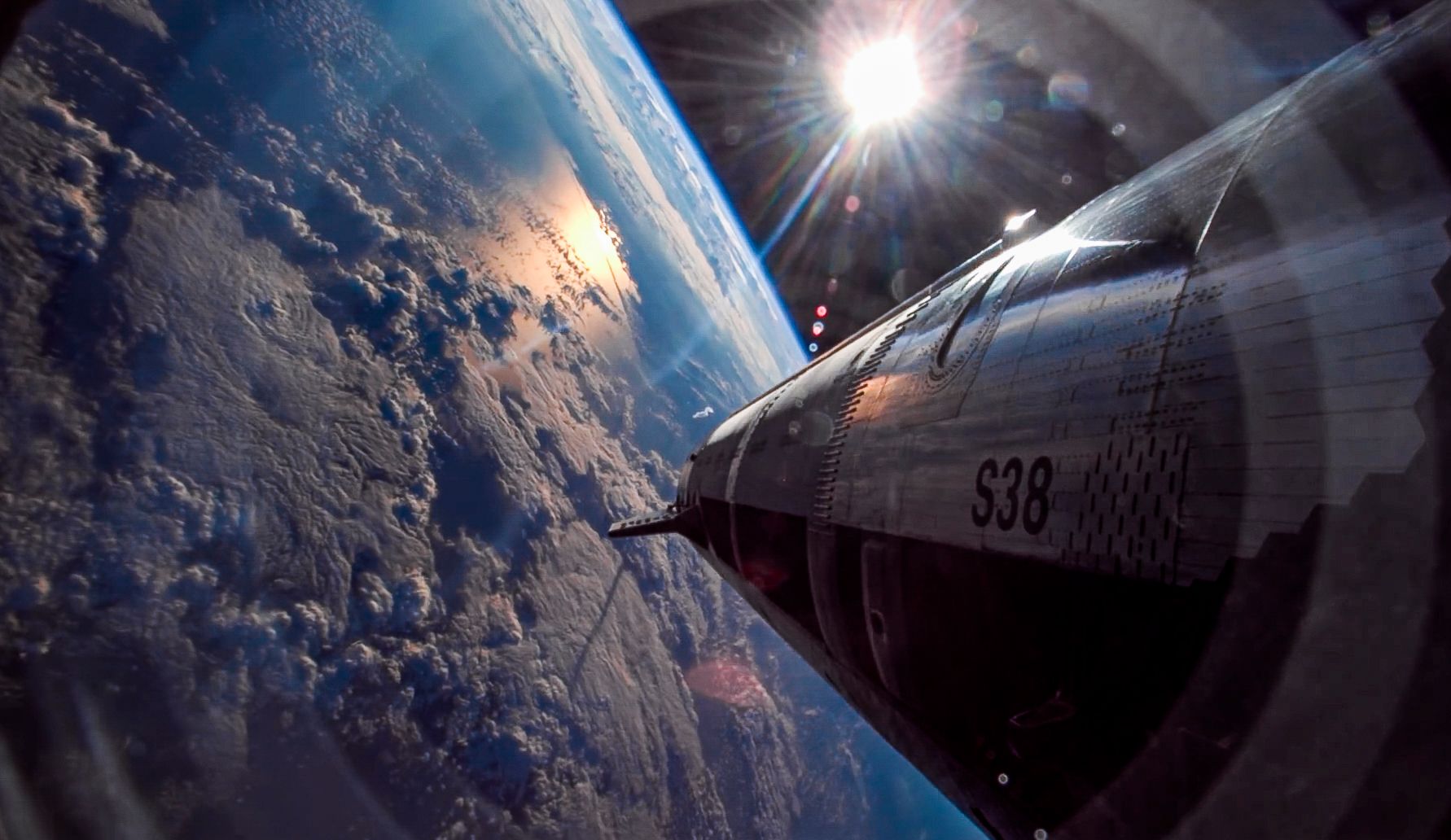
Elon Musk told SpaceX employees this week that artificial intelligence, not rockets, will soon carry the company’s revenue. In a roughly 29 minute internal address posted on SpaceX’s X account on Tuesday, Musk said AI revenue will pass every other line of business at SpaceX “probably in September” and pull further ahead by the fourth quarter.
The numbers he gave are specific. SpaceX currently runs 1.4 gigawatts of AI compute capacity. Musk wants that at 10 gigawatts by the end of 2027, a jump he tied directly to revenue: “if we bring 10GW of AI online by the end of next year, it will be $300 billion to $500 billion a year in revenue.” He called those “big numbers,” which undersells a projection larger than what most countries produce in a year.
We made rockets reusable and are rebuilding the internet in space. The next challenge: making life multiplanetary and understanding the true nature of the universe
Watch @ElonMusk deliver a company update to @SpaceX employees pic.twitter.com/5c8rxoCQfu
— SpaceX (@SpaceX) August 11, 2026

Musk went further on where AI fits into SpaceX’s future. “Probably in four or five years, AI will be 99% of the value of SpaceX,” he told staff, adding that digital intelligence would eventually run “a trillion times” ahead of biological intelligence as computing scales. He tied that growth to the company’s founding mission, telling employees “we must win on AI, because the future is overwhelmingly AI and robots,” with the payoff meant to help fund Starship and a Mars program that increasingly runs through Terafab, the joint Tesla, SpaceX and xAI chip plant.
Elon Musk launches TERAFAB: The $25B Tesla-SpaceXAI chip factory that will rewire the AI industry
None of this is entirely new territory. SpaceX told investors much the same story during its first earnings call as a public company on August 4, where Musk moved the company’s $1 trillion revenue target up a year to 2030 and said Starlink could someday carry a majority of the world’s internet. What the all hands video adds is a hard deadline and a specific power figure Musk had not given publicly before, along with a franker pitch to his own workforce that AI, not launch cadence, is now the thing SpaceX is betting its future on.
The AI revenue itself is not coming from SpaceX training its own models. It is largely Starlink acting as the network layer for xAI’s workloads, plus SpaceX renting out compute capacity directly, the same approach behind the roughly $16 billion the company spent on AI infrastructure in a single quarter.
Musk closed the video with a pitch aimed at recruiting and retention rather than investors, telling employees that anyone who helps SpaceX win the AI race will eventually get the chance to go to the moon or Mars themselves. Whether SpaceX can turn 1.4 gigawatts into 10 in seventeen months is the more immediate question, and one that will show up in quarterly numbers well before anyone leaves Earth.

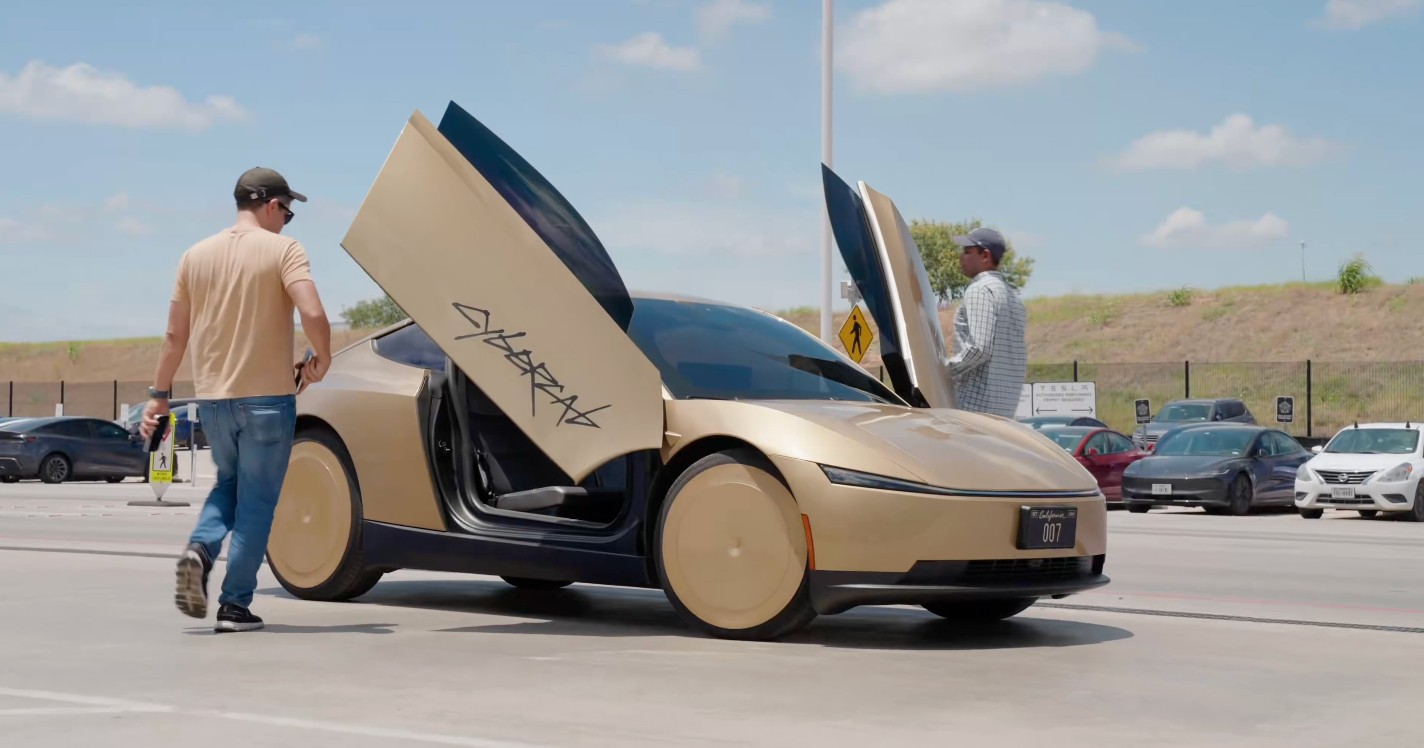
In a new note to investors on Tuesday, Morgan Stanley analyst Andrew Percoco said that Tesla has one big financial question to answer for investors regarding its Robotaxi rollout, Full Self-Driving software, and Optimus.
Percoco said in the note that, for the most part, investors are still very positive about the direction the company is headed. However, there are some things the firm would like to see, and they have to do with financials.
Tesla (TSLA) Q2 2026 earnings results: miss on EPS, beat on revenue
Tesla bulls are more than convinced that the company’s Full Self-Driving software is proof it can develop physical AI. Financially, however, there are still some questions, especially on elevated spending, which CEO Elon Musk said would occur as the company works to roll out Robotaxi faster and continue developing its Optimus robot.
The latter two are where Tesla will have to prove progress to investors, as Percoco writes that both projects “will require clearer evidence that Robotaxi is scaling and more tangible Optimus proof points to support the ROI on elevated capex.”
Percoco said the second quarter earnings call did not change his long-term thesis of where Tesla is positioned in the AI race, which is out in front. However, there are concerns that weaker gross margins and higher R&D spend will stress financials, and that has “sharpened our (and investors’) focus on measurable progress across Robotaxi and Optimus.”
Additionally, Robotaxi still needs to be proven with more operation in existing cities while maintaining safety but improving how many rides it gives in any given time, he said. For Optimus, Percoco wrote that he is “still looking for evidence beyond commentary around SOP.”
Morgan Stanley put Percoco in charge of covering Tesla after long-time analyst Adam Jonas transitioned to the automotive side.
Currently, Morgan Stanley has a $415 price target on Tesla and a ‘Hold’ rating on the stock. It is trading at around $330 at the time of publication, which was 2:30 P.M. on the East Coast.

Tesla Cybercab uses a unique strategy for picking up the right rider

Tesla ends in-house wrap service that always seemed like a short-term program


