News
Verizon, AT&T and T-Mobile are trying to shut Starlink out before FCC vote
AT&T, Verizon and T-Mobile want 290 MHz cut from an FCC satellite plan before Thursday.

AT&T, Verizon and T-Mobile are asking the Federal Communications Commission to pull nearly 300 MHz of spectrum out of a proposal that would let satellite companies like SpaceX offer cell service directly to ordinary phones. The request lands one day before the agency votes on it.
The FCC will vote Thursday, October 29, on a notice of proposed rulemaking that would make an additional 482 MHz available for direct to device service, expanding the number of eligible bands from five to 13, according to the FCC fact sheet. It would also scrap the rule requiring a satellite operator to lease spectrum from carriers, replacing it with a certification that the operator has coexistence agreements in place or holds the terrestrial license itself.
That second path matters for SpaceX. As Teslarati reported earlier this month, SpaceX agreed to buy Grain Management’s nationwide 800 MHz portfolio to turn Starlink Mobile into a full US carrier, adding to the spectrum it already bought from EchoStar.
The carriers want two bands removed, 2.5 GHz and 3.45 GHz, which make up 290 MHz of the 482 MHz on the table. Through industry group CTIA, they argued that about 300 million users depend on those bands and that satellite operations in them are not technically feasible. T-Mobile, which calls 2.5 GHz the foundation of its Ultra Capacity 5G network, said in its own filing that satellite interference could wipe out up to 96% of a cell site’s uplink coverage area and cut uplink speeds by 88% to 99%.
Executives from all three carriers met with FCC staff on October 20, and T-Mobile CEO Srini Gopalan met separately with FCC Chairman Brendan Carr. T-Mobile’s role stands out because it is still SpaceX’s US launch partner for Starlink Mobile. The three carriers have also teamed up on their own satellite joint venture to pool spectrum, a move widely seen as a response to Starlink.
SpaceX is asking for the opposite. In an October 23 filing after meetings with FCC staff and commissioners’ offices, the company asked regulators to add the 902 to 928 MHz band to the proposal. “Doing so now saves time later,” SpaceX wrote. The company also asked the FCC to modernize interference rules and align satellite deployment requirements with those for terrestrial cell networks, saying the goal is to let satellite and ground networks work together so Americans stay connected wherever they are.
The carriers have not been shy about how they view SpaceX as a competitor. On Verizon’s third quarter earnings call Monday, its chief executive said Starlink Mobile “just can’t compete with a terrestrial network” and estimated SpaceX would need four to six years and $300 billion to $500 billion to build a full US carrier network.
Thursday’s vote will not settle which bands survive. Adopting the notice opens a public comment period, with final rules to come later in the proceeding. The FCC already considered and rejected 2.5 GHz for satellite coverage once, in 2024. SpaceX also is not the only satellite player watching: the FCC approved Amazon’s $11.6 billion acquisition of Globalstar on October 27, giving its planned direct to device fleet its own mobile satellite spectrum.


Elon Musk
Tesla’s Powercore could change how data centers get power
Tesla unveiled Powercore, a solid-state transformer that could ease one of the grid’s worst bottlenecks.
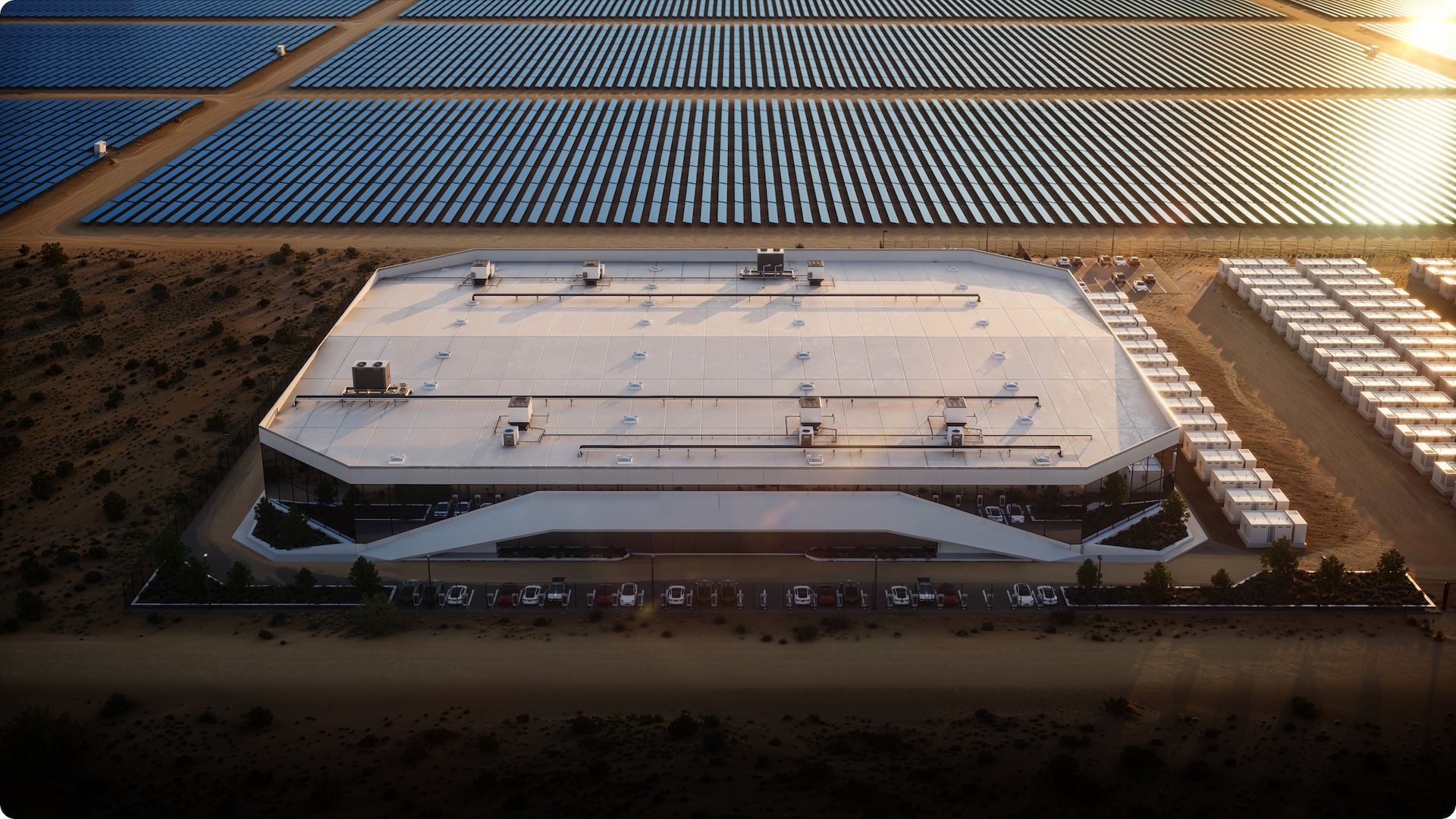
Tesla has unveiled Powercore, a solid-state medium voltage transformer that also handles the jobs of an inverter and a circuit breaker in a single unit. “Solid state medium voltage transformer, inverter and breaker – reliable, safe and secure,” the company’s Tesla Megapack account posted on X Tuesday, adding that the product is “Made in America” and will be “Operating 2027.” Elon Musk followed with his own post: “Advanced solid state transformers at scale from Tesla.”
Tesla rates Powercore at 7.4 MW, or 9 MVA, of continuous output at 34.5 kV AC, with grid-forming support for 10 MVA of peak power. Specs shared by Sawyer Merritt list a peak efficiency of 98.86 percent, a DC range of 800 to 2,000 volts and a built-in solid-state breaker that clears faults in about 100 microseconds. Tesla has not announced pricing, a factory location or a first customer.
The product fills a gap Tesla left open last year. When it introduced Megapack 3 and Megablock in September 2025, Tesla said it would build its own transformers, but shared almost nothing about them. Megablock groups four Megapack 3 units with a transformer and switchgear into a single medium voltage block, as Teslarati reported. Powercore appears to be that missing piece.
A typical battery or solar project today uses low voltage inverters to turn DC into AC, then a large oil-filled transformer to step that power up to grid voltage. A solid-state unit handles both steps with power electronics, which means less equipment, a smaller footprint and no flammable oil. Grid-forming capability lets it actively help hold voltage and frequency steady rather than simply following the grid.
Introducing Powercore Solid state medium voltage transformer, inverter and breaker – reliable, safe and secure 7.4 MW/9 MVA continuously at 34.5 kVac w/ grid-forming support for 10MVA of peak power Made in America. Operating 2027 https://t.co/sHxqnpWJrf — Tesla Megapack (@Tesla_Megapack) November 17, 2026
Timing is a big part of the pitch. Lead times for conventional transformers have stretched into years as AI data centers and renewable projects crowd utility interconnection queues. Tesla energy executive Max de Zegher pointed to the problem in a post Musk shared, noting that “transformers have barely changed since the 1890s: copper coils in a tank of oil,” while batteries, solar and compute all run on DC. Powercore, he wrote, delivers “one conversion and about half the losses.” Tesla has also said its Megapack supply for 2027 is nearly sold out.
Tesla deployed 13.7 GWh of energy storage in the third quarter, its second best quarter on record. On Tuesday, the company also said customer solar systems deployed by Tesla Energy now generate more than twice the electricity its global operations consume each year.

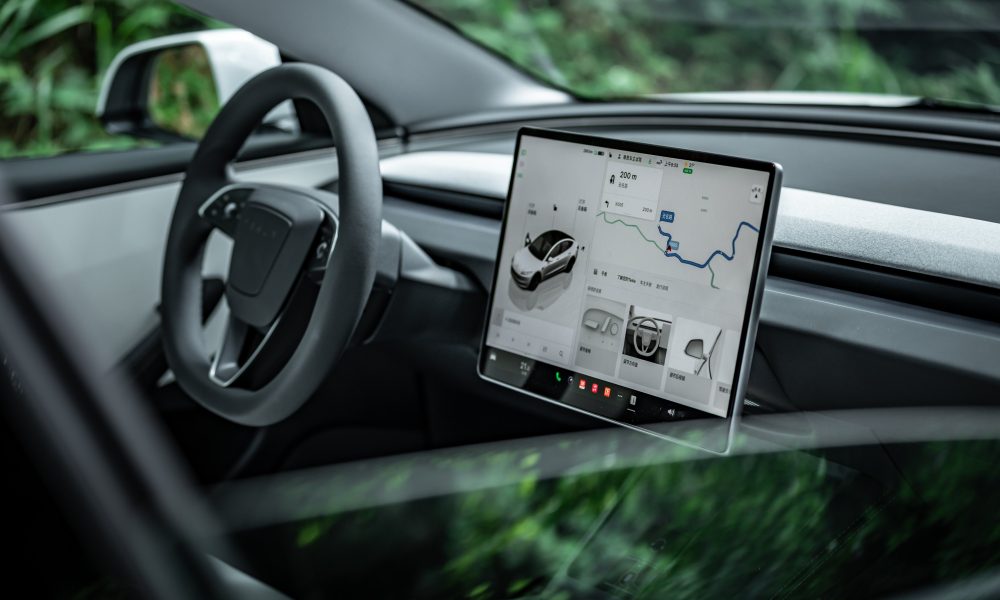
Tesla has officially changed the reference to its vehicles’ internal computers to “Super Intelligence,” or “SI,” reflecting a change that President Donald Trump made when he noted it would no longer be referred to as “Artificial Intelligence,” or “AI.”
Tesla hacker Green posted that a breakdown of Software Version 2026.44.1, noting that the in-car computer is now labeled as “SI Computer,” in system properties:
Took a peek at Tesla 2026.44.1 firmware
The huge change is that Tesla “upgraded” the “AI computer” inside to super intelligence, so it’s now referred to as “SI Computer” in car properties. 🙃
Other than this there are some minor adjustments:— green (@greentheonly) November 17, 2026
In September as he spoke at the UN’s General Assembly, President Trump said (via The Verge):
“The United States also totally rejects any attempt to construct a globalist scheme to control for the artificial intelligence being spoken of so much now. Here and after officially called “super intelligence,” changing the name, and that the use of the word artificial makes intelligence fake. It makes it sound fake, and it is not fake. It’s actually amazing. But we have to be careful. In fact, it is exactly the opposite of what it purports. From this point forward, all of the United States documents, and hopefully the world’s, will be changed to use the much more accurate term, super as opposed to artificial. So it’s super intelligence. In other words, welcome to the new world of super intelligence — SI. That’s, uh, let’s see if that does. It sounds much better. It is much better, and it’s much more accurate.”
Tesla and Musk have evidently chosen to adopt the change, as it now appears as an official reference to the company’s in-car computer.
Tesla has long used iterative software updates to refine Autopilot/FSD behavior, vehicle controls, and user interfaces. Renaming an internal identifier fits that pattern of quiet housekeeping far more closely than a sudden capability jump.
Owners on HW3 and later hardware continue to receive the same incremental FSD improvements seen in prior releases, as the property string does not alter compute allocation or model architecture.
Nevertheless, this won’t have any impact on the vehicles themselves, but it is more of an adoption of terms.
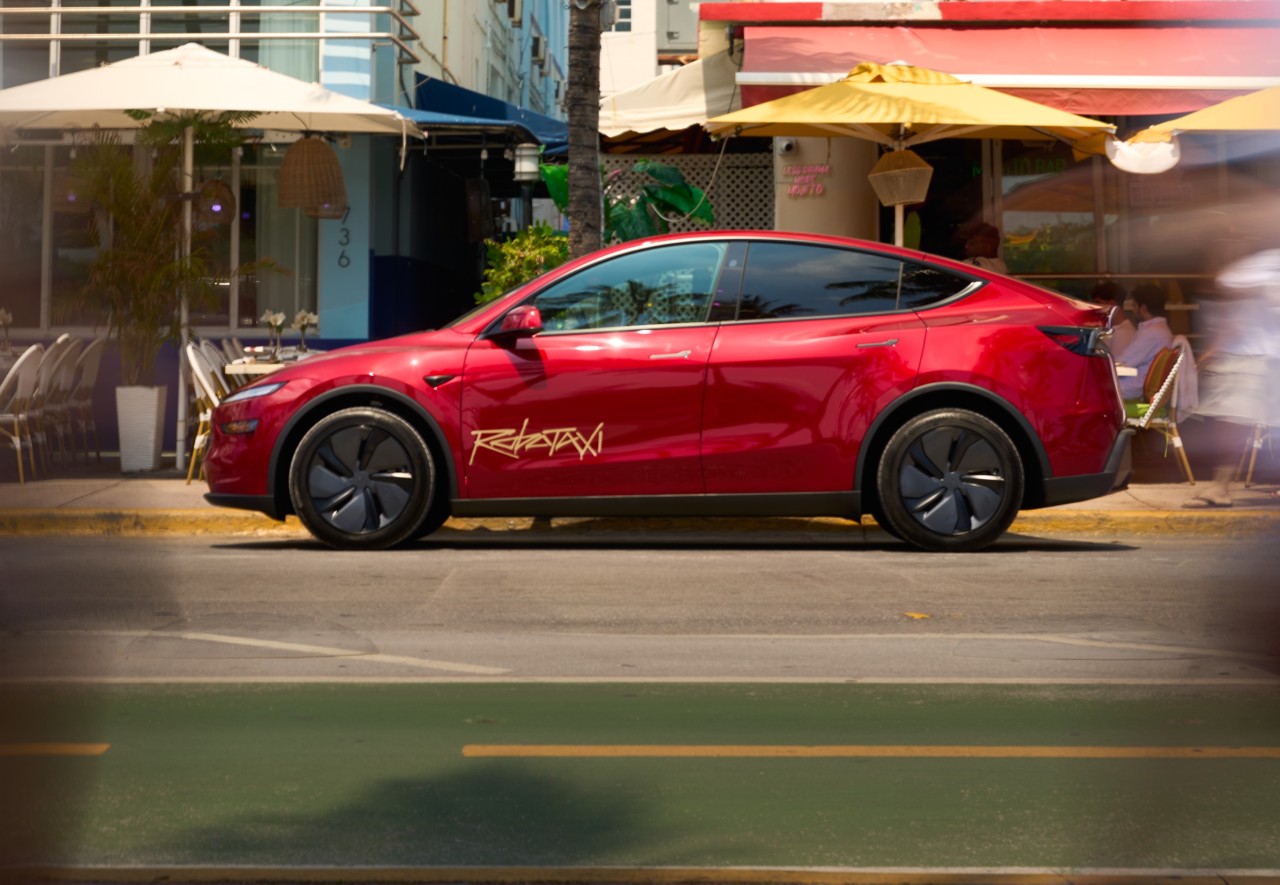
Tesla just doubled the serviceable area that its Robotaxi platform can travel in Miami, Florida.
On November 16, Tesla announced a major expansion of its Miami service area with a message stating that it would now service substantially more of the city. A new map shows the new service area, which is roughly double the initial geofence, including key urban districts into Robotaxi for the first time.
Miami’s geofence for Tesla Robotaxi has expanded considerably https://t.co/GpBqendVRN
— TESLARATI (@Teslarati) November 16, 2026
Tesla first launched unsupervised Robotaxi rides in Miami on July 3, making it the company’s initial market outside of Texas and California. The original geofence covered a very limited portion of the western Miami-Dade area, including West Miami, Doral, Sweetwater, and Miami International Airport. It was roughly 25 square miles, before a small expansion put it at about 31.
Now, Downtown Miami, the popular Brickell neighborhood, and Miami Beach, which were deliberately left outside the boundary initially, now are included in operations. Riders can now hail Model Y vehicles booked through the Tesla Robotaxi app and have run 24 hours a day since mid-November.
The map now looks to be about 59 square miles, a roughly 92 percent increase. The new eastern edge of the geofence now includes Downtown, Bickell, Wynwood, Little Havana, and the Biscayne Bay waterfront, nailing down a lot of typical tourist locations for Miami visitors. Additionally, the new geofence also extends North, reaching Hialeah, and adding coverage closer to the airport corridor.
At its widest, the zone now stretches roughly 11 miles from west to east. Miami Beach remains outside the service area, though Elon Musk previously indicated beach coverage was “coming soon” after Florida Governor Ron DeSantis publicly called for it.
Relative to Tesla’s other markets, Miami’s roughly 59-square-mile zone is now larger than Orlando (about 26 square miles) and Tampa (about 24 square miles) combined.
It remains smaller than Texas hubs such as Austin (around 443 square miles), San Antonio (about 275), Houston (about 254), and Fort Worth (about 143), but the rapid growth brings it closer to competitor Waymo’s approximately 60-square-mile Miami footprint, which already includes beach areas.
For Miami residents and visitors, the expansion makes driverless rides practical for trips into the city’s densest commercial and residential core, offering a new option amid heavy traffic and limited parking.
For Tesla, covering higher-demand downtown corridors should increase ride volume, generate more real-world autonomy data, and strengthen its competitive position as it scales the Robotaxi network toward broader profitability and eventual Cybercab deployment. The overnight growth also signals accelerating operational confidence less than five months after the city’s launch.

Tesla’s Powercore could change how data centers get power

Tesla changes vehicle computers from ‘AI’ to ‘SI,’ reflecting President Trump change


