Elon Musk
Elon Musk maps out Tesla’s AI chip iterations, and they’re pretty nutty
Based on the CEO’s post, it appears that Tesla is already exploring generations as far as AI8.

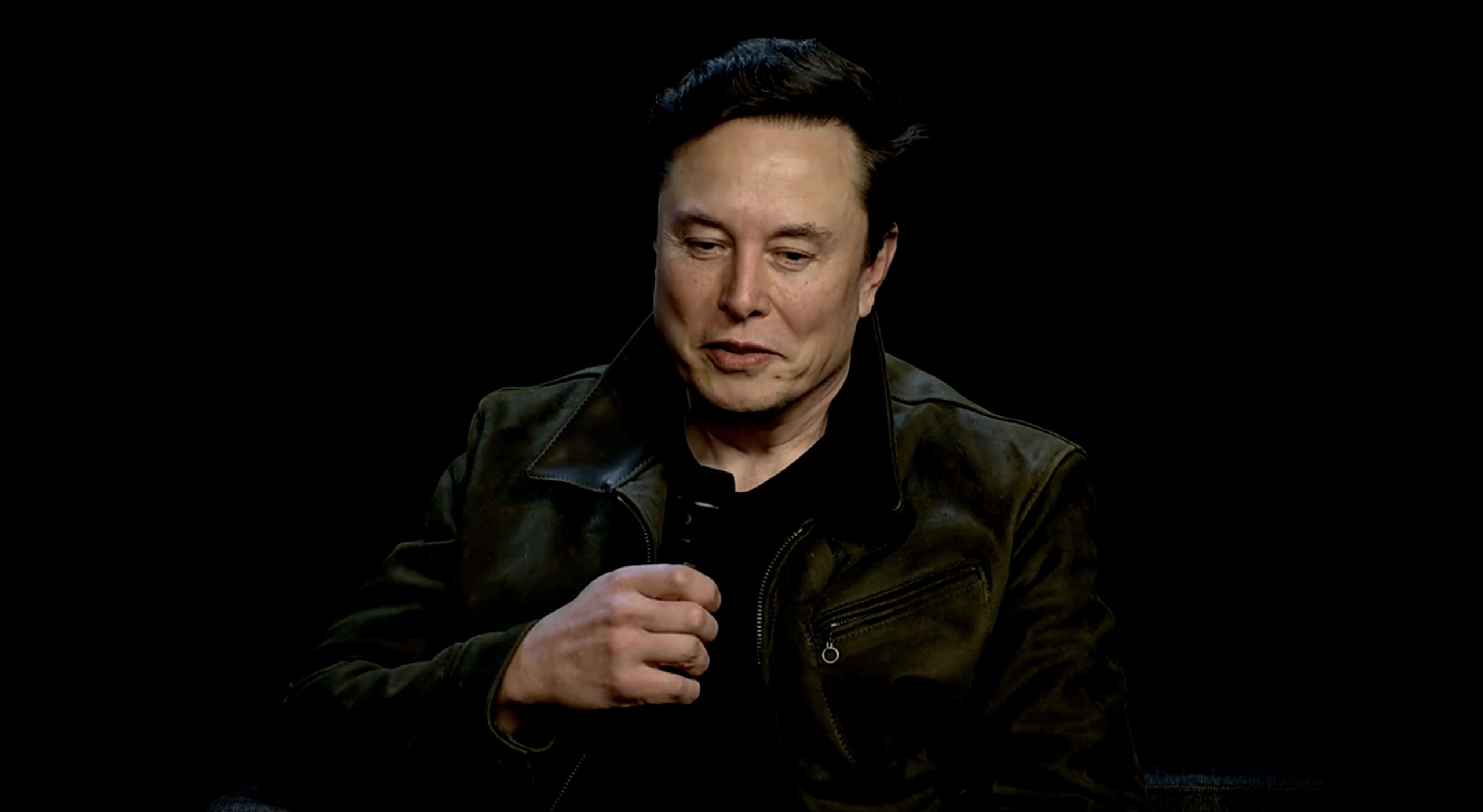
Elon Musk recently revealed new details about Tesla’s next-generation AI5 chip while hinting at even more advanced iterations of its custom silicon.
Based on the CEO’s post, it appears that Tesla is already exploring generations as far ahead as AI8.
Elon Musk teases Tesla’s chip development
In his X post, Musk stated that he had just completed a design review with Tesla’s chip engineers in California and Texas for the company’s upcoming AI5 chip. This was not surprising at all, considering that Musk has been discussing AI5 for quite some time now. What was surprising, however, were his comments that followed.
“And AI6 and AI7 will follow in fast succession. AI8 will be out of this world,” he wrote in his post, adding in a follow-up that his chip design review would be continuing the next day, followed by an Optimus demo review.
Considering that Tesla is currently rolling out a Robotaxi service using cars that are equipped with AI4 chips, some industry watchers have expressed interest in why the company is developing several generations’ worth of silicon for the company’s products. Inasmuch as AI4 might be enough for FSD and the Robotaxi rollout today, however, products such as Optimus might benefit from a more advanced chip.
Even AI5 will already be insanely impressive
During Tesla’s Q3 2025 earnings call, Musk described AI5 as “an amazing design” that represents a full evolution from the AI4 chip currently used in its vehicles and data centers. The new hardware, which will be manufactured by both Samsung in Texas and TSMC in Arizona, is expected to deliver up to 40x performance gains compared to its predecessor.
Tesla’s in-house engineering team redesigned the chip from the ground up, removing traditional components such as GPUs and image signal processors to improve efficiency and power måanagement. Musk said the chip now fits within a half-reticle design, calling it “a beautiful chip” into which he’s “poured so much life energy.”
Musk confirmed Tesla’s plan to create an oversupply of AI5 chips that could power not only vehicles but also humanoid robots and data centers. He emphasized that Tesla’s vertically integrated approach, designing both hardware and software, gives it a unique edge in scaling AI applications.


Elon Musk
SpaceX’s $24B Starbase supercomputer plan slipped past a key roadblock
SpaceX wants a Starbase tax break for a $24 billion gas plant and supercomputer campus.

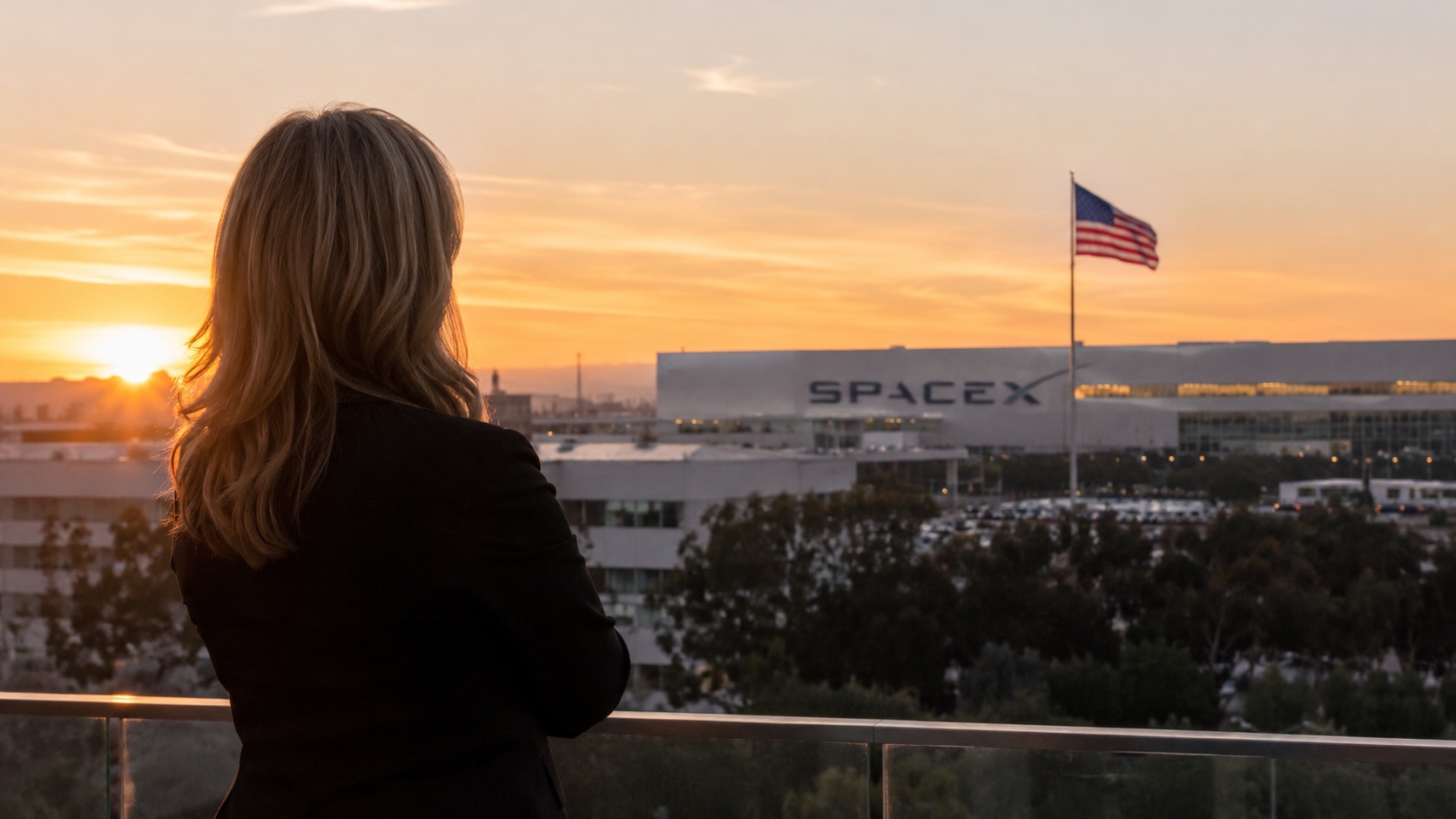
SpaceX is asking its own company town for a tax break on a $24 billion natural gas power plant and supercomputing facility at Starbase, Texas, and the land it picked sits just outside the reach of a data center moratorium that took effect in neighboring Brownsville last week.
A City of Starbase public hearing notice says SpaceX “proposes to construct, own, and operate a gas-fired power plant and super-compute facility” on roughly 444 acres between Boca Chica Boulevard and the Port of Brownsville. The $24 billion figure covers only the initial phases, and the notice leaves room for future expansions. The Starbase City Commission will consider a property tax abatement and a related economic development agreement at a 7 p.m. hearing on December 9. The notice does not disclose the size or length of the abatement, or how much computing capacity the site would hold.
The location has a history. Over the summer, SpaceX asked Brownsville to remove the tract from its city limits and offered $220 million for water and wastewater projects in return. Brownsville approved the move in August, and Starbase later annexed the land. Brownsville’s own 90-day pause on data center applications took effect last week, and had the tract stayed inside the city, the project likely would have needed a different home.
The power side is already in front of state regulators. SpaceX has applied to the Texas Commission on Environmental Quality for air permits covering 35 mobile gas turbines producing roughly 750 megawatts, according to Politico, which also noted that two of the three Starbase commissioners voting on the incentives are SpaceX executives.
Building its own plant lets SpaceX skip the Texas grid. Gov. Greg Abbott paused new data center grid connections in August pending an audit, but a facility that generates its own electricity does not need one. The air permit still has to clear the TCEQ, where Abbott also ordered a halt on data center permits.
The bigger test arrives in January. Governor-elect Gina Hinojosa, who unseated Abbott last week, has said she will block data center approvals until the legislature passes new protections, and she has already asked state officials to hold off on any sale of Boca Chica State Park to SpaceX until she is sworn in. Tesla and SpaceX shares both fell the day after the election, and Musk’s first reaction on X was “Data centers in space looking pretty appealing right now.”
That line points to Starmind, SpaceX’s orbital compute constellation. Musk has said terrestrial compute will be “peanuts compared to orbital compute” and expects monthly orbital deployments to pass ground deployments around the end of 2028, as Teslarati reported. Until then, SpaceX still needs gigawatts on the ground. It ended the third quarter with 1.7 GW of nameplate compute, is targeting 2.5 to 3 GW by the end of this year and wants at least 10 GW more in 2027. Its existing Colossus sites around Memphis already run on gas turbines and face a lawsuit from residents over emissions.
Local reaction is split. The South Texas Environmental Justice Network has announced a protest, citing air quality, water use and energy bills, while some Brownsville residents told the Tribune they welcome the jobs. SpaceX did not respond to the Tribune’s questions about the project.

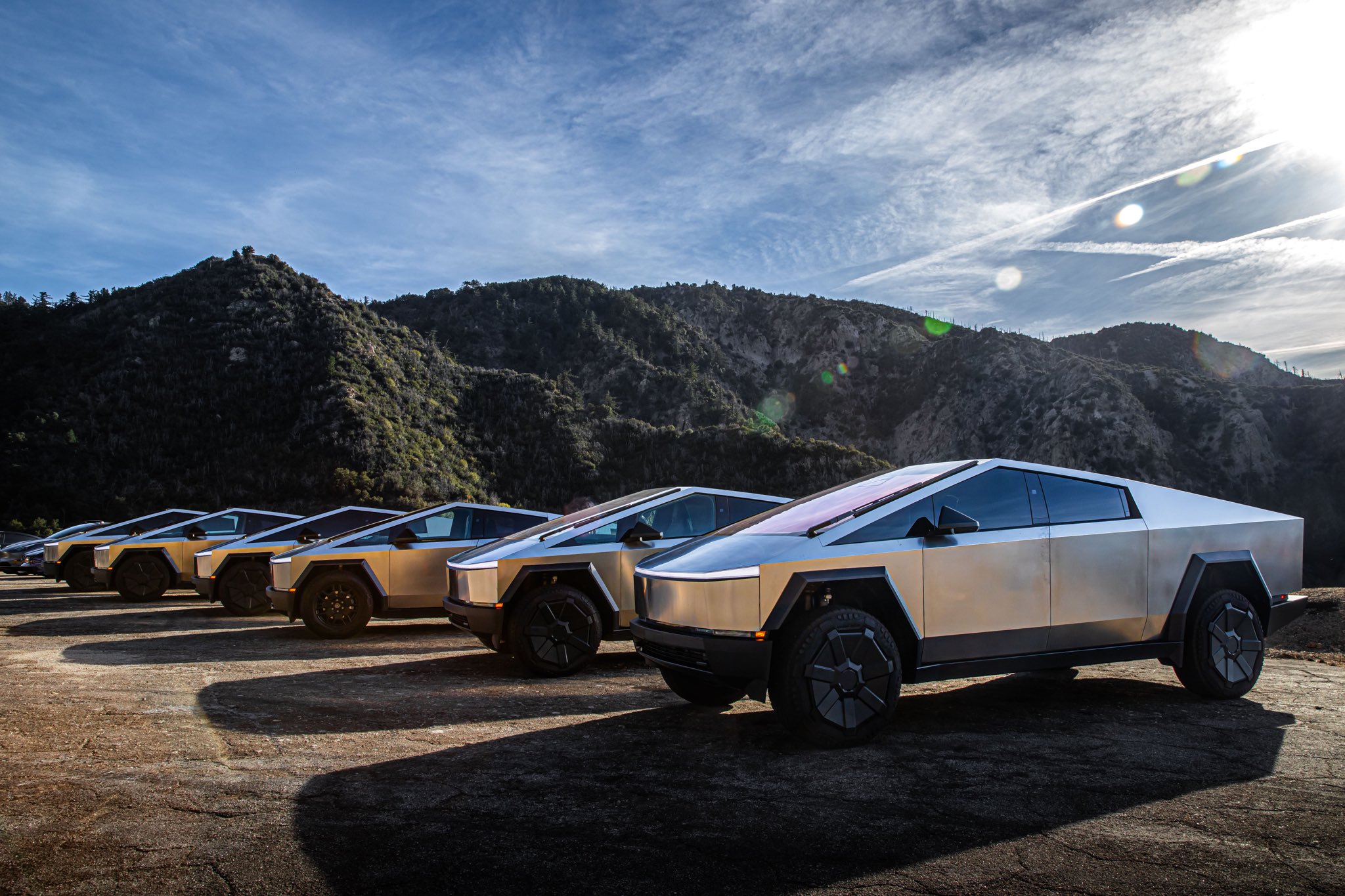
Tesla CEO Elon Musk announced that the company will extend Cybertruck production slightly to handle its extensive order backlog.
On Wednesday, Musk announced that “In order to work through more of the Cybertruck order backlog, production will be extended through the end of summer 2027.”
In order to work through more of the Cybertruck order backlog, production will be extended through the end of summer 2027
— Elon Musk (@elonmusk) November 11, 2026
Tesla has already attempted to simplify its last months of production for the Cybertruck by eliminating several trim levels and only offering the Cyberbeast, the most expensive trim that starts at $109,990. The other two trim levels, the Cybertruck All-Wheel-Drive and Premium All-Wheel-Drive have both been discontinued.
There has been plenty of backlash against Tesla’s decision to ax the Cybertruck, but the company’s forecast prioritizes Cybercab and autonomy. Factory space at Gigafactory Texas that is not necessary is now being set aside for the Cybercab as the company truly embraces its “transportation-as-a-service” model.
There is still a slim chance the Cybertruck survives. Last evening, Tesla upfitter Unplugged Performance offered to take the Cybertruck line off of Tesla’s hands and continue building it, along with a CyberSUV.
Nevertheless, Tesla seems to be ending the Cybertruck on its terms after what will be a three-and-a-half-year run. It still does not really feel quite real; I think many of us thought the Cybertruck would be around for years to come.
Musk added more detail, stating that while it was not the smartest move, “there must be some room in this world for sentimentality or what’s the point?”
This is not the smartest move from a profit-maximizing standpoint btw, but there must be some room in this world for sentimentality or what’s the point?
— Elon Musk (@elonmusk) November 11, 2026
Other EV pickups on the market have experienced a similar fate.
The Ford F-150 Lightning was axed by the Detroit company due to the continued losses the company took from sales. That truck was never profitable, and Ford is still taking a quarterly loss in its EV side. However, things are moving along as it has plans for a mass market EV pickup, which will likely gather some substantial demand if Ford can get it just right.
Perhaps another extension or even a total change of heart might come. Only Musk knows.
Elon Musk
SpaceX just cleared a key FCC hurdle in its fight with Verizon and AT&T
The FCC accepted SpaceX’s bid for Grain’s 800 MHz spectrum, opening review for Starlink Mobile.
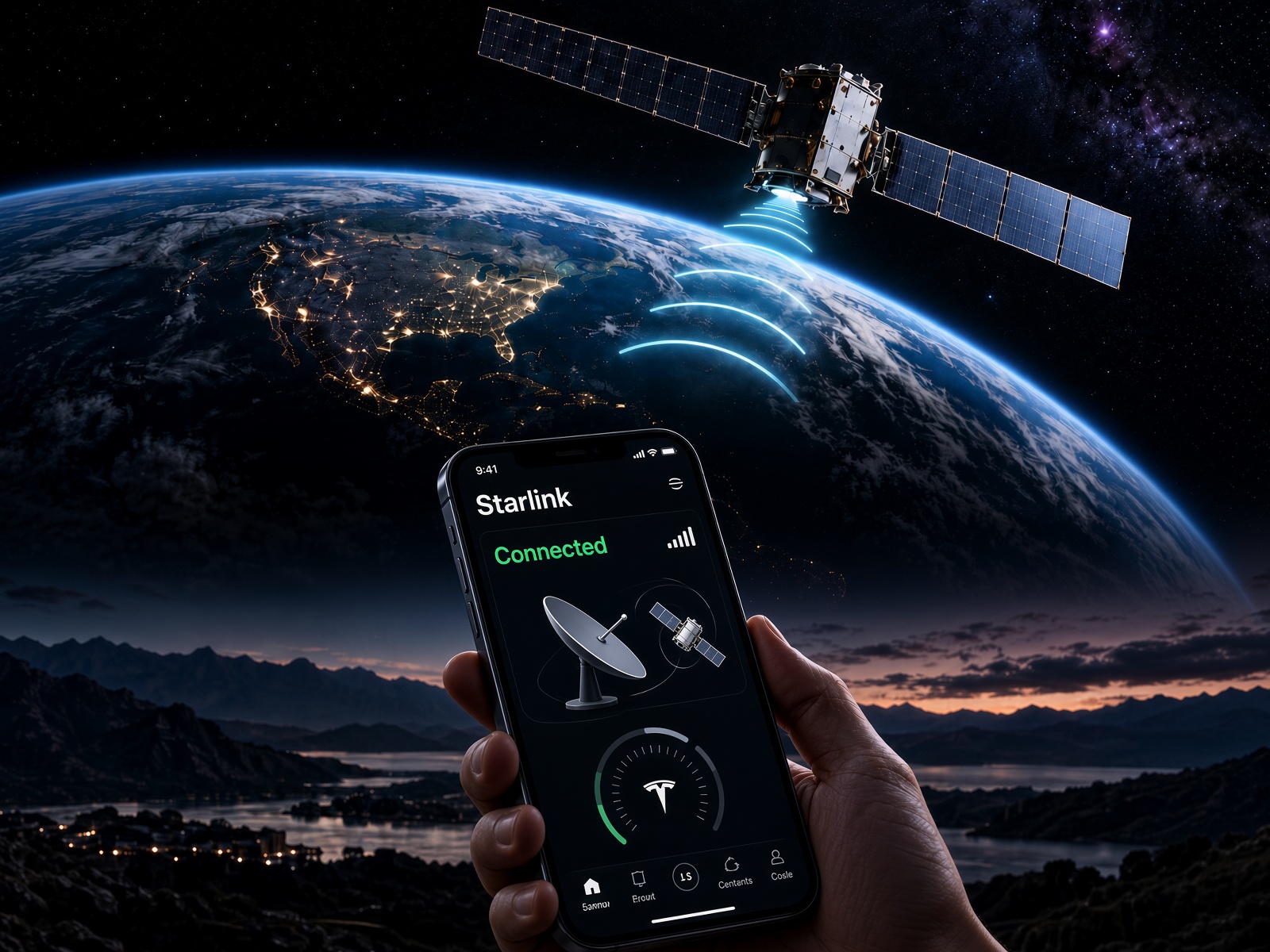
The Federal Communications Commission has formally opened its review of SpaceX’s plan to buy a nationwide block of 800 MHz spectrum from Grain Management, moving Starlink Mobile one step closer to operating as a full U.S. wireless carrier.
In a public notice issued Tuesday, the FCC’s Wireless Telecommunications Bureau said it accepted for filing the applications to transfer control of two Grain license companies, Prism License Co. 1 and Prism License Co. 2, to Starlink Spectrum Holdings, a wholly owned SpaceX subsidiary. The deal covers 546 paired licenses across 3,224 counties, reaching roughly 100% of the U.S. population in all 50 states, Washington, D.C., Puerto Rico and the U.S. Virgin Islands. The proceeding sits under WT Docket No. 26-313.
Acceptance is not approval. It means the applications cleared an initial review and the public comment window is now open. Comments and petitions to deny are due December 1, and oppositions are due December 8. The bureau also said the conditions attached to Grain’s July purchase of the licenses from T-Mobile, which require rapid buildout for terrestrial and direct to device service, would carry over to SpaceX if the transfer is approved.
SpaceX announced the agreement on October 8, saying the new airwaves would let Starlink Mobile’s signal reach phones inside buildings, something its 2 GHz spectrum from EchoStar cannot do as well. The portfolio includes up to 14 MHz of paired spectrum in the 817 to 824 MHz and 862 to 869 MHz bands, which most existing phones already support. Elon Musk called it “the last critical piece of the spectrum puzzle needed for SpaceX to provide complete phone coverage in America.”
According to the filing, SpaceX would hold up to 89 MHz of total spectrum in any given market after the deal closes, including up to 14 MHz below 1 GHz. That is far under the 385 MHz threshold the FCC uses to flag a transaction for closer competitive scrutiny, and well short of the roughly 300 MHz each of AT&T, Verizon and T-Mobile holds.
Tuesday’s notice does not decide how SpaceX can use the spectrum from orbit. A separate application SpaceX filed on October 27 seeking authority to provide supplemental coverage from space on the same frequencies, along with related waiver requests, is still pending before the commission.
The ground network is already taking shape. Last week, SpaceX picked Qualcomm to supply radios, baseband units and software for a nationwide 5G build, with deployment across tens of thousands of U.S. cell sites starting in 2027. The FCC also voted on October 29 to advance a proposal opening another 482 MHz to direct to device service, though AT&T, Verizon and T-Mobile hacritive pushed to strip nearly 300 MHz from it. SpaceX President Gwynne Shotwell has said service on SpaceX’s own airwaves is targeted for early 2028.

SpaceX’s $24B Starbase supercomputer plan slipped past a key roadblock

Tesla extends Cybertruck production as Musk concedes ‘sentimentality’


