News
SpaceX moves to challenge AT&T, Verizon with Qualcomm-powered 5G

SpaceX has selected Qualcomm Technologies to supply core infrastructure for Starlink Mobile’s planned nationwide terrestrial 5G network in the United States.
Announced on November 4, the multi-year agreement covers radios, baseband units, and commercial-grade Layer 1 software based on Qualcomm’s Dragonwing Cellular Infrastructure platforms, specifically the QRU100 and QDU100:
🚀 SpaceX has picked Qualcomm to supply radios, baseband units and Layer 1 software for Starlink Mobile’s nationwide terrestrial 5G network.
Deployment across tens of thousands of U.S. cell sites starts in 2027. Qualcomm calls it its biggest 5G deal yet. https://t.co/YKLRakuJjB
— TESLARATI (@Teslarati) November 4, 2026
These will power Massive MIMO radio units featuring 64 transmit and 64 receive paths (64T64R), designed to boost coverage, capacity, and spectral efficiency at scale. Qualcomm has described the pact as its largest 5G deal to date, with deployment across tens of thousands of U.S. cell sites scheduled to begin in 2027.
The terrestrial build-out is meant to complement, not replace, Starlink’s satellite direct-to-cell capabilities. SpaceX has assembled substantial spectrum holdings for this purpose: roughly 65 MHz of mid-band frequencies acquired from EchoStar (including AWS-4 and related bands) and up to 14 MHz of low-band 800 MHz spectrum from Grain Management.
The low-band airwaves improve indoor penetration and range, while mid-band supports higher capacity. SpaceX executives, including President Gwynne Shotwell, have outlined a hybrid architecture in which satellites eliminate outdoor dead zones and terrestrial nodes add capacity where demand is highest.
Earlier comments suggested small cells or femtocells potentially co-located with existing Starlink user terminals on roofs, though later filings also reference more conventional antennas on towers and structures.
The big picture is SpaceX’s bid to become a full-fledged U.S. mobile carrier rather than a satellite partner or dead-zone filler. AT&T, Verizon, and T-Mobile together generate hundreds of billions in annual wireless revenue; Shotwell has said SpaceX expects to win customers by offering superior coverage, including during disasters, through seamless satellite-terrestrial handoff.
Verizon, AT&T and T-Mobile are trying to shut Starlink out before FCC vote
Starlink already represents a major share of SpaceX’s revenue and profit following the company’s 2026 IPO. By vertically integrating spectrum, satellite manufacturing, launch capacity, and now ground radio equipment, SpaceX aims to control more of the connectivity stack.
Qualcomm’s involvement also positions the network for future evolution toward AI-native 6G infrastructure, with energy-efficient processing that could improve deployment economics.
Challenges remain: spectrum depth still lags the Big Three, capital costs for tens of thousands of sites will be substantial, and regulatory approvals continue, but the Qualcomm deal marks a concrete step from spectrum accumulation toward operational network build-out.
In short, the partnership accelerates Starlink Mobile’s shift from orbital broadband specialist to hybrid mobile competitor, testing whether a space-based company can reshape terrestrial wireless economics and coverage in the world’s largest market.


Elon Musk
SpaceX just cleared a key FCC hurdle in its fight with Verizon and AT&T
The FCC accepted SpaceX’s bid for Grain’s 800 MHz spectrum, opening review for Starlink Mobile.

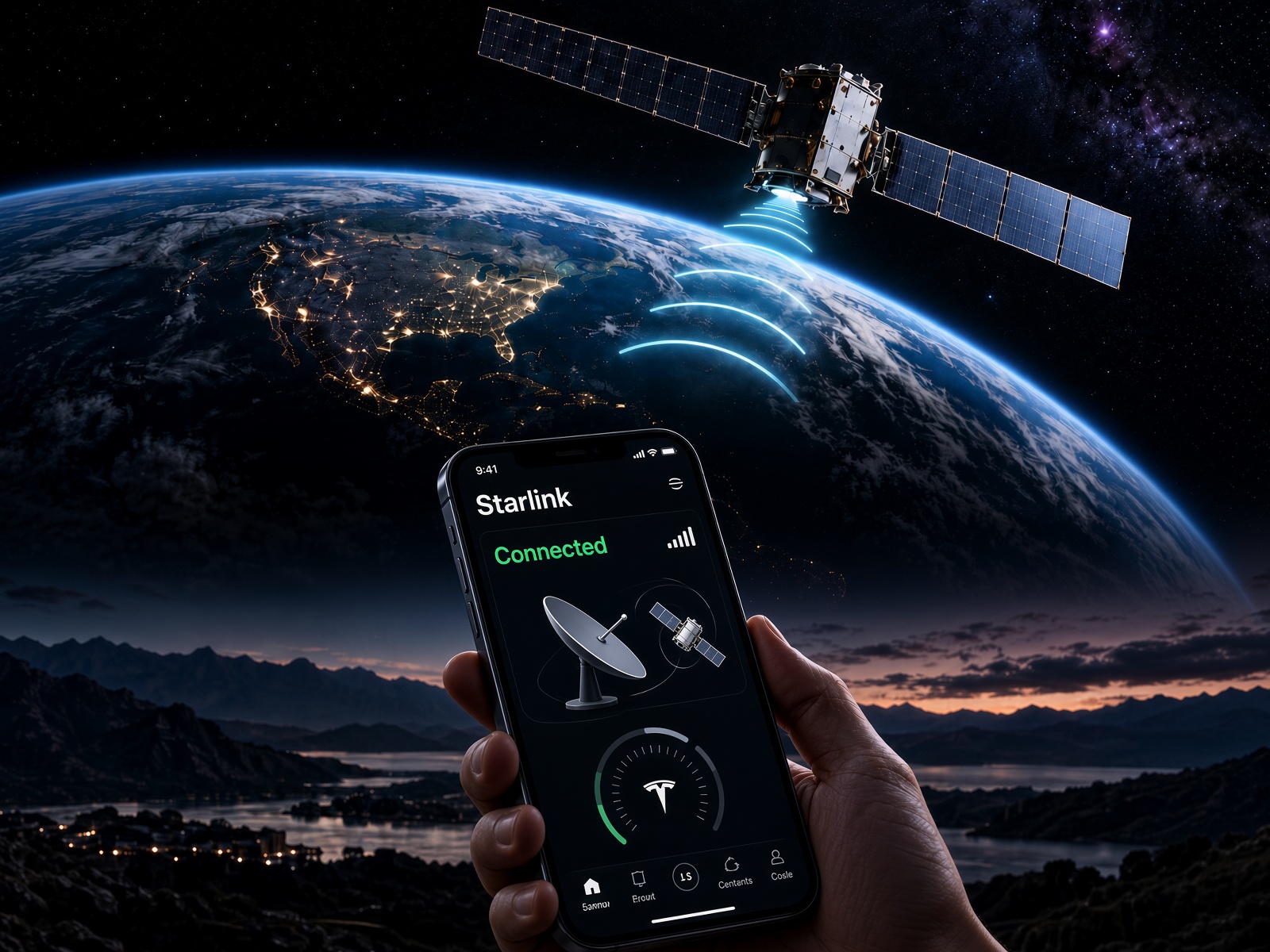
The Federal Communications Commission has formally opened its review of SpaceX’s plan to buy a nationwide block of 800 MHz spectrum from Grain Management, moving Starlink Mobile one step closer to operating as a full U.S. wireless carrier.
In a public notice issued Tuesday, the FCC’s Wireless Telecommunications Bureau said it accepted for filing the applications to transfer control of two Grain license companies, Prism License Co. 1 and Prism License Co. 2, to Starlink Spectrum Holdings, a wholly owned SpaceX subsidiary. The deal covers 546 paired licenses across 3,224 counties, reaching roughly 100% of the U.S. population in all 50 states, Washington, D.C., Puerto Rico and the U.S. Virgin Islands. The proceeding sits under WT Docket No. 26-313.
Acceptance is not approval. It means the applications cleared an initial review and the public comment window is now open. Comments and petitions to deny are due December 1, and oppositions are due December 8. The bureau also said the conditions attached to Grain’s July purchase of the licenses from T-Mobile, which require rapid buildout for terrestrial and direct to device service, would carry over to SpaceX if the transfer is approved.
SpaceX announced the agreement on October 8, saying the new airwaves would let Starlink Mobile’s signal reach phones inside buildings, something its 2 GHz spectrum from EchoStar cannot do as well. The portfolio includes up to 14 MHz of paired spectrum in the 817 to 824 MHz and 862 to 869 MHz bands, which most existing phones already support. Elon Musk called it “the last critical piece of the spectrum puzzle needed for SpaceX to provide complete phone coverage in America.”
According to the filing, SpaceX would hold up to 89 MHz of total spectrum in any given market after the deal closes, including up to 14 MHz below 1 GHz. That is far under the 385 MHz threshold the FCC uses to flag a transaction for closer competitive scrutiny, and well short of the roughly 300 MHz each of AT&T, Verizon and T-Mobile holds.
Tuesday’s notice does not decide how SpaceX can use the spectrum from orbit. A separate application SpaceX filed on October 27 seeking authority to provide supplemental coverage from space on the same frequencies, along with related waiver requests, is still pending before the commission.
The ground network is already taking shape. Last week, SpaceX picked Qualcomm to supply radios, baseband units and software for a nationwide 5G build, with deployment across tens of thousands of U.S. cell sites starting in 2027. The FCC also voted on October 29 to advance a proposal opening another 482 MHz to direct to device service, though AT&T, Verizon and T-Mobile hacritive pushed to strip nearly 300 MHz from it. SpaceX President Gwynne Shotwell has said service on SpaceX’s own airwaves is targeted for early 2028.
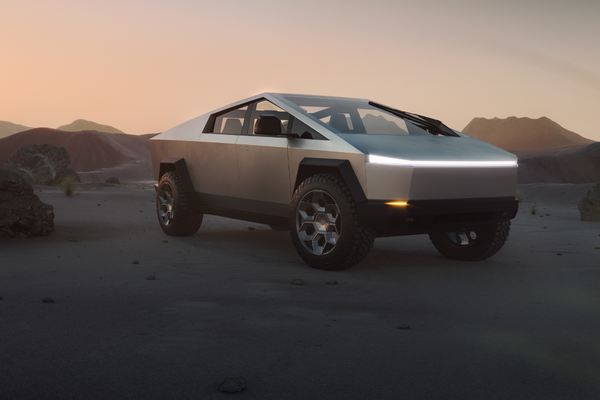
A Tesla upfitter has offered to take over Cybertruck lines from the company in a last-ditch effort to save the all-electric pickup from being completely canceled in the middle of 2027.
Unplugged Performance, the Hawthorne, California-based Tesla aftermarket specialist, has publicly offered to take over Cybertruck production from Tesla, funding the effort “through a consortium of investors.”
An open offer to Tesla: We fully support putting Cybercab first, and we’d be glad to take the Cybertruck line off your hands.
We’d fund it with a consortium of investors and run it at no cost to Tesla’s floor space, headcount, or focus. All of that goes to Cybercab. Cybercab gets first call on battery cells too. We’ll wait our turn.
Tesla gains incremental profit: a license fee, plus FSD and Robotaxi network revenues on every vehicle built.
We’d build the Cybertruck, a three-row CyberSUV, and an unmanned CyberCargo hauler. More autonomous miles, across every surface of this planet and beyond.
Worth a conversation?— UP (@UnpluggedTesla) November 10, 2026
The proposal comes as Tesla prioritizes its Cybercab Robotaxi program and prepares to wind down Cybertruck assembly at Gigafactory Texas around mid-2027.
Founded in 2013 by Ben Schaffer and located adjacent to Tesla’s Design Studio and SpaceX, Unplugged Performance has become a leading provider of premium upgrades for Tesla vehicles, including extensive Cybertruck packages under its UP INVINCIBLE line.
Through its UP.FIT division, the company has also developed purpose-built police and fleet versions of the Cybertruck, including deliveries to agencies such as the Las Vegas Metropolitan Police Department.
In an X post on Tuesday, Unplugged said:
“An open offer to Tesla: We fully support putting Cybercab first, and we’d be glad to take the Cybertruck line off your hands. We’d fund it with a consortium of investors and run it at no cost to Tesla’s floor space, headcount, or focus. All of that goes to Cybercab. Cybercab gets first call on battery cells too. We’ll wait our turn. Tesla gains incremental profit: a license fee, plus FSD and Robotaxi network revenues on every vehicle built. We’d build the Cybertruck, a three-row CyberSUV, and an unmanned CyberCargo hauler. More autonomous miles, across every surface of this planet and beyond. Worth a conversation?”
The arrangement would free Tesla resources and manufacturing capacity for Cybercab while allowing continued production of the stainless-steel pickup and expanded variants. Unplugged Performance indicated it would wait for battery cells after Cybercab needs are met and would generate ongoing revenue for Tesla through licensing and software/network services on the vehicles it produces.
Following strong initial interest, Unplugged Performance posted a follow-up inviting potential investors and strategic partners to email cyber@unpluggedperformance.com. The company clarified that the outreach is solely to gauge interest and does not constitute an offer to sell securities or acceptance of funds at this stage.
The proposal arrives shortly after Elon Musk indicated that Cybertruck production in Texas would be phased out by roughly the middle of 2027 to expand Cybercab output.
Whether Tesla engages with the offer remains to be seen, but the public overture highlights both the aftermarket specialist’s deep experience with the Cybertruck platform and the growing focus on autonomy within Tesla’s manufacturing plans.
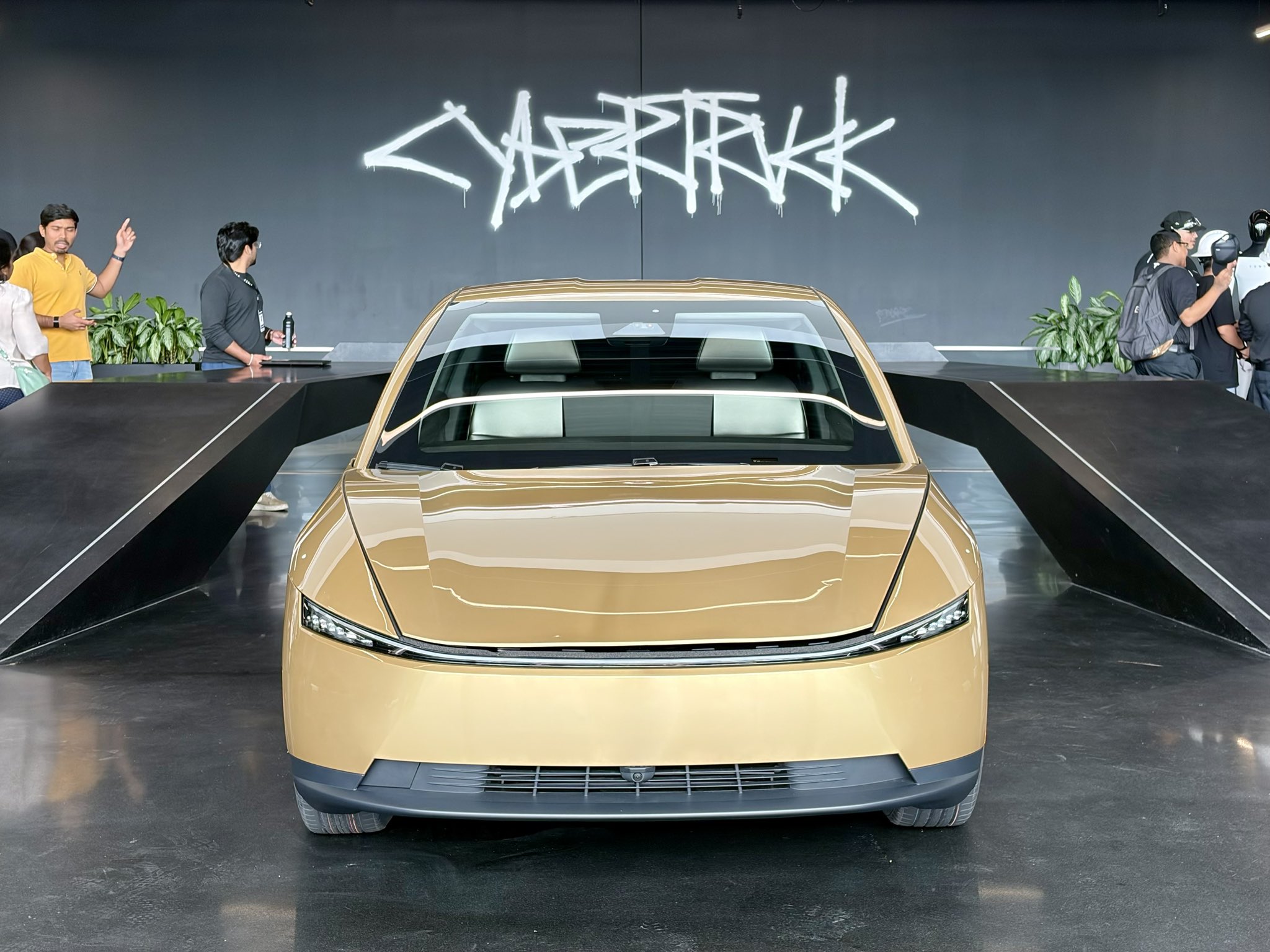
Elon Musk said the Tesla Cybercab will perform “a majority of all passenger miles” where it is allowed to operate and that point is “obvious to anyone with eyes and a brain.”
Musk used the point to double down on the company’s decision to ax the cult-favorite Cybertruck, as its production space will be removed and transitioned into additional Cybercab lines. The move has catalyzed a polarizing conversation on whether its right or wrong.
Whatever side you are on — it’s happening.
Dodge ended the Viper.
Audi retired the R8.
Mitsubishi said goodbye to the Lancer Evo.
Ford bid farewell to the Bronco (at one point).
Chevrolet sunset the Camaro.Tesla is ending the Cybertruck. I’m pissed. I’m upset.
Fans of those five automakers mentioned did the same thing. It happens. It sucks. I don’t like it.
But I still love Tesla. I love my Model Y. I hoped to be in a Cybertruck in a little under two years.
I won’t be. But I still won’t put my family in anything else. Too safe. Too advanced. Too much better than everything else.
— TESLARATI (@Teslarati) November 10, 2026
Regardless, Musk seems to be getting to the point that he is done talking about the choice. At some point, you have to think that this was truly a difficult decision for him and the company as well, and this is not something he took lightly. In fact, he’s probably a little bit disappointed with it, too.
But the point remains that the Cybertruck is gone. Musk’s focus is purely on developing an autonomous platform that the world will utilize for transportation, and he’s telling you that anyone “with eyes and a brain” can see it:
@PalmerLuckey @carlhancock Cybercab will do a majority of all passenger miles in any jurisdiction where it is not prohibited by law.
Obvious to anyone with eyes and a brain.
— Elon Musk (@elonmusk) November 10, 2026
Tesla is betting that all of its passengers in the future will be okay with not owning their own personal cars and will be fine with ride-hailing for the rest of their lives. Every dinner, every errand, every trip to the airport and transportation thereafter, will all be operated by ride-sharing, and in Tesla’s perfect world, it will happen in a Cybercab.
As of now, Cybercab is only active in Austin, but it has been spotted all over the country with a driver behind the wheel in those prototypes. In Austin, the car has no steering wheel or pedals for people to control the vehicle.
The Cybertruck dilemma is one that has truly come across the entire Tesla community and while it seems to be a great idea to keep it because people love it, the business side of things is steering Musk and Tesla in another direction.

SpaceX just cleared a key FCC hurdle in its fight with Verizon and AT&T

Tesla upfitter offers to keep Cybertruck alive


