Elon Musk
Elon Musk and Tesla try to save legacy automakers from Déjà vu

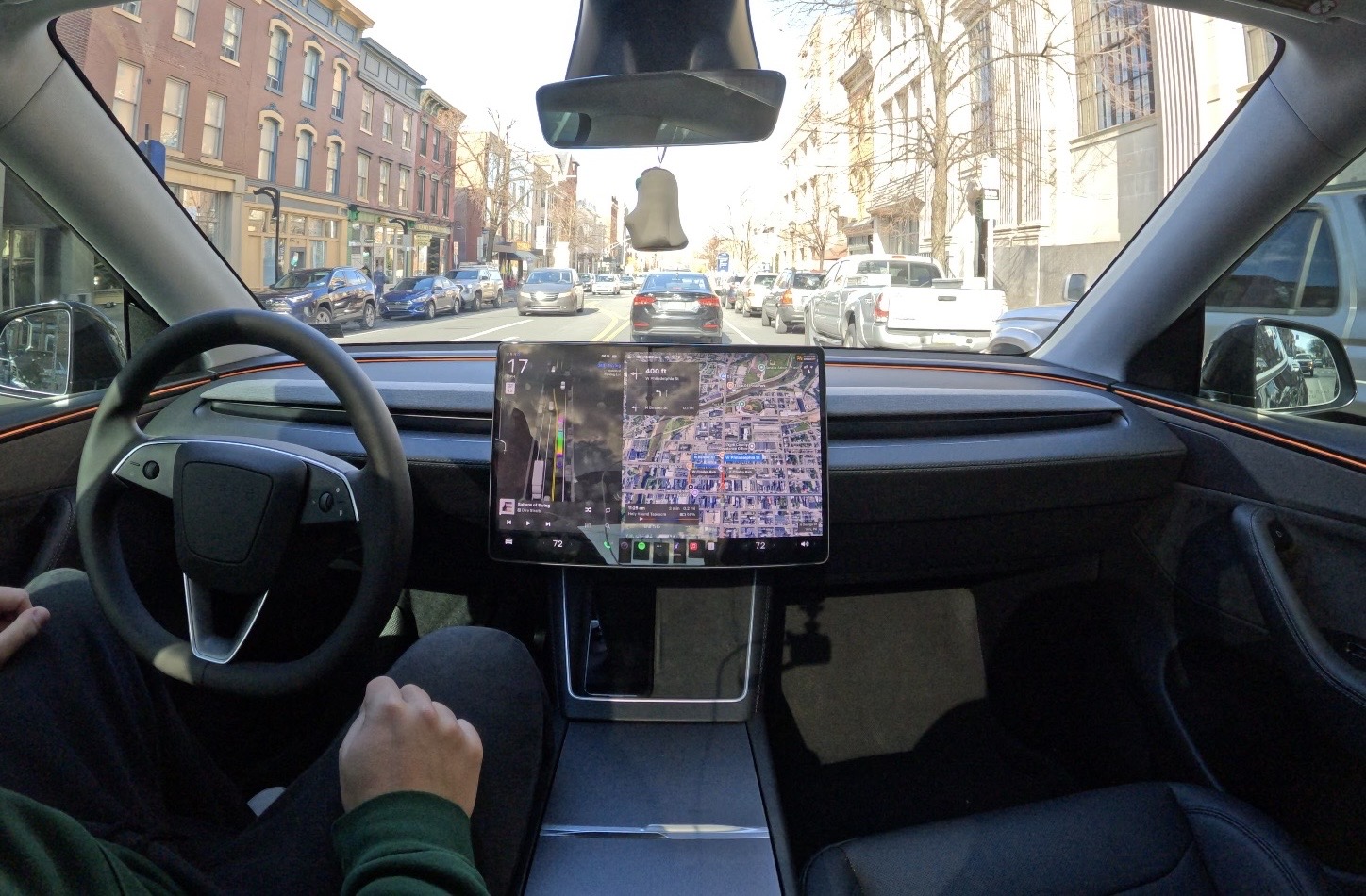
Elon Musk said in late November that he’s “tried to warn” legacy automakers and “even offered to license Tesla Full Self-Driving, but they don’t want it,” expressing frustration with companies that refuse to adopt the company’s suite, which will eventually be autonomous.
Tesla has long established itself as the leader in self-driving technology, especially in the United States. Although there are formidable competitors, Tesla’s FSD suite is the most robust and is not limited to certain areas or roadways. It operates anywhere and everywhere.
The company’s current position as the leader in self-driving tech is being ignored by legacy automakers, a parallel to what Tesla’s position was with EV development over a decade ago, which was also ignored by competitors.
The reluctance mirrors how legacy automakers initially dismissed EVs, only to scramble in catch-up mode years later–a pattern that highlights their historical underestimation of disruptive innovations from Tesla.
Elon Musk’s Self-Driving Licensing Attempts
Musk and Tesla have tried to push Full Self-Driving to other car companies, with no true suitors, despite ongoing conversations for years. Tesla’s FSD is aiming to become more robust through comprehensive data collection and a larger fleet, something the company has tried to establish through a subscription program, free trials, and other strategies.
Tesla CEO Elon Musk sends rivals dire warning about Full Self-Driving
However, competing companies have not wanted to license FSD for a handful of speculative reasons: competitive pride, regulatory concerns, high costs, or preference for in-house development.
Déjà vu All Over Again
Tesla tried to portray the importance of EVs long ago, as in the 2010s, executives from companies like Ford and GM downplayed the importance of sustainable powertrains as niche or unprofitable.
Musk once said in a 2014 interview that rivals woke up to electric powertrains when the Model S started to disrupt things and gained some market share. Things got really serious upon the launch of the Model 3 in 2017, as a mass-market vehicle was what Tesla was missing from its lineup.
This caused legacy companies to truly wake up; they were losing market share to Tesla’s new and exciting tech that offered less maintenance, a fresh take on passenger auto, and other advantages. They were late to the party, and although they have all launched vehicles of their own, they still lag in two major areas: sales and infrastructure, leaning on Tesla for the latter.
I’ve tried to warn them and even offered to license Tesla FSD, but they don’t want it! Crazy …
When legacy auto does occasionally reach out, they tepidly discuss implementing FSD for a tiny program in 5 years with unworkable requirements for Tesla, so pointless. 🤷♂️
🦕 🦕
— Elon Musk (@elonmusk) November 24, 2025
Musk’s past warnings have been plentiful. In 2017, he responded to critics who stated Tesla was chasing subsidies. He responded, “Few people know that we started Tesla when GM forcibly recalled all electric cars from customers in 2003 and then crushed them in a junkyard,” adding that “they would be doing nothing” on EVs without Tesla’s efforts.
Companies laughed off Tesla’s prowess with EVs, only to realize they had made a grave mistake later on.
It looks to be happening once again.
A Pattern of Underestimation
Both EVs and self-driving tech represent major paradigm shifts that legacy players view as threats to their established business models; it’s hard to change. However, these early push-aways from new tech only result in reactive strategies later on, usually resulting in what pains they are facing now.
Ford is scaling back its EV efforts, and GM’s projects are hurting. Although they both have in-house self-driving projects, they are falling well behind the progress of Tesla and even other competitors.
It is getting to a point where short-term risk will become a long-term setback, and they may have to rely on a company to pull them out of a tough situation later on, just as it did with Tesla and EV charging infrastructure.
Tesla has continued to innovate, while legacy automakers have lagged behind, and it has cost them dearly.
Implications and Future Outlook
Moving forward, Tesla’s progress will continue to accelerate, while a dismissive attitude by other companies will continue to penalize them, especially as time goes on. Falling further behind in self-driving could eventually lead to market share erosion, as autonomy could be a crucial part of vehicle marketing within the next few years.
Eventually, companies could be forced into joint partnerships as economic pressures mount. Some companies did this with EVs, but it has not resulted in very much.
Self-driving efforts are not only a strength for companies themselves, but they also contribute to other things, like affordability and safety.
Tesla has exhibited data that specifically shows its self-driving tech is safer than human drivers, most recently by a considerable margin. This would help with eliminating accidents and making roads safer.
Tesla’s new Safety Report shows Autopilot is nine times safer than humans
Additionally, competition in the market is a good thing, as it drives costs down and helps innovation continue on an upward trend.
Conclusion
The parallels are unmistakable: a decade ago, legacy automakers laughed off electric vehicles as toys for tree-huggers, crushed their own EV programs, and bet everything on the internal-combustion status quo–only to watch Tesla redefine the industry while they scrambled for billions in catch-up capital.
Today, the same companies are turning down repeated offers to license Tesla’s Full Self-Driving technology, insisting they can build better autonomy in-house, even as their own programs stumble through recalls, layoffs, and missed milestones. History is not merely rhyming; it is repeating almost note-for-note.
Elon Musk has spent twenty years warning that the auto industry’s bureaucratic inertia and short-term thinking will leave it stranded on the wrong side of technological revolutions. The question is no longer whether Tesla is ahead–it is whether the giants of Detroit, Stuttgart, and Toyota will finally listen before the next wave leaves them watching another leader pull away in the rear-view mirror.
This time, the stakes are not just market share; they are the very definition of what a car will be in the decades ahead.


Elon Musk
Elon Musk’s Boring Company has big plans for Las Vegas by year’s end
Elon Musk’s Boring Company says Vegas Loop stations will double by year end once again.

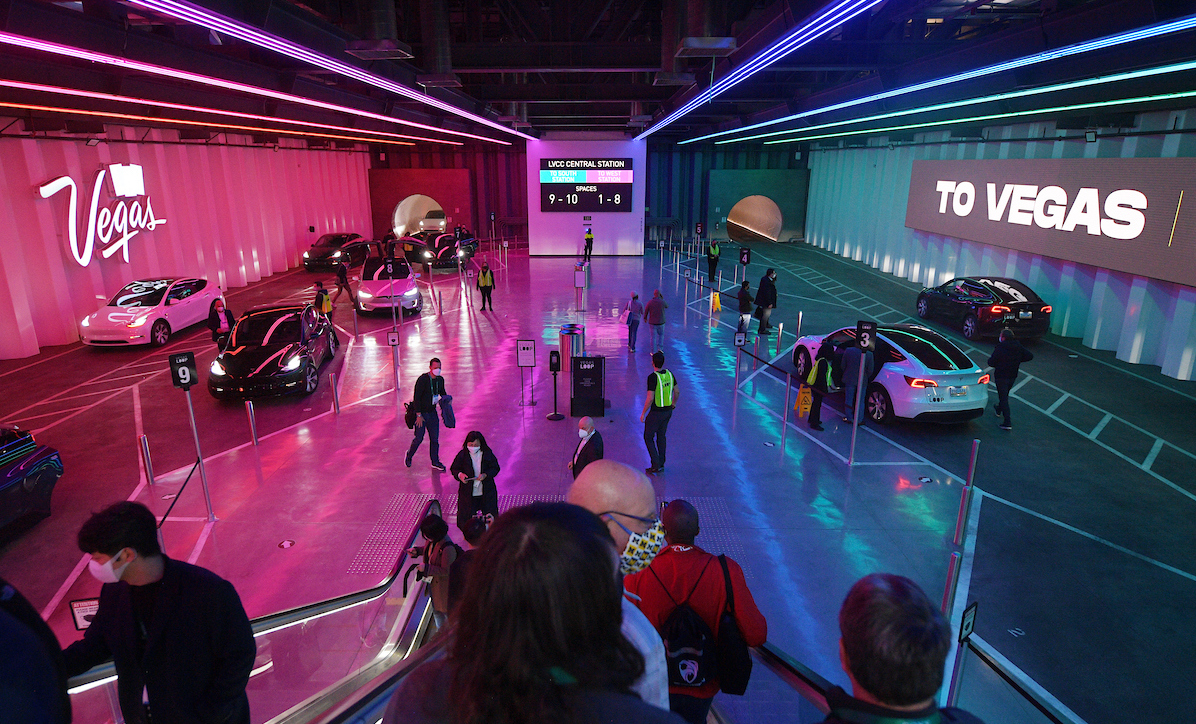
The Boring Company says the Vegas Loop’s station count will double by the end of the year, tying the target to a hiring push for drivers and operations managers in Las Vegas. “Vegas Loop is getting bigger – the station count will double by end of year!” the company wrote in a post on X, attaching listings for a Loop driver and a senior Loop operations manager.
The number checks out against what’s already public, with the Vegas Loop currently running 14 operational stations, while the Boring Company’s own project page lists 28 as the target for the end of 2026.
Vegas Loop is getting bigger – the station count will double by end of year!
Urgently hiring exceptional and enthusiastic Drivers and Ops Managers.
Apply here!
Driverhttps://t.co/ZUPXBYTONb
Senior Loop Ops Managerhttps://t.co/mV6V22V8jH pic.twitter.com/IZ9FqIw8WY
— The Boring Company (@boringcompany) September 14, 2026
Much of that growth is tied to tunnels that are already built and waiting on an opening date. A roughly two-mile dual tunnel system under Paradise Road, connecting Westgate to a planned station at 4744 Paradise Road, is expected to open in stages over the coming weeks, Las Vegas Convention and Visitors Authority chief executive Steve Hill told the Review-Journal last week. New stations at 4744 Paradise, Virgin Hotels Las Vegas, and the former Gordon Biersch site would come online with it, several of them built to speed up rides to Harry Reid International Airport ahead of Formula 1’s Las Vegas Grand Prix.
Clark County entitled Vegas Loop for 123 stations after approving 19 more in August, as Teslarati reported at the time. Entitlement and construction move at different speeds on this project, so county approval alone does not guarantee a station opens on any particular schedule.
Clark County approved 18 additional stations back in 2023, part of a plan that pushed the system’s target to 69 stations across 65 miles, doubling the network on paper for the first time. The target kept climbing after that, to roughly 93 stations by the end of that year and 104 by last year, before August’s vote pushed it to 123. This week’s announcement is the first time that doubling language has been attached to stations actually running rather than stations merely approved on a county map.
Ridership gives some sense of what a denser network could carry. Boring Company executive Mike Baier said in July that the Vegas Loop already moves around 40,000 passengers on busy convention days, a total that tops most light rail systems in the country despite the system running on a fraction of its planned tunnel mileage. Company leadership has projected ridership could triple or quadruple once the airport connector tunnels fully open.
Boring Company did not say which stations beyond those already under construction would open by year end, or whether the hiring push points to a fleet expansion alongside the new stops.
Elon Musk
Elon Musk’s companies made up with Apple but OpenAI still on the hook
Elon Musk’s X Corp and SpaceXAI dropped their Apple antitrust suit, leaving OpenAI as defendant.
X Corp and SpaceXAI, Elon Musk’s social platform and AI venture, have dropped Apple from the antitrust lawsuit that they filed against the iPhone maker and OpenAI last year. In a filing in the U.S. District Court for the Northern District of Texas, attorneys for X and SpaceXAI moved to dismiss the Apple portion of the case, first reported by Reuters. The filing does not explain why the companies are dropping Apple or say whether a settlement was reached.
X and SpaceXAI say they intend to keep pursuing the case against OpenAI, which remains a defendant. That resolves the dispute with one company while leaving the core allegation intact against the other, with no public accounting of what changed in between.
The lawsuit dates to August 2025, when xAI and X sued Apple and OpenAI, arguing that Apple’s decision to make ChatGPT the only generative AI chatbot built into iOS gave OpenAI an unfair structural advantage. The complaint claimed ChatGPT controlled roughly 80 percent of the chatbot market at the time, while Grok held only a few percent. It sought billions of dollars in damages and asked the court to unwind the arrangement.
Elon Musk’s xAI and X file antitrust suit against Apple and OpenAI over AI exclusivity
The filing followed weeks of Musk publicly complaining that Grok and X weren’t appearing in Apple’s “Must Have” App Store section, though Grok ranked second in the Productivity category and X ranked first in News at the time. He accused Apple of “playing politics” and warned of immediate legal action before following through days later.
Apple and OpenAI tried to get the case thrown out, but a federal judge denied both motions in November, ruling the dispute was better suited to summary judgment than an early dismissal. That decision sent the case into discovery, which is presumably what led to Monday’s filing.
Hey @Apple App Store, why do you refuse to put either 𝕏 or Grok in your “Must Have” section when 𝕏 is the #1 news app in the world and Grok is #5 among all apps?
Are you playing politics? What gives? Inquiring minds want to know. https://t.co/3wenLZGtwG
— Elon Musk (@elonmusk) August 11, 2025
The timing is notable given how Musk’s sentiment toward Apple has shifted, with Musk noting that he was open to letting Grok power a revamped Siri after a user suggested Apple replace its aging assistant with xAI’s model.
xAI, the AI venture Musk folded into X Corp last year, has since combined with SpaceX under the SpaceXAI brand. That structure now puts X, Grok and SpaceX’s rocket and satellite businesses under one roof as Musk pushes his AI ambitions beyond chatbots.
OpenAI remains the sole defendant going forward, and Musk’s companies have not said if there’s any changes to those original claims. Apple and OpenAI did not immediately respond to requests for comment on the filing.
Elon Musk
Tesla gives the Roadster an official “Go for launch” demonstration date
Tesla teased an October 1 Roadster reveal, reviving years of delayed SpaceX thruster hover promises.
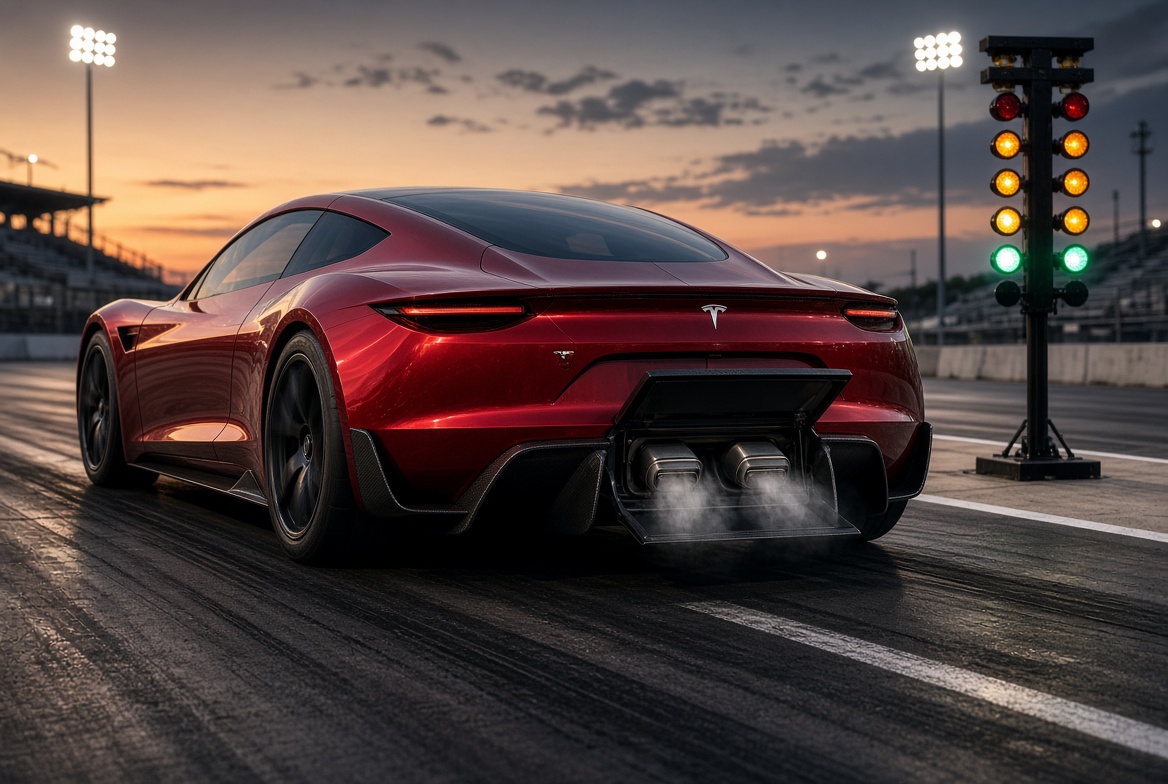
Tesla teased an October 1 event date for its next generation Roadster, posting an image on X Saturday that shows the car lit up like it is sitting on a launch pad, with the date “10.01” stamped across the bottom and the caption “Go for launch.” A countdown clock on Tesla’s Roadster order page now points to the same date, which falls on a Thursday. The company has not said where the event will happen or whether it will be streamed at the moment. Stay with us @Teslarati for live updates.
Go for launch pic.twitter.com/Khu03eiZ04
— Tesla (@Tesla) September 12, 2026
Tesla has since sent formal invitations to reservation holders confirming the event will take place in Waco, Texas, about 90 minutes north of its Austin headquarters, based on a digital ticket shared on X by Sawyer Merritt. Tesla did not name the exact venue, though Waco sits close to SpaceX’s McGregor, Texas, rocket test site, previously reported as the planned location for a Roadster thruster demonstration. The invite sets the reveal for 8:30 p.m. Eastern on October 1, requires RSVPs by midnight on September 16, and limits entry to guests 21 and older. Invitations are non-transferable.
The tease follows nine years of a project defined by unimaginable specs along with slipped dates. Musk first showed the second generation Roadster in November 2017 as a surprise reveal at the end of the Tesla Semi event, promising a 0 to 60 mph time under two seconds, a top speed above 250 mph, 620 miles of range from a 200 kWh battery, and production starting in 2020. At last November’s shareholder meeting, Musk set an April 1 demo date and joked the choice gave him “deniability” if it slipped again, which it did, moving first to late April, then to “a month or so,” then to August.
Tesla Roadster SpaceX Package’s 1.1-second 0-60 mph launch visualized in concept video
Whatever Tesla shows on October 1 is expected to center on the SpaceX developed thruster package Musk has described since 2018. Internally code named A71, a nod to the Lockheed SR-71 Blackbird, the system reportedly uses cold gas thrusters fed by a composite overwrapped pressure vessel, the same tank design SpaceX uses on Falcon 9. Musk has said a thruster equipped Roadster could hit 60 mph in about 1.1 seconds under roughly 2.75 g of launch force, well past the 1.9 second figure quoted for the standard car. That version reportedly will not be street legal and has reportedly been discussed as a limited run sold through a track only program.
The standard Roadster is still expected to carry the original $200,000 base price and $250,000 Founders Series tier, both set when Tesla opened $50,000 and $250,000 reservations in 2017. Tesla VP of Vehicle Engineering Lars Moravy has confirmed production will happen at Gigafactory Texas, with Musk targeting 2027 or 2028, 12 to 18 months after whatever the company demonstrates next month.

Elon Musk’s Boring Company has big plans for Las Vegas by year’s end

Tesla looks to expand into new Asian market, strengthening presence


