News
Tesla shocks with latest Robotaxi testing move
Why Tesla has chosen to use a couple of Model S units must have a reason; the company is calculated in its engineering and data collection efforts, so this is definitely more than “we just felt like giving our drivers a change of scenery.”

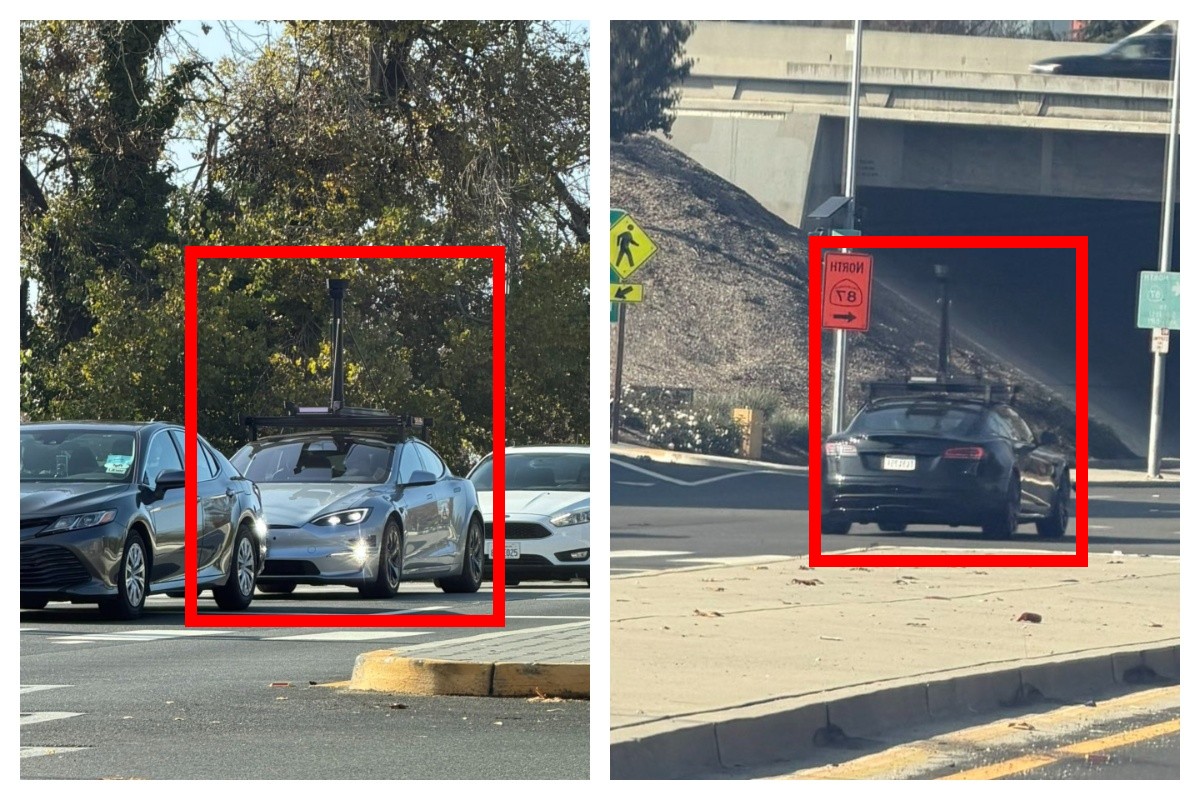
Tesla Model S vehicles were spotted performing validation testing with LiDAR rigs in California today, a pretty big switch-up compared to what we are used to seeing on the roads.
Tesla utilizes the Model Y crossover for its Robotaxi fleet. It is adequately sized, the most popular vehicle in its lineup, and is suitable for a wide variety of applications. It provides enough luxury for a single rider, but enough room for several passengers, if needed.
However, the testing has seemingly expanded to one of Tesla’s premium flagship offerings, as the Model S was spotted with the validation equipment that is seen entirely with Model Y vehicles. We have written several articles on Robotaxi testing mules being spotted across the United States, but this is a first:
🚨 Tesla is using Model S vehicles fitted with LiDAR rigs to validate FSD and Robotaxi, differing from the Model Ys that it uses typically
Those Model Y vehicles have been on the East Coast for some time. These Model S cars were spotted in California https://t.co/CN9Bw5Wma8 pic.twitter.com/UE55hx5mdd
— TESLARATI (@Teslarati) December 11, 2025
Why Tesla has chosen to use a couple of Model S units must have a reason; the company is calculated in its engineering and data collection efforts, so this is definitely more than “we just felt like giving our drivers a change of scenery.”
It seems to hint that Tesla could add a premium, more luxury offering to its Robotaxi platform eventually. Think about it: Uber has Uber Black, Lyft has Lyft Black. These vehicles and services are associated with a more premium cost as they combine luxury models with more catered transportation options.
Tesla could be testing the waters here, and it could be thinking of adding the Model S to its fleet of ride-hailing vehicles.
Reluctant to remove the Model S from its production plans completely despite its low volume contributions to the overall mission of transitioning the world to sustainable energy, the flagship sedan has always meant something. CEO Elon Musk referred to it, along with its sibling Model X, as continuing on production lines due to “sentimental reasons.”
However, its purpose might have been expanded to justify keeping it around, and why not? It is a cozy, premium offering, and it would be great for those who want a little more luxury and are willing to pay a few extra dollars.
Of course, none of this is even close to confirmed. However, it is reasonable to speculate that the Model S could be a potential addition to the Robotaxi fleet. It’s capable of all the same things the Model Y is, but with more luxuriousness, and it could be the perfect addition to the futuristic fleet.


Elon Musk
Elon Musk’s AI Grok Bot can now handle banking while your Tesla FSD handles the road
Elon Musk says Grok Bot can manage your finances through linked bank and investment accounts.

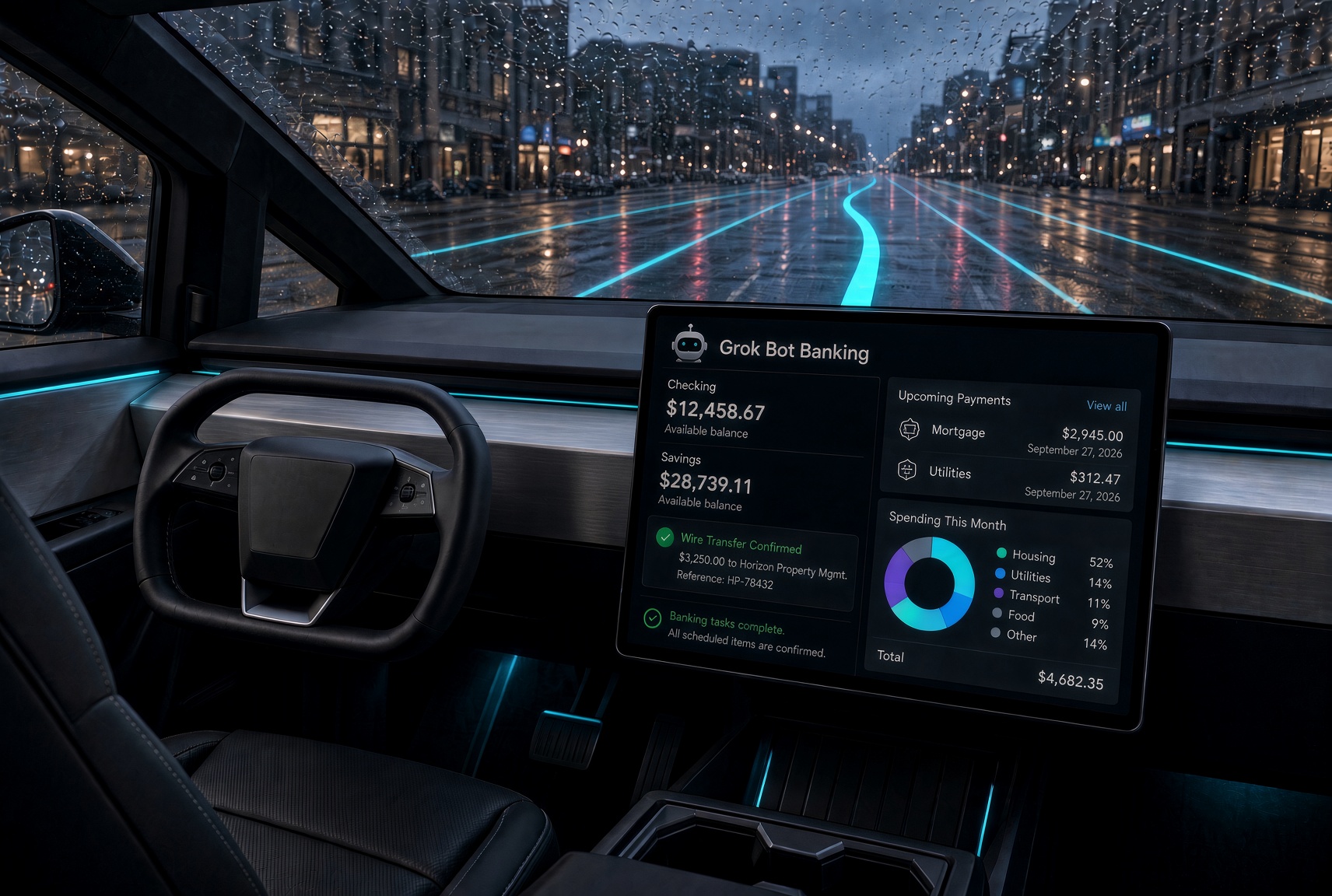
Grok Bot now wants access to your wallet, with SpaceXAI rolling out a new Finance integration for its agent platform that lets users link bank, credit card and investment accounts thereby letting their Bots help manage spending, investments and more. Elon Musk amplified the announcement on X with a short endorsement, “Grok Bot can manage your finances.”
The feature builds on two earlier steps. In early September, Grok gained the ability to answer questions about spending, savings, investments and cash flow using accounts connected through Plaid, starting with users in the U.S. Before that, on August 28, SpaceXAI let Grok Bot buy things online through Link, with users approving every spend request and the Bot receiving a single use card for each payment.
Musk has already shown how far he wants users to push it. In late August, when Tesla investor account Teslaconomics said he was weighing whether to give Grok Bot access to his bank accounts, Musk replied, “Try it out. If Grok Bot messes up, we will make you whole.” That promise goes beyond SpaceXAI’s consumer terms, which make users responsible for what their agents do and generally cap the company’s liability at the greater of fees paid or $100. SpaceXAI’s own documentation recommends requiring approval for purchases and financial transfers.
For Tesla owners, the update lands five days after Tesla brought Grok Bot into its vehicles, letting drivers hand off errands by voice while FSD (Supervised) handles the road. Bot access inside the car is currently limited to SuperGrok Heavy subscribers, though Connectors are open to anyone signed into Grok. With Finance linked, a driver could ask for a spending summary or a check on upcoming bills during the commute.
Grok’s role in the car has grown quickly since Tesla’s Summer Update let it control cabin features by voice. We have been using Grok Bot in our own Tesla for several weeks, and here’s how our latest test went.
Elon Musk
SpaceX just got the green light Starship has waited years for
The FAA has cleared Starship Flight 14, setting up SpaceX’s first orbital attempt on Monday.
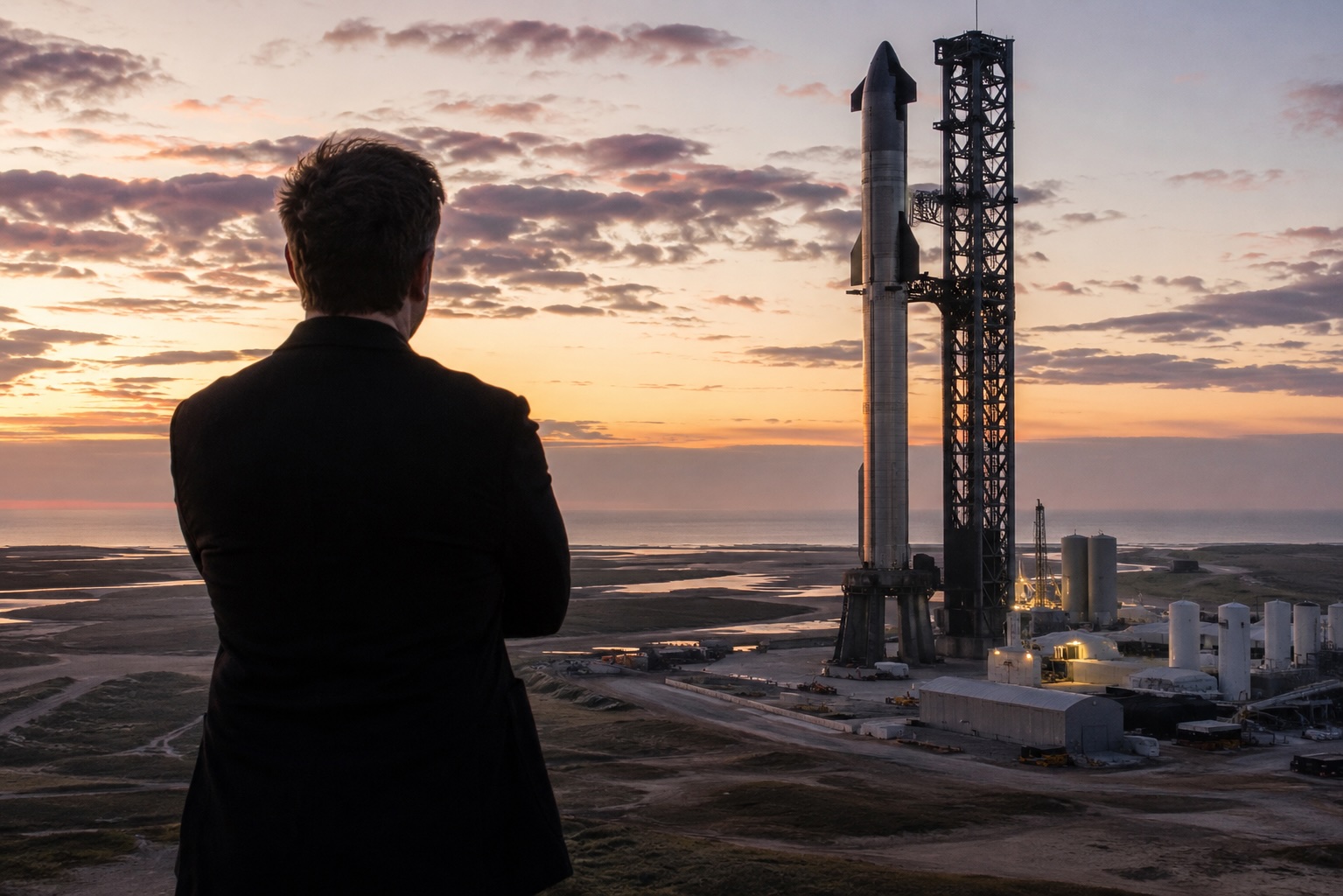
SpaceX has cleared the last regulatory hurdle standing between Starship and its first trip to orbit. The Federal Aviation Administration issued the launch license for Starship Flight 14 late Saturday, keeping the mission on track for liftoff Monday, September 28, from Pad 2 at Starbase, Texas.
The 75 minute launch window opens at 7:15 a.m. Central, and Boca Chica Beach closures are also scheduled for September 29 and 30 as backup dates. This will be Starship’s first revenue generating mission.
The license was the missing piece after SpaceX completed a full wet dress rehearsal with Booster 21 and Ship 41 on September 24. At the time, the company said the flight remained on track pending regulatory approval. Because Flight 14 flies an orbital profile, the FAA had to sign off on a modified license that met its safety, payload and financial responsibility requirements.
Observers combing through the new FAA paperwork also noticed that lightning no longer appears among Starship’s listed launch hazards. If that holds, it matters more for where Starship is headed than for Monday’s attempt. Florida and Louisiana, home to LC-39A and the planned Starbase Louisiana site, see some of the most frequent lightning in the United States.
SpaceX tells the FCC that Starship Flight 14 is going to orbit
Flight 14 is the mission SpaceX has been building toward for months. Ship 41 will carry 26 Starlink V3 satellites, the first operational V3 units to be deployed, and attempt roughly six orbits at about 275 kilometers over a flight lasting just under 10 hours. SpaceX says the ship will only perform its orbital insertion burn after flight controllers confirm enough hardware redundancy remains for the deorbit burn at the end of the mission. Ship 41 is targeting a splashdown in the Pacific west of Chile, while Super Heavy will return to the Gulf of Mexico.
The date carries some symbolism as well. A Monday launch would come 10 years and one day after Elon Musk first presented the Interplanetary Transport System, the design that became Starship, at the International Astronautical Congress in Guadalajara, Mexico.
SpaceX has not announced what comes next, but air traffic planning slides reported this week, list Flight 15 no earlier than October 19 and a first Starship launch from LC-39A in Florida no earlier than October 30. Both dates depend on how Monday goes.
News
SpaceX completes another secret Pentagon launch, adding to suspected Starshield buildout
SpaceX launched the classified USSF-385 mission from Vandenberg, landing its booster on a tenth flight.

SpaceX launched another classified mission for the U.S. Space Force from California early Saturday morning, and the Falcon 9 booster that carried it landed on a drone ship in the Pacific for the tenth time. The USSF-385 mission lifted off from Space Launch Complex 4E at Vandenberg Space Force Base at 7:00 a.m. PT.
Booster B1100 touched down on Of Course I Still Love You roughly eight and a half minutes after liftoff. It was the booster’s tenth flight and tenth successful landing, following the NROL-95 national security mission and eight Starlink launches. Its previous flight, a Starlink Group 15 mission on August 22, came just 35 days earlier. SpaceX ended its livestream shortly after the landing, which is standard for classified payloads, and neither the company nor the Space Force has said what the rocket carried.
Watch Falcon 9 launch the USSF-385 mission from pad 4E in California https://t.co/CAdbx85Ydy
— SpaceX (@SpaceX) September 26, 2026
USSF-385 is the fourth Space Force launch from the same Vandenberg pad in roughly six weeks, following USSF-366 on August 15, USSF-153 on September 10, and USSF-259 on September 17. When SpaceX flew USSF-366 in August, independent trackers noted that the rocket’s stage drop zones matched SpaceX’s Starlink Group 15 missions, pointing to Starshield, the government version of the Starlink satellite bus. The Space Force later cataloged 23 satellites after both USSF-366 and USSF-153, while USSF-259 placed 17 satellites into a different orbital plane, per KeepTrack. Launch databases describe USSF-385 the same way, though the payload remains officially unidentified.
The cadence lines up with the contracts, because in July, the Space Force awarded SpaceX $1.6 billion in task orders for 18 Falcon 9 missions from Vandenberg through the end of 2027. SpaceX also holds contracts to build pieces of that same network, which pushed its Pentagon contract total for 2026 past $8 billion.
Saturday’s flight was also the sixth and final Falcon 9 launch from Vandenberg in September, according to Spaceflight Now, while only one Falcon 9 flew from the East Coast this month as SpaceX shifts its Florida infrastructure toward Starship. Launch trackers list it as SpaceX’s 112th mission of 2026 and the 108th Falcon 9 flight of the year, with SLC-4E turned around about six and a half days after its previous launch.
The West Coast pad will not stay quiet for long, considering SpaceX has another Starlink mission scheduled from SLC-4E on September 30. Meanwhile, in Texas, the company is two days away from Starship Flight 14, which is targeting Monday at 7:15 a.m. CT for the vehicle’s first attempt to reach orbit.

Elon Musk’s AI Grok Bot can now handle banking while your Tesla FSD handles the road

SpaceX just got the green light Starship has waited years for


