Elon Musk
Countdown: America is going back to the Moon and SpaceX holds the key to what comes after
NASA’s Artemis II launches Wednesday, sending humans near the Moon for the first time since 1972.

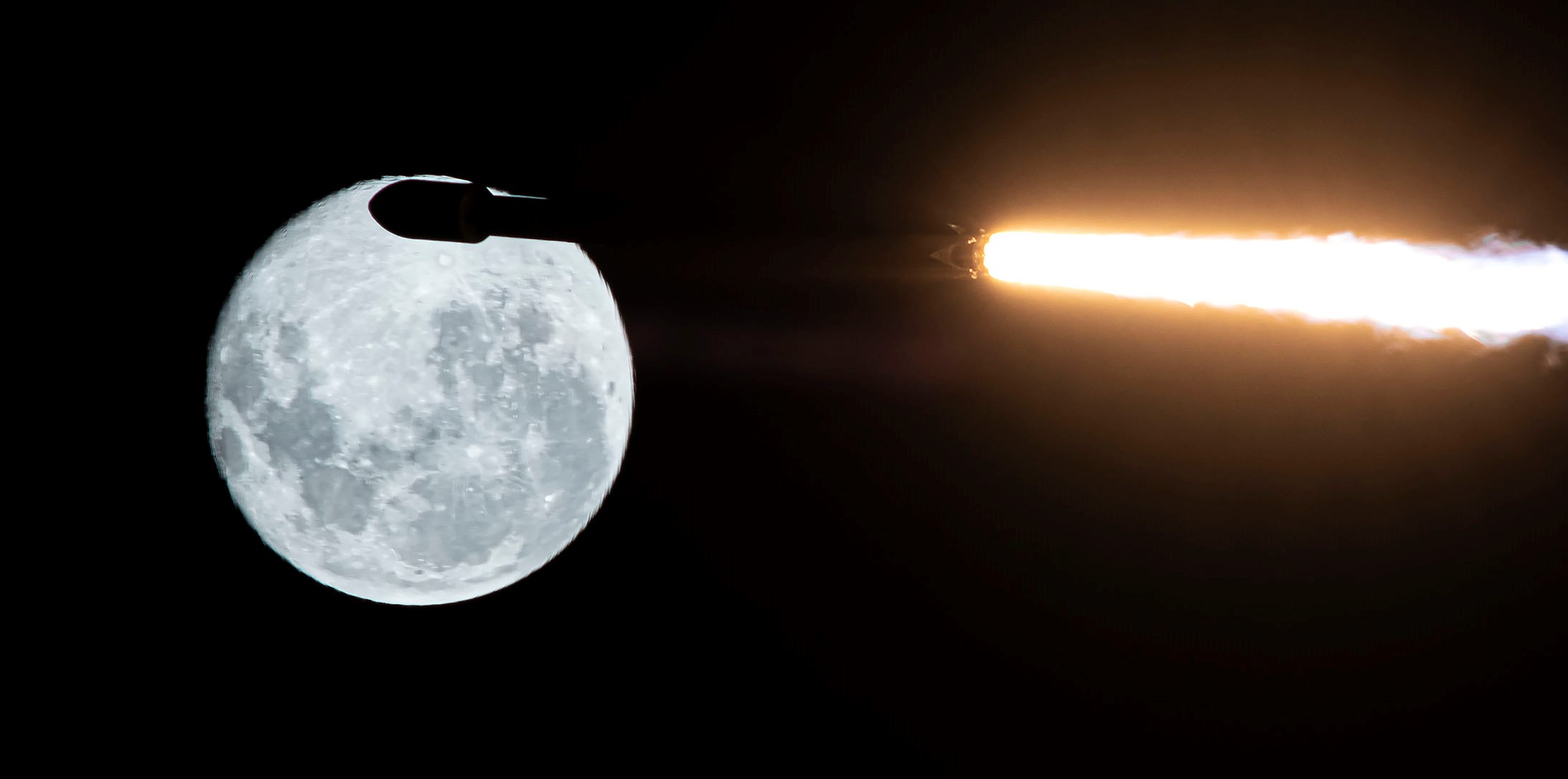
For the first time since Apollo 17 touched down on the lunar surface in December 1972, the United States is sending humans back toward the Moon. NASA’s Artemis II mission is set to launch as early as this week from Kennedy Space Center in Florida, carrying four astronauts on a 10-day journey around the Moon and back to Earth. It will not land anyone on the surface this time, but it is the first crewed flight in over half a century to travel beyond low Earth orbit, and it sets the stage for Elon Musk’s SpaceX missions to follow.
The mission uses NASA’s Space Launch System rocket and the Orion spacecraft, which will fly around the Moon before splashing down in the Pacific Ocean around April 10. For context, an uncrewed Artemis I flew the same path in 2022, proving the hardware worked. Artemis II now tests it with people aboard.
According to NASA’s official countdown blog, launch preparations are on track with an 80 percent chance of favorable weather. “Hey, let’s go to the moon!” Commander Wiseman told reporters upon arriving at Kennedy Space Center.
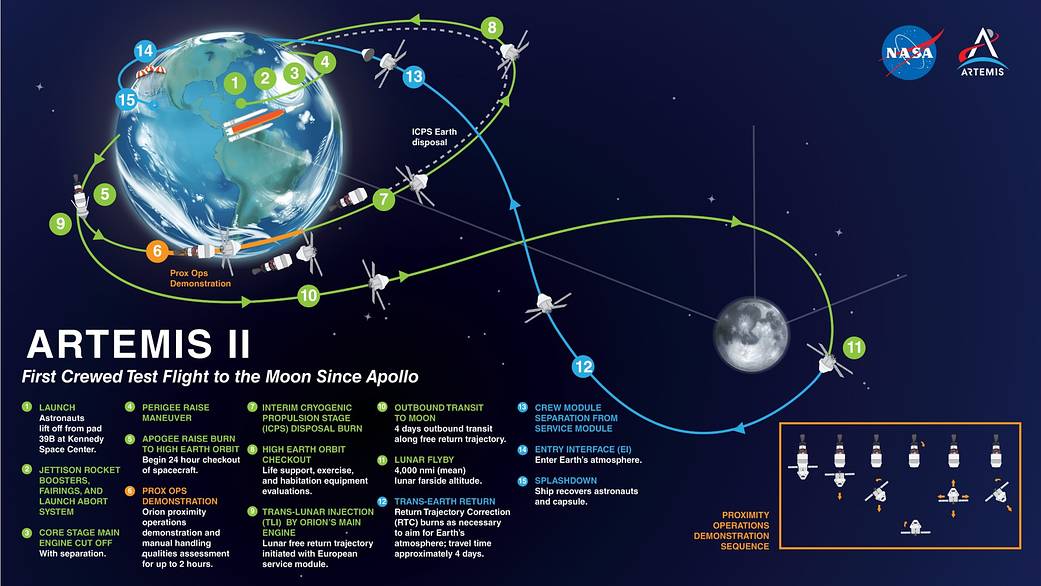
Source: NASA
Beyond Artemis II lies the lander question, and that is where SpaceX enters directly. In 2021, NASA awarded SpaceX a $2.89 billion contract to develop the Starship Human Landing System, a modified version of Starship designed to ferry astronauts from lunar orbit to the surface. The original plan called for SpaceX to deliver that lander for Artemis III, which was to be the first crewed lunar landing. Timing for Starship development, however, caused NASA to restructure the mission sequence entirely.
Before SpaceX’s Starship Human Landing System (HLS) can put anyone on the Moon, it has to solve a problem no rocket has demonstrated at scale, which is refueling in orbit. Because the Starship HLS requires approximately ten tanker launches worth of propellant loaded into a depot in low Earth orbit before it has enough fuel to reach the lunar surface, SpaceX plans to conduct this refueling process using its upgraded V3 Starship. And until that demonstration flies and succeeds, the Starship moon lander remains a question mark.
SpaceX’s Starship V3 is almost ready and it will change space travel forever
In February 2026, NASA Administrator Jared Isaacman confirmed that Artemis III, now planned for mid-2027, and will instead test lunar landers in low Earth orbit, with the actual landing pushed to Artemis IV that’s targeted for 2028.
Musk responded to earlier criticism of SpaceX’s schedule by posting on X that his company is “moving like lightning compared to the rest of the space industry,” and added that “Starship will end up doing the whole Moon mission.” The contract competition was also reopened in October 2025 by then NASA chief Sean Duffy, who cited Starship’s delays and said the agency needed speed given China’s own stated goal of landing astronauts on the Moon by 2030.
They won’t. SpaceX is moving like lightning compared to the rest of the space industry.
Moreover, Starship will end up doing the whole Moon mission. Mark my words.
— Elon Musk (@elonmusk) October 20, 2025
Artemis came from the first Trump administration’s 2017 Space Policy Directive 1, which directed NASA to return humans to the Moon. The program picked up pace through the 2020s, with the Orion spacecraft and SLS taking years to develop at enormous costs. SpaceX entered the picture in 2021 as the chosen lander contractor, tying the commercial space sector into what had historically been an all government undertaking.
Whether SpaceX’s Starship ultimately carries astronauts to the lunar surface or shares that role with Blue Origin’s competing lander, this week’s Artemis II launch is the necessary first step. Getting four humans to the Moon’s vicinity and back safely is the proof of concept everything else depends on.


Elon Musk
Nvidia’s board meets on Jensen Huang, and Elon Musk already has an answer
Elon Musk says it would be an honor to hire Jensen Huang amid Nvidia turmoil.
Elon Musk says he would welcome Jensen Huang at one of his companies if Nvidia’s board decides to push out its longtime chief executive.
On Wednesday evening, the financial account ZeroHedge posted “Elon please hire Jensen” on X. Musk replied roughly two hours later: “That would be an honor.” Neither Huang nor Nvidia had responded publicly as of Wednesday night.
Musk’s reply came as Nvidia’s board met to decide Huang’s future. The Wall Street Journal reported that directors were preparing to oust him following reports of two extramarital relationships. One involves Alice Huang, a Singapore-based businesswoman whom U.S. intelligence officials reportedly believe was working for China’s Ministry of State Security. The New York Times separately reported a relationship with Kimberly Powell, Nvidia’s vice president of health care. Huang acknowledged being unfaithful in a memo to employees on Sunday but gave no details.
@zerohedge That would be an honor
— Elon Musk (@elonmusk) November 12, 2026
Under Nvidia’s bylaws, a majority of its 11 directors can remove the CEO with or without cause. Bloomberg reported that the board has been working with an outside firm on possible replacements and may name an interim chief, with CFO Colette Kress seen as the likely pick. Nvidia shares fell more than 8 percent in extended trading, according to CNBC, and the company is scheduled to report quarterly earnings on November 17.
Musk has more riding on Nvidia’s leadership than most tech executives. In August, he told investors on SpaceX’s first earnings call as a public company that it would build its AI infrastructure exclusively on Nvidia hardware, calling Vera Rubin “the best architecture.” SpaceX is also working with Nvidia on the compute payload for Starmind, its planned orbital AI constellation. In October, SpaceX said it had a binding commitment for a roughly $40 billion lease of Vera Rubin GPUs and related equipment, with the leases expected to begin in the first half of 2027.
The scale of that dependence is already enormous. On its Q3 call, SpaceX said it was bringing roughly 200,000 to 220,000 Nvidia GB300 GPUs online each month and expects 2.5 to 3 GW of nameplate compute by the end of the year. That buildout is now reaching new sites like the proposed $24 billion power plant and supercomputer campus at Starbase.
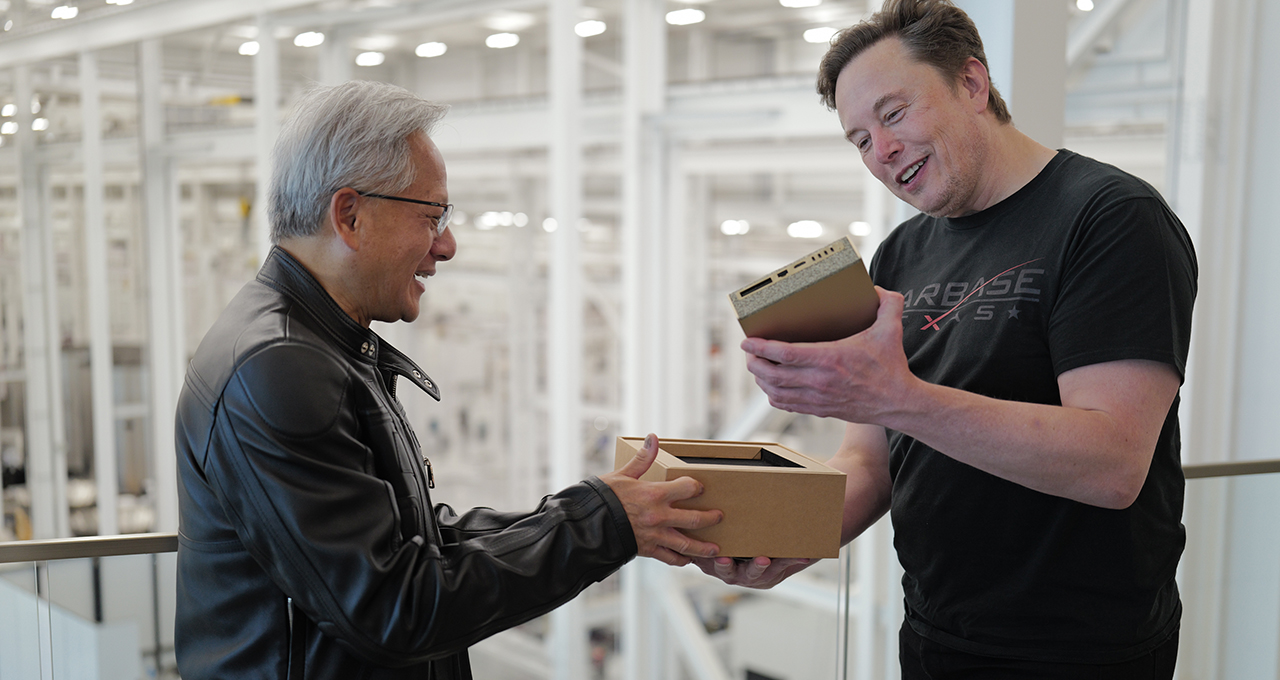
The relationship between the two executives also goes back nearly a decade. Huang has often told the story of personally delivering Nvidia’s first DGX-1 AI supercomputer to Musk in 2016, when no other customer wanted one. “Nobody wanted to be part of it, except for Elon,” Huang said on the Joe Rogan Experience last December.
Musk did not say what role Huang might fill, and his reply stops short of a formal offer. Huang co-founded Nvidia in 1993 and still owns about 3.6 percent of its stock, so any move to a Musk company would depend on whether, and how, he leaves the chipmaker he has run for more than three decades.
Elon Musk
SpaceX’s $24B Starbase supercomputer plan slipped past a key roadblock
SpaceX wants a Starbase tax break for a $24 billion gas plant and supercomputer campus.
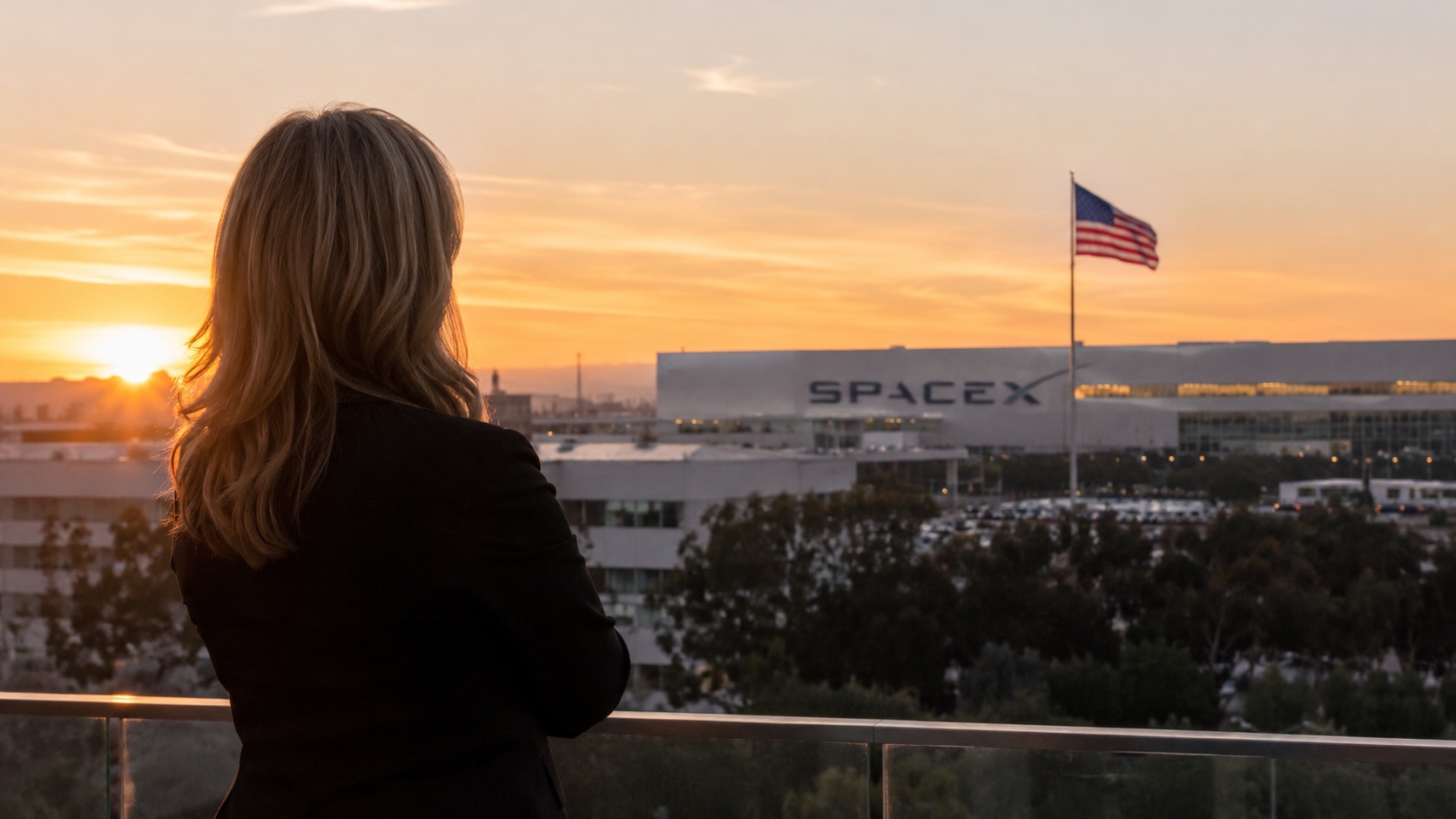
SpaceX is asking its own company town for a tax break on a $24 billion natural gas power plant and supercomputing facility at Starbase, Texas, and the land it picked sits just outside the reach of a data center moratorium that took effect in neighboring Brownsville last week.
A City of Starbase public hearing notice says SpaceX “proposes to construct, own, and operate a gas-fired power plant and super-compute facility” on roughly 444 acres between Boca Chica Boulevard and the Port of Brownsville. The $24 billion figure covers only the initial phases, and the notice leaves room for future expansions. The Starbase City Commission will consider a property tax abatement and a related economic development agreement at a 7 p.m. hearing on December 9. The notice does not disclose the size or length of the abatement, or how much computing capacity the site would hold.
The location has a history. Over the summer, SpaceX asked Brownsville to remove the tract from its city limits and offered $220 million for water and wastewater projects in return. Brownsville approved the move in August, and Starbase later annexed the land. Brownsville’s own 90-day pause on data center applications took effect last week, and had the tract stayed inside the city, the project likely would have needed a different home.
The power side is already in front of state regulators. SpaceX has applied to the Texas Commission on Environmental Quality for air permits covering 35 mobile gas turbines producing roughly 750 megawatts, according to Politico, which also noted that two of the three Starbase commissioners voting on the incentives are SpaceX executives.
Building its own plant lets SpaceX skip the Texas grid. Gov. Greg Abbott paused new data center grid connections in August pending an audit, but a facility that generates its own electricity does not need one. The air permit still has to clear the TCEQ, where Abbott also ordered a halt on data center permits.
The bigger test arrives in January. Governor-elect Gina Hinojosa, who unseated Abbott last week, has said she will block data center approvals until the legislature passes new protections, and she has already asked state officials to hold off on any sale of Boca Chica State Park to SpaceX until she is sworn in. Tesla and SpaceX shares both fell the day after the election, and Musk’s first reaction on X was “Data centers in space looking pretty appealing right now.”
That line points to Starmind, SpaceX’s orbital compute constellation. Musk has said terrestrial compute will be “peanuts compared to orbital compute” and expects monthly orbital deployments to pass ground deployments around the end of 2028, as Teslarati reported. Until then, SpaceX still needs gigawatts on the ground. It ended the third quarter with 1.7 GW of nameplate compute, is targeting 2.5 to 3 GW by the end of this year and wants at least 10 GW more in 2027. Its existing Colossus sites around Memphis already run on gas turbines and face a lawsuit from residents over emissions.
Local reaction is split. The South Texas Environmental Justice Network has announced a protest, citing air quality, water use and energy bills, while some Brownsville residents told the Tribune they welcome the jobs. SpaceX did not respond to the Tribune’s questions about the project.

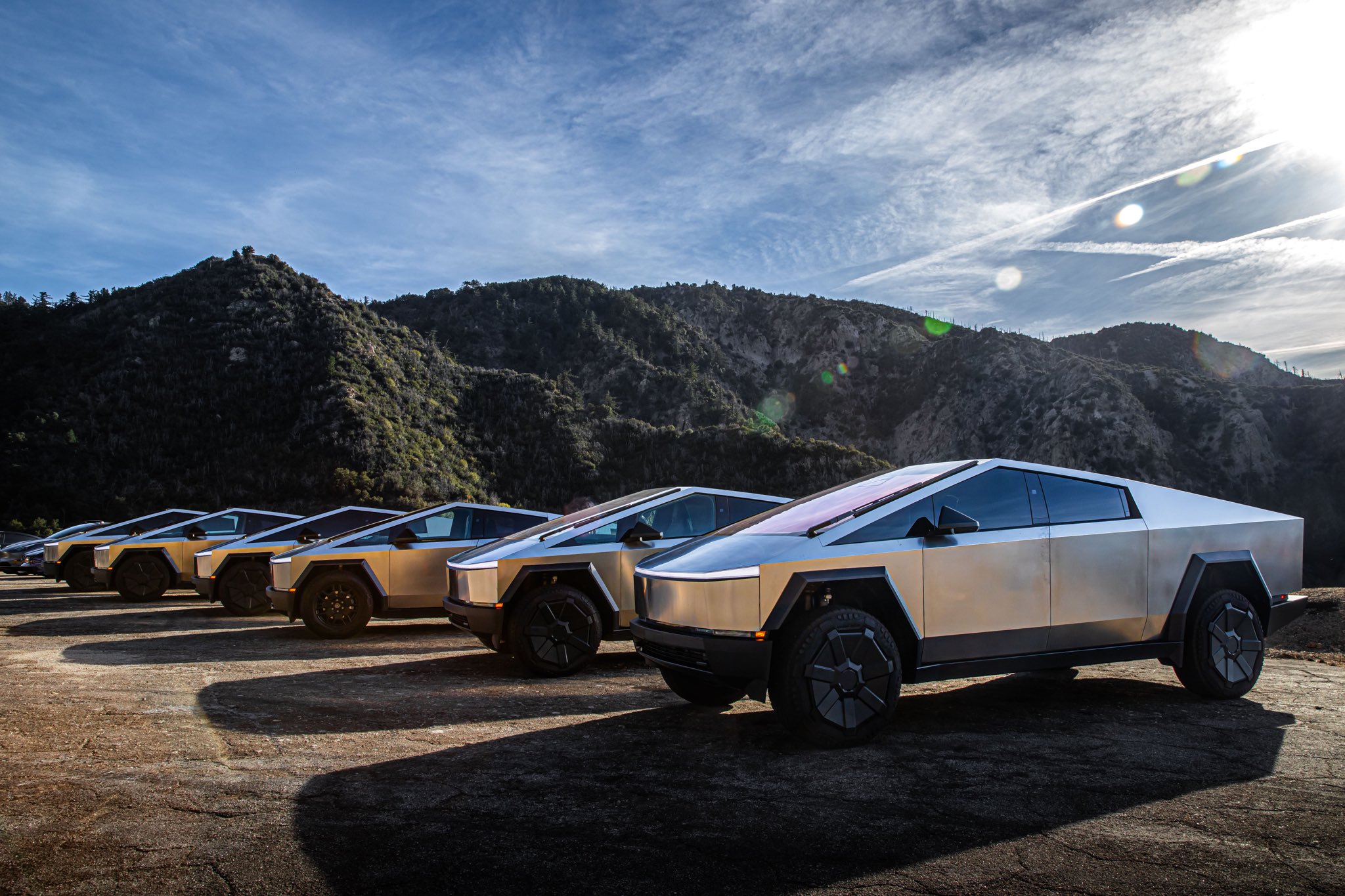
Tesla CEO Elon Musk announced that the company will extend Cybertruck production slightly to handle its extensive order backlog.
On Wednesday, Musk announced that “In order to work through more of the Cybertruck order backlog, production will be extended through the end of summer 2027.”
In order to work through more of the Cybertruck order backlog, production will be extended through the end of summer 2027
— Elon Musk (@elonmusk) November 11, 2026
Tesla has already attempted to simplify its last months of production for the Cybertruck by eliminating several trim levels and only offering the Cyberbeast, the most expensive trim that starts at $109,990. The other two trim levels, the Cybertruck All-Wheel-Drive and Premium All-Wheel-Drive have both been discontinued.
There has been plenty of backlash against Tesla’s decision to ax the Cybertruck, but the company’s forecast prioritizes Cybercab and autonomy. Factory space at Gigafactory Texas that is not necessary is now being set aside for the Cybercab as the company truly embraces its “transportation-as-a-service” model.
There is still a slim chance the Cybertruck survives. Last evening, Tesla upfitter Unplugged Performance offered to take the Cybertruck line off of Tesla’s hands and continue building it, along with a CyberSUV.
Nevertheless, Tesla seems to be ending the Cybertruck on its terms after what will be a three-and-a-half-year run. It still does not really feel quite real; I think many of us thought the Cybertruck would be around for years to come.
Musk added more detail, stating that while it was not the smartest move, “there must be some room in this world for sentimentality or what’s the point?”
This is not the smartest move from a profit-maximizing standpoint btw, but there must be some room in this world for sentimentality or what’s the point?
— Elon Musk (@elonmusk) November 11, 2026
Other EV pickups on the market have experienced a similar fate.
The Ford F-150 Lightning was axed by the Detroit company due to the continued losses the company took from sales. That truck was never profitable, and Ford is still taking a quarterly loss in its EV side. However, things are moving along as it has plans for a mass market EV pickup, which will likely gather some substantial demand if Ford can get it just right.
Perhaps another extension or even a total change of heart might come. Only Musk knows.

Nvidia’s board meets on Jensen Huang, and Elon Musk already has an answer

Starlink Mini 2 arrives with one feature for true off-grid connectivity


