SpaceX
SpaceX checks off 49 lunar lander milestones in push toward Artemis III

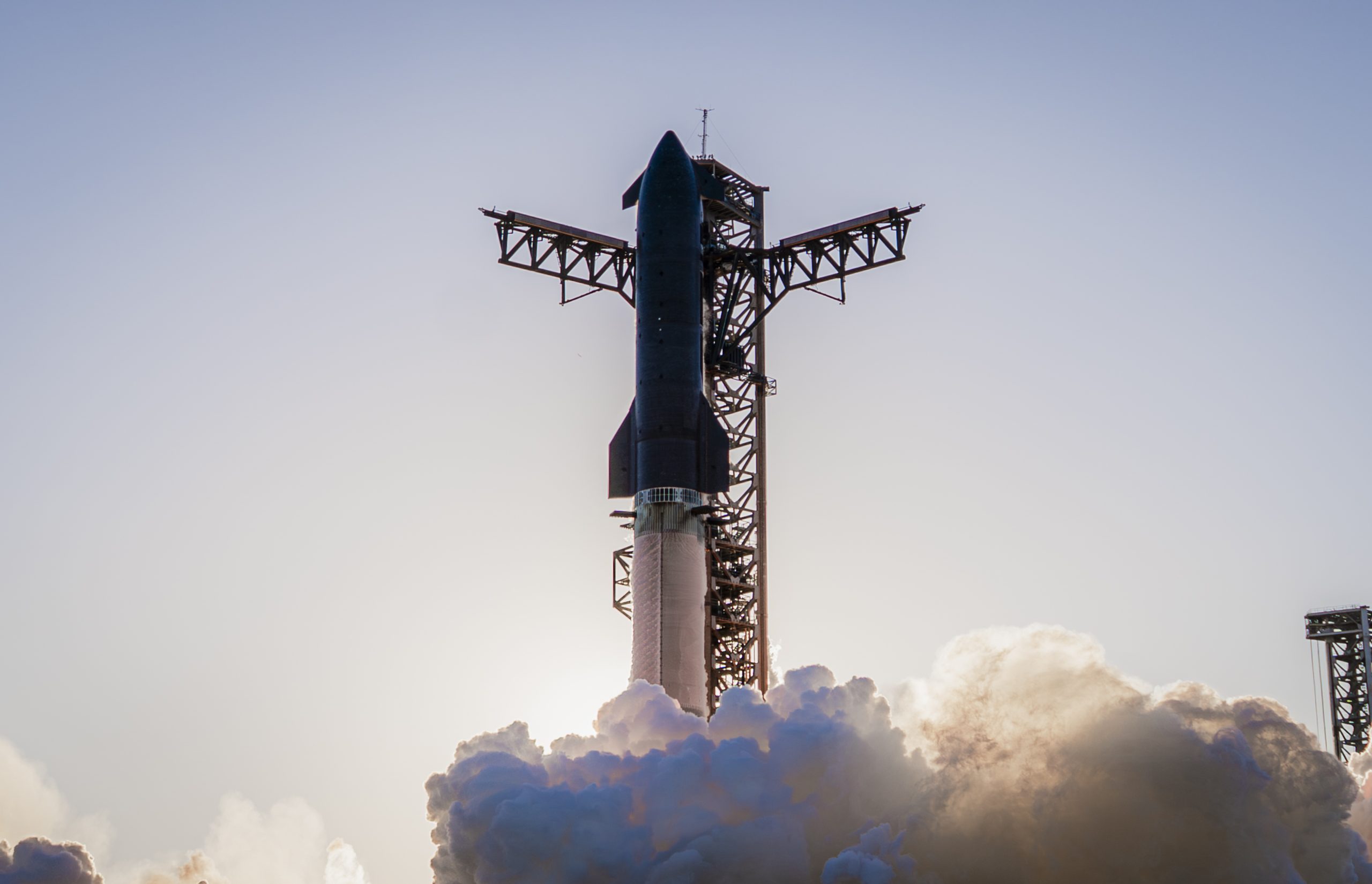
SpaceX has revealed that it has completed 49 major milestones for NASA’s Human Landing System (HLS) program, marking significant progress in the development of the Starship lunar lander that will deliver astronauts to the Moon.
The updates were detailed in SpaceX’s new blog post To the Moon and Beyond, which was recently posted on the private space company’s official website.
As noted by SpaceX, the 49 milestones that were completed by its HLS team were “tied to developing the subsystems, infrastructure, and operations” needed to safely land humans back into the lunar surface. SpaceX noted that it has only received funding on contractual milestones that have been successfully completed, the vast majority of which have been achieved on time or ahead of schedule.
Following are highlights of SpaceX’s completed milestones, as per the company’s post.
For the first time in our existence, we possess the means, technology, and, for the moment, the will to establish a permanent human presence beyond Earth. Starship is designed to make this future a reality → https://t.co/dGAZiB4rr3 pic.twitter.com/WsTg44G3oz — SpaceX (@SpaceX) October 30, 2025
- Lunar environmental control and life support and thermal control system demonstrations, using a full-scale cabin module inhabited by multiple people to test the capability to inject oxygen and nitrogen into the cabin environment and accurately manage air distribution and sanitation, along with humidity and thermal control. The test series also measured the acoustic environments inside the cabin
- Docking adapter qualification of the docking system that will link Starship and Orion in space, an androgynous SpaceX docking system capable of serving as the active system or passive system and based on the flight-proven Dragon 2 active docking system
- Landing leg drop test of a full-scale article at flight energies onto simulated lunar regolith to verify system performance and to study foot-to-regolith interaction
- Raptor lunar landing throttle test demonstrating a representative thrust profile that would allow Starship to land on the lunar surface
- Micrometeoroid and orbital debris testing of shielding, insulation, and window panels, analyzing different material stackups that will be used to protect Starship from impact hazards and harsh thermal conditions
- Landing software, sensor, and radar demonstrations testing navigation and sensing hardware and software that will be used by Starship to locate and safely descend to a precise landing site on the Moon
- Software architecture review to define the schematic of major vehicle control processes, what physical computers they will run on, and software functions for critical systems like fault detection, caution and warning alerts, and command and telemetry control
- Raptor cold start demonstrations using both sea-level and vacuum-optimized Raptor engines that are pre-chilled prior to startup to simulate the thermal conditions experienced after an extended time in space
- Integrated lunar mission operations plan review, covering how SpaceX and NASA will conduct integrated operations, develop flight rules and crew procedures, and the high-level mission operation plan
- Depot power module demonstration, testing prototype electrical power generation and distribution systems planned to be used on the propellant depot variant of Starship
- Ground segment and radio frequency (RF) communications demonstration, testing the capability to send and receive RF communications between a flight-equivalent ground station and a flight-equivalent vehicle RF system
- Elevator and airlock demonstration, which was conducted in concert with Axiom to utilize flight-representative pressurized EVA suits, to practice full operation of the crew elevator which will be used to transfer crew and cargo between Starship and the lunar surface
- Medical system demonstration covering the crew medical system on Starship and the telemedicine capability between the ground and crew
- Hardware in the loop testbed activation for the propellant transfer flight test which uses a testbed with flight representative hardware to run simulations for the upcoming propellant transfer flight test
Ultimately, SpaceX’s message is clear. With its plans for a simplified architecture, the timeframe of the first crewed lunar landing of the current century could happen sooner than expected.
Musk definitely seems determined to prove skeptics wrong, with the CEO declaring on X that Starship will be the vehicle that would pave the way for the buildout of a base on the Moon. “Starship will build Moonbase Alpha,” Musk wrote.


Elon Musk
The Starship moon landing number NASA and Elon Musk can’t agree on
Musk disputes NASA estimate of 22 Starship launches for Moon landing, predicting 6 to 8.

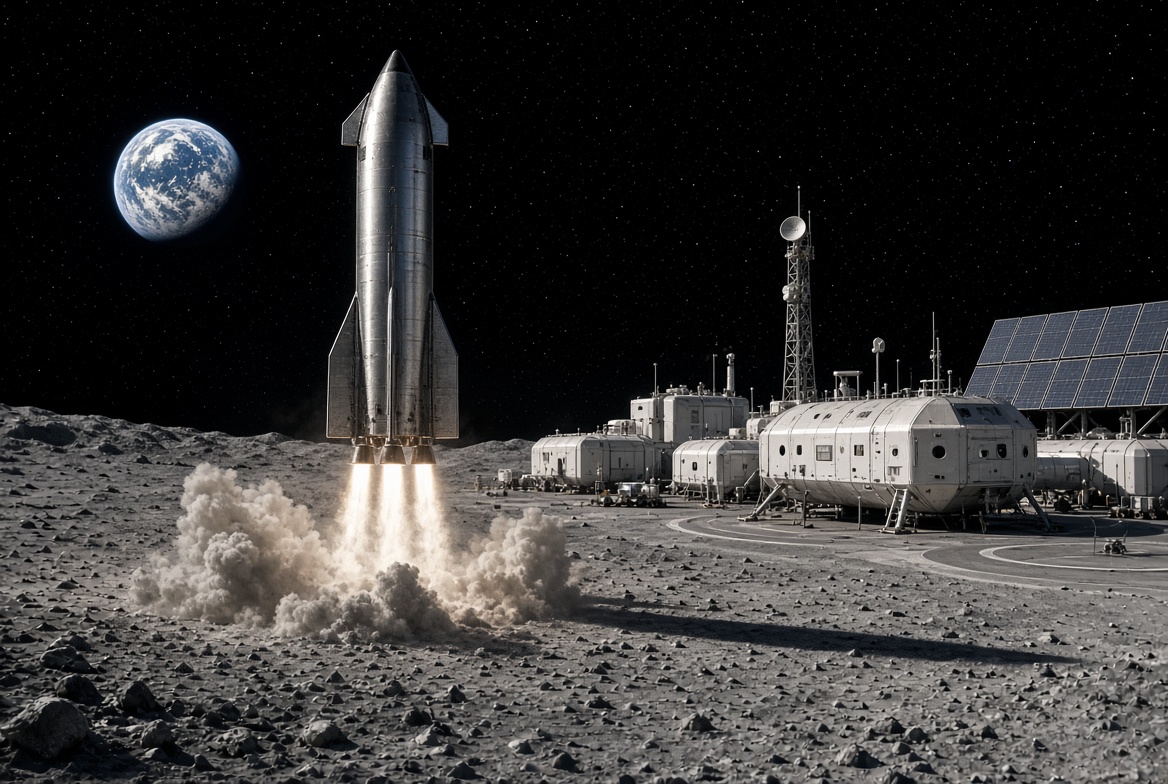
Elon Musk is disputing a new NASA safety panel estimate of how many Starship launches it will take to put astronauts on the Moon, saying the real number will be less than half the panel’s figure.
On Thursday, NASA’s Aerospace Safety Advisory Panel held its quarterly public meeting. Panel member Charlie Precourt, a former NASA astronaut, flagged the fueling process for SpaceX’s lunar lander as a major risk for Artemis IV, the mission planned to land a crew on the Moon in 2028. “We need to keep our eyes on numerous required fuelings for the lander,” Precourt said, according to Ars Technica. “I think the last estimate is around 22 flights.”
Ars Technica’s Eric Berger posted the comment on X, and Musk replied. “That’s way too high,” Musk wrote. “Actual number will be more like 6 to 8.”
The disagreement comes down to a basic problem with sending a ship as large as Starship to the Moon. Starship burns nearly all of its propellant just reaching Earth orbit, so it cannot continue on to the Moon without stopping for a refill. SpaceX’s answer is a gas station in space. First, a Starship that works as a storage tank, called a depot, is launched into orbit. Then a series of tanker Starships launch one at a time, dock with the depot and pump their leftover propellant into it. Once the depot is full, the lunar lander version of Starship launches, docks, fills up and heads for the Moon.
Every tanker trip is its own full rocket launch, which is why the count matters. More launches mean more time, more cost and more chances for something to go wrong before astronauts ever leave Earth. Berger estimated that even if SpaceX reaches twice weekly Starship launches by the end of 2027, filling a depot at the panel’s number would still take roughly three months.
How many tankers are needed depends mostly on how much propellant each one can carry to orbit and how much is lost along the way. Starship’s fuel and oxygen are stored at extremely cold temperatures, and some of it slowly boils off while waiting in orbit. More is lost in each transfer. NASA appears to be working from what Starship can lift today, while Musk’s range assumes a more capable rocket.
Musk has pushed back on higher counts before. In 2021, after a government document suggested 16 launches, he called that “extremely unlikely” and said eight tankers would be the most required.
Much of the answer depends on hardware SpaceX has not finished flying. As Teslarati noted earlier this year, the company plans to carry out the refueling process with its upgraded V3 Starship, and Precourt described Artemis IV as carrying “a large number of firsts.” He also praised NASA Administrator Jared Isaacman’s team for working to clear obstacles for both SpaceX and Blue Origin, whose Blue Moon lander does not rely on orbital refueling for its first mission.

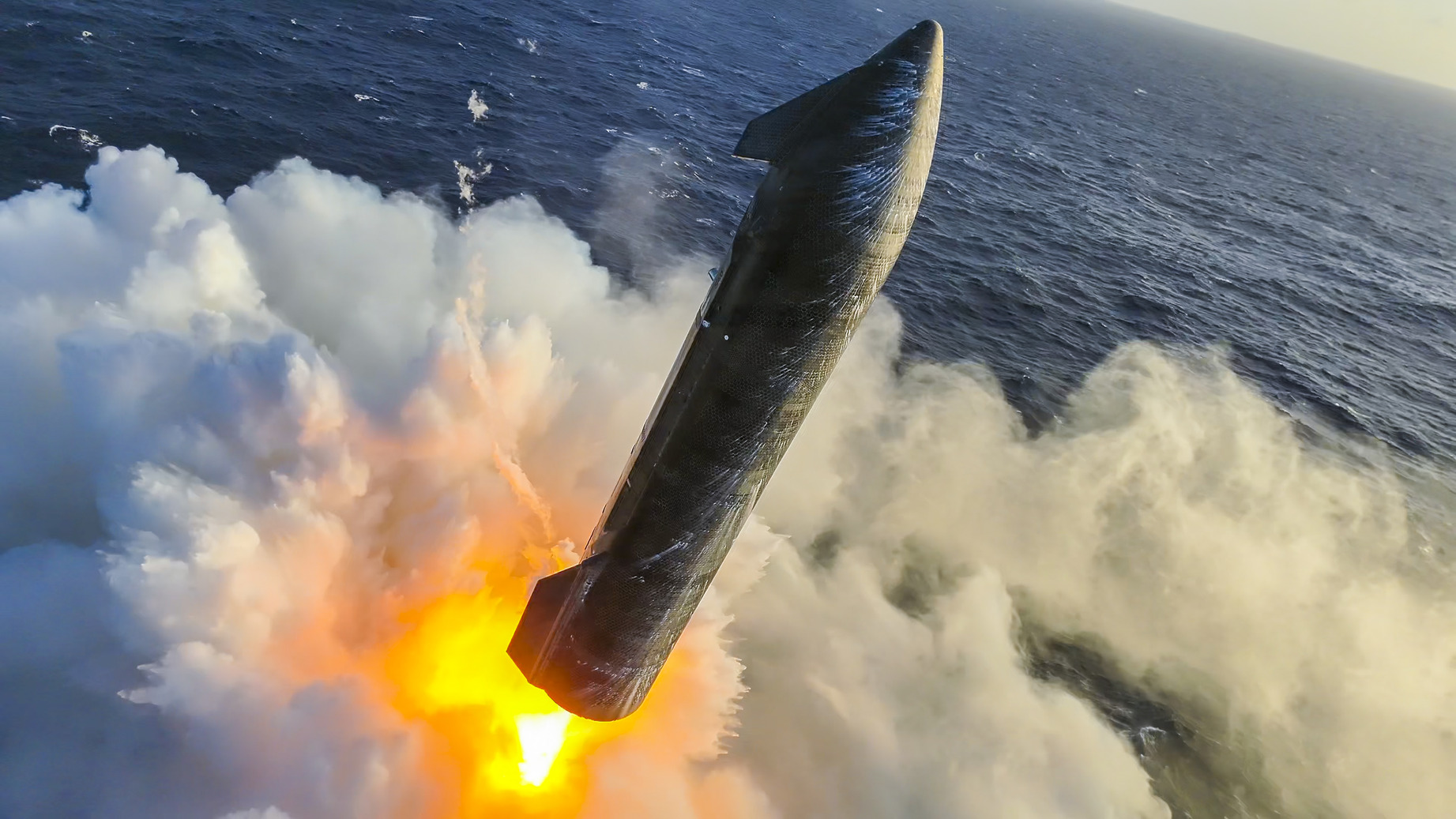
SpaceX confirmed the date of Starship’s 15th launch window with some massive ambitions for the mission, as it will attempt to catch Ship for the first time.
CEO Elon Musk confirmed during SpaceX’s Earnings Call last night on October 20 that it would launch Starship for its 15th test flight in November, and there are some incredible things the company wants to try, making it perhaps the most groundbreaking launch in the program’s history.
SpaceX delivers blockbuster Q3 results as Super Intelligence segment booms
The most major development of the call was SpaceX’s intention to catch Ship alongside catching the Super Heavy Booster, something that has happened in the past. SpaceX showed an animation of the Ship catch, which will be done on the launch tower’s chopsticks:
SpaceX has released a new Starship tower catch animation for the upcoming Flight 15! https://t.co/kStn01Da8u
— Truthful🛰️ (@Truthful_ast) October 20, 2026
This monumental goal is to catch both the Ship and Booster in a dual-catch scenario, an incredible feat since SpaceX has never been able to reuse a Ship after launch. Musk said it would be “the first time that an orbital launch vehicle has been fully recovered,” and said it would be a “profound technology milestone.”
Musk said the odds of success on this first Ship catch attempt are “more likely than not,” but SpaceX is ultimately prepared for more tries moving forward. The SpaceX frontman said that, starting next year, Starship would have a “steady stream” of flights through the end of the year.
The cadence will accelerate in 2027, with Musk stating the company plans to target weekly flights in the first half of 2027 and twice-weekly by year-end.
The Flight 15 attempt follows that of Flight 14, which took off in late September and was Starship’s first orbital mission. It deployed 26 Starlink V3 satellites, accomplished a controlled ocean splashdown of both stages, and shed more light on potential challenges for the program moving forward.
As of now, the Starship program is firing on all cylinders.
Interested in ordering a Tesla? Use my referral code for three free months of Full Self-Driving (Supervised) here.
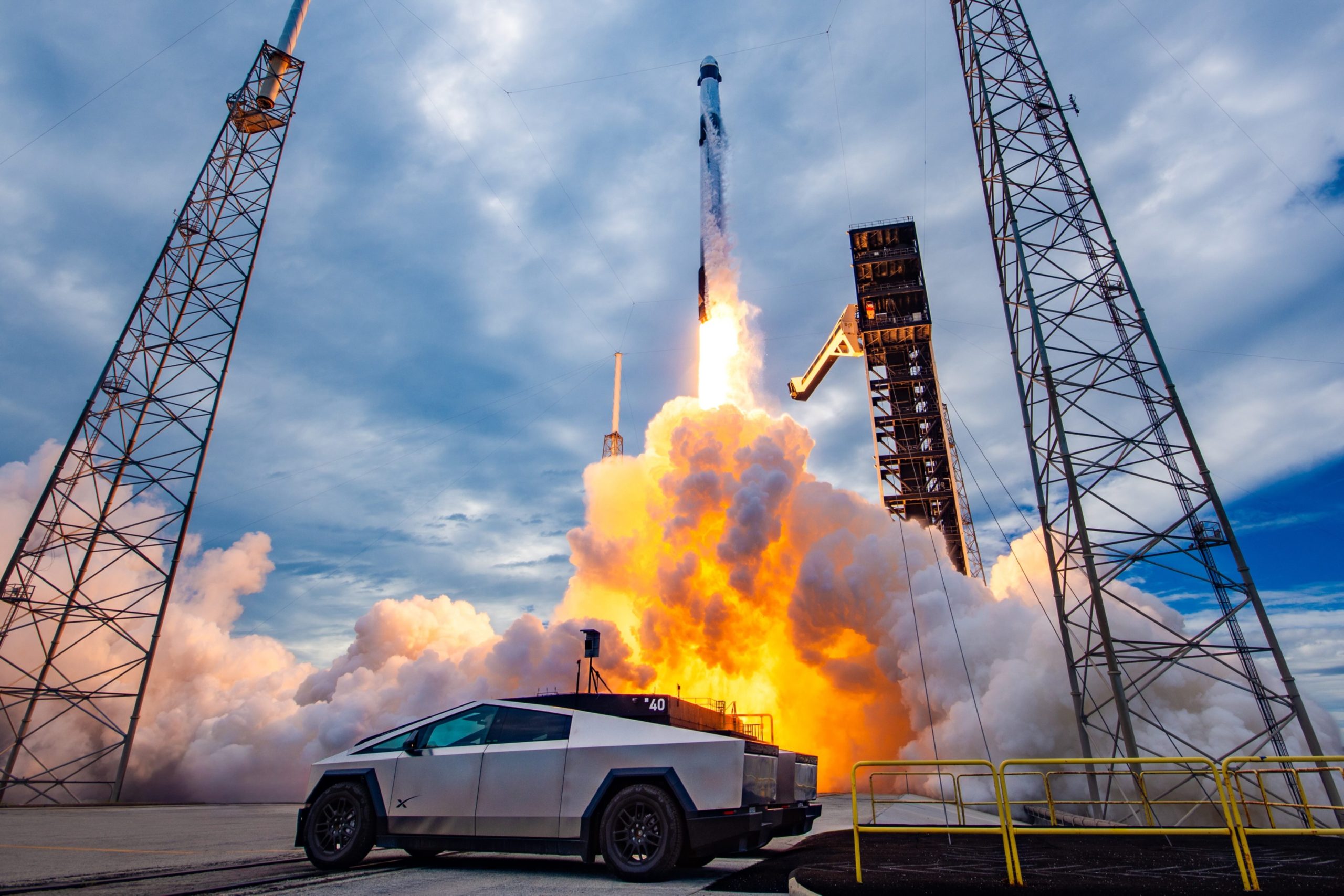
Wall Street analysts rapidly raised price targets on SpaceX (NASDAQ: SPCX) after the company reported a bullish third quarter for 2026 following the market close on October 20. Shares were sent sharply higher in after-hours and premarket trading.
SpaceX posted revenue of $14.6 billion, a 161 percent year-over-year increase that comfortably topped consensus estimates, which fell near $12.7 billion. The company also posted a net profit of $4.4 billion from a prior-year loss, with adjusted EBITDA reaching $8.8 billion.
More price target movement:
🚀 Cantor Fitzgerald lifted its target to $345 from $246 (Overweight).
🚀 Barclays raised its target to $300 from $254 (Overweight).
🚀 Citi increased its target to $240 from $200 (Buy),
🚀 UBS moved to $230 from $210 (Buy)
🚀TD Cowen raised its target to $224 from $200 (Buy).
🚀Morgan Stanley held an Overweight rating with a $300 target.
🚀Other firms also adjusted higher, including Wells Fargo (to $274 from $214) and Clear Street (to $248 from $217). Analysts broadly cited the strong quarterly print, accelerating AI compute expansion, Starlink progress, and Starship milestones as drivers of higher long-term growth and earnings power.— TESLARATI (@Teslarati) October 21, 2026
Its Super Intelligence (AI) division generated roughly $7.6 billion and became the largest revenue contributor, growing nearly 830 percent year-over-year, while the Connectivity segment delivered $5.2 billion on strong subscriber additions that lifted the consumer base to 13.6 million for Starlink.
The Earnings Call proved especially catalytic, as CEO Elon Musk and CFO Bret Johnsen outlined Q1 2027 revenue guidance of $33 billion to $37 billion, which was far above the roughly $22 billion analysts had modeled, alongside fourth-quarter capital-expenditure plans of $35 billion to $40 billion focused on AI compute infrastructure at sites including Memphis and Southaven.
SpaceX delivers blockbuster Q3 results as Super Intelligence segment booms
Management targets 2.5 to 3 gigawatts of nameplate compute capacity by year-end and discussed pathways to 13 gigawatts or more by the end of 2027. Musk described relentless demand from hyperscalers and other customers, with compute pricing supporting payback periods of less than a year and potentially as short as six months.
Additional highlights included Starship’s recent orbital success and V3 satellite deployment, Starlink pricing and enterprise momentum, rapid Grok Bot adoption, spectrum expansion plans, and the formation of special committees to explore a possible combination with Tesla.
These elements prompted a wave of price-target increases:
- JPMorgan more than doubled its target to $500 from $240 while maintaining an Overweight rating.
- Cantor Fitzgerald lifted its target to $345 from $246 (Overweight).
- Barclays raised its target to $300 from $254 (Overweight).
- Citi increased its target to $240 from $200 (Buy),
- UBS moved to $230 from $210 (Buy), and
- TD Cowen raised its target to $224 from $200 (Buy).
- Morgan Stanley held an Overweight rating with a $300 target.
- Other firms also adjusted higher, including Wells Fargo (to $274 from $214) and Clear Street (to $248 from $217). Analysts broadly cited the strong quarterly print, accelerating AI compute expansion, Starlink progress, and Starship milestones as drivers of higher long-term growth and earnings power.
Shares, which closed at $147.79 on October 20, jumped roughly 8 percent in early premarket trading on October 21 as investors digested the results and the newly elevated Street targets.
The average analyst price target has moved higher, which reflects greater conviction in SpaceX’s trajectory across launch, connectivity, and the Super Intelligence business, even as elevated spending remains a point of focus.

The Starship moon landing number NASA and Elon Musk can’t agree on

Tesla’s secretive “Project Crystal Sun” gets a big green light in Texas


