News
Tesla Giga Texas buzzing as new Cybertruck appears to enter production
Additionally, the Cybercab manufacturing ramp-up is continuing amidst Tesla’s busy May, which includes a handful of things from an automotive perspective.

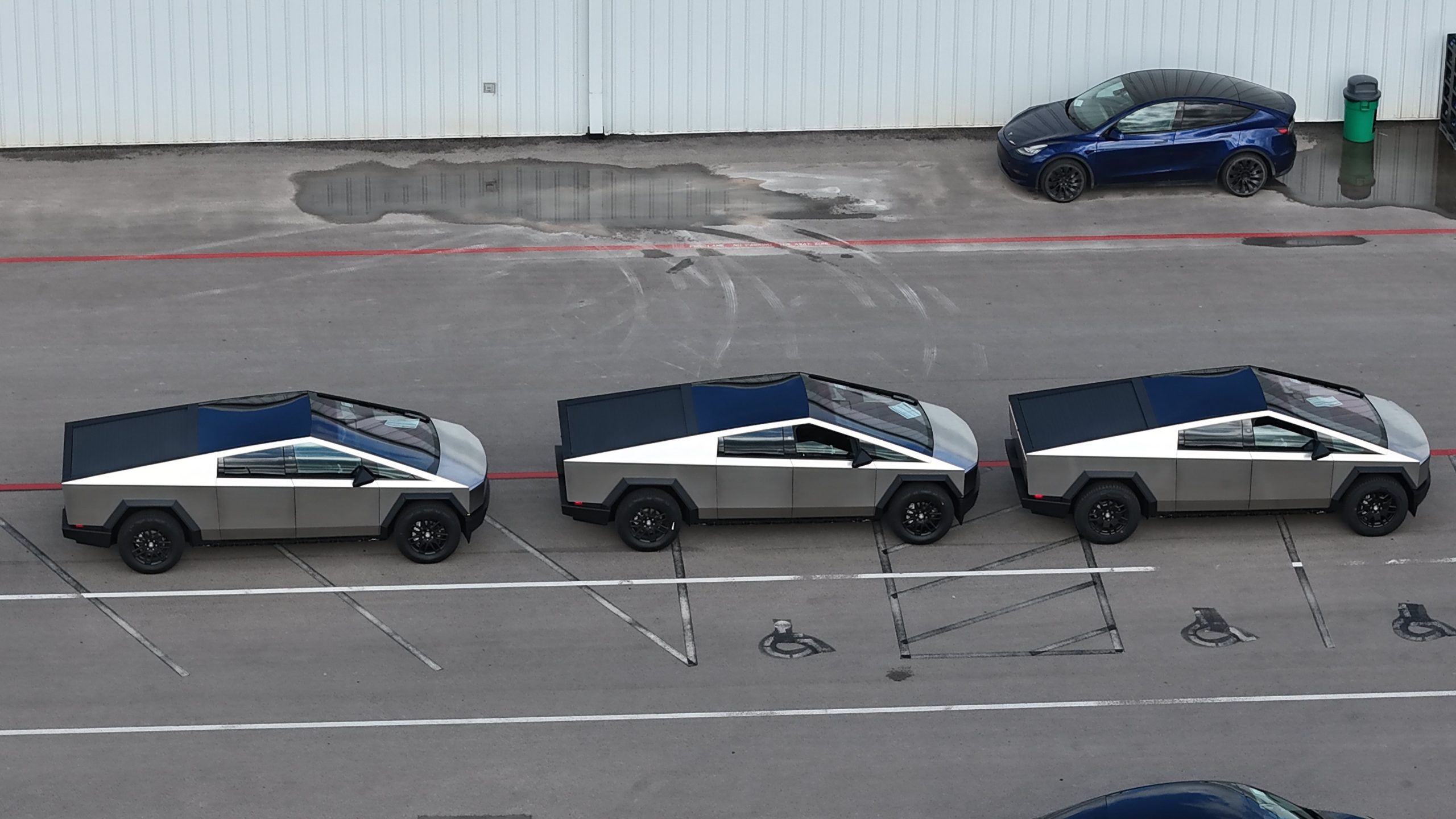
Tesla Giga Texas is buzzing with a lot of action, as it appears the new Cybertruck trim that was offered a few months back has entered production. Additionally, the Cybercab manufacturing ramp-up is continuing amidst Tesla’s busy May, which includes a handful of things from an automotive perspective.
Drone operator Joe Tegtmeyer captured striking footage over Giga Texas on the morning of May 11, 2026, revealing fresh batches of Cybertrucks that may mark the start of series production for the long-awaited $59,990 Dual Motor AWD variant.
Tesla launches new Cybertruck trim with more features than ever for a low price
The vehicles lined up in staging areas, and we got a great look at three of the units parked on the property:
Hard to say for sure, but production of the $59K AWD @Cybertruck may be just getting started here on this early and soggy morning at Giga Texas … this version is much harder to visually distinguish from the premium AWD versions, so I’ll come back on Wednesday and we’ll see if… pic.twitter.com/UX7yCQpgeC
— Joe Tegtmeyer 🚀 🤠🛸😎 (@JoeTegtmeyer) May 11, 2026
Tegtmeyer notes the difficulty in visually distinguishing this base AWD model from higher-trim versions, unlike the earlier Long-Range RWD that lacked a motorized tonneau cover.
Tesla launched the $59,990 Dual Motor AWD Cybertruck in late February 2026 with a brief introductory pricing window that closed by month’s end.
Initial U.S. delivery estimates of June 2026 quickly slipped to September–October and, for newer orders, as far as April 2027.
The move underscores robust consumer interest in a more accessible all-wheel-drive Cybertruck priced under $60,000 before incentives—positioning it as a volume play for Tesla’s electric pickup lineup while premium AWD and Cyberbeast variants continue to be sold as usual.
Meanwhile, Cybercab production at the same Austin facility shows steady, if deliberate, progress. Tegtmeyer’s latest flyover documented dozens of glossy production-spec Cybercabs parked in the outbound lot—consistent with Tesla’s early statements that initial output would remain modest before scaling later in 2026.
The purpose-built robotaxi, unveiled in 2024 and lacking a steering wheel or pedals, rolled its first unit off the line in February. Volume manufacturing began in April, with early examples already undergoing autonomous testing around the factory grounds.
Elon Musk has repeatedly emphasized that Cybercab and Semi production will start slowly before ramping “exponentially” toward year-end. The presence of multiple finished units signals Tesla’s Unboxed manufacturing process is maturing, even as the company balances Cybertruck output with autonomy milestones.
Recent drone imagery also shows ongoing construction for Optimus and test-track expansions, highlighting Giga Texas’s evolving role as Tesla’s hub for next-generation vehicles.
For Cybertruck buyers, the potential ramp of the $59K AWD offers hope of shorter waits and broader market access. For autonomy enthusiasts, the growing fleet of Cybercabs hints at robotaxi service trials on the horizon.
While official confirmation from Tesla remains pending, Tegtmeyer’s footage provides the clearest public signal yet that both programs are advancing in parallel at Giga Texas.


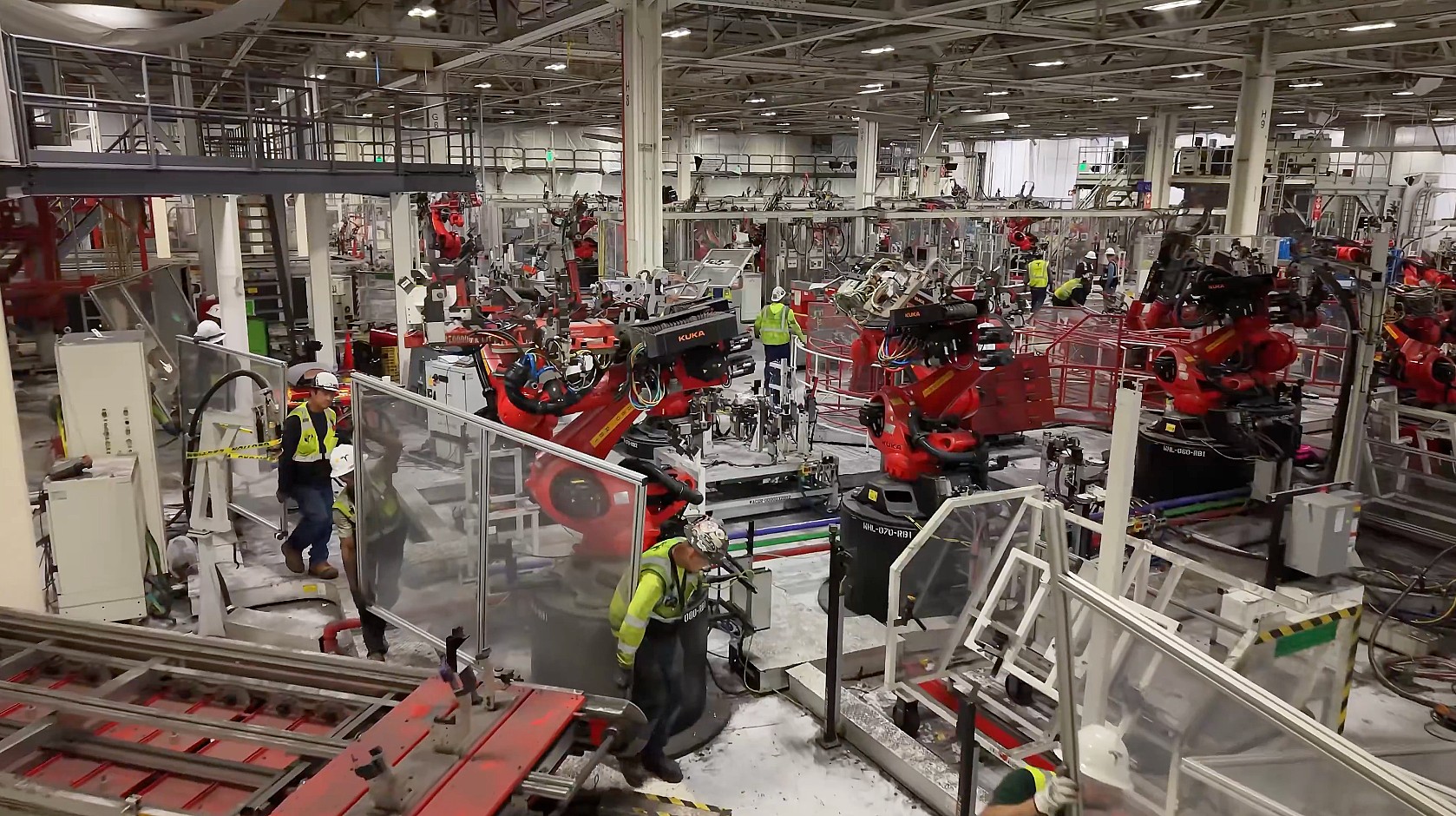
Tesla shared a striking video showcasing the decommissioning of the original Model S and Model X assembly line at its Fremont Factory in Northern California. Completed in just 46 days, the teardown involved heavy machinery dismantling concrete pits, removing robotic arms and conveyors, and clearing the space for new production.
The post, captioned “End of an era,” captured both the end of a historic chapter and Tesla’s aggressive pivot toward its next major initiative, Optimus.
End of an era: Decommissioning the original Model S & X assembly line in just 46 days pic.twitter.com/kGEdfhl62h
— Tesla Manufacturing (@gigafactories) July 10, 2026
The decision to retire the Model S and Model X originated during Tesla’s Q4 2025 Earnings Call in late January 2026. CEO Elon Musk announced that production of the company’s flagship sedan and SUV would wind down by the end of Q2 2026, describing it as bringing the programs to an “honorable discharge.”
Custom orders ceased around early April 2026, with the final vehicles rolling off the line in early May. A special signature delivery ceremony on May 20 marked the emotional close for these vehicles, which had defined Tesla’s early success and luxury EV segment since the Model S launch in 2012.
The primary reason for tearing down the lines was to repurpose the valuable factory floor space for high-volume production of Tesla’s Optimus humanoid robot. Musk had indicated on Earnings Calls that the Fremont S/X line would be replaced by a dedicated Optimus manufacturing line targeting a capacity of one million units per year.
This move aligns with Tesla’s broader strategic shift from traditional vehicle manufacturing toward robotics and artificial intelligence, leveraging the company’s expertise in autonomy, AI training, and high-volume production.
Optimus, Tesla’s general-purpose humanoid robot, is designed to perform repetitive or dangerous tasks in factories, warehouses, and eventually homes. Powered by Tesla’s AI and Neural Networks, it aims to be a versatile, affordable platform. Production of Optimus Gen 3 is already underway in limited form at Fremont, with full-scale output on the converted line expected to begin in late July or August.
Tesla is targeting rapid scaling, with internal ambitions pointing toward tens or even hundreds of thousands of units annually by the end of 2026.
Longer-term, Tesla is constructing a much larger second-generation Optimus facility at Giga Texas, with potential capacity reaching millions of units per year. The company views Optimus as a transformative product that could eventually surpass its automotive business in scale and value, enabling widespread deployment of useful robots across industries. CEO Elon Musk has even predicted it would be the most popular product of all-time.
As one era closes at Fremont, another is rapidly taking shape.
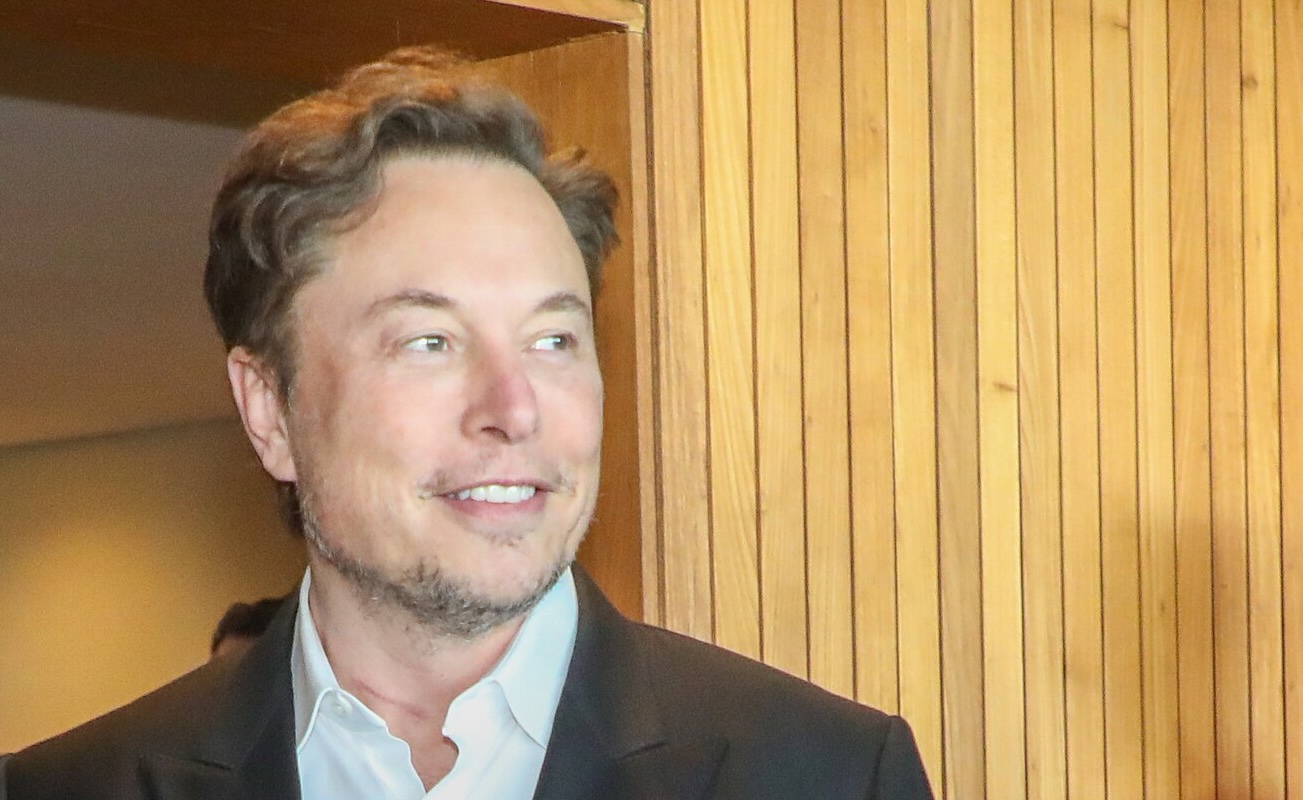
Elon Musk posted a candid admission on his social media platform X on June 9, declaring that he had been “clearly wrong” about Anthropic. The statement marked a notable reversal from his earlier skepticism toward the AI company.
In September, Musk had written, “Winning was never in the set of possible outcomes for Anthropic,” reflecting his view at the time that the startup had lacked the foundation or even the trajectory to succeed in what is an incredibly intense race for advanced artificial intelligence.
Musk’s latest post came amid discussion of Anthropic’s reliance on external compute resources. He praised the company’s progress, stating that Anthropic is “obviously currently the leader in AI” and that “no company has released a model as good as Mythos/Fable,” with expectations of a strong follow-up in Mythos 2.
The tone shifted dramatically from dismissal to acknowledgement of superior performance.
I was clearly wrong about Anthropic. They are obviously currently the leader in AI. No company has released a model as good as Mythos/Fable and they will undoubtedly have Mythos 2 ready soon.
And I would never cut them off in a way that hurt them badly, even as a competitor.…
— Elon Musk (@elonmusk) July 9, 2026
The context of Musk’s comments added significance. Anthropic has been operating under a recent compute deal with SpaceXAI, Musk’s AI infrastructure-focused venture. The pair entered a short-term GPU lease agreement initiated in May, providing Anthropic access to critical computing power for training and deploying its frontier models.
SpaceXAI signs agreement with Anthropic for massive AI supercomputer access
Some observers had speculated that Musk could leverage this dependency to disadvantage a rival. Musk directly addressed the possibility, writing, “I would never cut them off in a way that hurt them badly, even as a competitor. That’s not my style.”
To support his commitment to ethical competition, Musk referenced concrete examples from his other companies. Tesla famously open-sourced its entire portfolio of electric vehicle patents in 2014. The move was designed to accelerate the global adoption of sustainable transportation technology rather than protect proprietary advantages.
Tesla also made its Supercharger network available to competing electric vehicle manufacturers, transforming what could have remained an exclusive charging ecosystem into a shared infrastructure that benefits the broader industry and reduces barriers for EV adoption.
Musk further pointed to SpaceX’s practices, noting that the company launches satellites for competing commercial systems “with no increase in price or use of unfair terms.” He extended the principle to his social platform, observing that “even my worst enemies attack me on this platform,” underscoring preference for open discourse over retaliation.
These examples have illustrated Musk’s long-standing philosophy that long-term technological progress is best served by open competition and infrastructure sharing rather than leveraging market power to stifle rivals. In the fast-evolving AI sector, where compute resources and model capabilities determine leadership, Musk’s stance suggests a willingness to compete on innovation and performance alone.
Musk’s admission arrives as SpaceXAI itself advances its own frontier models while maintaining business relationships across the ecosystem. By publicly correcting his earlier assessment and reaffirming principles of fair play, Musk highlights a model of competition that prioritizes advancement of the field over short-term tactical advantages.
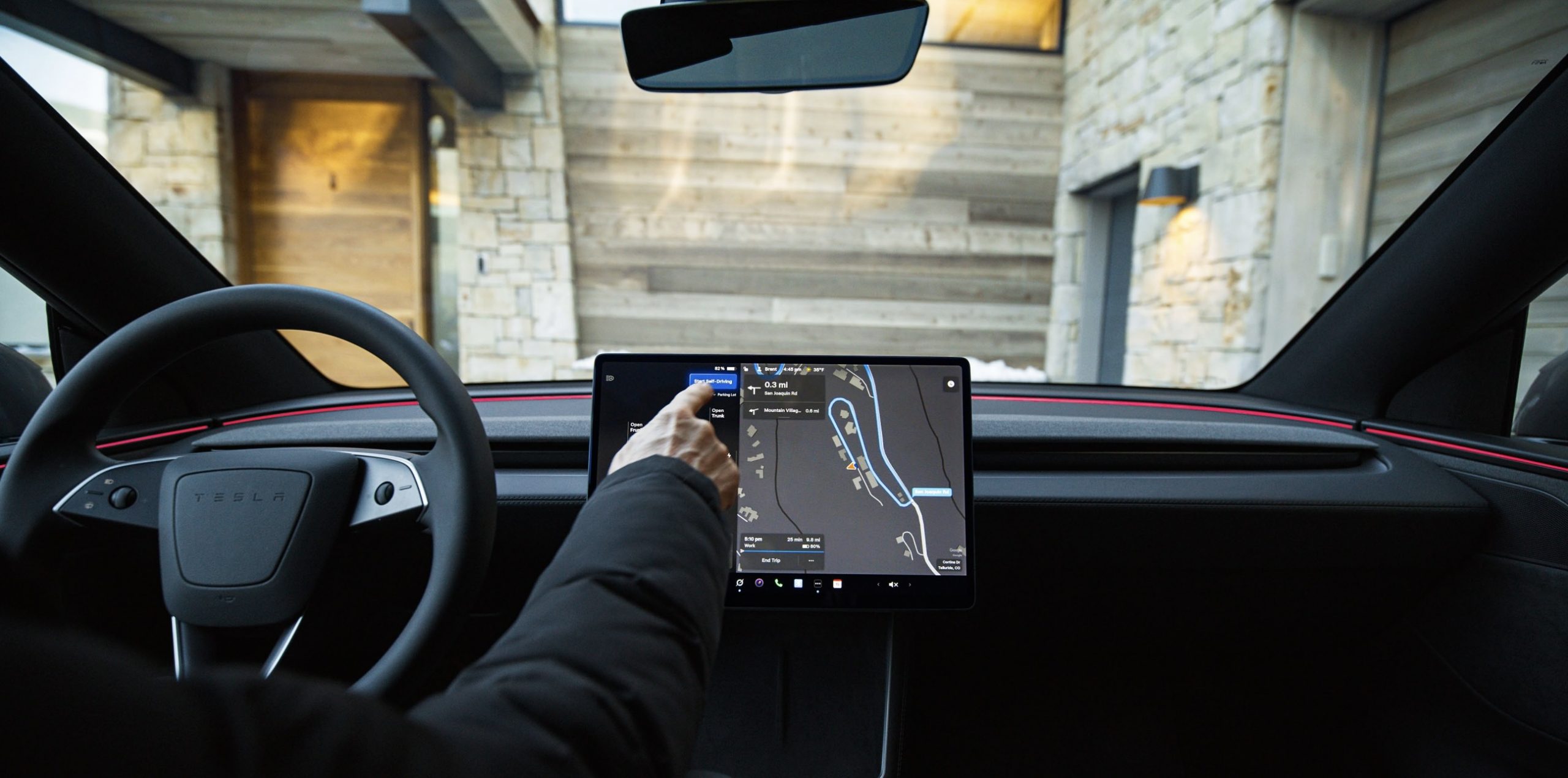
A Tesla analyst believes the company’s Full Self-Driving suite is close to an “inflection point,” where people will finally realize that it is more than what it appears, similar to how many view the iPhone.
Pierre Ferragu, an analyst who has covered Tesla for many years at New Street Research, says the Full Self-Driving suite is one piece of evidence supporting the view that a Tesla is more than a car. He compared it to the iPhone and noted that the high price tag seemed like a lot for a phone early on. Then people realized the iPhone was more than just something you make calls with. It made their lives simpler.
🚨 Analyst @p_ferragu says Tesla Full Self-Driving is at an “inflection point” in a recent commentary:
“A Tesla is not a car, the same way an iPhone was not a phone. As a tool that gets you to work peacefully every morning, it is not expensive. Give us 2 more quarters to see… pic.twitter.com/tm6xFrjVPV
— TESLARATI (@Teslarati) July 10, 2026
Suddenly, that price tag was justified.
Tesla offers several models under the average transaction price for a new vehicle, which was above $49,000, according to Kelley Blue Book. However, that does not take into account that many people can still not afford a $35,000 vehicle. Ferragu offers his thoughts:
“Remember when the addressable market of the iPhone was 10 million units? Then people realized how good it was, and now, nearly 250m are sold every year.
A similar evolution for Tesla is still on the table. A Tesla is not a car, the same way an iPhone was not a phone.
A model 3 at $35k + $100 per month is too expensive for most, but only as a car, the same way a $600 iPhone was too expensive for most, until most realized it was much more than a phone.
As a tool that gets you to work peacefully every morning, it is not expensive.”
This point is valid, especially considering the iPhone’s impact on the cell phone market. There are still a handful of players, but most people you know have an iPhone. The iPhone ties into Apple’s other ecosystem of products.
This is how Tesla plans to infiltrate the automotive market, and once the company offers a fully autonomous suite, or something that can allow for unsupervised self-driving, more and more people will flock to Tesla.
Ferragu believes Tesla needs two additional quarters of development before things will truly change. He didn’t elaborate on what will happen in two quarters, but he said it will give us all time to “see where this is heading.”
It is really quite interesting to see people’s reactions when they find out what a Tesla is capable of. Full Self-Driving is a great tool for taking stress out of travel; I use it daily, and it has made it really difficult to consider taking any other car on a drive of practically any length.
To me, it is really hard to believe that people will not at least seriously consider a Tesla as their next car if they experience Full Self-Driving. This is a major point for those who argue that Tesla should advertise in some way.

Tesla shows rapid teardown of Model S and X lines, paving the way for Optimus at Fremont

Elon Musk admits he was ‘clearly wrong’ about Anthropic


