Lifestyle
Reliving Model 3 Mania: Buying a Tesla I’ve Never Seen

The Model 3 is quite possibly the most important car to Tesla’s future. The Roadster, Model S and Model X were somewhat exclusive cars given the high price and low production volume, but the Model 3 is targeted to mid-market consumers and has been part of Tesla CEO Elon Musk’s not-so-secret Master Plan for years. Musk is finally at a point where he’ll be delivering on this incredible long term vision and I’m proud to be a part of it.
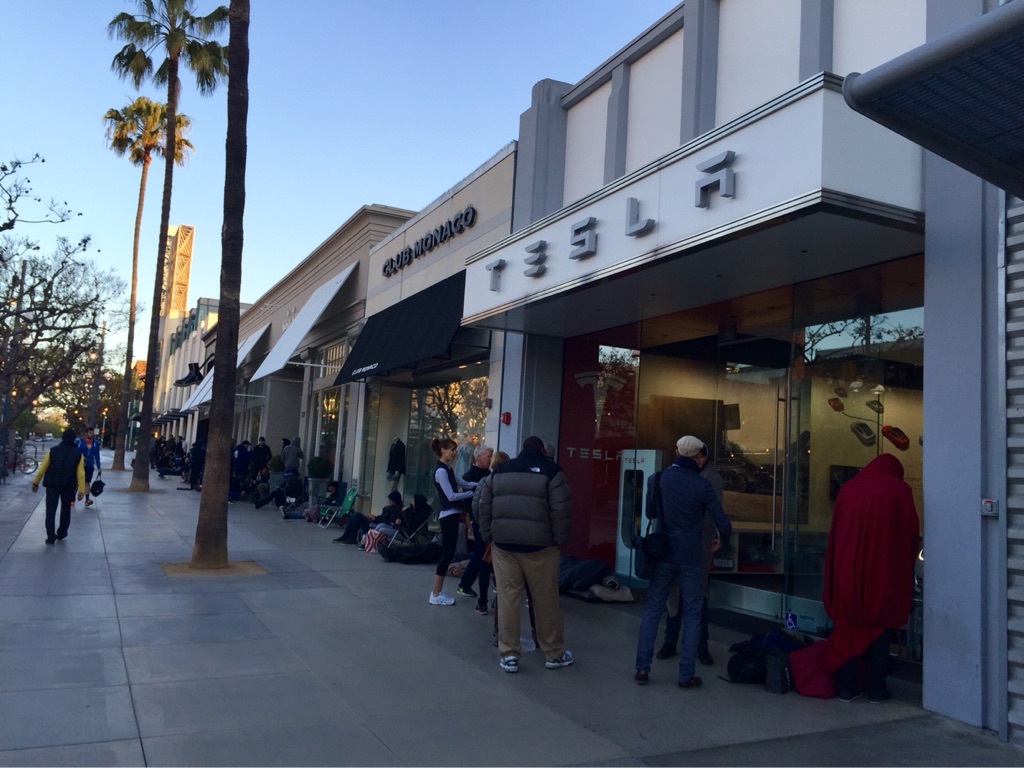
As much of the world already knows, Tesla Stores began taking reservations on the morning of March 31 for the Model 3. The announcement prompted anxious fans to line up hours before official store opening hours with some going as far as camping out overnight to be first in line to drop a $1,000 for a Model 3 reservation. But despite the efforts, Tesla has already stated that several factors come into play that will determine your real place in line to receive the coveted Model 3.
- Reservation Number
- Existing Tesla owners get preference
- Higher optioned cars will be delivered earlier
- Where you live (will start rolling out on US West Coast first)
In essence there isn’t as much benefit being the very first in line to reserve a Model 3 at stores than some might think.
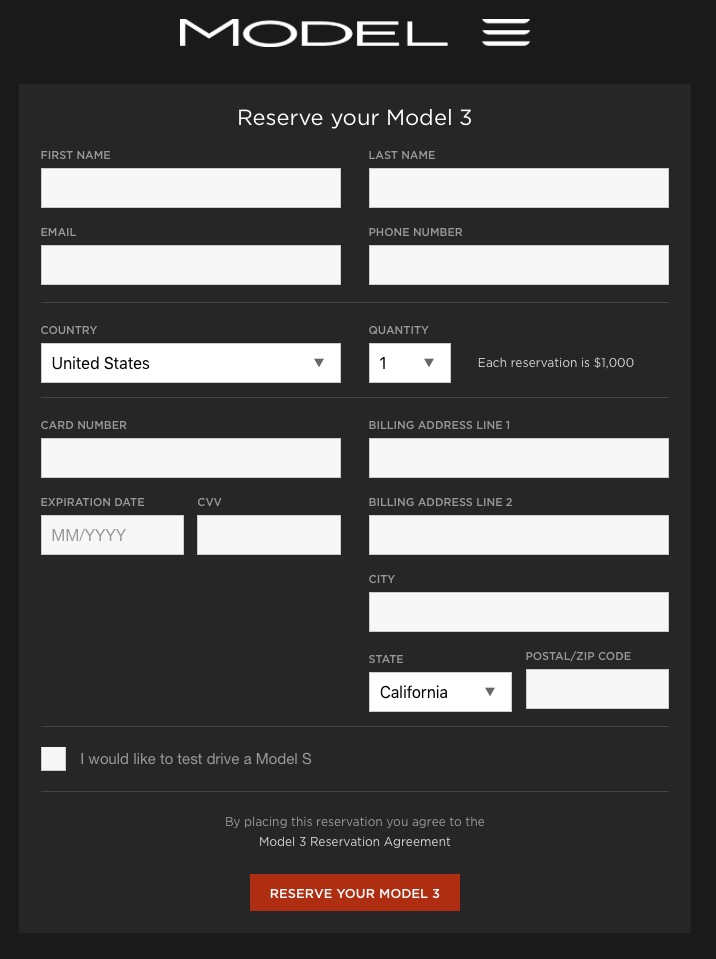
Reserving a Model 3 was as simple as filing out a basic form
Hundreds of people lined up in front of stores, with some reports indicating 800+ people in line before store opening. Despite the long lines the reservation process itself was quick and painless.
Like thousands of people worldwide, I got in line before store opening for my chance to grab an early reservation number and participate in the event. I own a Model S and love the car, but I also have three other ICE vehicles in my family many of which are nearing 200k miles, an age where the vehicle begins to deteriorate and cost more to maintain than the value of the car itself. I see the Model 3 as a viable replacement for at least one of those ICE vehicles so my hope is to stretch the life of these cars until the Model 3 becomes available.
I got to my local Tesla store at Natick Mall in Natick Massachusetts just before 8am to find 70 people lined up already. The line grew to about 225 by the time reservations began at the 10am store opening time.
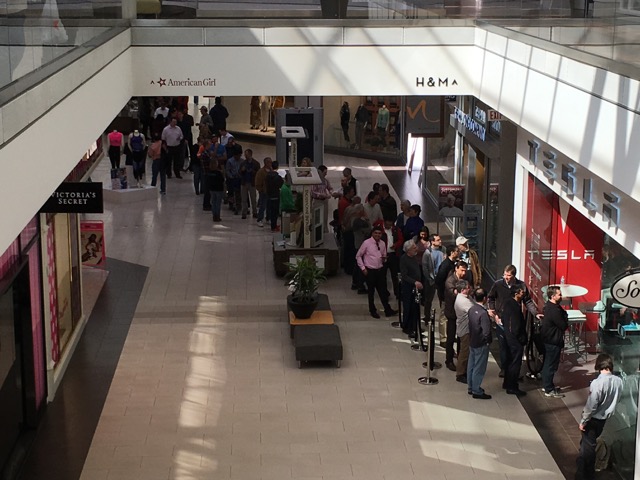
Most of the people I met in line did not yet own a Tesla which was not only a surprise but fantastic to hear. It was really encouraging to learn that many people waited years for this opportunity to drive electric, but more importantly drive electric in a Tesla.
The experience waiting in line was pleasant. Tesla did a great job of managing the throngs of people funneling into the store once it opened. Each reservation took approximately 2 minutes per person with 4 stations taking reservations simultaneously. By 10:30 am ET my reservation was complete and I was now a proud future owner of a Model 3.
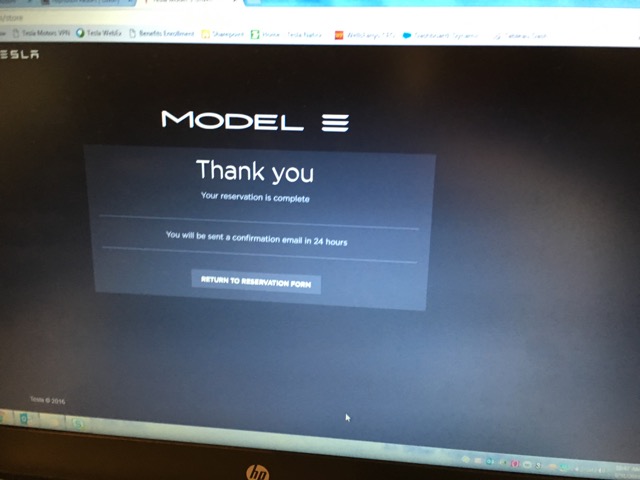
A line remained in front of the store until 1:30pm local time and shortly dissipated to the point that one can simply walk in to reserve a Model 3 with no wait.
An hour before Elon officially unveiled the Model 3, Tesla opened up its online reservation system for the Model 3. The servers were sluggish and required some patience but they held up. Elon would later announce during his speech at the event that Tesla had booked over 115,000 reservations for the Model 3, and in less than 24 hours. His master plan was being validated considering this impressive number of reservations was for a car nobody knew much about or even seen.
Tesla Model 3 Specifications
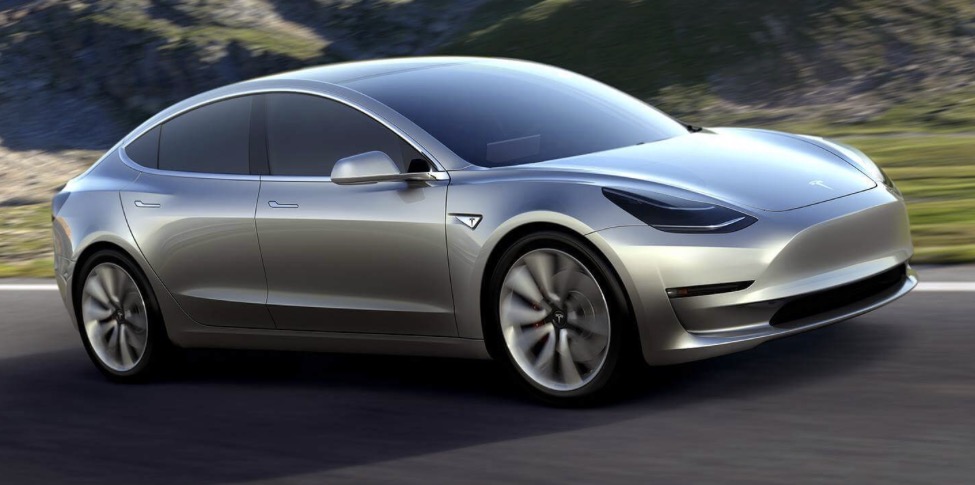
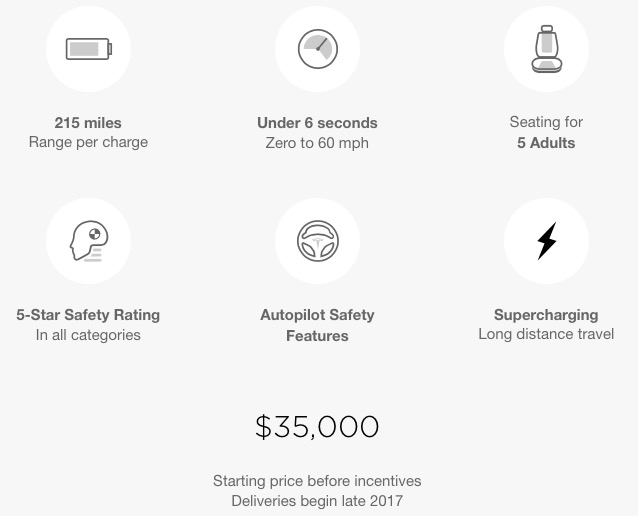
Tesla live streamed the event. Elon started by revealing new details for the vehicle followed by a live demo and test ride of working prototypes. Even at a base price of $35,000, the Model 3 is well-equipped with features that makes it a compelling car to own.
- EPA range: 215 miles
- The EPA range for the Tesla Model S 60kWh is 208 miles so this is even better.
- Superchargers have been strategically placed such that you can drive the Model S 60 across the country between superchargers (but on the S60 you must be more careful) so this means whatever you can do with a S60 you will be able to do with the Model 3 which is fantastic news!
- 0 – 60: Under 6 seconds
- For reference my Model S is 5.4 seconds and this number is for the basic Model 3. I have no need for more performance than what I have now and 5.4 feels very quick. People will love this level of performance.
- Like the Model S, there will be performance options for the Model 3 to make it even faster for significantly more money.
- Seating for 5 adults
- Tesla made a point of mentioning the work they did to move the front driving position forward thanks to the empty room in the front of the car where an engine would normally go. I think there’s going to be a lot of legroom in the Model 3 — more than competing cars within its category such as the Audi A4 and BMW 3 series. This fact will be a key selling point.
- 5 Star Safety Rating
- Elon led with this point again just like he did when he revealed the Model X. Most people have the mindset that the bigger the vehicle, the more safe it is, but knowing a Model 3 has a 5 star safety rating in all categories, this could give Tesla a real competitive advantage and shift buying behavior.
- Autopilot Safety Features
- The Model 3 will have Autopilot hardware and have autopilot safety features included but, like the Model S and X, it won’t have autopilot enabled unless you pay an upgrade price.
- Supercharging Standard
- Elon said the Model 3 will include Supercharging as a standard feature. I took this to mean there’s no extra charge for it, not just the ability to use it with a surcharge.
- Reducing the friction to charge especially for first time Tesla owners is a great idea, but one thing the company must keep in mind is that this action could lead to more local Supercharger abuse. Tesla will have to figure out a strategy that will account for this.
One important point Elon made during his presentation was around the 215 mile range and 0 – 60 mph acceleration in under 6 seconds being the specs for the entry level Model 3. It’s almost certain that Elon will surprise us with a lot more range and performance when he presents Part 2 of the Model 3.
Tesla Model 3 Design – Exterior
During the Model 3 presentation Elon pointed out a few key points to the design:
- The roof is one continuous pane of glass for extra headroom and a sense of openness
- Front trunk (frunk) and Trunk (hatchback) are part of the design
- The Model 3 will have more cargo capacity of any ICE car with the same external dimensions
My initial reaction to the front of the Model 3 was one of ambivalence, but as I continue to look at Model 3 pictures the visual styling of the car has grown on me. I had a similar initial reaction when I first saw the Models S and Model X. I got past it on the S and actually like it now, but on the X I haven’t gotten there yet.
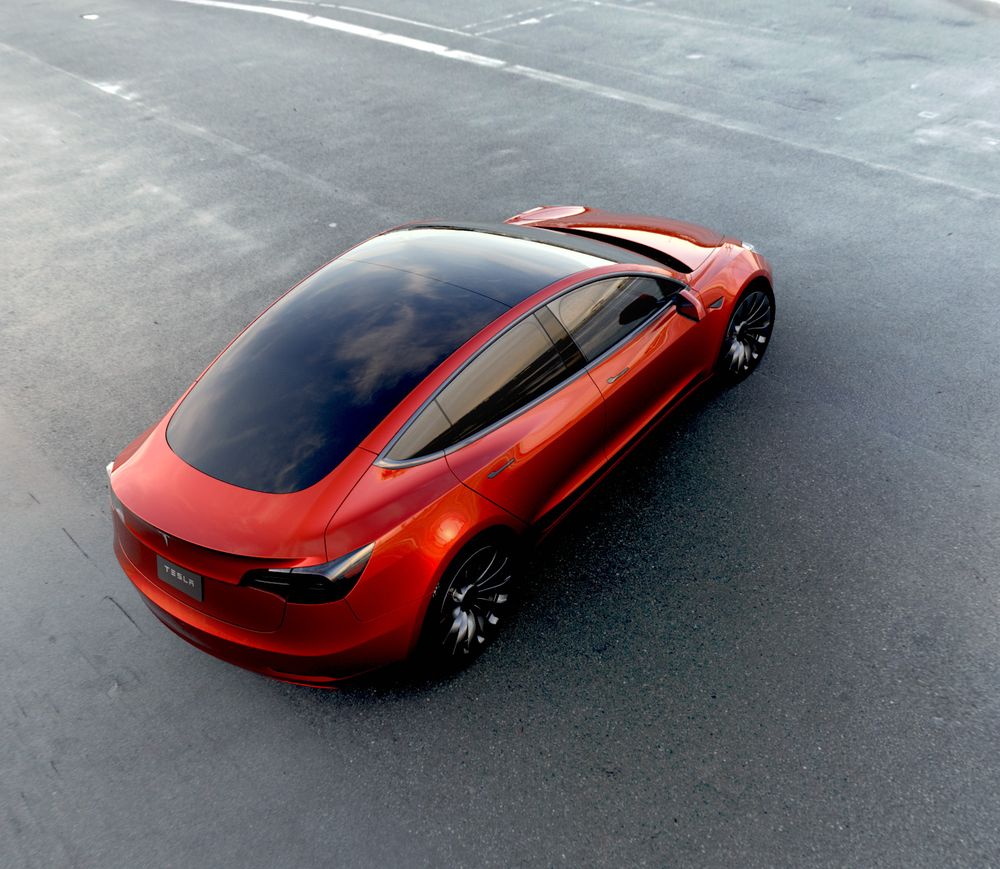
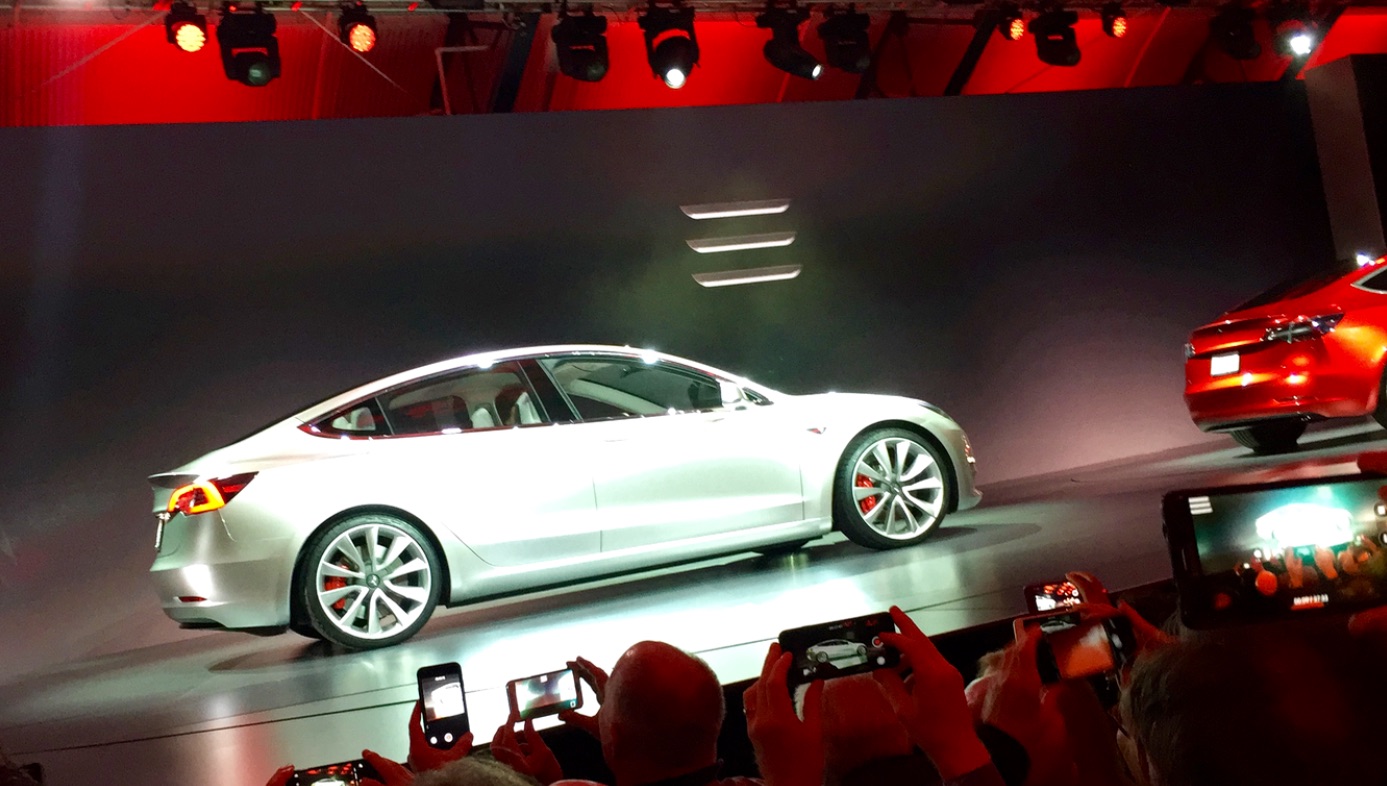
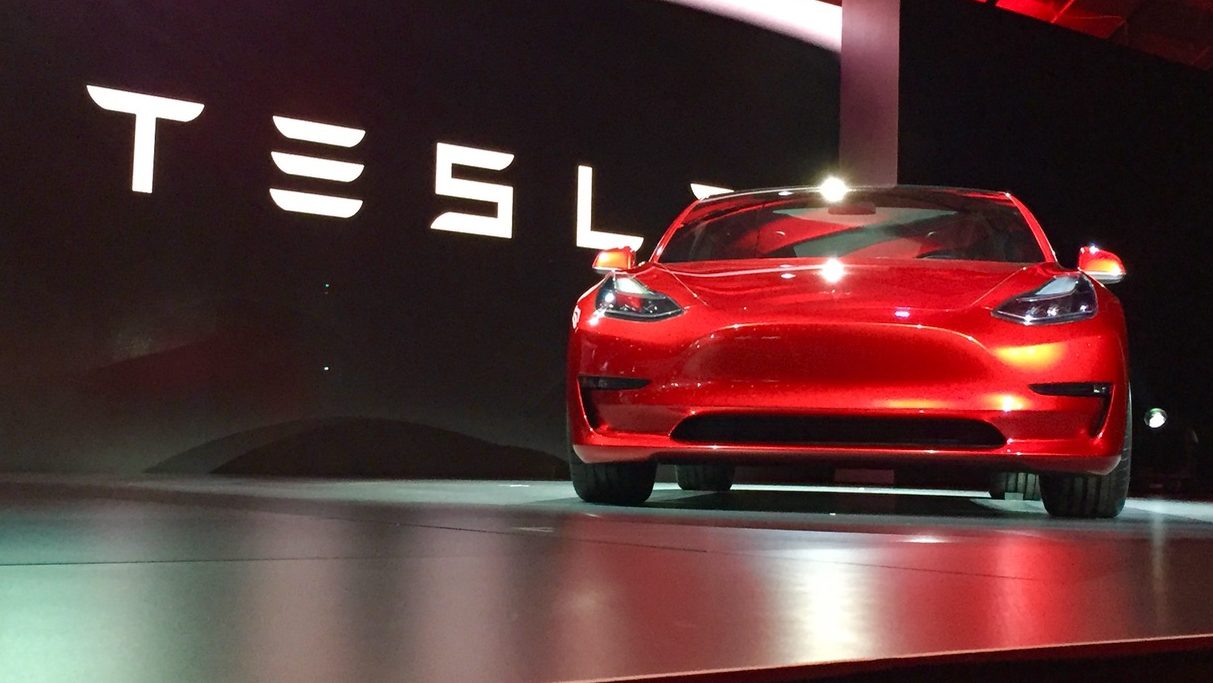
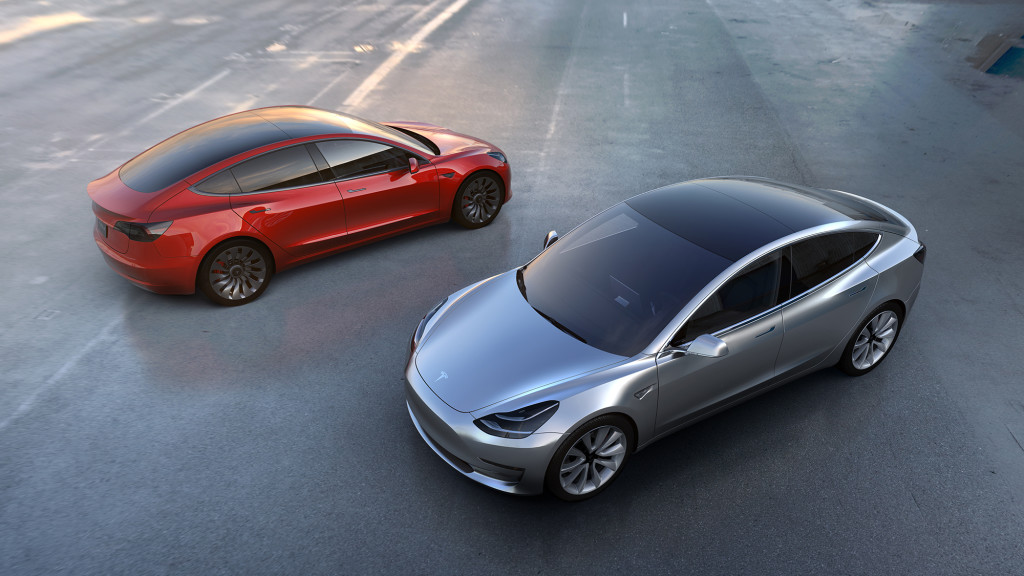
We know the Model 3 will have a dual motor all wheel drive capability, but it’s unclear whether this will be standard or available as an upgrade. The Model 3 prototypes seen at the unveil event also had varying door handles among the three vehicles present. As we begin to see more Model 3 sightings across California, we’ll soon find out which direction the Tesla team will take in terms of the final specs.
Tesla Model 3 Design – Interior
The Model has a spacious interior and one that differs significantly over its Model S and Model X siblings. Photos of the Model 3 shows a missing dashboard and a 15″ center-mounted touchscreen in landscape orientation.
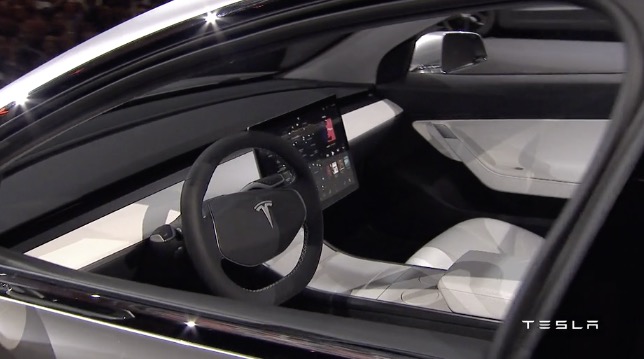
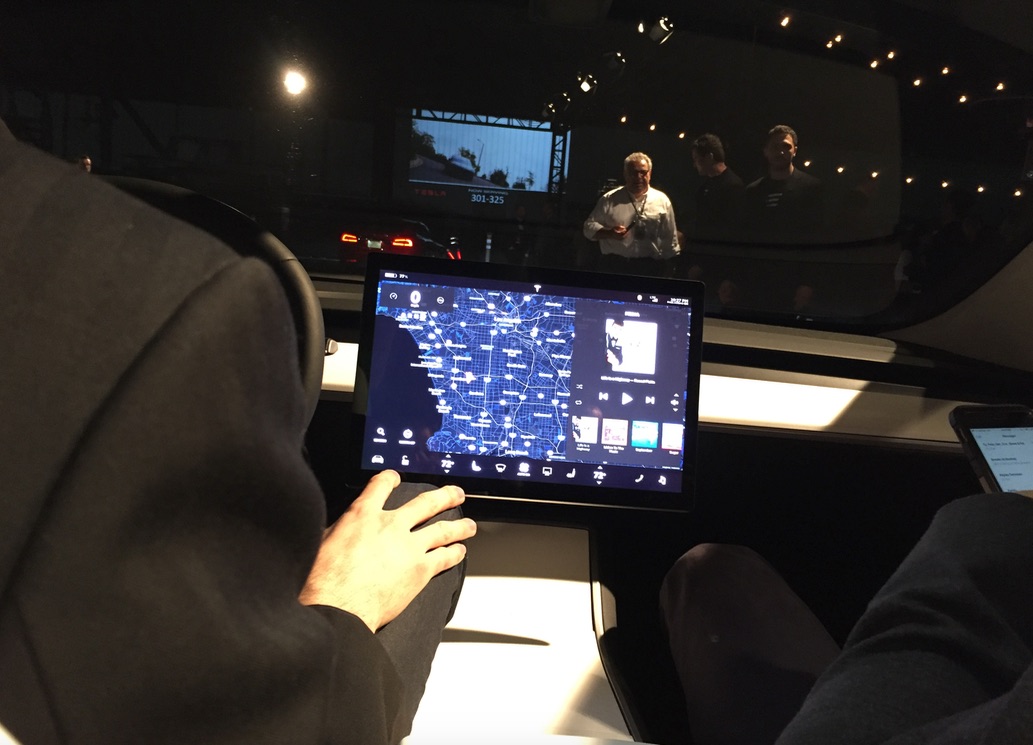
Similar to early pictures of the Model X prototype that showed a large screen protruding from the dash, I believe the Model 3 touchscreen in its current configuration is just a placeholder and will change once in production. I doubt the screen will remain in its current set up as it would be prone to being damaged due to lack of structural rigidity in its mounting position.
Tesla also seems to have gotten over their aversion to center consoles. New Model S and Model X come with a center console as a standard offering, and the Model 3 seems to have one as well.
Summary
Part of Elon’s presentation that I thought was critical to Tesla’s future success is the continued expansion of the Supercharger network, Stores, and the Service centers they operate across the world. The company plans on doubling the Supercharger network and quadrupling destination chargers by the end of next year.
Overall I was very impressed with the Model 3 launch event. The stores handled the volume well, the presentation was pretty much on time, and provided just enough information to keep potential buyers intrigued, while holding back on future details. The Model 3 didn’t have that many surprises and thats a good thing. Tesla didn’t need another over-engineered car.
Watch the full Model 3 unveiling presentation by Elon Musk:


Elon Musk
Elon Musk drops a surprise update on Boring Company’s next big dig
Musk says Boring Company could shrink the Austin to San Antonio drive to just minutes.

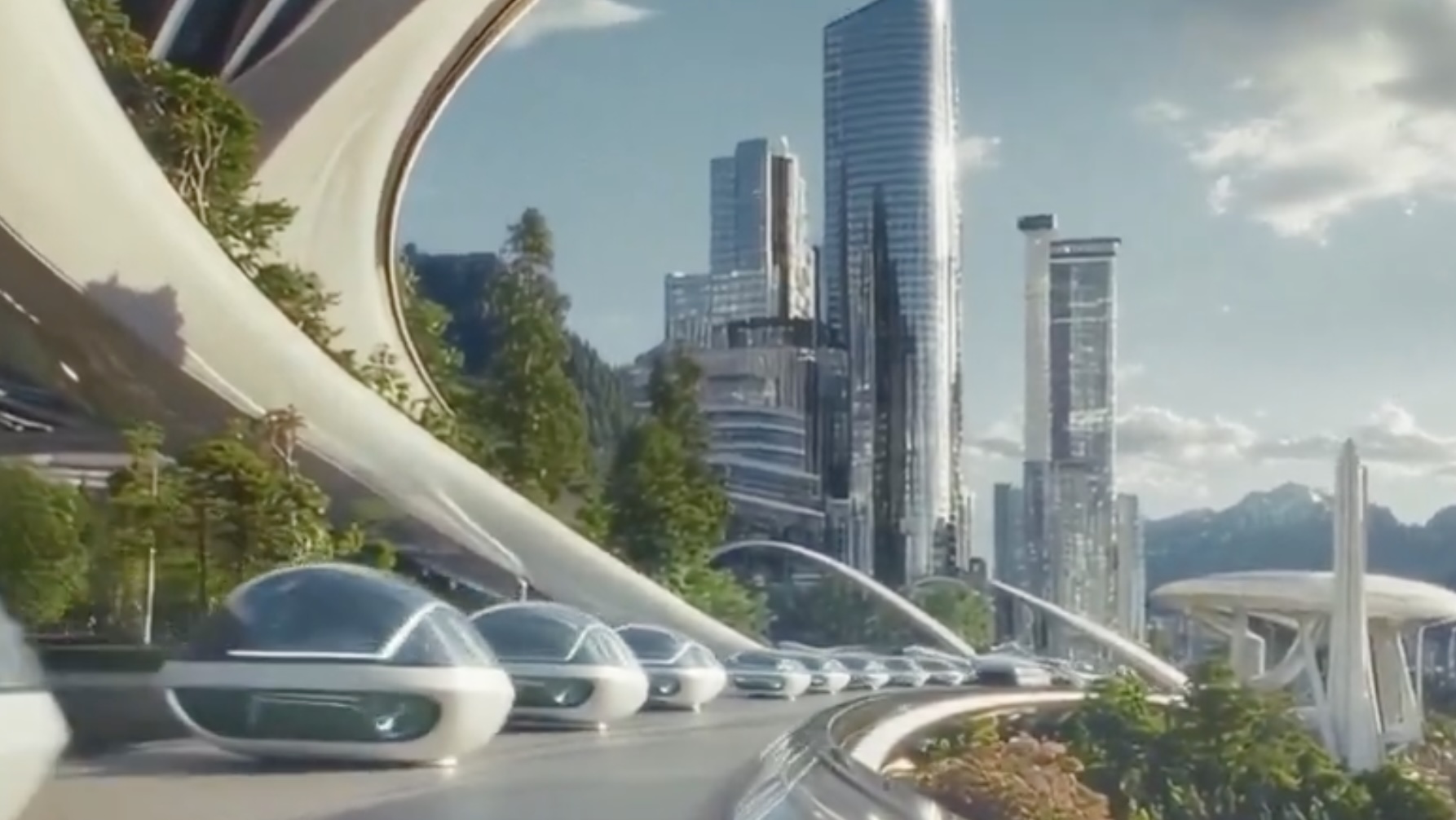
Elon Musk says The Boring Company is working on what he called “a simple, precursor Hyperloop” tunnel connecting Austin and San Antonio, targeting speeds above 200 mph and cutting a drive that can take up to two and a half hours down to a consistent under 30 minutes. Musk posted the idea on X Sunday, in a reply to a repost of an AI generated video imagining a science fiction future with human colonies on other worlds, which he shared with the line “This is the future we shall bring into being.”
This is the future we shall bring into being pic.twitter.com/8aD0w8MDVc
— Elon Musk (@elonmusk) September 20, 2026
The Boring Company’s own account picked up the idea in the same thread, adding a detail about how the trip would actually work: “Because Loop/Hyperloop is express (i.e. no intermediate stops), one could travel from an Austin parking lot to a favorite San Antonio restaurant in about 30 minutes. As long as they both have Loop stations.” That framing ties the proposed intercity link to the same station model the company already runs in Las Vegas, where riders enter the tunnel network through small, garage style stops rather than one central terminal.
This is not the company’s first run at the Austin to San Antonio corridor. Boring Company floated tunnels between the two cities as far back as 2021, and later competed for a separate San Antonio Loop project tied to the airport before that specific bid stalled. Pitches for tunnels in Chicago, Los Angeles, and a New York to Washington corridor have followed a similar pattern of big announcement without a shovel in the ground.
What is different this time is the balance sheet, especially since The Boring Company closed a 3 billion dollar funding round led by investors in the United Arab Emirates earlier this month at a valuation near 23 billion dollars, giving the tunneling company more capital to chase speculative projects than it had during its earlier Texas pitches. The company is also mid-build on two other intercity systems it has actually broken ground on, inc;luding a Nashville tunnel linking downtown to the airport, where a second boring machine finished commissioning in June, and its Las Vegas network, where the station count keeps climbing on paper faster than tunnels get dug.
That gap between announcement and execution is the reason to treat Sunday’s post as an opening bid rather than a project. A tunnel spanning roughly 80 miles between two metro areas, running at speeds Boring Company has not demonstrated over any real distance, would dwarf anything the company has built. For now, the Austin to San Antonio Hyperloop exists as a caption under an AI generated space video.
Elon Musk
Tesla eyes supply partners for Optimus mass production
Tesla certified three Chinese suppliers for Optimus mass production, signaling its robot timeline is accelerating.
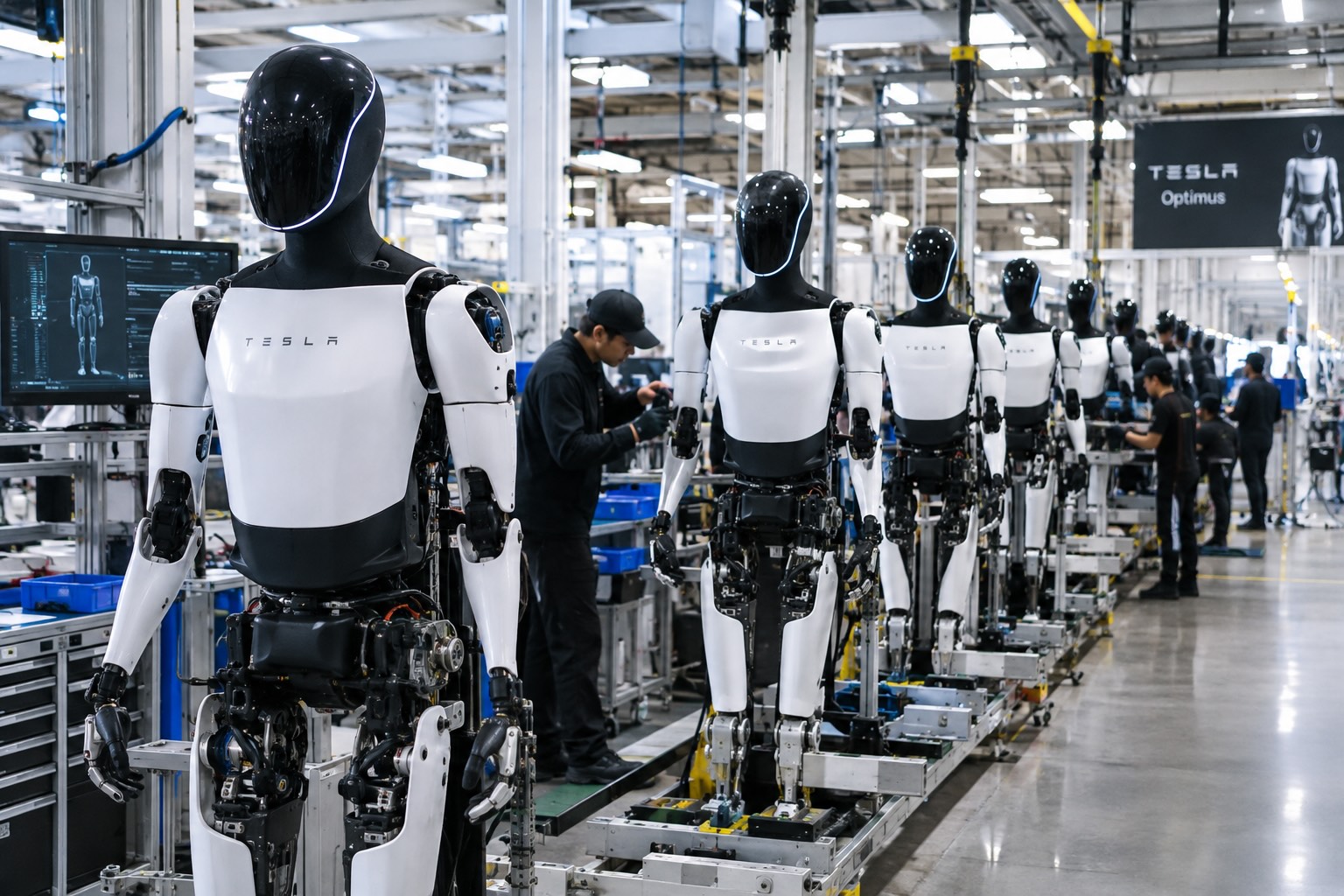
Tesla’s robotics team traveled to Ningbo, in China’s Zhejiang province, on September 16 and spent the following day auditing component suppliers for Optimus, according to a Bloomberg report cited by RobotAIGeek. The visit moved three manufacturers from provisional status to certified mass production partners: Tuopu Group, which handles actuators and chassis components, Ningbo Joyson Electronic, a sensor supplier, and Zhejiang Sanhua Intelligent Controls, which builds thermal management systems. All three already supply parts to Tesla’s electric vehicles, and the audit reportedly came with fresh orders that supply chain reports put at an initial batch of roughly 5,000 units.
Tuopu, Joyson, and Sanhua built their manufacturing base serving the automotive industry, where tolerances and volume requirements are already close to what a mass produced humanoid robot demands. Sanhua in particular has history here. Teslarati reported last October that the company had received a roughly $685 million order for linear actuators tied to Optimus, a volume industry watchers estimated could cover around 180,000 robots once production ramped.
Supply chain reports tied to this week’s audit put Tesla’s near term production goal at about 1,000 Optimus units a week by late September, rising to 2,000 to 2,500 units a week by the end of the year. That pace would put real weight behind the timeline Tesla has been building toward since May, when it wound down Model S and Model X production at Fremont to convert that floor space into a dedicated Optimus line targeting one million units annually. JPMorgan analysts who toured the factory in August confirmed the conversion took roughly four months, a pace Musk has called unprecedented for a facility that size.
New drone video shows Tesla’s Optimus Factory reaching a turning point
Fremont is only the first phase. A second, larger Optimus plant is rising at Gigafactory Texas, where drone footage shared by Joe Tegtmeyer last week showed the structural steel nearing completion on the north end of the building. Tesla has said that facility is meant to eventually support production of up to 10 million units a year, though volume output there is not expected before 2027.
Commercial sales of Optimus are still targeted for the second half of 2027, but production is expected to start well before then. JPMorgan analyst Rajat Gupta has said Tesla’s “Optimus Academy” program, which uses early units to collect real world training data inside Tesla’s own facilities, is expected to be running later this year. Bloomberg Intelligence analyst Ian Ma described the Ningbo audits as “a positive commercialization signal for China’s humanoid supply chain,” noting that sentiment could improve further if the visit leads to confirmed supplier nominations and larger orders. The Solactive China Humanoid Robotics Index rose about 1.4% on the news, though it remains down roughly 30% for the year.
Elon Musk
Tesla primes Cybercabs for 4K streaming and high bandwidth gaming with Starlink integration
Tesla is now shipping Cybercabs from Giga Texas with Starlink hardware built in as standard.
Tesla’s Cybercabs are now leaving Gigafactory Texas with Starlink hardware on the rear hatch in significant numbers, according to drone footage captured Tuesday by longtime Austin drone observer Joe Tegtmeyer. Production at the factory ramped back up after the Labor Day weekend, and his flyover of the outbound lot showed rows of gold Cybercabs alongside Model Y Long Wheelbase units, many carrying the satellite module for the first time as standard equipment rather than a one off retrofit.
Giga Texas today is busy with production coming back up following the long weekend. Of interest today in the outbound lot is the appearance of hundreds of Mode; YL’s and many more Cybercabs and for the 1st time equipped with the Starlink module one the hatch in big numbers.
At… pic.twitter.com/G9yl6s51m4
— Joe Tegtmeyer 🚀 🤠🛸😎 (@JoeTegtmeyer) September 8, 2026
Tesla first showed Starlink built into an actual Cybercab on August 10, when the Robotaxi account posted images of a single gold unit with the antenna integrated into the roofline above the taillights and called it the first Cybercab with Starlink integration. That followed a July reveal where Tesla and Starlink jointly posted a cutaway diagram of the antenna placement without a working vehicle to back it up. Ashok Elluswamy, Tesla’s VP of AI software, said at the time that the connection isn’t required for the car to drive itself. It exists mainly for navigation, customer service and keeping tabs on the fleet.
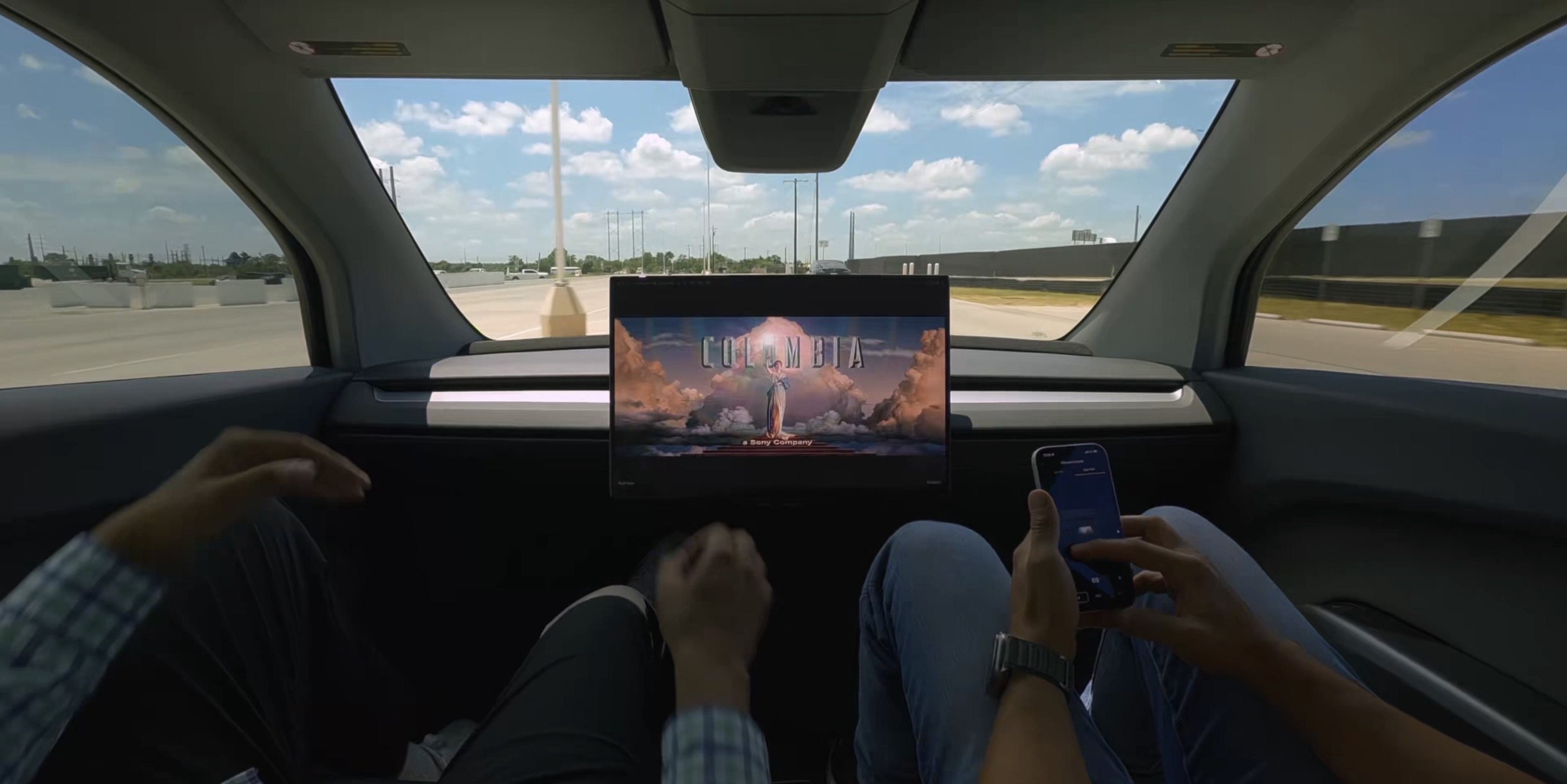
Musk has made a different case in public. During Tesla’s Q2 earnings call, he said the company can’t afford robotaxis stranded in what he called “Bermuda Triangles of lack of cellular connectivity,” and he separately claimed on X that Starlink will eventually reach every Tesla built, calling it the only way to deliver high bandwidth to billions of vehicles. He has also pitched the antenna as an entertainment upgrade, telling riders they would be able to stream 4K video or play games during a trip.
The rollout has moved fast since. Robotaxi service opened to the public in Austin on September 3, and Cybercabs had already been spotted with Starlink hardware in Houston and near Miami International Airport in the weeks before Tuesday’s factory footage showed the module shipping at volume rather than on scattered test units. Whether the satellite link earns its keep is still an open question. Tesla’s unsupervised service currently runs in dense metro geofences in Texas and Florida, markets where cellular coverage is already strong, which is not where the rural dead zones Musk describes tend to show up.

Why automakers keep turning down Elon Musk’s Tesla Full Self-Driving offer

Tesla Roadster is available for order once again following brief hold


