News
How humans will colonize Mars: Elon Musk livestream

Speaking at the International Astronautical Congress in Guadalajara, Mexico today at 2:30PM ET, Elon Musk will unveil his plans for making humans a multi-planetary species. As part of the plans, it’s widely anticipated that the billionaire entrepreneur and CEO to SpaceX will also provide an inside look at how the company’s new Raptor engine will be able to transport humans to Mars.
Colonizing Mars will require more than sending a manned spacecraft to the Red Planet – something Musk looks to achieve within a decade. During the one-hour long presentation titled “Making Humans a Multiplanetary Species”, Musk will discuss the “long-term technical challenges that need to be solved to support the creation of a permanent, self-sustaining human presence on Mars,” according to program notes for the event. SpaceX has been recently spotted testing its Dragon crew capsule which it will eventually use in an unmanned mission to Mars as early as 2018.
Despite SpaceX’s ambitious plans to have humans set foot on on the Red Planet by 2025, experts believe the year-long 140 million mile (225 million kilometers) flight to Mars would not only require a major feat of engineering and budget – something SpaceX may not be able to afford on its own – but also have a great impact on human health.
According John Logsdon, former director of the Space Policy Institute at George Washington University, via Phys.org, “It’s unlikely that (Musk) will be able to get humans on Mars by 2025. You’re talking of tens of billions of dollars and SpaceX doesn’t have that type of money.” However, despite the skepticism, “it’s exciting to have someone with the vision” and “we are all interested to see what he has in mind and whether he can make a compelling case,” Logsdon added.
Watch the live stream (above) as Elon Musk and SpaceX reveal their plans on how to make humans a multi-planetary species.


News
Tesla’s surprise Roadster video hints the 2017 design is gone
Tesla ended its Semi event with a Roadster teaser revealing a new front light bar.
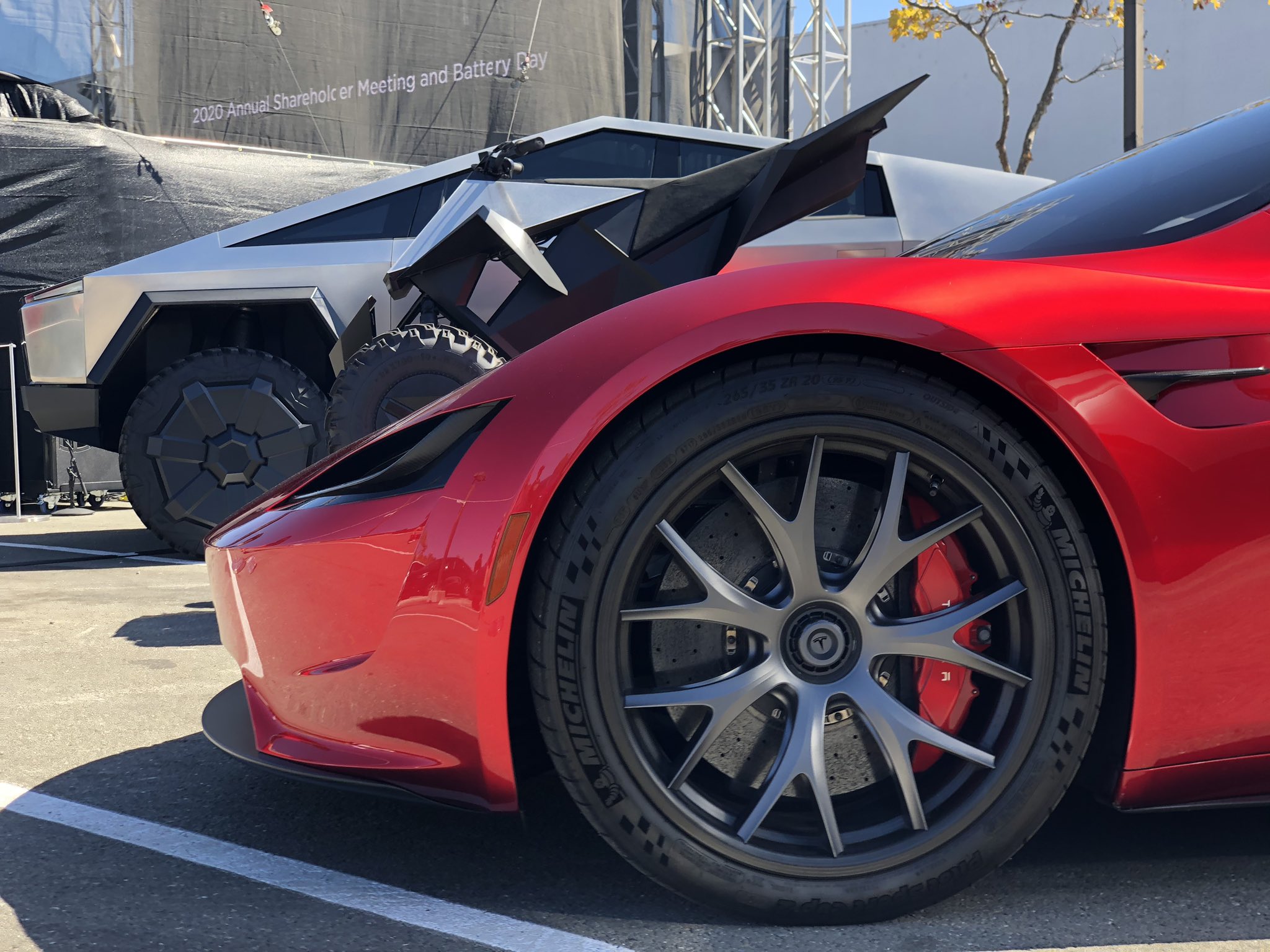
Tesla closed out its Semi event in Nevada on Thursday night with a nod to its own history, dropping a short Roadster teaser that suggests the production car will look noticeably different from the prototype first shown in 2017.
“We can’t have a Semi event without the Roadster,” Tesla engineering executive Lars Moravy told the crowd before the clip played. The line was a deliberate callback. Tesla first revealed the next generation Roadster in November 2017 by driving it out of the back of a Semi trailer at the truck’s original unveiling in Hawthorne, California.
The new video opens on trailer doors swinging apart in the dark. A thin white light bar glows across what appears to be the nose of the car, Tesla and SpaceX logos flash over the frame, and the Roadster name appears before the clip ends on “See you next week.” Tesla posted the nine second clip on X after the livestream wrapped.
See you next week pic.twitter.com/BT52bGVxFu
— Tesla (@Tesla) September 25, 2026
The light bar is the most concrete design detail so far. The 2017 prototype used two separate curved headlamp pods, while a connected front light strip would bring the Roadster in line with the Cybertruck, Cybercab, Semi, and refreshed Model Y. Sawyer Merritt was among the first to point out what looked like part of a SpaceX logo in the video, something Tesla has not addressed.
That logo fits the buildup around the optional SpaceX Package, which Elon Musk has long said would use cold gas thrusters to improve acceleration and possibly allow the car to briefly leave the ground. Tesla’s “Go for launch” post on September 12 set the October 1 date, and invitations sent to reservation holders place the event in Waco, Texas, at 8:30 p.m. Eastern. Waco sits roughly 20 minutes from SpaceX’s McGregor rocket test site, where the FAA has put a temporary flight restriction in place from September 18 through October 2, covering a 1.5 nautical mile radius from the surface up to 10,000 feet.
Tesla is also taking money ahead of the reveal. The company reopened Roadster reservations earlier this week with a $5,000 refundable card payment, followed by a $45,000 wire transfer due within 10 days. That puts buyers at $50,000 committed before Tesla has published a price.
The original pitch set a high bar: 0 to 60 mph in 1.9 seconds before any upgrades, 620 miles of range, a top speed above 250 mph, and production in 2020. That timeline has slipped repeatedly, and Tesla has since pointed to production at Gigafactory Texas no earlier than 2027. The company has said next Thursday’s event will include pricing, specifications, and production targets, the three details original reservation holders have been waiting on for nearly nine years.

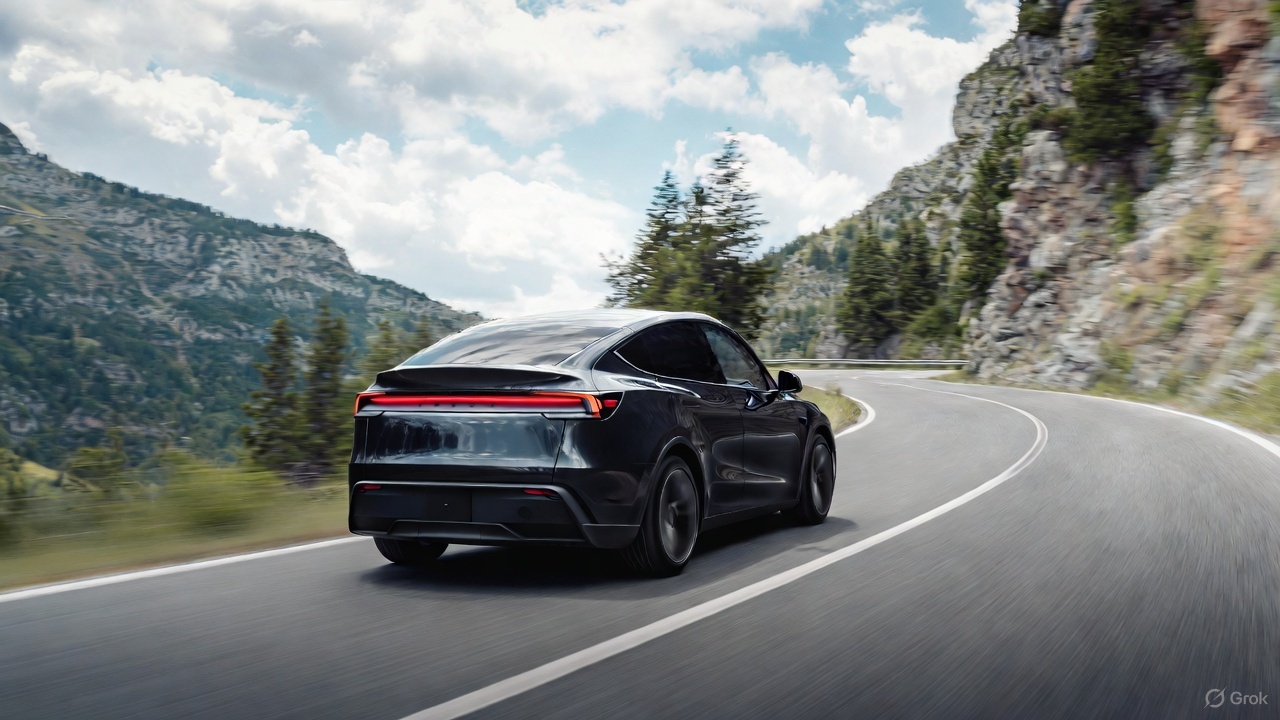
Tesla Full Self-Driving’s release in Europe is set to be delayed by at least a few months.
The European Union will not vote on Tesla’s Full Self-Driving (Supervised) on October 6. The draft agenda for the 119th meeting of the Technical Committee on Motor Vehicles lists only a 25-minute “continuation of discussions” on the Netherlands’ Article 39 request, not a decision. The next scheduled TCMV session is in December, which is now the earliest date a bloc-wide vote could occur.
Tesla Europe had pointed to October 6 as a possible EU-wide vote after the Dutch vehicle authority RDW granted the first European type approval on April 10.
That approval, under UN Regulation 171 plus an Article 39 exemption in EU Regulation 2018/858, is the legal file other member states have been recognizing one by one. The same committee has already discussed the request twice without voting.
Elon Musk’s reply to the delay was a single word: “Sigh.”
Sigh
— Elon Musk (@elonmusk) September 25, 2026
Seven EU countries have now cleared FSD Supervised on their own roads: the Netherlands, Lithuania, Estonia, Denmark, Belgium, Slovenia, and Czechia. Those seven states represent about 53 million people, or roughly 12 percent of the EU population. An EU-wide authorization still needs a qualified majority: at least 15 of 27 member states representing 65 percent of the bloc’s population, about 292 million people.
Germany, France, Italy, and Spain remain the decisive markets. France has already rejected the current system; several other governments have flagged speed-limit compliance as the main sticking point.
The safety case Tesla is putting in front of those governments is now public. On September 1, Tesla Europe said FSD Supervised was in use by more than 70,000 customers, covering over 1 million kilometers a day, and was 4.1 times less likely to be involved in a crash than manual driving across 100 million kilometers on EU public roads.
An earlier mid-year cut of the same fleet data, covering 65 million kilometers in five approved countries, put the collision advantage at 5.2 times, with zero highway collisions over 41.9 million kilometers. Tesla also reported far fewer automatic emergency braking events, harsh accelerations, and hard swerves than in comparable manual Tesla driving. Those figures are company-reported, not independently audited.
Tesla Full Self-Driving is taking over Europe: fourth country gets FSD approval
The public-health backdrop is harder to dispute. European countries recorded about 19,400 road deaths in 2025, or roughly 53 a day, most of them attributed to human error. FSD Supervised is not unsupervised autonomy; the driver remains legally responsible. But the software is already legal and in daily use across seven member states.
Until TCMV votes, the rest of the EU remains a patchwork: available in Prague and Amsterdam, locked behind review in Paris and Berlin. December is now the next chance to close that gap.
News
SpaceX readies Starship Flight 14 for a historic journey into uncharted territory
SpaceX finished Starship’s Flight 14 rehearsal, clearing the way for its first orbital flight Monday.
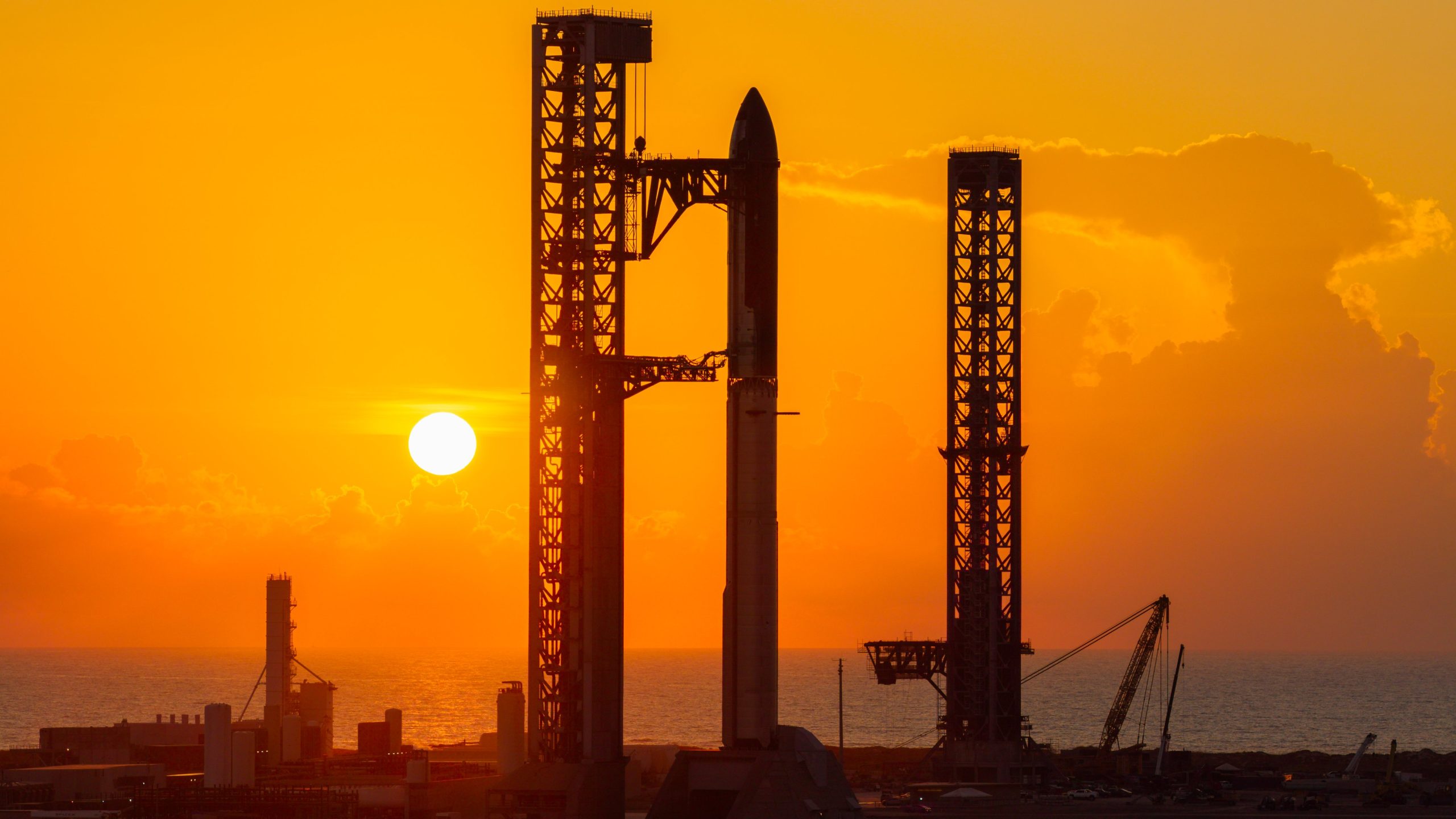
SpaceX has cleared one of the last hurdles before Starship’s first trip to orbit. The company posted on X Thursday afternoon that its launch rehearsal for Flight 14 was complete, keeping the mission on track for Monday, September 28. The launch window opens at 7:15 a.m. CT at Starbase, Texas, and runs for 75 minutes.
A wet dress rehearsal is essentially launch day without the launch. Crews fill Booster 21 and Ship 41 with thousands of tons of extremely cold propellant, run the countdown nearly to ignition, then drain everything back out. It lets engineers catch leaks or equipment problems before anything leaves the pad. SpaceX still needs a launch license from the FAA before the stack, which stands 407 feet tall, can fly.
Flight 14 matters because of where it is going. All 13 previous Starship flights followed a suborbital path, which works like throwing a ball extremely high and far: the vehicle reaches space, but it is always on a course that brings it back down within about an hour. This time, Ship 41 will perform a short engine firing called an orbital insertion burn roughly 25 minutes after liftoff, giving it enough speed to keep falling around Earth instead of back into it. SpaceX plans about six laps at an altitude near 275 kilometers (171 miles) over nearly 10 hours, as Teslarati detailed when the mission was first announced.
Launch rehearsal complete ahead of Starship Flight 14 pic.twitter.com/h5LBYyBqi4
— SpaceX (@SpaceX) September 24, 2026
Getting into orbit also means Starship has to prove it can get back out. The ship must relight a single Raptor engine in space to slow down for reentry. SpaceX says it will only attempt the orbital insertion burn after flight controllers confirm the hardware needed for that return burn has enough backup, and its flight plan includes health checks that could shorten the mission to two or five orbits.
Flight 14 is also the first to put working satellites into service. Flight 13 carried 20 Starlink V3 satellites in July, but they came back down with the ship because that mission never reached orbit. This time, 26 V3 satellites are meant to stay up and join the constellation within a few weeks. Together they add about 26 terabits per second of network capacity, which SpaceX says is roughly 10 times what a single Falcon 9 launch of older V2 Mini satellites adds. Three of them carry cameras that will photograph Starship’s heat shield in orbit to check for tile damage before reentry.
The hardware has changed too. Ship 41 flies with extra fasteners on tiles in the most vulnerable areas, fixes for gaps where superheated plasma slipped behind tiles, and curved tiles designed to reduce heating between them. Two tiles recovered from Ship 40 will fly again, the first reuse of any part of a Starship heat shield. Booster 21 carries better engine filtering and new relight software after ice clogged three center engines on the previous booster, leaving only eight of 13 engines to restart for its landing burn.
Ship 41 is targeting a splashdown in the Pacific Ocean west of Chile, a new recovery zone after several Indian Ocean landings, while Booster 21 aims for the Gulf. Neither will be caught by the tower on this flight. Elon Musk said in August that a ship catch was likely “in a few months.”

Tesla’s surprise Roadster video hints the 2017 design is gone

Tesla Full Self-Driving release in the EU gets delayed


