Racing
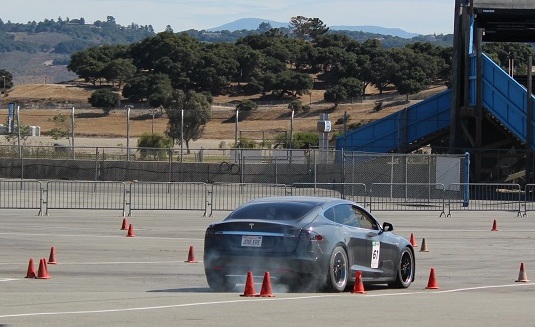
Autocross in a Tesla Model S

What is Autocross?
Do you just have a fast car or are you a fast driver? Turn, turn, turn, and more turns! Autocross is a motorsport that demands diver skill and vehicle handling rather than outright speed.
In ‘thrills-per-second’ autocross is on par with Indy racing! Different forms of autocross are practiced around the world; some include unpaved surfaces while others challenge multiple drivers at the same time in ‘wheel to wheel’ racing. All of my experience comes from American Autocross. American Autocross typically consists of a course marked out with cones set up in an open parking lot or tarmac. Cars run through the course one at a time while being monitored by a timer.
Events are open to most vehicles, daily drivers, ‘beaters,’ built race cars, and even some classic cars compete. With such a wide assortment of vehicles there will clearly be some that have advantages over others. These differences are mitigated through the use of a car classing system which keeps competition between different vehicles at a maximum by scaling the ‘slower’ cars by a time factor. Specs such as horsepower, weight, drive train/engine layout and what modifications have been made to a vehicle determine the class it may compete in.
What’s fun about Autocross?
Fun, adrenaline, competition and more! My introduction to autocross was through a local race driving & safety school. We practiced high speed emergency lane changes, some slalom, a figure 8 and a decreasing radius spiral. This event also included a day of autocross which was enough to get me a little hooked. Autocross allows you to legally learn your cars limitations and boundaries + push them a bit. In many emergency situations this may be extremely invaluable (I recommend every driver do some form of auto X at least once!).
RELATED: 5 Laps of Autocross (Enduro) in a Tesla Model S
Our paved space is rather small but there are so many ways to set up a track that I doubt I’ll ever see the same thing twice. Each morning before the race you get to walk the course and try and figure out the best line to drive, kind of like a puzzle (I like puzzles) Most of the kids and elder kids that participate locally are out to have some fun. We have some pretty competitive drivers in a variety of competitive (quick) cars. One of the most exhilarating things to do at an event is ride along with one of these people. It is pretty much like being in a flat land rollercoaster but even more thrilling with a good driver in a proper car.
Tesla Model S autocross setup
My car is a 2012 P85 with air suspension and pano roof. I started out doing the race driving school on my 21” Continentals from the factory which ended up killing my tires that very same day, and this was on tires that barely had 8k miles on them! Within a few weeks I bought a set of 19” staggered MRR wheels and put some Potenza RE-11s on them. I bent one of the MRRs at Laguna Seca and am currently running 255/285 Michelin Pilot Super Sports on 19” Forgestar CF5V wheels. This set up feels pretty nice to me (I think I might try the Hankook RS3 V2s next).
I run with regenerative braking on standard and traction control turned off. My seat position for racing is set much higher and a little more forward than I normally like. It really helps see the front corners of the car a bit plus it gives better steering control. I am still torn on what steering setting I prefer, I have tried all. Comfort is good sometimes because you can really move the car quick but almost too quick and it loses the feel of traction. Sport feels almost too stiff in hard braking/turning transitions but allows a better feel of what the front wheels are doing – scrubbing or sticking. I currently have been using the standard setting but may try a couple during some events. My alignment is to factory spec and I haven’t played with that yet. I think I might look into front shocks/ alignment if I do any changes.
Pros of a Model S in autocross
Well, it is quiet and it doesn’t smell funny either! I think the biggest advantage of the S in Autocross is that there is only 1 gear and the quickness of the S is in the <50mph region. The car is in the peak power band for most of an autocross course. Balance of the S is perfect and the rear wheel drive allows you to slightly drift out of corners or upset the car a bit to get it to rotate. The Brakes on the S are amazing, I have only really started to feel brake fade once and that was in a 5 lap Enduro event. Regen is also a bonus for the S in autocross. As you let off of the brakes when turning into a corner regen allows a tiny bit of natural trail braking into an apex.
Cons of a Model S in autocross
It is a massive car! Big size wise and it is quite heavy to be tossing around. Conservation of momentum is not your friend when completely changing directions. The Silence of the car is not good for safety of course workers either, loud exhaust notes of all the other cars gives a heads up that you should be watching. The S only really lets out squealy tire noises.
How does it compare against other cars?
Well, I have never raced in any other car so I really can’t give a firsthand comparison to anything. The Tesla Model S is classed in the F Street category (Formerly F Stock). This class is comprised mostly of V8 sedans, pickups and sedan derived convertibles. A few of the vehicles included are the V8 Audi S4, Camaros, Chrysler 300C, Dodge SRT8, Mustangs, and Firebirds. Until recently my competition has come from a 2013 M3. There have only been a few times that he has run faster than me but the competition between us has been pretty tight. Now I am being challenge by a 2014 CTS-V coupe driven by a man that comes from a racing family and has raced his whole life! In the last autocross I managed to top his time by over 1 second so I am holding my own pretty well. I have heard quite a few compliments of my driving skills and such so I take it I am doing it ‘right’. Personally I think the Model S is the best F Street car but I *might* be biased.


Cybertruck
Tesla Cybercab just rolled through Miami inside a glass box
Tesla paraded a Cybercab in a glass display at Miami’s F1 Grand Prix event this week.

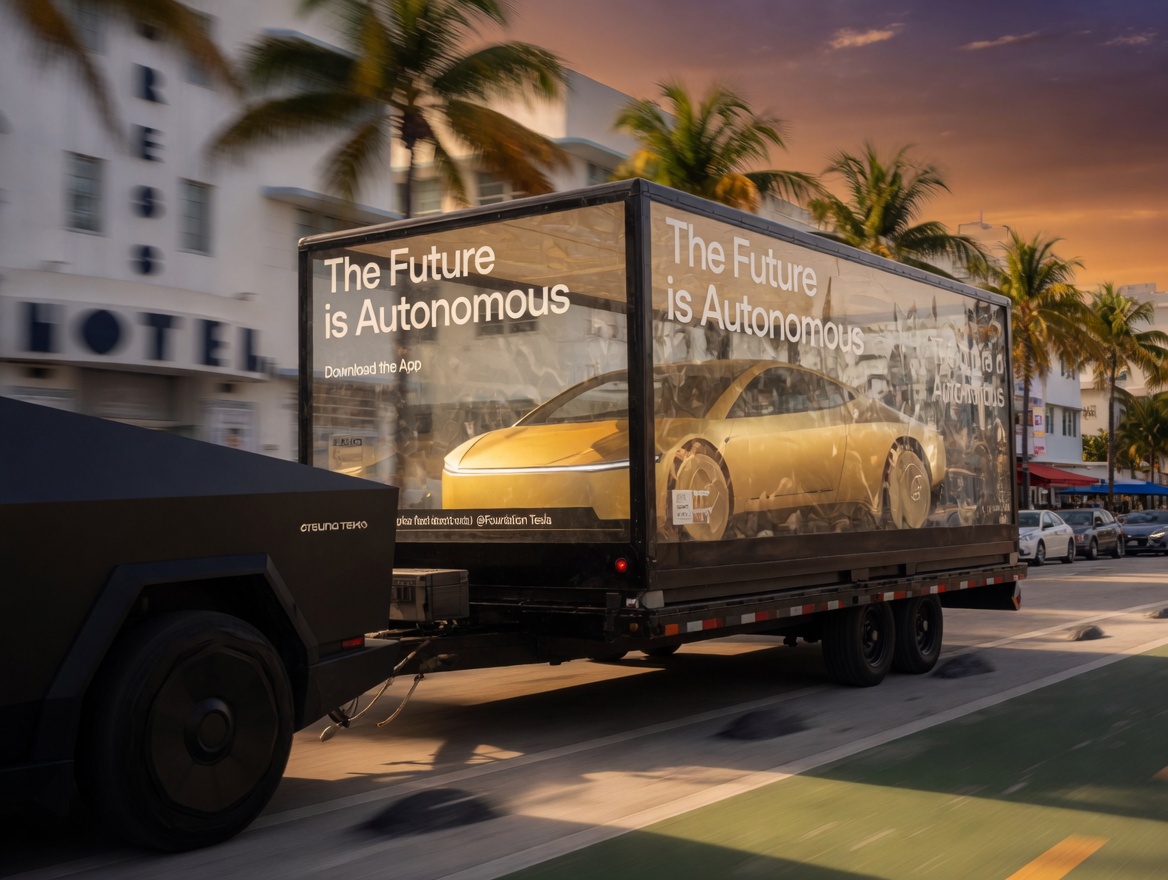
Tesla set up an “Autonomy Pop-Up” at Lummus Park in Miami Beach from April 29 through May 3, 2026, embedded within the official F1 Miami Grand Prix Fan Fest. The centerpiece was a Cybertruck towing the Cybercab inside a glass display case marked “Future is Autonomous,” rolling through the beachfront crowd.
Miami is on Tesla’s confirmed list of cities for robotaxi expansion in the first half of 2026, making the promotion a strategic promotion that lays groundwork in a target market.
This was not Tesla’s first time using Miami as a showcase city. In December 2025, Tesla hosted “The Future of Autonomy Visualized” at its Miami Design District showroom, coinciding with Art Basel Miami Beach. That event featured the Cybercab prototype and Optimus robots interacting with attendees. The F1 pop-up this week marks Tesla’s return to Miami and follows a pattern Tesla has been running since early 2026. Just two weeks before Miami, Tesla stationed Optimus at the Tesla Boston Boylston Street showroom on April 19 and 20, directly on the final stretch of the Boston Marathon, letting tens of thousands of runners and spectators meet the robot for free, generating massive earned media at zero advertising cost.
Tesla is sending its humanoid Optimus robot to the Boston Marathon
Tesla has confirmed plans to expand its robotaxi service to seven cities in the first half of 2026, including Dallas, Houston, Phoenix, Miami, Orlando, Tampa, and Las Vegas, building on the unsupervised service already running in Austin. Musk has said he expects robotaxis to cover between a quarter and half of the United States by end of year. On the production side, Musk told shareholders that the Cybercab manufacturing process could eventually produce up to 5 million vehicles per year, targeting a cycle time of one unit every ten seconds. Scaling robotaxis to 10 million operational units over the next ten years is a key condition of his compensation package, alongside selling 20 million passenger vehicles.
As for the Cybercab’s price, Musk has said buyers will be able to purchase one for under $30,000, with an average operating cost around $0.20 per mile. Whether those numbers hold through full production remains to be seen.
Cybercab at F1 Fan Fest in Miami
by
u/Joshalander in
teslamotors
Elon Musk
Elon Musk talks Tesla Roadster’s future
Elon Musk confirmed the Roadster as Tesla’s last manually driven car, with a debut coming soon.
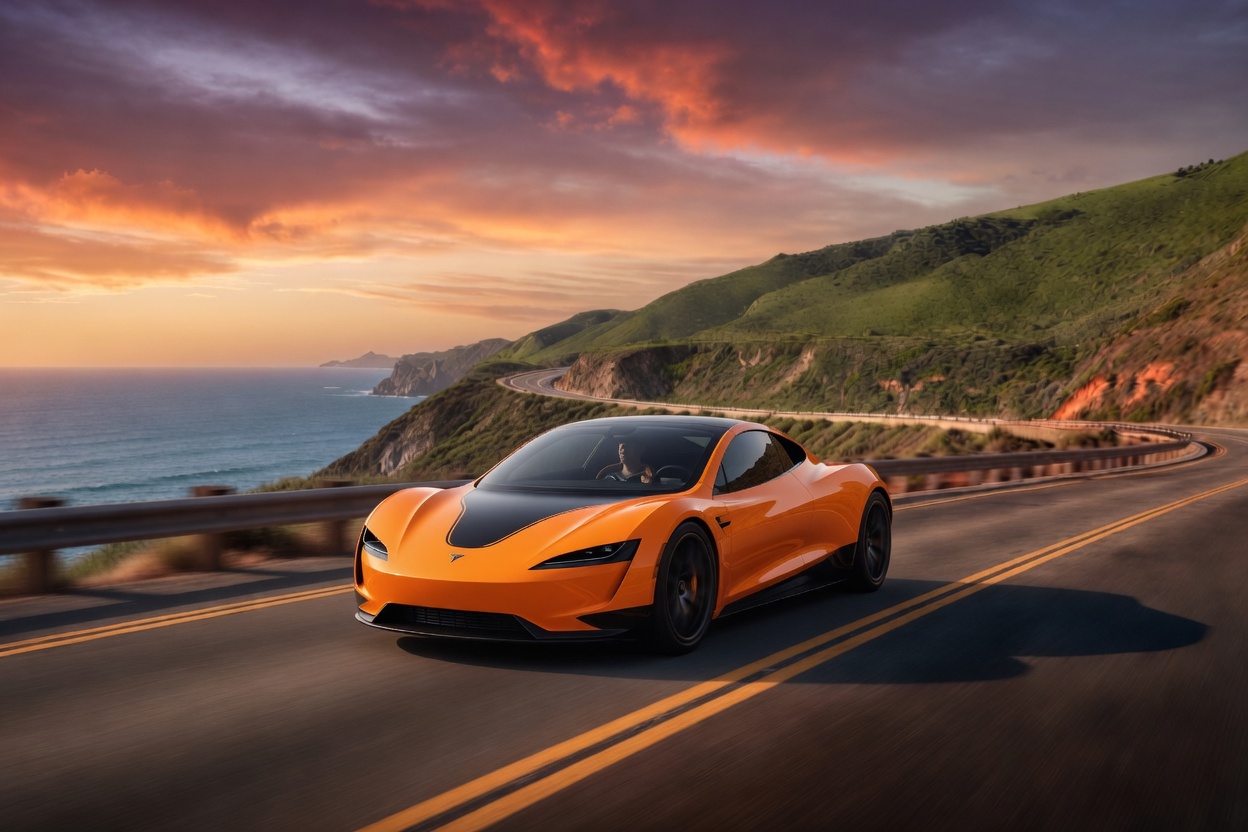
During Tesla’s Q1 2026 earnings call on April 22, Elon Musk made a brief but notable comment about the long-awaited next generation Roadster while describing Tesla’s future vehicle lineup. “Long term, the only manually driven car will be the new Tesla Roadster,” he said. “Speaking of which, we may be able to debut that in a month or so. It requires a lot of testing and validation before we can actually have a demo and not have something go wrong with the demo.”
That single statement is the entire Roadster update from yesterday’s call, and while it represents another timeline shift, it comes as no surprise with Tesla heads-down-at-work on the mass rollout of its Robotaxi service across US cities, and the industrial scale production of the humanoid Optimus.
The fact that Musk specifically framed the Roadster as the last manually driven Tesla is significant on its own. As the rest of the lineup moves toward full autonomy, the Roadster becomes something rare in the Tesla-sphere by keeping the driver in control. Driving enthusiasts who buy a $200,000 supercar are not doing so to be passengers. They want the physical connection to the road, the feel of acceleration under their own input, and the experience of controlling something with that level of performance. FSD, however capable it becomes, removes that entirely. The Roadster signals that Tesla understands this distinction and is building a car specifically for the people who consider driving itself the point.
Tesla isn’t joking about building Optimus at an industrial scale: Here we go
The specs for the Roadster Musk has teased over the years are genuinely unlike anything in production. The base model targets 0 to 60 mph in 1.9 seconds, a top speed above 250 mph, and up to 620 miles of range from a 200 kWh battery. The optional SpaceX package takes it further, rumored to add roughly ten cold gas thrusters operating at 10,000 psi, borrowed directly from Falcon 9 rocket technology. With thrusters, Musk has claimed 0 to 60 mph in as little as 1.1 seconds. In a 2021 Joe Rogan interview he went further, stating “I want it to hover. We got to figure out how to make it hover without killing people.” Tesla filed a patent for ground effect technology in August 2025, suggesting the hover concept has not been abandoned. The starting price remains $200,000, with the Founders Series requiring a $250,000 full deposit. Some reservation holders placed those deposits in 2017 and are approaching a full decade of waiting.
With production now targeted for 2027 or 2028 at the earliest, the Roadster remains Tesla’s most audacious promise and its longest-running delay. But if what Musk is testing lives up to even half of what he has described, the demo alone should be worth waiting for.
Elon Musk says the Tesla Roadster unveiling could be done “maybe in a month or so.”
He said it should be an extraordinary unveiling event. pic.twitter.com/6V9P7zmvEm
— TESLARATI (@Teslarati) April 22, 2026
Lifestyle
Tesla Model S Plaid battles China’s 1500 hp monster Nurburgring monster, with surprising results
There is just something about Tesla’s tuning and refinement that makes raw specs seem not as game-changing.

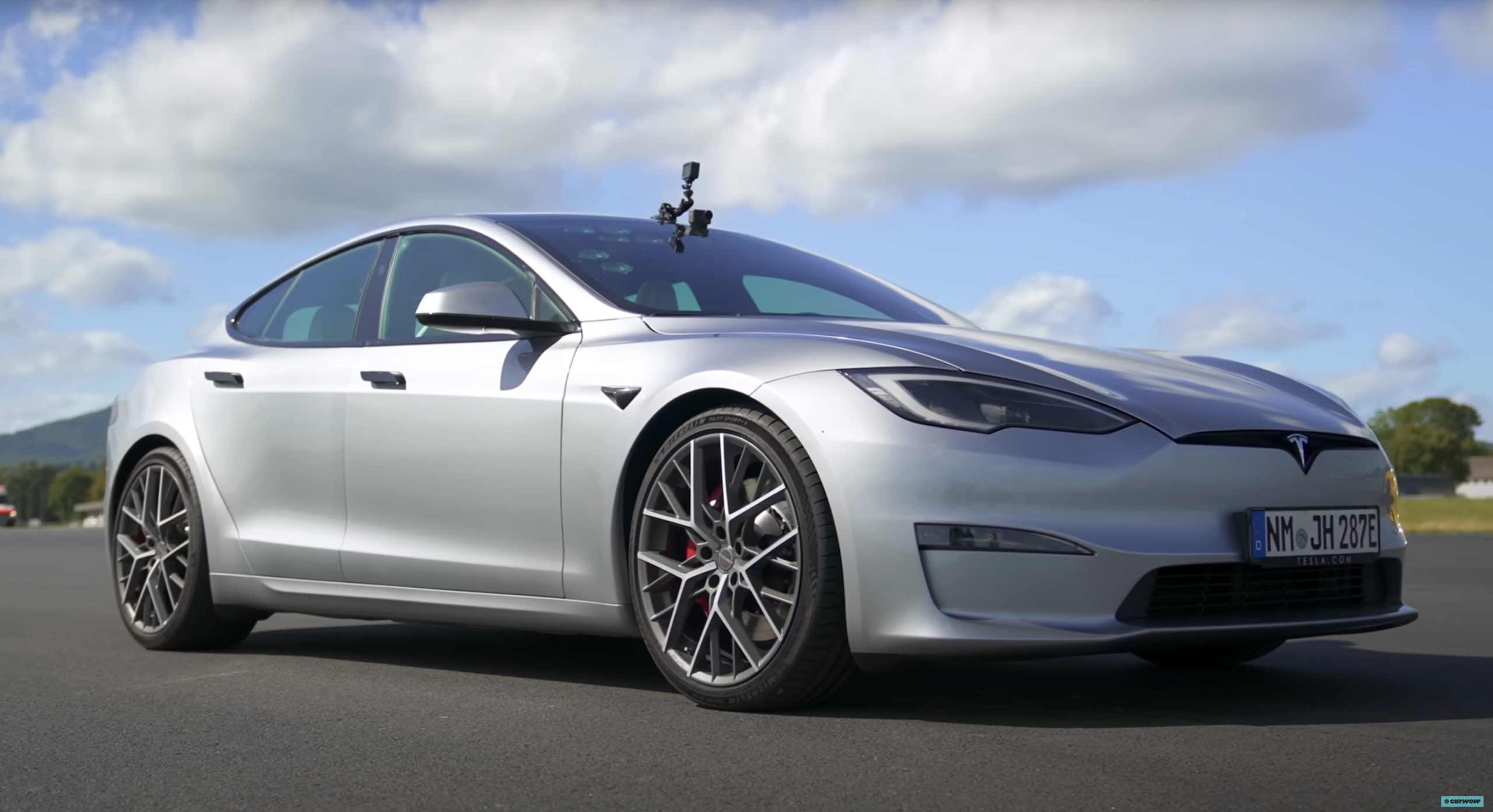
The Tesla Model S Plaid has been around for some time. Today, it is no longer the world’s quickest four-door electric sedan, nor is it the most powerful. As per a recent video from motoring YouTube channel Carwow, however, it seems like the Model S Plaid is still more than a match for some of its newer and more powerful rivals.
The monster from China
The Xiaomi SU7 Ultra is nothing short of a monster. Just like the Model S Plaid, it features three motors. It also has 1,548 hp and 1,770 Nm of torque. It’s All Wheel Drive and weighs a hefty 2,360 kg. The vehicle, which costs just about the equivalent of £55,000, has been recorded setting an insane 7:04.957 at the Nurburgring, surpassing the previous record held by the Porsche Taycan Turbo GT.
For all intents and purposes, the Model S Plaid looked outgunned in Carwow’s test. The Model S Plaid is no slouch with its three motors that produce 1,020 hp and 1,420 Nm of torque. It’s also a bit lighter at 2,190 kg despite its larger size. However, as the Carwow host pointed out, the Model S Plaid holds a 7:25.231 record in the Nurburgring. Compared to the Xiaomi SU7 Ultra’s record, the Model S Plaid’s lap time is notably slower.
Real-world tests
As could be seen in Carwow’s drag races, however, Tesla’s tech wizardry with the Model S Plaid is still hard to beat. The two vehicles competed in nine races, and the older Model S Plaid actually beat its newer, more powerful counterpart from China several times. At one point in the race, the Xiaomi SU7 Ultra hit its power limit due to its battery’s temperature, but the Model S Plaid was still going strong.
The Model S Plaid was first teased five years ago, in September 2020 during Tesla’s Battery Day. Since then, cars like the Lucid Air Sapphire and the Xiaomi SU7 Ultra have been released, surpassing its specs. But just like the Model Y ended up being the better all-rounder compared to the BYD Sealion 7 and the MG IM6, there is just something about Tesla’s tuning and refinement that makes raw specs seem not as game-changing.
Check out Carwow’s Model S Plaid vs Xiaomi SU7 drag race video below.

Tesla gets a massive order for the Semi: 370 units and $100M

Tesla begins factoring international designs in Full Self-Driving visualization


