Elon Musk
Elon Musk reveals unfortunate truth of Tesla Full Self-Driving development
In a candid reply to a dramatic video of Tesla’s Full Self-Driving (FSD) system averting disaster, Elon Musk laid bare a harsh reality facing autonomous vehicle technology.

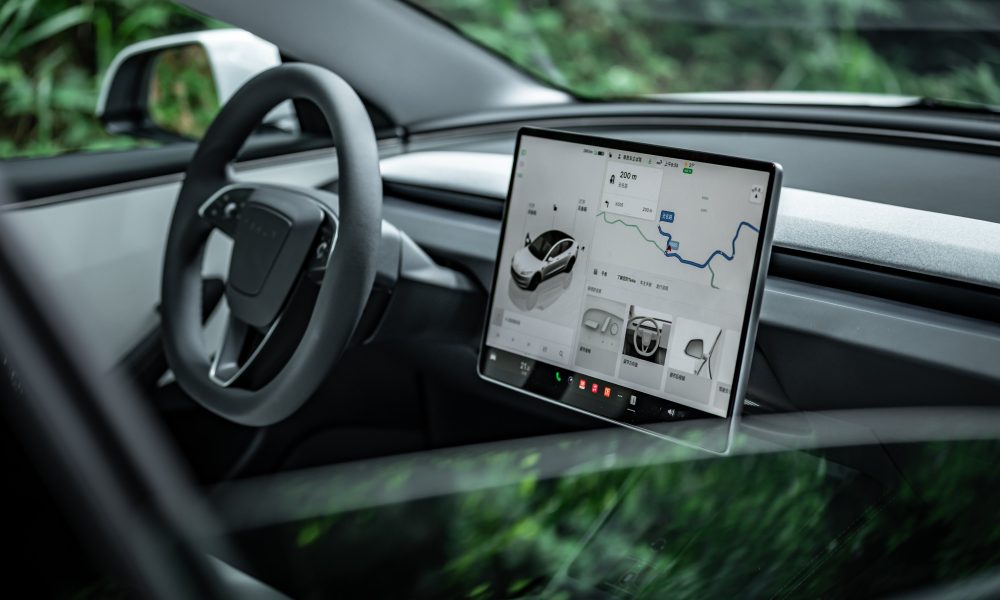
Tesla’s Full Self-Driving suite is one of the most significant technological developments in terms of passenger travel in decades, but it is not all sunshine and rainbows, even with major strides in safety, CEO Elon Musk revealed.
In a candid reply to a dramatic video of Tesla’s Full Self-Driving (FSD) system averting disaster, Elon Musk laid bare a harsh reality facing autonomous vehicle technology.
The clip shows a Model 3 traveling at over 65 mph on a foggy, rain-soaked highway when a pedestrian suddenly steps into traffic.
Full Self-Driving instantly detects the threat and swerves safely, preventing what could have been a fatal collision for both the pedestrian and the driver’s cousin.
Musk’s response was unequivocal:
“Tesla self-driving saves a lot of lives – the statistics are unequivocal. That doesn’t mean it’s perfect, of course.” Even with a projected 10x safety improvement over human drivers, FSD would still prevent roughly 90% of the world’s approximately one million annual auto fatalities. The remaining 10%—roughly 100,000 deaths—would expose Tesla to relentless lawsuits. Meanwhile, the vast majority of lives saved would go unnoticed. “The 90% who are still alive mostly won’t even know that Tesla saved them. Nonetheless, it is the right thing to do.”
This “unfortunate truth,” as Musk implicitly framed it, highlights a fundamental asymmetry in how society perceives safety technology. Human drivers cause the overwhelming majority of crashes through distraction, fatigue, or error.
Tesla self-driving saves a lot of lives – the statistics are unequivocal.
That doesn’t mean it’s perfect, of course.
Even when we improve safety 10X, saving 90% of the million lives lost in auto accidents every year, Tesla will still get sued for the 10% who did die. The 90%… https://t.co/OrNB1mO5eF
— Elon Musk (@elonmusk) April 6, 2026
Yet when FSD errs, the incident becomes headline news and a courtroom target. Prevented tragedies, by contrast, leave no trace.
Survivors simply continue their journeys, unaware of the split-second intervention that kept them alive. The result is a distorted public narrative that amplifies failures while rendering successes invisible.
We have seen this through various headlines throughout the years, including the mainstream media’s obsession with only mentioning the manufacturer’s name in the instance of an accident when it is “Tesla.”
Opinion: Tesla Autopilot NHTSA investigation headlines are out of control
The video’s real-world example underscores FSD’s current capabilities. In near-zero visibility, the system’s cameras and neural network reacted faster than any human could, demonstrating the life-saving potential Musk cites.
Tesla’s latest safety data already shows FSD (Supervised) performing significantly better than the U.S. average, with crashes occurring far less frequently per mile driven.
Still, regulatory scrutiny, liability concerns, and media focus on edge-case failures continue to slow widespread adoption. Musk’s frank admission suggests Tesla is prepared to push forward despite the legal and perceptual headwinds.
As FSD edges closer to unsupervised autonomy, Musk’s post serves as both a progress report and a reality check. The technology is already saving lives today.
The unfortunate truth is that proving it and scaling it responsibly will require society to value statistical lives saved as much as dramatic stories of those lost. In the race toward safer roads, perception may prove as formidable an obstacle as the fog and rain in that viral video.


Elon Musk
Elon Musk’s Boring Company lands a new Middle East deal, and Nashville is about to get faster
The Boring Company signs Abu Dhabi tunnel agreement while adding more Prufrock machines in Nashville.

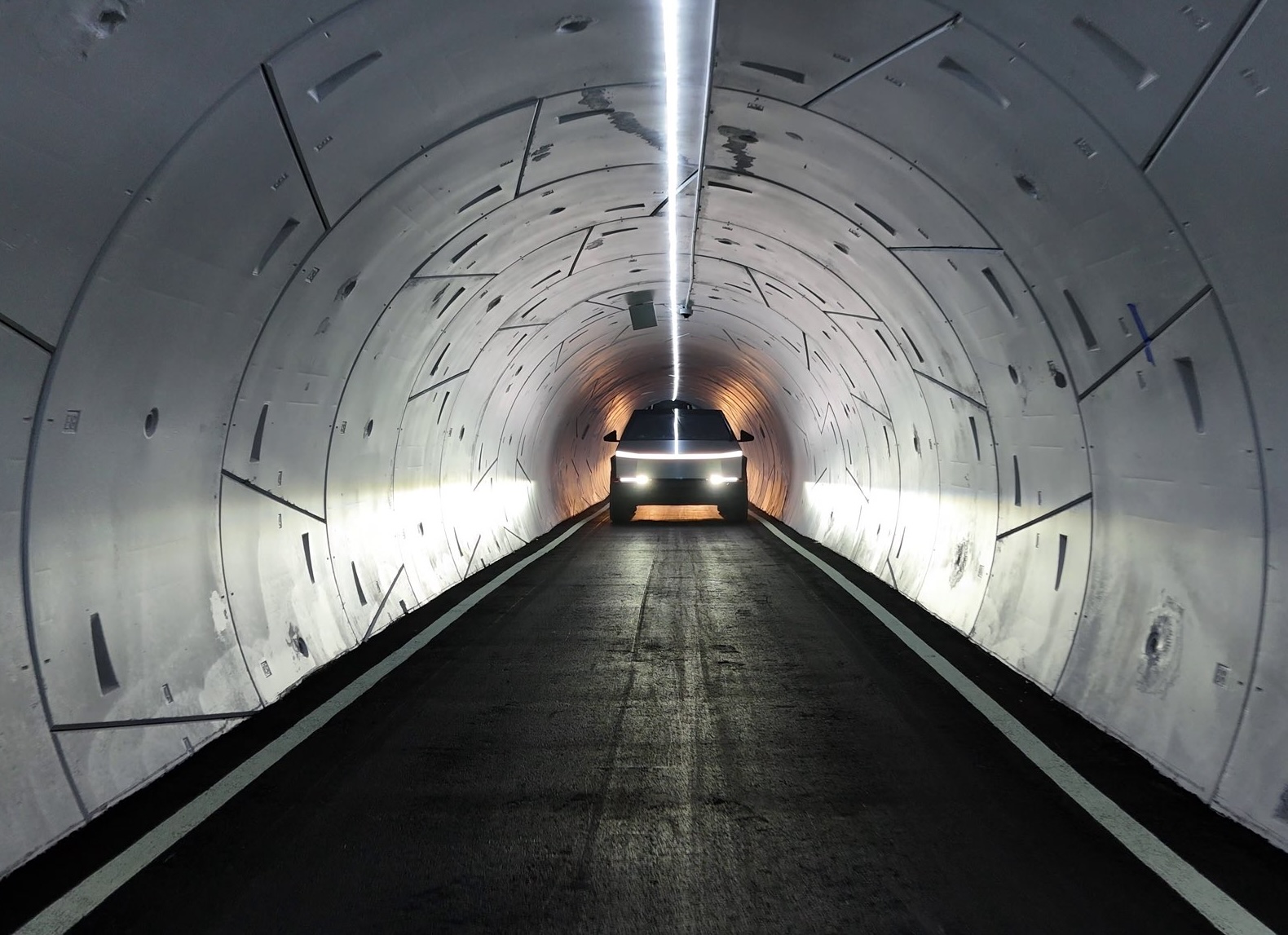
The Boring Company has signed an agreement with Abu Dhabi to study underground transport and utility tunnels across the emirate, adding a second UAE city to its pipeline as it prepares to also scale up tunneling back home in Nashville.
The deal was signed Thursday at the Liveability and Investment Exhibition (LIVEX 2026) by Boring Company President Steve Davis and Maysarah Mahmoud Salim Eid, director general of the Abu Dhabi Projects and Infrastructure Centre (ADPIC), according to the Abu Dhabi Media Office. Mohamed Ali Al Shorafa, chairman of the emirate’s Department of Municipalities and Transport, attended the signing.
Under the agreement, the two sides will assess feasibility, delivery and operating models for tunnels that could carry passengers or utilities. They will also look at Abu Dhabi’s potential as a regional hub for tunneling work. The current phase is exploratory, and no construction commitment or project budget has been announced.
“Abu Dhabi provides an ideal environment to explore the next generation of underground infrastructure solutions, supported by its ambitious growth vision and strong commitment to advanced technologies,”
Davis said. He added that the company wants to assess how tunnels can “expand urban capacity more efficiently, and enable better use of available space.”
The timing lines up with the money, considering last month, The Boring Company closed a $3 billion Series D led by the UAE and affiliated investors, valuing the company at $23 billion, as Teslarati reported. That round came with a commitment to build more than 150 kilometers of tunnel across the UAE, separate from the Dubai Loop pilot already under contract with Dubai’s Roads and Transport Authority. That pilot covers 6.4 kilometers and four stations linking DIFC and Dubai Mall at a cost of about $154 million.
Back home, The Boring Company projects in Nashville are also scaling up, with the company telling local NewsChannel 5 that a third Prufrock machine could start digging the Music City Loop in late October. A fourth is also targeted before the end of the year. Two machines are already mining Nashville limestone at the same time, and work is underway on a new launch site for the third.
The company said it has made more than 300 design and performance upgrades to its original Nashville machine. It is also working with property owners on more than 40 planned stations, with approvals in place for a future Nashville International Airport connection, a downtown station near the Music City Center, and stops at residential towers and the JW Marriott.
Construction on the Music City Loop began the same evening Tennessee and federal regulators approved the project’s lease in February, and the company targeted its first operational segment for late 2026. Back in Las Vegas, The Boring Company has said it plans to double its Vegas Loop station count by year’s end.
Elon Musk
Elon Musk shuts down talk of TSMC taking over Terafab
Musk says Tesla and SpaceX will build and run Terafab, with TSMC limited to renting.
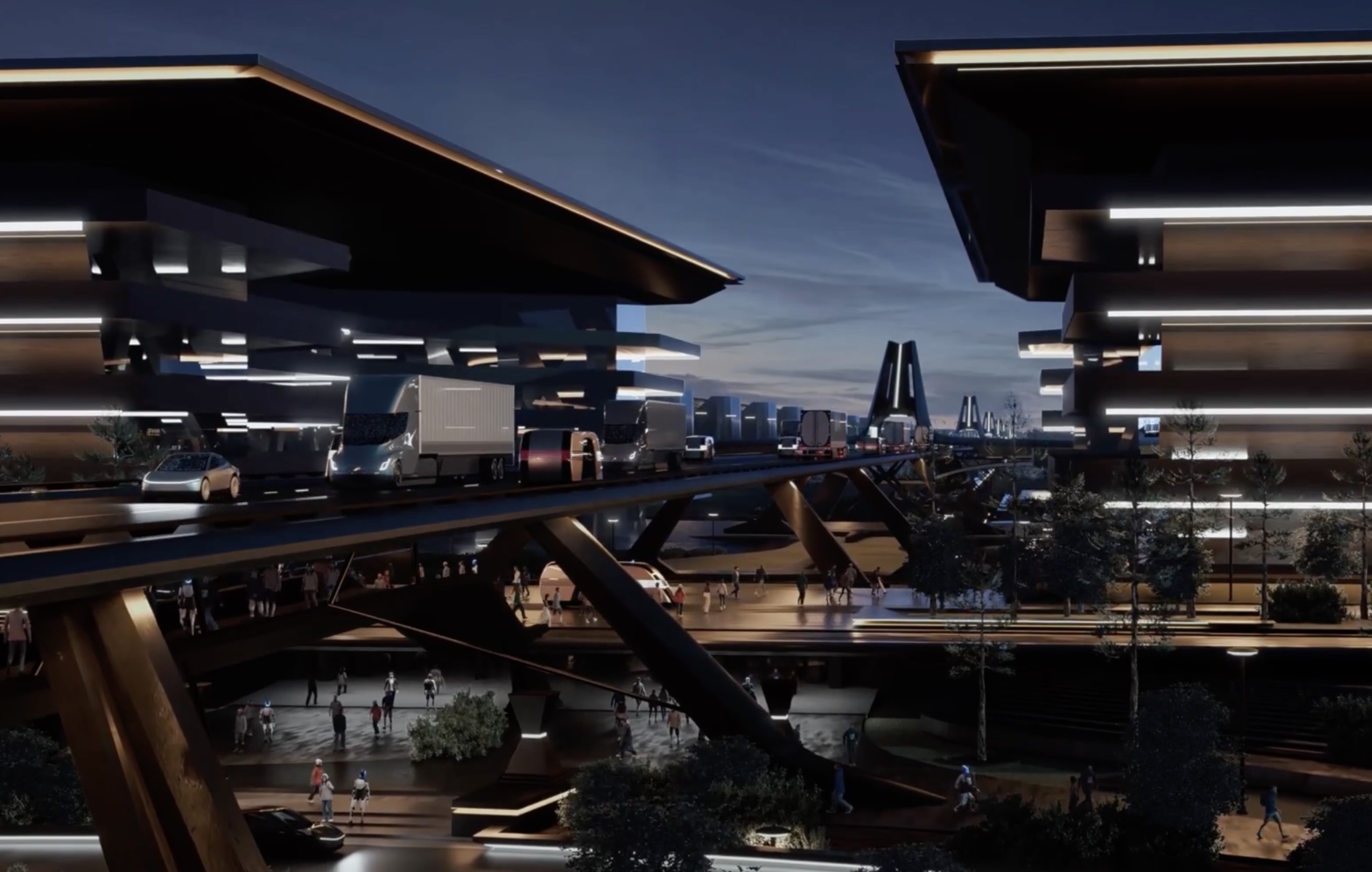
Elon Musk has drawn a firm line around who will be in charge of Terafab, the giant chip factory Tesla and SpaceX are planning in Texas.
Musk replied to a post on X arguing that Taiwan Semiconductor Manufacturing Company (TSMC) would most likely end up owning and operating the plant. “No, we will build and run the fab. Let there be ZERO doubt about that,” Musk wrote. “Maybe TSMC subleases part of the Terafab if they want, but nothing more than that.”
In plain terms, a sublease means TSMC could rent a section of the complex to make chips, similar to a tenant renting one floor of an office tower. The building, the equipment decisions and the daily operation would stay with Tesla and SpaceX.
@herbertong @thejefflutz No, we will build and run the fab. Let there be ZERO doubt about that.
Maybe TSMC subleases part of the Terafab if they want, but nothing more than that.
— Elon Musk (@elonmusk) October 7, 2026
The comment shuts down speculation that started last week. On October 2, tech journalist Tim Culpan reported that TSMC was exploring ways to help run Terafab’s factories. Musk responded the next day that it was “just discussions, but something may come of it,” as Teslarati reported at the time. That left room for a scenario where the world’s largest contract chipmaker took the wheel. Musk’s latest post closes that door.
Some background helps explain why this matters. Tesla designs its own AI chips today but pays outside companies like TSMC and Samsung to manufacture them. Musk unveiled Terafab in March as a joint project between Tesla, SpaceX and xAI, arguing that existing suppliers cannot expand fast enough to meet his companies’ future demand. The goal is to produce enough chips each year to supply one terawatt of computing power, roughly 50 times what the entire global AI chip industry produces now.
Those chips are meant for Tesla’s Optimus humanoid robots, the Cybercab and Full Self-Driving computers, along with chips for SpaceX’s planned data centers in orbit. Owning the factory means Musk’s companies would not have to compete with every other chip customer for time on someone else’s production lines.
Intel is still part of the picture. The company signed on in April to help design, build and package chips for the project, and CEO Lip-Bu Tan told Bloomberg this week that Intel will keep working on Terafab despite the TSMC chatter.
The project moved from concept to construction planning over the summer. In August, SpaceX confirmed the Grimes County site about an hour from Houston, sent the county a $10 million payment under its tax abatement deal and said civil work would begin shortly. The first phase carries a $16.8 billion price tag, and total spending across all phases could reach as much as $119 billion.
TSMC chairman C.C. Wei has said a new fab typically takes two to three years to build and another one to two years to reach full output. Tesla and SpaceX have never run one, which is why TSMC’s expertise drew so much attention. Musk’s answer suggests he would rather learn that process in house than hand control of a project this central to Tesla’s robotics and autonomy plans to an outside company.
Terafab Texas will be the largest and most valuable building on Earth by far.
And it will be stunningly beautiful. https://t.co/4NweOqTL7y
— Elon Musk (@elonmusk) August 6, 2026
Elon Musk
Trump to hand Elon Musk a top honor that traces back to JFK
Trump will award Elon Musk the National Medal of Science at Thursday’s White House summit.
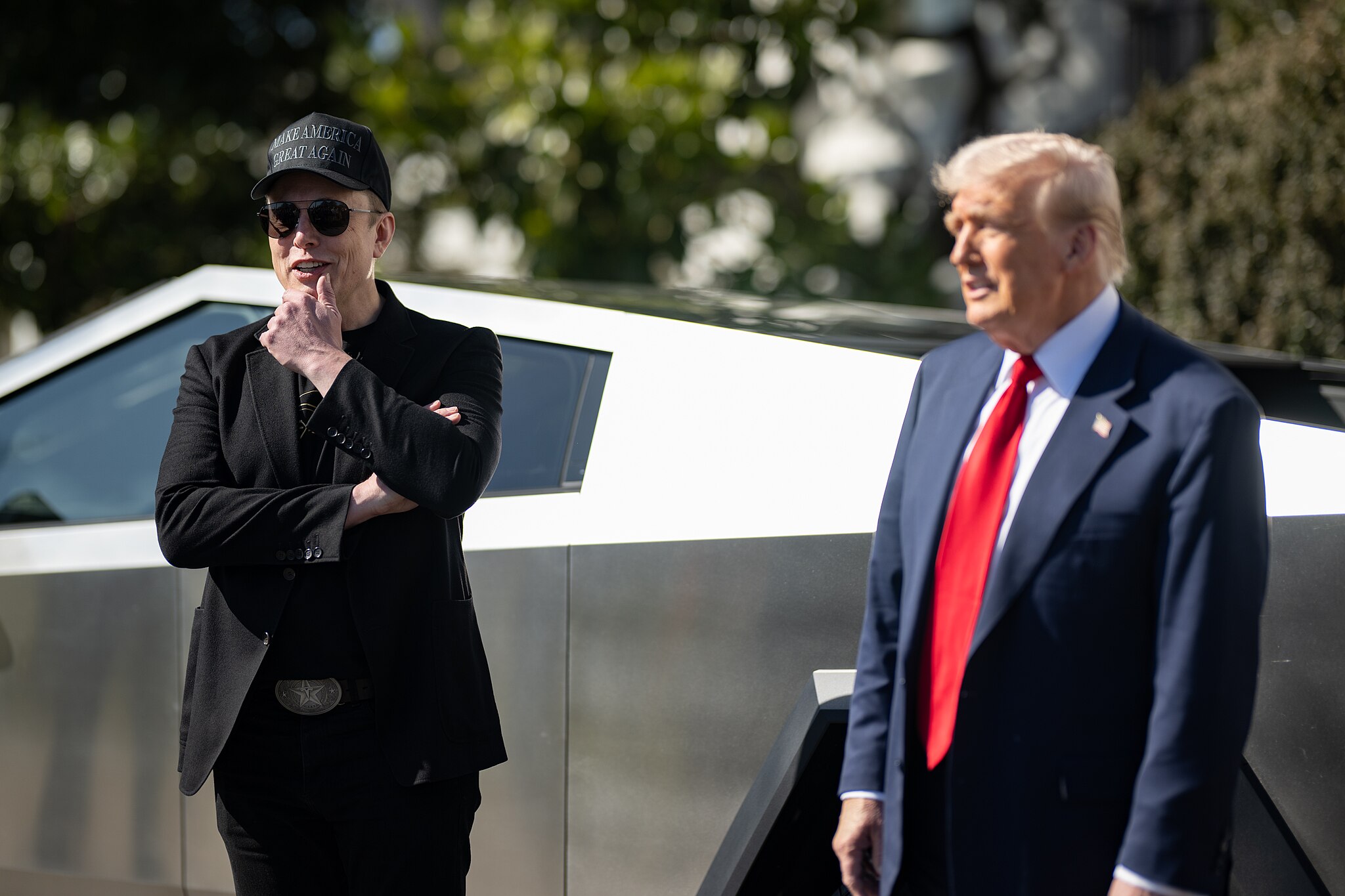
Elon Musk is set to receive the highest honor the U.S. government gives to scientists and engineers.
President Donald Trump will present Musk with the National Medal of Science on Thursday at the White House’s Science: A New Golden Age Summit, Fox News Digital first reported on Wednesday. Google cofounder Sergey Brin, Nvidia CEO Jensen Huang and AMD CEO Lisa Su will receive the same medal, while Dell Technologies CEO Michael Dell and Microsoft CEO Satya Nadella will receive the National Medal of Technology and Innovation. A White House official later confirmed the list to Reuters.
“The Trump administration is grateful for the contributions of these incredible leaders in science and technology. These recipients are helping ensure America keeps leading the world in innovation,” White House spokesperson Liz Huston told Fox News.
FIRST ON FOX: Trump will award Elon Musk the National Medal of Science at the White House Thursday.
Sergey Brin, Jensen Huang and Lisa Su will also receive the science medal, while Michael Dell and Satya Nadella will receive the technology medal.
It marks Trump’s first time presenting the awards across either administration.
Full story here https://t.co/omnrLV0EwS
— Fox News Politics (@foxnewspolitics) October 7, 2026
It will be the first time Trump has presented either medal in his two terms. Congress created the National Medal of Science in 1959, and the National Science Foundation, which administers it, says 529 scientists and engineers have received it since. A presidential committee reviews nominees, but the president makes the final call.
Thursday’s group of medalists run or founded companies, and three of them sit at the center of the Super Intelligence hardware race that Musk competes in. Huang’s Nvidia supplies the GB300 chips filling SpaceX’s Colossus 2 cluster, while Su’s AMD is Nvidia’s biggest rival in data center GPUs.
Worth noting that Trump’s uncle, MIT physicist John G. Trump, received the National Medal of Science from President Ronald Reagan for his work on ionizing radiation and its uses in medicine and industry.
The Pentagon taps Elon Musk to design the battlefield of the future
For Musk, the medal is the latest sign of how far his relationship with Trump has come since their 2025 split over the “Big Beautiful Bill” and his exit from DOGE. Last week, he sat at Trump’s left during a White House lunch where AI executives signed a voluntary safety accord, and Defense Secretary Pete Hegseth named him to help lead the Pentagon’s Project Meridian study on the future of warfare. Musk has also adopted the administration’s new vocabulary, saying on Sunday that SpaceXAI will be renamed SpaceXSI after Trump ordered federal agencies to replace “artificial intelligence” with “super intelligence.”
Musk has collected science honors before, including the Stephen Hawking Medal for Science Communication in 2019.

It’s official: SpaceX takes aim at Verizon, AT&T, and T-Mobile

Elon Musk’s Boring Company lands a new Middle East deal, and Nashville is about to get faster

SpaceX brings four astronauts home after 8 months in space, and the return was flawless

The Pentagon taps Elon Musk to design the battlefield of the future

Tesla Roadster’s new patent preps white-knuckle speeds, keeping it grounded


