Elon Musk
Elon Musk sheds details on Tesla FSD’s upcoming improvements

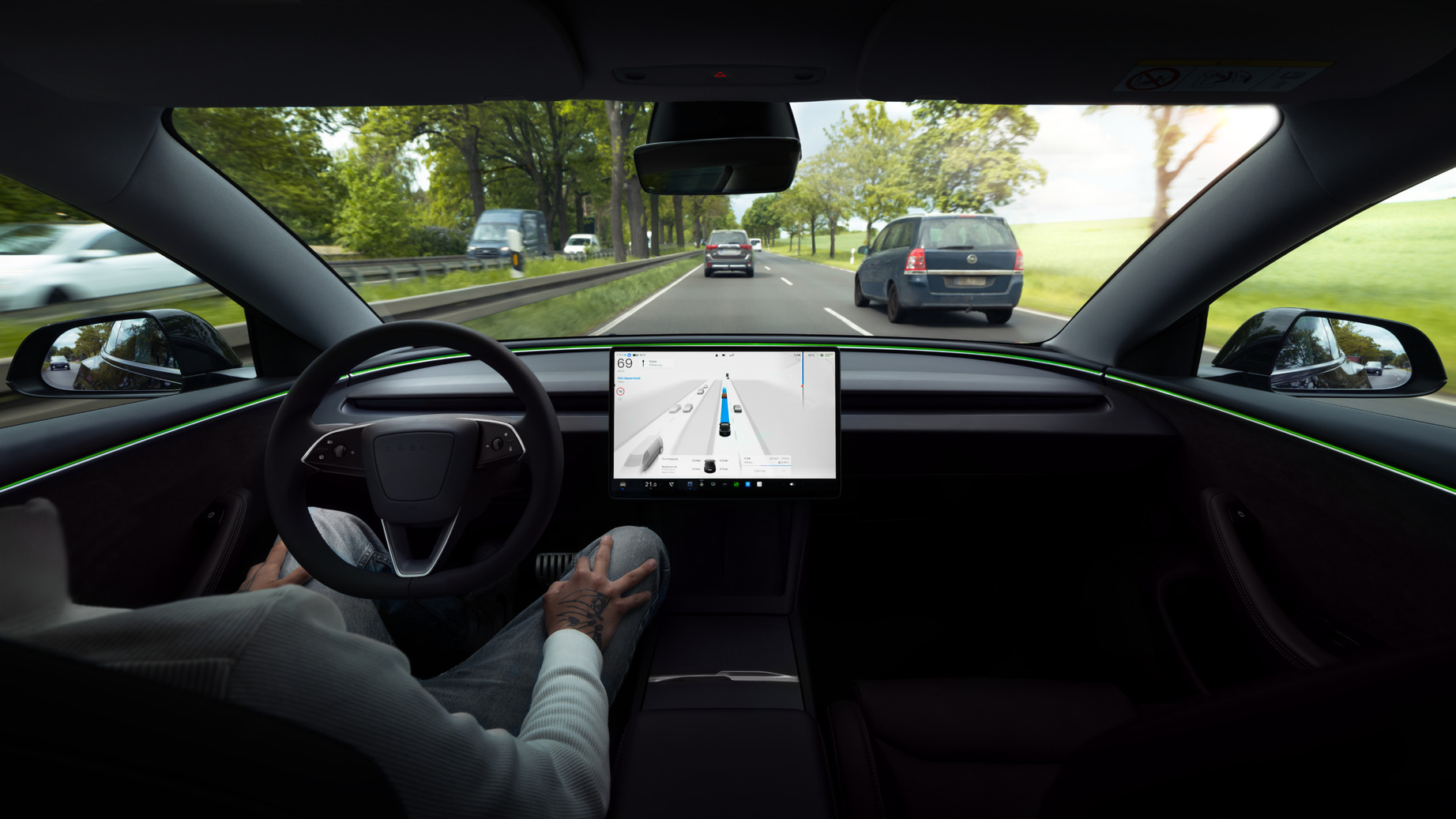
Elon Musk shed more details on the upcoming improvements to Tesla’s Full Self-Driving suite, specifically one that the CEO mentioned last week, which should help owners see fewer interventions.
Last week, Musk hinted that one major improvement that Tesla planned to roll out to Full Self-Driving users was the car’s ability “to remember your specific interventions and match each person’s individual preferences.”
Elon Musk says your Tesla will start to learn your individual preferences
This small bit of detail was linked to a post from Tesla community member Whole Mars, who said that FSD’s tendency to exit the carpool lane, a feature that owners can turn on but at times the car will disregard.
It sounds like, based on Musk’s two responses since that original post, it is safe to say the things FSD will start to remember are wide-ranging. However, it seems the biggest differences will be noticed with parking performance, which Musk continues to mention.
Highway Lane Preferences
The initial post Musk mentioned, with these new remembered preferences soon to arrive for Tesla owners everywhere, was the Carpool/Express Lane.
Tesla has a setting in the FSD menu that lets drivers enable HOV Lane travel. However, the car won’t always stay in that suggested or preferred lane.
The car will start to remember your specific interventions and match each person’s individual preferences
— Elon Musk (@elonmusk) July 18, 2026
Some owners have also complained of left lane camping, an illegal maneuver in at least some states. Cruising in the passing lane has resulted in tickets for some, as it is illegal in over 30 states in the U.S.
Tesla did not confirm if these preferences would also be included in new FSD behaviors, but it would certainly help move the company toward fewer interventions.
Parking Preferences
This seems to be the real focus of the entire operation, as Musk stated several weeks ago that parking was overwhelmingly the most frequent reason for interventions.
The major issue with parking is not necessarily the parking “performance,” as FSD is generally good at parking. It definitely has its issues; we’ve recorded plenty of them, including this one as recent as last week:
Yeah it seems like FSD v14.3.5 is having some issues with parking early on https://t.co/Bw5ULfVmDq pic.twitter.com/RHdpjOEpIo
— TESLARATI (@Teslarati) July 13, 2026
However, the changes coming are more about preferences, meaning where you park and how your car enters the spot, either pulling in or backing in. Owners have also reported that pulling into the correct driveway is a relatively rare thing for FSD, something else that needs to be confronted.
Musk basically confirmed that all of these things would be part of Tesla’s plan to address driver preferences with FSD:
Yes
— Elon Musk (@elonmusk) July 20, 2026
It’s obvious there is something big coming with FSD, and the company’s focus seems to be eliminating any intervention that would be related to preferences. This is probably the biggest bottleneck between Tesla and being fully autonomous. Critical interventions do occur, but they are much less frequent.
The only time a driver should be taking over is because of a critical intervention; this seems to be the goal of Tesla right now.
This all seems to be a priority as Tesla continues to move closer to the prospect of unsupervised driving.


Elon Musk
SpaceX President to gift Trump Accounts her SpaceX stock
Gwynne Shotwell’s 2 million SpaceX shares are headed to children’s Trump Accounts starting this December.

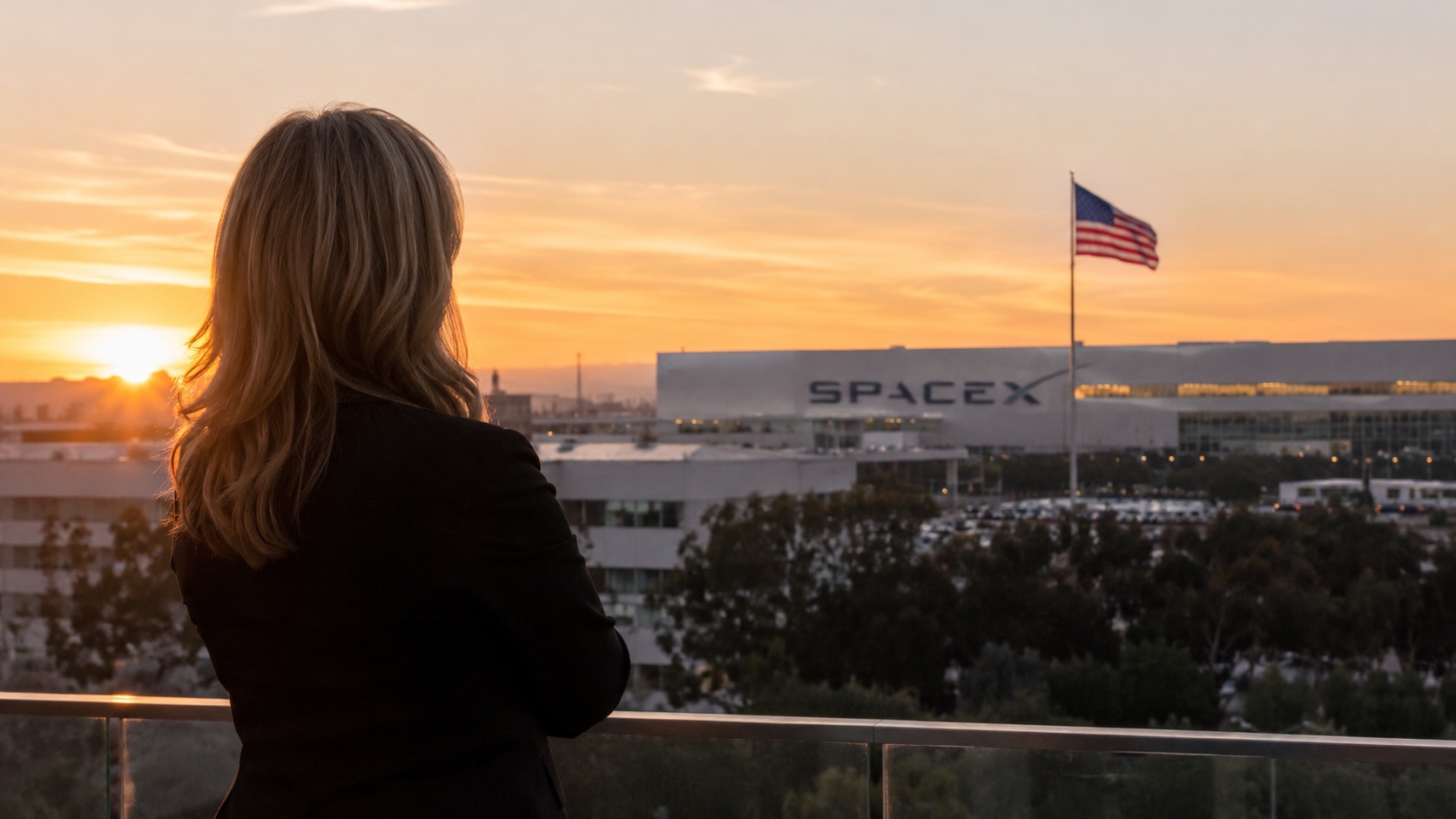
SpaceX President Gwynne Shotwell said Friday that more than 2 million SpaceX shares belonging to her and her husband, Robert, will be distributed to children’s Trump Accounts in December, turning a pledge she made over the summer into an actual transfer. “Robert and I are thrilled that our gift of over 2 million shares of SpaceX stock will be distributed to children’s Trump accounts in December!” Shotwell wrote on X, adding that the shares are “transferring to escrow as we speak.”
The first round goes to children aged 11 to 17 who live in ZIP codes where the median family income is $57,000 or less, along with kids in ZIP codes with too few residents for the Census to report that figure. Shotwell said those families should receive a notice by Monday, Reuters reported.
A second gift is expected to be finalized in the next few weeks. That round will cover eligible children in military families serving overseas, children in foster care, and more kids in Texas counties near the Shotwells’ home where median family income is $90,000 or less. Elon Musk replied to the announcement with “Cool” and a heart emoji.
Shotwell first announced the donation on July 6, less than a month after SpaceX priced its record IPO at $135 per share on the Nasdaq. IPO filings showed Shotwell owned about 12.6 million SpaceX shares, Quartz reported at the time, which makes the gift roughly one sixth of her stake. At the roughly $146 per share used to value Musk’s own pledge earlier this month, 2 million shares are worth about $290 million.
How the stock would actually reach the accounts had been an open question since July. Treasury guidance acknowledged that stock donations could flow into Trump Accounts, but it did not explain the mechanics for a program whose contributions default into an S&P 500 index fund. Shotwell thanked the Treasury, the IRS, the Dell Foundation, Greater Horizons, Invest America and the law firms Morgan Lewis and Gibson Dunn for “working over the past few months to make this happen.”
The transfer also works as a dry run for a far larger gift. On October 19, Musk said he would give one of his SpaceX shares to every kid in America next year and called it “the first of many.” With roughly 72 million children in the country, that pledge is worth about $10.5 billion. President Donald Trump thanked Musk the same day and said the shares would go through Trump Accounts, though neither SpaceX nor the Treasury has published how or when that distribution will happen.
Shotwell’s recipients also fill a gap in the program itself. Trump Accounts launched on July 4, and the $1,000 Treasury deposit only goes to babies born between 2025 and 2028. Teenagers aged 11 to 17 receive no government seed money, so for many of the families getting a notice on Monday, SpaceX stock will be the first asset in the account. The accounts convert into retirement accounts when the child turns 18.
Elon Musk
Tesla made napping in a Robotaxi easier with its latest update
Tesla’s quiet mode reaches Model Y Robotaxis, blacking out the screen for riders wanting rest.
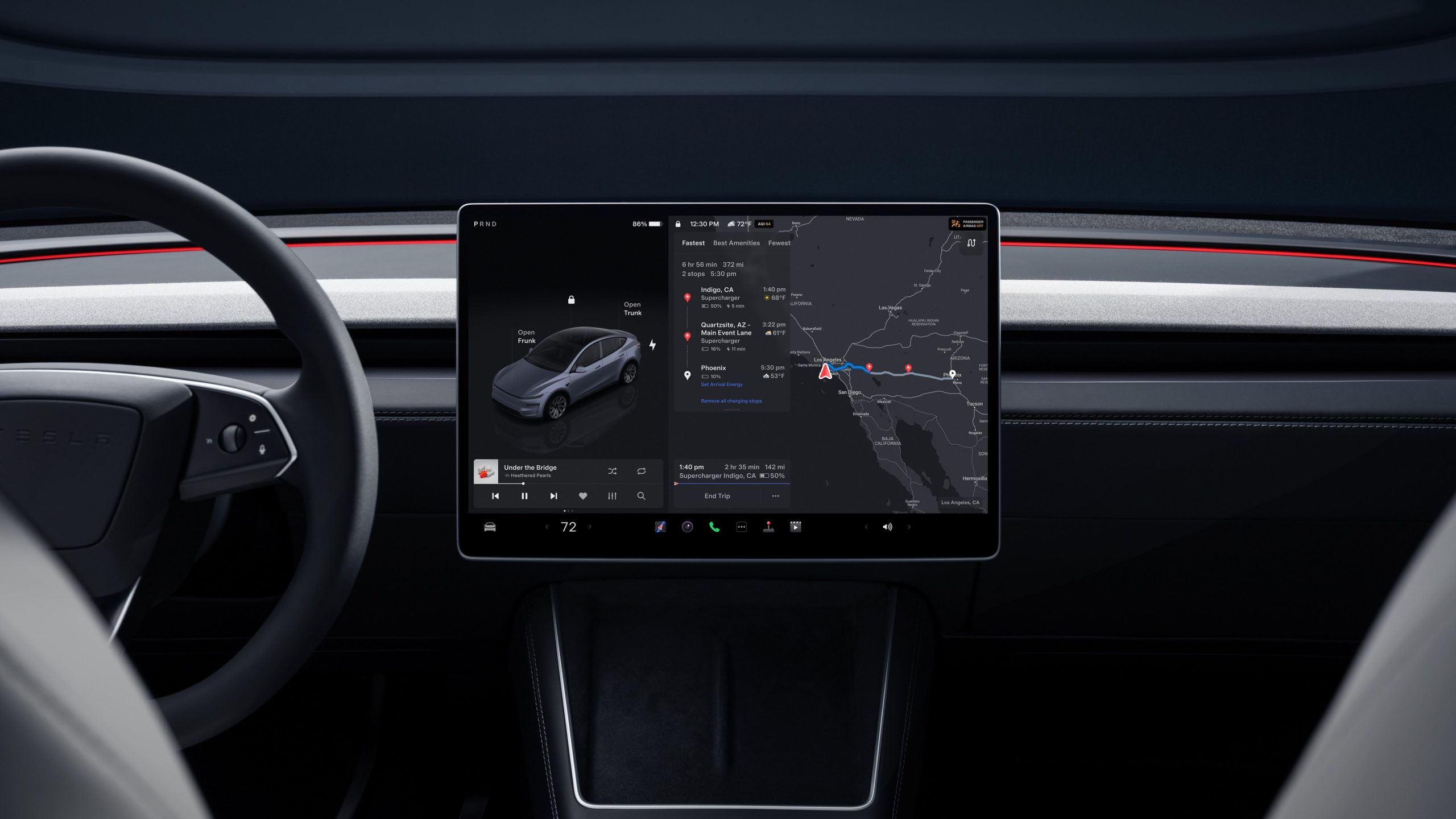
Tesla’s quiet mode, the setting that blacks out the screen for riders who want to rest, has moved beyond the Cybercab. A video posted Thursday by Spencer (@scotsrule08) shows the feature running in a Model Y Robotaxi on a night ride that appears to be in Dallas.
New quiet mode now on @Robotaxi https://t.co/2cM2eM9NeN — Spencer (@scotsrule08) October 29, 2026
The rider taps a small crescent moon icon in the bottom right corner of the map screen. The map, media player, app shortcuts and Grok prompt disappear, leaving a dark display with “Arriving soon,” the destination and a line reading “Tap display to exit quiet mode.” Controls a passenger may still need, including Pull Over, cabin temperature, volume and Support, stay visible. One tap anywhere brings the full map back.
Quiet mode first showed up in the Cybercab last week, which Teslarati reported alongside a new rear camera view. Tesla has been trimming cabin noise in other ways too. On October 25, Spencer reported that Robotaxi turn signals now chime for the first four blinks and then go silent. Tesla has not published release notes for either change.
Elon Musk has been pitching this use for more than a decade. In October 2014, he said that “maybe five or six years from now I think we’ll be able to achieve true autonomous driving where you could literally get in the car, go to sleep and wake up at your destination,”
By 2017 he was setting a higher bar. Speaking at TED, Musk said the hard part was not making self-driving work 99.9 percent of the time, “because, like, if a car crashes one in a thousand times, then you’re probably still not going to be comfortable falling asleep. You shouldn’t be, certainly.”
Owners asked for something similar in their own cars. In December 2019, a Tesla owner requested a Nap Mode that would keep the climate running and wake the occupant with an alarm, and Musk answered “Ok,” as Teslarati covered at the time.
The line returned when the Cybercab was unveiled at the We, Robot event in October 2024. “We’ll move from supervised Full Self-Driving to unsupervised Full Self-Driving, where you can fall asleep and wake up at your destination,” Musk said. On Tesla’s first quarter earnings call in April 2025, he called it the deciding measure: “The acid test is, can you go to sleep in your car and wake up in your destination and I’m confident that will be available in many cities in the US by the end of this year,”
Tesla has run driverless Model Y rides in Dallas and Houston since April, so a passenger dozing off on the way home is now a realistic use of the button. Tesla is also offering new riders a free first trip in both cities, according to an in-app screen shared by tracker Ethan McKanna, and said on its third quarter call that Cybercab rides would launch in Dallas next month.
Elon Musk
Tesla’s Roadster appearance at SpaceX has merger watchers talking
Tesla’s next generation Roadster was spotted at SpaceX’s Hawthorne headquarters, two weeks after its unveiling.
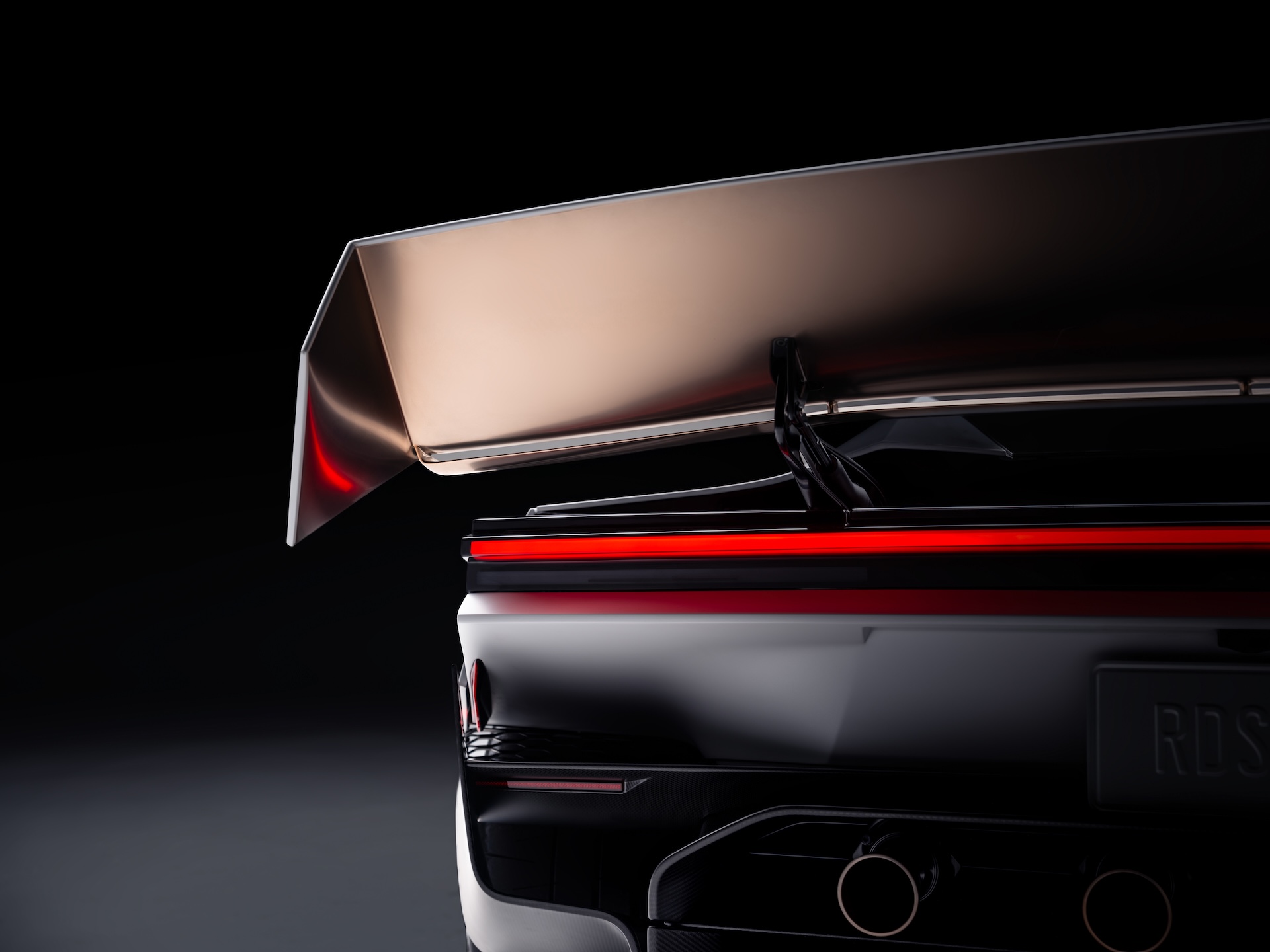
Tesla’s next generation Roadster turned up at SpaceX’s headquarters in Hawthorne, California on Wednesday, less than two weeks after the car flew off a ramp at its unveiling in Texas.
Photos shared on X by SpaceX Engineer (@DeannaRiceSPCX) show the new Roadster parked outdoors beside the famed Falcon 9 that stands outside company headquarters at the corner of Crenshaw Boulevard and Jack Northrop Avenue. Rocket B1019 was the first orbital-class booster ever to land after a launch on December 21, 2015 after it sent 11 Orbcomm satellites to orbit and then flew back to Landing Zone 1 at Cape Canaveral, which would be the first landing in what became SpaceX’s reusable rocket program. SpaceX chose not to fly it again. After a test fire in Florida, the booster was shipped to Hawthorne and raised upright as a permanent monument in August 2016, as Teslarati reported at the time. Putting the Roadster, which flies on SpaceX cold gas thrusters, next to the rocket that started SpaceX’s landings is symbolic in itself.
Small car, big rocket ambitions 🚀🚗 #roadster #falcon9 #spacex #tesla https://t.co/H32xUSXoCl
— Deanna Rice (@DeannaRiceSPCX) October 29, 2026
The Thrust and Rocket versions of the Roadster use cold gas thrusters fed by composite overwrapped pressure vessels, the same type of tank SpaceX flies on Falcon 9, and Elon Musk described the car as the work of Tesla and SpaceX engineers working together. Tesla lists 0 to 60 mph in under 0.9 seconds for Thrust and under 0.59 seconds for Rocket, while the base Performance model relies on a fan and ground sealing system for grip, as Teslarati detailed in its breakdown of the three Roadster configurations.
Tesla has kept the car in the spotlight since the October 15 event near Waco. Last week, the company posted a video of the Roadster’s fighter jet inspired cockpit, including a Track Mode screen with a “Thruster · 5,500 PSI” readout, which we covered in our look at the Roadster’s center display. Musk also said owners will be able to ask the car to perform the stunts autonomously, and promised a looping track at Tesla’s Texas headquarters.
The visit comes as special committees at Tesla and SpaceX weigh a possible merger, a step Musk confirmed on SpaceX’s third quarter earnings call. The Roadster, built on SpaceX hardware, has become one of the clearest examples of the two companies already building products together.
Musk said at the unveiling that Roadster production will begin in 2028. Reservations are open with a $50,000 payment, Thrust is listed as a limited release and Rocket is invite only. Tesla says the car is not approved for public road use.

SpaceX President to gift Trump Accounts her SpaceX stock

Tesla Full Self-Driving becomes main pillar of new Referral Program


