Elon Musk
The Boring Company’s newest tunnel vehicle runs on Tesla parts and no one is driving it
The Boring Company’s new tunnel vehicle runs on Tesla Model 3 batteries and drive units.

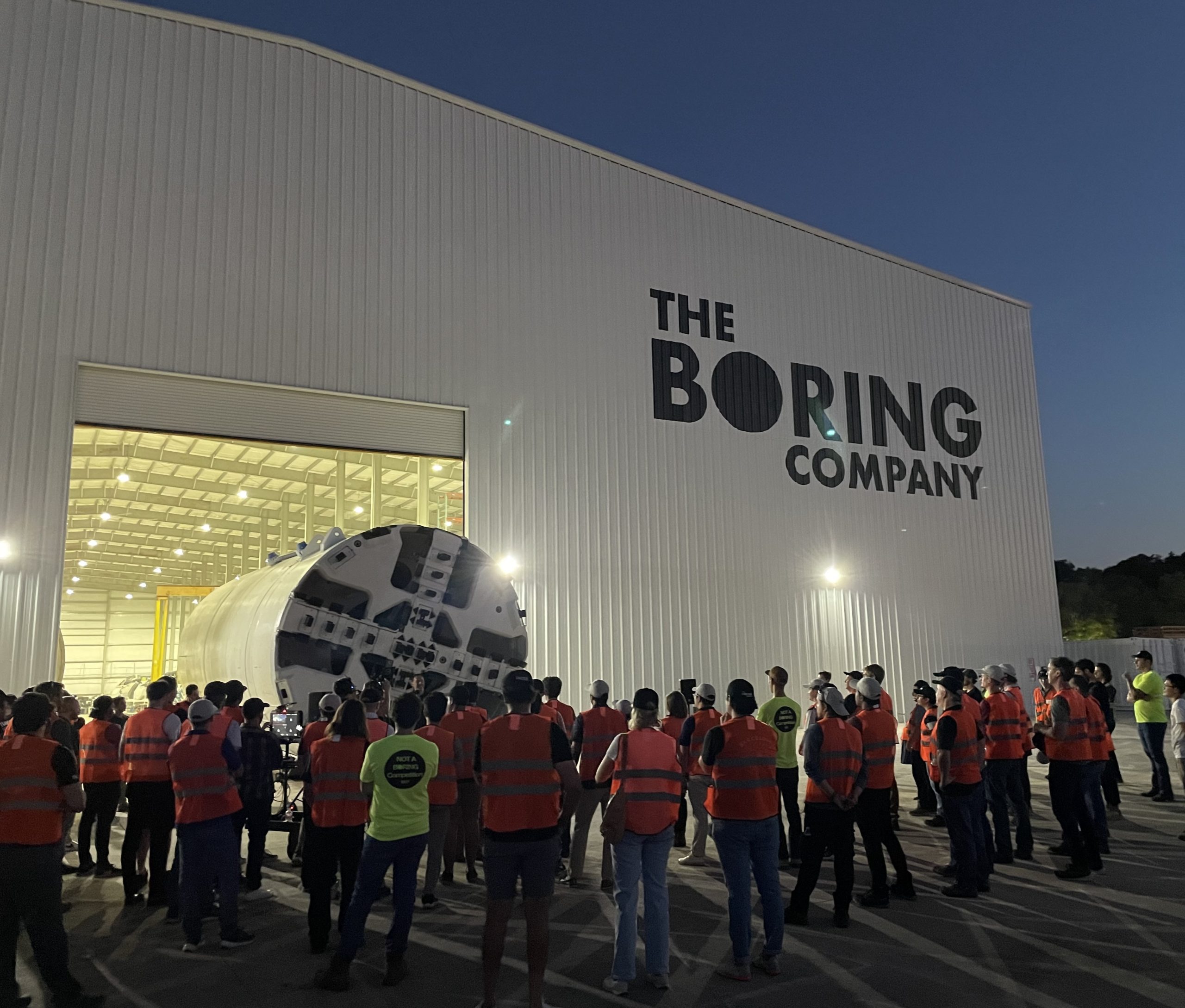
The Boring Company just introduced a new piece of hardware, and it runs on parts pulled straight from a Tesla showroom. Liner Truck 3, unveiled in a post from the tunneling company’s official X account, is an all electric vehicle built around Tesla Model 3 battery packs and drive units, purpose built to move concrete tunnel segments to the boring machine face without a single person underground.
Introducing Liner Truck 3 — our latest fully electric tunnel vehicle.
– Tesla Model 3 battery and drive units
– Transports 22,000+ lb of concrete segments to the boring machine
– 28 miles of range
– 12 mph max operating speed
– Remotely piloted from Global OCC in Texas, with… pic.twitter.com/XB7FgSXnpy— The Boring Company (@boringcompany) August 7, 2026
The job itself is unglamorous but critical. Each precast segment run weighs more than 22,000 pounds, roughly the load of a full cement mixer, and Liner Truck 3 hauls that weight repeatedly between the surface staging area and wherever the Prufrock machine happens to be cutting.
The Boring Company said Liner Truck 3 is piloted remotely out of its Global Operations Control Center in Texas, extending the Zero-People-In-Tunnel approach the company has spent years building toward. An earlier version of a ZPIT liner truck was already tested at the company’s Bastrop, Texas research tunnels, and a factory tour released last month showed an employee flying a fully loaded liner truck with a PlayStation controller. Liner Truck 3 looks like the production version of that same idea, cleaned up and pushed into daily use.
The timing lines up with a company digging in more places than it ever has before. The Boring Company now has multiple Prufrock machines active or arriving in Nashville, where Music City Loop construction has been accelerating since February, and its Vegas Loop network keeps adding tunnel mileage on a near monthly basis. Every one of those projects depends on getting concrete segments to the cutting face fast enough to keep the boring machine from idling, which is exactly the bottleneck Liner Truck 3 is designed to remove.
It also reinforces something Tesla owners have watched happen gradually across Musk’s companies: passenger car hardware finding a second life in heavy equipment. Model 3 drive units already move people through the Vegas Loop, and now the same components are hauling concrete underground in Nashville and wherever The Boring Company digs next. Whether that kind of component reuse extends further into TBC’s equipment lineup, or into other Musk owned industrial hardware, is the next thing worth watching.


Elon Musk
Elon Musk shuts down talk of TSMC taking over Terafab
Musk says Tesla and SpaceX will build and run Terafab, with TSMC limited to renting.
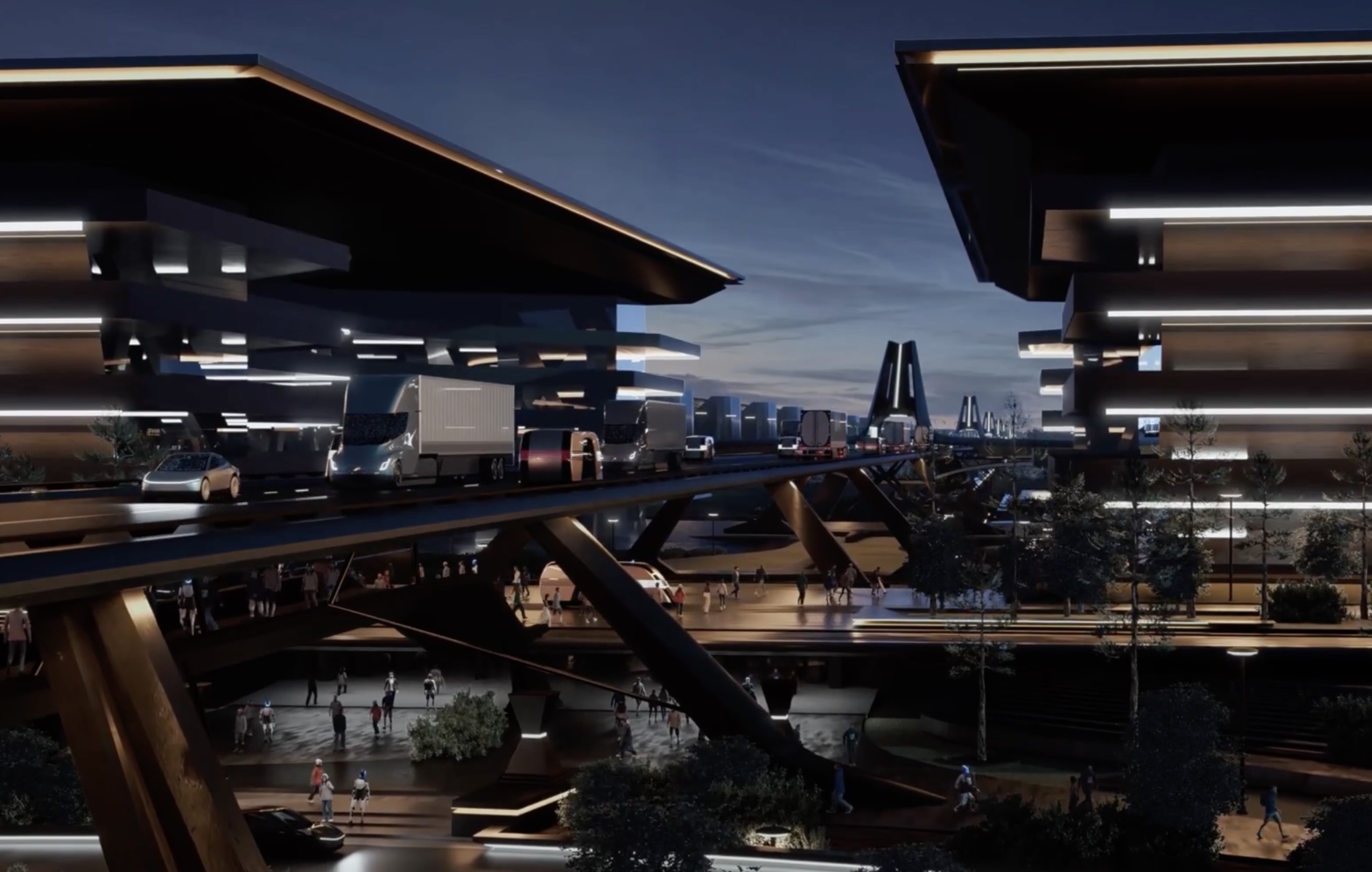
Elon Musk has drawn a firm line around who will be in charge of Terafab, the giant chip factory Tesla and SpaceX are planning in Texas.
Musk replied to a post on X arguing that Taiwan Semiconductor Manufacturing Company (TSMC) would most likely end up owning and operating the plant. “No, we will build and run the fab. Let there be ZERO doubt about that,” Musk wrote. “Maybe TSMC subleases part of the Terafab if they want, but nothing more than that.”
In plain terms, a sublease means TSMC could rent a section of the complex to make chips, similar to a tenant renting one floor of an office tower. The building, the equipment decisions and the daily operation would stay with Tesla and SpaceX.
@herbertong @thejefflutz No, we will build and run the fab. Let there be ZERO doubt about that.
Maybe TSMC subleases part of the Terafab if they want, but nothing more than that.
— Elon Musk (@elonmusk) October 7, 2026
The comment shuts down speculation that started last week. On October 2, tech journalist Tim Culpan reported that TSMC was exploring ways to help run Terafab’s factories. Musk responded the next day that it was “just discussions, but something may come of it,” as Teslarati reported at the time. That left room for a scenario where the world’s largest contract chipmaker took the wheel. Musk’s latest post closes that door.
Some background helps explain why this matters. Tesla designs its own AI chips today but pays outside companies like TSMC and Samsung to manufacture them. Musk unveiled Terafab in March as a joint project between Tesla, SpaceX and xAI, arguing that existing suppliers cannot expand fast enough to meet his companies’ future demand. The goal is to produce enough chips each year to supply one terawatt of computing power, roughly 50 times what the entire global AI chip industry produces now.
Those chips are meant for Tesla’s Optimus humanoid robots, the Cybercab and Full Self-Driving computers, along with chips for SpaceX’s planned data centers in orbit. Owning the factory means Musk’s companies would not have to compete with every other chip customer for time on someone else’s production lines.
Intel is still part of the picture. The company signed on in April to help design, build and package chips for the project, and CEO Lip-Bu Tan told Bloomberg this week that Intel will keep working on Terafab despite the TSMC chatter.
The project moved from concept to construction planning over the summer. In August, SpaceX confirmed the Grimes County site about an hour from Houston, sent the county a $10 million payment under its tax abatement deal and said civil work would begin shortly. The first phase carries a $16.8 billion price tag, and total spending across all phases could reach as much as $119 billion.
TSMC chairman C.C. Wei has said a new fab typically takes two to three years to build and another one to two years to reach full output. Tesla and SpaceX have never run one, which is why TSMC’s expertise drew so much attention. Musk’s answer suggests he would rather learn that process in house than hand control of a project this central to Tesla’s robotics and autonomy plans to an outside company.
Terafab Texas will be the largest and most valuable building on Earth by far.
And it will be stunningly beautiful. https://t.co/4NweOqTL7y
— Elon Musk (@elonmusk) August 6, 2026
Elon Musk
Trump to hand Elon Musk a top honor that traces back to JFK
Trump will award Elon Musk the National Medal of Science at Thursday’s White House summit.
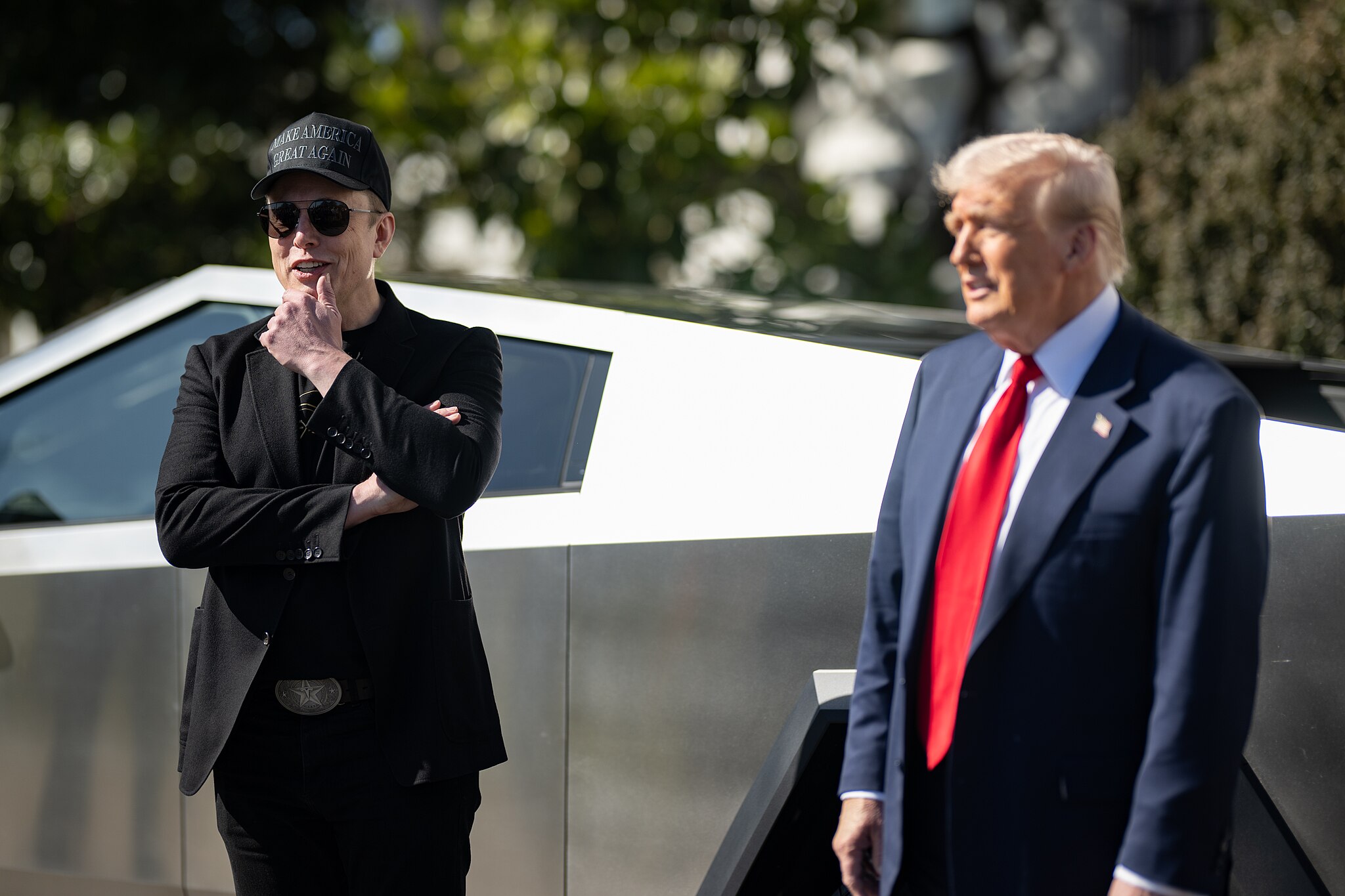
Elon Musk is set to receive the highest honor the U.S. government gives to scientists and engineers.
President Donald Trump will present Musk with the National Medal of Science on Thursday at the White House’s Science: A New Golden Age Summit, Fox News Digital first reported on Wednesday. Google cofounder Sergey Brin, Nvidia CEO Jensen Huang and AMD CEO Lisa Su will receive the same medal, while Dell Technologies CEO Michael Dell and Microsoft CEO Satya Nadella will receive the National Medal of Technology and Innovation. A White House official later confirmed the list to Reuters.
“The Trump administration is grateful for the contributions of these incredible leaders in science and technology. These recipients are helping ensure America keeps leading the world in innovation,” White House spokesperson Liz Huston told Fox News.
FIRST ON FOX: Trump will award Elon Musk the National Medal of Science at the White House Thursday.
Sergey Brin, Jensen Huang and Lisa Su will also receive the science medal, while Michael Dell and Satya Nadella will receive the technology medal.
It marks Trump’s first time presenting the awards across either administration.
Full story here https://t.co/omnrLV0EwS
— Fox News Politics (@foxnewspolitics) October 7, 2026
It will be the first time Trump has presented either medal in his two terms. Congress created the National Medal of Science in 1959, and the National Science Foundation, which administers it, says 529 scientists and engineers have received it since. A presidential committee reviews nominees, but the president makes the final call.
Thursday’s group of medalists run or founded companies, and three of them sit at the center of the Super Intelligence hardware race that Musk competes in. Huang’s Nvidia supplies the GB300 chips filling SpaceX’s Colossus 2 cluster, while Su’s AMD is Nvidia’s biggest rival in data center GPUs.
Worth noting that Trump’s uncle, MIT physicist John G. Trump, received the National Medal of Science from President Ronald Reagan for his work on ionizing radiation and its uses in medicine and industry.
The Pentagon taps Elon Musk to design the battlefield of the future
For Musk, the medal is the latest sign of how far his relationship with Trump has come since their 2025 split over the “Big Beautiful Bill” and his exit from DOGE. Last week, he sat at Trump’s left during a White House lunch where AI executives signed a voluntary safety accord, and Defense Secretary Pete Hegseth named him to help lead the Pentagon’s Project Meridian study on the future of warfare. Musk has also adopted the administration’s new vocabulary, saying on Sunday that SpaceXAI will be renamed SpaceXSI after Trump ordered federal agencies to replace “artificial intelligence” with “super intelligence.”
Musk has collected science honors before, including the Stephen Hawking Medal for Science Communication in 2019.


Elon Musk has acknowledged that early discussions with Taiwan Semiconductor Manufacturing Company (TSMC) could bring the company into his ambitious Terafab semiconductor project, signaling a possible partnership with the world’s leading contract chipmaker.
Musk confirmed that early talks are underway, but as of right now, they are “just discussions.” There is no confirmation of a deal nor dismissal of the possibility of one, leaving open the prospect of one of the largest advanced-chip collaborations under discussion in the U.S.
@wholemars Just discussions, but something may come of it
— Elon Musk (@elonmusk) October 3, 2026
The report that speculated on potential discussions between Terafab and TSMC comes from Tim Culpan, who outlined a few ways the collaboration could operate. One is TSMC using the project as an “anchor customer” for future facilities in Texas, potentially contributing process expertise, operational know-how, or capacity while Terafab provides capital, long-term purchase commitments, or both.
Tesla and SpaceX jointly developed the Terafab project, with Intel already participating on the tech side. Elon Musk announced the project in March, and it intends to produce more than one terawatt of AI compute capacity annually once fully built.
Company statements place the first phase at approximately $16.8 billion in cost, with later filings pointing to a total that could reach well into the tens of billions across multiple stages.
Intel joined the effort in April 2026 and is expected to supply its 14A manufacturing process for the full-scale plant.
Musk has said existing suppliers, including Samsung and TSMC, remain important for near-term needs; Tesla already has production arrangements with Samsung for AI5 and AI6 chips, but that future demand from Optimus robots, Cybercab vehicles, and planned space-based data centers will eventually exceed what the global industry can currently deliver.
Terafab is positioned as the long-term answer to that projected shortfall, and Tesla did something similar during COVID to avoid a chip shortage. This is just a much larger-scale solution.
If the partnership were to materialize, it would add TSMC’s industry-leading strategies to a project that already combines Tesla’s and SpaceX’s capital and offtake with Intel’s process technology. For now, the only public confirmation is Musk’s brief acknowledgement that conversations are occurring.

Elon Musk shuts down talk of TSMC taking over Terafab

Trump to hand Elon Musk a top honor that traces back to JFK


