News
Elon Musk slams Sky News over Epstein invite: “Deserves complete contempt”
“Anyone pushing this false narrative deserves complete contempt,” Musk wrote.

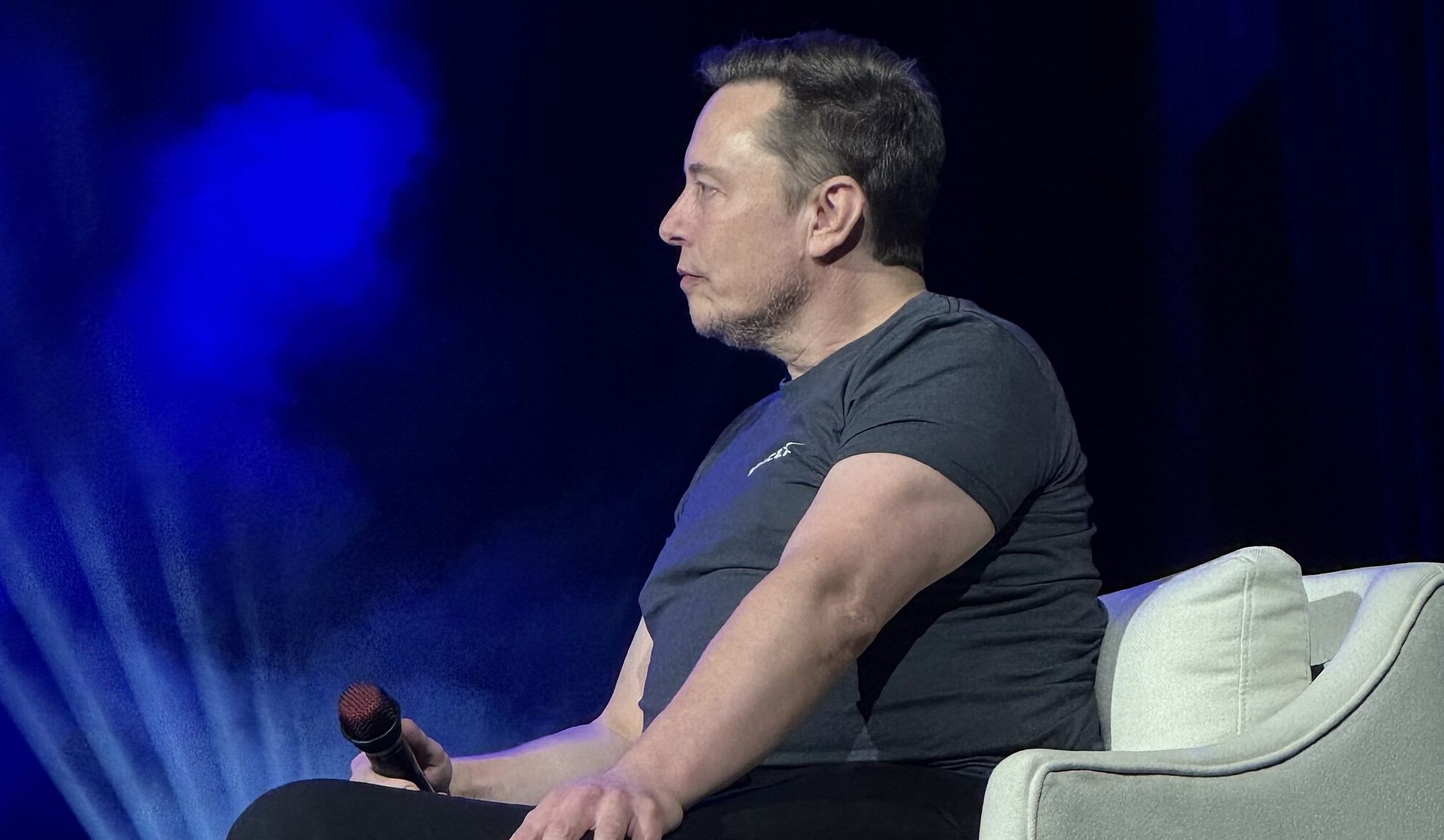
Elon Musk has slammed media outlet Sky News for publishing a misleading headline surrounding an invitation he received from the late Jefferey Epstein, who is infamous for allegedly orchestrating a global trafficking ring.
Despite indicating in its article that Musk was just invited to the island, Sky News nevertheless ran with a headline saying that the CEO was “named” in the latest Epstein files release.
Sky News’ article
As could be seen in Sky News’ own article, which had a headline that read “Elon Musk and Prince Andrew named in latest Epstein files release,” Musk’s name came out on Epstein’s daily schedule back in 2014. “Reminder: Elon Musk to island Dec.6 (is this still happening?)” The entry read.
Sky News then provided some context on the entry: “They show Musk as a potential visitor to Epstein’s island, Little St James, on 6 December 2014 – six years after Epstein became a listed sex offender.”
Interestingly, while the latest release also named Prince Andrew, who does appear in Epstein’s flight logs, Sky News nonetheless opened its article by discussing Musk. It also used Musk’s photo as its featured image for its article.
Musk slams Sky News
Sky News’ framing of the story and its use of Elon Musk as a header image on its article did not escape X’s Community Notes, which proceeded to state that the CEO was only invited by the controversial figure. Interestingly enough, the media outlet also disabled replies to its post amid criticism from the social media platform’s users. Musk himself slammed Sky News for its misleading angle.
“Shame on Sky News for this utterly misleading headline. Anyone pushing this false narrative deserves complete contempt. Epstein tried to get me to go to his island and I REFUSED, yet they name me even before Prince Andrew, who did visit,” Musk wrote in a post on X.
Despite Musk’s comments and Sky News getting Community Noted, the media outlet’s story has been used as yet another piece of ammo by the CEO’s critics. As highlighted by broadcaster Mehdi Raza Hasan on X:
“Such a bad week for Musk – he spends years obsessing over pedophiles only for the NYT to accuse his dad of being one and him knowing about it, and now Epstein asking in a file if Musk was coming to visit him on the island. Sheesh,” Hasan wrote in a post.


Elon Musk
Elon Musk reveals date of SpaceX Starship v3’s maiden voyage
The announcement arrives after Flight 11 on October 13 of last year, which concluded a busy 2025 testing campaign. Since then, SpaceX has focused on ground testing, including cryoproofing of Ship 39 and preparations for Booster 19, the first V3 Super Heavy.

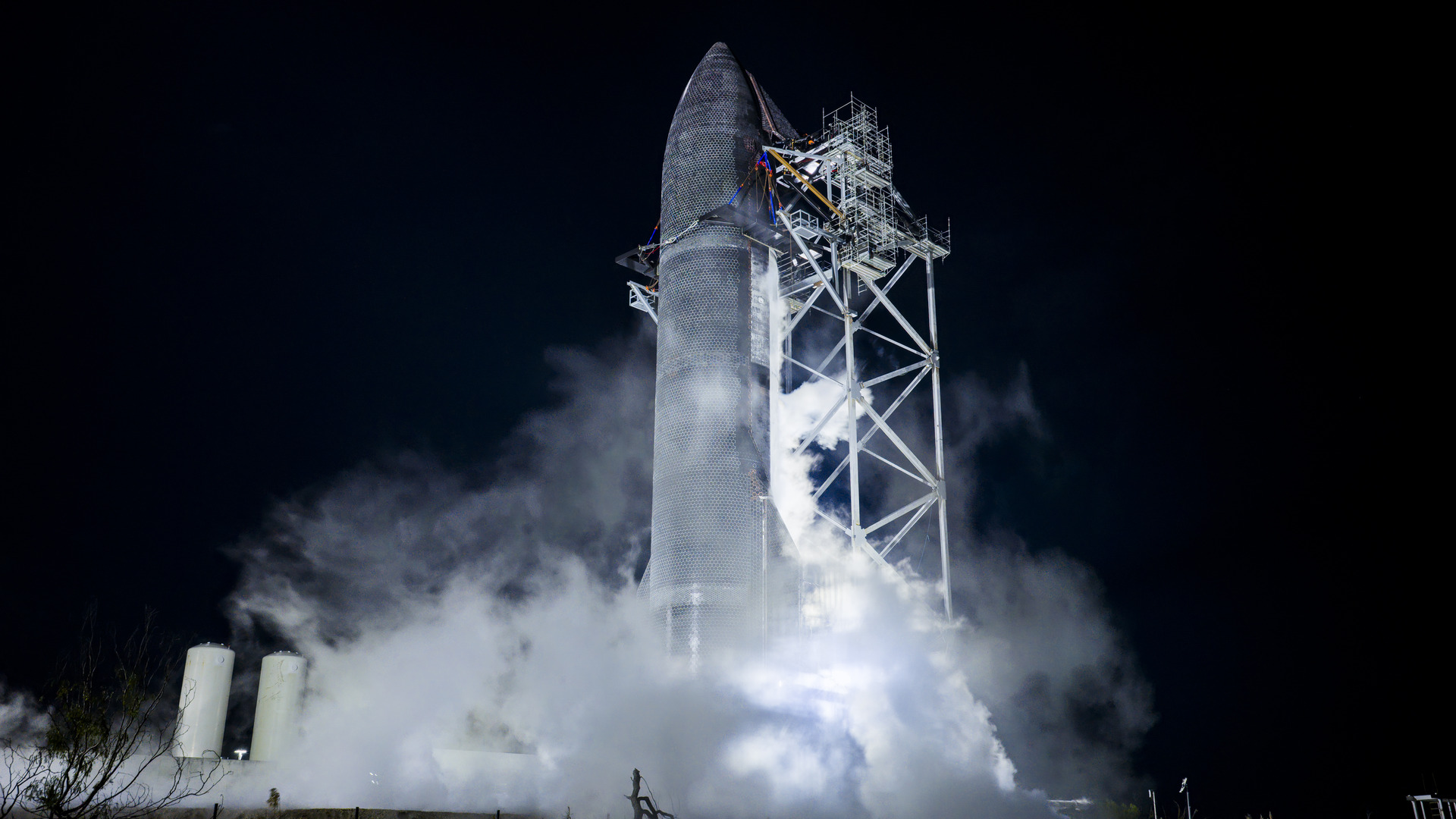
SpaceX CEO Elon Musk has revealed the timeline for the next Starship launch. It will be the first launch using SpaceX’s revamped design for Starship, as its v3 rocket will take its maiden voyage sooner than many might expect.
Musk announced on April 3 on X that the next Starship flight test, and the first flight of the upgraded v3 ship and booster, is 4 to 6 weeks away. The update signals the end of a nearly six-month hiatus since the program’s last launch.
Elon says the first V3 Starship launch will occur in 4-6 weeks
It will be the first Starship launch since Flight 11 on October 13, 2025 https://t.co/QnnYPTdbUu
— TESLARATI (@Teslarati) April 3, 2026
The upcoming mission, designated as Starship’s 12 integrated flight test (IFT-12), marks a significant milestone. It will be the debut of the v3 configuration, featuring a taller Super Heavy Booster and Starship upper stage. The changes SpaceX has made with the v3 rocket and booster are an increased propellant capacity and the more powerful Raptor 3 engines.
Earlier predictions from Musk in March had pointed to an April timeframe, but the latest timeline now targets a launch window in early to mid-May 2026.
The V3 iteration represents a substantial evolution from previous Starship prototypes. Engineers have optimized the design for improved manufacturability, higher thrust, and greater efficiency. Raptor 3 engines deliver significantly more power while reducing weight and production costs compared to earlier variants.
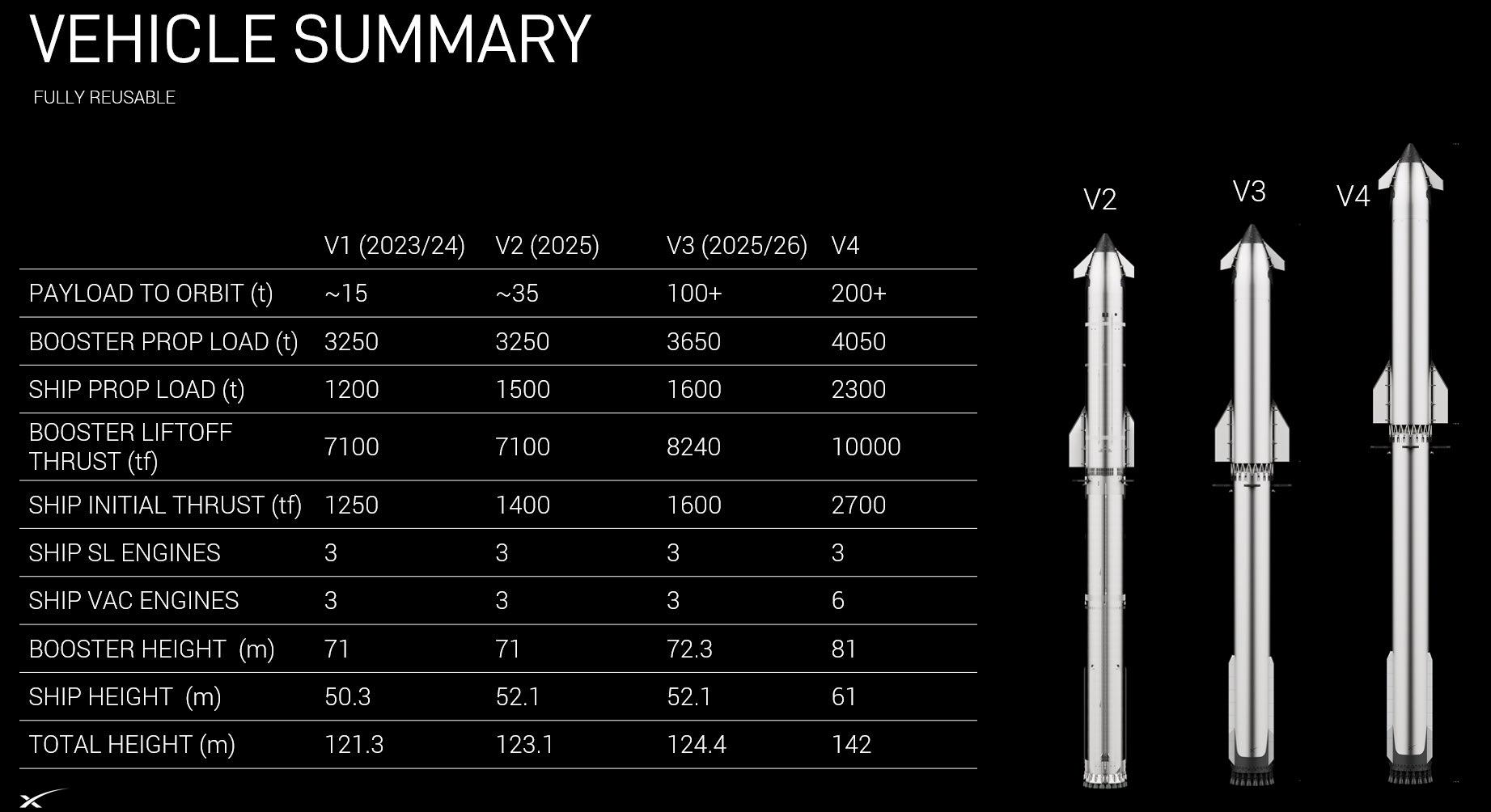
With these enhancements, SpaceX aims to boost payload capacity toward 200 metric tons to low Earth orbit in a fully reusable configuration — a dramatic leap from the roughly 35-ton target of prior versions. Such capabilities are critical for ambitious goals, including NASA’s Artemis lunar missions and eventual crewed flights to Mars.
The announcement arrives after Flight 11 on October 13 of last year, which concluded a busy 2025 testing campaign. Since then, SpaceX has focused on ground testing, including cryoproofing of Ship 39 and preparations for Booster 19, the first V3 Super Heavy.
Recent activities have involved static fires, activation of the new Pad 2 at Starbase in Boca Chica, Texas, and integration of Raptor 3 engines.
A prior incident with an early V3 booster on the test stand in late 2025 contributed to the delay, necessitating additional assembly and qualification work.
Musk’s timeline updates have become a hallmark of the Starship program, often described with characteristic optimism.
SpaceX’s Starship V3 is almost ready and it will change space travel forever
While past targets have occasionally shifted by weeks, the rapid iteration pace remains impressive. However, don’t be surprised if this timeline shifts again, as Musk has been overly optimistic in the past with not only launches, but products under his other companies, too.
SpaceX continues to refine launch infrastructure, including new propellant loading systems and tower mechanisms designed to support higher cadence operations. A successful V3 flight could pave the way for more frequent tests, tower catches of both booster and ship, and progression toward operational reusability.
The v3 debut is viewed as a transition point for Starship, moving beyond experimental flights toward a system capable of supporting large-scale deployment of Starlink satellites, lunar landers, and interplanetary transport.
Success on IFT-12 would demonstrate not only the new hardware’s performance but also SpaceX’s ability to recover from setbacks and maintain momentum.
As the 4-to-6-week countdown begins, anticipation builds at Starbase. Teams are finalizing vehicle stacking, conducting final pre-flight checks, and preparing for regulatory approvals. The world will be watching to see if Starship V3 can deliver on its promise of transforming humanity’s access to space.
Elon Musk
SpaceX to launch military missile tracking satellites through new Space Force contract
SpaceX wins a $178.5M Space Force contract to launch missile tracking satellites starting in 2027.

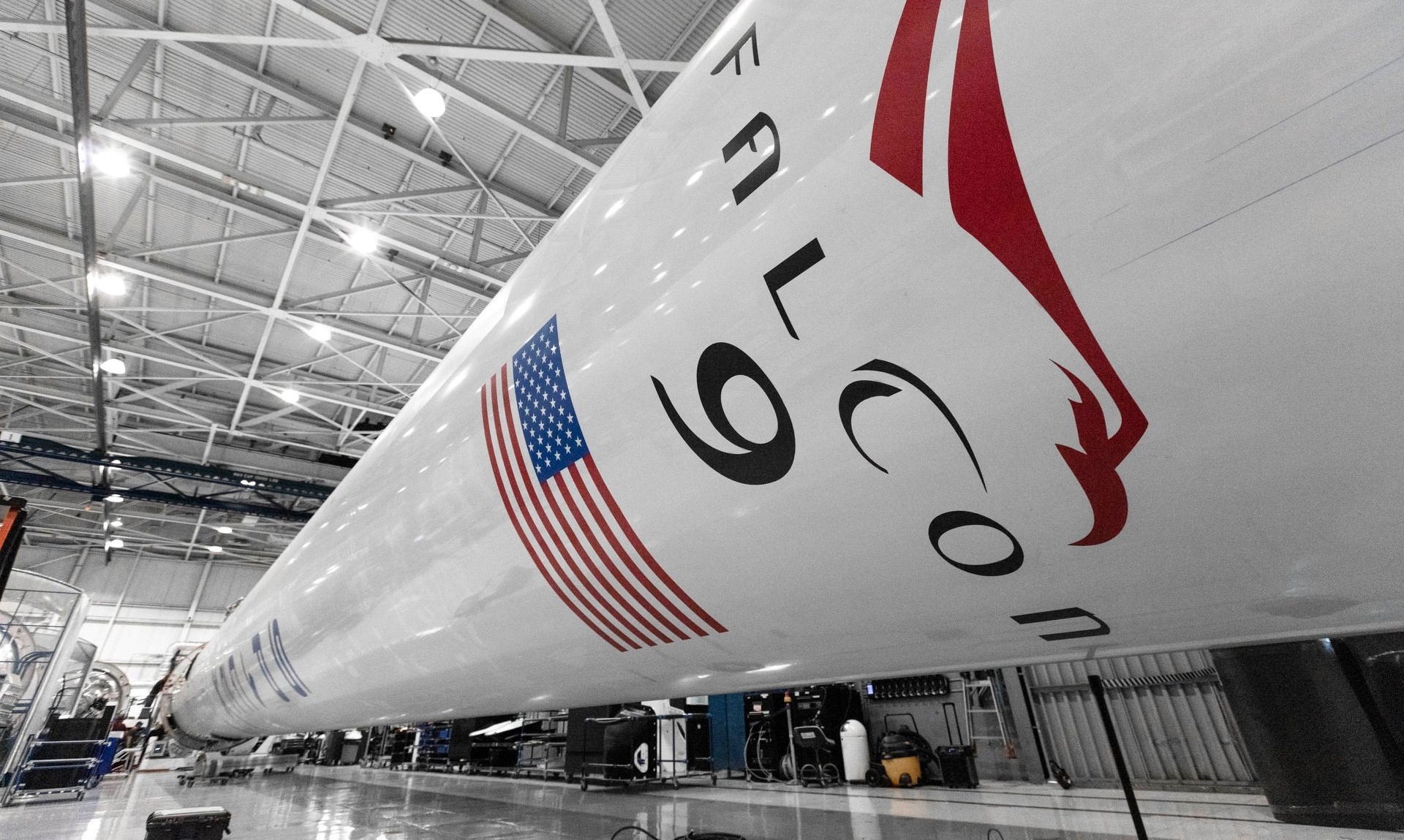
The U.S. Space Force awarded SpaceX a $178.5 million task order on April 1, 2026 to launch missile tracking satellites for the Space Development Agency. The contract, designated SDA-4, covers two Falcon 9 launches beginning in Q3 2027, one from Cape Canaveral Space Force Station in Florida and one from Vandenberg Space Force Base in California. The satellites, built by Sierra Space, are designed to bolster the nation’s ability to detect and track missile threats from orbit.
The award falls under the National Security Space Launch Phase 3 Lane 1 program, which Space Force uses to move payloads to orbit on faster timelines and at more competitive prices. “Our Lane 1 contract affords us the flexibility to deliver satellites for our customers, like SDA, more easily and faster than ever before to all the orbits our satellites need to reach,” said Col. Matt Flahive, SSC’s system program director for Launch Acquisition, in the official press release.
SpaceX is quietly becoming the U.S. Military’s only reliable rocket
The SDA-4 contract is the latest in a long string of national security wins for SpaceX. As Teslarati reported last month, the Space Force recently shifted a GPS III satellite launch from ULA’s Vulcan rocket to SpaceX’s Falcon 9 after a significant Vulcan booster anomaly grounded ULA’s military missions indefinitely. That move made it four consecutive GPS III satellites transferred to SpaceX after contracts were originally awarded to its competitor.
This didn’t come without a fight and dates back years. SpaceX originally had to sue the Air Force in 2014 for the right to compete for national security launches, at a time when United Launch Alliance held a near monopoly on the market. Since then, the company has steadily displaced ULA as the dominant provider, and last year the Space Force confirmed SpaceX would handle approximately 60 percent of all Phase 3 launches through 2032, worth close to $6 billion.
With missile defense satellites now part of its launch manifest alongside GPS, communications, and reconnaissance payloads, SpaceX is giving hungry investors something to chew on before its imminent IPO.
Elon Musk
Tesla’s Q1 delivery figures show Elon Musk was right
On the surface, the numbers reflect a mature EV market facing competition, softening demand, and the loss of certain incentives. Yet they also quietly validate a prediction Elon Musk has repeated for years: Tesla’s traditional auto business is becoming far less central to the company’s future.

Tesla reported its Q1 delivery figures on Thursday, and the figures — solid but unspectacular — show that CEO Elon Musk was right about what the company’s most important production and division would be.
We are seeing that shift occur in real time.
Tesla delivered 358,023 vehicles in the first quarter of 2026, according to the company’s official report released April 2.
The figure represents modest year-over-year growth of roughly 6 percent from Q1 2025’s 336,681 deliveries but a sharp sequential drop from Q4 2025’s 418,227. Production reached 408,386 vehicles, while energy storage deployments hit 8.8 GWh.
On the surface, the numbers reflect a mature EV market facing competition, softening demand, and the loss of certain incentives. Yet they also quietly validate a prediction Elon Musk has repeated for years: Tesla’s traditional auto business is becoming far less central to the company’s future.
Musk has long argued that vehicles alone will not define Tesla’s value.
Optimus Will Be Tesla’s Big Thing
In September 2025, Musk stated bluntly on X that “~80% of Tesla’s value will be Optimus,” the company’s humanoid robot.
He has described Optimus as potentially “more significant than the vehicle business over time.” Those comments were not abstract futurism. In January 2026, during the Q4 2025 earnings call, Musk announced the end of Model S and X production, framing it as an “honorable discharge,” he called it.
Those are the biggest factors.
~80% of Tesla’s value will be Optimus.
— Elon Musk (@elonmusk) September 1, 2025
The Fremont factory space, once dedicated to those flagship sedans, is being converted into an Optimus manufacturing line, with a long-term target of one million robots per year from that single facility alone.
The Q1 2026 numbers arrive at precisely the moment this strategic pivot is accelerating. Model 3 and Y deliveries totaled 341,893 units, while “other models” (including Cybertruck, Semi, and the final wave of S/X) added 16,130.
Growth is no longer explosive because Tesla is no longer chasing volume at all costs. Instead, the company is reallocating capital and factory floor space toward autonomy, energy storage, and robotics, businesses Musk believes will command far higher margins and enterprise value than incremental car sales.
Delivery Hits and Misses are Becoming Less Important
Wall Street’s pre-release consensus had pegged deliveries near 365,000. Coming in below that estimate might have rattled investors focused solely on automotive metrics. Yet Musk’s thesis has never been about maximizing quarterly vehicle shipments.
Tesla, he has insisted, “has never been valued strictly as a car company.”
The modest Q1 auto performance, paired with the deliberate wind-down of legacy programs and the ramp of Optimus, underscores that point. While EV demand stabilizes, Tesla is building the infrastructure for Robotaxis and humanoid robots that could dwarf today’s car business.
The future is here, and it is happening. It’s funny to think about how quickly Tesla was able to disrupt the traditional automotive business and force many car companies to show their hand. But just as fast as Tesla disrupted that, it is now moving to disrupt its own operation.
Cars, once the only recognizable and widely-known division of Tesla, is now becoming a background effort, slowly being overtaken by the company’s ambitions to dominate AI, autonomy, and robotics for years to come.
Critics may still view the shift as risky or premature. But the Q1 figures, solid but unspectacular in the auto segment, illustrate exactly what Musk has been signaling: the era when Tesla’s valuation rose and fell with every Model Y delivery is ending.
The company’s long-term bet is on AI-driven products that turn vehicles into high-margin robotaxis and factories into robot foundries. Thursday’s delivery report did not just meet the market’s tempered expectations; it proved Elon Musk was right all along.
The car business, once everything, is quietly becoming an important piece of a much larger puzzle.

Elon Musk reveals date of SpaceX Starship v3’s maiden voyage

SpaceX to launch military missile tracking satellites through new Space Force contract


