News
Tesla brings closure to flagship ‘sentimental’ models, Musk confirms

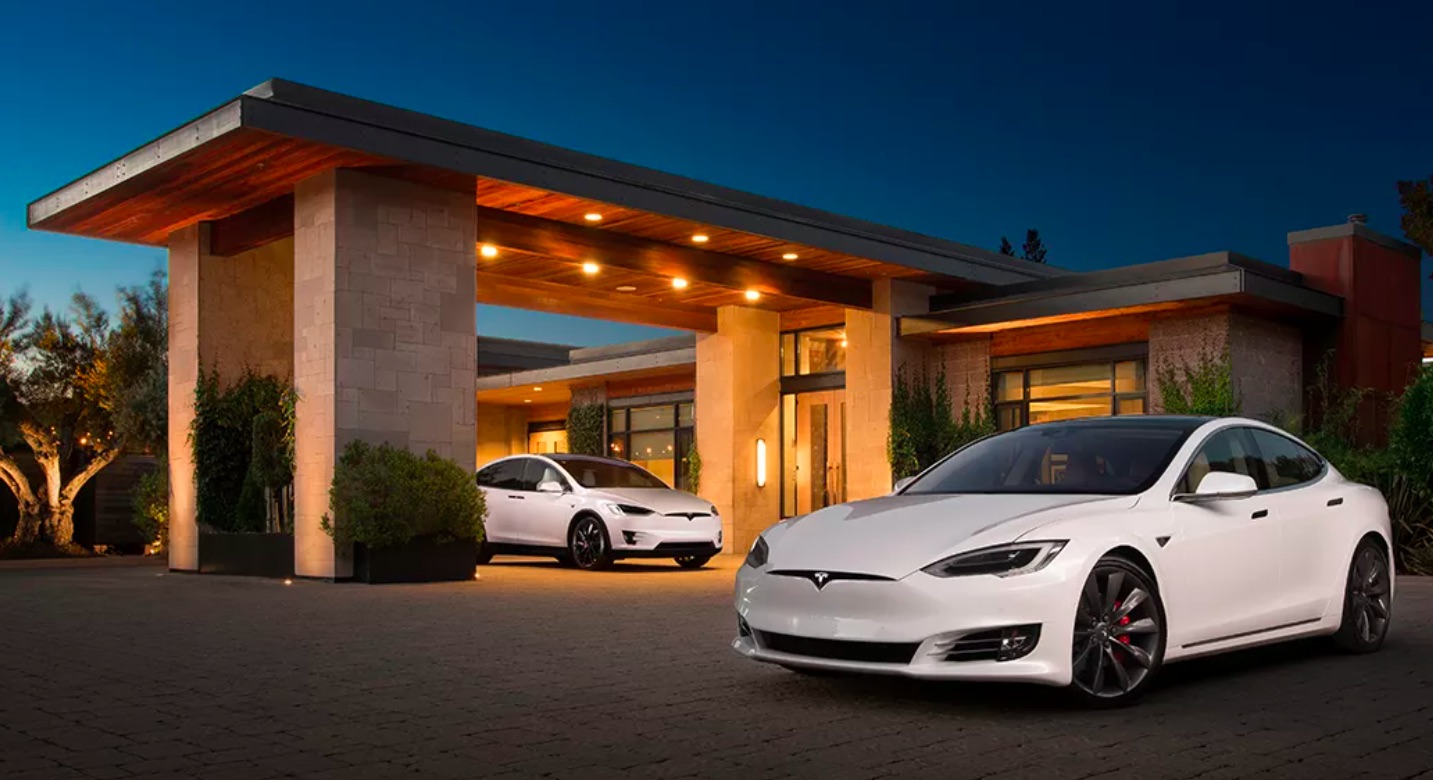
Tesla is bringing closure to its flagship Model S and Model X vehicles, which CEO Elon Musk said several years ago were only produced for “sentimental reasons.”
The Model S and Model X have been light contributors to Tesla’s delivery growth over the past few years, commonly contributing only a few percentage points toward the over 1.7 million cars the company has handed over to customers annually since 2022.
However, the Model S and Model X have remained in production because of their high-end performance and flagship status; they are truly two vehicles that are premium offerings and do not hold major weight toward Tesla’s future goals.
On Wednesday, during the Q4 2025 Earnings Call, Musk confirmed that Tesla would bring closure to the two models, ending their production and making way for the manufacturing efforts of the Optimus robot:
“It is time to bring the Model S and Model X programs to an end with an honorable discharge. It is time to bring the S/X programs to an end. It’s part of our overall shift to an autonomous future.”
Musk said the production lines that Tesla has for the Model S and Model X at the Fremont Factory in Northern California will be transitioned to Optimus production lines that will produce one million units per year.
Tesla Fremont Factory celebrates 15 years of electric vehicle production
Tesla will continue to service Model S and Model X vehicles, but it will officially stop deliveries of the cars in Q2, as inventory will be liquidated. When they’re gone, they’re gone.

BREAKING: Tesla will wind down Model S and Model X production next quarter, Elon Musk confirms.
“It is time to bring the Model S and Model X programs to an end with an honorable discharge.” pic.twitter.com/Czn7aQjJE1
— TESLARATI (@Teslarati) January 28, 2026
Tesla has been making moves to sunset the two vehicles for the better part of one year. Last July, it stopped taking any custom orders for vehicles in Europe, essentially pushing the idea that the program was coming to a close soon.
Musk said back in 2019:
“I mean, they’re very expensive, made in low volume. To be totally frank, we’re continuing to make them more for sentimental reasons than anything else. They’re really of minor importance to the future.”
That point is more relevant than ever as Tesla is ending the production of the cars to make way for Optimus, which will likely be Tesla’s biggest product in the coming years.
Musk added during the Earnings Call on Wednesday that he believes Optimus will be a major needle-mover of the United States’ GDP, as it will increase productivity and enable universal high income for humans.


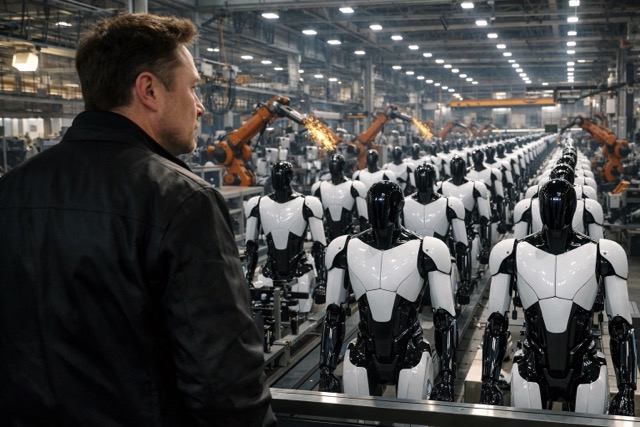
Tesla is set to make a major acquisition as it plans to buy a more than a century-old German manufacturing systems supplier. The move targets EMAG, a specialist in precision machines used to produce drive systems for humanoid robots, according to a filing with Germany’s antitrust authority that surfaced Friday.
Reuters first reported the news.
The planned transaction appeared on the Bundeskartellamt’s list of pending reviews as an asset acquisition involving Tesla and the EMAG Group, under case number B5-132/26 and dated November 23. Financial terms and the exact scope of assets remain undisclosed.
Tesla has not commented, and EMAG did not immediately respond to requests for comment.
Headquartered in Salach near Stuttgart, EMAG traces its roots to an iron foundry founded in Bautzen in 1867. It designs and builds turning, grinding, gear-cutting, and related machines long used in automotive production, but more recently those systems have been applied to the complex gears and actuators required in humanoid robots such as Tesla’s Optimus.
Why Elon Musk’s target date for buying an Optimus robot is harder than it sounds
Some local reports have suggested that the 220 EMAG employees could end up transferring to Tesla while the Salach site remains in opertaion. EMAG has faced some challenges in recent years; it has posted losses amid softer demand from traditional automotive customers. It recently cut hundreds of jobs in Germany.
Bringing specialized machining capability in-house would give Tesla tighter control over a critical production bottleneck for Optimus, whose joints require high-precision components that are difficult to scale.
The approach fits a pattern of strategic, macro-level acquisitions Tesla has used to accelerate vertical integration.
In 2019 the company completed its purchase of Maxwell Technologies for approximately $218 million in stock, primarily to obtain the firm’s dry-electrode battery manufacturing process. That technology promised to eliminate solvent-based slurry coating, reduce factory size and energy use, cut costs, and raise energy density, steps that later underpinned development of Tesla’s 4680 cells.
Although Tesla later sold Maxwell’s ultracapacitor business, it retained the dry-electrode know-how and has continued refining it for high-volume production.
Earlier, Tesla’s 2017 acquisition of German automation specialist Grohmann Engineering supplied expertise in high-speed manufacturing systems that helped ramp vehicle output. The EMAG filing signals a similar bid to internalize specialized tooling and process knowledge, this time aimed at scaling humanoid robot production rather than cars or batteries alone.
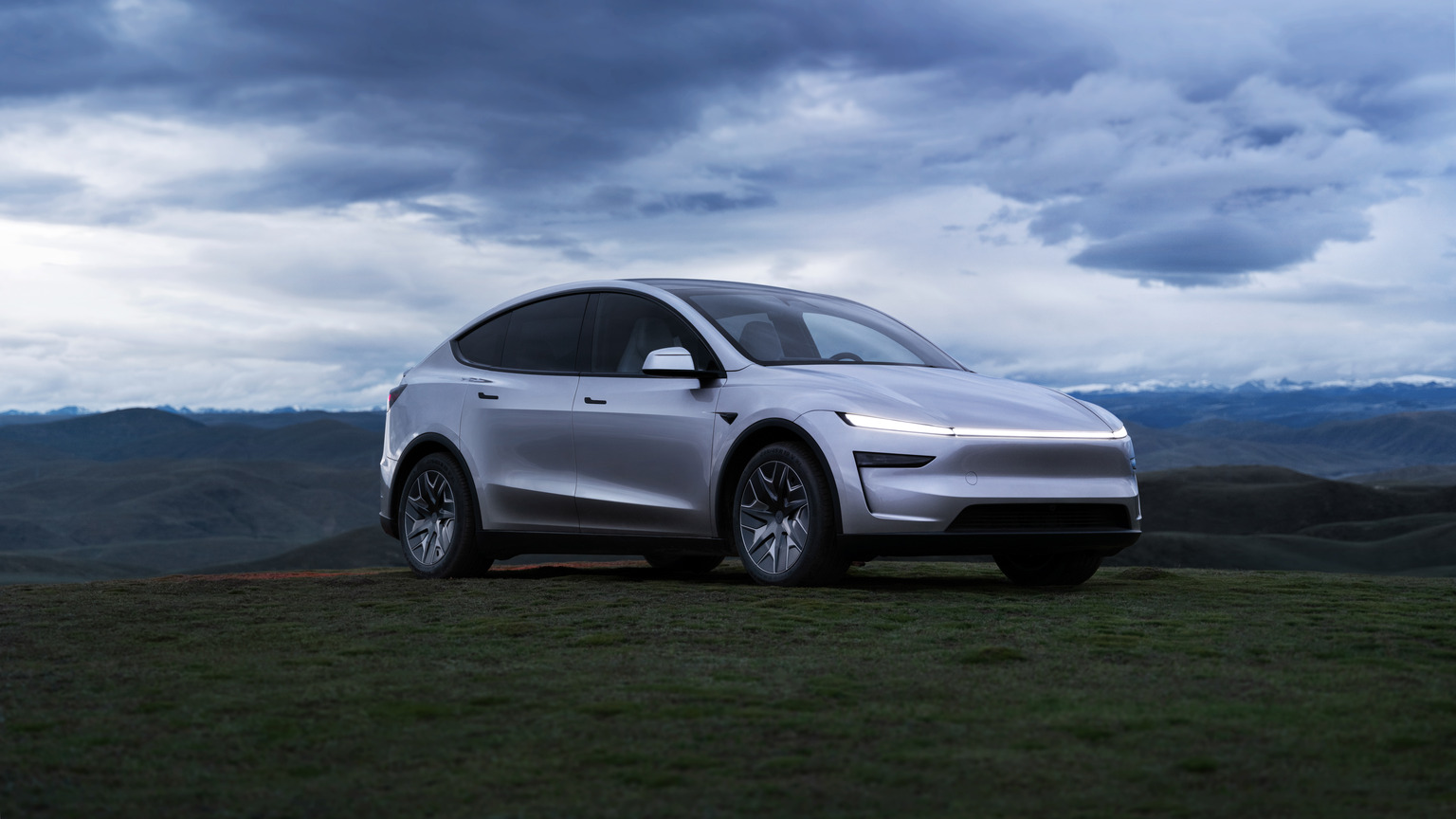
Tesla is rolling out what is likely its biggest battery feature in years through a software update, as owners are starting to reveal the new addition is hitting their cars.
Tesla is now giving owners the option to manually enable Battery Preconditioning, a feature that was previously only available at the vehicles’ discretion when heading to a Supercharger stall.
It is on its way to some owners, who are sharing the first screenshots of the feature, which lies within the Charging section of the Tesla App:
This is how 2026.44.3.1 battery preconditioning looks in the current Tesla App. 👇 https://t.co/TN9lGkc3JP
— Lothar Lindinger (@lotharlindinger) November 27, 2026
The “Preconditioning for Fast Charging” button is clearly labeled just below the charging information UI in the app. Of course, you do not need to keep it exclusively for fast charging, as preconditioning the cells can have a lot of different advantages for EV drivers.
Battery preconditioning brings your battery cells to an ideal temperature before driving or fast charging. Warming or cooling the battery cells to a proper temperature can improve charging speeds, protect the cells and their longevity, restore regenerative braking quicker in cold temperatures, and help with both performance and efficiency.
This new change comes with Tesla Software Version 2026.44.3.1, which includes several new improvements, like a new Charging Network View, Security Improvements, and Bug Fixes.
This is a welcome change and it is pretty surprising that this has not been enabled before now. There were a handful of times in the winter last year that I would set my destination as a Supercharger just to get the cells warmed up to get regenerative braking and performance to a more reasonable level.
This should be something that helps many owners in colder climates get more from their Teslas, and it also should help with long-term battery health.
Elon Musk
Elon Musk will give every American kid a SpaceX share every year
Elon Musk’s SpaceX stock giveaway to American kids just became something that repeats every year.

Elon Musk says the SpaceX shares headed to American children will not be a one time gift.
“I will be donating another share of SpaceX to all kids in America every year,” Musk wrote on X on Thanksgiving. He later quoted Sawyer Merritt’s estimate that the pledge covers about 70 million children, adding, “Vital that children have a stake in the future.”
At Wednesday’s closing price of $127.44, one share for 70 million children works out to roughly $9 billion a year, a figure that would rise or fall with SpaceX’s stock. Musk did not say how the annual shares would be distributed or whether they would also flow through Trump Accounts.
Vital that children have a stake in the future — Elon Musk (@elonmusk) November 27, 2026
The yearly pledge builds on an announcement made a day earlier. SpaceX said Wednesday it will donate one newly issued class A share to every currently active Trump Account, with Musk personally matching the gift. “Every child in America will receive two SpaceX shares, one from the company and one from me personally,” Musk wrote.
Combined with President and COO Gwynne Shotwell’s pledge of more than 2 million shares, that first round totals about 142 million shares worth roughly $18.1 billion. Musk said SpaceX’s share will be transferred next month, while “the share directly from me will be transferred when my lockup expires in June next year.”
Musk also offered the new shareholders some advice. “If SpaceX succeeds in making life multiplanetary and harnessing even a millionth of the Sun’s energy, it will be worth about a million times the current global economy,” he wrote, calling the goals “absurdly difficult” before adding, “I recommend holding on to your shares.”
The giveaway has grown quickly since October, when Musk first promised a SpaceX share to “every kid in America” in 2027. Shotwell had already committed her own stock to Trump Accounts, with those shares due to reach eligible children in December.
Trump Accounts, also known as 530A accounts, are tax advantaged investment accounts open to any U.S. child under 18 with a Social Security number. The White House said in October that nearly 70 million had been opened, more than 60 million of them through automatic enrollment, though it is unclear how many count as active.
The first gift was announced hours after the FCC authorized SpaceX to deploy up to 1 million Starmind data center satellites. It also arrives as Tesla and SpaceX special committees negotiate a possible all stock merger, which would make every child holding SpaceX stock an owner of the combined company if a deal closes.

Tesla aims to bolster Optimus with newest company acquisition

Tesla is rolling out its biggest battery upgrade through a software update


