Elon Musk
Elon Musk and Tesla try to save legacy automakers from Déjà vu

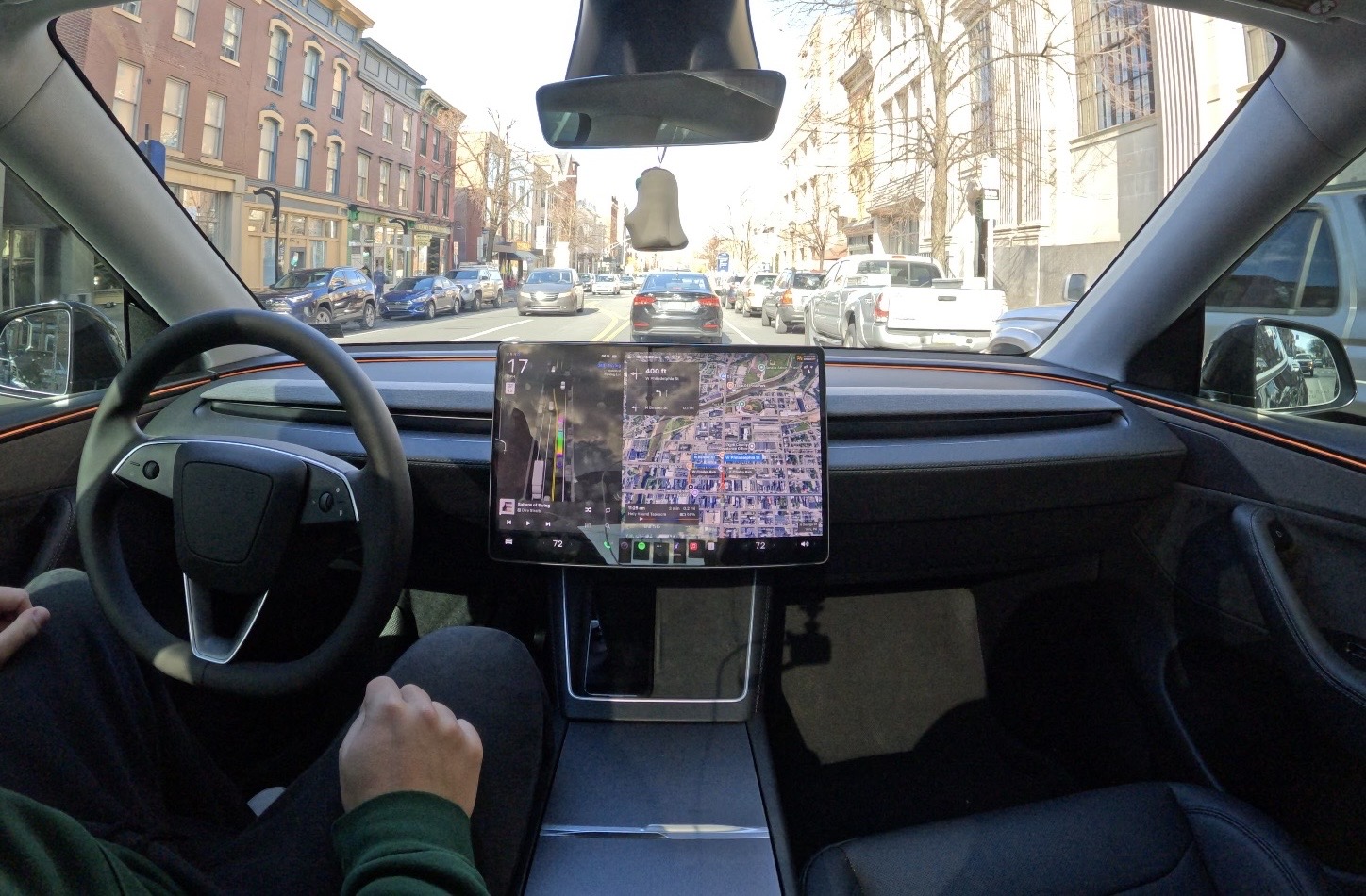
Elon Musk said in late November that he’s “tried to warn” legacy automakers and “even offered to license Tesla Full Self-Driving, but they don’t want it,” expressing frustration with companies that refuse to adopt the company’s suite, which will eventually be autonomous.
Tesla has long established itself as the leader in self-driving technology, especially in the United States. Although there are formidable competitors, Tesla’s FSD suite is the most robust and is not limited to certain areas or roadways. It operates anywhere and everywhere.
The company’s current position as the leader in self-driving tech is being ignored by legacy automakers, a parallel to what Tesla’s position was with EV development over a decade ago, which was also ignored by competitors.
The reluctance mirrors how legacy automakers initially dismissed EVs, only to scramble in catch-up mode years later–a pattern that highlights their historical underestimation of disruptive innovations from Tesla.
Elon Musk’s Self-Driving Licensing Attempts
Musk and Tesla have tried to push Full Self-Driving to other car companies, with no true suitors, despite ongoing conversations for years. Tesla’s FSD is aiming to become more robust through comprehensive data collection and a larger fleet, something the company has tried to establish through a subscription program, free trials, and other strategies.
Tesla CEO Elon Musk sends rivals dire warning about Full Self-Driving
However, competing companies have not wanted to license FSD for a handful of speculative reasons: competitive pride, regulatory concerns, high costs, or preference for in-house development.
Déjà vu All Over Again
Tesla tried to portray the importance of EVs long ago, as in the 2010s, executives from companies like Ford and GM downplayed the importance of sustainable powertrains as niche or unprofitable.
Musk once said in a 2014 interview that rivals woke up to electric powertrains when the Model S started to disrupt things and gained some market share. Things got really serious upon the launch of the Model 3 in 2017, as a mass-market vehicle was what Tesla was missing from its lineup.
This caused legacy companies to truly wake up; they were losing market share to Tesla’s new and exciting tech that offered less maintenance, a fresh take on passenger auto, and other advantages. They were late to the party, and although they have all launched vehicles of their own, they still lag in two major areas: sales and infrastructure, leaning on Tesla for the latter.
I’ve tried to warn them and even offered to license Tesla FSD, but they don’t want it! Crazy …
When legacy auto does occasionally reach out, they tepidly discuss implementing FSD for a tiny program in 5 years with unworkable requirements for Tesla, so pointless. 🤷♂️
🦕 🦕
— Elon Musk (@elonmusk) November 24, 2025
Musk’s past warnings have been plentiful. In 2017, he responded to critics who stated Tesla was chasing subsidies. He responded, “Few people know that we started Tesla when GM forcibly recalled all electric cars from customers in 2003 and then crushed them in a junkyard,” adding that “they would be doing nothing” on EVs without Tesla’s efforts.
Companies laughed off Tesla’s prowess with EVs, only to realize they had made a grave mistake later on.
It looks to be happening once again.
A Pattern of Underestimation
Both EVs and self-driving tech represent major paradigm shifts that legacy players view as threats to their established business models; it’s hard to change. However, these early push-aways from new tech only result in reactive strategies later on, usually resulting in what pains they are facing now.
Ford is scaling back its EV efforts, and GM’s projects are hurting. Although they both have in-house self-driving projects, they are falling well behind the progress of Tesla and even other competitors.
It is getting to a point where short-term risk will become a long-term setback, and they may have to rely on a company to pull them out of a tough situation later on, just as it did with Tesla and EV charging infrastructure.
Tesla has continued to innovate, while legacy automakers have lagged behind, and it has cost them dearly.
Implications and Future Outlook
Moving forward, Tesla’s progress will continue to accelerate, while a dismissive attitude by other companies will continue to penalize them, especially as time goes on. Falling further behind in self-driving could eventually lead to market share erosion, as autonomy could be a crucial part of vehicle marketing within the next few years.
Eventually, companies could be forced into joint partnerships as economic pressures mount. Some companies did this with EVs, but it has not resulted in very much.
Self-driving efforts are not only a strength for companies themselves, but they also contribute to other things, like affordability and safety.
Tesla has exhibited data that specifically shows its self-driving tech is safer than human drivers, most recently by a considerable margin. This would help with eliminating accidents and making roads safer.
Tesla’s new Safety Report shows Autopilot is nine times safer than humans
Additionally, competition in the market is a good thing, as it drives costs down and helps innovation continue on an upward trend.
Conclusion
The parallels are unmistakable: a decade ago, legacy automakers laughed off electric vehicles as toys for tree-huggers, crushed their own EV programs, and bet everything on the internal-combustion status quo–only to watch Tesla redefine the industry while they scrambled for billions in catch-up capital.
Today, the same companies are turning down repeated offers to license Tesla’s Full Self-Driving technology, insisting they can build better autonomy in-house, even as their own programs stumble through recalls, layoffs, and missed milestones. History is not merely rhyming; it is repeating almost note-for-note.
Elon Musk has spent twenty years warning that the auto industry’s bureaucratic inertia and short-term thinking will leave it stranded on the wrong side of technological revolutions. The question is no longer whether Tesla is ahead–it is whether the giants of Detroit, Stuttgart, and Toyota will finally listen before the next wave leaves them watching another leader pull away in the rear-view mirror.
This time, the stakes are not just market share; they are the very definition of what a car will be in the decades ahead.


Elon Musk
Brazil Supreme Court orders Elon Musk and X investigation closed
The decision was issued by Supreme Court Justice Alexandre de Moraes following a recommendation from Brazil’s Prosecutor-General Paulo Gonet.

Brazil’s Supreme Federal Court has ordered the closure of an investigation involving Elon Musk and social media platform X. The inquiry had been pending for about two years and examined whether the platform was used to coordinate attacks against members of the judiciary.
The decision was issued by Supreme Court Justice Alexandre de Moraes following a recommendation from Brazil’s Prosecutor-General Paulo Gonet.
According to a report from Agencia Brasil, the investigation conducted by the Federal Police did not find evidence that X deliberately attempted to attack the judiciary or circumvent court orders.
Prosecutor-General Paulo Gonet concluded that the irregularities identified during the probe did not indicate fraudulent intent.
Justice Moraes accepted the prosecutor’s recommendation and ruled that the investigation should be closed. Under the ruling, the case will remain closed unless new evidence emerges.
The inquiry stemmed from concerns that content on X may have enabled online attacks against Supreme Court justices or violated rulings requiring the suspension of certain accounts under investigation.
Justice Moraes had previously taken several enforcement actions related to the platform during the broader dispute involving social media regulation in Brazil.
These included ordering a nationwide block of the platform, freezing Starlink accounts, and imposing fines on X totaling about $5.2 million. Authorities also froze financial assets linked to X and SpaceX through Starlink to collect unpaid penalties and seized roughly $3.3 million from the companies’ accounts.
Moraes also imposed daily fines of up to R$5 million, about $920,000, for alleged evasion of the X ban and established penalties of R$50,000 per day for VPN users who attempted to bypass the restriction.
Brazil remains an important market for X, with roughly 17 million users, making it one of the platform’s larger user bases globally.
The country is also a major market for Starlink, SpaceX’s satellite internet service, which has surpassed one million subscribers in Brazil.
Elon Musk
FCC chair criticizes Amazon over opposition to SpaceX satellite plan
Carr made the remarks in a post on social media platform X.
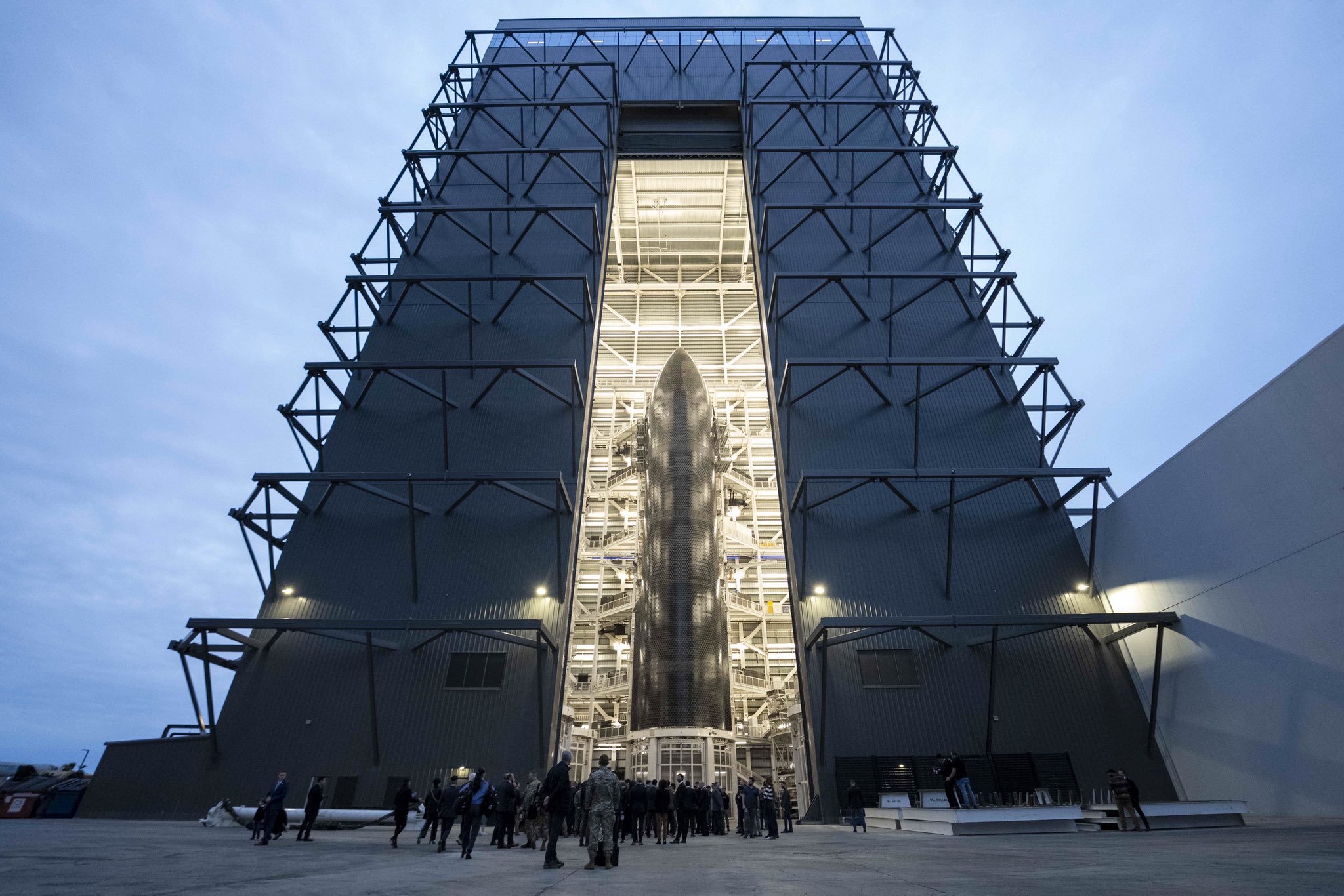
U.S. Federal Communications Commission (FCC) Chairman Brendan Carr criticized Amazon after the company opposed SpaceX’s proposal to launch a large satellite constellation that could function as an orbital data center network.
Carr made the remarks in a post on social media platform X.
Amazon recently urged the FCC to reject SpaceX’s application to deploy a constellation of up to 1 million low Earth orbit satellites that could serve as artificial intelligence data centers in space.
The company described the proposal as a “lofty ambition rather than a real plan,” arguing that SpaceX had not provided sufficient details about how the system would operate.
Carr responded by pointing to Amazon’s own satellite deployment progress.
“Amazon should focus on the fact that it will fall roughly 1,000 satellites short of meeting its upcoming deployment milestone, rather than spending their time and resources filing petitions against companies that are putting thousands of satellites in orbit,” Carr wrote on X.
Amazon has declined to comment on the statement.
Amazon has been working to deploy its Project Kuiper satellite network, which is intended to compete with SpaceX’s Starlink service. The company has invested more than $10 billion in the program and has launched more than 200 satellites since April of last year.
Amazon has also asked the FCC for a 24-month extension, until July 2028, to meet a requirement to deploy roughly 1,600 satellites by July 2026, as noted in a CNBC report.
SpaceX’s Starlink network currently has nearly 10,000 satellites in orbit and serves roughly 10 million customers. The FCC has also authorized SpaceX to deploy 7,500 additional satellites as the company continues expanding its global satellite internet network.
Elon Musk
Elon Musk shares big Tesla Optimus 3 production update
According to Musk, Tesla is in the final stages of completing Optimus 3, which he described as one of the world’s most advanced humanoid robots.

Tesla CEO Elon Musk has stated that production of Optimus 3 could begin this summer. Musk shared the update in his interview at the Abundance Summit.
According to Musk, Tesla is in the final stages of completing Optimus 3, which he described as one of the world’s most advanced humanoid robots.
“We’re in the final stages of completion of Optimus 3, which is really going to be by far the most advanced robot in the world. Nothing’s even close. In fact, I haven’t even seen demos of robots that are as good as Optimus 3,” Musk said.
He also set expectations on the pace of Optimus 3’s production ramp, stating that the initial volumes of the humanoid robot will likely be very low. Musk did, however, also state that high production rates for Optimus 3 should be possible in 2027.
“I think we’ll start production on Optimus 3 this summer, but very slow at first, like sort of this classic S-curve ramp of manufacturing units versus time. And then, probably reach high volume production around summer next year,” he said.
Interestingly enough, the CEO hinted that Tesla is looking to iterate on the robot quickly, potentially releasing a new Optimus design every year.
“We’ll have Optimus 4 design complete next year. We’ll try to release a new robot design every year,” Musk stated.
Tesla has already outlined broader plans for scaling Optimus production beyond its first manufacturing line. Musk previously stated that Optimus 4 will be built at Gigafactory Texas at significantly higher production volumes.
Initial production lines for the robot are expected to be located at Tesla’s Fremont Factory, where the company plans to establish a line capable of producing up to 1 million robots per year.
A larger production ramp is expected to occur at Gigafactory Texas, where Musk has previously suggested could eventually support production of up to 10 million robots per year.
“We’re going to launch on the fastest production ramp of any product of any large complex manufactured product ever, starting with building a one-million-unit production line in Fremont. And that’s Line one. And then a ten million unit per year production line here,” Musk said previously.
The comments suggest that while Optimus 3 will likely begin production at Fremont, Tesla’s larger-scale manufacturing push could arrive with Optimus 4 at Gigafactory Texas.

Tesla adds awesome new driving feature to Model Y

Tesla finally brings a Robotaxi update that Android users will love
![Lucid Lunar robotaxi concept [Credit: Rendering by TESLARATI]](https://www.teslarati.com/wp-content/uploads/2026/03/lucid-lunar-robotaxi-concept-teslarati-rendering-80x80.jpg)


