Elon Musk
SpaceX blocks unauthorized Starlink terminals used by Russian troops
Ukrainian officials confirmed that Starlink terminals believed to be used by Russian troops were disabled after coordination with SpaceX.

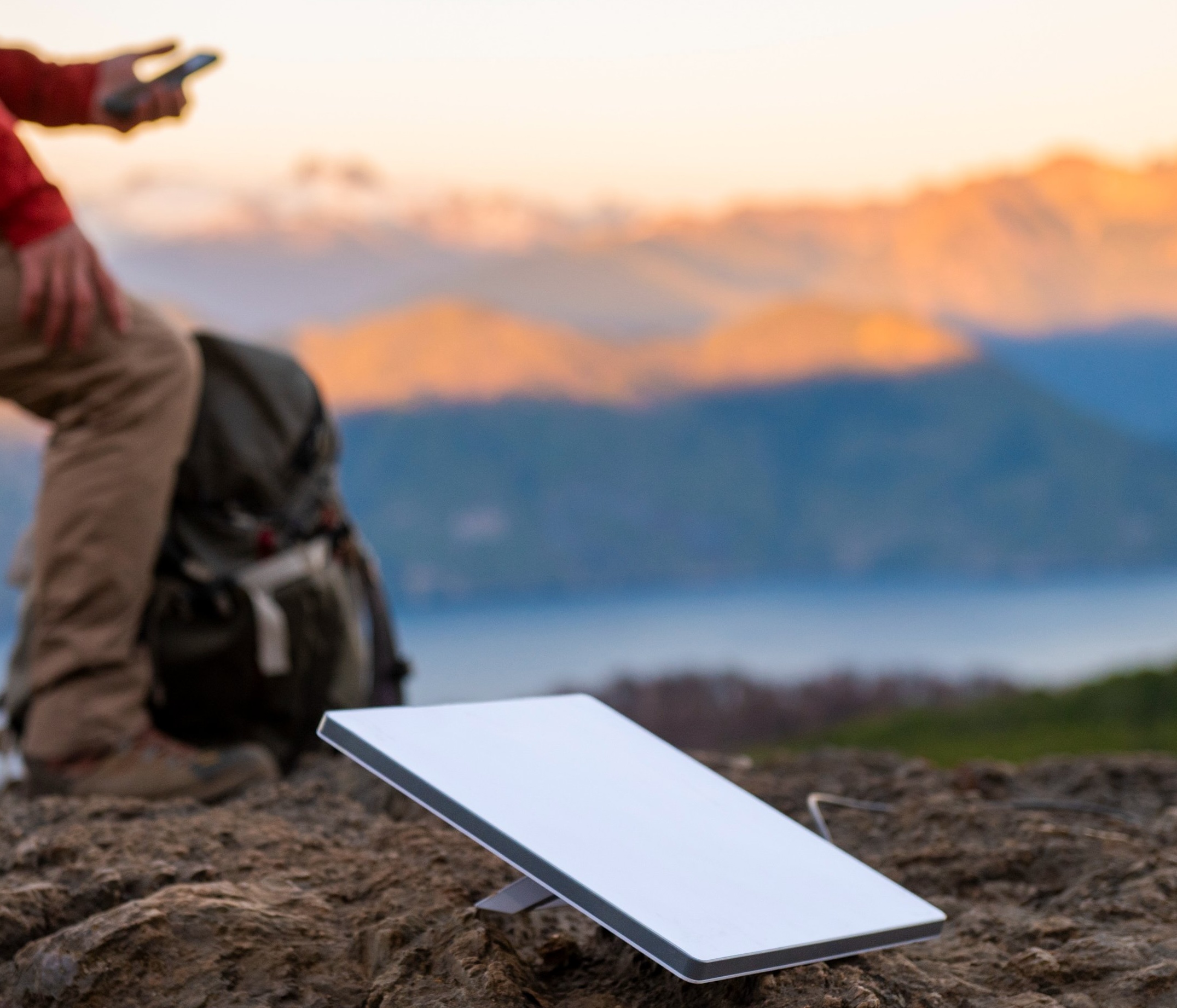
SpaceX has taken steps to block unauthorized use of its Starlink satellite internet network, a move Ukrainian officials stated is already disrupting Russian military communications.
Russian units lose a key communications tool
As per a report from The Guardian, Ukrainian defense officials have confirmed that Starlink terminals believed to be used by Russian troops were recently disabled after coordination with SpaceX. The move reportedly affected frontline communications and drone operations, especially in areas where traditional military radios are unreliable or easily jammed.
For months, Russian units had relied on large numbers of illicitly obtained Starlink terminals to stay connected along the front. The satellite internet service allowed faster coordination and more precise drone use for Russian forces.
Several Russian military bloggers close to frontline units have acknowledged the impact of the Starlink shutdown, with some describing sudden connectivity problems in the satellite internet service.
Russia lacks comparable replacement
Russia does not have a satellite internet system that matches Starlink’s speed, coverage, and ease of deployment. Alternatives such as fiber-optic lines, short-range wireless links, and digital radio systems take longer to install and work inadequately for fast-moving units.
Russia does operate limited satellite communications through state-linked providers, but those systems rely mainly on geostationary satellites, which are notably slower. Coverage is uneven, and data capacity is far lower than Starlink’s low-Earth-orbit network.
For now, Ukraine has stated that it has introduced a verification system that allows only approved Starlink terminals to connect. Devices believed to be linked to Russian forces are blocked from the network. That being said, Ukrainian officials have also claimed Russian units are trying to work around the restrictions by asking civilians to register Starlink terminals in their names.


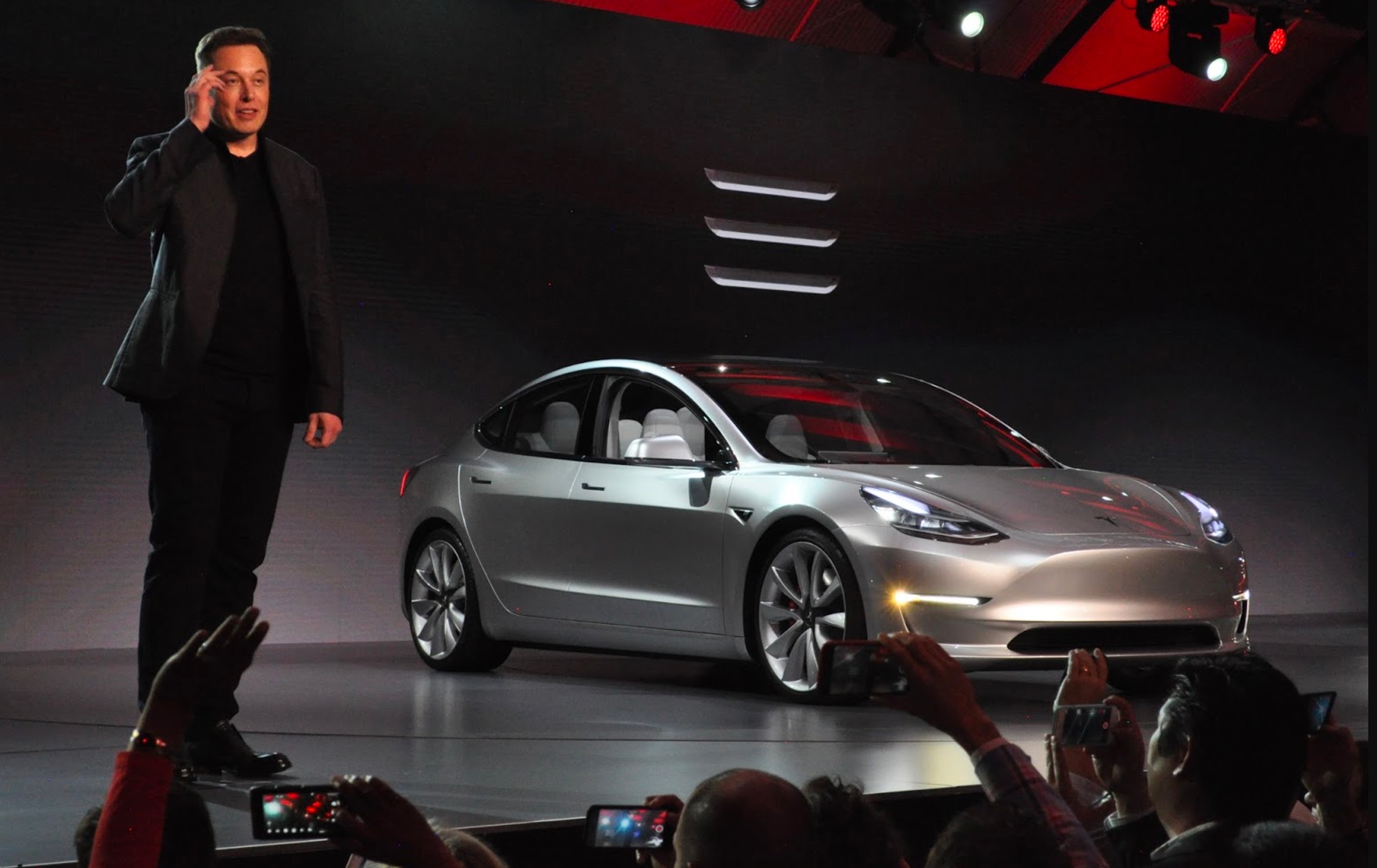
Tesla has taken home the “Overall Loyalty to Make” award from S&P Global Mobility for the fourth consecutive year, reinforcing Tesla owners’ willingness to come back. The 2025 awards are based on S&P Global Mobility’s analysis of 13.6 million new retail vehicle registrations in the U.S. from October 2024 through September 2025. The complete list of 2025 winners includes General Motors for Overall Loyalty to Manufacturer, Tesla for Overall Loyalty to Make, Chevrolet Equinox for Overall Loyalty to Model, Mini for Most Improved Make Loyalty, Subaru for Overall Loyalty to Dealer, and Tesla again for both Ethnic Market Loyalty to Make and Highest Conquest Percentage.
Tesla’s streak in this category started in 2022, and the brand has now won the Highest Conquest Percentage award for six straight years, meaning it keeps pulling buyers away from other brands at a rate no competitor has matched. Tesla’s retention among Asian households reached 63.6% and among Hispanic households 61.9%, rates that significantly outpace national averages for those groups. That breadth of appeal across demographics adds a layer of significance to a win that some might dismiss as routine.
The timing matters too. After several consecutive quarters of decline, Tesla’s share of U.S. EV sales jumped to 59% in Q4 2025. That rebound, arriving just as competitors were flooding the market with new models and incentives, suggests Tesla’s loyalty numbers are not simply the result of limited alternatives. Buyers are still choosing it when they have plenty of other options.
What keeps Tesla owners coming back has a lot to do with the and convenience of charging. The Supercharger network is the most straightforward example. With over 65,000 Superchargers globally, it remains the largest and most reliable fast-charging network in the world, and owners who have built their routines around it face a real practical cost when considering a switch. Competitors have made progress, but the consistency, speed, and availability of Tesla’s network is still the benchmark the rest of the industry is chasing. Then there is the software side. Tesla has built a model where the car you own today is functionally different from the car you bought two years ago, through over-the-air updates that add continuous game-changing improvements such as Full Self-Driving that has moved from a driver-assist feature to an increasingly capable autonomous system. For many Tesla owners, leaving the brand means starting over with a car that will not get meaningfully better over time, and that is a trade-off fewer and fewer are willing to make.
Elon Musk
SpaceX Board has set a Mars bonus for Elon Musk
SpaceX has given Elon Musk the goal to put one million people on Mars.

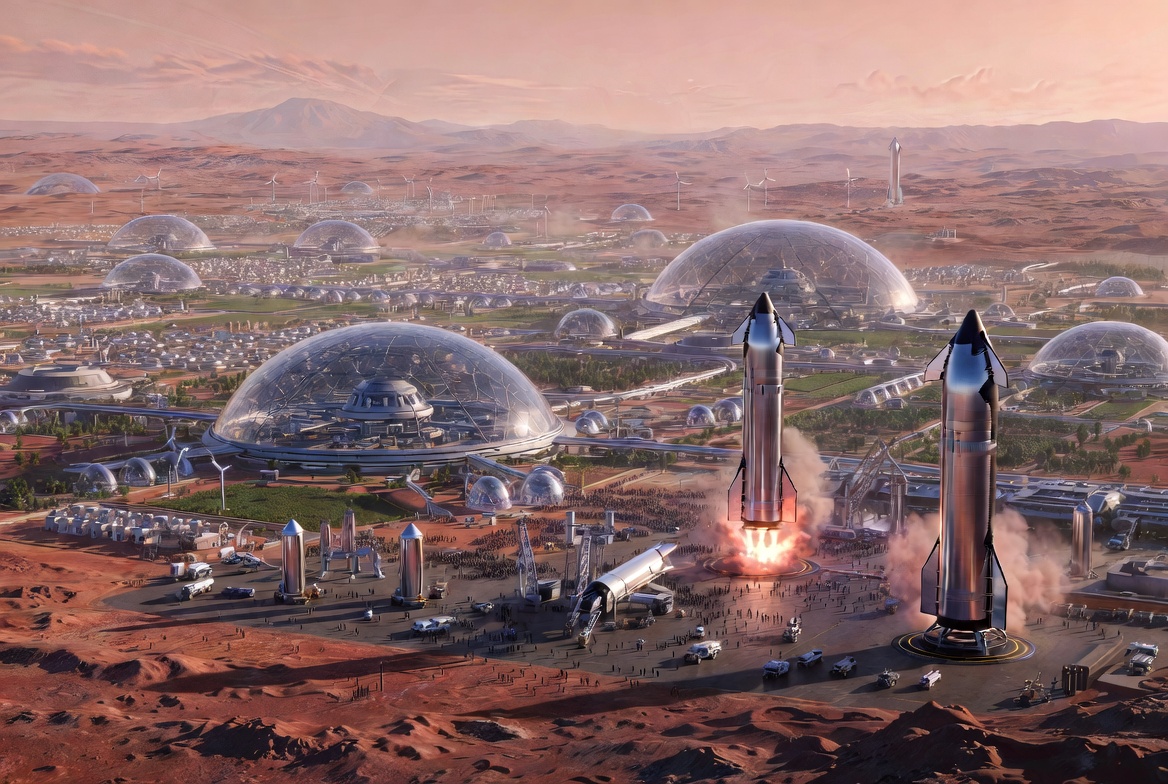
SpaceX’s board approved a compensation plan for Elon Musk that ties his pay directly to colonizing Mars and building data centers in outer space. The details surfaced this week after Reuters reviewed SpaceX’s confidential registration statement filed with the Securities and Exchange Commission, making it one of the first concrete looks inside the company’s financials ahead of a public offering.
The pay package will reportedly award Musk 200 million super-voting restricted shares if the company hits a market valuation milestone, with the most ambitious targets going further. To unlock the full award, SpaceX would need to reach a $7.5 trillion valuation and help establish a permanent human settlement on Mars with at least one million residents. Additional incentives are tied to developing space-based computing infrastructure capable of delivering at least 100 terawatts of processing power.
SpaceX wins its first MARS contract but it comes with a catch
Long before SpaceX filed anything with the SEC, Elon Musk had already spent years framing Mars colonization as an insurance policy against human extinction. The philosophy traces back to at least 2001, when Musk first began researching Mars missions independently, before SpaceX even existed. By 2002 he had founded the company with Mars as the stated long-term goal.
In a 2017 presentation at the International Astronautical Congress, Musk outlined the specific vision that still underpins SpaceX’s architecture today. He described a self-sustaining city on Mars requiring roughly one million people to become viable, the same number now written into his compensation package.
SpaceX’s Starship, still in active development, was designed from the ground up to support the eventual colonization of Mars. Musk has stated publicly that getting the cost per ton to Mars below $100,000 is necessary to make mass migration economically feasible. Everything from Starship’s payload capacity to its full reusability targets flows from that single constraint. One can say that Musk’s latest compensation package has put a formal valuation on Mars for the first time.
SpaceX is targeting an IPO around June 28, Musk’s birthday, at a valuation of approximately $1.75 trillion. Between the Mars rover contract, the Golden Dome software group, Space Force satellite launches, and now a pay structure built around interplanetary colonization, SpaceX has become the single most consequential contractor in American space and defense. The IPO will put a public price tag on all of it for the first time.
Elon Musk
The FCC just said ‘No’ to SpaceX for now
SpaceX is fighting the FCC for spectrum that could put satellites inside every smartphone.
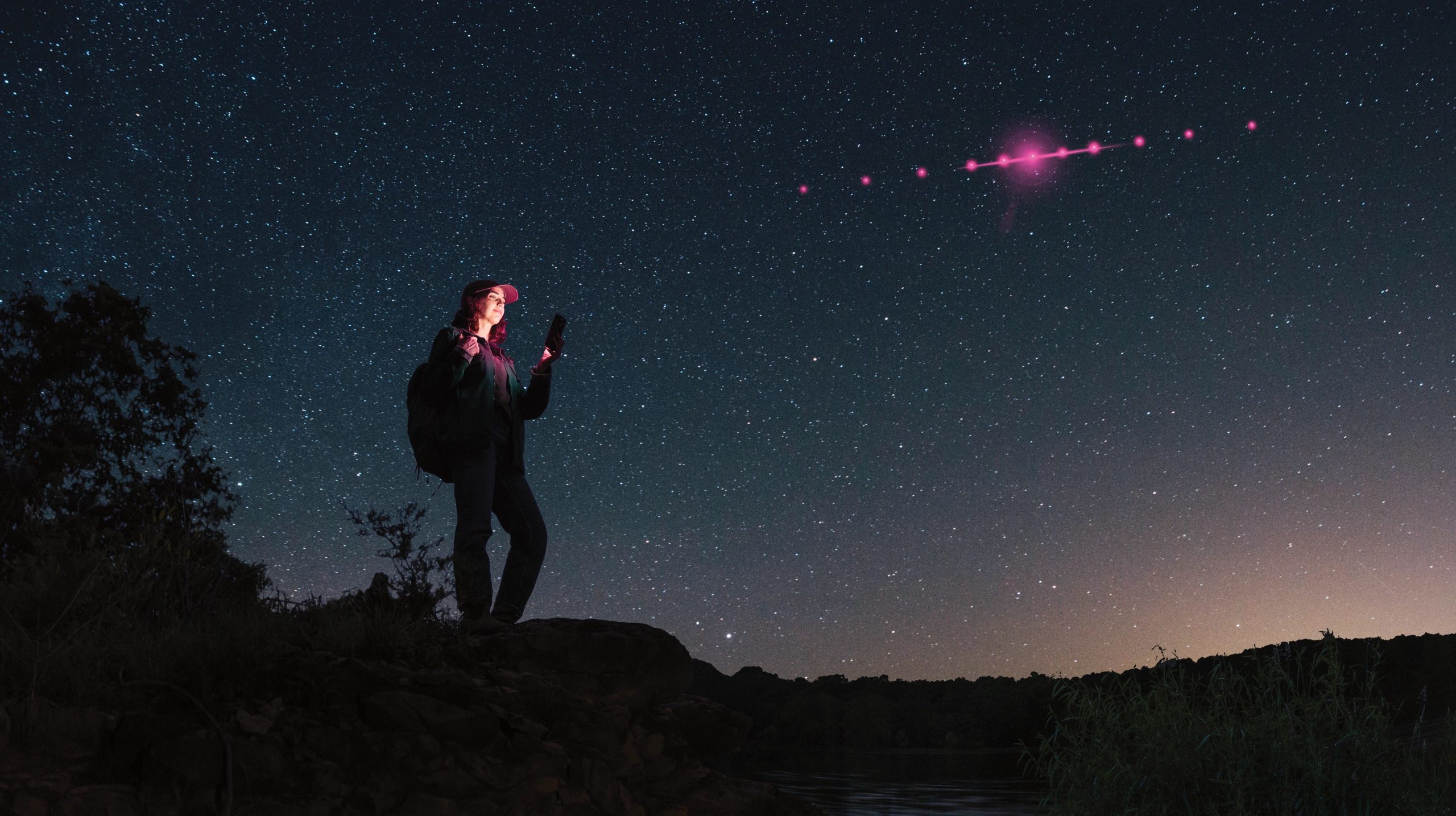
SpaceX was dealt a new setback on April 23, 2006 by the Federal Communications Commission (FCC) after the U.S. government agency dismissed the company’s petition to access a Mobile Satellite Service spectrum that would allow direct-to-device (D2D) capabilities.
The FCC regulates communications by radio, television, wire, and cable, which also includes regulating D2D technology that lets your existing smartphone connect directly to a satellite orbiting Earth, the same way it would connect to a cell tower.
Elon Musk’s SpaceX has been building toward this through its Starlink Mobile service, formerly called Direct-to-Cell, in partnership with T-Mobile. The service officially launched on July 23, 2025, starting with messaging and expanding to broadband data in October of that year.
T-Mobile Starlink Pricing Announced – Early Adopters Get Exclusive Discount
It’s worth noting that SpaceX is not alone in this race. AT&T and Verizon have their own satellite texting deals with AST SpaceMobile, while Verizon separately offers free satellite texting through Skylo on newer phones.
The regulatory foundation for all of this dates to March 14, 2024, when the FCC adopted the world’s first framework for what it called Supplemental Coverage from Space, allowing satellite operators to lease spectrum from terrestrial carriers and fill gaps in their coverage. On November 26, 2024, the FCC granted SpaceX the first-ever authorization under that framework, approving its partnership with T-Mobile to provide service in specific frequency bands. SpaceX then went further, completing a roughly $17 billion acquisition of wireless spectrum from EchoStar, which gave it the ability to negotiate with global carriers more independently.
Starlink’s EchoStar spectrum deal could bring 5G coverage anywhere
This recent ruling by the FCC blocked SpaceX from going further, protecting incumbent spectrum holders like Globalstar and Iridium. But the market momentum is already in motion. As Teslarati reported, SpaceX is targeting peak speeds of 150 Mbps per user for its next generation Direct-to-Cell service, compared to roughly 4 Mbps today, which would bring satellite connectivity close to standard carrier performance.
With a reported IPO targeting a $1.75 trillion valuation on the horizon, each spectrum fight, carrier deal, and regulatory win or loss now carries weight beyond just connectivity. SpaceX is quietly becoming the infrastructure layer underneath the phones of millions of people, and the FCC’s next move will help determine how much further that reach extends.
FCC Satellite Rule Makings can be found here.

Tesla owners keep coming back for more

Tesla Robotaxi service in Austin achieves monumental new accomplishment


