News
SpaceX continues bold advertising routine, polar opposite to Tesla’s strategy

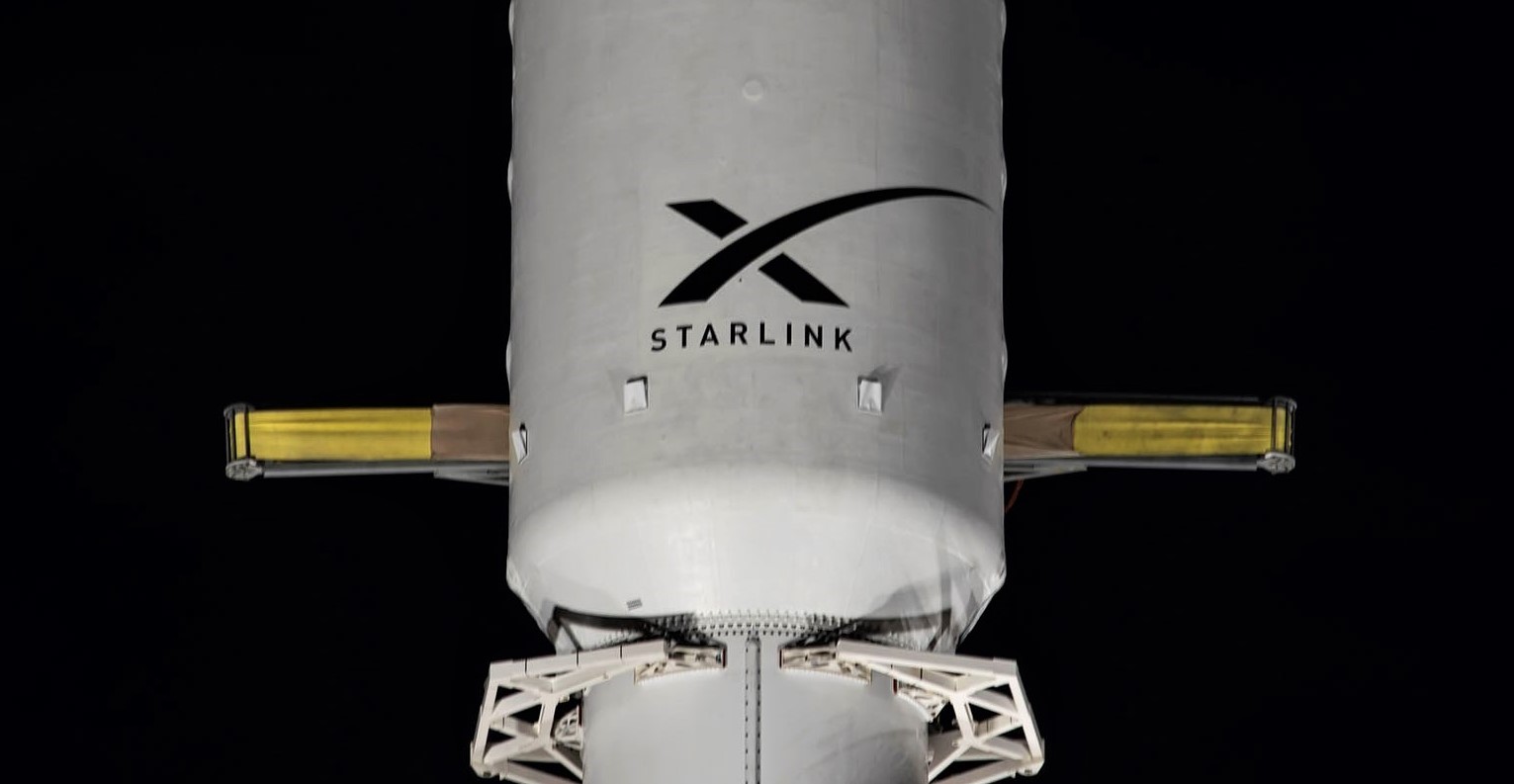
SpaceX and Tesla, the two flagship companies under Elon Musk’s leadership, share a commitment to groundbreaking technology yet pursue dramatically different paths in how they connect with customers.
Tesla has built its brand through a philosophy of minimal traditional advertising, trusting that exceptional products will generate their own momentum.
SpaceX, by contrast, has embraced high-visibility paid advertising for its Starlink satellite internet service, placing prominent spots during major live sporting events such as the Super Bowl and the recent UFC Freedom 250. This divergence highlights how each company tailors its marketing to the unique demands of its products and target markets.
Tesla’s approach stems directly from Musk’s long-held conviction that superior engineering sells itself. Musk has repeatedly explained that the company redirects resources into research and development rather than endorsements or television commercials.
Tesla’s growth has relied instead on organic channels: enthusiastic owner referrals, viral product reveals like the Cybertruck, extensive media coverage of launches and achievements, and the sheer visibility of its vehicles on roads everywhere.
Even as the company has tested more social media promotions in response to fluctuating demand, its overall strategy remains restrained and digital-focused compared to legacy automakers that pour hundreds of millions into marketing annually.
SpaceX has taken a more assertive route with Starlink to drive widespread consumer awareness. In February of this year, SpaceX aired its first-ever Super Bowl advertisement, marking the initial time any Musk-led enterprise invested in the massive event.
The thirty-second spot emphasized fast and affordable internet available nearly anywhere on the planet, blending inspiring footage of Falcon 9 and Starship landings with narration drawn from science fiction visionary Arthur C. Clarke. United Airlines complemented this with its own Super Bowl commercial showcasing Starlink-enabled high-speed Wi-Fi on flights.
🚨 Starlink Super Bowl ad! https://t.co/pEdH1KevBj pic.twitter.com/01onakkoqX
— TESLARATI (@Teslarati) February 9, 2026
But that is not all SpaceX has done to get word out about its internet service.
Just last night, Starlink branding appeared prominently on the octagon and during the broadcast of UFC Freedom 250, the high-profile event staged on the White House South Lawn. These placements represent a strategic investment in reaching massive, engaged audiences.
🚨 Starlink ads have appeared on the UFC Freedom 250 broadcast on Paramount+ pic.twitter.com/VPAAhDR6LI
— TESLARATI (@Teslarati) June 15, 2026
The rationale behind SpaceX’s advertising push lies in Starlink’s distinct position as a consumer broadband service. Unlike Tesla’s visually striking cars that act as mobile billboards for early-adopter enthusiasts, Starlink must overcome awareness gaps in rural, remote, and mobile markets where traditional internet infrastructure falls short.
Starlink now serves as SpaceX’s leading revenue generator, with ambitions tied to future growth and potential public offerings. Targeted advertising during sports broadcasts efficiently demonstrates real-world reliability for applications ranging from home connectivity to aviation and live event broadcasting.
Partnerships with airlines and mobile providers further extend its reach, while high-profile placements help convert curiosity into subscriptions amid competition and regulatory considerations.
Ultimately, these contrasting strategies reflect the different maturity levels and competitive landscapes each business navigates. Tesla benefits from built-in visibility and a passionate community that amplifies its message at little cost.
Starlink, operating in the more fragmented broadband sector, requires deliberate efforts to educate and attract mainstream users. By leveraging the spectacle of major sporting events where Tesla once declined to participate, SpaceX is accelerating Starlink toward global ubiquity.
This flexibility underscores a key lesson: even the most innovative companies must adapt their tactics to the practical realities of their markets and customer acquisition challenges.


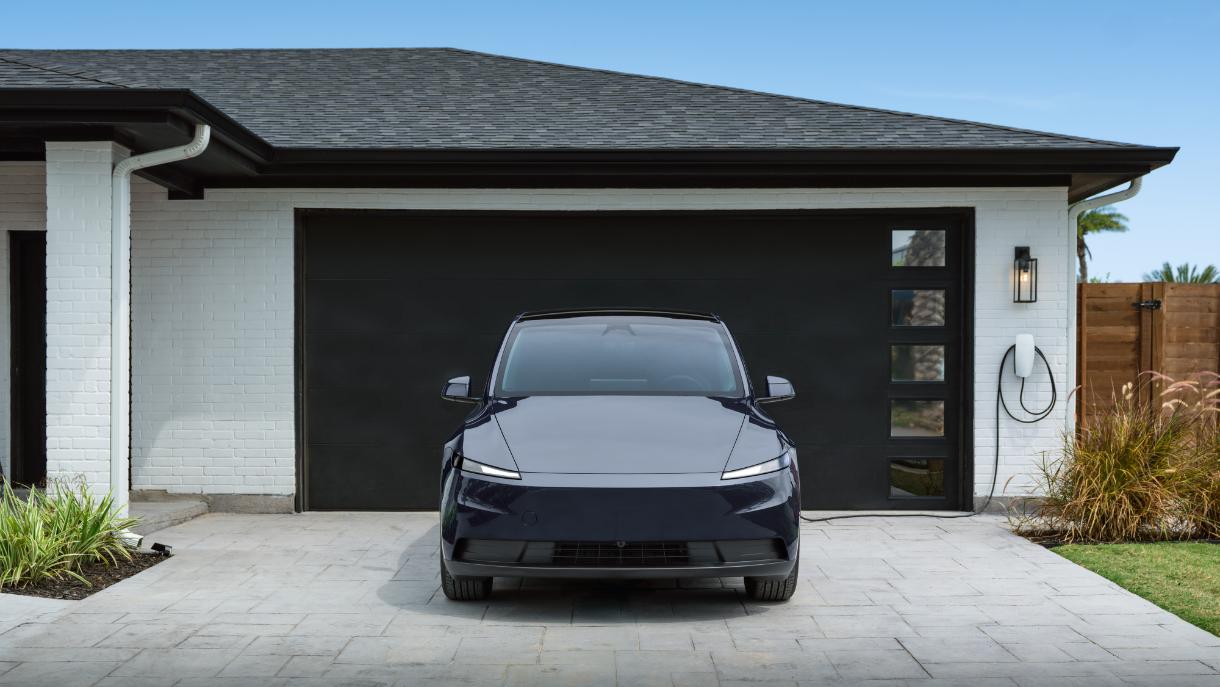
Tesla Full Self-Driving is going to be getting a major parking upgrade. That’s according to CEO Elon Musk, who detailed a crafty new feature that will improve parking preferences, removing a layer of human input.
Musk said that upcoming releases of Full Self-Driving will “remember your parking preferences.” It will go to the location you prefer, based on where you’ve parked in the past, instead of taking the first spot available, which is where the suite is currently.
The CEO went on to explain that destination parking is “by far” the biggest reason for intervention during FSD operation. We’d have to believe this is true; many takeovers in my Model Y, which runs the latest version of FSD as it is in the Early Access Program, are due to parking because it chooses a spot I do not want to be in.
Many times, as soon as I enter a parking lot, I take over and park manually. I prefer to park away from the entrance of wherever I am, away from cars. Too many lessons learned over the years from people with free-swinging doors.
Upcoming releases of FSD will remember your parking preferences, so that the car goes to the right location at your home, office, school drop off, etc.
Destination parking is by far the biggest reason people now intervene with FSD. Critical safety interventions are extremely…
— Elon Musk (@elonmusk) June 17, 2026
We’d imagine these new updates will also solve things like parking orientation. Let’s say when you arrive at work, you always park in the third spot in the third row, and you prefer to back in. It seems as if Musk is implying that your car will now do this, learning from takeovers and aiming to eliminate the need to manually park whenever possible.
This is a major upgrade because parking is a major shortcoming of FSD currently. We’ve requested things like manual input of parking preferences, choosing to park far away, first available, or away from cars, for example.
This is a big reason Parking Preferences with Supervised FSD will be so valuable.
If possible, parking a little further away and being distant from people like this is worth it. https://t.co/1YqQLgnfTz pic.twitter.com/3Ac71KQiQ3
— TESLARATI (@Teslarati) June 7, 2026
However, some have used the option of dropping a pin at the location you’d like to park at your destination. This has worked some of the time, but FSD will still choose to park in whatever it sees first.
Musk did not give a timetable for when the improvements would be released, but it is likely to come soon. Tesla has been releasing a new FSD version every few weeks, so we may not have to wait long to test it.
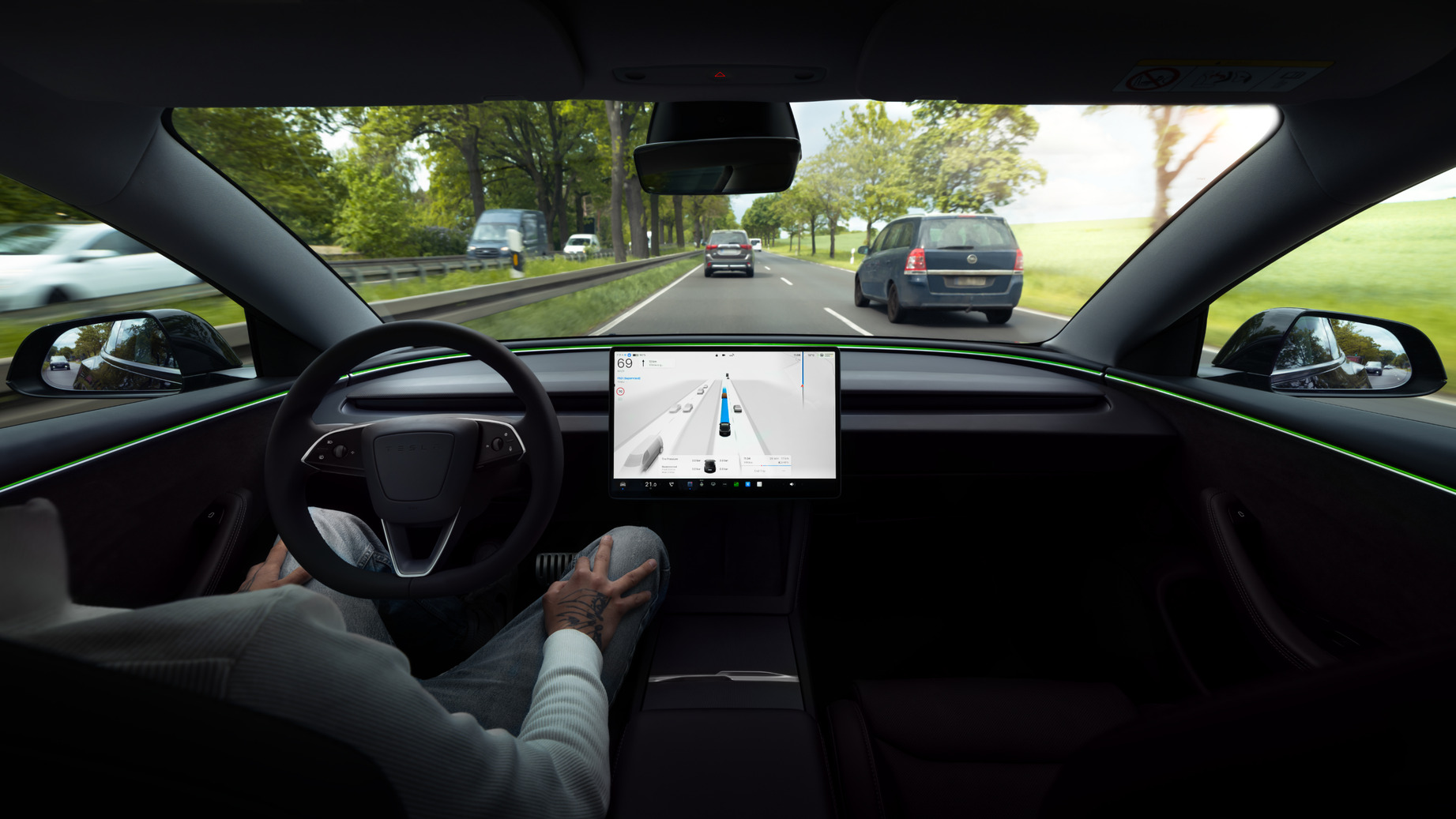
In a remarkable demonstration of how advanced vehicle technology can intersect with family care and rapid response, a Tesla Model Y equipped with Full Self-Driving (FSD) Supervised helped save a driver’s life during a severe heart attack. The incident, which occurred on November 15, 2025, highlights the life-saving potential of Tesla’s connected ecosystem.
John Brandt, 55, was driving his new 2026 Model Y Launch Edition on Interstate 20 from Atlanta toward Birmingham early that morning. He had recently received the FSD v14.1.3 update. Around 3:50 a.m., he began experiencing severe chest pain. Barely conscious and unable to safely control the vehicle, John managed to call his son, Jack Brandt.
FSD Supervised remained engaged, keeping the car steadily on course while John reached out for help.
As an authorized driver on his father’s Tesla account, Jack quickly sprang into action from his own phone. He located Tanner Medical Center in Carrollton, Georgia—a facility equipped for cardiac emergencies—via Google Maps and shared the destination directly through the Tesla app.
A Model Y driver started experiencing a medical emergency with chest pain mid-drive & called his son.
His son then remotely rerouted the car – which had FSD Supervised enabled – to the nearest hospital & let them know the vehicle was en route. ER staff were standing by on… pic.twitter.com/yi1tHISK9y
— Tesla North America (@tesla_na) June 16, 2026
The Model Y responded immediately, rerouting: it took the next exit, turned around on I-20, navigated local roads, and pulled directly up to the emergency room entrance. Jack also alerted hospital staff that a heart attack patient was en route in a Tesla.
Doctors diagnosed John with a massive STEMI heart attack, requiring immediate intervention on three blocked arteries. They later confirmed that without the swift reroute, John likely would not have survived—whether he had pulled over to wait for an ambulance or attempted to continue driving. He received life-saving treatment and is now recovering fully.
Tesla shared the story on X, including an interview video featuring John and Jack reflecting on the event. John described the terrifying onset of symptoms, while Jack detailed the ease of remote intervention thanks to the app’s features. Only authorized users with vehicle access can change navigation destinations, adding a layer of security and family coordination.
This case underscores Tesla’s emphasis on connectivity and supervised autonomy. Features like remote navigation allow loved ones to assist in real-time emergencies, while FSD handles complex driving tasks reliably. Tesla notes that FSD Supervised requires active driver supervision and is not fully autonomous; this was a specific incident, not a general emergency protocol.
The story has resonated widely, with many praising Tesla’s technology for bridging gaps in critical moments. Jack previously shared details on social media in February 2026, and Tesla’s recent post has amplified its reach. As vehicles become smarter and more connected, such integrations could redefine personal safety on the road—turning cars into proactive partners in health crises.
For Tesla owners, the incident serves as a powerful reminder to add trusted family members as authorized drivers and explore FSD capabilities. While no technology replaces professional medical care, this blend of AI-assisted driving and seamless app control proved invaluable. John’s survival stands as a testament to innovation that prioritizes human life.
In a bold declaration on X, xAI CEO Elon Musk announced that its model will be capable of creating full movies by the end of the year. Quoting an xAI post showcasing a stunning AI-generated trailer for Homer’s The Odyssey, Musk simply stated: “Full movies by the end of the year.”
The quoted video, created entirely with the newly released Grok Imagine Video 1.5, demonstrates the rapid strides in AI video generation. Crafted by creator David Thompson, the 2-minute-plus trailer reimagines the ancient epic in the style of a 1970s classical Hollywood blockbuster. It features 36 meticulously consistent shots that form a cohesive narrative world.
Full movies by the end of this year https://t.co/kkBrngWA0X
— Elon Musk (@elonmusk) June 17, 2026
Its realistic nature is truly mind-blowing, and it’s pretty amazing to think that it cool to think it could create an entire movie soon.
The trailer reimagines The Odyssey as a whole, and opens with a concept board outlining the vision: a retelling of the story using 35mm film aesthetics, classical framing, and other elements.
There are a handful of things that truly outline Grok’s capabilities:
- Scale and Physics: A bloodied Spartan helmet rests on a sandy battlefield amid smoke, marching armies, and flocks of birds. Horses gallop, chariots charge, and warriors clash with believable weight and motion.
- Emotional Depth and Dialogue: Close-ups capture intense expressions, as characters deliver lines like a warrior’s grief-stricken speech on a rocking ship.
- Cinematic Workflow: It’s hard to believe AI created this trailer, as editing and suspense are clearly detailed in this trailer
Now, why is this a big deal? AI has been a real threat to the way movies have been made over the past several decades. It’s no secret that the various AI platforms out there are becoming more capable, but Musk has said that he believes things would be “watchable” by the end of this year, and by the end of 2027, Grok would be able to create “really good” movies.
There are several issues that remain, most notably the ability to remain cohesive throughout the length of a film, energy requirements, copyright questions for training data, and artistic intent. Hollywood has created some of the greatest cinematic masterpieces over the past 100 years, but 2026 could be the year AI not only assists but also independently authors cinema.

Tesla Full Self-Driving is getting a major parking upgrade, Elon Musk says

Tesla Full Self-Driving and App Connectivity save life in medical emergency


