Elon Musk
Tesla bull, ARK head Cathie Wood says brand damage is not long-term
Cathie Wood of ARK Invest does not believe Tesla brand damage is a long-term problem.

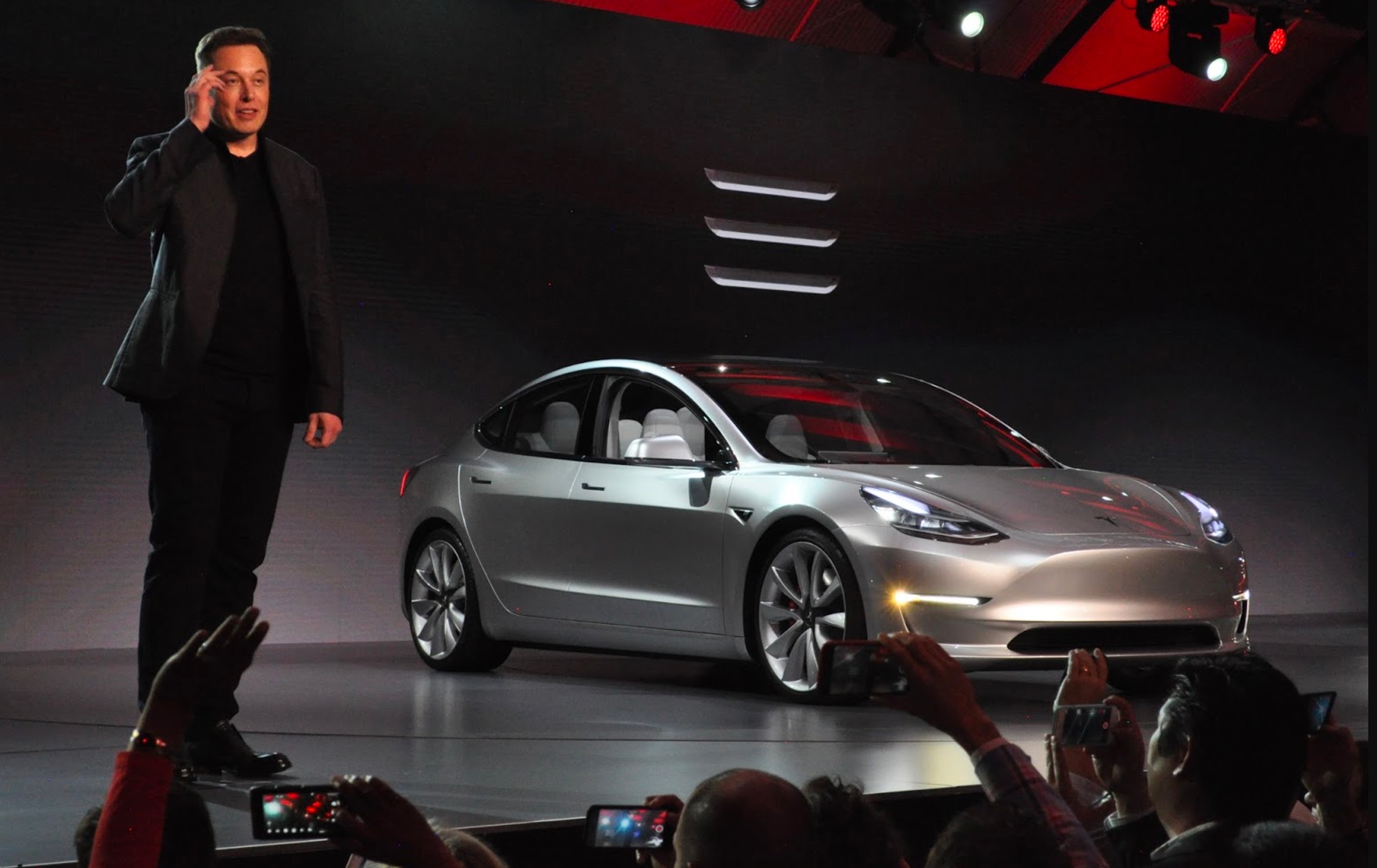
Tesla bull and head of ARK Invest, Cathie Wood, admitted during an interview with Bloomberg that she does believe the company has experienced some brand damage due to CEO Elon Musk’s political involvement. However, she does not believe it is a long-term issue.
Over the past eight months, Musk’s involvement in the U.S. political landscape has swayed some to stop supporting Tesla, others to ditch their cars, and some to boycott the brand altogether. Inversely, others have started supporting Musk, Tesla, and its products as a nod of support for what he’s done for government efficiency.
The perspective on how Musk’s involvement has impacted Tesla truly varies. Its impact has been noticeable, especially in Europe, as some countries have seen some pretty drastic declines in deliveries since the start of the year.
However, some of this can be attributed to the company’s switchover to new production lines for the updated Model Y. Some can also be blamed on economic issues, as the cost of living is still relatively high. There is no denying that at least some of the impact has come from those who simply disagree with Musk and are choosing not to buy his companies’ products.
Wood is among Tesla’s most outspoken bulls and has tremendously high expectations for the stock moving into the late 2020s and into the 2030s. In a recent interview, she highlighted the brand’s exceptional potential moving forward, but did address some of the short-term concerns, especially regarding Tesla’s perception amongst the public:
“I think he feels he has a duty to the country to make sure we don’t ‘blow ourselves up’ with these deficits. Brand damage? Yes. I do not believe [it is long-term]. Tesla, we believe, will have a lock on the Robotaxi business in the U.S., and we believe they are going to proliferate through the United States, especially if we remove regulation from a state level to a federal level, which we believe will happen.”
🚨 ARK’s Cathie Wood: “Tesla Brand Damage Has Happened”@CathieDWood breaks down what Elon Musk’s moves mean for $TSLA — from tech updates to falling sales in Europe!
She’s still bullish on US Robotaxis but warns that rules in Europe and China could make things tricky. Big… pic.twitter.com/YzNnc8dUhi
— Herbert Ong (@herbertong) May 19, 2025
Musk announced during the company’s most recent Earnings Call that he would step back from his government duties and return to Tesla in a more consistent role, as his work with the Department of Government Efficiency (DOGE) seemed to be winding down to a certain extent.
Tesla CEO Elon Musk confirms time spent with DOGE will drop ‘significantly’
It was a big win for Tesla investors, as many were interested in Musk returning his focus to the automaker, especially as 2025 is expected to be a year of many catalysts between the Robotaxi launch, affordable models coming into play, production of the Semi starting at the tail-end of the year, and the Optimus robot continuing consistent development.
Wood was quick to point out that Tesla is not the only car company that was suffering with lagging sales, as a macro-level perspective on the automotive industry proves that many automakers are looking for ways to avert disaster due to the ongoing tariff war.
Tesla is still the highest-valued automaker in the world, and it has plenty of bullish points to look forward to as the year nears the halfway point.


Elon Musk
Elon Musk demands Delaware Judge recuse herself after ‘support’ post celebrating $2B court loss
A banner on the post read “Katie McCormick supports this,” using LinkedIn’s heart-in-hand “support” icon, an endorsement stronger than a simple “like.” Musk’s lawyers argue the action creates “a perception of bias against Mr. Musk,” warranting immediate recusal to preserve judicial impartiality.
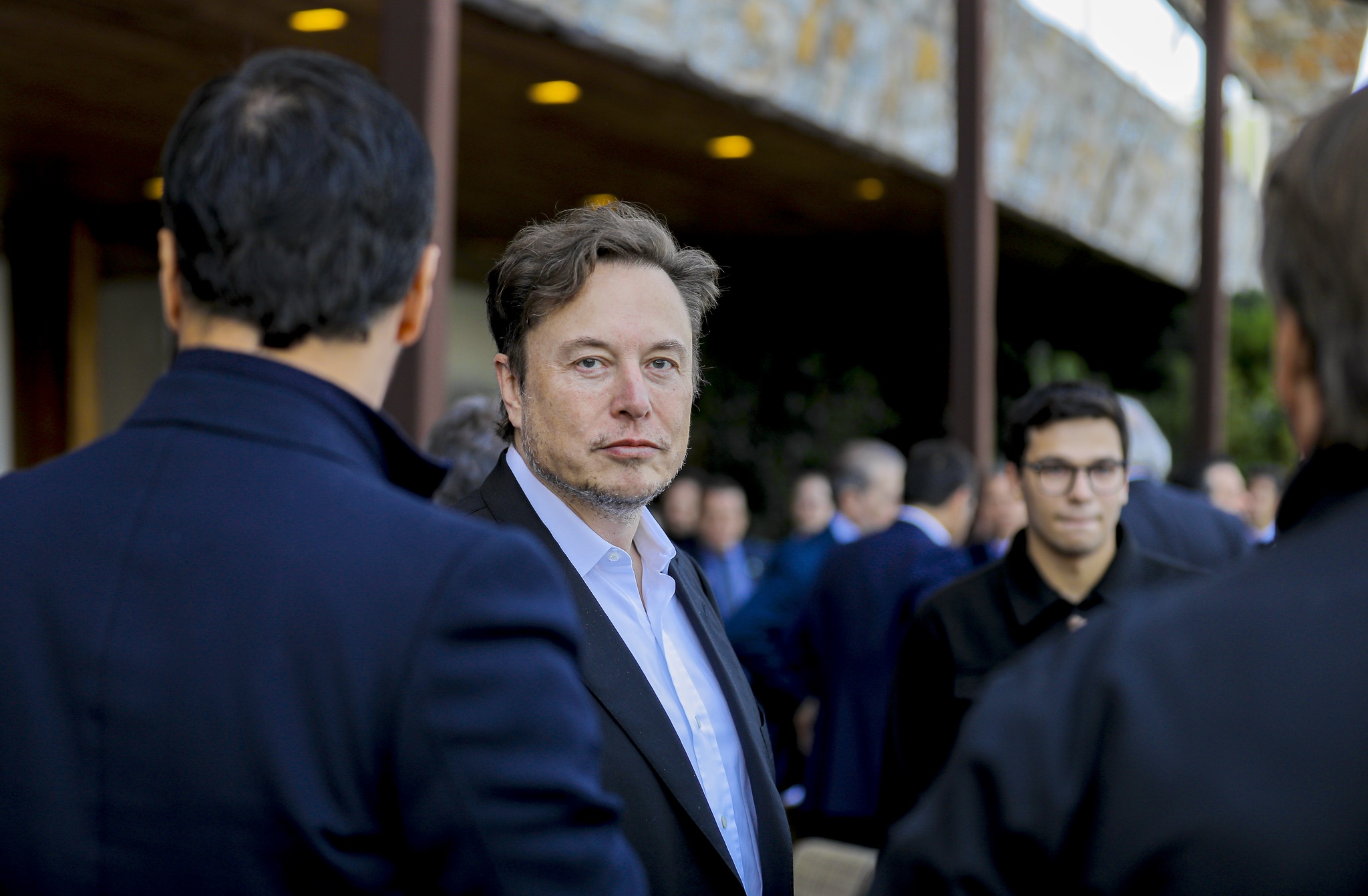
Tesla CEO Elon Musk’s legal team has filed a motion demanding that Delaware Chancellor Kathaleen McCormick disqualify herself from an ongoing high-stakes Tesla shareholder lawsuit.
The filing, submitted March 25, cites an apparent LinkedIn “support” reaction from McCormick’s account to a post celebrating a $2 billion jury verdict against Musk in a separate California securities-fraud case.
The move escalates long-simmering tensions between Musk, Tesla, and the Delaware judiciary, where McCormick previously presided over the landmark challenge to Musk’s record $56 billion 2018 compensation package.
Delaware Supreme Court reinstates Elon Musk’s 2018 Tesla CEO pay package
The LinkedIn post was written by Harry Plotkin, a Southern California jury consultant who assisted the plaintiffs who sued Musk over 2022 tweets about his Twitter acquisition. Plotkin praised the trial team for “standing up for the little guy against the richest man in the world.”
The New York Post initially reported the story.
A banner on the post read “Katie McCormick supports this,” using LinkedIn’s heart-in-hand “support” icon, an endorsement stronger than a simple “like.” Musk’s lawyers argue the action creates “a perception of bias against Mr. Musk,” warranting immediate recusal to preserve judicial impartiality.
This appears to be unequivocal proof she denied the pay package because of her own personal beliefs and not the law.
Corruption. https://t.co/8dvgcfYuvh
— TESLARATI (@Teslarati) March 25, 2026
McCormick swiftly denied intentional endorsement. In a letter to attorneys, she stated she was unaware of the interaction until LinkedIn notified her. She wrote:
“I either did not click the ‘support’ icon at all, or I did so accidentally. I do not believe that I did it accidentally.”
The chancellor maintains the reaction was inadvertent, but critics, including Musk allies, call the explanation implausible given the platform’s deliberate interface.
McCormick’s central role in the Tesla pay-package litigation underscores the stakes. In Tornetta v. Musk, in January 2024, she ruled the 2018 performance-based stock-option grant, potentially worth $56 billion at the time and now valued far higher, was invalid.
The package consisted of 12 tranches of options, each vesting only after Tesla achieved ambitious market-cap and operational milestones. McCormick found Musk exercised “transaction-specific control” over Tesla as a controlling stockholder, the board lacked sufficient independence, and proxy disclosures to shareholders were materially deficient.
Applying the entire-fairness standard, she concluded defendants failed to prove the deal was fair in process or price and ordered full rescission, an “unfathomable” remedy she described as necessary to deter fiduciary breaches.
After the ruling, Tesla shareholders ratified the package a second time in June 2024. McCormick rejected that ratification in December 2024, holding that post-trial votes could not cure defects.
Tesla appealed. On December 19 of last year, the Delaware Supreme Court unanimously reversed the rescission remedy while largely leaving McCormick’s liability findings intact. The high court deemed total unwinding inequitable and impractical, restoring the package but awarding the plaintiff only nominal $1 damages plus reduced attorneys’ fees. Musk ultimately received the full award.
The current recusal motion arises in yet another Tesla derivative suit before McCormick. Legal observers say granting it could signal heightened scrutiny of judicial social-media activity; denial might reinforce perceptions of an insular Delaware bench.
Broader fallout includes accelerated corporate migration out of Delaware, Musk himself moved Tesla’s incorporation to Texas after the first ruling, and renewed debate over whether the state’s specialized courts remain the gold standard for corporate governance disputes.
A decision is expected soon; whichever way it lands, the episode highlights the fragile balance between judicial independence and public confidence in high-profile litigation.
Elon Musk
Elon Musk says Tesla is developing a new vehicle: ‘Way cooler than a minivan’
It sounds as if Tesla could be considering a new vehicle to fit the mold of what a larger family would need, and as fans have been demanding it for several years and the company is phasing out the Model X, its only family-geared vehicle, it sounds as if it could be the perfect time.
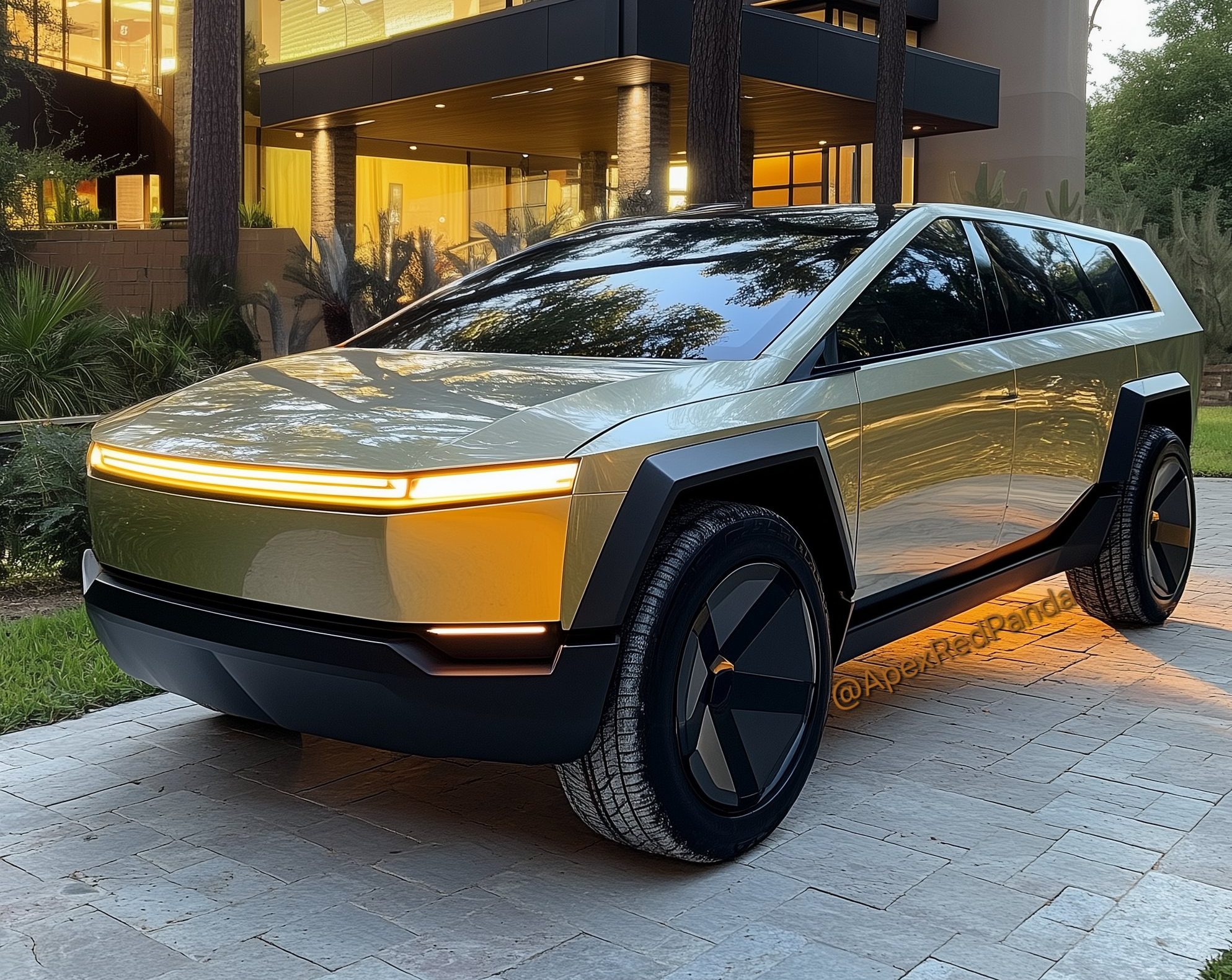
Tesla CEO Elon Musk said the company is developing a new vehicle, and it will be “way cooler than a minivan.”
It sounds as if Tesla could be considering a new vehicle to fit the mold of what a larger family would need, and as fans have been demanding it for several years and the company is phasing out the Model X, its only family-geared vehicle, it sounds as if it could be the perfect time.
There are a handful of things Musk could be talking about, and as many Tesla owners have wanted a vehicle along the lines of a minivan for hauling around their family, speculation has persisted about what the company would do in terms of developing something for that exact use case.
There were several options, and some of them seemed to be already available. Musk posted on X yesterday that the Cybertruck has three sets of isofix attachments and could fit three child seats or three adults, and it seemed to be a way to deflect plans for a new, larger vehicle as a Model Y L appeared to be present at Giga Texas.
There is also the Robovan, the large people mover that Tesla unveiled at the “We, Robot” back in 2024.
Something way cooler than a minivan is coming
— Elon Musk (@elonmusk) March 25, 2026
However, it seems Tesla could be developing something like a CyberSUV, something that is going to be large enough to haul around a car full of kids, but could be developed with the company’s aesthetic of the company’s most recent releases: this would likely include a light bar and a more sleek, futuristic look.
We’ve mocked up some potential looks for Tesla’s speculative vehicle in the past:
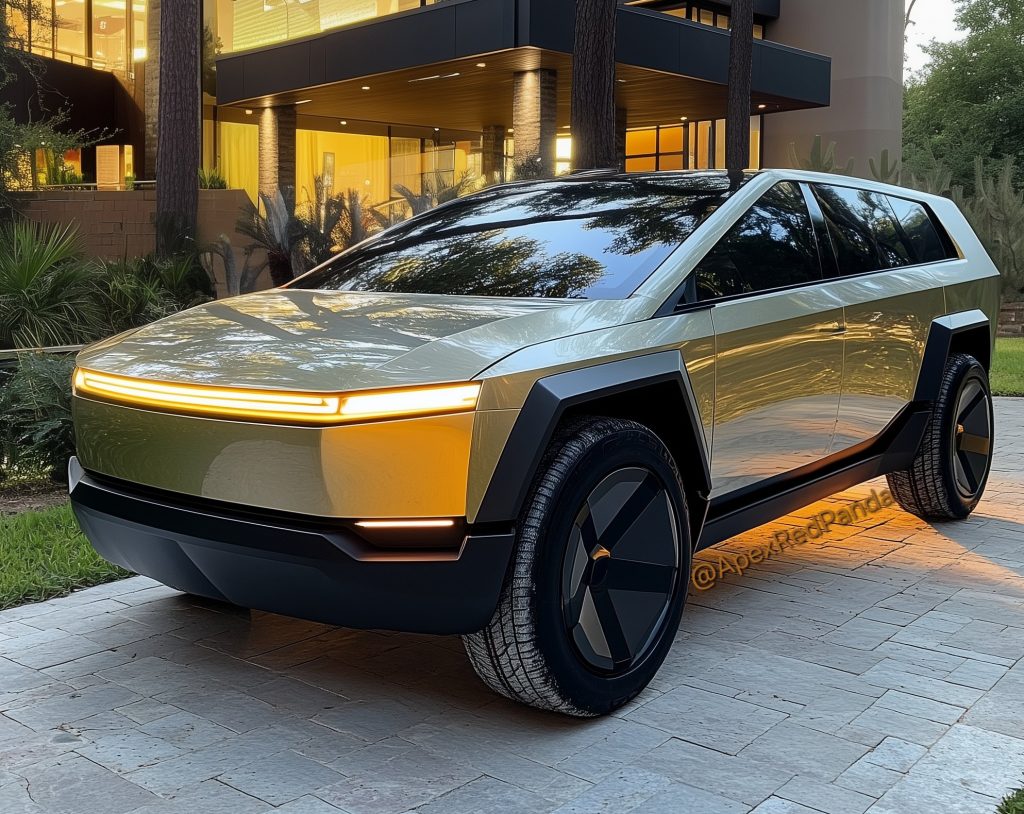
Tesla has teased the potential of a CyberSUV in the past, showing off clay models that it developed back in September in a teaser video called “Sustainable Abundance.”
Fans and owners have been calling for this development for a very long time, and it seems like Tesla might be ready to finally answer the call on a large SUV. With the segment being dominated by combustion engine vehicles, Tesla could truly disrupt the large SUVs that have been mainstays.
The Chevrolet Tahoe and GMC Yukon would feel some additional pressure, and it would be possible for Tesla to infiltrate some of those sales and pull consumers to electric powertrains.
As the Model S and Model X sunset process is truly hitting full swing, it might be time to consider Tesla’s next option in terms of vehicle development.
Elon Musk
Elon Musk’s $10 Trillion robot: Inside Tesla’s push to mass produce Optimus
Tesla’s surging Optimus job listings reveal a company sprinting from prototype to one million robot production.

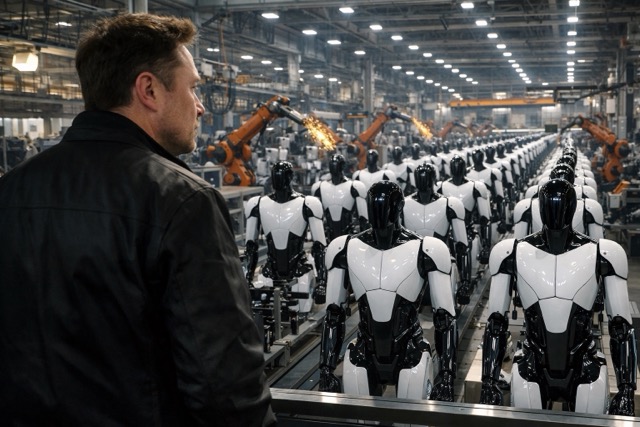
Tesla is accelerating its push to bring the Optimus humanoid robot to high volume production, and its recent job listings tells the story as clearly as any earnings call.
With well over 100 Optimus related job openings now posted across its U.S. facilities, Tesla is signaling a critical pivot for the program, moving it from a captivating tech demo to a serious manufacturing endeavor. Roles span the full spectrum of the product lifecycle, from Robotics Software Engineers and Manufacturing Engineers to Mechanical Integration Engineers and AI Engineers focused on world modeling and video generation. One active listing for a Software Engineer on the Optimus team asks candidates to build scalable and reliable data pipelines for Optimus manufacturing lines and develop automation tools that accelerate analysis and visualization for mass manufacturing.
Tesla is racing toward a one million unit annual production target. The clearest signal yet that Tesla is treating Optimus as its primary business came on January 28, 2026, during the company’s Q4 2025 earnings call. Musk announced that Tesla is ending production of the Model S and Model X, and will repurpose those lines at its Fremont, California factory to build Optimus humanoid robots.
A production intent prototype of Optimus Version 3 is planned to be ready in early 2026, after which Tesla intends to build a one million unit production line with a targeted production start by the end of 2026. To support that ramp, Tesla broke ground on a massive new Optimus manufacturing facility at Gigafactory Texas in late 2025, with ambitions to eventually reach 10 million units per year.
Tesla Giga Texas to feature massive Optimus V4 production line
The business case for scaling this aggressively is rooted in labor economics. Musk has stated that “Optimus has the potential to be the biggest product of all time,” reasoning that if Tesla can produce capable humanoid robots at scale and reasonable cost, every task currently performed by human labor becomes a potential application. In a separate statement, Musk framed Optimus’s long term importance even more bluntly, saying it could surpass Tesla’s vehicle business in scale with the potential to generate $10 trillion in revenue.
The industries Tesla is targeting first are those most burdened by repetitive physical labor. Early applications include manufacturing assembly, material handling and quality inspection, as well as logistics tasks like loading, unloading, sorting, and transporting goods in warehouses and distribution centers. Longer term, Tesla’s vision is for Optimus to penetrate household, medical, and logistics scenarios at the scale of a smartphone rollout.

Elon Musk demands Delaware Judge recuse herself after ‘support’ post celebrating $2B court loss

Tesla Cybercab spotted next to Model Y shows size comparison

Elon Musk says Tesla is developing a new vehicle: ‘Way cooler than a minivan’

Elon Musk’s Boring Co. Tunnel Vision Challenge ends with a surprise for Louisiana, Maryland and Dallas

What is Digital Optimus? The new Tesla and xAI project explained


