News
Tesla invites Europeans to take ‘Drive To Believe’ challenge: one week with Model S

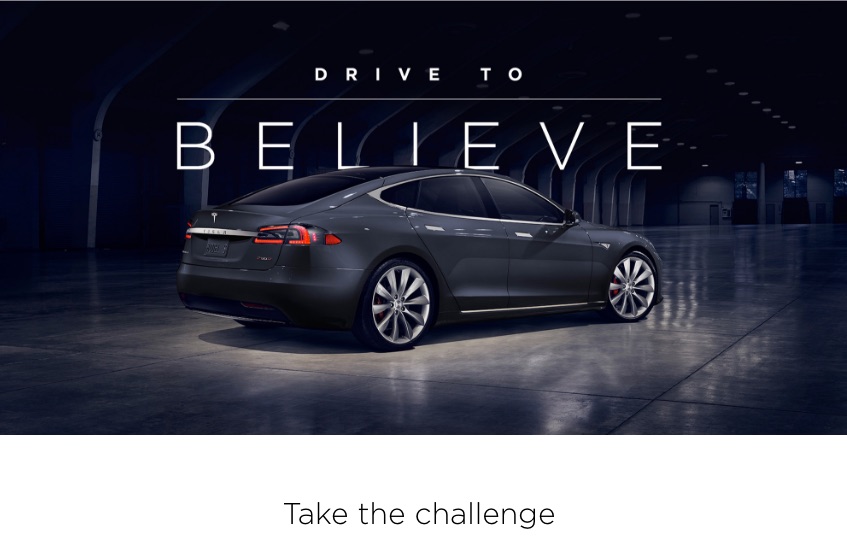
A new program being offered by Tesla invites residents in select European markets to participate in the company’s latest ‘Drive To Believe’ challenge and win a chance to experience Model S through an extended one week test drive.
Residents of the UK, Germany, Netherlands, Norway, Sweden, Switzerland, France, Austria, Belgium, Finland, Luxembourg, Italy, Denmark, and Ireland that win the challenge will have the opportunity to swap their existing vehicles for a Tesla Model S on specific dates between November 16 and December 31, 2016.
“At Tesla, we believe that it takes driving a Tesla and experiencing its superior performance, safety, and technology, to be convinced. We now want to give you that opportunity as well.”, reads the description on Tesla’s ‘Drive to Believe’ online form.
It’s no secret that Tesla is making a significant investment in expanding its European footprint. CEO Elon Musk recently told investors that the company has plans to expand its battery production into Europe with a second Gigafactory. The company also recently announced that it had acquired top-notch German engineering firm Grohmann Engineering to form a new division aimed at building automated assembly systems, a step towards Musk’s goal of “building the machine that builds the machine”. Continued efforts on scaling Tesla’s European infrastructure while streamlining manufacturing processes and logistics allows the company to position itself ahead of demand.
Meanwhile, programs such as the latest ‘Drive To Believe’ challenge allows the company’s sales arm to focus on driving demand overseas. Secondarily, by having prize winners sign off on terms that would allow Tesla to film their experience with a Model S, the company is able to leverage its Customer Stories program as a tool to build trust among interested buyers and further stimulate sales efforts.
We’ve included the full details of Tesla’s ‘Drive to Believe’ European competition.
TESLA ‘DRIVE TO BELIEVE’ EUROPEAN COMPETITION 2016
1. The promoter
1.1 The promoter is: Tesla Motors Netherlands B.V., Burgemeester Stramanweg 122 (1101 EN), Amsterdam Netherlands (Tesla).
2. The competition
2.1 The title of the competition is TESLA ‘DRIVE TO BELIEVE’.
2.2 Entrants must answer a skill-based question within the space provided in the competition field online at www.tesla.com/drive-to-believe
2.3 The competition will run in one phase. For you to be eligible for the competition, your entry must be submitted between 00:01 on 16th November to 23:59 on 31 December 2016
2.4 You may enter the competition only once.
2.5 All competition entries received after 23:59 on 31 December 2016 will be automatically disqualified from the competition.
2.6 To enter the competition you must fill in all required fields on www.tesla.com/drive-to-believe
2.7 Participation in the competition can only take place at www.tesla.com/drive-to-believe. No applications to enter made in any other manner will be accepted.
2.8 No purchase necessary.
2.9 Tesla will not accept:
(a) responsibility for competition entries that are lost, mislaid, damaged or delayed in transit, regardless of cause, including, for example, as a result of any equipment failure, technical malfunction, systems, satellite, network, server, computer hardware or software failure of any kind; or
(b) proof of transmission as proof of receipt of entry to the competition.
2.10 By submitting a competition entry, you are agreeing to be bound by these terms and conditions.
2.11 The competition entry selection will be based on the entrant’s specific eligibility for the competition. The decision of Tesla (acting reasonably) will be final. Tesla reserves the right to amend the criteria used to judge entries.
2.12 By entering the competition, you hereby warrant that all information submitted by you in your entry is true, accurate and complete in every respect. Tesla reserves the right to verify any information contained in your entry and/or your eligibility to enter the competition.
2.13 Tesla reserve the right in its absolute discretion to disqualify any entrant if it has reasonable grounds to believe that an entrant has breached any of these terms and conditions or any applicable law. Each entrant acknowledges and agrees that any failure to comply with these terms and conditions could lead to Tesla disqualifying that person, without Tesla giving any reason for such disqualification or granting any opportunity for challenge.
2.14 In the event that a prize-winner is disqualified from the competition, Tesla will select an alternative prize-winner in the same manner as the original prize-winner and such selection will be subject to these terms and conditions.
3. Eligibility
3.1 The competition is only open to all residents in the following European markets: UK, Germany, Netherlands, Norway, Sweden, Switzerland, France, Austria, Belgium, Finland, Luxembourg, Italy, Denmark, Ireland
3.2 Entrants must be 25 years of age or above and own a car and hold a valid driver’s license for the market they reside in and enter the competition from.
3.3 Entrants must be able to provide proof of identity.
3.4 Entrants must be willing to be filmed and for all footage and image and voice recordings of their person to be used for Tesla promotional purposes, in all media, globally, in perpetuity for no additional fee or financial remuneration of any kind.
3.5 Any person that is any of the following is not eligible to win the competition:
(a) an employee of Tesla or its holding or subsidiary companies;
(b) an employee of agents or suppliers of Tesla or its holding or subsidiary companies, who are professionally connected with the competition or its administration; or
(c) a member of the immediate families or households of (a) and (b) above.
Tesla reserves the right to disqualify any person that it knows is, or has reasonable grounds to believe is, ineligible for the competition as a result of this condition.
3.6 In entering the competition, you confirm that you are eligible to do so and eligible to claim the prize. Tesla may require you to provide proof that you are eligible to enter the competition.
3.7 Tesla will not accept competition entries that are:
(a) automatically generated by computer;
(b) completed by third parties;
(c) illegible, have been altered, reconstructed, forged or tampered with;
(d) incomplete.
3.8 There is a limit of one entry per person for the duration of the competition. In the event that Tesla discovers or has reasonable grounds to believe that the same person has made multiple entries, such person and any entries made by them shall be disqualified and, if such entrant has already been selected as a prize-winner, an alternative prize-winner will be selected in accordance with condition 2.14
3.9 Tesla reserves all rights to disqualify you if your conduct is contrary to the spirit or intention of the competition or if you engage in political slogans or homophobic language, behaviour of a lewd or explicitly sexual nature or engage in content which is defamatory, obscene, illegal, vulgar, offensive or otherwise unsuitable or infringes others’ rights (including intellectual property rights).
4 The prize
4.1 The prize is as following:
(a) Competition winners must swap their current car for a Tesla Model S for the duration of one week to take place on specific dates Tesla will select between 00:01 on 16th November to 23:59 on 31 December 2016.
4.2 The prize is supplied by Tesla.
4.3 There is no cash alternative for the prize. The prize is not negotiable or transferable.
4.4 In order to claim the prize you must comply with condition 6.
5. Winner announcement
5.1 The winners of the competition will be announced across all media to be selected by Tesla on a date or dates to be selected by Tesla.
5.2 The decision of Tesla is final and no correspondence or discussion will be entered into.
5.3 Tesla will contact the winner personally as soon as Tesla has selected a shortlist of winners.
6. Claiming the prize
6.1 If you are the winner of the prize, you will have 2 days from the Announcement Date to claim the prize. If you do not claim the prize within this timeframe, your claim will become invalid.
6.2 The prize may not be claimed by a third party on your behalf.
6.3 Tesla will make all reasonable efforts to contact the winner. If the winner cannot be contacted or is not available, or has not claimed their prize within 2 days of contact, Tesla reserves the right to offer the prize to the next eligible entrant selected from the correct entries that were received.
6.4 Tesla does not accept any responsibility if you are not able to take up the prize.
6.5 No prize will be awarded where any entrant has committed any form of misconduct (as determined by Tesla in its sole discretion).
7. Limitation of liability
Insofar as is permitted by law, Tesla, its agents or distributors will not in any circumstances be responsible or liable to compensate the winner or accept any liability for any loss, damage, disappointment, personal injury or death occurring as a result of any entrant entering this competition, taking up the prize, or as a result of any entrant winning or not winning any prize, except where it is caused by the negligence of Tesla, its agents or distributors or that of their employees. Your statutory rights are not affected.
8. Ownership and intellectual property rights
8.1 You agree that Tesla (and any third party authorised by Tesla) may use your person, voice and image for any promotional purpose (for example, placing it on the Tesla webpage and social channels for advertising media. You give Tesla (and any third party authorised by Tesla) your irrevocable permission to use, reproduce, publish, display, transmit, copy, amend, store, sell and sub-license your person, voice and image worldwide and in perpetuity for promotional purposes and for the purposes of the competition. Tesla will own the right to your image and voice recordings captured during the duration of the competition.
8.2 By submitting your competition entry, you agree to:
(a) assign to Tesla all your voice and image rights with full title guarantee; and
(b) waive all moral rights,
8.3 You agree that Tesla may, but is not required to, make your personal image and voice recordings available on our social media channels and websites and any other media, whether now known or invented in the future, and in connection with any publicity of the competition. You agree to grant Tesla a non-exclusive, worldwide, irrevocable license, for the full period of any intellectual property rights in your image and voice recordings, to use, display, publish, transmit, copy, edit, alter, store, re-format for such purposes.
9. Data protection and publicity
9.1 If you are the winner of the competition you agree that Tesla may use your name, image, and town or country of residence to announce the winner of this competition and for any other reasonable and related promotional purposes.
9.2 You further agree to participate in any reasonable publicity required by Tesla.
9.3 By entering the competition, you agree that any personal information provided by you with the competition entry may be held and used only by Tesla or their agents and suppliers to administer the competition.
10. General
10.1 If there is any reason to believe that there has been a breach of these terms and conditions, Tesla may, at its sole discretion, reserve the right to exclude you from participating in the competition.
10.2 In the event of any dispute regarding these terms and conditions, the conduct or results of the competition, or any other matter relating to a competition, the decision of Tesla shall be final and unchallengeable and no correspondence or discussion shall be entered into, comment issued, or reason given in respect of any decision made by Tesla.
10.3 Tesla reserves the right to hold void, suspend, cancel, or amend all or any part of the competition where it becomes necessary to do so. Any changes to these terms and conditions, or cancellation of the competition, will be posted on the Tesla website. It is the responsibility of entrants to keep themselves informed as to any changes to the terms and conditions.
10.4 These terms and conditions and any dispute arising out of or in connection with them or their subject matter (including any non-contractual disputes or claims) shall be governed by the laws of the Netherlands and the parties submit to the exclusive jurisdiction of the courts of The Netherlands.



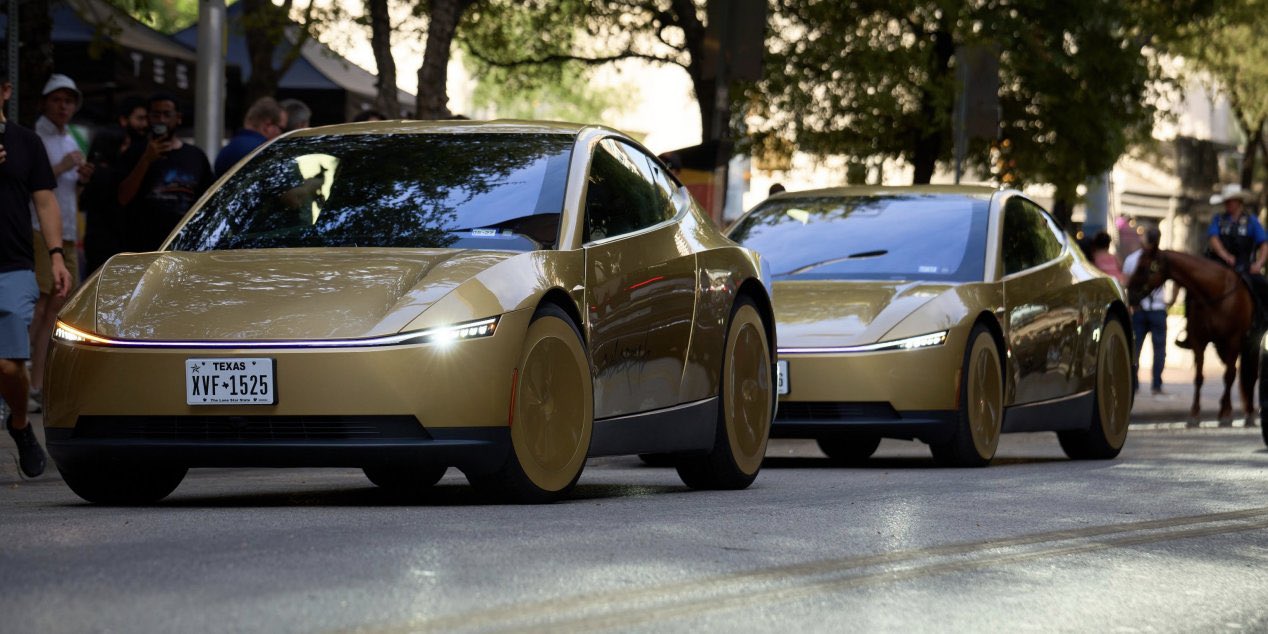
Tesla Cybercab units finally got a definitive date for when they will be able to be purchased by consumers, ending speculation regarding whether the fully autonomous vehicle would be available in the near term.
During Tesla’s third-quarter 2026 earnings call on October 21, Vice President of Engineering Lars Moravy said the company is aiming to begin delivering its purpose-built Cybercab robotaxi to customers before year-end.
🚨 In short, Cybercabs are slated to go to customers by end of the year. All units are going into Robotaxi fleet currently, per @larsmoravy
Cybercab will be “transport-as-a-service,” but vast majority of Cybercab will be “Tesla-owned,” @elonmusk says https://t.co/R8Qu8QWdmp
— TESLARATI (@Teslarati) October 21, 2026
“We’re trying to get Cybercabs to customers by the end of this year, 2026,” Moravy said. He added that production is underway on the line at Gigafactory Texas, but “all of those are currently going to our own internal Robotaxi fleet.”
Moravy explained that as operations scale, Tesla will “mainly deliver fully designed autonomous vehicles to our customers,” with the Cybercab as the first such vehicle. Initial customer deliveries will start small while the company gains experience with delivery logistics, ownership models, fleet management, and operating autonomous vehicles outside its direct control.
CEO Elon Musk reinforced the limited nature of private sales, describing the Cybercab primarily as a “transport-as-a-service” offering rather than a personal ownership vehicle like the Model 3, Model Y, or upcoming Roadster. “The vast majority of the Cybercab stuff will be Tesla-owned and transport-as-a-service,” Musk said.
The Cybercab is a two-seater vehicle developed by Tesla without a steering wheel or pedals. It relies completely on Tesla’s Full Self-Driving suite and has been in production since February. Early units have been put in Tesla’s Robotaxi service as of early September, when the company launched rides to the public. Tesla previously indicated it would aim to sell Cybercabs for about $30,000.
Unsupervised Full Self-Driving is expected to ship to consumer cars during Q2 2027, Ashok Elluswamy, Tesla’s Head of AI, indicated during the call. Early buyers or fleet operators may receive vehicles whose autonomous operation remains geographically restricted due to lagging regulatory agencies. There are some hurdles that remain ahead of Cybercab deliveries.
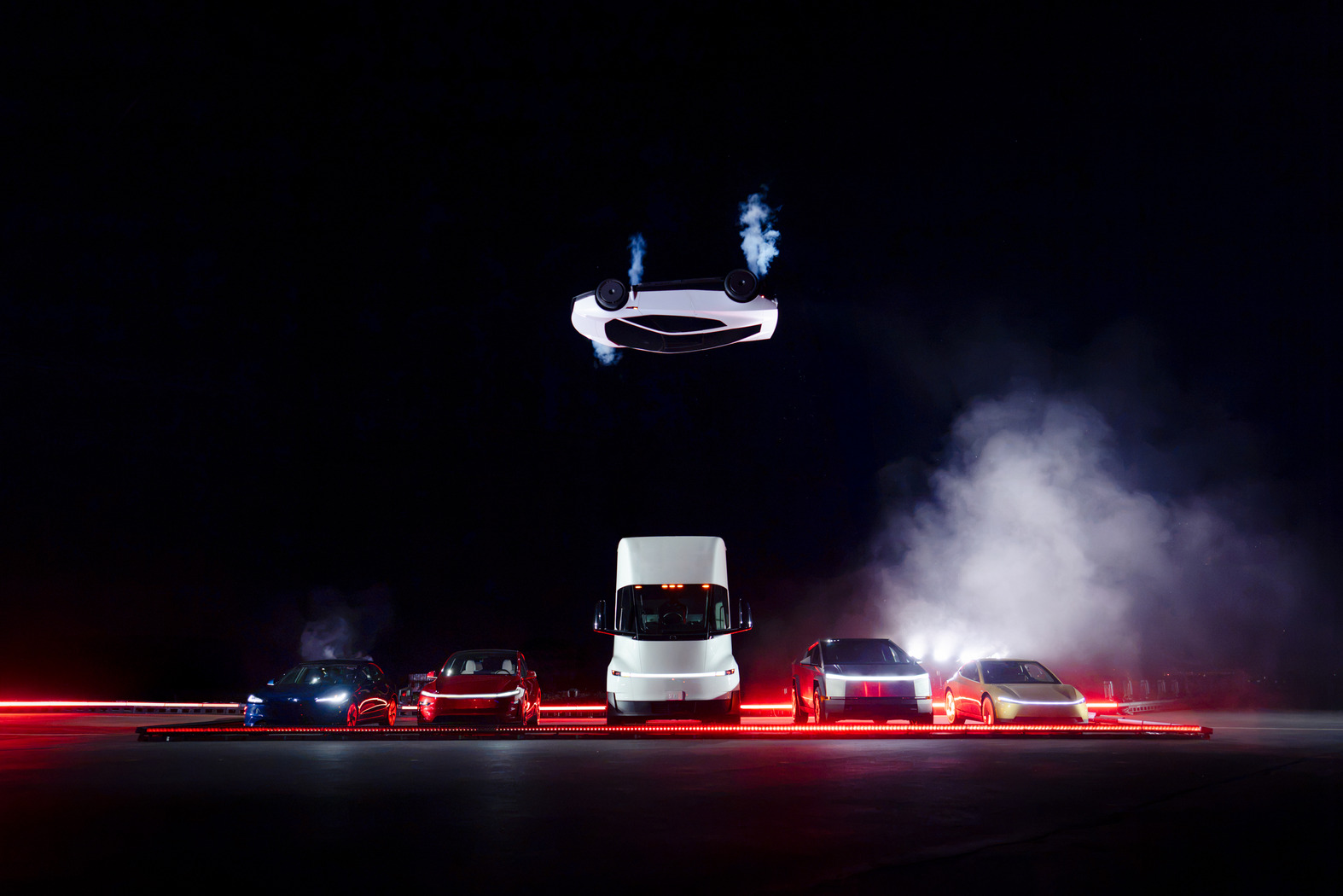
Tesla (NASDAQ: TSLA) reported its earnings for the third quarter of 2026, marking a reasonable performance on the various financial metrics. Tesla still plans to hold a call that will field investor questions at 5:30 p.m. ET, 4:30 p.m. CT.
Here’s where Earnings came in:
- Total Revenues: $28.046 reported vs. $28.34B expected
- Non-GAAP EPS: $0.48 reported vs. $0.45 expected
- Operating Margin: 2.6 % reported vs. 2.5% expected
- Operating Income: $718M reported vs. $721M expected
- Free Cash Flow: $1.531B reported vs. ~-$4.51B expected
Tesla $TSLA Earnings Results:
Revenues: $28.046B
Non-GAAP EPS: $0.48
Operating Margin: 2.6%
Operating Income: $718M
FCF: $1.531B— TESLARATI (@Teslarati) October 21, 2026
Major Takeaways
Full Self-Driving (Supervised)
“FSD (Supervised)⁴ attach rate continued to grow, reaching over 75% of new vehicle deliveries in North America – our most mature market – a nearly twenty percentage point sequential increase. We believe that FSD is driving demand in markets where it is available, and we continue to work with regulators to get it approved in other markets.”
Tesla Semi
“We began volume production of Tesla Semi, our Class 8 heavy-duty truck. The top variant can go 500 miles at full 82,000 lbs gross combination weight while achieving an efficiency of 1.7 kWh/mile. That efficiency allows the Tesla Semi to use a third of the energy used by a comparable diesel truck to haul the same payload. In a transportation market where energy is one of the largest components of total cost per mile, this will provide a meaningful advantage to Tesla Semi operators.”
SI Compute
“We plan to reach 400 MW of SI training compute by the end of the year, supporting the development of both vehicle and humanoid robot autonomy software. Additionally, we continued construction for the Austin Fab, where we plan to start commissioning equipment in 2027.”
Robotaxi
“We began deployment of Cybercab into our Robotaxi fleet in Austin. We reached nearly two million cumulative unsupervised miles for our Robotaxi service as of the end of the quarter. Operating hours in Austin are now 6am to midnight, and we expect to reduce wait times via increased fleet supply and improvement of Robotaxi orchestration algorithms. Grok is available in Cybercab with access to Grok Bot and Connectors, which allows users to manage their inbox, calendars, files, chats and tasks – all hands free via voice command – making Cybercab a mode of transport, a productivity space and, with our entertainment options, a second living room.”
Interested in ordering a Tesla? Use my referral code for three free months of Full Self-Driving (Supervised) here.
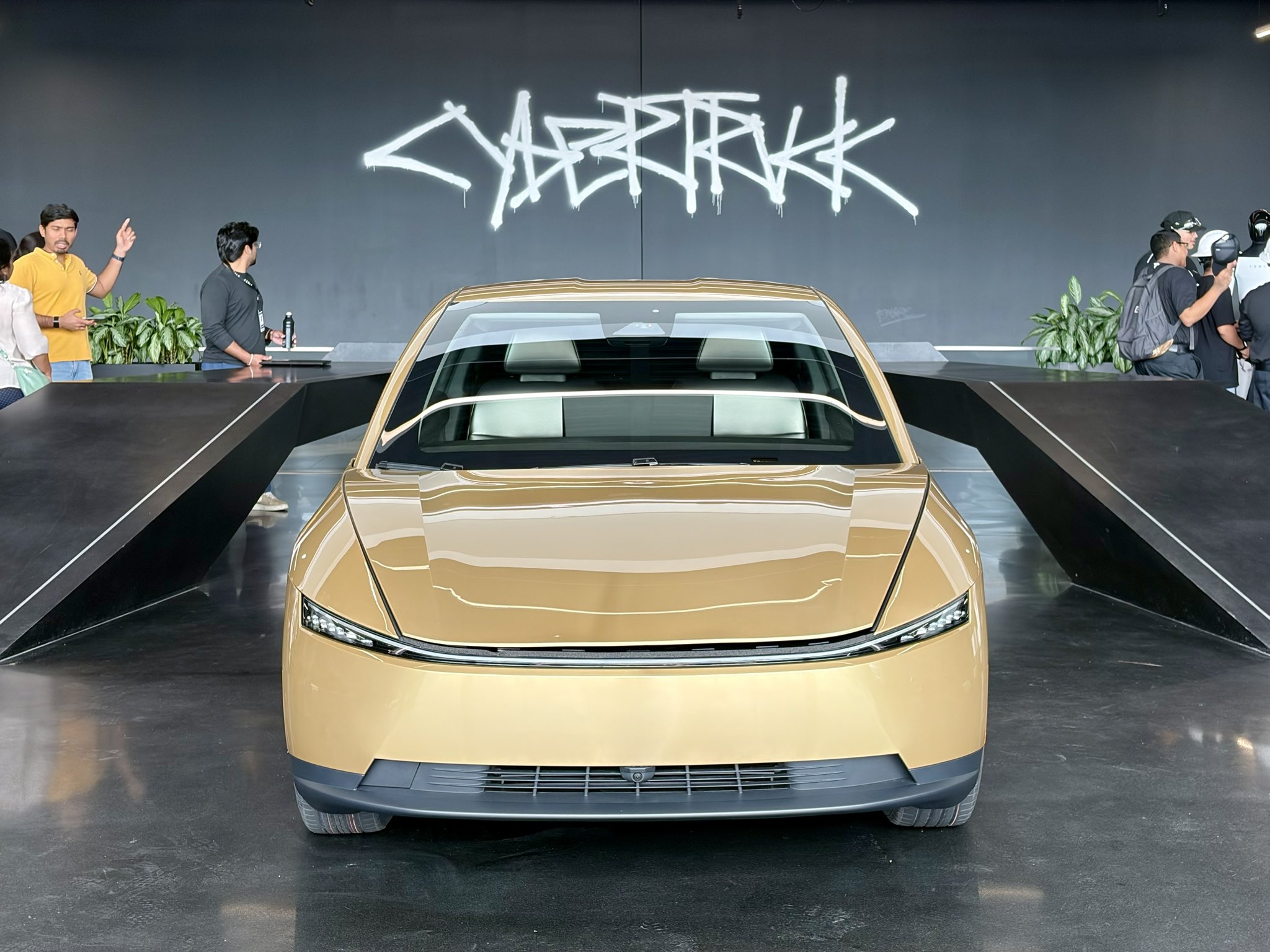
Tesla (NASDAQ: TSLA) reports its earnings for Q3 today. Here’s what to expect, as the company will reveal its balance sheet after the market closes on Wednesday.
Tesla already reported deliveries just after Q3 ended, and it demolished Wall Street consensus estimates of roughly 462,000 vehicles. Tesla delivered 486,532 cars in the third quarter, which was a big beat, but was down 2.1 percent from the same quarter last year. Energy storage deployments were 13.7 GWh, up year-over-year.
Tesla showrooms picked clean ahead of Q3 end as demand looks strong
For the quarter, analysts have already compiled their predictions for what Tesla will report this afternoon:
- Total Revenues: $28.34B
- Non-GAAP EPS: $0.43
- Operating Margin: 2.5%
- Operating Income: $721M
- Free Cash Flow: ~-$4.51B
Here are a few things we are looking forward to hearing about on the call:
Automotive Gross Margin and Overall Profitability
This was 16.3 percent in Q2, down from 19.2 percent in Q1, and was impacted by warranty charges and some fading regulatory credits. Consensus implies overall gross margin near 18 percent, but a miss here would potentially reinforce concerns about pricing pressure on its vehicles.
Pay attention to energy storage margins as well, especially since Tesla missed GWh expectations, although it was still a strong quarter.
Robotaxi/Cybercab, Unsupervised FSD, and Optimus Progress
The Say questions from retail investors usually focus on these types of projects, and this quarter is no different. Scaling the Cybercab fleet beyond Austin amid the open NHTSA safety review, timeline for Unsupervised FSD in customer cars, Robotaxi unit economics, and Optimus cost per unit plus when it could start generating revenue, are all things to be looking for.
Any concrete timelines or regulatory path details will likely move the stock more than the near-term numbers. SpaceX merger speculation, which was detailed during SpaceX’s earnings call last night, may also surface, although the key details were shared last night.
Elon Musk just confirmed the Tesla and SpaceX merger step everyone was waiting for
Say Investor Questions
- How does the Cybercab fleet scale past Austin, and what’s the regulatory path outside Texas given NHTSA’s open safety review?
- When can we anticipate FSD unsupervised in customer cars?
- When will the CyberCab be available for customer purchase/ownership?
- What’s the unit economics per paid robotaxi mile, and how does it compare to the thirty-cent target?
- Tesla has acknowledged that HW3 vehicles cannot support unsupervised FSD. When will owners know whether they can upgrade their hardware for free, and when will Tesla provide a clear plan?
The full Earnings Call will be streamed this evening after market close around 5 p.m. this evening.

Tesla Cybercab gets a for sale date at last

Tesla Q3 2026 Earnings results: in-line revenues, slight beat on EPS


