Elon Musk
Tesla just trademarked MEGAPOD: here’s what it is

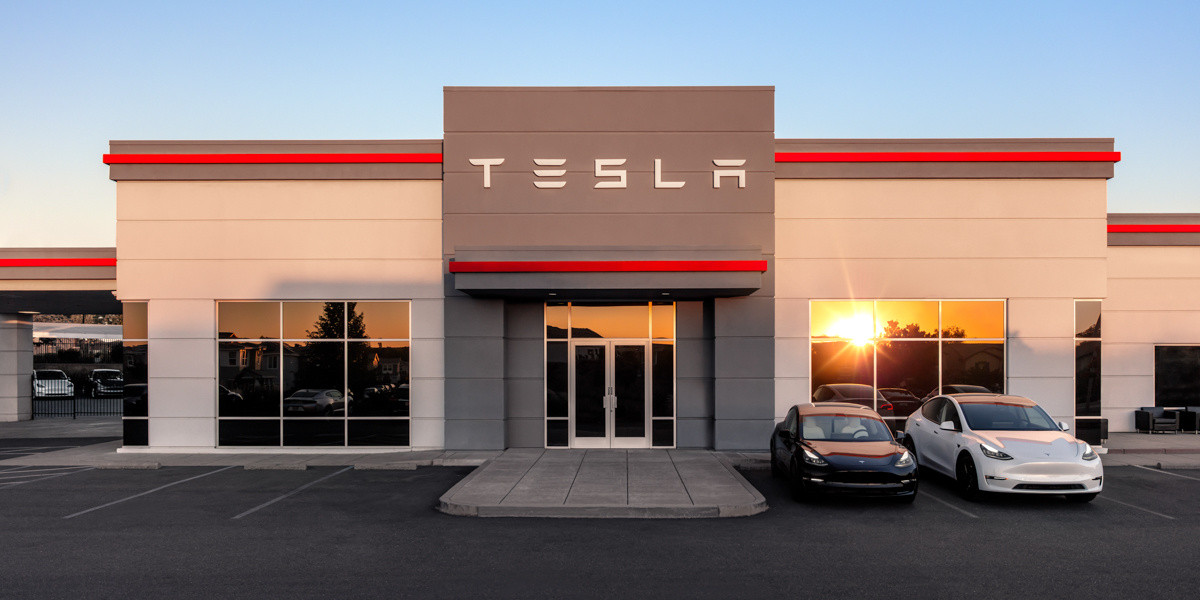
Tesla just trademarked ‘MEGAPOD’ with the United States Patent and Trademark Office (USPTO), its latest move in what seems to be a hint that the company is incredibly focused on its AI efforts and storage needs as compute increases.
The application carries serial number 99893717 and lists the applicant as Tesla, Inc., located at 1 Tesla Road, Austin, Texas 78725.
The filing remains in ‘live pending’ status, and it is a new application waiting for assignment to an examining attorney. It has not yet been published or registered.
Tesla just trademarked MEGAPOD
Summary:
“Modular data center hardware systems for artificial intelligence computing, comprised of computer servers, computer hardware for artificial intelligence processing, computer networking hardware, electrical power distribution units, and… pic.twitter.com/3l85DsKadl— Robin (@xdNiBoR) June 19, 2026
According to the official goods and services description in the application, Tesla describes ‘MEGAPOD’ as:
“Modular data center hardware systems for artificial intelligence computing, comprised of computer servers, computer hardware for artificial intelligence processing, computer networking hardware, electrical power distribution units, and cooling systems, sold as a unit; self-contained modular computing hardware systems for artificial intelligence workloads; integrated computer hardware platforms for artificial intelligence computing, namely, enclosures containing computer hardware, power distribution hardware, and cooling hardware, sold as a unit; downloadable software for monitoring, managing, optimizing, and regulating modular artificial intelligence computing hardware systems.”
This description specifies complete, self-contained modular units that integrate servers and specialized AI processing hardware with networking components, power distribution, and cooling systems. It also includes associated downloadable software for oversight and optimization of these systems. The language emphasizes hardware sold “as a unit” and enclosures that combine the necessary elements for AI computing workloads.
Tesla has an established history of developing and commercializing modular hardware systems. Its Megapack product line, for example, consists of utility-scale battery energy storage systems designed as containerized units for grid applications. The MEGAPOD filing follows a similar pattern of protecting a name for modular, integrated hardware platforms, this time focused on artificial intelligence computing infrastructure.
This could be an early move, especially as Tesla did not have trademark rights to the word ‘Cybercab,’ the name of its self-driving, ride-hailing-focused vehicle.
Trademark applications of this type allow companies to secure priority rights to a name for defined categories of goods and services. The USPTO examines applications for compliance with legal requirements, including distinctiveness and absence of conflicts with prior marks. If the application proceeds successfully through examination, publication, and any opposition period, it could result in a federal trademark registration providing nationwide protection. This is what Tesla’s obvious intention is with ‘MEGAPOD.’
Public reports and analysis suggest MEGAPOD could represent modular, container-style AI computing pods designed for easy deployment. These would bundle servers, AI accelerators, power systems, and cooling into self-contained units suitable for distributed AI workloads. This approach aligns with Tesla’s announced AI compute strategy.
In March 2026, Elon Musk outlined plans for “Digital Optimus” (also referred to as Macrohard), a joint Tesla-xAI project for AI agents capable of handling complex digital tasks. The plans include running these agents on Tesla’s AI4 hardware in parked vehicles as well as dedicated compute units installed at Supercharger stations, which collectively offer substantial unused electrical capacity.
What is Digital Optimus? The new Tesla and xAI project explained
A modular hardware platform like the one described in the ‘MEGAPOD’ filing would support scalable, rapid deployment of such distributed compute resources. It could complement Tesla’s other AI infrastructure efforts, including the Dojo supercomputer used for training models and the development of AI systems for autonomous driving and robotics, by enabling edge or regional AI inference without reliance on traditional centralized data centers.


Elon Musk
The Starship moon landing number NASA and Elon Musk can’t agree on
Musk disputes NASA estimate of 22 Starship launches for Moon landing, predicting 6 to 8.

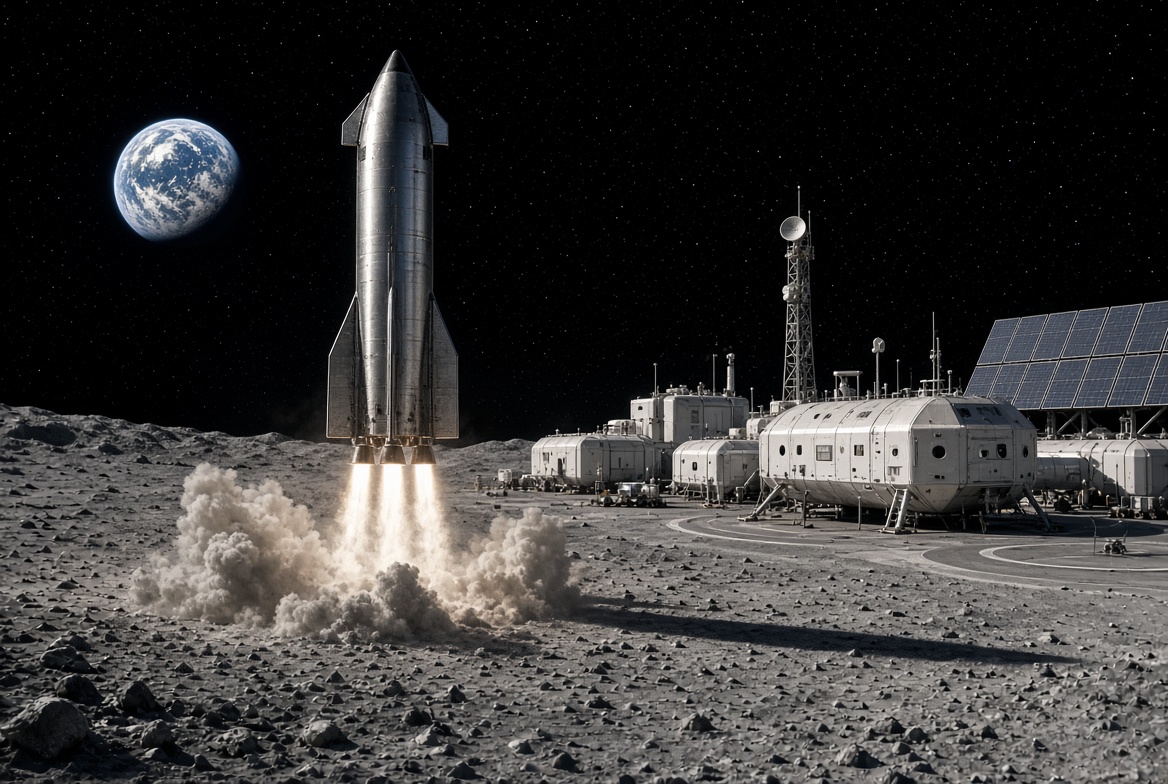
Elon Musk is disputing a new NASA safety panel estimate of how many Starship launches it will take to put astronauts on the Moon, saying the real number will be less than half the panel’s figure.
On Thursday, NASA’s Aerospace Safety Advisory Panel held its quarterly public meeting. Panel member Charlie Precourt, a former NASA astronaut, flagged the fueling process for SpaceX’s lunar lander as a major risk for Artemis IV, the mission planned to land a crew on the Moon in 2028. “We need to keep our eyes on numerous required fuelings for the lander,” Precourt said, according to Ars Technica. “I think the last estimate is around 22 flights.”
Ars Technica’s Eric Berger posted the comment on X, and Musk replied. “That’s way too high,” Musk wrote. “Actual number will be more like 6 to 8.”
The disagreement comes down to a basic problem with sending a ship as large as Starship to the Moon. Starship burns nearly all of its propellant just reaching Earth orbit, so it cannot continue on to the Moon without stopping for a refill. SpaceX’s answer is a gas station in space. First, a Starship that works as a storage tank, called a depot, is launched into orbit. Then a series of tanker Starships launch one at a time, dock with the depot and pump their leftover propellant into it. Once the depot is full, the lunar lander version of Starship launches, docks, fills up and heads for the Moon.
Every tanker trip is its own full rocket launch, which is why the count matters. More launches mean more time, more cost and more chances for something to go wrong before astronauts ever leave Earth. Berger estimated that even if SpaceX reaches twice weekly Starship launches by the end of 2027, filling a depot at the panel’s number would still take roughly three months.
How many tankers are needed depends mostly on how much propellant each one can carry to orbit and how much is lost along the way. Starship’s fuel and oxygen are stored at extremely cold temperatures, and some of it slowly boils off while waiting in orbit. More is lost in each transfer. NASA appears to be working from what Starship can lift today, while Musk’s range assumes a more capable rocket.
Musk has pushed back on higher counts before. In 2021, after a government document suggested 16 launches, he called that “extremely unlikely” and said eight tankers would be the most required.
Much of the answer depends on hardware SpaceX has not finished flying. As Teslarati noted earlier this year, the company plans to carry out the refueling process with its upgraded V3 Starship, and Precourt described Artemis IV as carrying “a large number of firsts.” He also praised NASA Administrator Jared Isaacman’s team for working to clear obstacles for both SpaceX and Blue Origin, whose Blue Moon lander does not rely on orbital refueling for its first mission.
Elon Musk
Tesla’s secretive “Project Crystal Sun” gets a big green light in Texas
Fort Bend County approved four incentive agreements Thursday for Tesla’s proposed $10.1 billion solar factory.
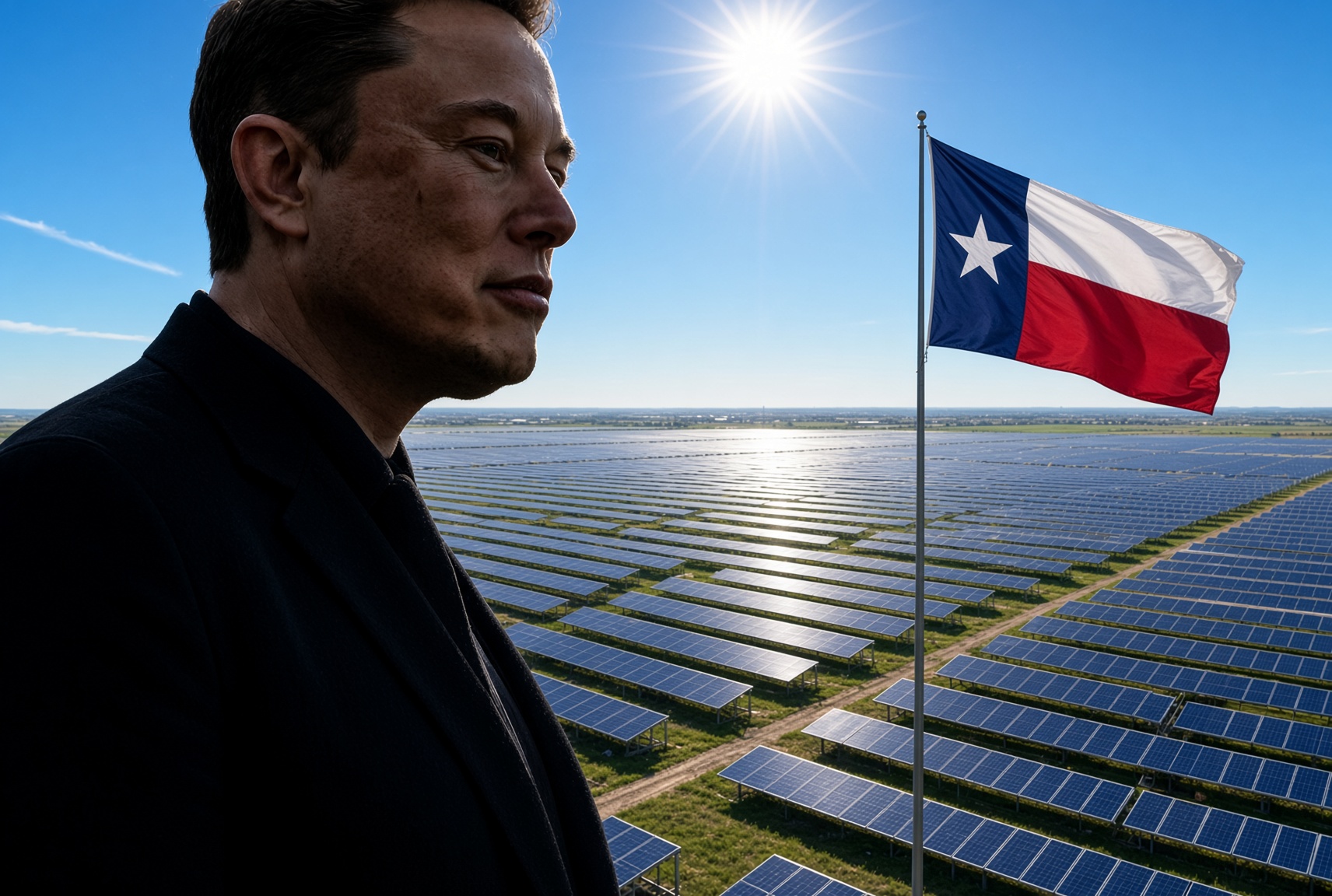
Fort Bend County commissioners on Thursday approved a package of tax incentives for Tesla’s proposed $10.1 billion solar cell factory near Needville, Texas, giving the company one of the last local approvals it needs before it decides where to build. All four Tesla agreements passed 4 to 0.
The votes covered a property tax abatement inside Reinvestment Zone No. 34, a Chapter 381 economic development agreement, a foreign trade zone non-objection paired with payments in lieu of certain taxes, and a separate payment in lieu of taxes “true up” agreement, according to agenda notes from the Fort Bend Commissioners Court meeting.
The project, known internally as “Project Crystal Sun,” would make solar cells and finished modules on roughly 3,000 acres near FM 762 and FM 1994, south of the Brazos River. As Teslarati reported when the filing first surfaced in August, Tesla’s application under the state’s JETI Act splits the investment into $1.5 billion in real property and $8.6 billion in equipment, with 9,712 permanent jobs projected by 2033 and commercial operations targeted for the first quarter of 2029. The plant would handle the full chain from ingot and wafer production through cell testing.
Inside Tesla’s secretive $10 Billion “Project Crystal Sun” filing
Thursday’s approval does not lock in the site. Tesla has told the Texas Comptroller it is still weighing other locations, and site selection adviser David Dennison told Lamar Consolidated ISD trustees in September that the race had narrowed to Fort Bend and one out of state rival with a “very compelling package,” according to the Houston Chronicle. Tesla hopes to decide before the end of 2026, and the incentives still need sign off from the Comptroller and the Governor’s office.
Local officials have now done nearly everything within their control. Commissioners created the reinvestment zone in an August 24 special meeting, with Interim County Judge Daniel Wong formally withdrawing himself over his engineering firm’s past work with Tesla. Lamar CISD trustees voted 7 to 0 on September 15 to advance a JETI agreement that would tax Tesla’s qualifying property at 50 percent of its value for maintenance and operations from 2029 through 2038.
The plant lines up with a target Elon Musk set on Tesla’s Q4 2025 earnings call in January, when he said the company would “work toward getting 100 GW a year of solar cell production, integrating across the entire supply chain from raw materials all the way to finished solar panels.” In March, Tesla was reported to be negotiating a $2.9 billion purchase of Chinese solar manufacturing equipment bound for Texas. The Houston area already hosts Tesla’s Megafactory in Brookshire, where Megapack 3 production has started. Tesla said on its Q3 call that Megapack supply for 2027 is nearly sold out, and Musk wrote on X Thursday that the company is “increasing production of Megapacks as much as possible,” as demand from data centers climbs.
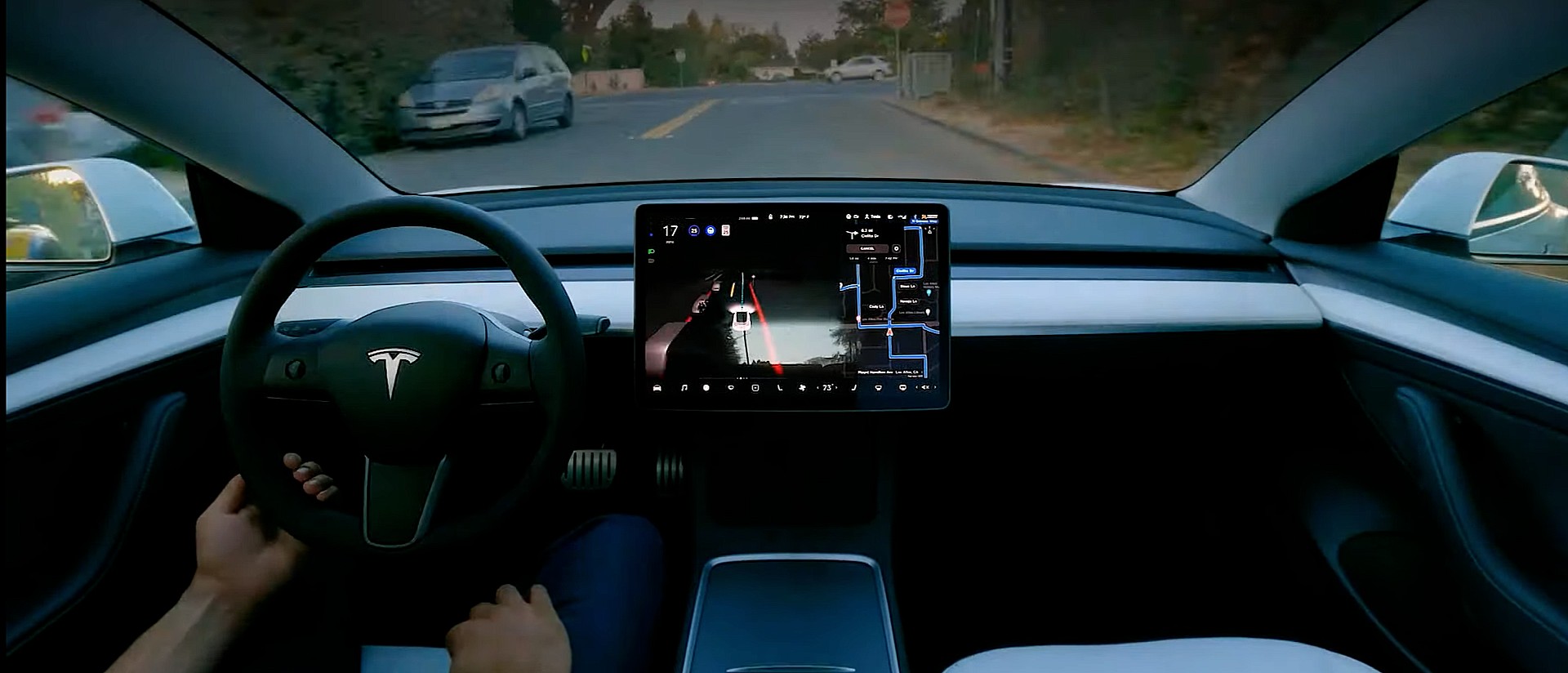
Tesla Full Self-Driving (Supervised) showed a record attach rate at delivery for new vehicles in the third quarter of 2026.
75 percent of new vehicle deliveries in North America included a subscription to FSD software, up from 55 percent in the prior quarter, a 20-percentage-point sequential gain in the company’s most mature market.
Tesla Q3 2026 Earnings results: in-line revenues, slight beat on EPS
Tesla shed light on the Q3 Shareholder Deck that 75 percent of new deliveries came with an FSD subscription:
“FSD (Supervised)⁴ attach rate continued to grow, reaching over 75% of new vehicle deliveries in North America – our most mature market – a nearly twenty percentage point sequential increase. We believe that FSD is driving demand in markets where it is available, and we continue to work with regulators to get it approved in other markets. “
The higher attach rate accompanied strong growth in the overall FSD consumer base, as active subscriptions rose to 1.75 million, a 67 percent year-over-year increase. For the first time, more than half of paid customers are on the monthly subscription, which is priced at $99 per month in the U.S.
People are buying FSD with a car attached, not the other way around
— Elon Musk (@elonmusk) October 21, 2026
The transition to subscriptions has accelerated since Tesla discontinued the one-time purchase option in most markets earlier this year. The recurring model improves revenue visibility and margins compared with large upfront payments. With three-quarters of North American deliveries now including FSD, the software is now an evidently large contributor to Tesla’s economics and ancillary revenue.
Geographic expansion remains important for further gains. FSD is now available in nine countries in the EU, and more than 100,000 customers have driven over 160 million kilometers. Tesla is pursuing broader EU-wide approval, with a related vote expected in December. Similar progress in additional markets could support higher attach rates beyond North America.
These results came as Tesla had a strong quarterly delivery performance of 486,532 vehicles in the quarter, which came with its largest passenger-vehicle backlog in four years. Battery supply continued to limit volume, but the company has pointed to FSD as a clear difference-maker that is helping sustain demand. As supervised capabilities improve, the attach rate will likely continue to improve.
At face value, it is a key measure of how Tesla is converting sales into autonomy progress.

The Starship moon landing number NASA and Elon Musk can’t agree on

Tesla’s secretive “Project Crystal Sun” gets a big green light in Texas


