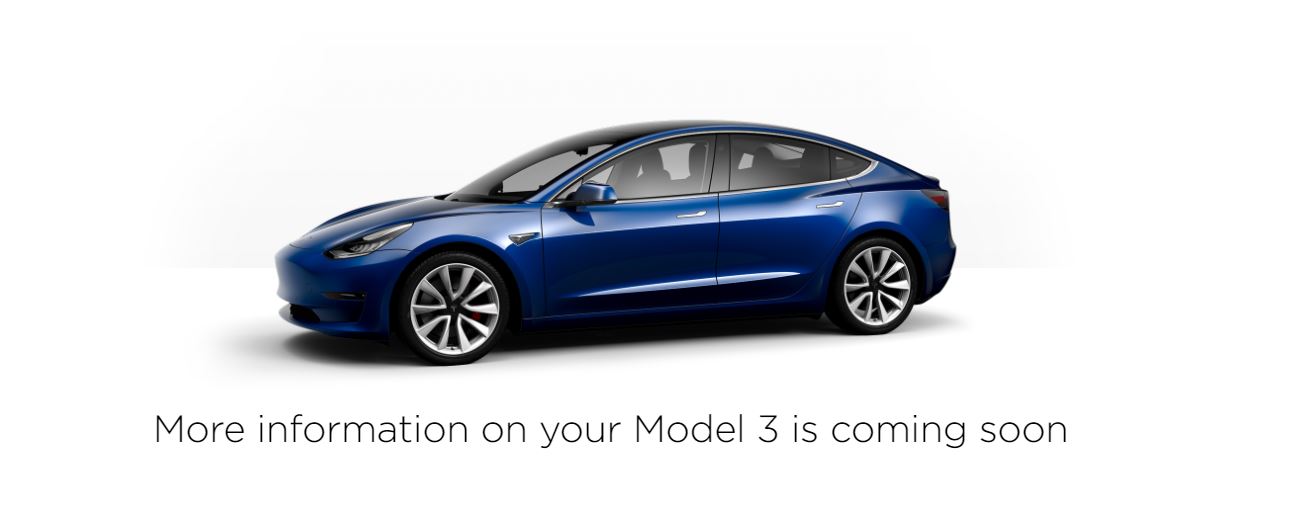
Tesla Model 3
Tesla’s Model 3 is already a game changer: Tech, Value and Economics prevail

Yesterday I spoke to BBC Newsday about the Tesla Model 3 and one of the questions they asked was “is the Tesla Model 3 a game changer”. Even before incentives the Model 3 competes with other entry level luxury vehicles like the BMW 3 series and Audi A4. With incentives it moves even further down-market, competing with big sellers like the Toyota Camry (the USA’s top selling car in 2016). That definitely moves Tesla into the mass market with a lot of opportunity to grow. There are some additional factors though that I think makes it a true game changer.
Industry Affect
It’s already a game changer. Just over a year ago most automakers still dismissed Tesla as a niche manufacturer and articles still wrote about how electric vehicles were decades out or may never come to fruition. Then Telsa had almost 400,000 preorders for a vehicle no one had actually driven, most had only seen through their computer screens, and wouldn’t be available for over a year. I was one of those people.
Fast forward to today, with manufacturers practically falling over each other to announce their own electric vehicle programs and new targets. The discussion has flipped. Articles are no longer written about if electric vehicles are coming but how quickly. I think we have the Tesla Model 3 to thank for that.
Value Proposition
Preorders are one thing, but can the Model 3 compete in a world of mostly combustion vehicles? That will depend on the value customers assign to it. My opinion is that Model 3 is the first lower cost electric vehicle to cross the ‘value threshold’. What I mean by that is that a buyer considering two vehicles in the same class and quality, one electric and one combustion, would chose the Model 3 over the combustion option. The Model 3 is just the better all-around car.
(Tesla)
Consider the Chevy Bolt, a good car, but a more difficult sell on value proposition. Does it actually provide $37,500 worth of value to the buyer or could I purchase an internal combustion vehicle that provides me more value (as per classic capitalism this is largely ignoring the societal and environmental benefits to others, which can be difficult for most buyers to quantify – it’s not right, just reality).
“The Model 3 is just the better all-around car”
The factors at play are complex, the initial purchase price, comfort, reliability, range, acceleration and speed, safety, handling, aesthetics, operating costs, convenience, and environmental impact. These all go into a buyer’s value calculation, mostly subconsciously. For me I can’t think of another vehicle that hits those categories as well as the Model 3.
Economics and Cost Reductions
Customer value is great but Tesla more than any other automaker needs to produce electric vehicles with a decent profit margin. It doesn’t have a lot of gas guzzling expensive SUVs to offset losses on EVs. Other automakers have claimed they are perfectly willing to make EVs at a loss, which seems largely driven by meeting emissions targets in key US states (California, Connecticut, Maine, Maryland, Massachusetts, New Jersey, New York, Oregon, Rhode Island, and Vermont). That may also be why GM is pulling back on Bolt production, if they’re approaching their quotas in those states . In Ontario Canada, which has no such requirements, the Chevy Bolt is sold out until January 2018 and the only one available to test drive is at the non-profit organization Plug’n Drive in Toronto. A lot has been made in the past of Tesla’s business losses, but those include capital investments and R&D. They do in fact make a profit on their vehicles, but invest more money on improvements and expansions than that profit totals. Making an affordable electric vehicle at a profit is a challenge Tesla seems confident they’ve achieved. That’s a big deal. A game changer.
Technology Innovation
To be a game changer though the Model 3 can’t just be another lower priced electric vehicle. It has to be innovative and it is absolutely that. It will be using a new battery format, autonomous driving hardware, and it’ll likely be using Tesla’s newly optimized powertrain with 1 million miles capability + faster acceleration.
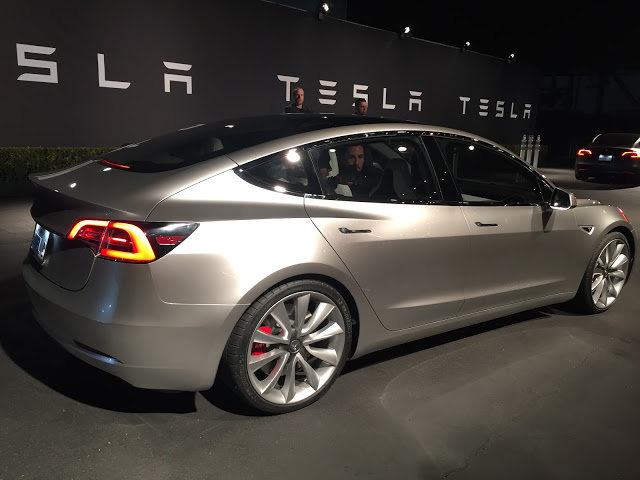
Tesla Model 3 prototype from the March 31, 2016 unveiling event in Hawthorne, CA
With those improved batteries and powertrain it should be one of the most efficient electric vehicles on the road. There’s also the Supercharger network which really opens up the options for long distance driving, more than any other manufacturer. These capabilities will set a new benchmark for affordable electric vehicles.
Tonight it will be very interesting to see what the final specs. Will anyone be able to match it? Let the (affordable) EV space race begin!
What do you think? Is the Model 3 a game changer and why?


Energy
Tesla Model 3 and Model Y can now do what only Cybertruck could
Tesla Model 3 and Model Y can power your home with Powerwall 3 during outages.

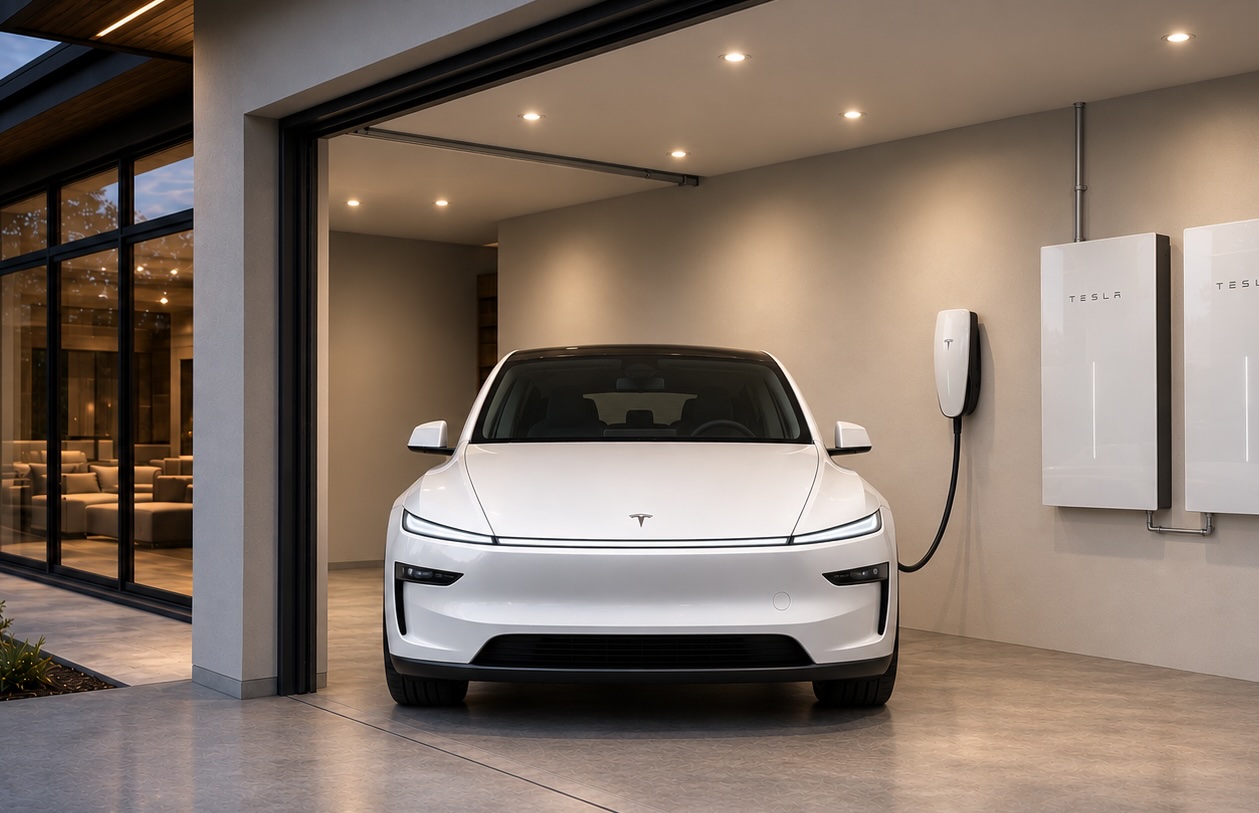
Tesla has turned its two top sellers into backup batteries for the house.
Tesla Energy announced on Tuesday that Powershare Home Backup is now available for new Model 3 and Model Y vehicles paired with a Powerwall 3, saying the car can “extend your home backup by over 2 days.” Minutes later, Tesla’s main account quoted the post with a broader pitch: “With Powerwall 3, every Tesla can now serve as your home’s backup battery.”
Until this week, the Cybertruck was the only Tesla that could send power back into a home, and that capability only began working alongside Powerwall 3 last month, after years of ambitious targets.
Tesla’s updated Powershare page says every Model 3 and Model Y ordered in the U.S. or Puerto Rico on or after October 1, 2026 can use the feature. Some, but not all, earlier cars also qualify. Owners can check on the touchscreen under Software, then Additional Vehicle Information, where a capable car shows “Powershare Support: Enabled.” As Electrek reported, bidirectional power on the two cars runs through an inverter Tesla calls PCS2 Lite, and the company has not said when that part entered production on each trim.
The home side is simpler. A house that already has a Powerwall 3 and either a Wall Connector 3 or Universal Wall Connector needs no additional equipment, and Tesla says compatibility is enabled through a software update. When the grid drops, the Powerwall and the car work together, with up to 11.52 kW of continuous power available. Tesla’s “over two days” estimate assumes a home using 30 kWh per day and a car starting at a 90 percent charge. Standard trims are rated for up to two days, while the Cybertruck adds more than three.
There are limits. Powerwall 2 and Powerwall+ support is listed as “coming soon.” Model S and Model X are not included, and Grid Support, the program that lets Cybertruck owners in Texas send power back to the grid during demand spikes for bill credits, is not available for Model 3 or Model Y.
The rollout also lines up with something Elon Musk said more than three years ago. At Tesla’s March 2023 Investor Day, Musk said, “I don’t think very many people are going to want to use bidirectional charging, unless you have a Powerwall.” Tesla has now shipped the feature for its volume cars with exactly that requirement attached.
The Powerwall pairing was the hard part on Cybertruck. Tesla told owners in December 2025 that Powershare with Powerwall had been pushed to mid 2026, and lead engineer Wes Morrill explained that two devices capable of forming a home’s grid have to negotiate which one leads during an outage, across multiple generations of hardware. With that work done for the truck, Tesla was able to extend it to the Model 3 and Model Y within a month.
Ford and GM have offered home backup from their EVs for several years, but both require a separate inverter and backup hardware. Tesla’s version leans on equipment many Powerwall 3 owners already have on the wall. Powershare for the two cars also ships as part of software update 2026.38.3, the same release that began delivering Halloween Mode on Tuesday.

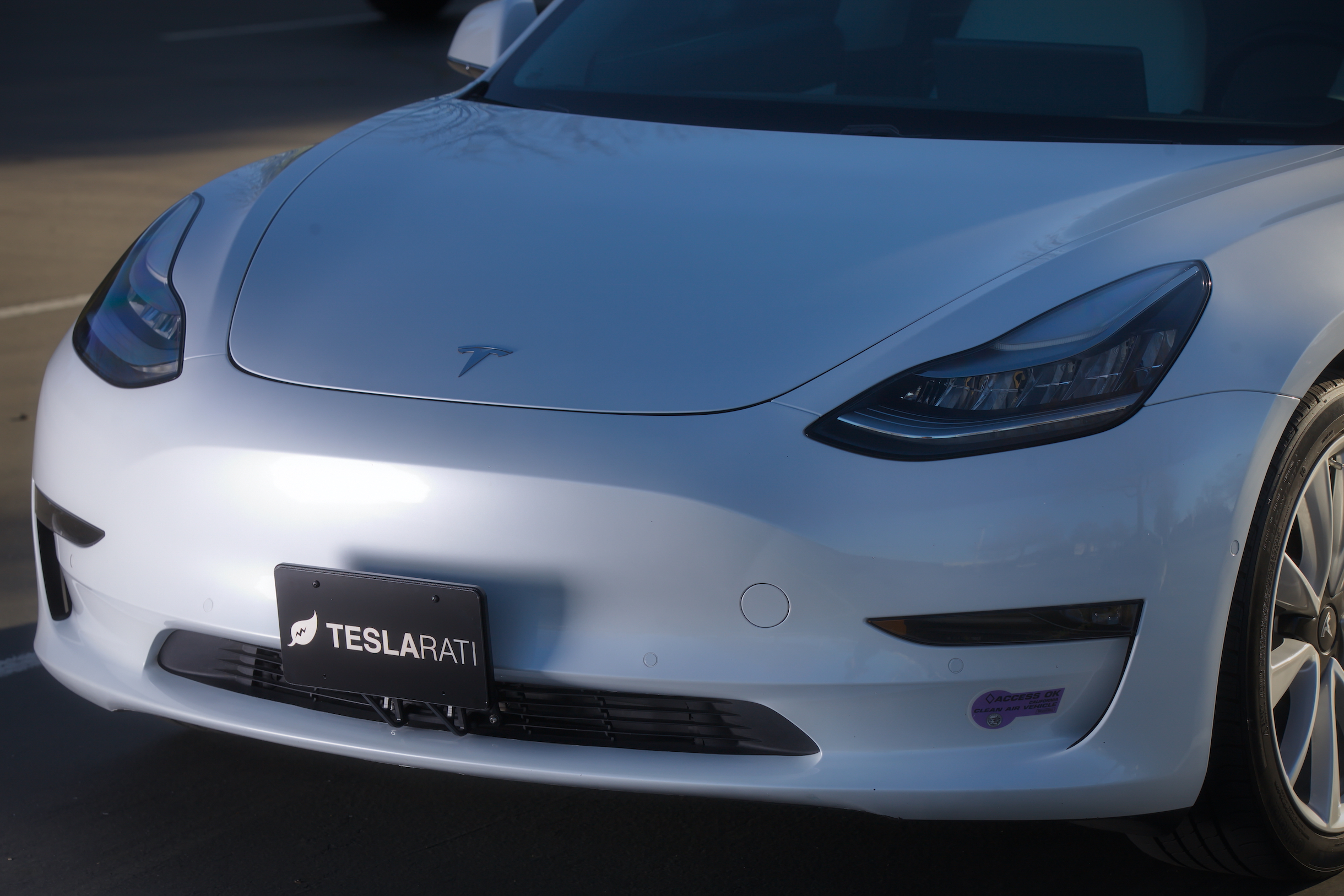
Tesla headlights have caused a recall of over 20,000 of the company’s two most popular vehicles, the Model 3 and Model Y, due to the low-beam bulb exceeding the maximum allowed intensity according to federal standards.
Tesla initiated the recall with the National Highway Traffic Safety Administration (NHTSA) this morning, stating that the low-beam output “exceeds the maximum allowed intensity in the outer upper-right and outer upper-left areas of the 10U and 90U zone, as prescribed in FMVSS No. 108.”
Tesla sourced the impacted headlights from Marelli Automotive Lighting, a Mexico-based company. The recall impacts 2020-2023 Model Y vehicles and 2017-2023 Model 3 vehicles. It is estimated that every VIN in this recall is impacted by the defect.
🚨 Tesla is recalling 20,349 2020-23 Model Y vehicles and 2017-23 Model 3 vehicles due to an excessively bright headlamp low beam.
Currently, there is no remedy plan in place, as it is still being developed. pic.twitter.com/y34cIO2U0B
— TESLARATI (@Teslarati) August 11, 2026
Typically, Tesla would remedy recalls of this nature through an Over-the-Air software update, which has been a major focus of criticism by the company and its supporters because the NHTSA still refers to it as a “recall,” even though it requires no action by the vehicle owner. The fix is shipped over the internet and downloaded to the car.
However, there appears to be a potentially different solution for this problem. Tesla has not developed a remedy for this issue, so it could potentially be on the way. The big issue appears to be the fact that these recalled lamps are out of production, and this is an old body style for both vehicles. The headlights and front-end designs are completely different.
Tesla switched to another supplier when the affected headlight design was discontinued. It plans to begin notifying owners of their remedy options by September 15.
Tesla filed a petition protesting the recall to fix the vehicles’ headlight issue, but the NHTSA denied it. Now, Tesla will come up with a solution to fix it.
Elon Musk
The Boring Company’s newest tunnel vehicle runs on Tesla parts and no one is driving it
The Boring Company’s new tunnel vehicle runs on Tesla Model 3 batteries and drive units.
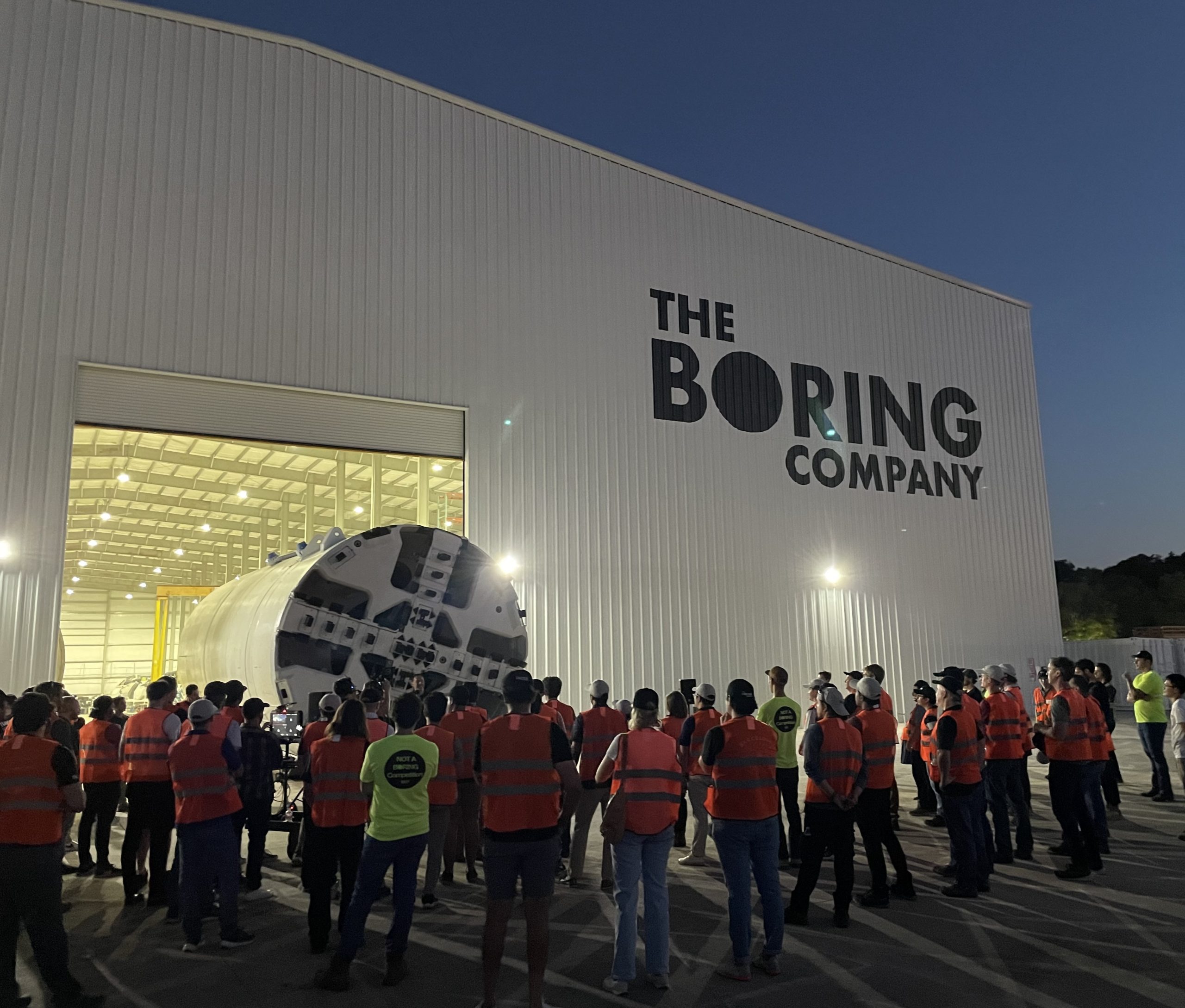
The Boring Company just introduced a new piece of hardware, and it runs on parts pulled straight from a Tesla showroom. Liner Truck 3, unveiled in a post from the tunneling company’s official X account, is an all electric vehicle built around Tesla Model 3 battery packs and drive units, purpose built to move concrete tunnel segments to the boring machine face without a single person underground.
Introducing Liner Truck 3 — our latest fully electric tunnel vehicle.
– Tesla Model 3 battery and drive units
– Transports 22,000+ lb of concrete segments to the boring machine
– 28 miles of range
– 12 mph max operating speed
– Remotely piloted from Global OCC in Texas, with… pic.twitter.com/XB7FgSXnpy— The Boring Company (@boringcompany) August 7, 2026
The job itself is unglamorous but critical. Each precast segment run weighs more than 22,000 pounds, roughly the load of a full cement mixer, and Liner Truck 3 hauls that weight repeatedly between the surface staging area and wherever the Prufrock machine happens to be cutting.
The Boring Company said Liner Truck 3 is piloted remotely out of its Global Operations Control Center in Texas, extending the Zero-People-In-Tunnel approach the company has spent years building toward. An earlier version of a ZPIT liner truck was already tested at the company’s Bastrop, Texas research tunnels, and a factory tour released last month showed an employee flying a fully loaded liner truck with a PlayStation controller. Liner Truck 3 looks like the production version of that same idea, cleaned up and pushed into daily use.
The timing lines up with a company digging in more places than it ever has before. The Boring Company now has multiple Prufrock machines active or arriving in Nashville, where Music City Loop construction has been accelerating since February, and its Vegas Loop network keeps adding tunnel mileage on a near monthly basis. Every one of those projects depends on getting concrete segments to the cutting face fast enough to keep the boring machine from idling, which is exactly the bottleneck Liner Truck 3 is designed to remove.
It also reinforces something Tesla owners have watched happen gradually across Musk’s companies: passenger car hardware finding a second life in heavy equipment. Model 3 drive units already move people through the Vegas Loop, and now the same components are hauling concrete underground in Nashville and wherever The Boring Company digs next. Whether that kind of component reuse extends further into TBC’s equipment lineup, or into other Musk owned industrial hardware, is the next thing worth watching.

Tesla Roadster owners to get “Flying Stunt Mode” and looping track access

How to use Grok Bot to block spam calls and texts

Tesla’s flying Roadster just revealed something bigger than the car

SpaceX reveals how its 1 Million AI satellite network will work and prevent space collisions

Elon Musk’s Boring Company lands a new Middle East deal, and Nashville is about to get faster


