News
Tesla receives European Ecolabel (EMAS) seal for Giga Berlin-Brandenburg
The EMAS seal highlights Tesla’s existing environmental measures in the facility.

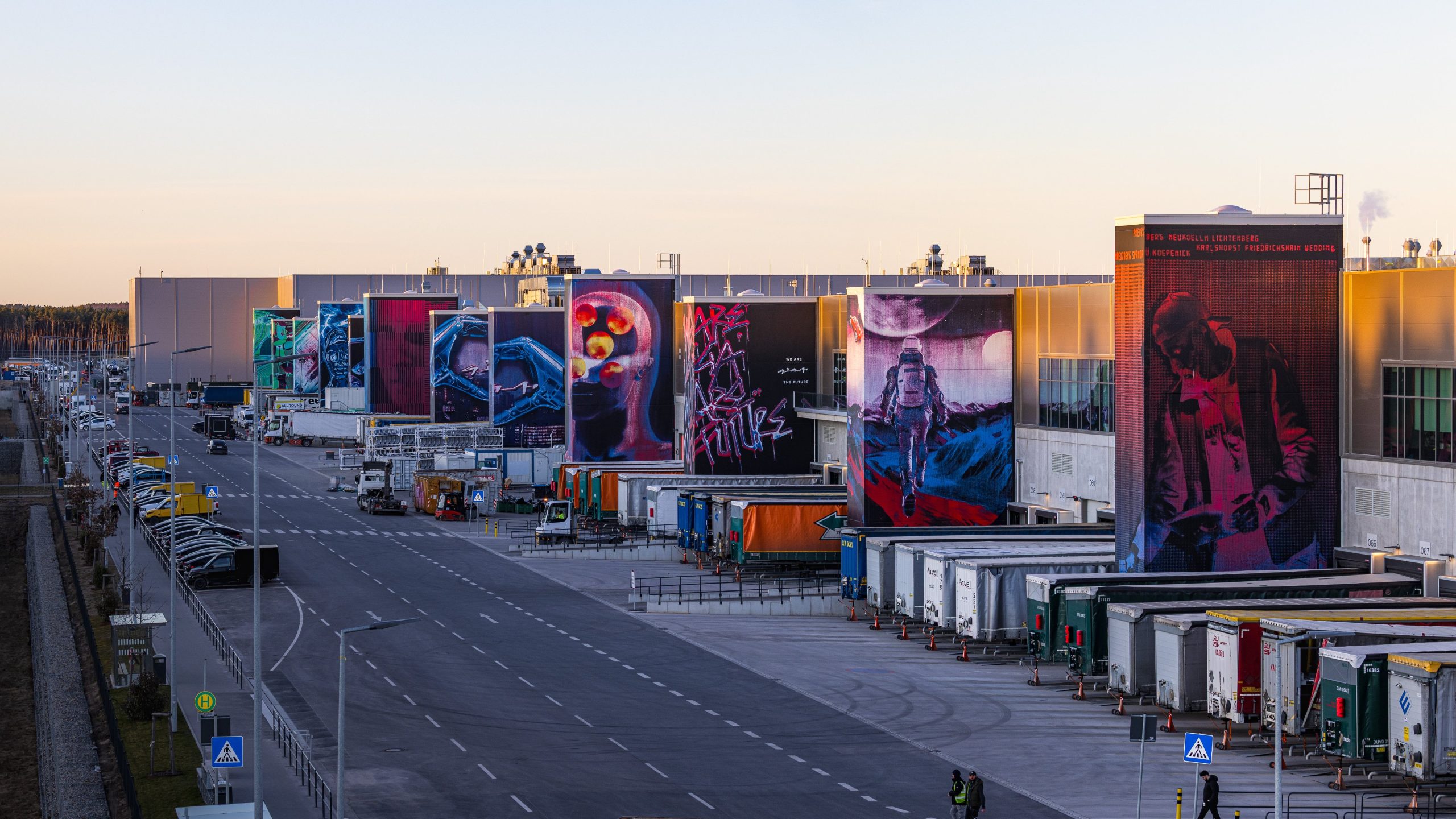
Tesla has been awarded the European Ecolabel (EMAS) seal for Gigafactory Berlin-Brandenburg.
The EMAS seal highlights Tesla’s existing environmental measures in the facility, such as extensive reforestation efforts and reduced water usage. It also emphasizes Tesla’s commitment to improve its environmental initiatives.
Giga Berlin’s environmental initiatives
The EMAS (Eco-Management and Audit Scheme) seal is a long-term environmental management system that focuses on compliance with regulations and improving environmental performance, as noted in a Tagesspiegel report.
Plant manager André Thierig noted that Tesla has already planted over 2 million trees to replace the trees that have been felled to make way for Giga Berlin. Tesla is also targeting an additional 5 to 15 MW peak solar capacity this year to make the plant more sustainable. “We will continue to promote photovoltaics in the future,” he said.
Giga Berlin’s consumption and energy use
In 2024, Giga Berlin consumed about 419,503 MWh of energy, with electricity accounting for more than half, followed by natural gas. The facility is looking to lower natural gas use by redirecting the use of process heating water via waste heat. Water consumption was listed at 2.16 cubic meters per vehicle, significantly below the industry average of 3.5.
This year, Tesla Giga Berlin is looking to recycle 90% of the Model Y plant’s process wastewater. Around 11,000 employees currently work at Giga Berlin, which produces 5,000 vehicles per week or roughly 250,000 units annually.
Certification welcomed but not without criticism
The EMAS program requires companies to disclose resource use, emissions, and improvement plans. Over 40 companies in Brandenburg have EMAS certification.
Brandenburg’s Environment Minister Minister Hanka Mittelstädt (SPD) described Tesla as a role model for the region. “Everything is public, and that also creates a certain amount of trust,” she said, noting that Tesla is a “beacon” in the industry.
Monique Zweig, Managing Director of the East Brandenburg Chamber of Industry and Commerce (IHK), shared her optimism in a comment to rbb24. “At Tesla, you can see that climate goals go hand in hand with industry,” Zweig stated.
Unsurprisingly, local activists expressed skepticism. The Association for Nature and Landscape in Brandenburg, which is against Tesla, questioned whether the certification could be used as “greenwashing.”
The group also alleged that the certificate could pave the way for weaker oversight for the EV maker. “The seal is ‘greenwashing’ to portray the company as more environmentally friendly,” spokesperson Steffen Schorcht noted.


Elon Musk
Tesla Roadster owners to get “Flying Stunt Mode” and looping track access
Musk says Roadster owners can command the unveiling stunts autonomously, with a Texas looping track.

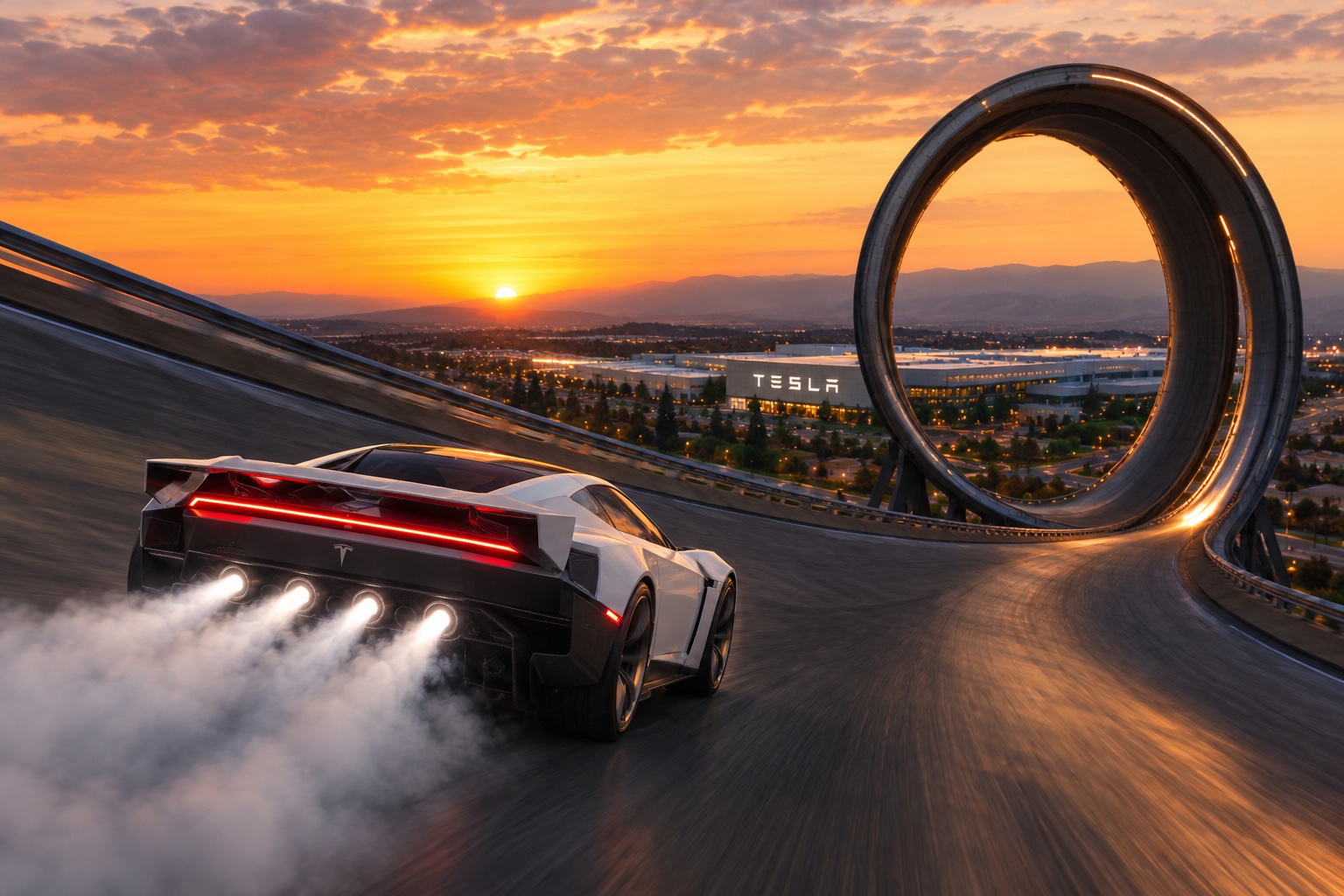
Elon Musk says owners of the new Tesla Roadster will be able to ask the car to perform the stunts Tesla showed at its unveiling, with the car doing the driving itself. Musk made the comment Saturday in a reply on X to tech blogger Robert Scoble, and he added a promise of a looping track at Tesla’s Texas headquarters.
Scoble had argued that the person in the Roadster is not really driving it. In his description, the driver operates a computer that tells another computer what to do, with steering, braking and acceleration all handled by wire. Musk answered, “True. You will be able to ask the Roadster to perform any of the tricks shown autonomously, as it will be sentient. Also, we will have a wild looping track (crazier even than Hot Wheels) at our Texas HQ where you can test out your Roadster.”
@Scobleizer True.
You will be able to ask the Roadster to perform any of the tricks shown autonomously, as it will be sentient.
Also, we will have a wild looping track (crazier even than Hot Wheels) at our Texas HQ where you can test out your Roadster.
— Elon Musk (@elonmusk) October 17, 2026
At the October 15 event outside Waco, the car drove up a curved ramp until it was upside down, flew off on cold gas thrusters, flipped and landed. It also hovered over a Cybercab, Cybertruck, Semi, Model Y and Model 3 while moving. As we noted in our breakdown of the three Roadster configurations, Musk said at the event that the car “literally is just going to puff itself up” to perform the maneuvers whenever an owner wants. Saturday’s reply adds that the car would run them on its own.
Tesla has described some of the hardware that would make that possible. The Roadster uses steer by wire with a yoke, and its cold gas thrusters rely on electric actuators for small adjustments in flight. A fan system under the car creates suction, which Tesla says is strong enough to hold it upside down, a setup we covered in our look at the Roadster’s fan system and thrusters.
Musk did not say when an autonomous stunt feature might arrive, how it would work, or what he means by sentient. He also gave no size, location or opening date for the Texas track. Production is planned for Giga Texas in 2027 or 2028, and Tesla says the car is not approved for public road use. The Rocket version, the one built to fly, is invite only.
The comment follows a week of Musk teasing the event, including his claim that the demo would be a banger, which we covered before the stream. Tesla reports third quarter earnings on October 21, and shareholders can submit and vote on questions through the Say portal until 4 p.m. EDT on October 20, according to our earnings Q&A preview. A question about autonomous Roadster stunts and the Texas track would be a quick way to get specifics from management.
Elon Musk
How to use Grok Bot to block spam calls and texts
Musk told users to ask Grok Bot to scrub their phone numbers from spam lists.
Elon Musk has a new use case for Grok Bot, and it is the spam call. On Thursday he replied to an X user named Arash with a short instruction: “Ask your @Grok @Bot to remove your phone number from spam call & text lists!” Arash had said he got tired of the calls, had an AI bot find his number on listing sites and file removal requests, and packaged the process as a free skill for others.
The skill is called Spam-Call Scrubber, which is described to find a phone number on people search sites and data brokers, submits the opt outs, completes the confirmation emails those sites send back, and rechecks on a schedule the user picks. Using it requires the Grok Bot app. The pitch is time saved, since most broker opt outs sit behind separate forms on separate sites.
Ask your @Grok @Bot to remove your phone number from spam call & text lists!
— Elon Musk (@elonmusk) October 15, 2026
Musk said Grok Bot now gives each bot its own email address, and that it can detect scam emails. On Thursday he also said SpaceX would make users whole if the bot botches a purchase or leaks a card, then told users to shop away from Amazon after the retailer blocked the agent, as Teslarati reported. The terms of service we reviewed at the time put responsibility for what an agent does on the user.
For Tesla owners, Grok Bot is not just a phone app. Tesla brought Grok Bot into its vehicles on September 22, and we argued earlier this week that the Cybercab’s real advantage may be the errands it runs during a ride. Every Cybercab and the rest of the Model Y Robotaxi fleet has it enabled. The more routine tasks like this one become, the more a rider has reason to hand over something personal in the back seat.
The new Spam-Call Scrubber skill can be downloaded for free and works on sites that honor removal requests, while noting that listings can reappear, and illegal robocallers do not check any registry. Whether Spam-Call Scrubber cuts anyone’s call volume is something the first wave of users will find out, and Musk’s endorsement guarantees that wave is coming.
Investor's Corner
Tesla’s flying Roadster just revealed something bigger than the car
Analysts say the Roadster demo puts a Tesla and SpaceX merger back on the table.
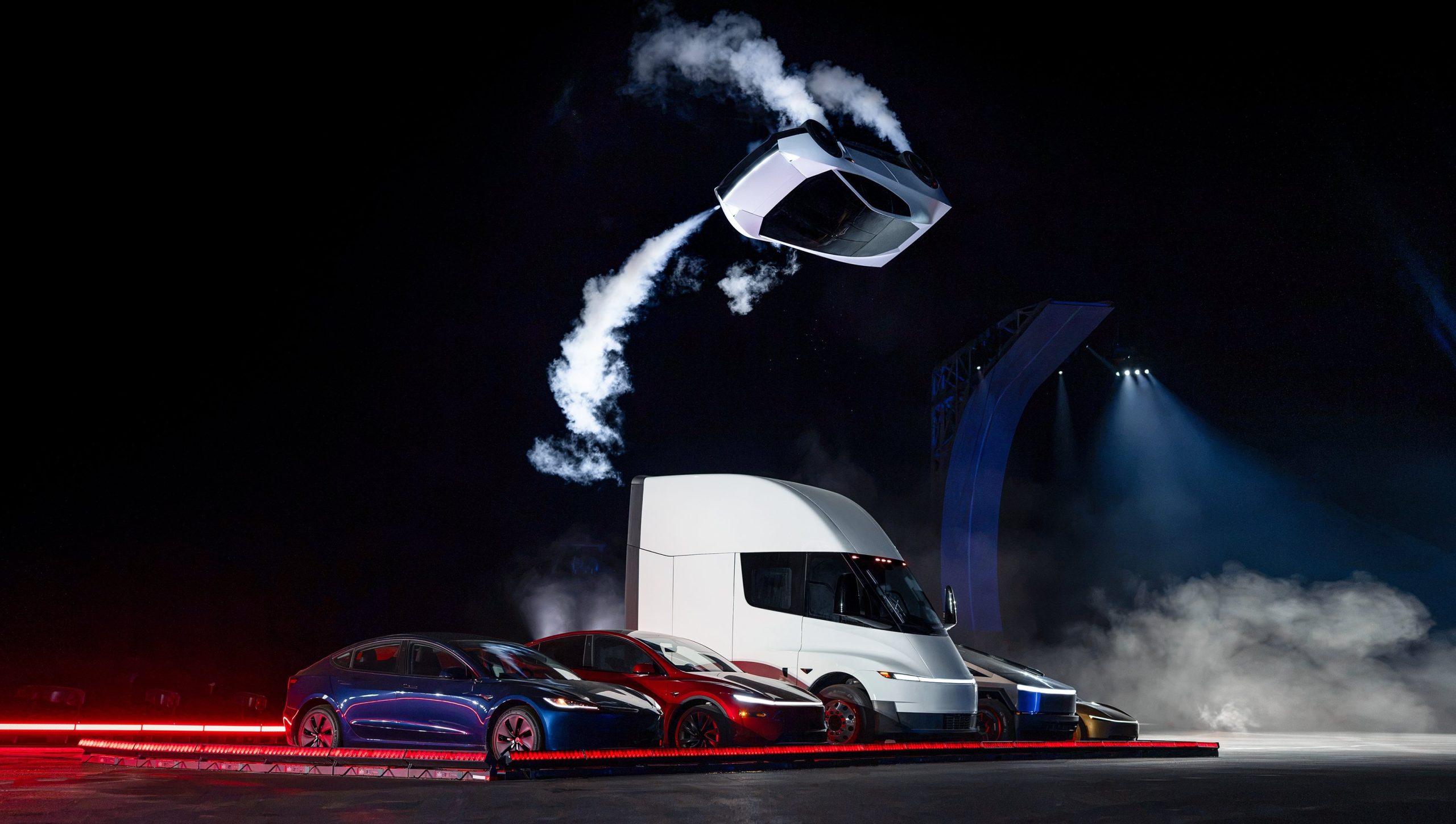
The Roadster unveiling near Waco ended Thursday night, and by Friday morning much of the investor reaction had less to do with the car than with who owns the rocket technology inside it.
Wedbush analyst Dan Ives said the event “puts the Tesla/SpaceX relationship on the table in a tangible way,” pointing to the propulsion, pressure vessel and control hardware sitting on a Tesla product. Gene Munster of Deepwater Asset Management called the demo “a ridiculous display of engineering” with “no commercial value” beyond embarrassing traditional automakers, though he said it showed Musk wants the two companies together.
The more specific forecast came a day earlier from Barclays. Analyst Dan Levy told clients a deal could be announced before Tesla’s annual meeting, which must happen by December 6, and that an announcement in late October or early November could make shareholder approval harder. Barclays expects SpaceX to be the buyer in an all stock deal, with Tesla holders receiving SpaceX shares at a premium, based on market values of roughly $2.1 trillion for SpaceX and $1.5 trillion for Tesla. If nothing lands around the meeting, the bank still sees an announcement within 6 to 12 months.
The Roadster demo just added more weight to merger speculations. Tesla’s demo used cold gas thrusters and pressure tanks of the kind SpaceX uses on Falcon 9, and Musk described the car as a collaboration between Tesla and SpaceX engineers, as we mentioned in our breakdown of the three Roadster configurations.
Musk has not publicly addressed a deal since the event, as far as we have seen. His most direct answer remains the one he gave at the All In Summit, when he said that with so much collaboration, “who can imagine what action one might take” without ruling anything out. Ives has held to a 2027 timeline since his March note, and Musk pushed back on the China piece of the speculation when ARK floated a year end announcement in August.
The next test is Tesla’s third quarter earnings call on October 21. However, we recall in July that Musk told analysts, “we can’t talk about combining companies and that kind of thing on an earnings call,” so a clear answer wouldn’t be expected.

Tesla Roadster owners to get “Flying Stunt Mode” and looping track access

How to use Grok Bot to block spam calls and texts

Tesla’s flying Roadster just revealed something bigger than the car

SpaceX reveals how its 1 Million AI satellite network will work and prevent space collisions

Elon Musk’s Boring Company lands a new Middle East deal, and Nashville is about to get faster


