Investor's Corner
Tesla (TSLA) Q3 2025 earnings: Wall Street’s reactions
Tesla’s third-quarter 2025 results delivered the highest quarterly revenue in company history, and Wall Street analysts are taking notice.

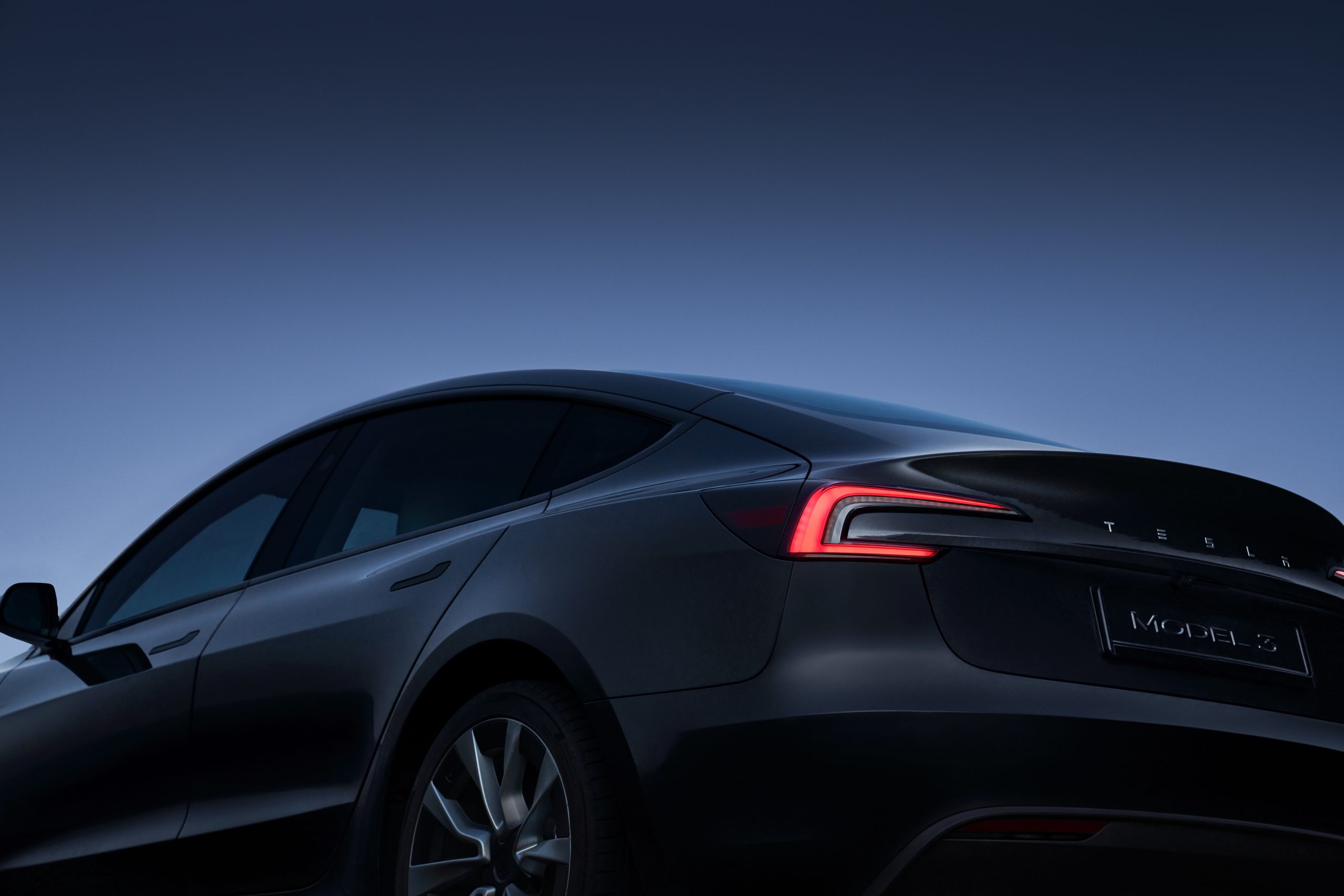
Tesla’s third-quarter 2025 results delivered record quarterly revenues, and Wall Street is taking notice.
The automaker reported $28.1 billion in revenue, topping estimates of $26.4 billion, while non-GAAP EPS landed at $0.50 versus $0.54 expected. Despite the slight earnings miss, Tesla’s free cash flow surged to nearly $4.0 billion and total cash on hand jumped to $41.6 billion, a new high.
The following are some of Wall Street’s reactions to Tesla’s third-quarter results.
Mizuho
Mizuho analyst Vijay Rakesh maintained an “Outperform” rating on Tesla and raised the firm’s price target to $485 from $460 per share, pointing to Tesla’s next-generation autonomy roadmap. “We see 2026E better with stronger FSD traction and deliveries. TSLA is focusing on AI5/HW5 with ~40x gains gen/gen, while ramping Robotaxis and FSD into 2026E–27E.”
Rakesh also highlighted that Mizuho sees Tesla as “well-positioned” to lead “physical AI with Cybercab/FSD traction, humanoid longer term, offset by near-term demand headwinds.”
Wedbush
Wedbush analyst Dan Ives reiterated his “Outperform” rating and $600 price target on Tesla. As per the analyst, “Tesla reported its FY3Q25 results featuring beats on the top-line while missing bottom-line expectations as the company benefitted from a pull-forward in its delivery segment with greater strength across EMEA and APAC while making gradual progress with its autonomous and energy businesses.”
He also pointed to Musk’s upcoming compensation vote as a key inflection point: “We believe it will be approved by a wide margin despite some opposition,” Ives noted. “That will be incremental to keeping Musk as a war-time CEO as the company enters a critical AI expansion phase.”
Baird
Baird analyst Ben Kallo reiterated his “Outperform” rating and $548 per share price target for Tesla following the company’s Q3 2025 earnings results. He praised Tesla’s energy segment for delivering record results.
“Energy demand is particularly high given grid constraints in several regions and a rapid build-out of infrastructure. We expect this piece of the business to capture more attention in the remainder of 2025 and moving into 2026 with the tipping points for longer-term initiatives (Optimus, robotaxi, etc.) more opaque,” Kallo noted.
Deepwater
Meanwhile, Deepwater’s Gene Munster struck a more measured tone. “The September numbers and earnings call were largely uneventful,” Munster said, adding that Tesla’s decision to move cautiously with robotaxis in Austin is the right one.
“Shares of TSLA traded down following Elon’s comment that he remains paranoid about the safety of Robotaxi given any accidents would represent a significant step back in terms of the public’s confidence in the fleet,” he wrote. Munster, however, emphasized that Tesla’s cash position is a major strength: “They have enough cash to will Elon’s vision into reality. It may take a lot longer than many expect, but they’ve got the cash to get there.”


Investor's Corner
Tesla gets tip of the hat from major Wall Street firm on self-driving prowess
“Tesla is at the forefront of autonomous driving, supported by a camera-only approach that is technically harder but much cheaper than the multi-sensor systems widely used in the industry. This strategy should allow Tesla to scale more profitably compared to Robotaxi competitors, helped by a growing data engine from its existing fleet,” BoA wrote.

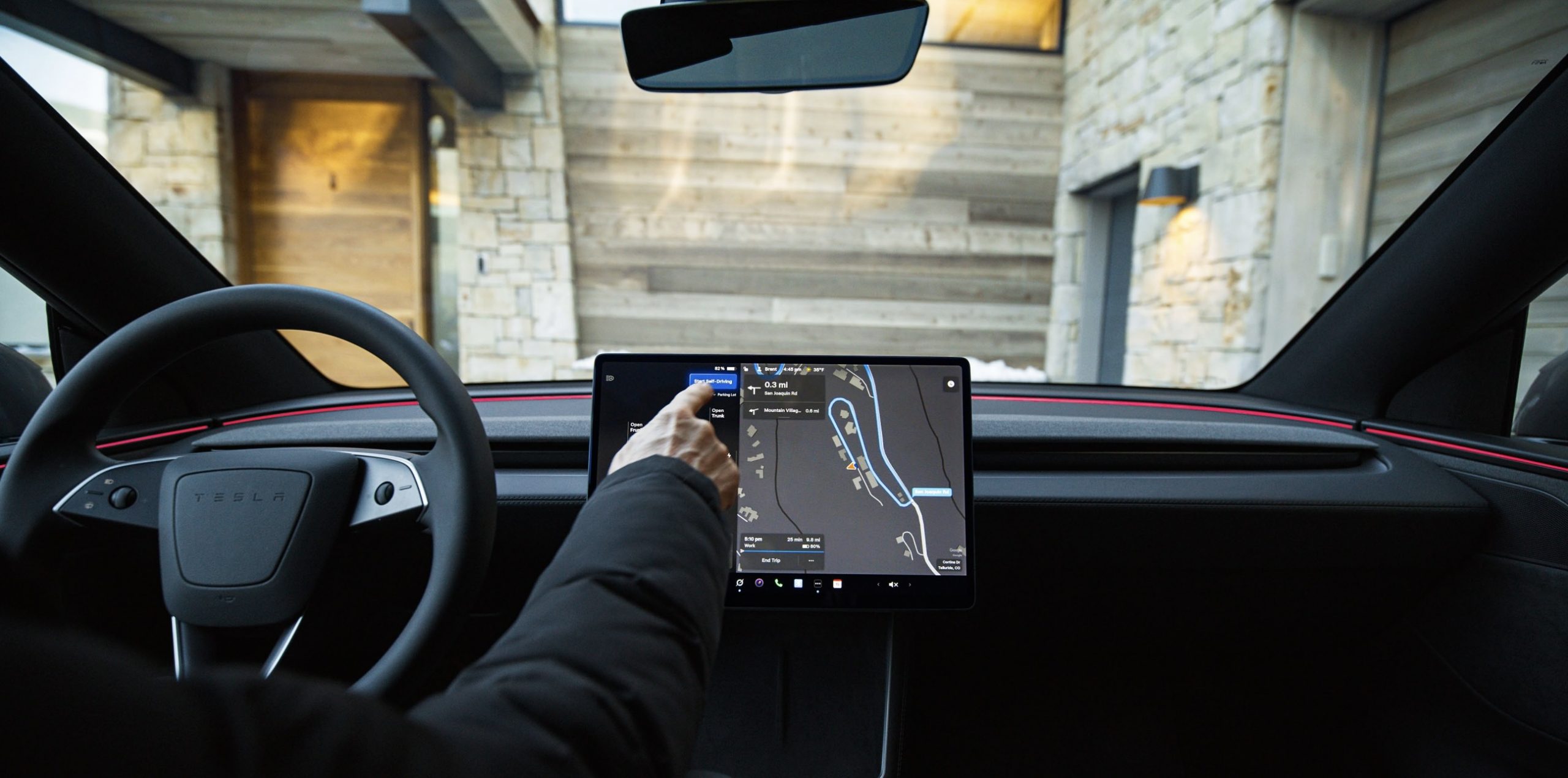
Tesla received a tip of the hat from major Wall Street firm Bank of America on Wednesday, as it reinitiated coverage on Tesla shares with a bullish stance that comes with a ‘Buy’ rating and a $460 price target.
In a new note that marks a sharp reversal from its neutral position earlier in 2025, the bank declared Tesla’s Full Self-Driving (FSD) technology the “leading consumer autonomy solution.”
Analysts highlighted Tesla’s camera-only architecture, known as Tesla Vision, as a strategic masterstroke. While technically more challenging than the multi-sensor setups favored by rivals, the vision-based approach is dramatically cheaper to produce and maintain.
This cost edge, combined with Tesla’s rapidly expanding real-world data engine, positions the company to scale robotaxis far more profitably than competitors, BofA argues in the new note:
“Tesla is at the forefront of autonomous driving, supported by a camera-only approach that is technically harder but much cheaper than the multi-sensor systems widely used in the industry. This strategy should allow Tesla to scale more profitably compared to Robotaxi competitors, helped by a growing data engine from its existing fleet.”
The bank now attributes roughly 52% of Tesla’s total valuation to its Robotaxi ambitions. It also flagged meaningful upside from the Optimus humanoid robot program and the fast-growing energy storage business, suggesting the auto segment’s recent headwinds, including expired incentives, are being eclipsed by these higher-margin opportunities.
Tesla’s own data underscores exactly why Wall Street is waking up to FSD’s potential. According to Tesla’s official safety reporting page, the FSD Supervised fleet has now surpassed 8.4 billion cumulative miles driven.
Tesla FSD (Supervised) fleet passes 8.4 billion cumulative miles
That total ballooned from just 6 million miles in 2021 to 80 million in 2022, 670 million in 2023, 2.25 billion in 2024, and a staggering 4.25 billion in 2025 alone. In the first 50 days of 2026, owners added another 1 billion miles — averaging more than 20 million miles per day.
This avalanche of real-world, camera-captured footage, much of it on complex city streets, gives Tesla an unmatched training dataset. Every mile feeds its neural networks, accelerating improvement cycles that lidar-dependent rivals simply cannot match at scale.
Tesla owners themselves will tell you the suite gets better with every release, bringing new features and improvements to its self-driving project.
The $460 target implies roughly 15 percent upside from recent trading levels around $400. While regulatory and safety hurdles remain, BofA’s endorsement signals growing institutional conviction that Tesla’s data advantage is not hype; it’s a tangible moat already delivering billions of miles of proof.
Elon Musk
SpaceX IPO could push Elon Musk’s net worth past $1 trillion: Polymarket
The estimates were shared by the official Polymarket Money account on social media platform X.
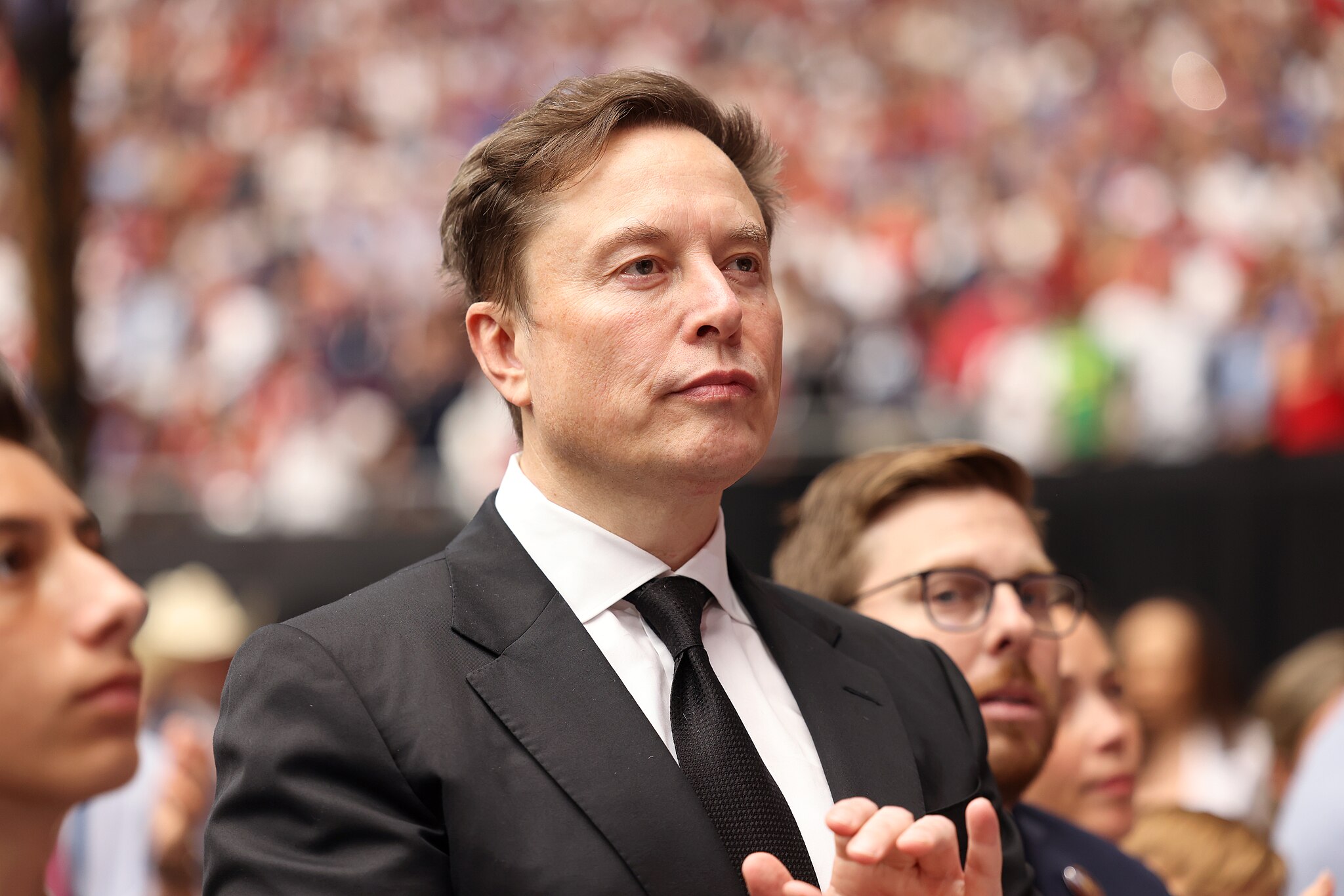
Recent projections have outlined how a potential $1.75 trillion SpaceX IPO could generate historic returns for early investors. The projections suggest the offering would not only become the largest IPO in history but could also result in unprecedented windfalls for some of the company’s key investors.
The estimates were shared by the official Polymarket Money account on social media platform X.
As noted in a Polymarket Money analysis, Elon Musk invested $100 million into SpaceX in 2002 and currently owns approximately 42% of the company. At a $1.75 trillion valuation following SpaceX’s potential $1.75 trillion IPO, that stake would be worth roughly $735 billion.
Such a figure would dramatically expand Musk’s net worth. When combined with his holdings in Tesla Inc. and other ventures, a public debut at that level could position him as the world’s first trillionaire, depending on market conditions at the time of listing.
The Bloomberg Billionaires Index currently lists Elon Musk with a net worth of $666 billion, though a notable portion of this is tied to his TSLA stock. Tesla currently holds a market cap of $1.51 trillion, and Elon Musk’s currently holds about 13% to 15% of the company’s outstanding common stock.
Founders Fund, co-founded by Peter Thiel, invested $20 million in SpaceX in 2008. Polymarket Money estimates the firm owns between 1.5% and 3% of the private space company. At a $1.75 trillion valuation, that range would translate to approximately $26.25 billion to $52.5 billion in value.
That return would represent one of the most significant venture capital outcomes in modern Silicon Valley history, with a growth of 131,150% to 262,400%.
Alphabet Inc., Google’s parent company, invested $900 million into SpaceX in 2015 and is estimated to hold between 6% and 7% of the private space firm. At the projected IPO valuation, that stake could be worth between $105 billion and $122.5 billion. That’s a growth of 11,566% to 14,455%.
Other major backers highlighted in the post include Fidelity Investments, Baillie Gifford, Valor Equity Partners, Bank of America, and Andreessen Horowitz, each potentially sitting on multibillion-dollar gains.
Elon Musk
Elon Musk hints Tesla investors will be rewarded heavily
“Hold onto your Tesla stock. It’s going to be worth a lot, I think. That’s my bet,” Musk said.
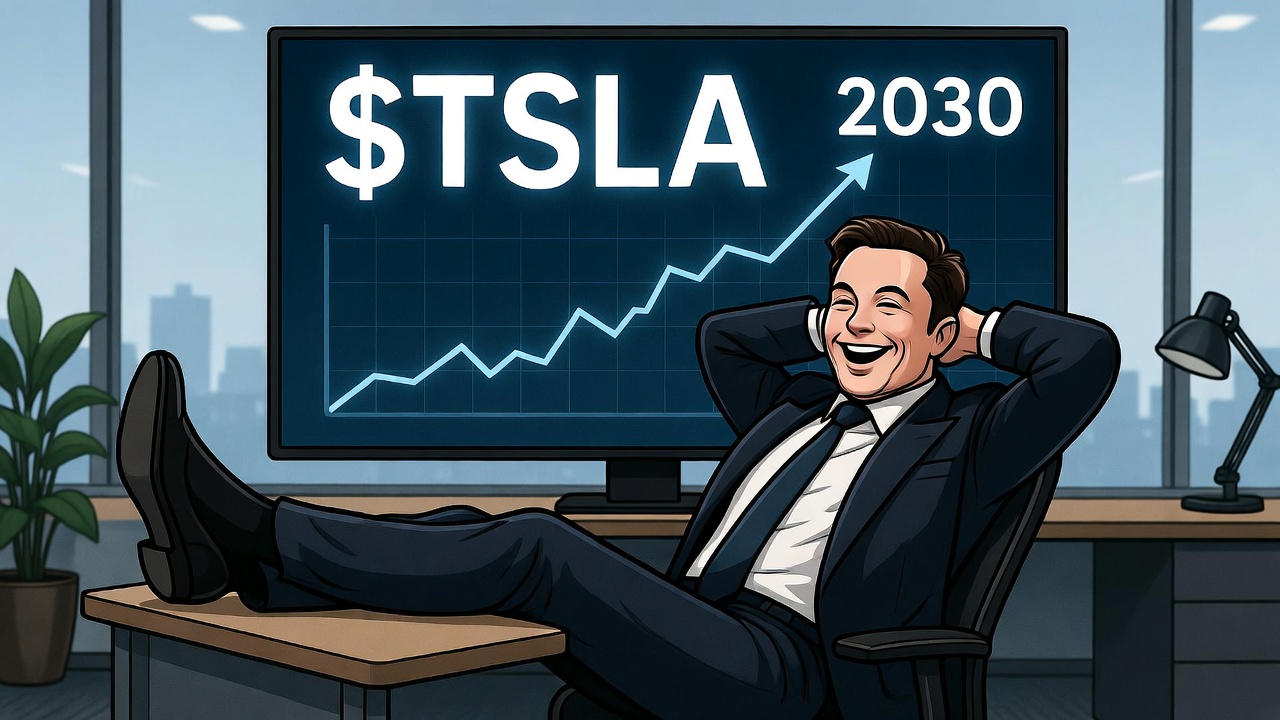
Elon Musk recently hinted that he believes Tesla investors will be rewarded heavily if they continue to hold onto their shares, and he reiterated that in a new interview that the company released on its social accounts this week.
Musk is one of the most successful CEOs in the modern era and has mammothed competitors on the Forbes Net Worth List over the past year as his holdings in his various companies have continued to swell.
Tesla investors, especially those who have been holding shares for several years, have also felt substantial gains in their portfolios. Over the past five years, the stock is up over 78 percent. Since February 2019, nearly seven years ago to the day, the stock is up over 1,800 percent.
Musk said in the interview:
“Hold onto your Tesla stock. It’s going to be worth a lot, I think. That’s my bet.”
Elon Musk in new interview: “Hold on to your $TSLA stock. It’s going to be worth a lot, I think. That’s my bet.” pic.twitter.com/cucirBuhq0
— Sawyer Merritt (@SawyerMerritt) February 26, 2026
It’s no secret Musk has been extremely bullish on his own companies, but Tesla in particular, because it is publicly traded.
However, the company has so many amazing projects that have an opportunity to revolutionize their respective industries. There is certainly a path to major growth on Wall Street for Tesla through its various future projects, including Optimus, Cybercab, Semi, and Unsupervised FSD.
- Optimus (Tesla’s humanoid robot): Musk has discussed its potential for tasks like childcare, walking dogs, or assisting elderly parents, positioning it as a massive long-term driver of company value.
- Cybercab (Tesla’s robotaxi/autonomous ride-hailing vehicle): a fully autonomous vehicle geared specifically for Tesla’s ride-sharing ambitions.
- Semi (Tesla’s electric truck, with mentions of expansion, like in Europe): brings Tesla into the commercial logistics sector.
- Unsupervised FSD (Full Self-Driving software achieving full autonomy without human supervision): turns every Tesla owner’s vehicle into a fully-autonomous vehicle upon release
These projects specifically are some of the highest-growth pillars Tesla has ever attempted to develop, especially in Musk’s eyes, as he has said Optimus will be the best-selling product of all-time.
Many analysts agree, but the bullish ones, like Cathie Wood of ARK Invest, are perhaps the one who believes Tesla has incredible potential on Wall Street, predicting a $2,600 price target for 2030, but this is not even including Optimus.
She told Bloomberg last March that she believes that the project will present a potential additive if Tesla can scale faster than anticipated.

What is Digital Optimus? The new Tesla and xAI project explained

Tesla adds awesome new driving feature to Model Y


